![Elderly woman lighting candle solstice[1]](https://www.grayingwithgrace.com/wp-content/uploads/2025/12/elderly_woman_lighting_candle_solstice1-e1764616673551.jpg)
Have you noticed how December feels like it’s running you over?
Between shopping, cooking, and endless social obligations, you’re exhausted before the holidays even arrive.
But what if December 21st—the winter solstice—could be your secret pause button?
Here’s something most people don’t realize: while everyone’s talking about New Year’s resolutions, you could be tapping into something far more powerful.
The winter solstice isn’t just the shortest day of the year. It’s the turning point when the days literally start getting longer again.
And that shift? It does something remarkable to your brain and your sense of possibility.

The Science Behind Your “Longer Days Ahead” Mood Boost
Your brain doesn’t just respond to how much light you’re getting right now. It responds to the trajectory—to knowing things are getting better.
Psychologists call this anticipatory psychology, and it’s powerful. When you know improvement is coming, your mood lifts even before the actual change happens.
Think about it: December 20th and December 21st have almost the same amount of daylight. But on December 21st, something fundamental shifts. The days stop getting shorter and start getting longer.
That’s not just poetic—it’s measurable. And your circadian rhythms, which regulate everything from your sleep to your mood, recognize this shift.
This is why December 21st feels different in a way that January 1st never quite manages. One is grounded in natural cycles your body has evolved with for millennia. The other is just a number on a calendar.
The solstice marks real, biological change. And you can harness that.
Why Your Brain Craves Natural Turning Points
Here’s what makes this so valuable: arbitrary dates like January 1st require pure willpower to feel meaningful. But natural turning points? They come with built-in momentum.
You’re not forcing significance onto a random day. You’re aligning with a pattern that’s already happening in the world around you.
And when you set intentions during a natural shift—when the light is literally returning—you’re working with nature instead of against it.

Simple Solstice Rituals You Can Do Alone
You don’t need a group gathering or complicated preparations. These are quiet, personal practices you can do entirely on your own terms.
The Candlelight Transition
Light a candle at sunset on December 20th. Place it somewhere safe where you can check on it regularly—your kitchen table, a bedroom dresser, anywhere that feels right to you.
If keeping a real candle burning overnight concerns you (and it should), use an electric candle or simply relight it first thing December 21st. The ritual is about carrying light through the longest night, not creating fire hazards.
As you light it, you might simply think: “I’m carrying my own light through.”
That’s it. Nothing fancy. Just acknowledgment.
Intention-Setting for the Returning Light
This isn’t about New Year’s resolutions with their pressure and public scrutiny. This is quieter, more personal.
On the morning of December 21st, write down one to three things you’d like to “grow” as the days lengthen. Not goals with deadlines or measurements—just intentions.
Maybe it’s: “I want to feel more connected to my grandchildren.” Or: “I want to move my body more.” Or: “I want to try that pottery class.”
Keep this paper somewhere you’ll see it naturally—tucked in your journal, on your bathroom mirror, in your kitchen drawer. Not as a task list, but as a gentle reminder of what you’re welcoming as the light returns. If writing feels difficult, you might explore alternative practices for daily reflection that don’t require traditional journaling.
The Morning Light Acknowledgment
Step outside or sit by a window at sunrise on December 21st. Just five minutes.
You don’t need to say anything, do anything, or even think profound thoughts. Just be present for the turn.
Some people like to say something simple: “Welcome back, light.” Others prefer silence. Both are perfect.
Ready to discover more innovative strategies for healthy, comfortable aging? Subscribe to our newsletter for expert-tested tips and recommendations designed specifically for older adults.
Drawing from Cultural Wisdom
Many cultures have honored the winter solstice for thousands of years, and you can draw gentle inspiration from their practices without appropriating sacred traditions.
Scandinavian traditions include lighting candles and enjoying a special breakfast. You might make yourself a favorite meal and eat it by candlelight on the morning of December 21st.
Celtic practices involved bringing evergreen branches indoors as a reminder that life continues even in darkness. A small pine branch in a vase can serve the same purpose.
Some Asian traditions focus on warm, nourishing foods—soups, teas, anything that literally brings warmth. Perhaps you could make yourself a particularly comforting meal that day.
Choose what resonates. Leave what doesn’t. The key is creating personal traditions that feel meaningful to you, rather than following prescribed rules.
The Evening Reflection
As December 21st ends, you might take a few moments to consider: What am I ready to leave in the darkness? What am I welcoming with the returning light?
This can be entirely mental, or you can write it down, or you can speak it aloud to yourself. Whatever feels natural.
The point isn’t to perform a perfect ritual. It’s to mark the moment in a way that matters to you.

Your Mid-Holiday Pause Button
Let’s be honest: December is overwhelming. Shopping for gifts, preparing meals, attending gatherings, managing family dynamics—it’s exhausting even when you enjoy it.
And if you’re feeling the pressure to be cheerful and festive when you’re actually just tired? You’re not alone.
December 21st gives you permission to take one day entirely for yourself. Not selfishly—strategically. This strategic rest approach can actually prevent the exhaustion that typically follows major holidays.
How One Quiet Day Recharges Everything
Think of it as the pause between holiday preparation and holiday events. A single day where you owe nobody anything.
You don’t have to shop, cook, clean, or socialize unless you genuinely want to. You can decline invitations without explanation or guilt. “I’m taking a quiet day for myself” is a complete sentence.
This pause doesn’t diminish your holiday experience—it enhances it. By taking one day to rest and reset, you’ll actually enjoy the remaining days more.
What a “Pause Day” Actually Looks Like
This isn’t about elaborate self-care routines. It’s simpler than that.
Maybe you make yourself a simple, nourishing meal instead of another festive spread. Maybe you take a short walk in winter air instead of battling holiday crowds. Maybe you read, work on a puzzle, or listen to music you actually love.
The key is gentle activities that require nothing from you. No performance, no productivity, no obligations.
If someone questions why you’re “not doing anything” on December 21st, you can simply say you’re observing the solstice. People respect that more than you might expect.
Making Light Work for You After the Solstice
Once you’ve marked the turn, you can work with the returning light in practical ways that genuinely affect your energy and mood.
The Power of Morning Sunlight
The single most effective time for light exposure is within the first hour after waking. Even on cloudy days, natural light is brighter than indoor lighting.
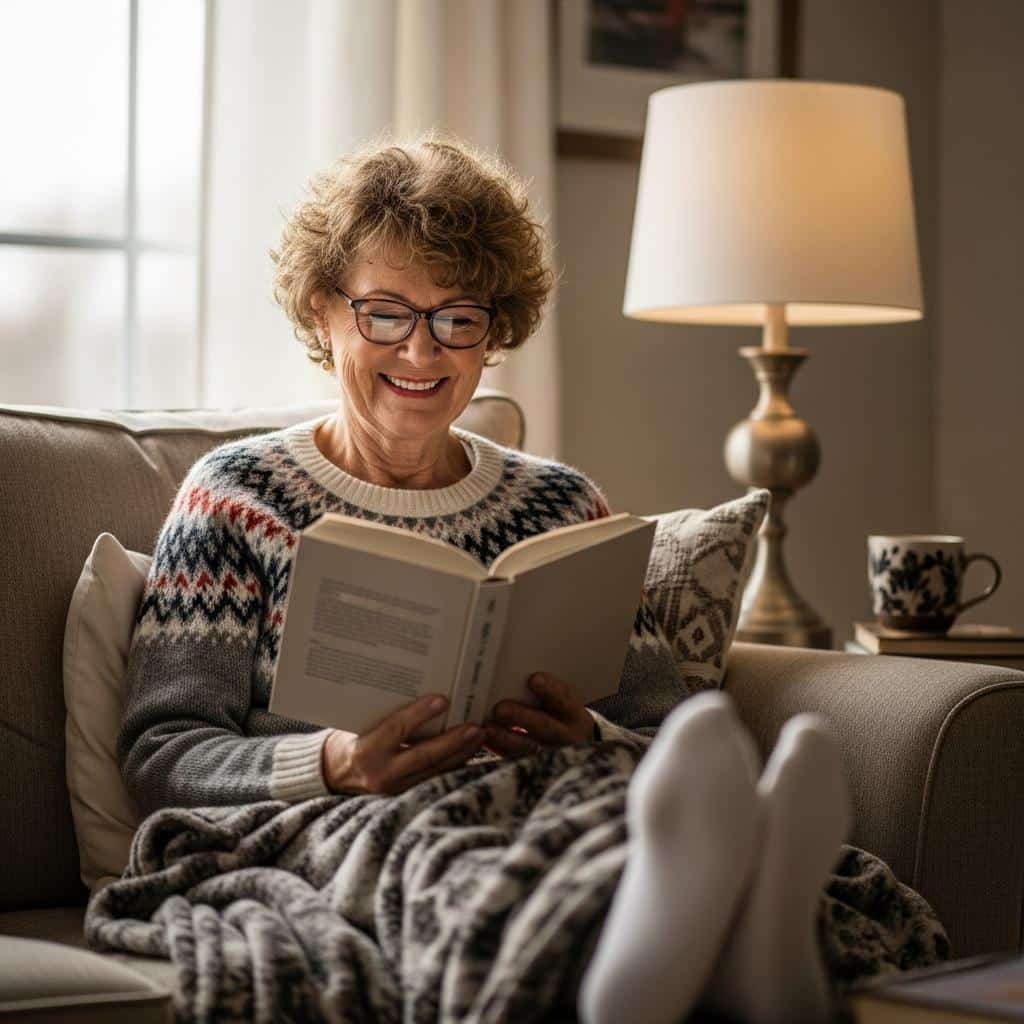
If you can, open your curtains immediately upon waking. Better yet, have your morning coffee or tea by a window. Even 10-15 minutes makes a difference. Your natural circadian rhythm responds powerfully to this early light exposure.
If mobility is a concern, you don’t need to go outside—window light works. If winter temperatures make outdoor time difficult, you can still benefit from indoor exposure to natural light.
Strategic Indoor Lighting Choices
You can maximize natural light in your home with a few simple adjustments. Open curtains during daylight hours. Sit near windows when you’re reading or doing activities.
If you’re in a room with limited natural light, consider whether you could relocate certain activities to brighter spaces. Perhaps move your reading chair closer to a window, or have breakfast in the sunniest room.
Light-colored walls and furnishings reflect more natural light throughout a space. You don’t need to redecorate, but it’s worth being aware of which rooms in your home feel brightest and spending more time there.
Light Therapy Lamps: A Tool, Not a Requirement
These devices, which produce bright light similar to natural daylight, can be helpful if you struggle with winter energy levels. They’re not necessary for everyone, but they’re an option worth knowing about.
If you’re interested, look for lamps that produce 10,000 lux and are designed for this purpose (not just bright regular lights). Use them in the morning for 20-30 minutes while you have breakfast or read.
They’re available at various price points—you don’t need the most expensive model to get benefits. But check with your doctor first if you have eye conditions or take medications that increase light sensitivity.
The Gradual Shift You Might Not Notice
Here’s something encouraging: after December 21st, each day brings about two more minutes of daylight. It doesn’t sound like much. But by early February, you’ll have gained almost an hour.
Your body notices these incremental changes even when your conscious mind doesn’t. Those extra minutes accumulate, and so do their effects on your energy and outlook. Understanding how seasonal light changes affect your wellbeing can help you work with these natural rhythms rather than against them.
Want more thoughtful strategies for meaningful, comfortable aging? Subscribe to our newsletter for expert-tested tips and insights designed specifically for older adults embracing life with intention.
Why This Beats the New Year’s Rush
There’s nothing wrong with New Year’s resolutions if they work for you. But consider this: why is January 1st special?
Because we decided it is. That’s it. There’s no natural significance to that date—it’s purely calendar-based, a human invention.
The Pressure Problem with January 1st
New Year’s resolutions come with enormous social pressure. Everyone’s watching. Social media is full of transformation promises. Gyms are crowded. The scrutiny is intense.
And when do most people abandon their resolutions? Mid-January, when the excitement fades and real life resumes.
There’s an inherent mismatch: we’re trying to start fresh in the middle of winter’s darkness, when our bodies are telling us to conserve energy. We’re fighting against natural rhythms.
The Private Power of Solstice Intentions
In contrast, December 21st is personal. Most people aren’t paying attention to the solstice, which means there’s no performance pressure.
You’re not competing with anyone’s transformation posts. You’re not part of a crowded movement. It’s just you, marking a natural turning point in a way that feels meaningful.
And here’s the beautiful part: you’re setting intentions as the light literally begins returning. You’re planting seeds as the growing season—metaphorically—begins.
Working With Nature’s Timeline
By February, when most New Year’s resolutions have faded, you’ll have been working with your intentions for six weeks. The days will be noticeably longer. Spring will be approaching.
Your intentions will have been growing alongside the returning light—naturally, gradually, without forcing.
This doesn’t mean you can’t also set New Year’s resolutions if you want. These aren’t either-or choices. But the solstice offers an alternative that many people find more sustainable precisely because it’s less pressured and more aligned with natural cycles.
Your Invitation to Try Something Different
You’ve made it through decades of Decembers. You know what works for you and what doesn’t.
If the holiday rush leaves you drained, if New Year’s resolutions feel like just another obligation, maybe this year you try something quieter.
Mark your calendar for December 21st. Note the sunrise and sunset times for your area. Choose one simple ritual from this article—just one.
See what it feels like to mark a turning point that’s real, measurable, and entirely yours. No crowds, no social media pressure, no public declarations.
Just you, acknowledging that the light is returning. And welcoming what you’d like to grow alongside it.
This is your reset button. You get to decide whether to press it.