![Keep older woman reviewing photo album armchair[1]](https://www.grayingwithgrace.com/wp-content/uploads/2026/05/KEEP-older_woman_reviewing_photo_album_armchair1-1-e1778623130749.jpg)
Did you know that a 20-minute conversation about the past could do more for a senior’s brain than a crossword puzzle? Most people assume reminiscing is just a pleasant way to pass the time—sweet, maybe even a little indulgent, but not particularly meaningful.
Science disagrees. Researchers have been quietly studying what families have known instinctively for generations, and the findings are remarkable. Telling old stories isn’t nostalgia. It’s neuroscience.
This article breaks down exactly why reminiscing makes older adults measurably happier, healthier, and sharper—and how to turn this natural behavior into a simple, powerful weekly ritual anyone can use.
What Reminiscence Therapy Actually Is (and Why It Works So Well)

Reminiscence therapy is not simply chatting about the old days. It is a documented therapeutic approach—studied in clinical psychology, used in professional care settings, and increasingly adopted in memory care and dementia support programs.
At its core, it involves the structured or semi-structured practice of recalling and discussing past experiences, often triggered by sensory prompts: photographs, familiar music, meaningful objects, or even a specific scent.
Here’s what makes it so effective for older adults specifically.


The aging brain stores long-term episodic memories differently from short-term information. Those deeply encoded memories from decades ago often remain remarkably accessible—even when recent events are harder to recall. A senior who struggles to remember Tuesday’s lunch may describe in vivid, sensory detail the smell of their grandmother’s kitchen in 1958. That’s not just endearing. It’s neurologically significant.
Reminiscing is not passive. It actively engages neural pathways, requires language retrieval, emotional processing, and narrative construction. Every element of that process is meaningful cognitive work.
This is not small talk. This is brain exercise wrapped in a conversation.
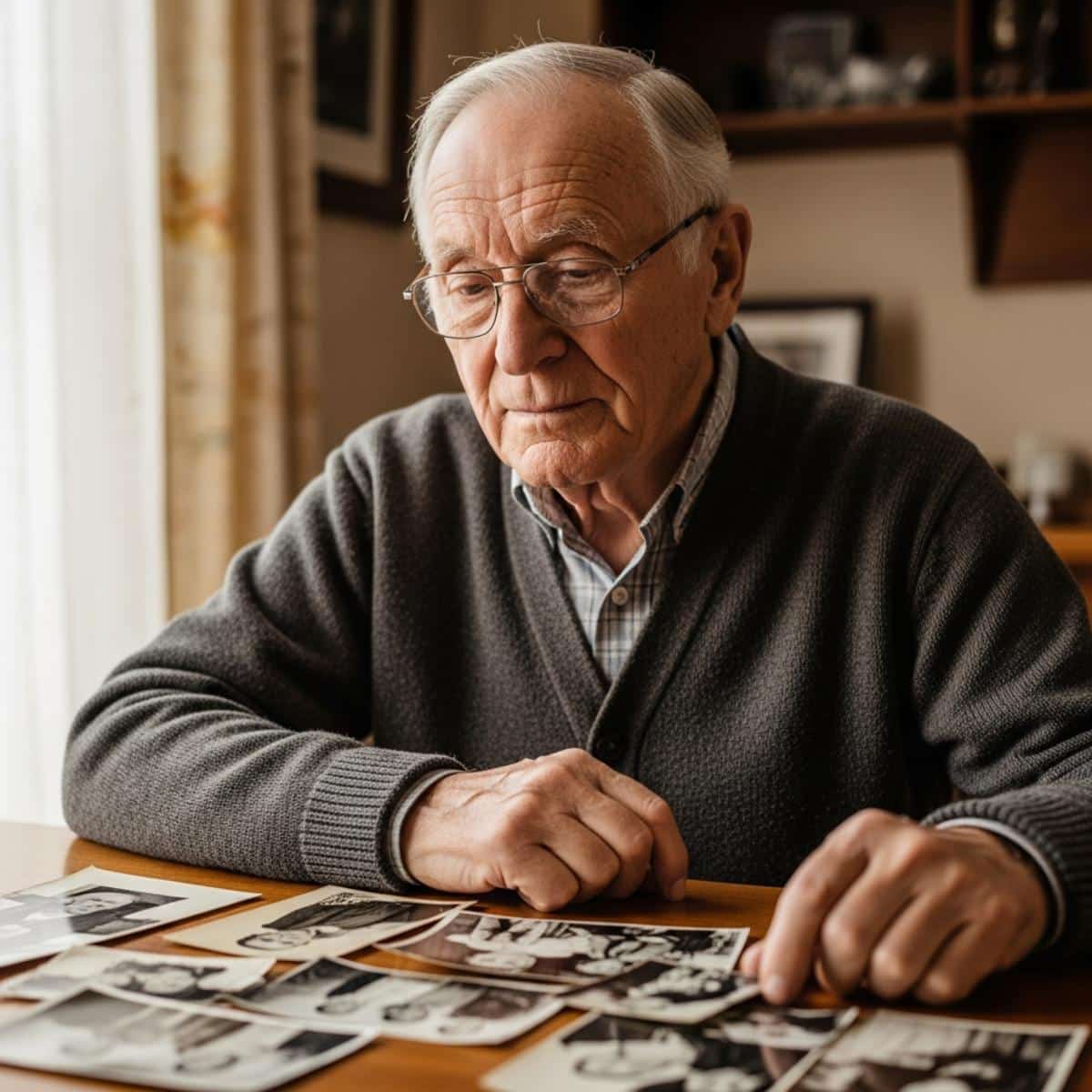
A simple digital photo frame loaded with family images, a personalized photo book, or even a shoebox of old photographs can serve as powerful, accessible conversation starters in any home setting—no formal program required.
The Brain Science — Why Memories Actually Make You Sharper

Every time a senior retrieves a long-term memory, they are reinforcing the neural pathways that house it. Think of it like walking a trail through tall grass—the more often you travel it, the clearer and more accessible it becomes.
There’s also a neurochemical dimension worth understanding. When older adults recall vivid, positive memories, the brain releases dopamine and serotonin. That visible brightening you see when someone starts talking about a cherished moment from their past isn’t just emotional—it’s a measurable shift in brain chemistry.
Research in this area consistently shows that regular life review and structured reminiscence is associated with slower rates of cognitive decline in older adults. Storytelling specifically—constructing a narrative, sequencing events, recalling sensory details—engages multiple brain regions simultaneously. That’s broad cognitive stimulation happening naturally, inside an ordinary conversation.




Consider a simple Sunday afternoon ritual: a grandmother pulls out a box of old photographs and walks her grandchildren through her early years. What feels like a family tradition is actually a neurological workout. Multiple memory systems, language centers, and emotional processing regions are all active at once.
Every story told from the past is also, quietly, an investment in future cognitive function. Protecting and scheduling these conversations intentionally—rather than letting them happen by accident—is one of the most evidence-supported things a family can do. This connects directly to why combating senior loneliness through social engagement matters so deeply for long-term brain health.
The Emotional Benefits — Happiness, Identity, and a Quieter Anxiety
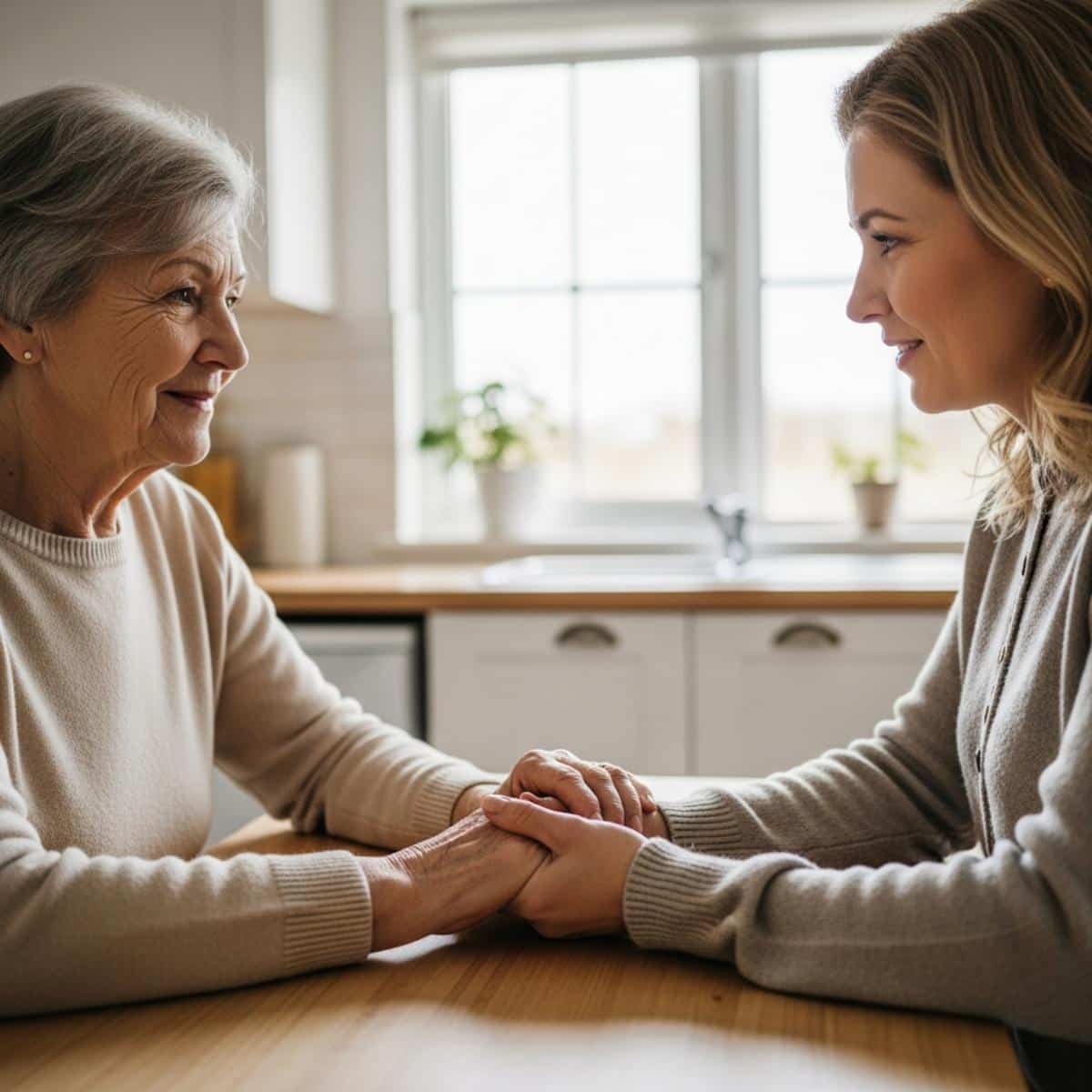
Research on reminiscence-based interventions consistently shows measurable reductions in depression symptoms among older adults. In some peer-reviewed studies, the outcomes are comparable to certain non-pharmacological approaches—and it requires no prescription, no equipment, and no clinical setting.
Here’s why it works emotionally.
As adults age, roles shift. Abilities change. Daily routines look different than they did at 45 or 55. That transition can quietly erode a person’s sense of who they are. Reminiscence helps restore identity continuity—the ability to connect the present self to the past self. That connection maintains psychological coherence and reduces anxiety in a way that few other interventions can replicate.
Life review also helps older adults feel that their lives have had meaning and arc. That sense of narrative purpose is a critical component of emotional wellbeing in later years. It’s the difference between feeling like a footnote and feeling like the author of your own story.
Clinical observations have also noted the relationship between reminiscence and improved sleep quality and lower pain perception. The calming, anchoring effect of familiar, positive memories has a measurable physiological dimension—not just an emotional one.
A senior who is regularly invited to share stories from her past shows tangible differences in mood, engagement, and self-perception compared to one who feels increasingly peripheral in family life. Encouraging someone to share their stories is not just a kindness. It is an act that directly supports their emotional health and sense of purpose. This is also why learning to stop apologizing for slowing down connects so naturally to the healing power of life review.
Want more research-backed strategies for supporting the seniors you love? Subscribe to our newsletter for expert-tested tips and practical tools designed specifically for older adults and their families.
The Relationship Benefit — What Reminiscing Does for Families and Caregivers
Families who engage in regular reminiscing together report higher relationship satisfaction and stronger intergenerational bonds. That finding alone is worth pausing on.
But there’s a specific dynamic at work that makes reminiscing uniquely powerful in caregiving relationships.
When a family member or caregiver creates space for stories, the senior becomes the expert and the storyteller—not the recipient of care. That shift in role restores dignity and agency in a relationship that can otherwise feel one-directional. The senior is no longer the person being helped. They are the person with something irreplaceable to offer.
For caregivers, this matters practically. Research shows measurable reductions in caregiver stress and burnout associated with meaningful, positive interactions versus purely task-based caregiving. Even brief, informal reminiscing moments—a photograph on the wall, a song on the radio, a familiar recipe on the counter—can create connection that sustains both caregiver and senior emotionally.
For family members like adult children managing the balance between caregiving responsibilities and their own lives, this is not one more task to add to an already full list. It is a relationship investment that makes every other aspect of caregiving easier, warmer, and more rewarding.
The practical starting point is simpler than most people expect. Look at what’s already present in the senior’s environment. A photograph on the wall. A favorite song. A dish they used to cook. Any of these can open a conversation that neither of you will forget.
A tool like MemoryBoard can also play a role here—designed for families to coordinate care and stay connected, it creates ongoing touchpoints that naturally invite reflection and story-sharing across distance.
How to Make It a Ritual — A Simple Weekly Format Anyone Can Use
You do not need training, a formal program, or special equipment. A simple, repeatable ritual is enough.
The 5 Senses Prompt System
Each of the five senses can unlock vivid, detailed recollection:
- Sound: Music from the senior’s era is one of the most powerful triggers available—and free on any streaming service
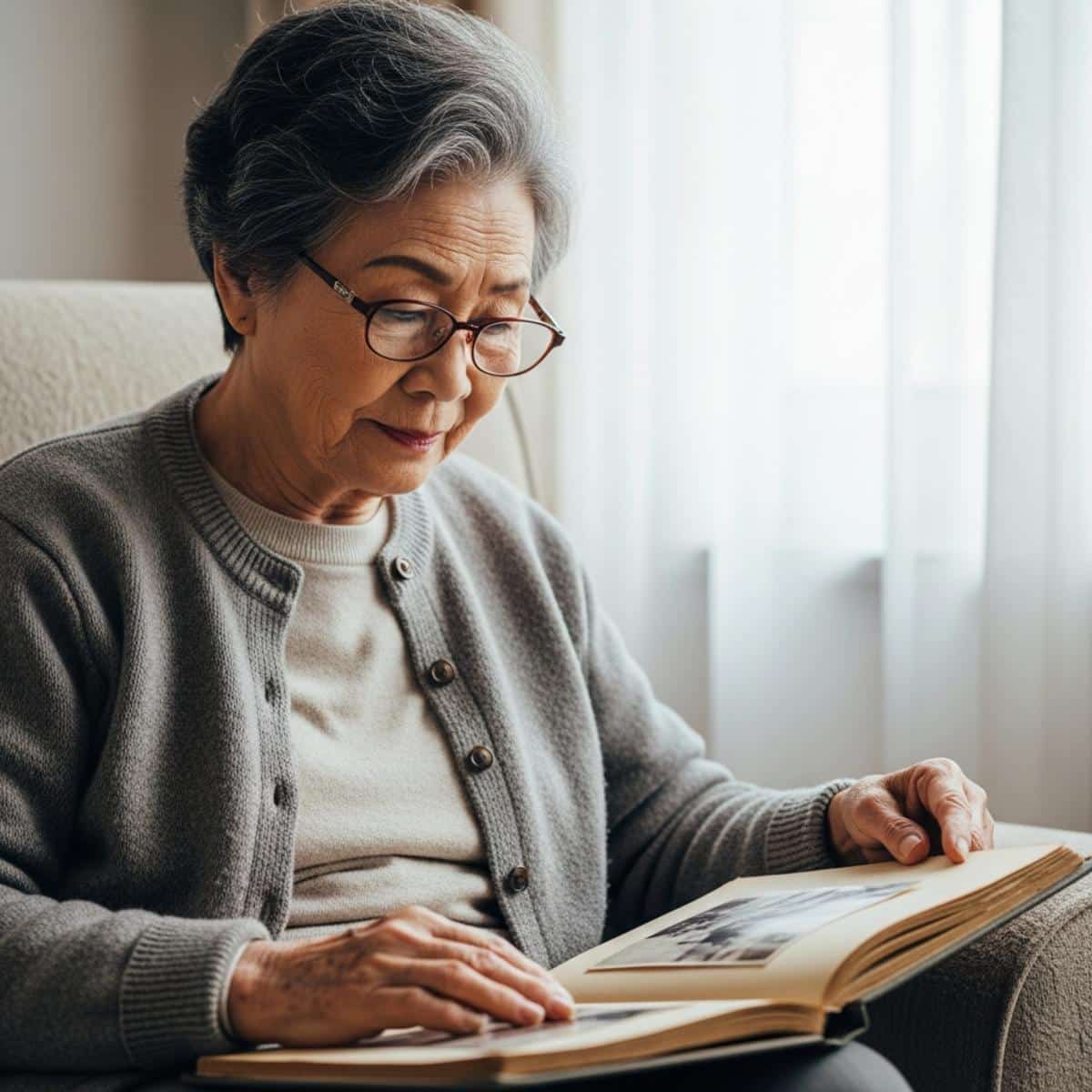
- Sight: A familiar photograph, a home movie, or images from a specific decade
- Touch: A meaningful object, a fabric, or something they used to work with regularly
- Smell: A familiar scent tied to a memory—baked bread, a specific cologne, a garden
- Taste: A food or drink connected to a cherished time or person
Start with whichever prompt is already present in their environment. You don’t need to go looking for anything.
The 20-Minute Weekly Ritual
- Choose one sensory prompt
- Ask one open-ended question (“What do you remember about…?” or “What was that like?”)
- Listen without rushing or redirecting
- Optionally note or record what surfaces
That’s it. Twenty minutes. One prompt. One story. That is genuinely enough to make a meaningful difference.
Era-Specific Conversation Starters
For seniors who grew up in the 1940s–1950s:
- What did your family do together on weekends?
- What was school like when you were young?
- What music did everyone listen to?
For seniors who came of age in the 1960s–1970s:
- What were you doing when you heard about major events of that era?
- What was your first job like?
- Where did you and your friends spend time?
Preserve What Surfaces
The stories shared in these conversations are irreplaceable family history. Capturing them—even as brief written notes or a voice recording—turns a meaningful moment into a lasting legacy.
A platform like MemoryBoard makes it easy to collect and organize what surfaces during these conversations, so stories shared once don’t disappear. Era-specific music playlists, available free on any streaming service, remain one of the easiest and most emotionally powerful sensory prompts you can use. Staying mentally and socially engaged through regular shared rituals is one of the most protective investments an older adult can make.
Your Stories Are Not Just Memories — They Are Medicine
Reminiscing is not a passive activity or a sentimental indulgence. It is a documented, accessible, and genuinely powerful tool for supporting the mental, emotional, and relational health of older adults.
If you are an older adult who naturally gravitates toward reflection and storytelling—science has confirmed you were right all along. Your stories matter to your family, yes. But they also matter to your own health and wellbeing in ways researchers are only beginning to fully appreciate.
If you are a caregiver or family member, creating space for those stories is one of the most meaningful and evidence-supported things you can do. It requires no training, no equipment, and no more than twenty minutes. The return on that investment—in connection, in cognitive health, in emotional wellbeing—is extraordinary. This kind of intentional engagement also supports the broader goal of helping seniors maintain gratitude, self-compassion, and a sense of purpose as they age.
Choose one sensory prompt this week. Ask one open-ended question. Then simply listen.
What memory did it unlock? Share in the comments—your experience might be exactly what someone else needed to hear today.