
![Keep older woman video call tablet kitchen warm smile[1]](https://www.grayingwithgrace.com/wp-content/uploads/2026/05/KEEP-older_woman_video_call_tablet_kitchen_warm_smile1-e1778624028172.jpg)
You finally download a dating app one quiet evening. You’re hopeful. A little nervous. You have no idea what’s waiting on the other side.
Wanting companionship after loss or divorce isn’t weakness — it’s one of the most human things in the world. Millions of older adults are exploring online dating right now, and that desire for connection deserves to be celebrated, not hidden.
But there’s a trap built into this space that almost nobody warns you about. Once you know what to look for, you can move through online dating with your eyes open, your heart hopeful, and your information protected.
This article covers both the real dangers and the three apps actually worth your time.

The Trap Nobody Warns You About: Why Dating Apps Have Become a Hunting Ground for Scammers
Romance scams targeting older adults are not random accidents. They are deliberate, sophisticated operations designed to exploit the specific emotional circumstances of widowed and divorced seniors.
According to the Federal Trade Commission, romance scams cost Americans over $1 billion annually — and older adults lose more per victim than any other age group. The average loss for adults over 70 exceeds $9,000 per incident.
Scammers specifically target seniors because they are more likely to be financially stable, recently bereaved, and less familiar with digital deception tactics. These aren’t impulse crimes. They’re calculated campaigns.
The scams unfold slowly — over weeks or months — building genuine emotional attachment before any request for money appears. By the time someone feels manipulated, they often feel genuine grief over a relationship that was never real.
The shame that follows keeps most victims from reporting it or telling family. That silence is exactly what scammers count on.
What a Convincing Scam Profile Looks Like
Imagine a profile with a professional photo, a thoughtful biography, and messages that feel surprisingly warm and attentive. For someone who hasn’t dated in 20 or 30 years, that can feel completely real — because it’s designed to.
Here’s one technique that immediately exposes many scammers: a reverse image search. Upload any profile photo to Google Images or a free tool called TinEye. If the photo appears elsewhere on the internet under a different name, you’re looking at a stolen image.
Being targeted by a romance scammer is not a reflection of your intelligence or emotional strength. These are professional operations. Knowing how they work is simply a skill — like knowing how to spot a phishing email.
Understanding how financial exploitation targets older adults and what steps to take can help you protect yourself before anything goes wrong.
5 Red-Flag Phrases Romance Scammers Use in the First 3 Messages
Scammers follow predictable scripts. Knowing the exact phrases they use gives you an immediate advantage.
Here are five phrases to watch for — and why scammers use each one:
“I feel like I’ve known you my whole life” — Rapid artificial intimacy designed to accelerate emotional bonding before skepticism can form.
“I work overseas / I’m deployed / I’m on an offshore oil rig” — Establishes a reason they can never meet in person or video call reliably.
“I’ve never felt this way about anyone I met online” — Creates a sense of unique specialness that makes you feel chosen.
“I’d love to move our conversation off this app” — Moving to personal email, WhatsApp, or phone removes the platform’s monitoring and reporting tools.
“I’m in a bit of a crisis and I don’t know who else to turn to” — The eventual pivot toward a financial request, typically framed as a temporary emergency.
None of these phrases alone is definitive proof of a scam. But appearing early in a conversation, they form a recognizable pattern.
Seeing one is a reason to slow down. Seeing two or three together is a reason to stop entirely.
Practical step: Screenshot any conversation where these phrases appear and wait 24 hours before responding. Scammers rely on urgency. Time is your protection.
Staying socially connected is one of the most important things you can do for your health — research consistently shows that meaningful connection reduces dementia risk and improves overall wellbeing. That’s exactly why protecting yourself in this space matters so much.

Your “Before You Share Anything” Checklist
Protecting your personal information in the early stages of online dating is not paranoia — it is standard practice. Knowing exactly what is and isn’t safe to share removes the guesswork entirely.
Never Share in Early Conversations
- Your full last name (use first name only until you’ve verified the person)
- Your home address or neighborhood
- Your phone number (use the app’s messaging system until you’re confident)
- Any financial information
- Details about living alone, travel plans, or daily routines
Safe to Share Gradually as Trust Builds
- First name and general city
- General interests and hobbies
- Family structure (adult children, grandchildren) without specific identifying details
The Video Call Test
Before agreeing to meet anyone in person, request a video call — on FaceTime, Zoom, or WhatsApp Video. This is a widely accepted, reasonable step.
Scammers who use stolen profile photos almost always refuse or invent excuses to avoid video calls. That refusal alone tells you everything you need to know.
A tablet with a front-facing camera — like an iPad or Amazon Fire tablet — makes video calling straightforward and comfortable, especially if small smartphone screens feel limiting.

Setting these boundaries isn’t cynicism. It’s the same common sense you’d apply to any new relationship. You wouldn’t give your home address to someone you met at a party an hour ago. Online is no different.
Want more practical guidance for navigating life with confidence and independence? Subscribe to the Graying With Grace newsletter for expert-tested tips and trusted resources designed specifically for older adults.

The 3 Apps Actually Worth Trying (And Who Each One Suits Best)
Not all dating apps are created equal. Three platforms have earned genuine credibility among older adults for their design, user base, and overall experience.
1. SilverSingles
Best for: Someone who wants thoughtful, values-aligned matching without wading through an overwhelming number of profiles.
SilverSingles is designed specifically for adults 50 and older. It uses a personality-based questionnaire to match users, and it tends to attract people looking for serious, long-term companionship rather than casual connection.
If you want a more structured, intentional experience, this is a strong starting point.
2. OurTime
Best for: Someone who wants to explore broadly and move at their own pace.
OurTime is one of the largest senior-focused dating platforms in the U.S. Its larger user pool means more potential matches, especially outside major metropolitan areas.
The browsing style is more casual and less structured — better suited for someone confident in their own filtering instincts.
3. Stitch
Best for: Anyone nervous about the word “dating” who wants a lower-pressure entry point into social connection.
Stitch is unique in that it’s designed for companionship broadly — not just romantic relationships. Users can seek friends, travel companions, activity partners, or romance.
Built-in community events and group activities make it easier to connect without the pressure of one-on-one romantic framing from the start.
Practical step: Try just one platform to start. Spend two full weeks exploring before making any judgments. Review your privacy settings immediately after creating a profile — most platforms default to sharing more than you’d want.
If loneliness has been a quiet struggle, know that combating isolation has real, measurable health consequences — and that pursuing connection is one of the most proactive things you can do for your wellbeing.

How to Talk to Your Adult Kids About Online Dating Without Handing Over Control
Adult children’s concern about online dating scams is understandable. But the decision to date online belongs to you — not them.
Many older adults avoid mentioning online dating to family specifically because they fear unsolicited intervention or condescension. That’s a reasonable concern, and you get to decide how much you share.
Here’s a framing that works well if you do choose to involve someone:
- Invite a trusted family member or friend to review your profile before you publish it — framing it as a practical second set of eyes, not seeking approval
- Share the red-flag phrases from this article with someone you trust so they can be a sounding board if something feels off
- Establish one personal rule for yourself: before sending any money to anyone you’ve met online, you will speak with one trusted person first — no exceptions
Including someone you trust isn’t weakness. It’s the same accountability structure that protects people of every age from sophisticated financial deception.
You’re choosing to be strategic. That’s not surrendering your independence — it’s exercising it.
If you’ve ever navigated pressure from adult children around your personal choices, recognizing the difference between genuine concern and overreach is a skill worth developing.







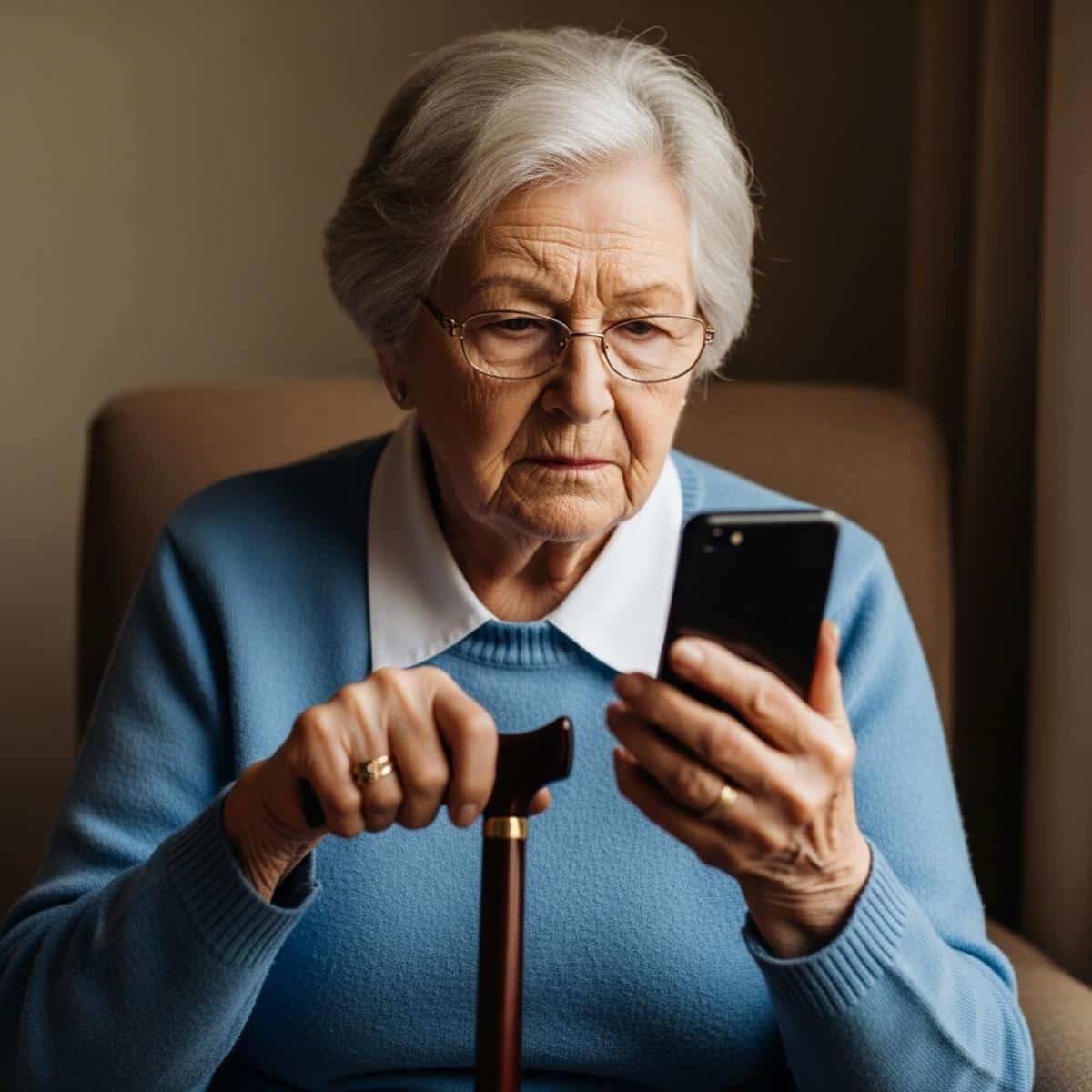
You Now Know the Trap — Here’s Your Next Step
Online dating after 60 isn’t reckless or naive. It’s a natural response to one of the most fundamental human needs: connection.
The risks are real. But they are also specific, predictable, and avoidable once you know what to look for.
Here’s a quick summary of what you now have:
- The reverse image search technique to verify any profile photo
- Five exact phrases that signal a scam in progress
- A clear checklist of what’s safe to share — and what isn’t
- The video call test that exposes stolen-photo scammers immediately
- Three specific platforms with distinct strengths for different needs
- A framework for involving family on your own terms
That knowledge doesn’t eliminate possibility — it protects it.
Your action for this week: Pick one thing from this list and do it today. Download one app. Try a reverse image search on a profile you’ve already seen. Share the red-flag phrases with a friend.
Companionship is worth pursuing. You now have the tools to pursue it safely.
Have you tried any of these apps, or do you have questions about navigating online dating? Share your experience in the comments — this is a judgment-free space, and your insight might help someone else take that first step with confidence.


![Keep feat elderly woman walker family living room conversation[1]](https://www.grayingwithgrace.com/wp-content/uploads/2026/05/KEEP-FEAT-elderly_woman_walker_family_living_room_conversation1-e1779544485375-450x300.jpg)

![Keep older couple computer woman cane protective[1]](https://www.grayingwithgrace.com/wp-content/uploads/2026/05/KEEP-older_couple_computer_woman_cane_protective1-e1778616055742-450x300.jpg)
![Group of seniors sharing simple grocery saving tips[1]](https://www.grayingwithgrace.com/wp-content/uploads/2026/01/group_of_seniors_sharing_simple_grocery_saving_tips1-e1769521429158-450x300.jpg)
![Elderly man with cane looking up recurring charge[1]](https://www.grayingwithgrace.com/wp-content/uploads/2026/01/elderly_man_with_cane_looking_up_recurring_charge1-e1769520115610-450x300.jpg)


