
![Older woman reading chord chart ukulele kitchen[1]](https://www.grayingwithgrace.com/wp-content/uploads/2026/01/older_woman_reading_chord_chart_ukulele_kitchen1-e1769443530357.jpg)
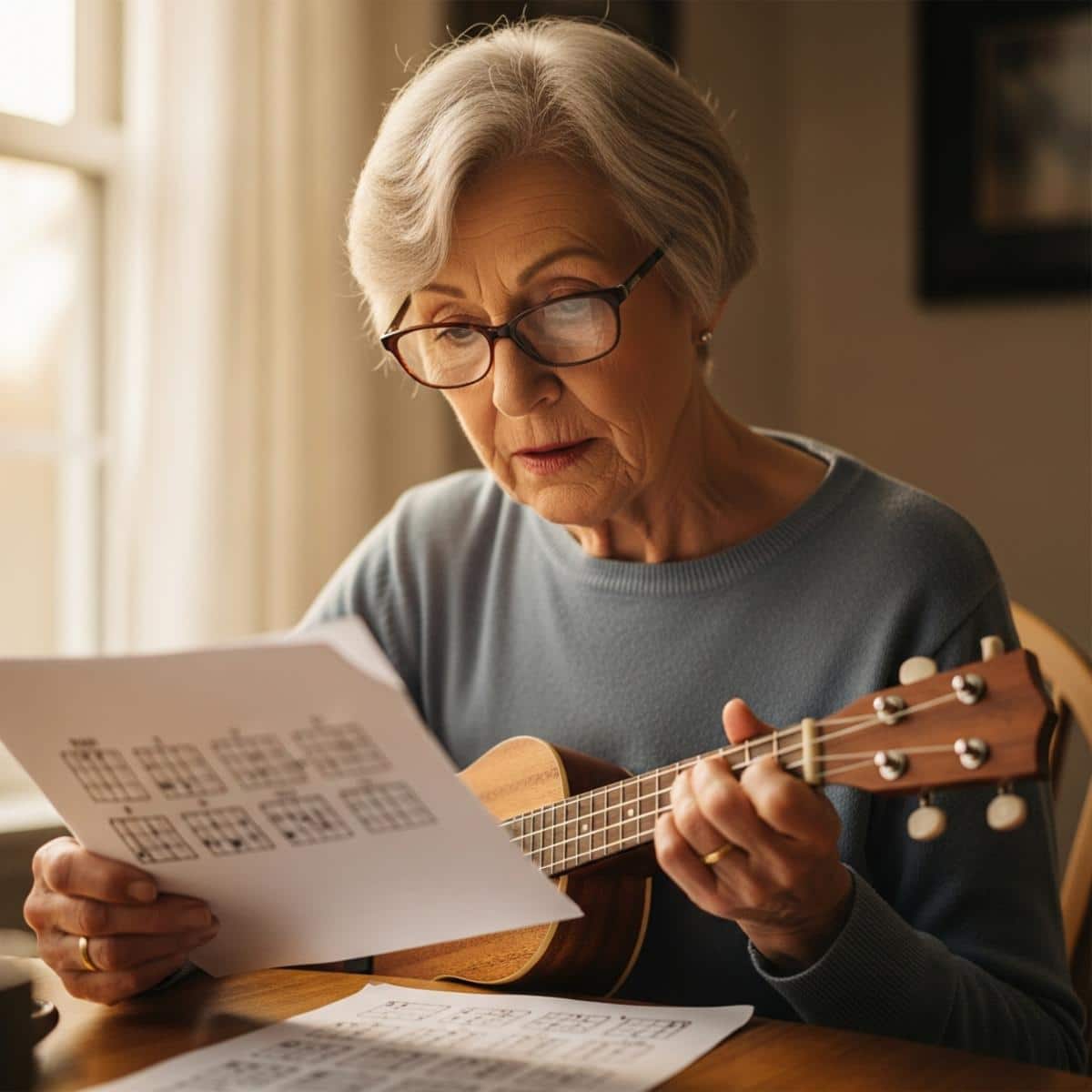
You’ve always wanted to play music. Maybe you hum along with the radio, or you watch musicians perform and think, “I wish I could do that.”
But whenever you consider starting, the same thoughts appear: “Piano takes years to learn,” “My hands aren’t what they used to be,” “I’m too old to start now.”
Here’s the truth: There’s an instrument that lets you play recognizable songs within weeks, costs less than $150, and is gentler on aging hands than any other option. It’s not piano. It’s not guitar.
And once you discover it, you’ll wonder why no one told you about it sooner.
Your First Month with Ukulele: The Complete Quick-Start Guide
Download your complete first-month ukulele roadmap with a realistic 15-minute daily practice schedule, the four chords that unlock 100+ songs, and troubleshooting solutions for every beginner frustration—so you can go from complete beginner to playing real songs in just four weeks.
Why Piano Isn’t the Best Starting Point (Despite What You’ve Heard)
Piano seems like the obvious choice. It’s what most people picture when they think about learning music.
But piano creates barriers that make it unnecessarily difficult for first-time older learners.
Your left hand and right hand must do completely different things simultaneously. That’s hard enough when you’re young—it’s exponentially harder when you’re learning music fundamentals for the first time after 60.
You’re also reading two different clefs at once. Treble clef for your right hand, bass clef for your left. Each uses different note positions. It’s like reading two languages simultaneously.
Then there’s cost. Even basic digital pianos start at $500. Acoustic pianos cost thousands. That’s a significant investment before you know if you’ll enjoy playing.
Pianos aren’t portable. You practice in one location, at one time. If your living room gets cold in winter or you want to play outside on a nice day, you’re out of luck.
Progress feels slow. Before you play recognizable songs, you’re drilling scales and reading theory. That takes months. Many people quit before they experience the joy of actually making music.
Understanding how to embrace new challenges in your later years helps you choose activities that build confidence rather than create frustration.
Piano is wonderful. But it’s not the best first instrument. Starting with something more approachable builds skills and confidence that can transfer to piano later—if you still want to learn it.


The Surprising Winner: Why the Ukulele Is Perfect for First-Time Senior Musicians
The ukulele offers the fastest path from “I’ve never played music” to “I’m actually playing songs.”
It has only four strings instead of six (guitar) or 88 keys (piano). Fewer strings mean simpler chord shapes and less to remember.
Those strings are soft nylon, not steel. Steel guitar strings hurt your fingertips until you build calluses. Nylon strings are gentle from day one—perfect if you have arthritis or sensitive skin.


The instrument weighs about one pound. You can carry it anywhere. Practice on your porch, in your living room, at a park, or while visiting grandchildren. Staying engaged through portable hobbies gives you flexibility that fixed instruments don’t.
Chord shapes require minimal finger strength and hand stretching. The fretboard is smaller than a guitar’s, so your fingers don’t need to stretch as far. Three or four simple chords unlock hundreds of songs.
You’ll play recognizable melodies within weeks. Most folk songs, oldies, and popular tunes use just three or four basic chords. Learn C, G, Am, and F—you can play dozens of songs immediately.
The cognitive benefits are real but don’t require years of commitment. Learning chord patterns, transitioning between shapes, and maintaining rhythm activates multiple brain regions simultaneously. You’re building new neural pathways every time you practice.
The ukulele accommodates arthritis and reduced hand mobility better than any other instrument. If you struggle with grip strength, you can still press nylon strings. If your fingers don’t bend as easily, the small fretboard requires less stretching.
What to Look for in Your First Ukulele
Soprano size (the smallest) is traditional but can feel cramped for larger hands. Concert size is slightly bigger and often more comfortable for adults. Both are lightweight and portable.
Expect to spend $50-150 for a quality starter instrument. Avoid the $20 toy versions—they won’t stay in tune and will frustrate you unnecessarily.
Brands like Kala, Cordoba, and Lanikai make excellent beginner ukuleles. Music stores let you hold different sizes to see what feels right.
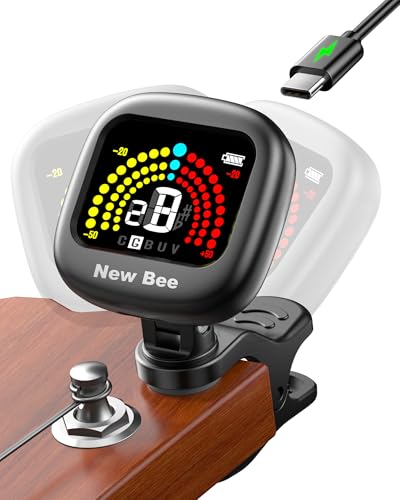
You’ll also want a clip-on tuner ($10-15), which ensures your instrument sounds right. A simple ukulele stand ($10-20) keeps it visible and accessible—instruments you see get played more often than ones hidden in closets.



Ready to discover more ways to stay mentally sharp and socially connected? Subscribe to our newsletter for expert advice on hobbies, health, and living fully in your later years.

What About Harmonica? (And Why It’s Not the Best First Choice)
Harmonica seems simple. It fits in your pocket. No strings, no frets, no complicated hand positions.
But it presents unexpected challenges for absolute beginners.
Breath control is harder than it looks. You’re not just blowing air—you’re controlling pressure, speed, and whether you’re inhaling or exhaling. When something sounds wrong, it’s difficult to know what you’re doing incorrectly.
There’s no visual feedback. With a ukulele, you see your fingers on frets and know exactly where you are. With harmonica, everything happens inside the instrument. You can’t watch what’s working or what’s not.
Chord variety is limited. Harmonicas are designed for specific keys. Want to play along with a song in a different key? You need a different harmonica. Serious players own multiple harmonicas, which gets expensive.
Social playing opportunities are fewer. Ukulele groups exist in nearly every community. Harmonica circles are rare. You’re more likely to practice alone.
Growth potential hits a ceiling quickly. Once you master basic melodies on one harmonica, advancing means buying more equipment and learning complex techniques like bending notes.
Harmonica has a place. It’s perfect for certain musical styles, especially blues and folk. But as a first instrument for learning music fundamentals, it’s less forgiving than the ukulele.
Making choices that support your independence means picking tools and hobbies that work with your abilities, not against them.
Consider harmonica as a second instrument once you understand rhythm, melody, and musical structure from learning ukulele first.

The Learning Curve: What to Realistically Expect in Your First Month
Week 1-2: You’re learning to hold the instrument comfortably and strum with a steady rhythm. Your fingers feel clumsy positioning chords. That’s completely normal. Every musician started exactly where you are.
Week 3-4: You’re playing three to five simple songs with basic chords. They might not sound perfect yet, but you recognize the melodies. That recognition creates a surge of motivation.
By the end of month one, you’re making actual music. Not練習 exercises—real songs you’ve heard on the radio.
Online learning resources make this faster than ever. YouTube channels like “Ukulele Teacher” and “The Ukulele Site” offer free lessons designed for adult beginners. Apps like Yousician provide interactive lessons with immediate feedback.
Short, consistent practice beats marathon sessions. Fifteen minutes daily produces better results than cramming an hour on Sundays. Your muscle memory needs regular repetition, not occasional intensity.
Mistakes don’t mean you can’t do this. They mean you’re learning. Every wrong finger position teaches your hands where the right position is. Every off-rhythm strum improves your sense of timing.
Learning new skills after 60 keeps your brain active and gives you a sense of purpose that extends beyond the music itself.
The cognitive benefits accumulate quickly. Learning chord transitions improves working memory. Maintaining rhythm while changing chords enhances coordination. Reading simple chord charts strengthens pattern recognition.
You’re not just playing music—you’re building new neural pathways that support overall cognitive health.
Recommended Learning Resources for Adult Beginners
For visual learners: “Bernadette Teaches Music” on YouTube offers clear, patient instruction specifically for older adults.
For structured learning: “Yousician” app provides gamified lessons that make practice feel like play.
For song-focused learning: “UkuTabs.com” offers thousands of songs with chord diagrams—find songs you love and learn by playing them.
For community learning: Check your local senior center, library, or community college for group ukulele classes. Learning alongside others provides accountability and encouragement.
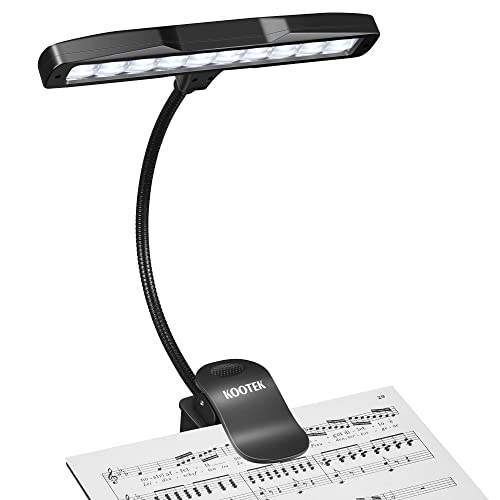
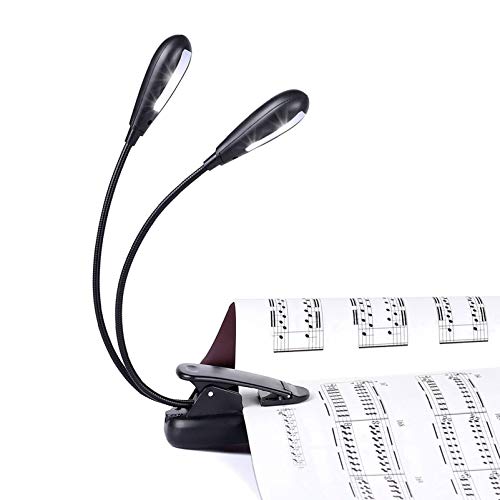
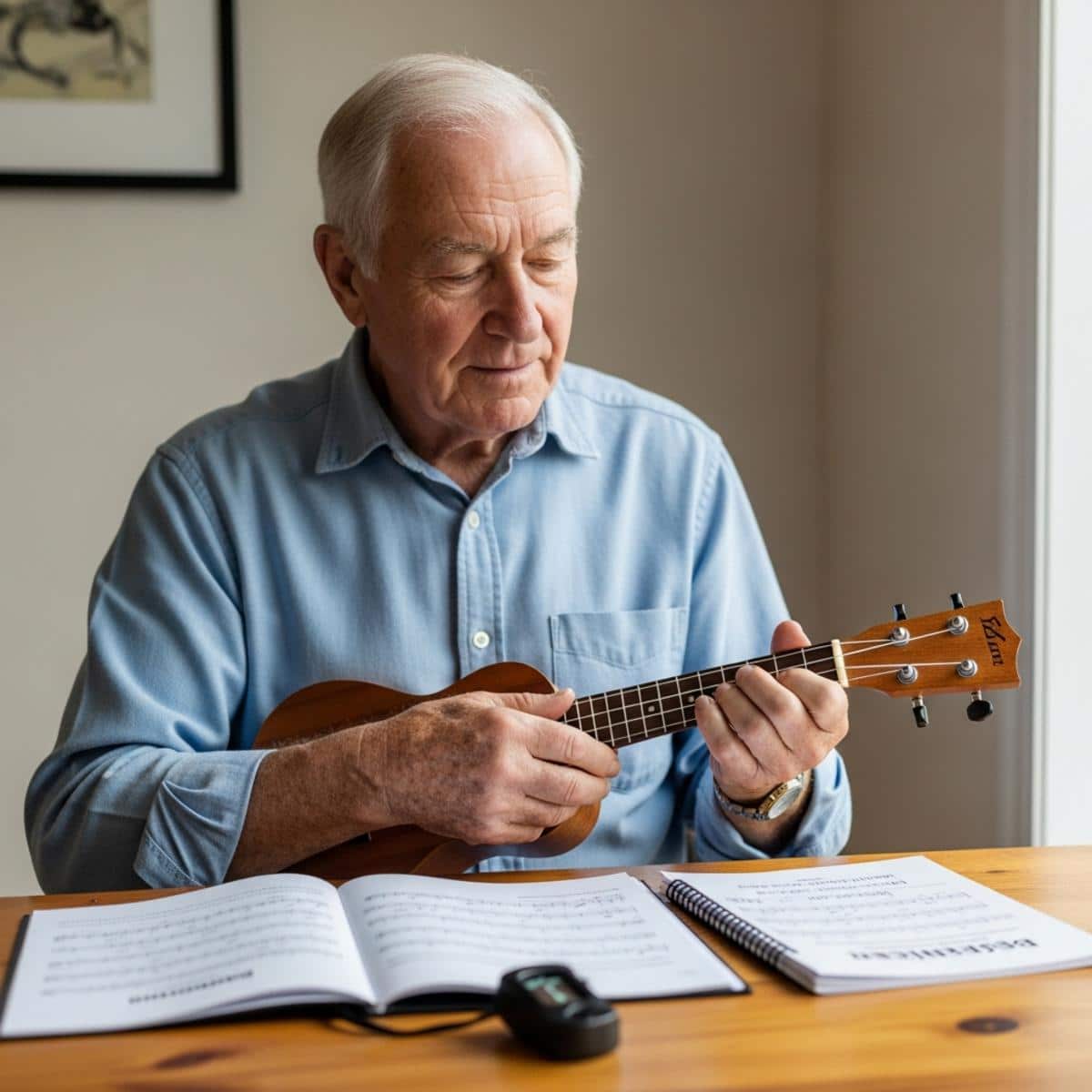
A simple music stand light ($15-20) extends practice time into evening hours when natural light fades. Beginner songbooks designed for ukulele include familiar songs with easy arrangements—you’ll recognize tunes immediately.



The Hidden Benefit: Community and Connection Through Music
Ukulele groups exist in nearly every community. Search “ukulele club near me” and you’ll find weekly gatherings where players of all levels meet, share songs, and enjoy making music together.
The instrument’s portability makes it perfect for gatherings. Bring it to family events, picnics, or community centers. You’re always ready to join in.
Easy singalong potential connects you with others naturally. People love singing along to familiar songs. Your ukulele becomes a catalyst for shared joy.
The lower intimidation factor encourages group playing. Unlike piano or guitar, ukulele feels approachable. Beginners aren’t afraid to try playing with others, even while still learning.
Online communities provide support and encouragement when you can’t attend in-person groups. Reddit’s r/ukulele and Facebook’s “Ukulele Underground” connect thousands of players sharing tips, songs, and encouragement.
Fighting isolation through meaningful activities becomes easier when your hobby naturally creates social opportunities.
You’re not just playing for others—you’re playing with others. That’s the difference between performing and connecting.
Shared learning creates new friendships. The person struggling with the same chord transition you just mastered becomes someone you help. The player who’s been playing for years becomes someone who helps you. Those interactions build community.
Music breaks down age barriers too. Ukulele groups welcome everyone from teenagers to retirees. Your age becomes irrelevant when everyone’s focused on making music together.
Start Your Musical Journey This Week
The ukulele offers the most accessible path to making music for first-time senior musicians. Quick progress keeps you motivated. Gentle learning curve respects your current abilities. Rich social opportunities connect you with others.
It’s never too late to learn music. The belief that you’ve “missed your window” is simply wrong. Adults bring patience, dedication, and life experience to learning that children don’t possess. Those qualities are advantages, not disadvantages.
Choosing the right instrument makes the difference between frustration and joy. Piano intimidates many people away from music entirely. Ukulele invites them in.
Embracing new experiences after 60 opens doors you didn’t know existed—including the door to making music.
Your first step is simple: Visit a local music store and hold a concert-size ukulele. Feel the weight. Try strumming the strings. Ask to hear what it sounds like in tune.
If buying feels premature, check your library. Many libraries loan instruments for free. Try it for a month with zero financial commitment.
Find one YouTube tutorial for absolute beginners and watch it this week. You don’t need to memorize anything. Just watch and imagine yourself doing what they’re teaching.
Search for “ukulele groups near me” and mark the next meeting on your calendar. You don’t have to attend yet. Just know when and where they meet. Having that information removes one barrier to joining later.
Your First Month with Ukulele: The Complete Quick-Start Guide
Download your complete first-month ukulele roadmap with a realistic 15-minute daily practice schedule, the four chords that unlock 100+ songs, and troubleshooting solutions for every beginner frustration—so you can go from complete beginner to playing real songs in just four weeks.
The dream of making music doesn’t have to stay a dream. You can be playing recognizable songs by this time next month.
Start this week. Your future musical self will thank you.
What’s stopping you from starting your musical journey? Have you tried learning an instrument before? Share your experience in the comments—your story might encourage someone else to finally take that first step.
![Grandfather autumn puzzle daylight[1]](https://www.grayingwithgrace.com/wp-content/uploads/2025/10/grandfather_autumn_puzzle_daylight1-e1761043151497-450x300.jpg)


