
![Senior couple cold porcht thermal mugs[1]](https://www.grayingwithgrace.com/wp-content/uploads/2025/12/senior_couple_cold_porcht_thermal_mugs1-e1767121617380.jpg)
You bundle up in your favorite sweater, turn up the heat, and settle in with a good book. Dehydration? That’s a summer problem, right?
Here’s what might surprise you: winter is when older adults face their highest dehydration risk. While you’re watching for icy walkways and cold-related dangers, your body is quietly losing moisture in ways you’d never expect. Winter brings multiple health challenges for seniors, and dehydration is one of the most overlooked.
The hidden cost?
Winter dehydration triggers falls, UTIs, medication complications, and that afternoon brain fog you’ve been blaming on age.
But here’s the good news: your body is sending you three clear signals right now, and once you know what to look for, prevention becomes surprisingly simple.

The 3 Dehydration Warning Signs Hiding in Plain Sight
Your body is trying to tell you something, but winter makes the message easy to miss.
Signal #1 is right there in the mirror. Persistent dry mouth and cracked lips aren’t just winter annoyances. If your lips stay dry even after applying lip balm, or if that parched feeling greets you each morning and doesn’t improve after one glass of water, your body is waving a red flag.
Signal #2 requires a simple bathroom check. Yes, morning urine is naturally darker, but here’s what matters: if your urine stays dark yellow or amber after 10am despite drinking normally, you’re dehydrated. This is one of your most reliable indicators because it bypasses the unreliable thirst mechanism.
Signal #3 shows up in your afternoon routine. Do you struggle to focus on your crossword puzzle around 2pm? Feel unusually tired during your favorite TV show? Before dismissing it as age, notice the pattern. Dehydration fatigue typically strikes in the afternoon, comes with a slight headache or difficulty concentrating, and improves noticeably when you increase fluids. If you’re experiencing persistent afternoon energy crashes, hydration might be a key piece of the puzzle.
Check yourself right now. How many of these signals are you experiencing today?

Why Your Heated Home Is Secretly Stealing Your Hydration
The culprit isn’t what you’d expect—it’s the very system keeping you warm.
Forced air heating strips moisture from your indoor air, creating humidity levels as low as 17-25% when your body needs 40-50% to maintain healthy hydration. Every breath you take in this desert-like environment pulls moisture from your body. You’re losing one to two cups of water daily just from breathing dry indoor air.
But it gets more complex. Cold outdoor air holds even less moisture, so every time you step outside, your body must humidify and warm each breath before it enters your lungs. This invisible moisture loss never triggers thirst—you’re dehydrating without any warning bells.
Your winter wardrobe plays a surprising role too. Those cozy layers cause mild perspiration that evaporates quickly in dry indoor air. You don’t feel sweaty, so you don’t think to replace the fluids. Temperature shifts between cold outdoors and warm indoors stress your body’s hydration balance further.
The final blow? Your thirst sensation naturally decreases with age, and cold weather suppresses it even more. By the time you actually feel thirsty in winter, you’re already moderately dehydrated.
Ready to discover more innovative strategies for healthy, comfortable aging? Subscribe to our newsletter for expert-tested tips and product recommendations designed specifically for older adults.
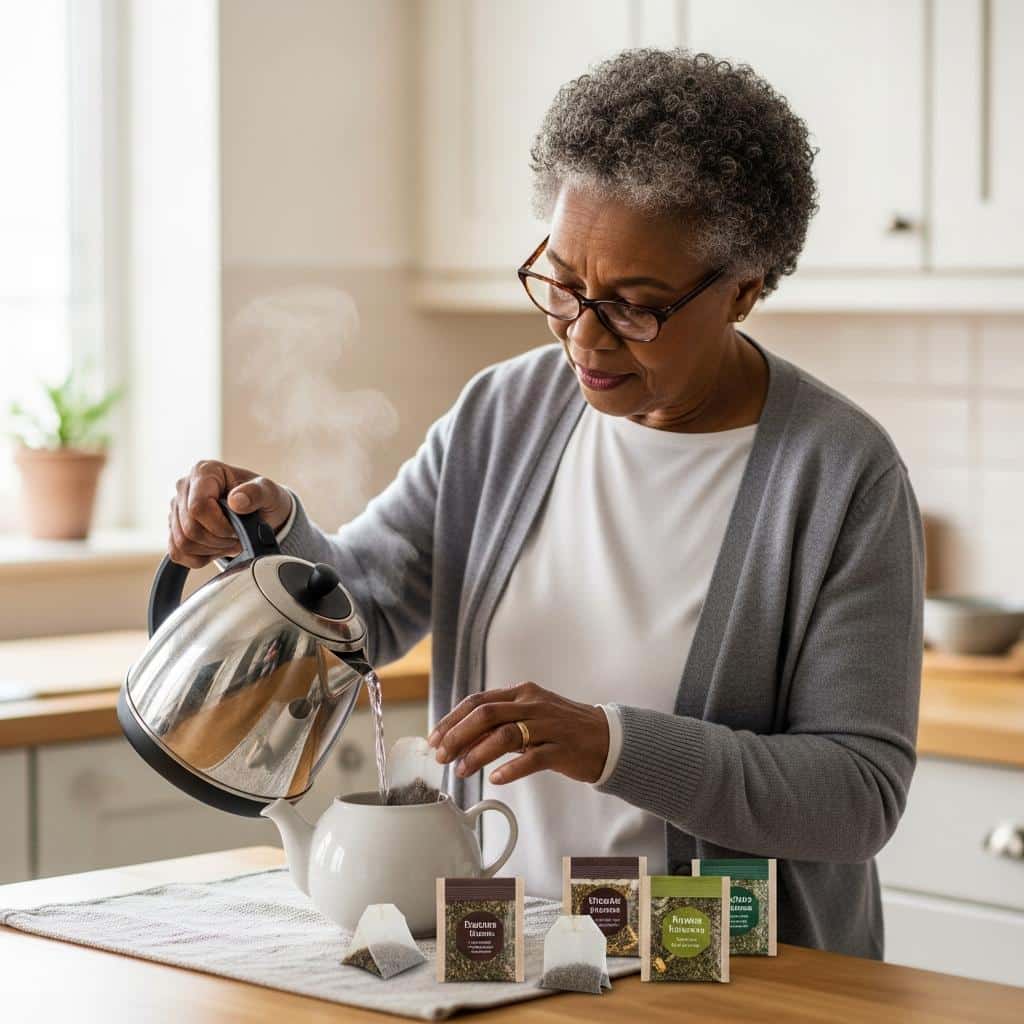
The Medication Factor That Multiplies Your Winter Dehydration Risk
If you take daily medications, winter dehydration becomes even more serious.
Certain medication classes actively pull fluid from your body. Diuretics for blood pressure or heart failure, antihistamines for allergies and colds, some blood pressure medications, and certain diabetes drugs all increase fluid loss. This isn’t a medication problem—it’s a hydration awareness issue.
Here’s where winter becomes dangerous: medication-induced fluid loss compounds with winter’s natural dehydration factors. If your medication makes you lose fluid AND winter suppresses your thirst AND heating dries your environment, dehydration accelerates dramatically. The same medication regimen that worked perfectly in summer can leave you feeling foggy, fatigued, or dizzy in winter.
Consider this scenario: you take a diuretic for blood pressure and an antihistamine for seasonal stuffiness. You’re losing fluid from both medications while your thirst mechanism is already dampened by cold weather. That afternoon confusion or unexpected fatigue isn’t mysterious—it’s your dehydrated brain struggling to function.
Talk with your doctor or pharmacist specifically about your winter hydration needs. Ask these exact questions: “Does this medication increase my fluid requirements? How much extra should I be drinking in winter months?” If you’re taking multiple medications, understanding safe medication practices becomes even more important for managing your overall health. Understanding your medication schedule helps you plan hydration strategically.
The Warm Fluid Strategy That Makes Winter Hydration Effortless
Here’s the breakthrough that changes everything: warm fluids work with winter, not against it.
Your body and brain crave warmth when it’s cold outside. Fighting this natural desire by forcing yourself to drink cold water creates an uphill battle you’ll eventually lose. But warm beverages? They’re appealing, comforting, and your body absorbs them just as effectively as cold water.
Your best options include herbal tea (choose non-caffeinated varieties like chamomile, peppermint, or ginger), warm water with fresh lemon, clear broths (select low-sodium chicken or vegetable versions for bonus electrolytes), decaf coffee, and warm milk or plant-based alternatives. Each cup counts toward your daily hydration while satisfying that winter craving for warmth.
Make it automatic with an hourly schedule that works with your natural rhythm. Start with eight ounces upon waking, before breakfast. Add eight ounces mid-morning around 10 or 11am. Include eight ounces with lunch, another eight ounces mid-afternoon between 2 and 3pm, eight ounces with dinner, and a final six ounces in early evening—not too late to avoid nighttime bathroom trips. This schedule gives you approximately 54 ounces from planned drinking, supplemented by moisture from food.
Set yourself up for success. Keep a kettle or electric hot water dispenser within easy reach. Prepare herbal tea bags in advance so making a cup requires minimal effort. Set phone reminders for your hydration times until the habit feels natural.
Instead of forcing cold water when it’s 35 degrees outside, keep a thermal carafe of herbal tea at your reading chair. You’ll sip consistently when the beverage matches what your body craves.
Ready to discover more innovative strategies for healthy, comfortable aging? Subscribe to our newsletter for expert-tested tips and product recommendations designed specifically for older adults.

Creating Your Complete Winter Hydration Environment
Combine drinking strategies with environmental solutions for total winter hydration protection.
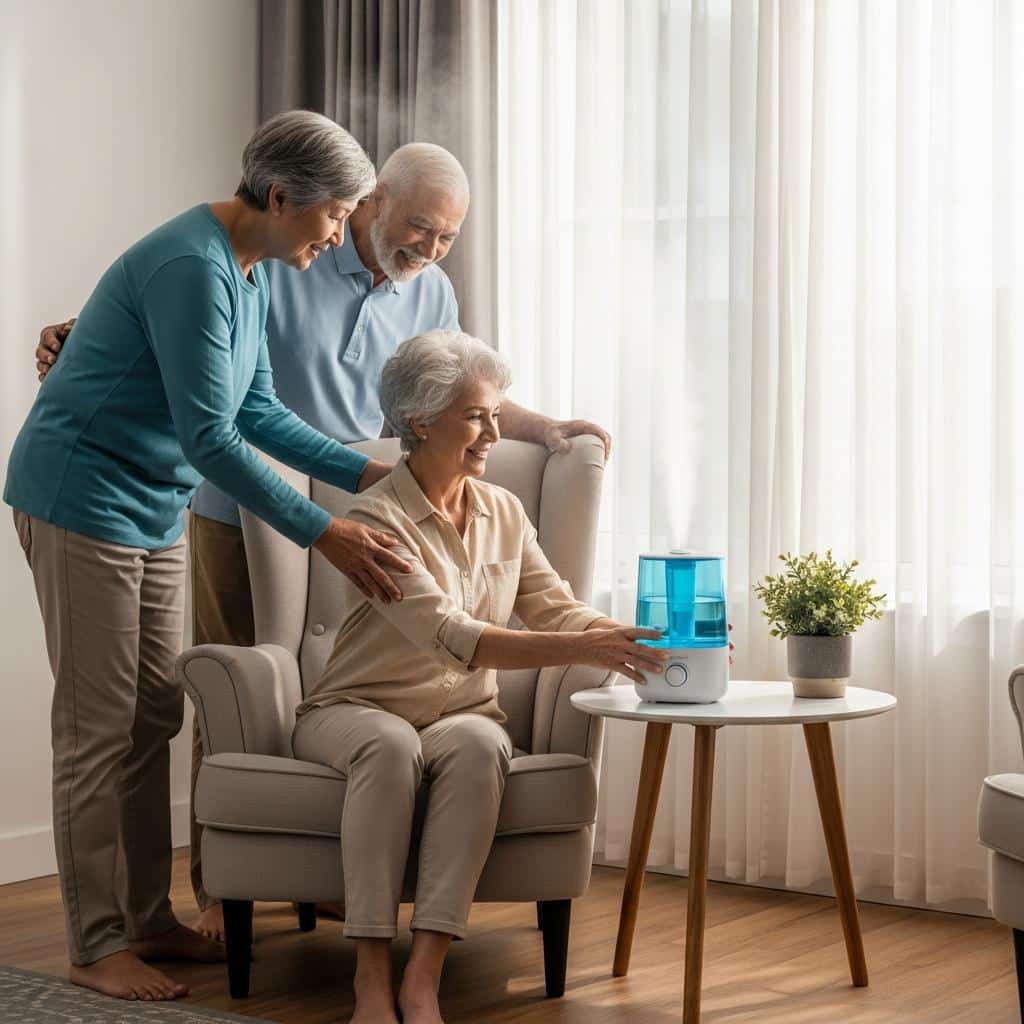
Start with strategic humidifier placement in your three priority rooms. Your bedroom comes first—you spend seven to nine hours there nightly, breathing that dry heated air continuously. Add your main living area next, then any room with significant heating vent exposure. Aim for 40-50% humidity, measured with an inexpensive hygrometer available at any hardware store. While you’re thinking about winter home safety, understanding proper indoor temperature settings is equally important for your overall wellbeing.
Budget-friendly cool-mist humidifiers work well for single rooms at 30 to 50 dollars. Console humidifiers handle larger spaces for 80 to 150 dollars. Whole-house systems provide comprehensive solutions if you’re ready for that investment. Whatever option you choose, clean your humidifier every three days to prevent bacteria and mold growth.
When thirst sensation becomes unreliable, visual tracking systems become essential. Try the rubber band method: start your day with several rubber bands on your left wrist, moving one to your right wrist each time you finish a glass. Use water bottles with time markers printed on the side showing when you should reach each level. Set smartphone hydration reminder apps. Keep a simple checkmark chart on your refrigerator.
Know when to act fast. Self-treat mild symptoms like dry mouth, slight headache, or dark urine by drinking eight ounces of water or electrolyte drink every 20 minutes for the first hour, then resume your normal schedule. But call your doctor immediately for severe confusion, extreme fatigue, dizziness upon standing, very dark urine that doesn’t improve with increased fluids, or rapid heart rate. These require professional evaluation.
Take Control of Your Winter Hydration Today
Check yourself right now for those three warning signs: look at your lips for persistent dryness, check your urine color from this morning’s bathroom visits, and assess how you felt this afternoon.
Choose ONE strategy to start immediately. Either set up your warm fluid system with a thermal carafe and herbal tea selection, OR begin the hourly hydration schedule with phone reminders, OR install a humidifier in your bedroom tonight. Starting small beats trying everything at once and feeling overwhelmed.
This isn’t just about drinking more water—it’s about protecting your independence, preventing falls, supporting your medication effectiveness, and keeping your mind sharp. Winter dehydration can significantly impact cognitive function, making proper hydration essential for mental clarity. Winter hydration is completely manageable when you understand your body’s signals and work with simple systems that feel natural.
What winter hydration strategies have worked best for you? Have you noticed dehydration symptoms you’d been dismissing as normal aging? Share your experience in the comments below—your insight might help someone else recognize what they’ve been missing.
![Senior woman bedroom window breakfast journaling[1]](https://www.grayingwithgrace.com/wp-content/uploads/2025/12/senior_woman_bedroom_window_breakfast_journaling1-e1767122246503-450x300.jpg)
![Senior woman video call weekly checkin[1]](https://www.grayingwithgrace.com/wp-content/uploads/2025/12/senior_woman_video_call_weekly_checkin1-e1767120242595-450x300.jpg)
![Senior woman window coffee cozy[1]](https://www.grayingwithgrace.com/wp-content/uploads/2025/12/senior_woman_window_coffee_cozy1-e1767119963869-450x300.jpg)
![Older group herbal tea infusion winter social[1]](https://www.grayingwithgrace.com/wp-content/uploads/2025/12/older_group_herbal_tea_infusion_winter_social1-e1767119761234-450x300.jpg)
![Senior woman step stool safe closet declutter[1]](https://www.grayingwithgrace.com/wp-content/uploads/2025/12/senior_woman_step_stool_safe_closet_declutter1-e1767118700445-450x300.jpg)
![Older couple reviewing bills together[1]](https://www.grayingwithgrace.com/wp-content/uploads/2025/12/older_couple_reviewing_bills_together1-e1767118045107-450x300.jpg)
![Elderly couple garden bench rest[1]](https://www.grayingwithgrace.com/wp-content/uploads/2025/12/elderly_couple_garden_bench_rest1-e1767102641150-450x300.jpg)
![Senior woman with walker holiday grocery[1]](https://www.grayingwithgrace.com/wp-content/uploads/2025/12/senior_woman_with_walker_holiday_grocery1-e1765212886497-450x300.jpg)


