
![Senior couple testing microwave doors[1]](https://www.grayingwithgrace.com/wp-content/uploads/2025/12/senior_couple_testing_microwave_doors1-e1765215776583.jpg)
If twisting that microwave door handle makes you wince, or if your fingers ache after punching in cooking times, here’s something you need to know: the problem isn’t your hands—it’s your microwave.
Nearly half of all adults over 65 experience some form of arthritis. Yet most of us are still using microwaves designed decades ago, before manufacturers understood how painful those stiff buttons, tight door handles, and complicated controls could be.
But here’s the surprising part: modern microwaves have evolved dramatically to address these exact challenges. Most people just don’t realize how much has changed.
What if you could reheat your coffee with a single tap instead of five button presses?
What if opening the microwave door didn’t require that painful twisting grip?
These aren’t futuristic fantasies—these features exist right now, and they could transform your daily cooking comfort.
The 5 Game-Changing Features Your Old Microwave Doesn’t Have
Modern microwave technology has come a long way from those clunky dials and hard-to-press buttons you might remember.
Let me walk you through the features that make the biggest difference for arthritic hands.
One-Touch Sensor Cooking
No more guessing cooking times or punching in multiple numbers. Modern sensor cooking detects steam and moisture to calculate the perfect cooking time automatically.
Instead of pressing 3-0-0-START to reheat your soup, you simply press “Beverage” or “Reheat” once. The microwave figures out the rest.
Large Flat Touch Panels
Smooth, sensitive surfaces that respond to the lightest touch have replaced those stiff, hard-to-press buttons.
You’re not forcing arthritic fingers to push down on resistant buttons anymore. A gentle tap is all it takes.
Handle-Free Door Opening
This might be the biggest game-changer of all. Push-to-open mechanisms eliminate the twisting, pulling motion that triggers hand pain.
A simple push releases the door, and it swings open smoothly. No gripping, no twisting, no wincing.
Voice Control Integration
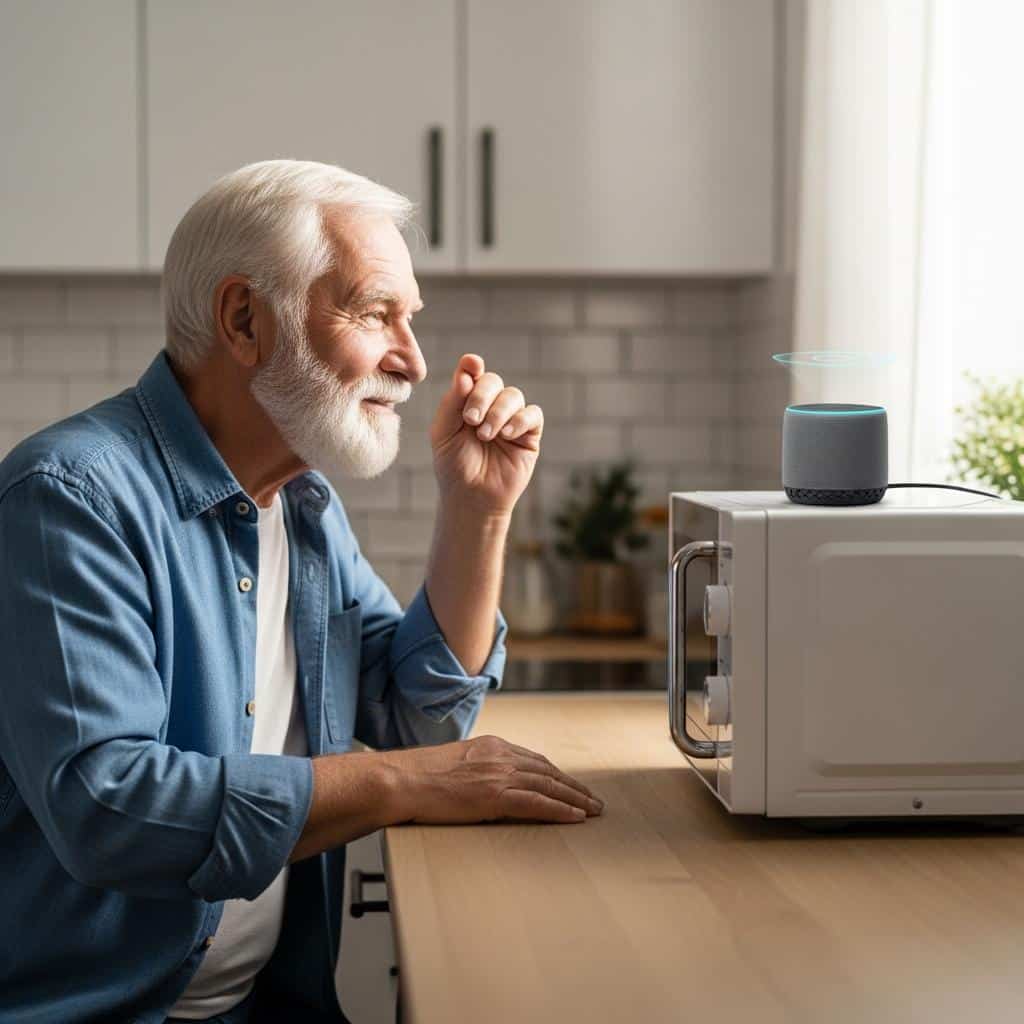
Many newer microwaves connect with Alexa or Google Assistant. You can literally say “heat my coffee for one minute” and it happens.
For those mornings when your hands are particularly stiff, voice control means you don’t have to touch anything at all. If you’ve been hesitant about embracing voice assistant technology, a voice-enabled microwave can be a perfect, low-pressure way to start.
Memory Function Buttons
Program your most-used settings once—your morning oatmeal, afternoon tea, evening leftovers—then activate them with a single touch.
Instead of re-entering cooking times daily, you press one button and you’re done.
Why the Door Design Matters More Than You Think
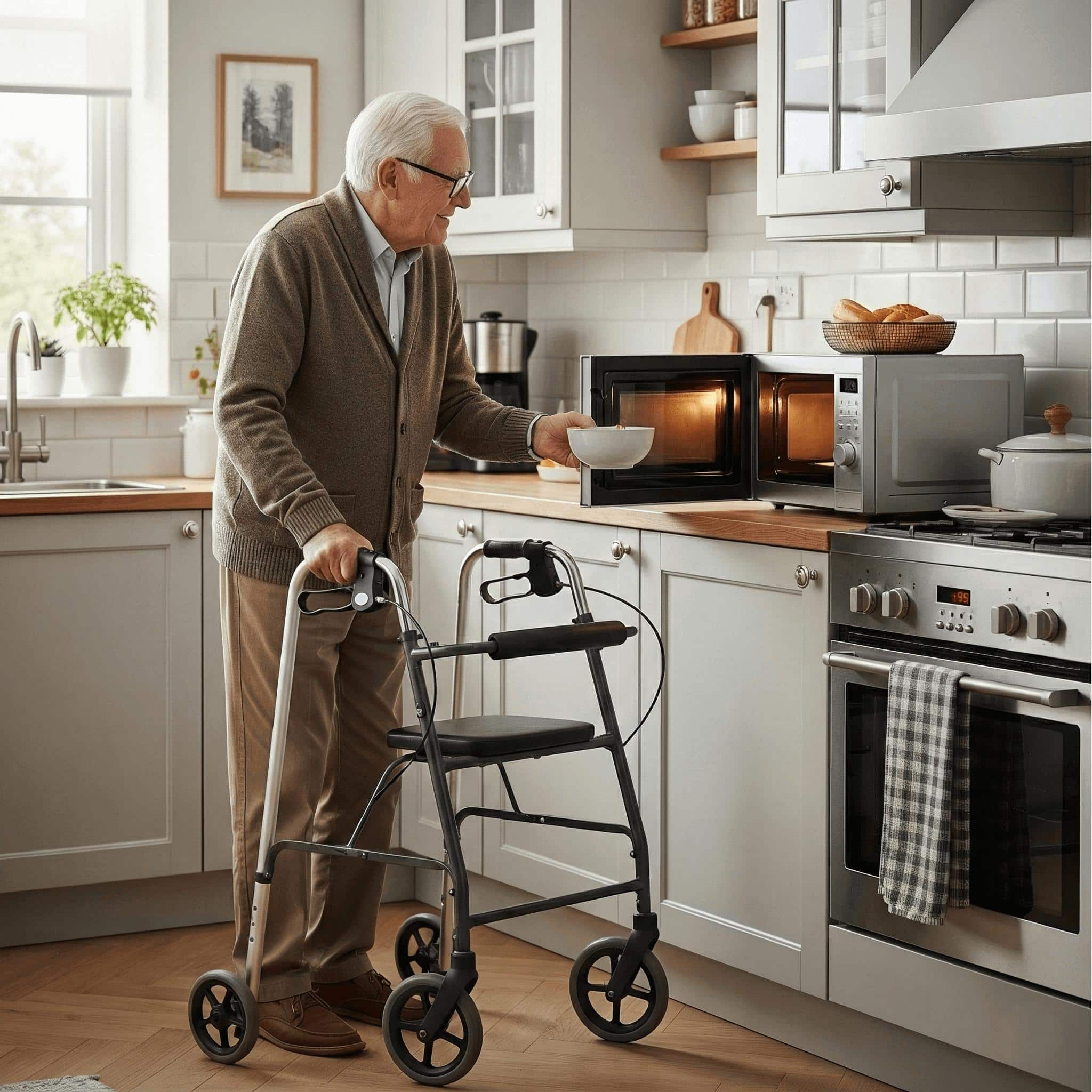
Let’s talk about something most people never consider when buying a microwave: how you open the door.
Think about how many times you open your microwave in a typical day. Morning coffee, reheating breakfast, warming lunch, heating water for tea, reheating dinner leftovers—easily 6 to 10 times daily.
That’s over 3,000 door openings per year. Each one requiring that same grip-and-twist motion that aggravates arthritis.
Traditional pull handles force you to grip tightly, then twist your wrist while pulling. This combination puts stress on every joint in your hand and wrist.
Push-button release doors change everything. A simple push with your palm or even your elbow triggers the release. The door opens smoothly without requiring any gripping or twisting.
Some high-end models even feature automatic opening with just a touch sensor. You barely make contact and the door releases itself.
Drop-down doors, though less common in countertop models, use gravity to assist the opening motion. You’re working with physics instead of against your joints.
The bottom line: If opening your microwave hurts, you’re not imagining it, and you’re not being overly sensitive. The design is genuinely working against you.
Ready to discover more innovative strategies for healthy, comfortable aging? Subscribe to our newsletter for expert-tested tips and product recommendations designed specifically for older adults.
Sensor Cooking: The Feature That Eliminates Button Pressing
Let me explain how sensor cooking actually works, because once you understand it, you’ll wonder how you ever managed without it.
Traditional microwaves require you to estimate cooking time, punch in the numbers (often multiple buttons), and then monitor the results. If you guessed wrong, you’re pressing more buttons to add time.
Sensor cooking uses humidity sensors to detect when food reaches the right temperature. You press one button—”Popcorn,” “Potato,” “Beverage,” “Reheat”—and the microwave handles everything else.
Here’s the practical impact: Instead of pressing 2-3-0-START (four button presses), you press “Beverage” once. That’s an 80% reduction in button pressing right there.
No more second-guessing yourself mid-cooking. No more stopping to add 30 more seconds because you underestimated. No errors from finger slippage on number pads.
For those moments when brain fog makes you wonder “Did I start it or not?”, sensor cooking eliminates that confusion. One press, and it’s working.
Many older adults tell me they avoided using their microwave because figuring out the right timing felt overwhelming. Sensor cooking removes that entire mental burden. And when you’re dealing with daily arthritis pain that affects multiple aspects of life, reducing even small sources of frustration can make a meaningful difference.
The Right Containers Make All the Difference
Even the best microwave won’t help much if you’re struggling with heavy, awkward containers.
Let’s talk about what makes containers arthritis-friendly.
Look for These Design Features
Large, easy-grip handles with soft-touch or textured surfaces give you something substantial to hold. You’re not pinching narrow edges with painful fingers.
Lightweight materials matter more than you might think. Modern BPA-free plastics and thin borosilicate glass are surprisingly durable while being much lighter than traditional ceramics.
A container that feels light when empty might feel quite heavy when full of soup. Test the weight of your favorite portions before committing to a purchase. If you’re also managing cognitive changes alongside physical challenges, simple adaptive kitchen tools can make mealtime significantly easier for everyone involved.
Wide-mouth openings make removing food easier. You’re not trying to reach into narrow containers with a spoon, risking burns and spills.
Steam-vent lids eliminate wrestling with plastic wrap or dealing with vented containers that leak. Built-in venting just works.
The Tools That Help
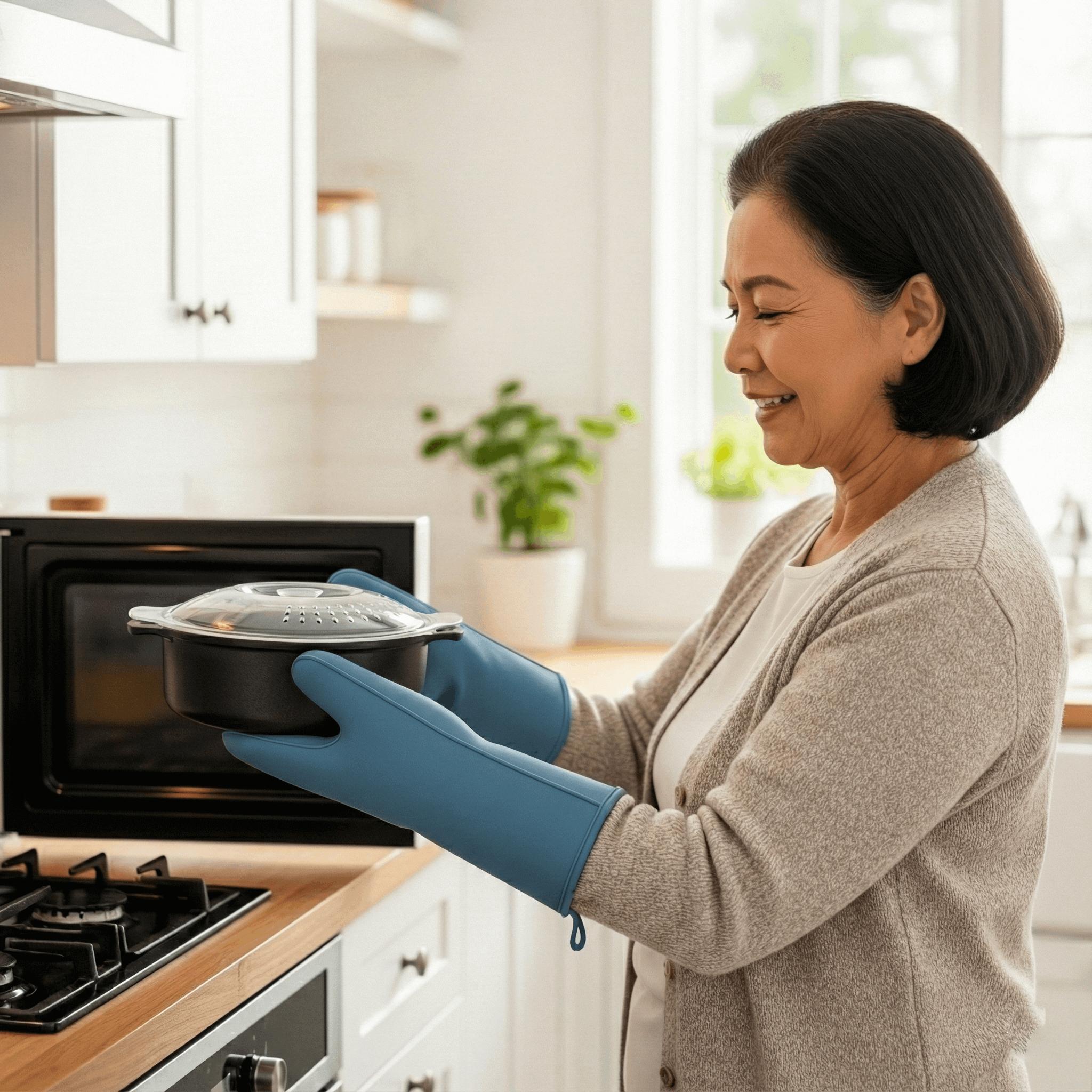
Silicone oven mitts with textured grips provide much better hold than traditional cloth mitts, especially when your hand strength is reduced.
The texture prevents slipping, and the flexibility conforms to your grip rather than requiring you to maintain a rigid hold.
Plate covers with easy-lift tabs beat standard covers that require pinching and lifting simultaneously. Look for handles you can hook with one or two fingers.
A Safety Note
Always use the two-hand carry method for removing hot dishes, even if you think you can manage with one hand. Hot containers are less forgiving of small grip failures.
And remember: lightweight doesn’t mean fragile. Modern materials are engineered for durability. Don’t avoid them thinking they won’t last—they often outlast heavier alternatives.

3 Microwaves We Actually Recommend for Arthritic Hands
Let me share three specific models that excel in arthritis-friendly features. These represent different price points so you can find an option that fits your budget.

This model features smart sensor cooking with 10 power levels and multiple auto-cook menus. The control panel uses large, clearly labeled buttons that respond to light pressure.
While it has a traditional door handle rather than push-button release, the handle is rubberized and requires less grip strength than older models.
The size is perfect for most kitchens at 1.2 cubic feet, and the LED display is large and easy to read.
Trade-off: No voice control integration, and the door still requires some grip strength to open.
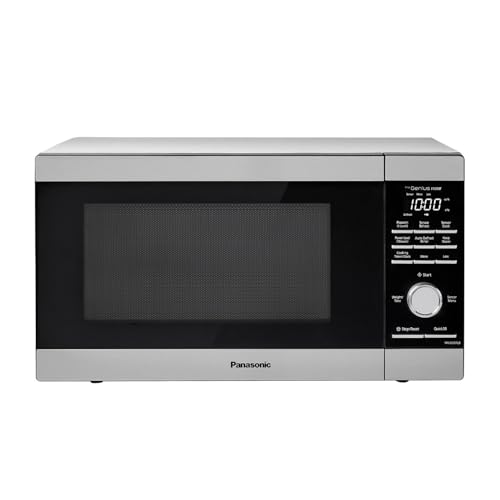
Panasonic’s inverter technology provides more consistent heating, and the genius preset buttons reduce button pressing dramatically.
The control panel features large, flat buttons that respond to minimal pressure. The button layout is logical and well-spaced, reducing accidental presses.
This model includes the push-button door release—a simple press near the handle releases the door smoothly. This single feature might justify the extra cost if door opening is particularly painful for you.
Trade-off: Still no voice control, and it’s a larger unit that takes up more counter space.
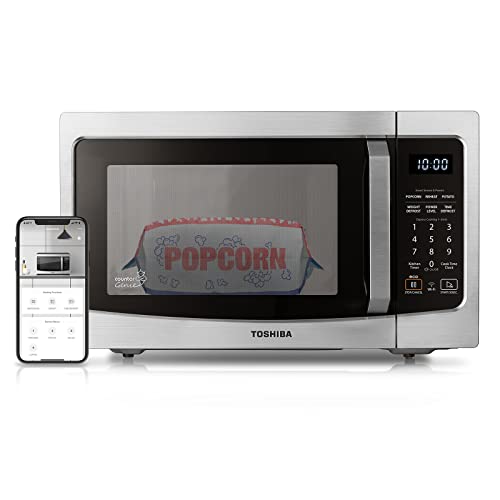
Here’s a surprise: you don’t need to spend a fortune for voice control. Amazon’s smart microwave integrates seamlessly with Alexa-enabled devices you might already own.
Say “Alexa, microwave for two minutes” or “Alexa, add 30 seconds,” and it responds. For mornings when your hands are particularly stiff, this is transformative.
The caveat is that it’s a more basic microwave otherwise—traditional door handle, smaller capacity (0.7 cubic feet), and simpler features overall. But if you’ve been resistant to technology in the past, this affordable entry point might change your mind when you experience how much easier daily tasks become.
Trade-off: Requires an Alexa device (Echo Dot, Echo Show, etc.) to access voice features. Basic functionality compared to higher-end models.
Which Features Matter Most?
If you can only afford one upgrade, prioritize this way:
Most impact for arthritis: Push-button door release
Best value for daily ease: Sensor cooking
Worth it if hands are very stiff: Voice control
Don’t feel pressured to buy the most expensive option. Match features to your actual cooking habits. If you mainly reheat coffee and leftovers, you don’t need every premium feature.
Ready to discover more innovative strategies for healthy, comfortable aging? Subscribe to our newsletter for expert-tested tips and product recommendations designed specifically for older adults.
Your Next Steps to Easier Cooking
You don’t have to continue struggling with equipment that works against you.
If You’re Ready to Buy a New Microwave
Start by identifying which feature would make the biggest difference in your daily life. Is it the door opening? The button pressing? The mental load of figuring out cooking times?
If possible, visit a store to test door mechanisms in person. Press the buttons, feel the weight of the door, check if you can read the display clearly.
Shopping online? Look for retailers with generous return policies. You want the option to return if the controls aren’t as easy as described.
If You’re Not Ready to Buy Yet
You can still make improvements to your current setup. Add a rubber grip aid to your microwave door handle for better grip without the pain.
Upgrade your containers to lightweight, easy-grip options. That alone can reduce daily frustration significantly.
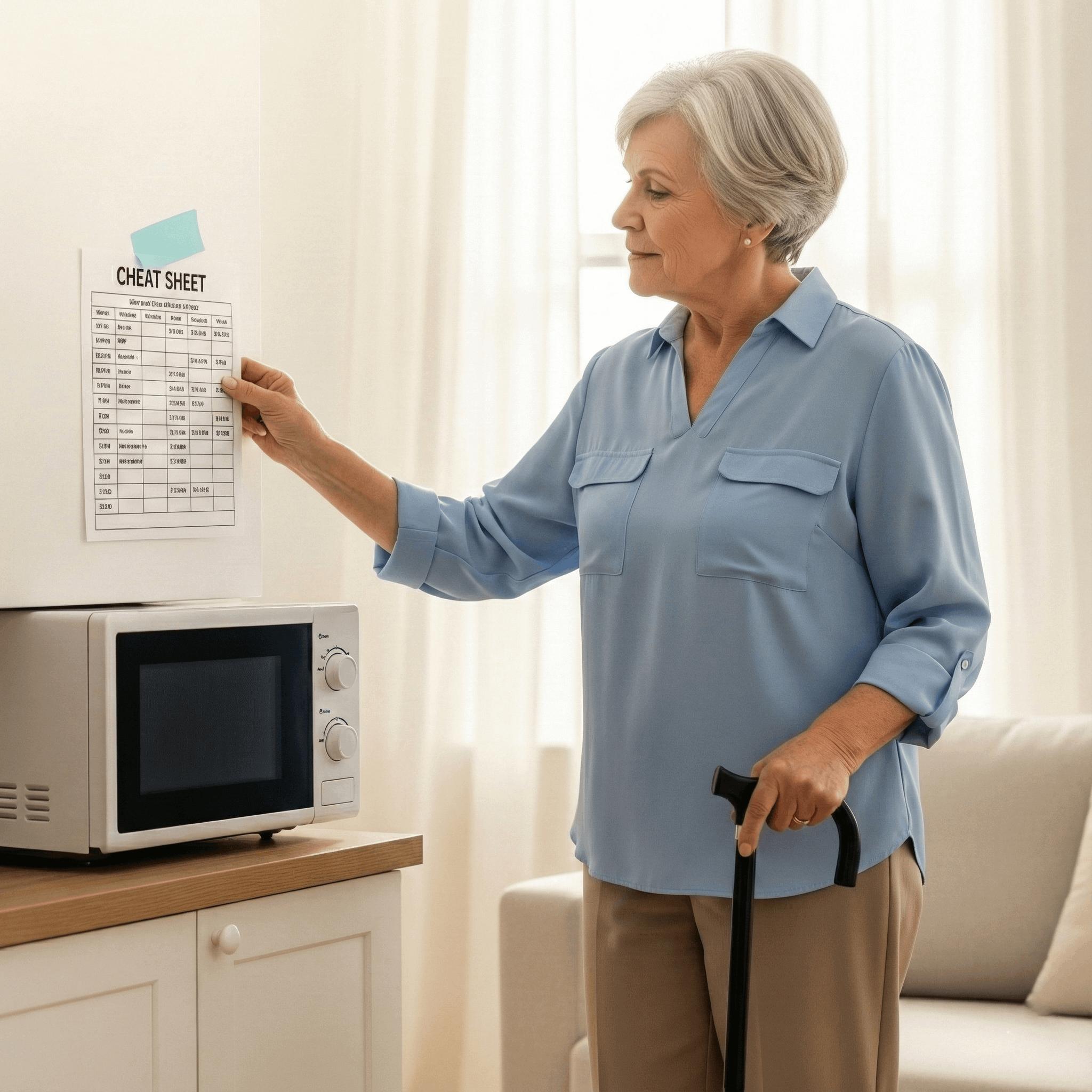
Create a cheat sheet of your most-used cooking times and tape it near your microwave. Reducing mental load helps when your hands are hurting and your patience is thin.
When to Reconsider
If daily cooking pain is limiting what you eat or making you avoid the kitchen entirely, it’s time for a change.
Your independence in the kitchen matters. Maintaining your ability to prepare meals safely is a crucial part of aging in place successfully. Adapting your tools isn’t giving up—it’s making smart choices that let you keep doing what you love.
Keep Cooking with Confidence
Cooking should bring you joy, not pain.
Modern microwave technology has evolved specifically to address the challenges you’re facing. These aren’t gimmicks or unnecessary luxuries—they’re thoughtful design improvements that recognize the real needs of real people.
You deserve equipment that works with your hands, not against them.
Whether you upgrade your microwave tomorrow or make small adaptations to your current setup, remember this: adapting your tools is a sign of wisdom, not weakness.
What microwave features have made the biggest difference for you? Or what challenges are you still facing in the kitchen? Share your experience in the comments below—your insight might help someone else find the solution they’ve been looking for.

![Older man cane eating quick microwave meal[1]](https://www.grayingwithgrace.com/wp-content/uploads/2025/12/older_man_cane_eating_quick_microwave_meal1-e1767119019397-450x300.jpg)
![Elderly man walker junk drawer rubber band 1[1]](https://www.grayingwithgrace.com/wp-content/uploads/2025/12/elderly_man_walker_junk_drawer_rubber_band-11-e1765808720869-450x300.jpg)
![Elderly black woman angled splatter guard[1]](https://www.grayingwithgrace.com/wp-content/uploads/2025/12/elderly_black_woman_angled_splatter_guard1-e1765214805474-450x300.jpg)
![Multi gen family cooking kneading dough[1]](https://www.grayingwithgrace.com/wp-content/uploads/2025/12/multi_gen_family_cooking_kneading_dough1-e1765213705990-450x300.jpg)
![Elderly man with walker watching grandchild dessert[1]](https://www.grayingwithgrace.com/wp-content/uploads/2025/11/elderly_man_with_walker_watching_grandchild_dessert1-e1762874265659-450x300.jpg)


