
![Senior woman step stool safe closet declutter[1]](https://www.grayingwithgrace.com/wp-content/uploads/2025/12/senior_woman_step_stool_safe_closet_declutter1-e1767118700445.jpg)
Does January feel different to you this year? Not in a “new year, new me” way, but something quieter—like your mind is clearer even though your energy isn’t quite back yet?
Here’s what might surprise you: that feeling isn’t just in your head. Your body and brain are actually in their prime decluttering window right now, and science can explain exactly why.
What if I told you that the very thing making January feel slow and contemplative is the same force that makes it the smartest month to tackle your cluttered spaces? Most people fight against January’s natural rhythm. But you’re about to learn how to work with it instead.
The January Energy Advantage Your Body Already Knows About
Your circadian rhythm—your body’s internal clock—shifts after the winter solstice.
Those few extra minutes of daylight each day? They’re accumulating now, and your brain is responding. Studies show that even small increases in natural light exposure can boost energy for physical tasks, especially in older adults.
But here’s the part most people miss: January’s energy isn’t the explosive motivation of spring. It’s something steadier and more useful for decision-heavy work like sorting through belongings.
Think about how you feel right now. The holiday chaos has ended. Your routine is back. You’re not overheating like you would in summer, and you’re not fighting the exhaustion of shorter December days.
This is your cognitive clarity window, and it’s perfectly suited for the kind of thoughtful decision-making that decluttering requires.
Your blood sugar stabilizes more easily in cooler months. Your thinking sharpens when you’re not dealing with heat stress. These aren’t limitations—they’re biological advantages that make January ideal for organizing work.
Why Decluttering Is Actually Exercise for Your Mind
Every time you pick up an item and decide whether to keep or release it, you’re activating your executive function.
That’s the part of your brain responsible for planning, decision-making, and impulse control. It’s the mental equivalent of doing reps at the gym.
Here’s what happens in your brain during decluttering:
You evaluate an object’s usefulness. You recall the last time you used it. You imagine your future need for it. You weigh emotional attachment against practical value. You make a choice and commit to it.
Each decision strengthens those neural pathways, keeping your mind sharp and engaged.
There’s a physical component too. Reaching for items on shelves supports your balance. Bending safely to access lower storage works your flexibility. Lifting and carrying boxes counts as gentle strength training. Staying socially and mentally engaged through meaningful activities further amplifies these cognitive benefits.
And then there’s the emotional benefit. Many older adults carry possessions tied to past obligations—gifts you felt you had to keep, items from roles you no longer fill, inherited belongings you’re storing out of duty rather than love.
Releasing these items isn’t about dishonoring memories. It’s about creating space for your life right now.
When you clear a cluttered shelf, you’re reducing cognitive load. Your brain doesn’t have to process and track all those items anymore. You’ll experience less stress every time you open that closet and things don’t fall out. If you’re feeling overwhelmed about where to start with decluttering your entire home, this comprehensive decluttering guide for seniors breaks down the process into manageable steps.
The 15-Minute January Method That Works With Winter Energy
Short, focused sessions are your secret weapon this month.
Why? Because winter energy comes in waves. You might feel sharp and motivated from 9 to 11 AM, then need rest. Fighting this pattern leads to burnout. Working with it leads to sustainable progress. Many older adults find that understanding their natural energy patterns and optimal times for different tasks helps them accomplish more with less frustration.
Here’s your room-by-room system:
Start with spaces that deliver quick wins and have minimal emotional attachment. This builds momentum without exhausting your decision-making capacity.
Week 1: Bathroom medicine cabinet. Expired medications and old cosmetics are easy decisions. No sentiment involved, just practical evaluation. Fifteen minutes, done.
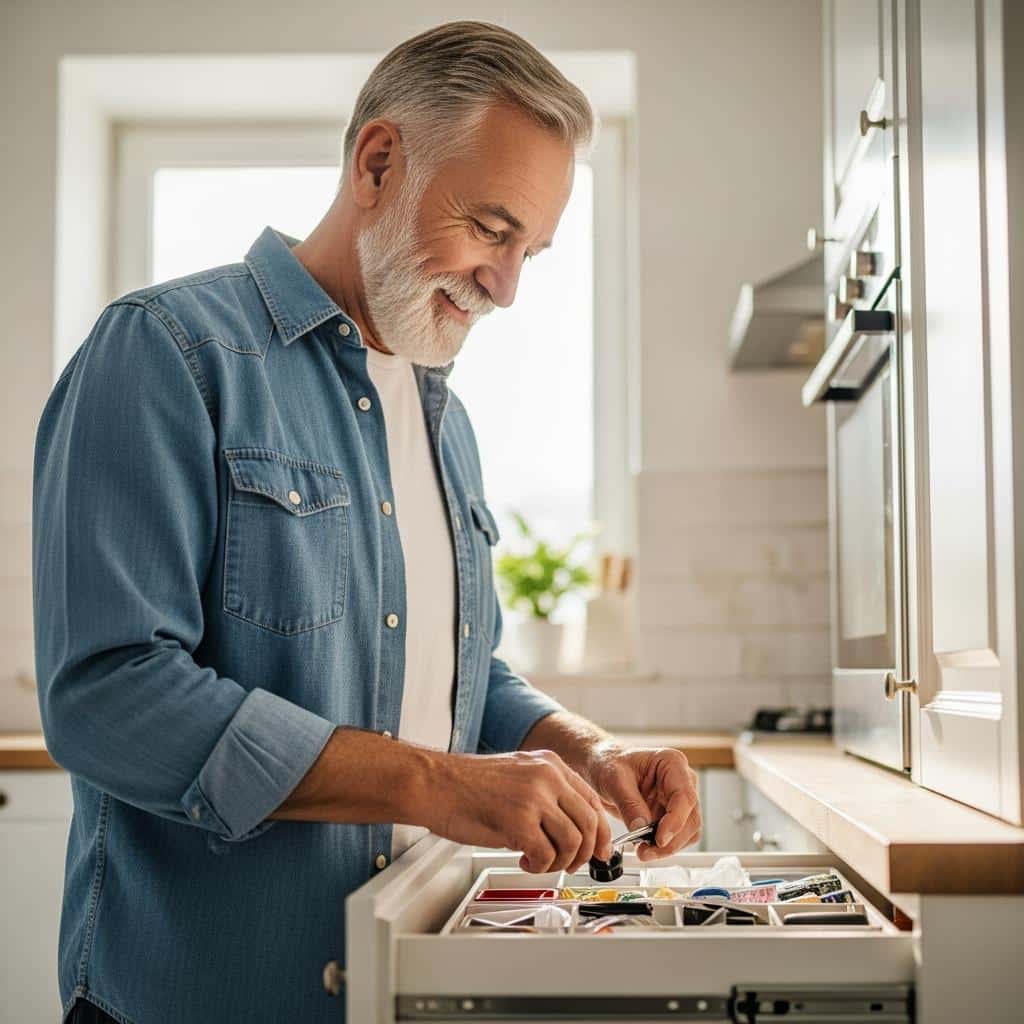
Week 2: Kitchen junk drawer. Duplicate utensils, broken items, mysterious keys from three houses ago. Clear candidates for removal. Another quick win.
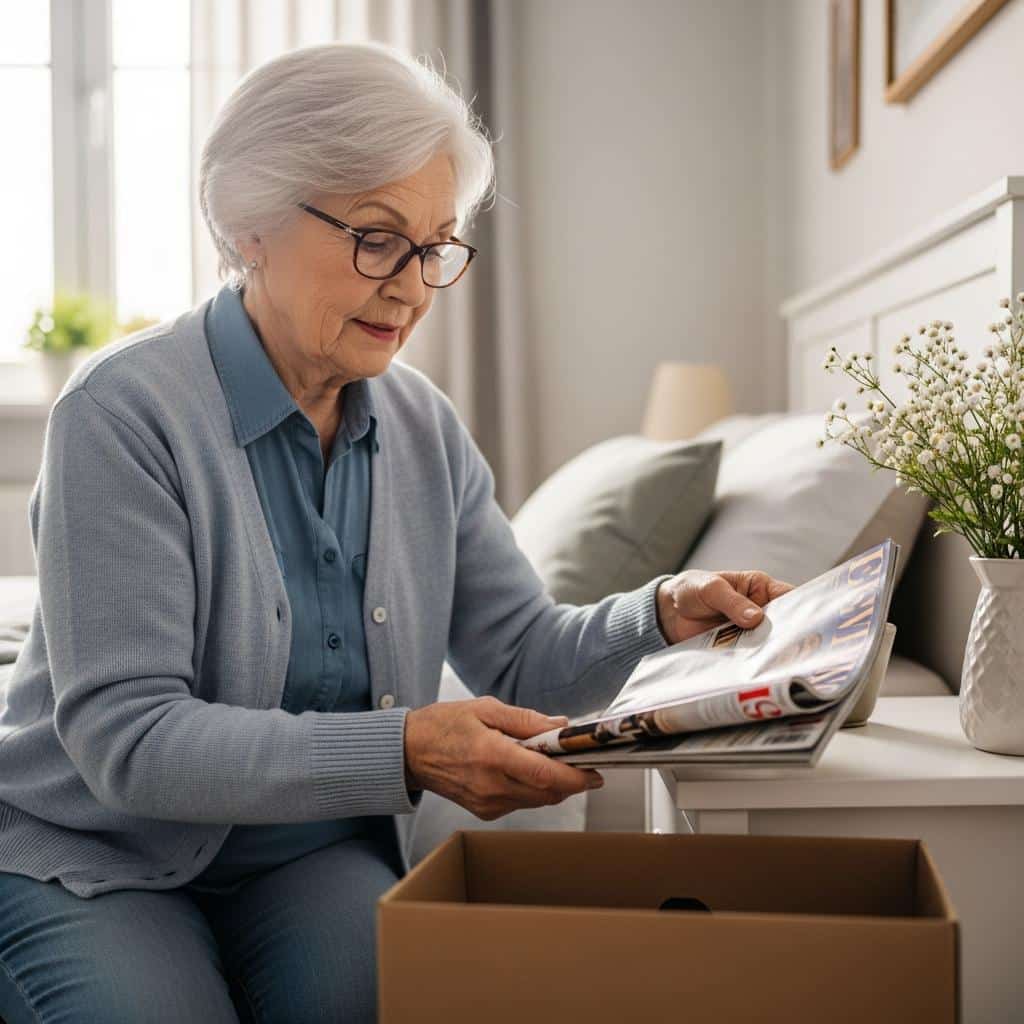
Week 3: Bedroom nightstand. Old reading materials, accumulated papers, items that somehow migrated there. These decisions are slightly harder but still manageable.
Week 4: Living room surfaces. Old mail, magazines you’ve finished, decorative items you no longer notice. Starting to touch sentimental territory but still relatively straightforward.
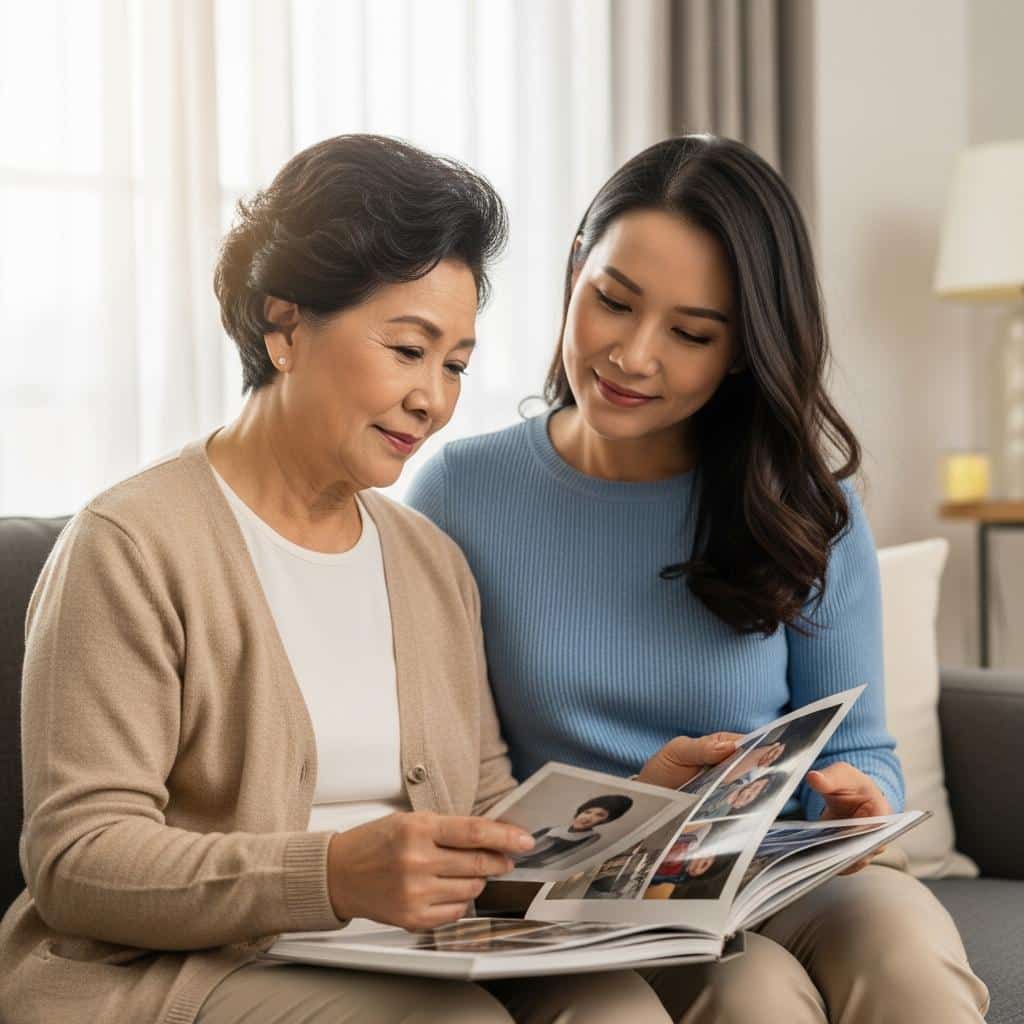
Weeks 5+: Sentimental spaces. Now you’re warmed up for photos, inherited items, and objects with deeper meaning. Your decision-making muscle is stronger from the easier work.
Important: Build in rest days. Aim for three to four active decluttering days per week, maximum. Your body and brain need recovery time, just like with physical exercise.
Before each session, position your supplies: donation box, trash bag, maybe a “relocate” basket for items that belong in other rooms. This preparation makes your 15 minutes purely about decisions, not logistics.
Ready to discover more innovative strategies for healthy, comfortable aging? Subscribe to our newsletter for expert-tested tips and product recommendations designed specifically for older adults.

The Decision Matrix for Items That Make You Hesitate
Some possessions are easy to evaluate. Others stop you in your tracks with waves of guilt, memory, or obligation.
Here’s a framework to work through those difficult moments.
Keep It If:
You’ve actually used or displayed it in the past year. Not “I might need this someday”—you actively engaged with it in the last twelve months.
It brings genuine joy when you see it. Not guilt about getting rid of it, but actual happiness or useful function in your current life.
You have a specific place for it where you’ll see or use it regularly. Not “I’ll find somewhere eventually”—you know exactly where it belongs in your home right now.
It connects you to happy memories you actively revisit. You think about these memories fondly, not because you stumbled across the object but because they’re part of your mental landscape.
Consider Releasing It If:
You’re keeping it out of obligation to the giver. Ask yourself honestly: would that person even remember giving this to you? Would they want you to feel burdened by it?
It represents a past version of yourself you’re no longer trying to be. That hobby you thought you’d take up but never did. That formal clothing style that doesn’t match your current life. It’s okay to acknowledge that chapter has closed.
You’re storing it “just in case” but haven’t needed it in three or more years. Real need shows up more frequently than that.
You’d feel genuinely relieved if it somehow disappeared. That’s your intuition telling you the truth about this item’s place in your life.
The Special Case of Inherited Items
You can honor someone’s memory without keeping everything they owned.
Consider this approach: photograph the item before releasing it. Document it with your phone, maybe add a voice memo about why it was meaningful. Create an album called “Released Items – January 2025.”
Now you keep the memory without the storage burden. You can look at those photos whenever you want to connect with that person.
Here’s the permission you might need: The people you inherited these items from loved you. They wanted you to live well. They wouldn’t want you to feel trapped by their belongings.
If other family members might want certain items, reach out before donating. Sometimes an inherited vase means nothing to you but everything to a cousin who remembers it from childhood visits.
And if you’re facing pressure from family members about what you “should” keep, remember that maintaining your independence means making decisions that work for your life now, not living according to others’ expectations.
The items can find new life with people who’ll actually use and appreciate them. That’s more honoring than storing them in a box where no one sees them.

Your Unexpected Winter Wellness Practice
Every 15-minute decluttering session is doing more than clearing your space.
You’re accumulating gentle physical activity. Reaching for items on high shelves—that’s balance work. Bending safely to access lower cabinets—that’s flexibility training. Carrying donation boxes to your car—that’s functional strength building.
These movements count toward your daily activity goals, and they’re practical movements that directly support your independence.
Track your progress in whatever way feels motivating to you:
Some people like a simple daily log: “15 minutes in kitchen – donated 8 items – felt accomplished.”
Others prefer before-and-after photos, just for their own satisfaction in seeing the change.
You might count items donated—not as a competition, but as tangible evidence of progress.
Or track it as movement minutes that you can add to your other daily activities.
Safety matters, even in simple tasks. Keep a sturdy step stool nearby if you’re accessing high shelves. Ask for help with heavy items without hesitation. Take your time with bending and lifting.
Here’s the bonus: decluttering itself makes your home safer. Fewer items on surfaces means fewer things to knock over. Clear pathways reduce trip hazards. Organized storage means less reaching and searching. For more comprehensive strategies on creating a safer home environment and preventing falls, simple modifications can make a significant difference.
You might even notice you sleep better. An organized, calmer environment reduces ambient stress that you might not even realize you’re carrying.
Ready to discover more innovative strategies for healthy, comfortable aging? Subscribe to our newsletter for expert-tested tips and product recommendations designed specifically for older adults.
Your Fresh Start Begins With One Drawer
January’s biological advantages are working in your favor right now.
The increasing daylight is supporting your energy. The return to routine is supporting your clarity. The cooler temperatures are supporting your physical comfort during activity. Your body and brain are naturally aligned for this kind of thoughtful, physical work.
You don’t need to declutter your entire home. Even one drawer creates momentum. One shelf proves to yourself that you can do this. One closet makes daily life noticeably easier.
This isn’t about preparing for some imagined future. It’s about creating a space that supports your life today—the life you’re actually living, with the activities you actually do, surrounded by items you actually use and enjoy.
Your energy patterns are valid and wise. The 15-minute method honors them instead of fighting them. Rest days are part of the system, not failures.
Set a timer for 15 minutes tomorrow morning and tackle just one drawer or shelf. That medicine cabinet. That junk drawer. That nightstand surface.
See how it feels. Notice what you learn about your attachment patterns and decision-making style. Build from there at your own pace.
What’s the first space you’ll tackle? Drop a comment below—your experience might inspire someone else to start. And remember, you can make this method your own. Adjust the timing, pick different rooms, take more rest days.
January is offering you a gift: the perfect conditions to create a home that works better for you. All you have to do is accept it, 15 minutes at a time.
![Senior woman bedroom window breakfast journaling[1]](https://www.grayingwithgrace.com/wp-content/uploads/2025/12/senior_woman_bedroom_window_breakfast_journaling1-e1767122246503-450x300.jpg)
![Senior couple cold porcht thermal mugs[1]](https://www.grayingwithgrace.com/wp-content/uploads/2025/12/senior_couple_cold_porcht_thermal_mugs1-e1767121617380-450x300.jpg)
![Senior woman video call weekly checkin[1]](https://www.grayingwithgrace.com/wp-content/uploads/2025/12/senior_woman_video_call_weekly_checkin1-e1767120242595-450x300.jpg)
![Senior woman window coffee cozy[1]](https://www.grayingwithgrace.com/wp-content/uploads/2025/12/senior_woman_window_coffee_cozy1-e1767119963869-450x300.jpg)
![Older group herbal tea infusion winter social[1]](https://www.grayingwithgrace.com/wp-content/uploads/2025/12/older_group_herbal_tea_infusion_winter_social1-e1767119761234-450x300.jpg)
![Older couple reviewing bills together[1]](https://www.grayingwithgrace.com/wp-content/uploads/2025/12/older_couple_reviewing_bills_together1-e1767118045107-450x300.jpg)
![Elderly couple garden bench rest[1]](https://www.grayingwithgrace.com/wp-content/uploads/2025/12/elderly_couple_garden_bench_rest1-e1767102641150-450x300.jpg)
![Senior woman with walker holiday grocery[1]](https://www.grayingwithgrace.com/wp-content/uploads/2025/12/senior_woman_with_walker_holiday_grocery1-e1765212886497-450x300.jpg)


