
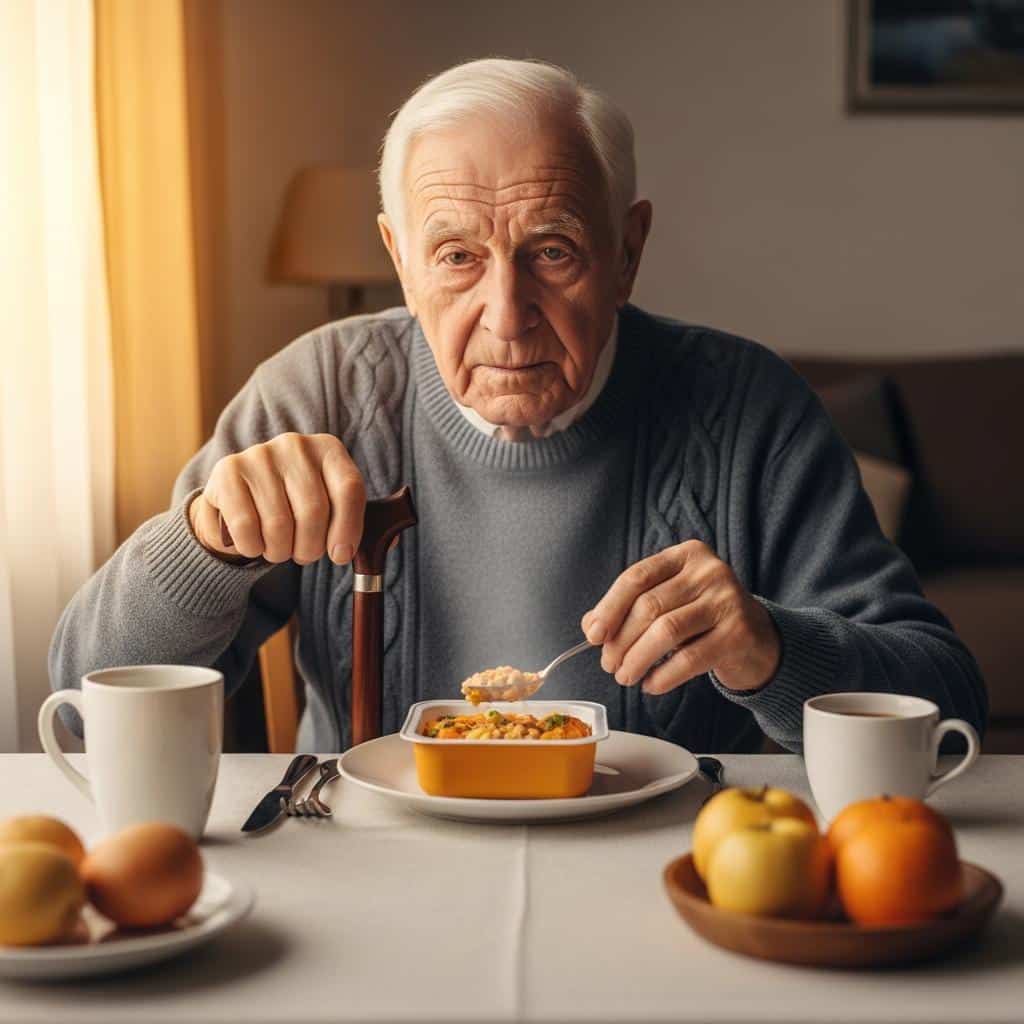
![Older man cane eating quick microwave meal[1]](https://www.grayingwithgrace.com/wp-content/uploads/2025/12/older_man_cane_eating_quick_microwave_meal1-e1767119019397.jpg)
Have you ever followed the package directions perfectly, only to end up with a frozen meal that’s simultaneously burned around the edges and ice-cold in the center?
You’re not alone. And here’s the truth nobody tells you: those instructions were written by engineers for engineers, not for actual cooking.
What if I told you there’s one simple secret that transforms frozen meals from rubbery disappointment to genuinely good food?
It’s not a special microwave, expensive equipment, or complicated technique. It’s something already on your microwave that most people completely ignore: the power level button.
Understanding how to use power levels properly means hot, evenly-cooked meals on your schedule, without relying on delivery or complicated cooking.
And if you’ve been feeling rushed or pressured during meal prep, this is one area where taking your time actually produces better results. Let’s unlock what your microwave can really do.
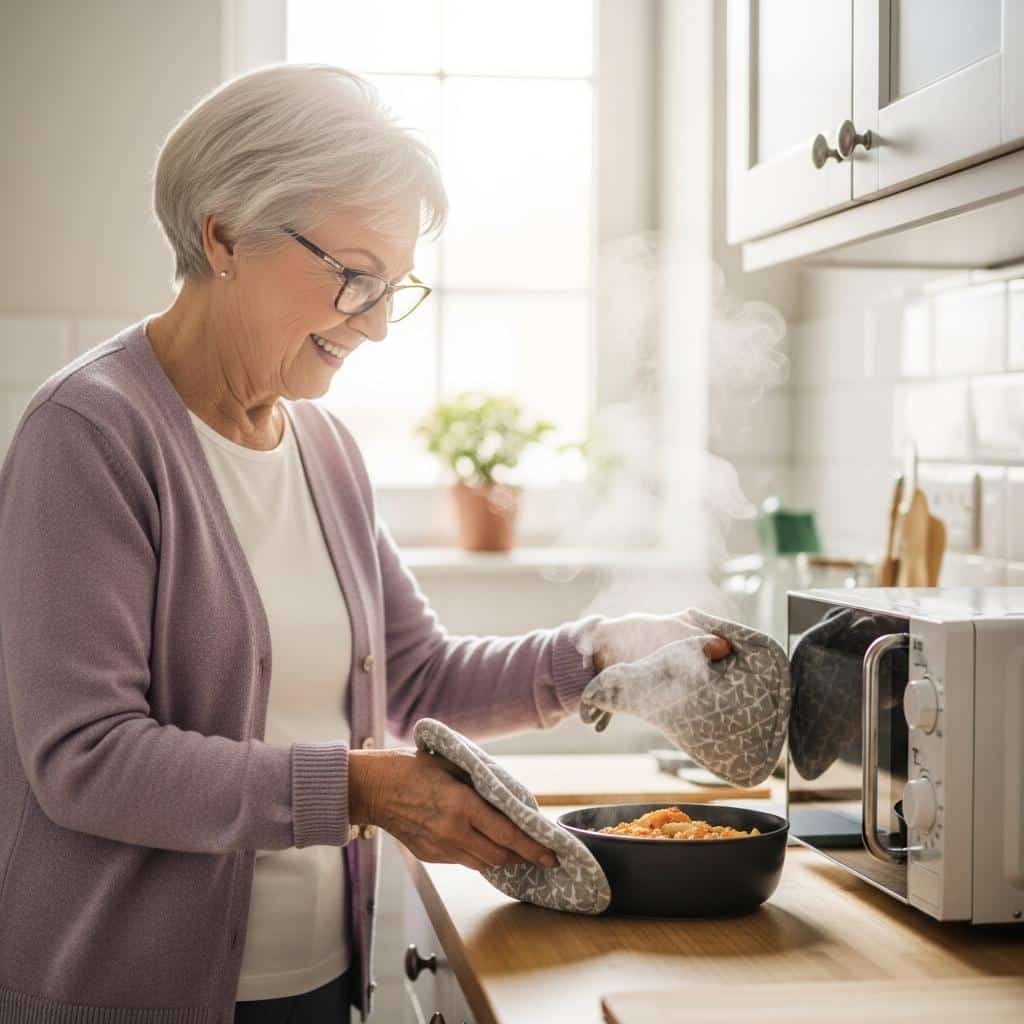
The Power Level Truth Nobody Tells You
Here’s the revelation that changes everything: high power doesn’t mean faster cooking—it means uneven heating.
When you blast food at 100% power, the microwave creates intense hot spots while leaving cold pockets throughout. Those burned edges and frozen centers? That’s not your fault. That’s physics working against poorly written instructions.
The universal formula that actually works: 50% power for double the time equals even heating throughout.
Think about it this way. Cooking at full power is like trying to dry a thick towel with a hair dryer on high—the outside scorches while the inside stays damp. Lower the heat and give it time, and everything dries evenly.
Your microwave manual probably never explained this. Most people—including your younger family members—don’t know this secret either. You’re about to become the expert who understands what actually works. It’s the same kind of practical kitchen wisdom that has always made life easier.
Now let’s put this knowledge into action with specific foods you actually cook.
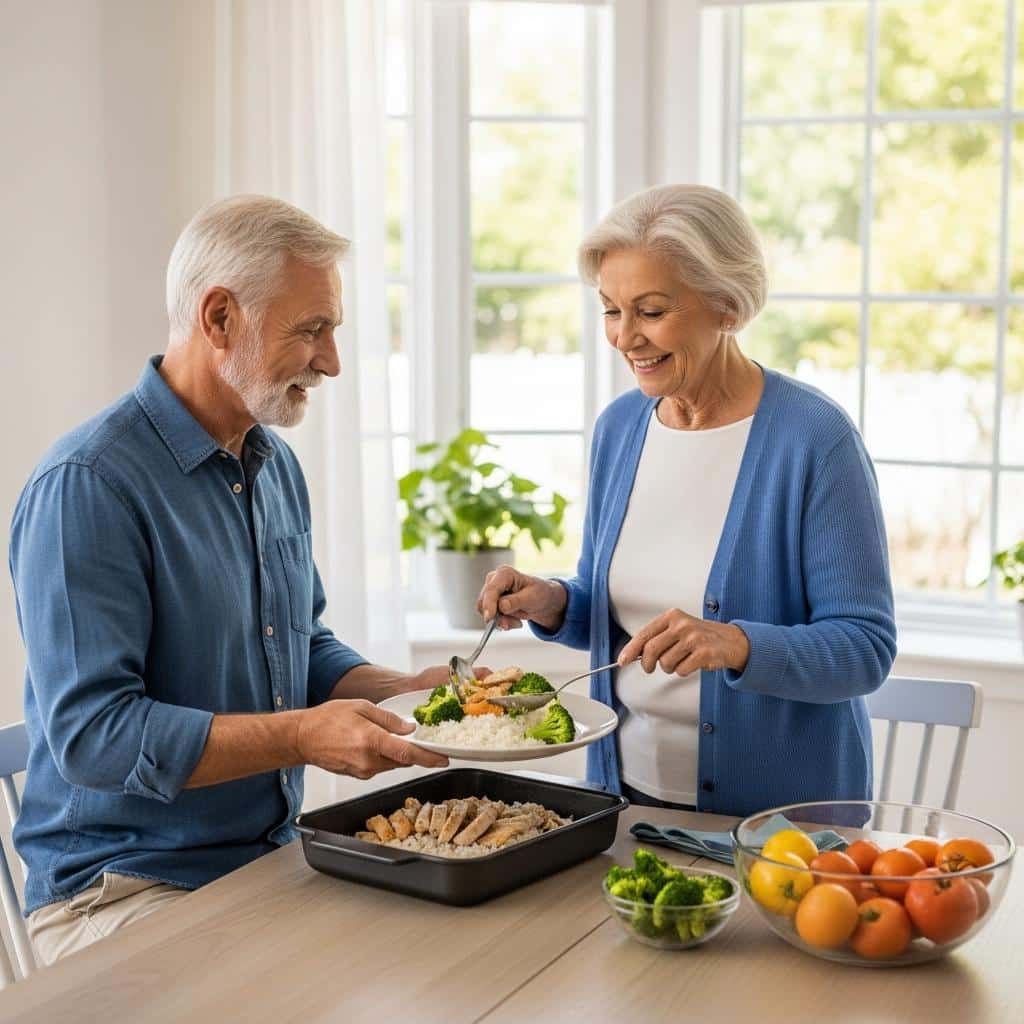
Your Food-Specific Power Level Reference Chart
Print this out and keep it near your microwave. These are the power levels that actually work, not the ones printed on packages.
Frozen Store-Bought Meals
- Power level: 50%
- Time: Double what the package says
- Technique: Rotate the dish halfway through
- Pro tip: Let it rest 2 minutes after the beep—it keeps cooking
Leftover Reheating
Soups and stews: 70% power for 5-7 minutes, stir halfway through
Pasta dishes: 60% power for 3-4 minutes, sprinkle a little water on top first
Rice: 70% power for 2-3 minutes, fluff with a fork when done
Casseroles: 60% power for 10-12 minutes, cover with a damp paper towel
Cooking From Frozen
Vegetables: 80% power for 4-5 minutes, add 1 tablespoon of water
Chicken breast: 50% power for 5-6 minutes per piece, let rest 2 minutes
Fish fillets: 50% power for 4-5 minutes, cover loosely
Important Container Notes
Glass dishes heat most evenly. Plastic containers must say “microwave-safe” on the bottom.
Always leave one corner of the cover slightly open for steam to escape. Round containers work better than square ones—the corners can overheat.
Ready to discover more time-saving strategies for comfortable, independent living? Subscribe to our newsletter for expert-tested tips and practical solutions designed specifically for older adults.
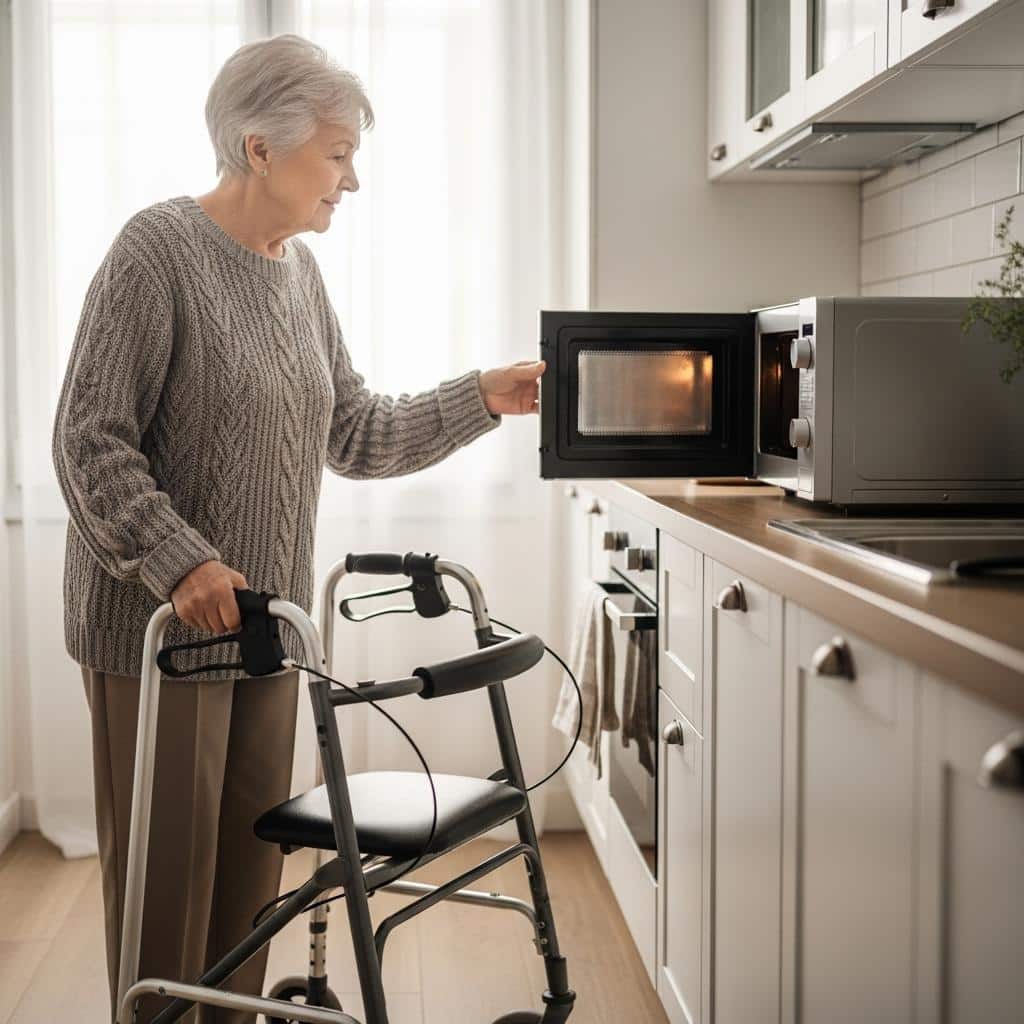
The Rest Time Rule That Changes Everything
Here’s the second secret that makes power levels work even better: food keeps cooking after the microwave stops.
This is called carryover cooking, and it’s exactly what fixes those frustrating ice-center problems. During those 2 minutes of rest time, heat redistributes from the hot spots to the cold spots all by itself.
The standard rule: Let most dishes rest for 2 minutes, covered, after the beep.
Use that time to set your place at the table, pour a beverage, or prepare a simple side. The food is working for you during those 2 minutes.
The most common mistake? Opening the door immediately and thinking the food isn’t done yet. Give it time to finish.
Visual cue to look for: Steam should be evenly distributed throughout the dish after proper rest time, not just coming from one corner.
I’ve seen this transform dozens of meals. That frozen dinner that seemed underdone becomes perfectly heated after a proper 2-minute rest.
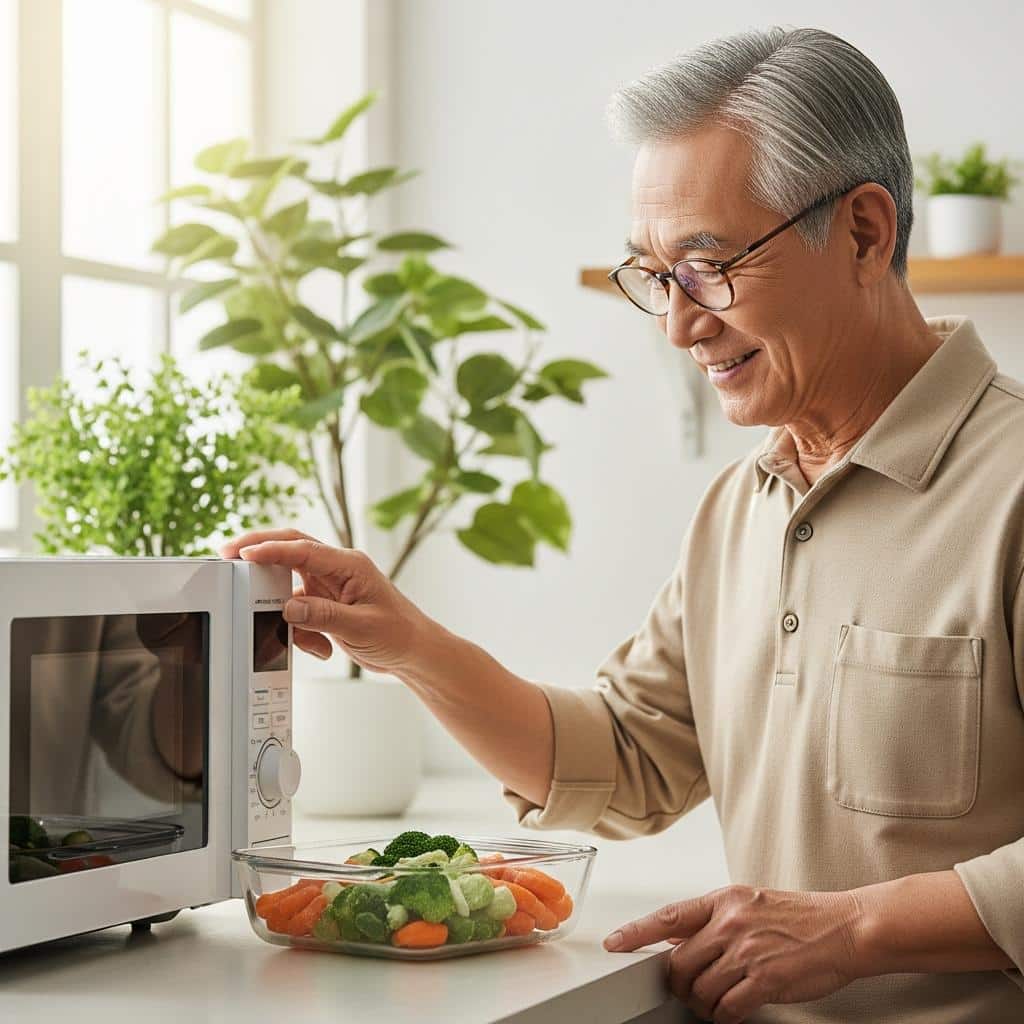
Rescuing Mistakes and Building Better Meals
Even with power levels mastered, things can still go wrong. Here’s how to fix common problems.
When Edges Are Overcooked
Add a splash of water or broth to the dish. Cover it and microwave for 30 seconds at 30% power.
The moisture redistributes to the dry areas, rescuing what seemed ruined.
When the Center Stays Frozen
Continue cooking at 50% power in 1-minute intervals. Rotate and stir between each interval.
Don’t jump to high power—that just makes the problem worse by creating more hot spots.
When Food Dries Out
Sprinkle water over the surface and cover with a damp paper towel. Reheat at 40% power.
The steam rehydrates the food as it heats.
Building Complete One-Dish Meals
Here’s where power levels really shine. You can cook an entire balanced meal in one session by timing different foods strategically.
The template that works:
Start with frozen protein like chicken or fish: 50% power for 5-6 minutes
Add frozen vegetables during the protein’s rest time: 80% power for 4 minutes
Finish with minute rice or frozen potato: 70% power for 3 minutes
Everything finishes together, all properly cooked, in about 15 minutes total.
Real-world example:
Cook a frozen chicken breast for 6 minutes at 50% power. While it rests, cook frozen broccoli for 4 minutes at 80% power. During the final minute, heat frozen mashed potatoes for 3 minutes at 70% power.
You’ve just made a complete, balanced meal with 13 minutes of actual cooking time. No complicated coordination, no multiple pots, no exhausting meal prep.
Safety, Savings, and Strategic Advantages
Safety Without Patronizing
Test temperature in the center before eating—it should be steaming throughout, not just hot around the edges.
Use a potholder when removing dishes. The container gets hot from the food, even though the microwave itself doesn’t heat dishes.
Stir hot soups away from you so steam doesn’t come toward your face. Pierce any sealed foods before heating to prevent steam explosions.
When removing lids or plastic wrap, tilt the far edge up first so steam escapes away from you.
The Real Cost Comparison
Microwave cooking uses 60% less energy than using your oven. Over a month, that’s a noticeable difference on your electric bill. It’s one of those old-fashioned practical habits that turns out to be environmentally smart, too.
A frozen meal cooked properly with power levels: $3-5 per serving
Restaurant delivery for the same meal: $12-18 per serving
Time investment: 15 minutes versus 45 minutes waiting for delivery
And honestly? A properly microwaved frozen meal often beats rushed takeout food in both taste and nutrition.
Your Independence Advantage
This is about more than saving money or time. It’s about strategic independence.
You cook on your schedule, not restaurant hours. No tipping, no doorbell interaction, no waiting around. You’re not coordinating with family members to help with meals or feeling like a burden.
Mastering power levels means you can manage nutritious meals completely on your own, whenever you want them. Whether you’re making breakfast as part of an intentional morning routine or heating lunch on your own timeline, that’s confidence. That’s control.
Ready to discover more time-saving strategies for comfortable, independent living? Subscribe to our newsletter for expert-tested tips and practical solutions designed specifically for older adults.
Your New Microwave Confidence
You now understand something that 95% of people don’t about microwave cooking. This isn’t common knowledge—it’s kitchen wisdom that most people never learn.
And this isn’t “making do” with lesser cooking methods. You’re mastering an efficient, energy-smart cooking technique that produces genuinely good food.
Here’s your immediate action: Print out the power level chart from this article. Try just one technique tonight—maybe that frozen dinner you’ve got in the freezer.
Tonight’s meal will be the best microwave dinner you’ve ever made. The edges won’t be rubbery, the center won’t be frozen, and you’ll wonder why nobody explained this years ago.
This is good food on your terms, your schedule, your independence. You’re not settling for less—you’re cooking smarter. And when maintaining your independence matters most, mastering everyday skills like this reinforces your capability.
Have you discovered your own power level secrets? What foods have you transformed from disappointment to delicious? Share your discoveries in the comments below—your insight might help someone else eat better tonight.




![Elderly man walker junk drawer rubber band 1[1]](https://www.grayingwithgrace.com/wp-content/uploads/2025/12/elderly_man_walker_junk_drawer_rubber_band-11-e1765808720869-450x300.jpg)
![Senior couple testing microwave doors[1]](https://www.grayingwithgrace.com/wp-content/uploads/2025/12/senior_couple_testing_microwave_doors1-e1765215776583-450x300.jpg)
![Elderly black woman angled splatter guard[1]](https://www.grayingwithgrace.com/wp-content/uploads/2025/12/elderly_black_woman_angled_splatter_guard1-e1765214805474-450x300.jpg)
![Multi gen family cooking kneading dough[1]](https://www.grayingwithgrace.com/wp-content/uploads/2025/12/multi_gen_family_cooking_kneading_dough1-e1765213705990-450x300.jpg)


