
![Elderly couple garden bench rest[1]](https://www.grayingwithgrace.com/wp-content/uploads/2025/12/elderly_couple_garden_bench_rest1-e1767102641150.jpg)
Every January, the wellness advice comes flooding in: Do more. Add more. Push harder.
But what if I told you that some of the health habits you’ve been faithfully following might actually be working against you?
Here’s the liberating truth: After decades of taking care of yourself, you deserve health advice that actually serves your body’s current needs—not generic rules designed for everyone.
This year, five leading doctors who specialize in aging are giving you permission to stop doing things that no longer make sense for your stage of life. And they’re offering you something better instead.

STOP Taking Daily Multivitamins (Unless Your Doctor Says Otherwise)
You’ve probably been taking that daily multivitamin for years, maybe even decades.
It feels responsible, like health insurance in a pill. But here’s what recent research shows: most healthy older adults don’t actually benefit from standard multivitamins.
In fact, they might be creating problems you don’t need.
Why Doctors Are Changing Their Minds
Generic multivitamins often contain nutrients you’re already getting enough of through food, while missing the specific ones you might actually need.
Some multivitamins can interfere with prescription medications or contain excessive amounts of certain nutrients that aging kidneys struggle to process efficiently. When you’re managing multiple medications, adding unnecessary supplements can complicate things further.
Even more concerning, that daily multivitamin might give you a false sense of nutritional security, making you less attentive to actual dietary gaps.
What To Do Instead: Get Personal With Your Nutrients
Schedule a conversation with your doctor about comprehensive bloodwork at your next appointment. Being an active participant in your healthcare means asking informed questions about what your body actually needs.
Ask them to check for the nutrients that commonly run low in older adults: Vitamin D, B12, and calcium. If you show a deficiency, your doctor can prescribe specific supplements at the right doses for your body.
This targeted approach often costs less than years of unnecessary multivitamins and actually addresses your real nutritional needs.
Think of it this way: you wouldn’t take medication for a condition you don’t have. Supplements deserve the same thoughtful approach.
STOP Forcing Eight Glasses of Water Every Day
The “eight glasses a day” rule has been repeated so often it feels like medical law.
But here’s the truth that hydration researchers want you to know: that arbitrary number doesn’t account for your medications, your activity level, your climate, or your individual health conditions.
For some older adults, forcing excessive water intake can actually strain kidneys, dilute necessary electrolytes, or create uncomfortable nighttime bathroom trips that increase fall risk.
Why One-Size-Fits-All Hydration Doesn’t Work
Your hydration needs are as individual as you are.
If you’re taking diuretics, you need a different approach than someone who isn’t. If you have heart or kidney issues, your doctor may actually want you to limit fluids. And if you’re active in a hot climate, you need more hydration than someone in a temperate environment.
The bigger issue? Thirst signals can diminish with age, which means you do need to be intentional about hydration—just not through rigid rules that don’t fit your life. Even mild dehydration can affect cognitive function, so smart hydration matters more than arbitrary numbers.
What To Do Instead: Listen to Your Body (With Simple Monitoring)
Pay attention to urine color: pale yellow is your target. Dark yellow means you need more fluids; clear means you might be overdoing it.
Drink when you’re thirsty, and adjust based on your activity level and the weather.
Ask your doctor about your personal hydration needs based on your specific medications and health conditions. Some medications require increased fluids while others require restriction.
Remember that foods contribute to hydration too. Soups, fruits, and vegetables all count toward your daily fluid intake.
Stop worrying about counting glasses and start trusting your body’s signals combined with these simple monitoring techniques.
Ready to discover more innovative strategies for healthy, comfortable aging? Subscribe to our newsletter for expert-tested tips and product recommendations designed specifically for older adults.

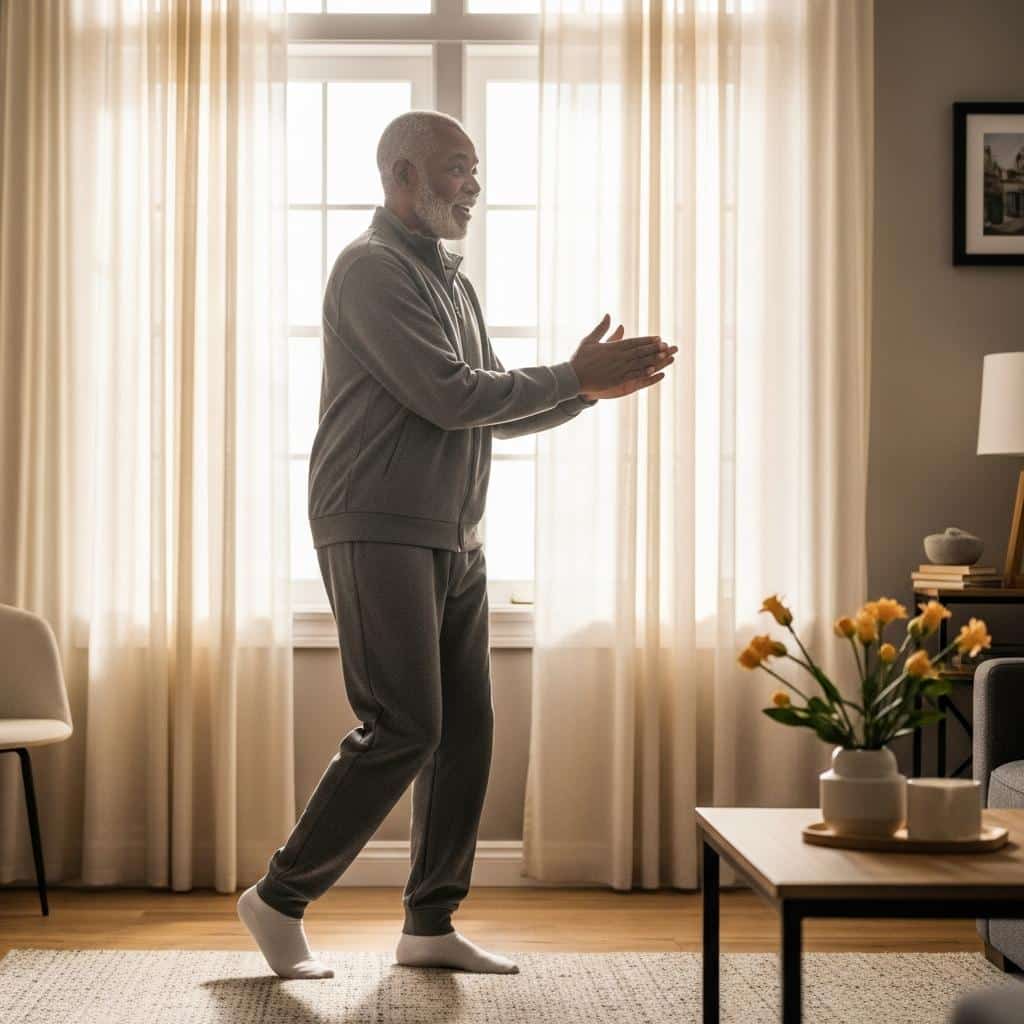
STOP Stretching Cold Muscles First Thing in the Morning
You roll out of bed and immediately start your stretching routine, believing this prevents stiffness and injury.
It’s a habit that feels virtuous and proactive. But physical therapists who specialize in aging bodies have news: you’re actually increasing your injury risk.
Cold muscles need gentle warm-up before stretching to improve flexibility safely.
Why Physical Therapists Say Wait
Stretching cold muscles can cause micro-tears that actually make you stiffer and more prone to injury.
Your muscles are like taffy—when they’re cold, they’re brittle and can snap. When they’re warm, they’re pliable and can stretch safely.
This doesn’t mean your stretching routine is wrong. It just means the timing needs adjustment for better results and safer movement.
What To Do Instead: Warm Up First, Then Stretch
Start with 3-5 minutes of gentle movement before you stretch.
Walk to the kitchen for water, do some light arm circles, march in place, or simply move around as you start your morning routine. Then do your stretches when muscles are warm.
Or stretch after your morning shower when muscles are naturally warmed. The heat and movement combination creates the perfect conditions for safe, effective stretching.
This simple sequence change prevents the morning stiffness and injury risk you’re trying to avoid with your current routine—it’s about better results through smarter timing.
You’re not abandoning your healthy habits. You’re becoming even more skilled at caring for your body.

STOP Forcing Yourself to “Stay Busy” All the Time
You’ve probably heard it a thousand times: “Stay active! Stay busy! Keep going!”
The cultural pressure on older adults to constantly be doing something can feel relentless. You might even feel guilty when you rest, worried that downtime means decline.
But gerontologists and longevity researchers have a message for you: strategic rest isn’t giving up. It’s essential for healthy aging.
Why Constant Activity Backfires
Your body isn’t designed for non-stop activity at any age, and it’s especially true as you get older.
Constant activity without adequate rest actually increases stress hormones, impairs cognitive function, and can lead to burnout that makes you less able to enjoy the activities that truly matter. In fact, that afternoon energy crash many people experience is often your body signaling it needs better balance, not more activity.
Rest allows your body to repair, consolidate memories, and maintain the energy for activities you genuinely care about. Quality of activity matters far more than quantity.
What To Do Instead: Choose Meaningful Activity and Honor Rest
Evaluate your calendar honestly. Which activities bring genuine joy or connection, and which ones do you do out of obligation or fear of “slowing down”?
Give yourself permission to eliminate one draining commitment and use that time for restorative rest, hobbies you actually enjoy, or quality time with the people you love most.
Adequate rest—including daytime relaxation and sufficient sleep—supports memory, emotional regulation, and decision-making. These cognitive functions are crucial for independent living.
This isn’t about becoming sedentary. It’s about being a wise steward of your energy for the long term.
Resting doesn’t mean giving up. It means you’re smart enough to know that sustainable health requires balance, not exhaustion.

STOP Eating the Same Breakfast Every Day
You’ve eaten the same breakfast for years, maybe decades.
It’s routine, reliable, and requires zero thought on busy mornings. There’s nothing wrong with that approach—but there’s something better.
Why Nutrition Variety Matters More As You Age
Aging bodies benefit from diverse nutrients, and eating the same foods repeatedly can lead to micronutrient gaps even in otherwise healthy diets.
Different foods provide different antioxidants, vitamins, and beneficial compounds that support everything from brain health to immune function. Smart nutrition choices don’t have to be complicated—they just need to be varied.
The good news? You don’t need to become a gourmet chef or completely overhaul your routine. You just need simple rotation.
What To Do Instead: Rotate Between Three Simple Options
Identify your current breakfast, then add just two alternatives to rotate through the week.
This provides nutritional diversity without requiring complicated meal planning or extensive prep time.
If you currently eat oatmeal every day, you might rotate with scrambled eggs one morning and Greek yogurt with fruit another. If you’re a toast person, try cottage cheese with berries one day and a veggie omelet another.
Keep it simple. The goal is variety in nutrients, not complexity in preparation.
This is the easiest change on the list because it works with your existing habits rather than overhauling them completely.
Ready to discover more innovative strategies for healthy, comfortable aging? Subscribe to our newsletter for expert-tested tips and product recommendations designed specifically for older adults.
Your Permission Slip for Smarter Health in 2026
Stopping these five practices isn’t about doing less—it’s about being smarter and more personalized with your health choices.
These aren’t opinions. They’re evidence-based recommendations from healthcare professionals who understand aging bodies and respect your intelligence.
You don’t need to overhaul everything at once. Choose ONE item from this list to address first—whichever feels most relevant or easiest to implement.
After decades of taking care of yourself, you deserve health advice that actually serves your specific needs. You’ve earned the right to stop following one-size-fits-all rules that don’t fit your life.
These changes aren’t about abandoning healthy habits. They’re about becoming even more skilled at self-care tailored to who you are now.
Which of these “stops” surprises you most? Or which one are you most eager to try? Share your thoughts in the comments below—your perspective might help someone else make a positive change too.
![Senior woman bedroom window breakfast journaling[1]](https://www.grayingwithgrace.com/wp-content/uploads/2025/12/senior_woman_bedroom_window_breakfast_journaling1-e1767122246503-450x300.jpg)
![Senior couple cold porcht thermal mugs[1]](https://www.grayingwithgrace.com/wp-content/uploads/2025/12/senior_couple_cold_porcht_thermal_mugs1-e1767121617380-450x300.jpg)
![Senior woman video call weekly checkin[1]](https://www.grayingwithgrace.com/wp-content/uploads/2025/12/senior_woman_video_call_weekly_checkin1-e1767120242595-450x300.jpg)
![Senior woman window coffee cozy[1]](https://www.grayingwithgrace.com/wp-content/uploads/2025/12/senior_woman_window_coffee_cozy1-e1767119963869-450x300.jpg)
![Older group herbal tea infusion winter social[1]](https://www.grayingwithgrace.com/wp-content/uploads/2025/12/older_group_herbal_tea_infusion_winter_social1-e1767119761234-450x300.jpg)
![Senior woman step stool safe closet declutter[1]](https://www.grayingwithgrace.com/wp-content/uploads/2025/12/senior_woman_step_stool_safe_closet_declutter1-e1767118700445-450x300.jpg)
![Older couple reviewing bills together[1]](https://www.grayingwithgrace.com/wp-content/uploads/2025/12/older_couple_reviewing_bills_together1-e1767118045107-450x300.jpg)
![Senior woman with walker holiday grocery[1]](https://www.grayingwithgrace.com/wp-content/uploads/2025/12/senior_woman_with_walker_holiday_grocery1-e1765212886497-450x300.jpg)


