![Elderly man walker junk drawer rubber band 1[1]](https://www.grayingwithgrace.com/wp-content/uploads/2025/12/elderly_man_walker_junk_drawer_rubber_band-11-e1765808720869.jpg)
You know exactly which drawer I’m talking about.
You are picturing it in your head right now.
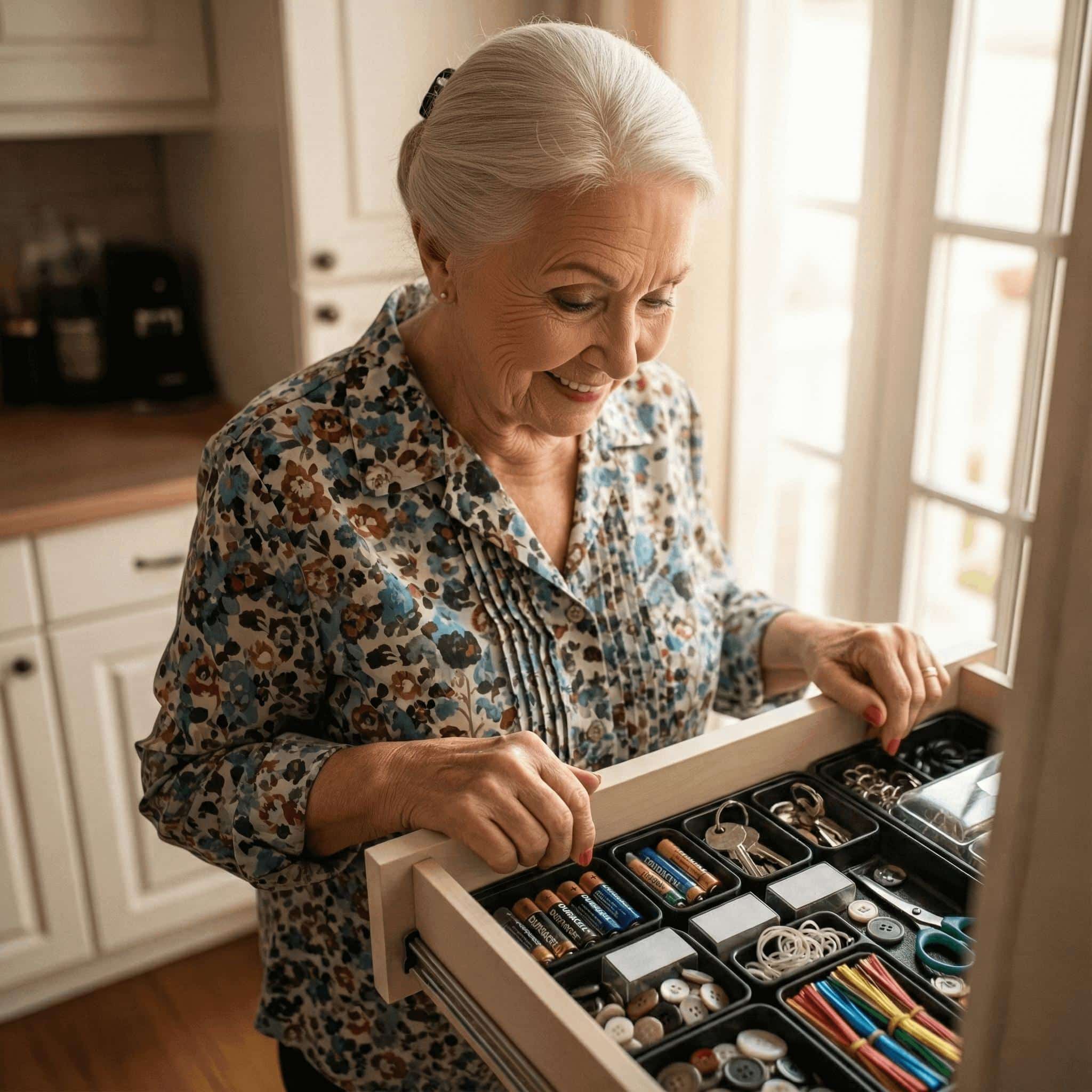
The one with the rubber bands wrapped around each other in a chaotic ball. The butter containers nested inside each other. The twist ties from every bread loaf you’ve bought in the past decade. The mystery keys that might open something important. The spare buttons still attached to their little cards.
Your kids might call it the “junk drawer.” Your grandchildren might joke about it. But here’s what they don’t understand: that drawer isn’t clutter—it’s wisdom.
While younger generations were embracing disposable culture and buying $40 “organization systems,” you were practicing sustainability before it became a trendy hashtag.
You understood something they’re just now figuring out: waste not, want not isn’t old-fashioned. It’s intelligent.
What if I told you that drawer represents decades of practical knowledge that’s actually saving you hundreds of dollars a year?
That you were an environmental pioneer when everyone else was throwing things away?
The Philosophy That Built That Drawer
You didn’t just randomly start saving things.
You learned from your parents or grandparents who lived through the Depression. They taught you that “you never know when you’ll need this” isn’t paranoia—it’s preparedness.
That mindset shaped an entire generation. You watched your mother wash and reuse aluminum foil. You saw your father save every screw and nail from projects. You learned that taking care of what you have is how you make it last.
Here’s what modern “sustainability experts” are finally admitting: Reusing beats recycling in the environmental hierarchy. Keeping and repurposing items you already have is better for the planet than buying new “eco-friendly” products. This same principle applies throughout your home—from keeping your kitchen safe with smart adaptations to organizing spaces that work for you.
Your drawer saves you $5 to $10 every single month by having items on hand when you need them. That’s $60 to $120 annually that you’re not spending at the hardware store or home goods section.
More importantly, you’re saving time. No last-minute trips to the store for a rubber band or twist tie. No waiting for an online order when you need to organize cables right now.
Your values—thrift, preparedness, self-reliance—built that drawer. And those values have served you well for decades. They represent the same kind of practical independence that helps you adapt to life’s changes while staying true to what works for you.
The Rubber Band Collection: Your Secret Superpower
Let’s talk about that impressive ball of rubber bands in your drawer.
A package of rubber bands at the store costs $3 to $5. A container of bread bag twist ties runs $4 to $6. Your drawer probably contains $50 worth of these items—collected entirely free.
Here’s why you’re brilliant for keeping them:
Rubber bands solve problems daily.
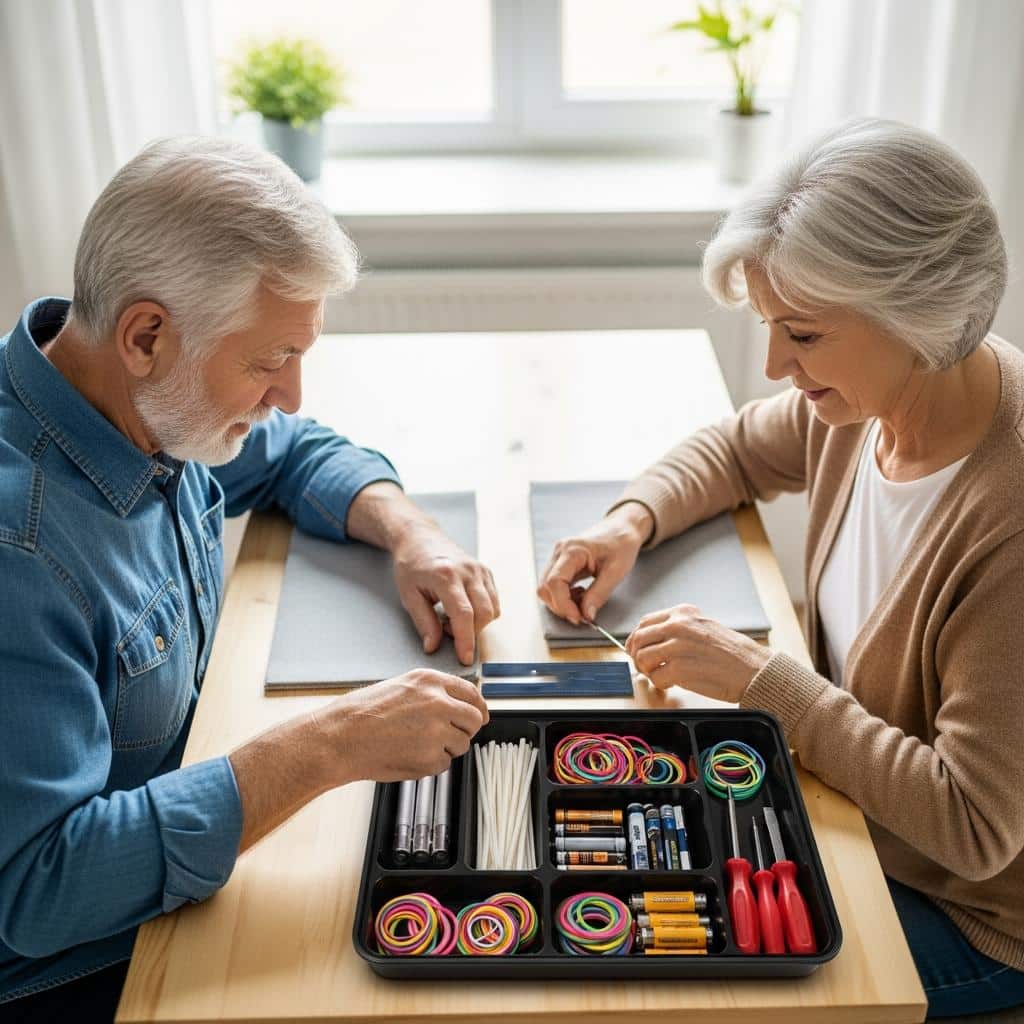
- Wrap one around a stubborn jar lid for instant grip.
- Loop them around hanger edges to keep clothes from sliding off.
- Gather charging cables so they’re not tangling across your counter.
- Secure rolled newspapers, yoga mats, or wrapping paper.
- Create an emergency phone grip when your hands are tired.
And those twist ties everyone jokes about? They’re organizational gold.
- Use them for cable management—different colors for different devices.
- Thread one through a broken zipper pull for an instant fix.
- Secure tomato plants or climbing flowers to garden stakes.
- Keep garbage bags from slipping into the can.
- Create temporary keychains when you’re lending keys to family.
That chaotic rubber band ball? It’s a problem-solving toolkit that never runs out.
The Container Collection That Saves You Money
Those butter tubs and yogurt containers stacked in your cabinet aren’t taking up space—they’re replacing expensive purchases.
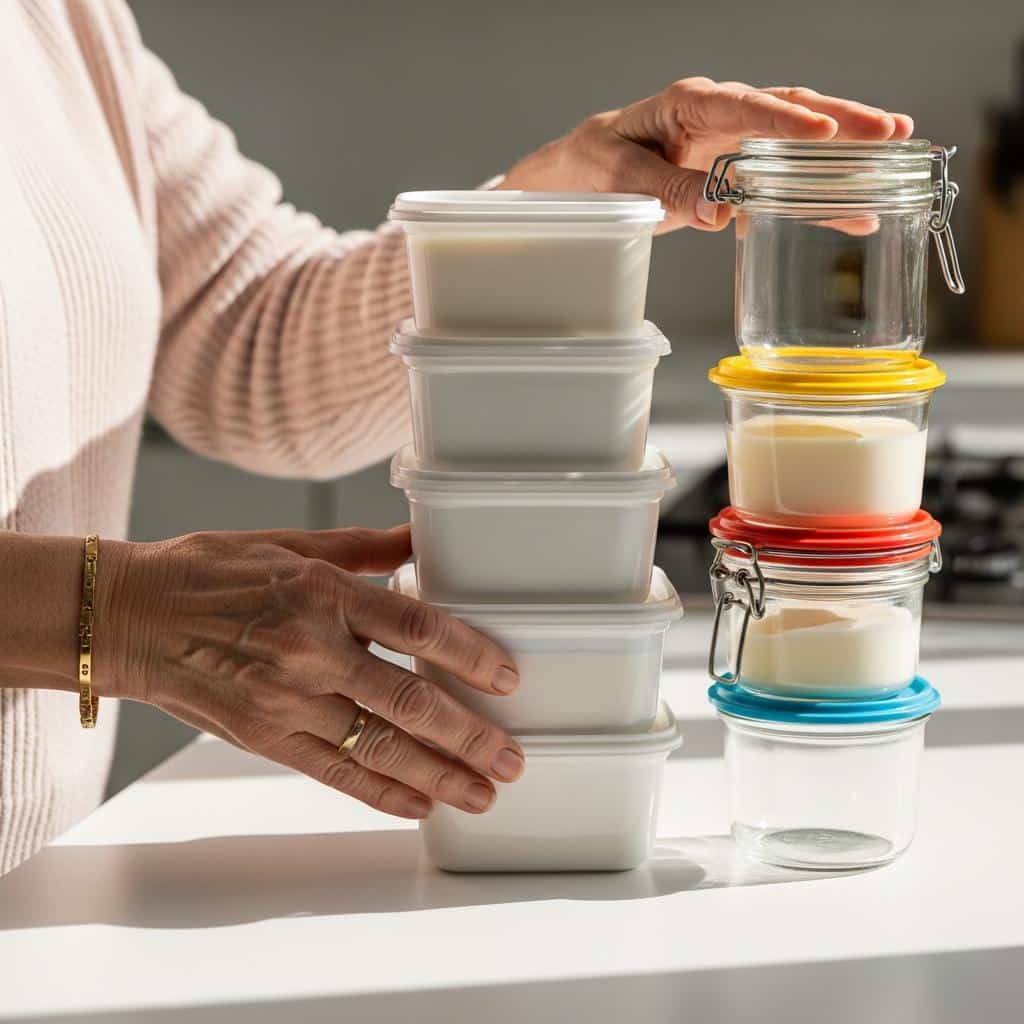
A set of “meal prep containers” costs $30 to $50. Glass “organization systems” run $25 to $40. You have both, completely free.
Your butter containers and yogurt tubs are perfect for:
- Portioning leftovers so you’re not overeating.
- Freezing individual servings of soup or sauce.
- Organizing small items like buttons, screws, or craft supplies.
- Letting grandchildren use them for paint or craft projects without worrying about ruined dishes.
- Propagating plant cuttings to share with friends.
Those glass jars you saved from pasta sauce and pickles? They’re better than anything you could buy.
- Store dry goods like pasta, rice, and beans so you can see when supplies are low.
- Mix homemade salad dressing and store it in the fridge.
- Prepare overnight oats in individual portions.
- Organize bathroom items like cotton balls and Q-tips. Package homemade cookies or jam as thoughtful gifts.
If you’re looking for more ways to preserve meaningful items, you might also be interested in organizing old family photos before they end up forgotten in another drawer.
These free containers reduce your reliance on single-use plastic. Every time you reach for a saved container instead of plastic wrap or a disposable bag, you’re making an environmental choice that younger generations are just learning about.
Your generation has always understood that smart money management comes from using what you have rather than constantly buying new.
Ready to discover more innovative strategies for healthy, comfortable aging? Subscribe to our newsletter for expert-tested tips and product recommendations designed specifically for older adults.

The Mystery Key and Button Box That Proves You Right
Here’s where your practical wisdom really shines.
The average household has three to five unidentified keys floating around. Your kids might question why you keep them. But you know the truth: better to have and not need than need and not have.
That one time you found the right mystery key? It saved you a $150 locksmith call. That’s why you keep them all, labeled with tape when possible, stored in a small container where you can find them.
Your button collection tells a similar story. Quality clothing comes with spare buttons for a reason. Replacing one button takes five minutes and costs nothing. Replacing an entire garment because you lost a button costs $40 or more.
Those spare buttons double as craft supplies for grandchildren’s projects or decorative elements for homemade cards. Organizing them is simple: attach each set to the original garment tag with a safety pin, or store them in small labeled bags.
The validation moment makes it all worthwhile. When someone needs a specific button or that mystery key finally meets its lock, you’re the hero with the solution already on hand.
Your collection isn’t clutter. It’s preparedness paying dividends.

The “Might Be Useful” Items That Actually Are
Let’s celebrate the other drawer staples that prove their worth time and again.
Those batteries you’re testing: Keeping a few “dead” batteries helps you diagnose whether the remote control is the problem or the device itself. Once you’ve confirmed they’re depleted, you properly recycle them. But having them for testing saves unnecessary trips to the store.
The small tools from past projects: Tiny screwdrivers from eyeglass repair kits. Allen wrenches from furniture assembly. Random screws and nails that might be the exact size you need someday. Instruction booklets you can reference years later.
Each one has saved you a trip to the hardware store or solved a small problem exactly when you needed it.
Even those take-out condiment packets have value. They’re perfect for picnics or travel. Single servings prevent food waste when you only need a little ketchup or mayo. The typical household accumulates $10 to $15 worth of free condiments that come in handy for camping trips or packed lunches. This practical mindset extends beyond your drawer—it’s the same wisdom that helps preserve family recipes and traditions that might otherwise be lost.
Your drawer is essentially a free convenience store for small everyday needs.
Ready to discover more innovative strategies for healthy, comfortable aging? Subscribe to our newsletter for expert-tested tips and product recommendations designed specifically for older adults.
Your Drawer Is a Testament to Wisdom
That drawer everyone jokes about? It represents practical intelligence that’s serving you well.
You understood sustainability before it became a billion-dollar industry. You practiced waste reduction when everyone else was filling landfills with perfectly useful items. You saved money by keeping things instead of buying them twice.
The numbers tell the story: You’re saving more than $100 annually by having items on hand instead of making emergency purchases. You’re reducing environmental impact by reusing instead of recycling or discarding. You’re prepared for small problems before they become big inconveniences.
Your generation learned resourcefulness from people who survived genuine hardship. That lesson shaped how you approach everyday life. You take care of what you have. You find value in simple items. You prepare for future needs with present actions.
This isn’t about being cheap or cluttered. It’s about being smart with resources and honest about what makes sense to keep. That’s wisdom worth celebrating, not explaining away.
Be proud of that drawer. You were ahead of the curve on waste reduction, environmental consciousness, and practical living. Your approach has served you well for decades, and it will continue serving you—and probably your children and grandchildren once they stop joking and start learning from you.
What’s in your genius drawer? Which saved item has proven most useful over the years? Share your story in the comments below. Let’s celebrate our resourcefulness together.