Nearly half of all older adults take multiple medications daily — and missing even one dose can trigger a cascade of health problems. Yet the most common reminder system out there is still a generic beeping alarm that gets snoozed, ignored, or simply not heard.
What if the reminder sounded like someone who actually loves you?
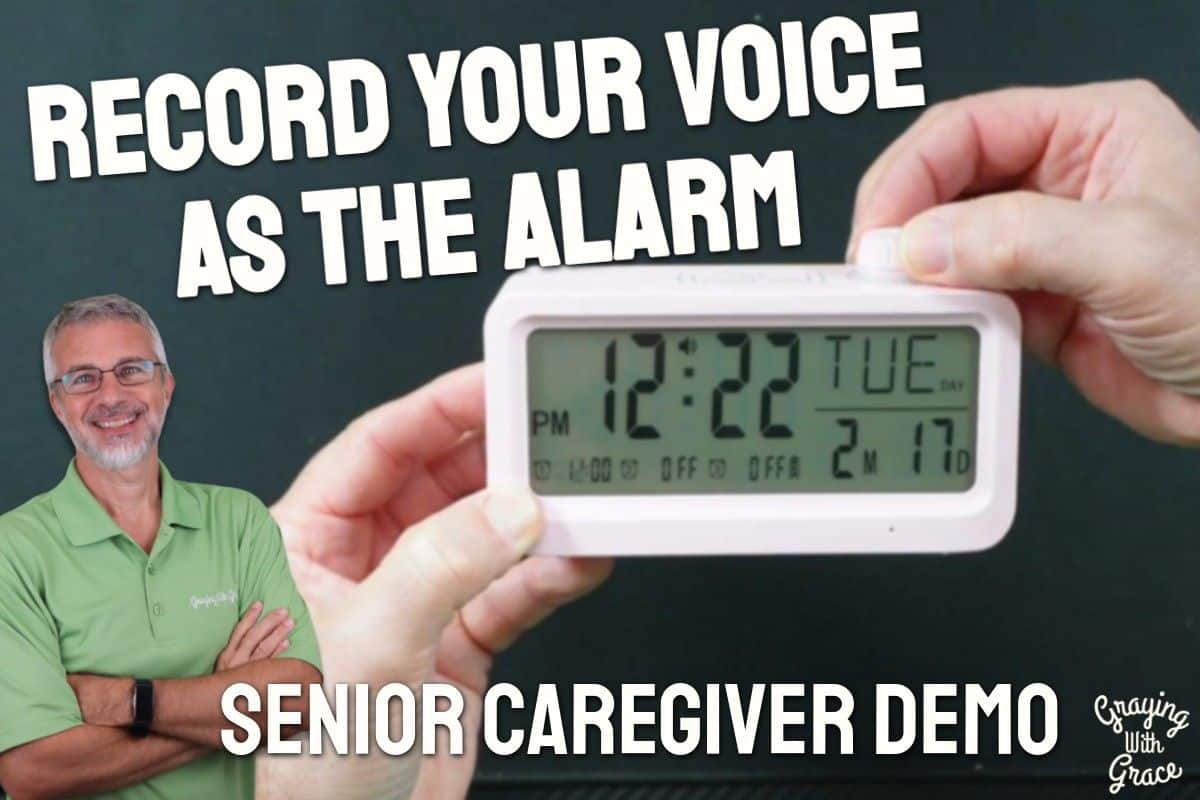
That’s the idea behind the Bovintex Medication Pill Reminder Talking Alarm Clock. As a Certified Senior Advisor and Senior Home Safety Specialist, I personally evaluated this device hands-on and recorded a full video walkthrough so you can see exactly how it works before you decide. This review covers every feature that matters — the good, the not-so-perfect, and who this clock is genuinely built for.


Quick Takeaways
- Solves: Missed medication doses caused by ignored beeping alarms
- Best for: Older adults managing 1-3 daily medication times, especially those with mild memory challenges or mild hearing loss
- Worth it if: You want a simple, standalone device with no tech learning curve
- Best feature: Record a family member’s voice for warm, personalized reminders that actually get attention
- Biggest limitation: Only three alarms — not ideal for complex, multi-dose schedules
How This Could Help You
Picture this: it’s 8 AM, and your dad is still in his chair watching the morning news. His blood pressure medication is sitting on the kitchen counter. A generic alarm goes off — he mutes it without a second thought.
Now picture the same moment, but this time your voice comes through the speaker: “Hey Dad, it’s 8 o’clock. Time to take your heart medicine.” That’s a different experience entirely.
The Bovintex Talking Alarm Clock replaces impersonal beeps with recorded voice messages — yours, a grandchild’s, a spouse’s — tied directly to scheduled alarm times. You get three separate alarms to cover morning, midday, and evening doses.
Beyond medications, this works beautifully for hydration reminders, daily exercise nudges, or appointment alerts. Any recurring daily task that tends to slip through the cracks becomes manageable with a friendly voice prompt.
For older adults who lose track of the date, the touch-to-talk feature is a quiet bonus. One gentle tap on the top of the device and it announces the full time, day, and date out loud. No squinting at a small screen required.
This kind of structure reduces the mental load that comes with managing a daily health routine. And that reduction in cognitive effort — especially for someone navigating early memory changes — genuinely improves quality of life.
Ready to discover more innovative strategies for healthy, comfortable aging? Subscribe to our newsletter for expert-tested tips and product recommendations designed specifically for older adults.
Important Details You Should Know
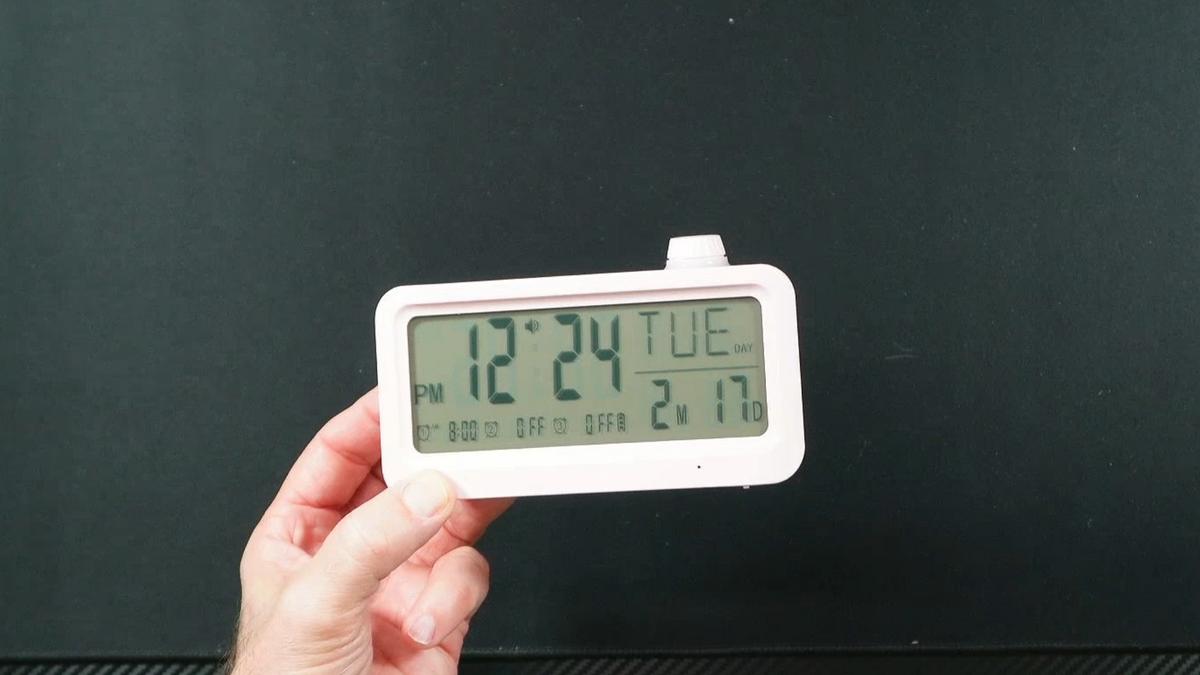
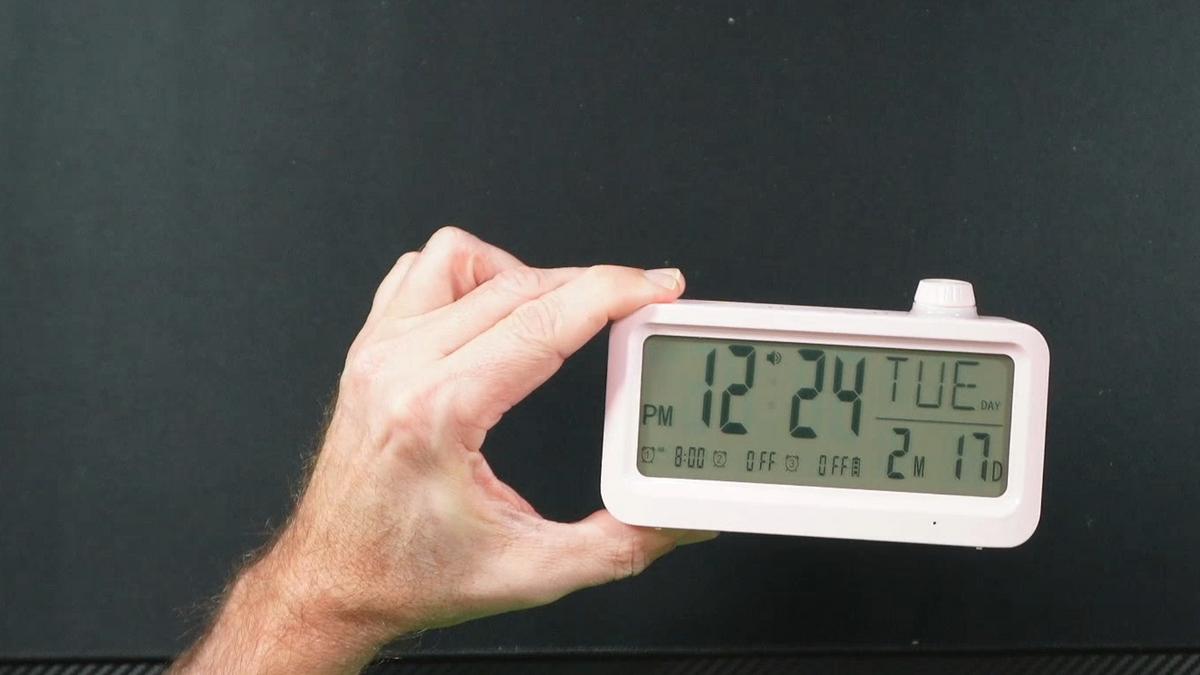
The Bovintex is compact — small enough to sit comfortably on a nightstand, a medication shelf, or even a kitchen counter without crowding the space. It travels easily too, fitting into a bag or carry-on without taking up meaningful room.
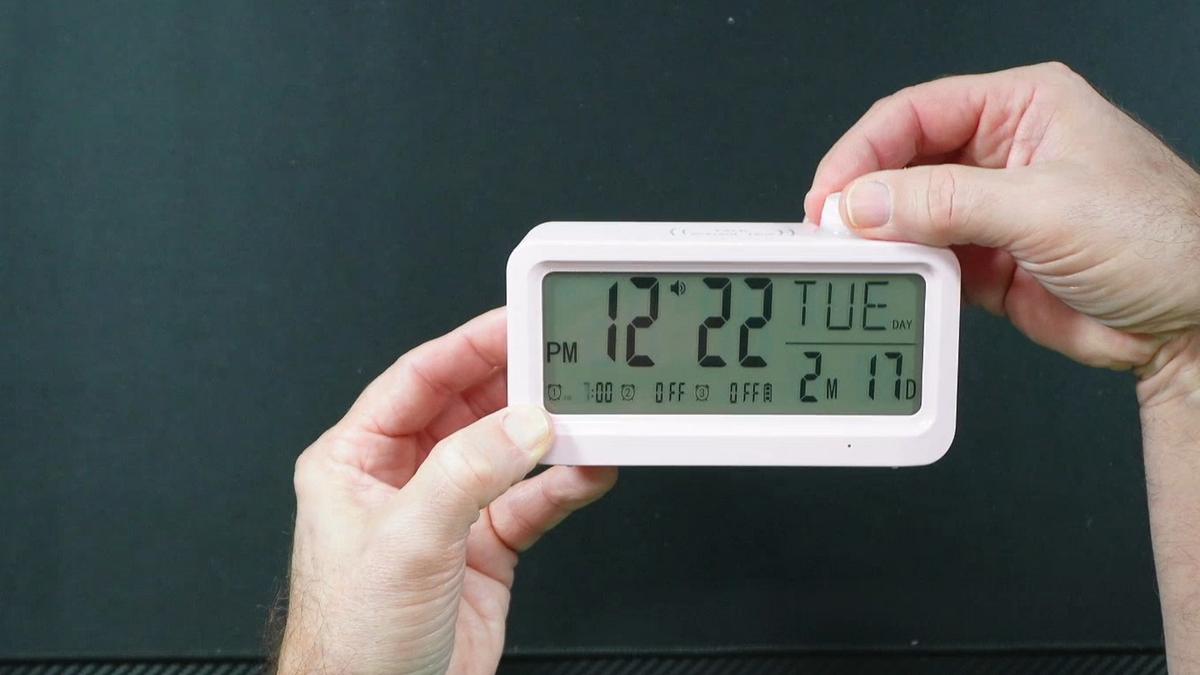
The LCD screen displays the time, date, and day of the week in a high-contrast format. An auto-dimming sensor adjusts brightness automatically based on the light in the room, and manual bright and dim buttons give additional control.
It comes in multiple colors including pink, black, and blue — a small detail, but one that matters when a device lives on someone’s nightstand every day.
The build feels solid and practical rather than flimsy. It’s not a heavy-duty industrial device, but it’s designed for daily use on stable surfaces and holds up well in normal home environments.
Getting Started
Setup is refreshingly straightforward. As I demonstrated in the video, setting the current time and date takes just a minute or two using a simple dial on the top of the device and a dedicated set button on the back.
You hold the set button until the display starts flashing, then turn the dial to adjust hours, minutes, year, month, and day. Press the dial to confirm each setting. That’s genuinely all there is to it.
Recording a voice message is equally simple. Hold down the record button until it beeps, speak your reminder, then release. The device confirms with an audible “Recording saved.” In the video, you can hear me record: “Hey Mom, it’s 8 AM. Time to take your heart medicine.” — and play it right back with a single short press.
No apps to download. No passwords to create. No Bluetooth pairing. You plug it in via USB to charge, and you’re ready to go.
A family member or caregiver typically handles the initial setup, which takes under ten minutes total. After that, the older adult using it needs only to respond when the alarm goes off — or tap the top to hear the time.
Features That Matter to You
The voice recording feature is the heart of this device, and it’s worth understanding why it works so well. When I evaluated this product, I noticed that the playback quality is clear and natural-sounding — it doesn’t feel like a robotic computer voice. It sounds like a real person, because it is one.
For someone living with mild dementia, that distinction matters enormously. As I mentioned in the video, people with dementia tend to respond much better to a warm, familiar voice than to a blaring alarm that can actually increase anxiety. A grandchild’s voice saying “Grandpa, time for your noon pills” is calming and familiar — it prompts recognition and action without confusion or distress.
The three adjustable volume levels are a practical accessibility feature. As I demonstrated in the video, the high volume setting is genuinely loud enough to be heard clearly across a room — more than sufficient for older adults with mild hearing loss. I used the medium setting during my evaluation and found it quite comfortable for normal hearing.
The Bovintex Talking Alarm Clock also has a clever safety benefit I want to highlight: it keeps working during power outages. Because it runs on a rechargeable internal battery, a power interruption won’t silence your medication reminder at a critical moment.
The touch-to-talk function on top of the device is remarkably sensitive. As I demonstrated in the video, you barely graze it with a fingertip and it immediately announces the current time and full date. There’s no pressing, no holding — just a light touch. That’s a meaningful design choice for someone with arthritis or reduced hand strength.
Real Life Experience
When I evaluated this product, I noticed that the dial-based setup feels much more intuitive than punching tiny buttons repeatedly. Turning a knob to scroll through hours and dates is smooth and forgiving — you don’t overshoot easily, and you can correct mistakes without starting over.
The recording process does take a little practice the first time. But as I noted in the video, once you’ve done it once or twice, it becomes second nature. The system confirms each saved recording audibly, so you always know it took.
Day to day, the device is low-maintenance. Charge it fully in about three hours via USB, and it runs for approximately 30 days with daily alarm use. I’d suggest building a weekly charging habit — Sunday evenings work well — rather than waiting for the battery to run low.
The auto-dimming screen is a genuine quality-of-life feature at night. It softens automatically in a dark room so it doesn’t glow like a beacon from the nightstand, but brightens during the day so it’s easy to read at a glance.
In the video, you can see that the buttons on the back have reasonably bold labels. They’re not enormous, but they’re clear enough to identify without a magnifying glass. For the initial setup, having a family member assist is practical — after that, the older adult using the device doesn’t typically need to interact with the back buttons at all.
Will You Be Able to Use It?
The day-to-day interaction with this device is minimal and manageable for most older adults. Once it’s set up, the primary actions are listening to alarms and occasionally tapping the top to hear the time — neither requires fine motor skill or significant dexterity.
The touch-to-talk sensor responds to the lightest contact, which is a real advantage for someone with arthritic fingers. You don’t need to grip anything or apply pressure.
For someone with mild cognitive decline, the simplicity is its greatest strength. There are no menus to navigate, no modes to switch between, no screen interactions required during normal use. The device just runs, and reminds.
Initial setup will likely require a family member or caregiver — particularly the voice recording step. But that can be done once during a visit and left in place indefinitely, or updated whenever schedules change.
Important Considerations
Three alarms is sufficient for most standard medication schedules — but if your loved one takes medications at four or more distinct times daily, this device alone won’t cover the full routine. In that case, it might work best alongside a separate pill organizer with its own reminder system.
This device relies entirely on sound. For someone with moderate to severe hearing loss, the three volume levels may not be enough. There is no vibration alert option, no flashing light alert, and no integration with hearing aid systems. If hearing loss is significant, look for a supplemental solution.
Similarly, this is not a monitoring device. It doesn’t notify a caregiver if the alarm was acknowledged or if a pill was actually taken. For situations where medication compliance needs to be verified remotely, you’d need a different or additional tool.
The device has no specified waterproof rating. Keep it on stable, dry surfaces — a nightstand, a dresser, a kitchen shelf — and away from sinks or bathroom counters near water.
For advanced dementia where someone may no longer respond reliably to any audio prompt, this device is best used as one part of a broader care plan rather than a standalone solution. Familiar voice cues help, but they aren’t a substitute for in-person caregiver oversight at that stage.
Always consult with your doctor or occupational therapist before making health-related product decisions.
Help When You Need It
Warranty and customer support details for the Bovintex are best confirmed directly through the Amazon product listing, as policies can vary and update over time. Amazon’s standard buyer protections also apply to purchases made through the platform.
The device charges via standard USB, which means replacement cables are universally available and inexpensive if the original is ever misplaced.
If you run into setup questions, the recording and alarm-setting process is simple enough that most caregivers can troubleshoot it by re-reading the instructions or watching the video walkthrough I recorded.
Understanding the Cost
The Bovintex Talking Alarm Clock sits at an accessible price point for what it delivers. Compare it against professional medication management services, smart home monitoring systems, or even the hourly cost of a caregiver making daily reminder calls — and the math strongly favors this device.
There are no subscription fees, no app charges, and no ongoing battery costs. One purchase and one USB cable is all you need, indefinitely.
For families considering higher-tech alternatives like smart pill dispensers with cellular connectivity, those devices solve a broader set of problems but come at a significantly higher cost and require ongoing setup and maintenance. The Bovintex is the right tool when the core need is a reliable, personal voice reminder — nothing more complicated than that.
Making It Work for You
Get the most from this device by involving the older adult in choosing whose voice records the reminders. If a grandchild rarely gets to visit, have them record all three alarms during the next family gathering. That moment of hearing a beloved grandchild’s voice three times a day has value well beyond medication management.
Keep a small laminated card taped to the back of the device with simple instructions for adjusting the volume or re-recording a message. That way, if something shifts and the older adult needs to make a change independently, the steps are right there.
Set a weekly charging reminder for yourself — Sunday evening is easy to remember. Thirty days of battery life means you’ll need to charge roughly once a month, but a predictable weekly routine is more reliable than waiting for the battery to quietly run out.
If your loved one tends to ignore alarms in general, start with the highest volume setting and choose the most compelling voice available — usually a child or grandchild. Combine the alarm with a consistent physical habit, like placing the pill bottles directly next to the device, so the reminder and the action are in the same spot.
For older adults managing early memory challenges, the touch-to-talk date feature is worth actively encouraging. A quick morning tap to hear the full date and day can quietly anchor someone’s sense of time and routine — a small but meaningful cognitive support.
Our Recommendation
The Bovintex Talking Alarm Clock earns a genuine recommendation from me — with a clear picture of who it’s right for.
If your older adult takes medications at one to three times daily, has normal to mildly reduced hearing, and would benefit from a simple and dignified reminder system, this device is an excellent fit. It’s especially compelling for families who want to add a personal touch through recorded voice messages.
It’s also a thoughtful gift that solves a real, specific problem. It doesn’t feel clinical or patronizing — it feels like care expressed in a practical form.
If the medication schedule is complex (four or more daily doses), if hearing loss is significant, or if remote monitoring and verification are needed, look at more comprehensive medication management systems as a primary or supplemental tool.
For the majority of older adults managing a standard daily medication routine, this device does exactly what it promises — reliably, simply, and with warmth.
Where to Get It
You can check current pricing and availability for the Bovintex Medication Pill Reminder Talking Alarm Clock on Amazon, where it’s also available in multiple colors including pink, black, and blue. Stock and pricing can change, so it’s worth checking the current listing for the most up-to-date information.
Conclusion
Missed medications are one of the most preventable health risks facing older adults — and the solution doesn’t have to be complicated or expensive. The Bovintex Talking Alarm Clock turns a simple, loving voice into a reliable daily health safeguard.
Whether you’re shopping for a parent, a grandparent, or yourself, this device delivers real peace of mind through real simplicity. Set it up once, record a voice that matters, and let it do the work every single day.
Have questions about this device or want to share how voice reminders have worked in your family? Drop a comment below — I read every one, and your experience might be exactly what another family needs to hear.