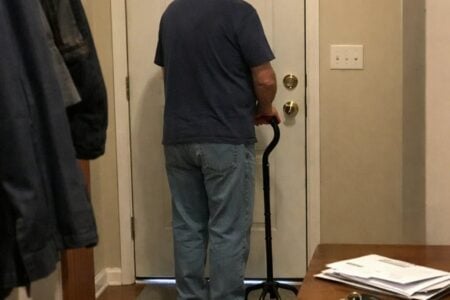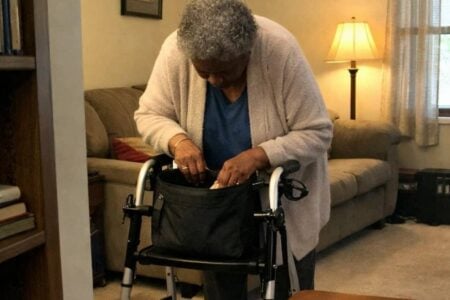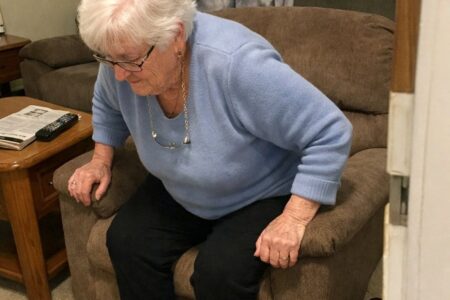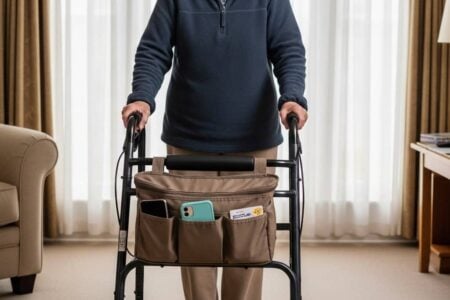
If you have been helping a parent or spouse get up from a chair by grabbing their arm and hoping for the best, you already know that approach has a short shelf life. Arms get strained, backs give out, and for the person being helped, it can feel uncertain and even frightening.
A proper transfer belt for elderly family members changes that dynamic completely. It gives the caregiver a real grip point and gives the person being helped something secure to transfer against, making the whole process safer and more dignified for everyone involved.
As a Certified Senior Advisor (CSA) and Senior Home Safety Specialist (SHSS), I have evaluated a lot of transfer and mobility aids. The Rhino Valley Gait Belt with 7 Handles caught my attention because it takes a familiar tool and genuinely improves on it. I tested this one hands-on and want to share exactly what I found.


Quick Takeaways
- Problem it solves: Eliminates the unsafe habit of grabbing arms or clothing during transfers and walking assists
- Who benefits most: Family caregivers, home health aides, and older adults with limited mobility who need daily transfer support
- Worth the investment? Yes, especially for households doing multiple transfers daily
- Best feature for seniors: Wide belt construction that spreads pressure across the waist rather than concentrating it on one narrow band
- Biggest limitation: Fit must be snug to work correctly, so caregivers need a short learning curve on proper application
How This Could Help You
Think about the last time you helped someone stand up from a low chair or a bed. Where did your hands go? Most family caregivers grab whatever is within reach, and that usually means an arm, a shoulder, or a piece of clothing. None of those options give you real control, and all of them risk injury to both people.
A Rhino Valley Gait Belt with 7 Handles gives you a stable, purpose-built grip point right at the center of gravity. That changes everything about how a transfer feels.
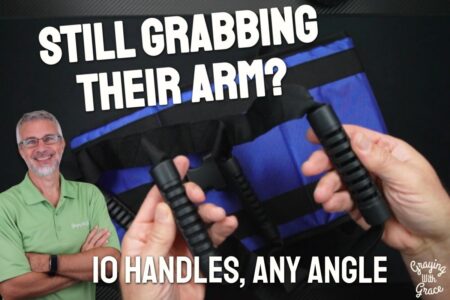
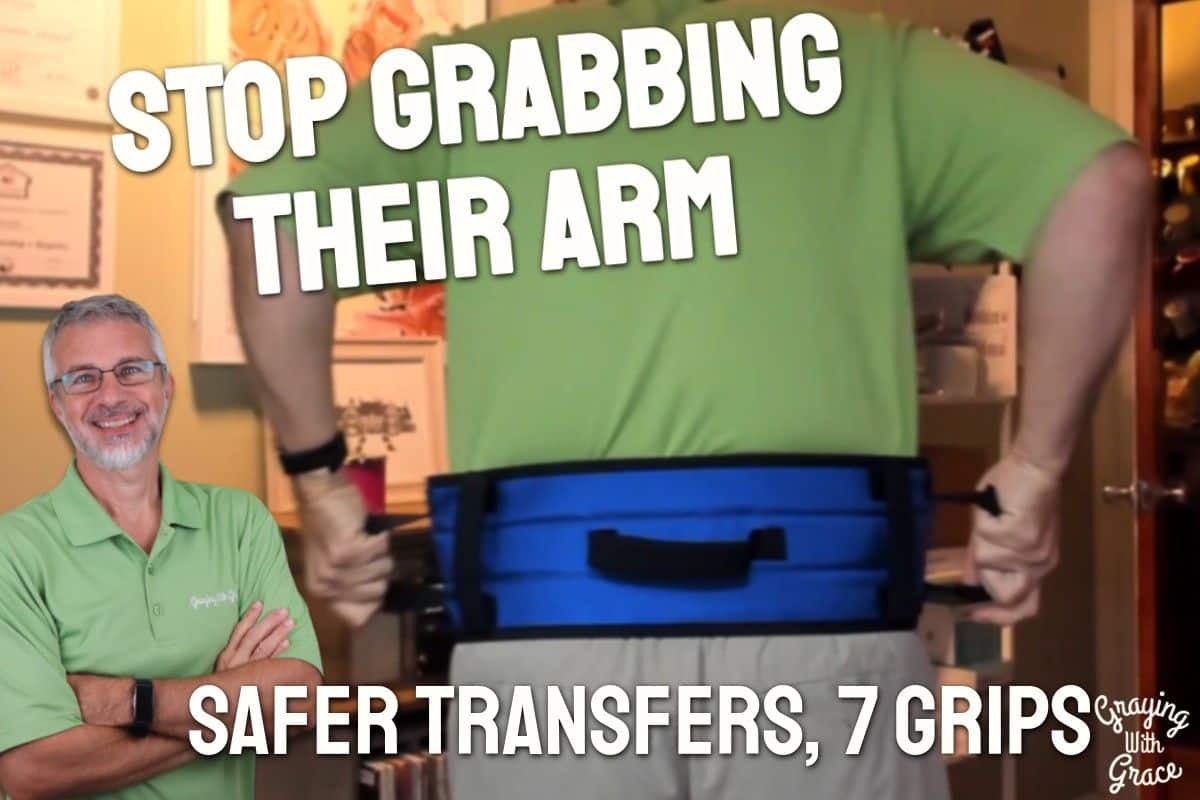
The seven handles are not just a marketing number. As I demonstrated in the video, sit-to-stand transfers and walking assist transfers require your hand in completely different positions. Four vertical handles support upward lifting motions, while three horizontal handles along the sides are designed specifically for guiding someone while they walk. Having both means you are not forcing one grip to work for two completely different jobs.
Are you doing transfers more than once a day? This belt is built for that kind of regular use. Home health aides doing multiple transfers per shift will especially appreciate having the right handle available without repositioning.
For older adults themselves, there is a real psychological benefit to a structured transfer. Knowing that the caregiver has a firm, reliable grip reduces the instinct to tense up or grab back, which actually makes the transfer smoother and safer.
Ready to discover more innovative strategies for healthy, comfortable aging? Subscribe to our newsletter for expert-tested tips and product recommendations designed specifically for older adults.
Important Details You Should Know
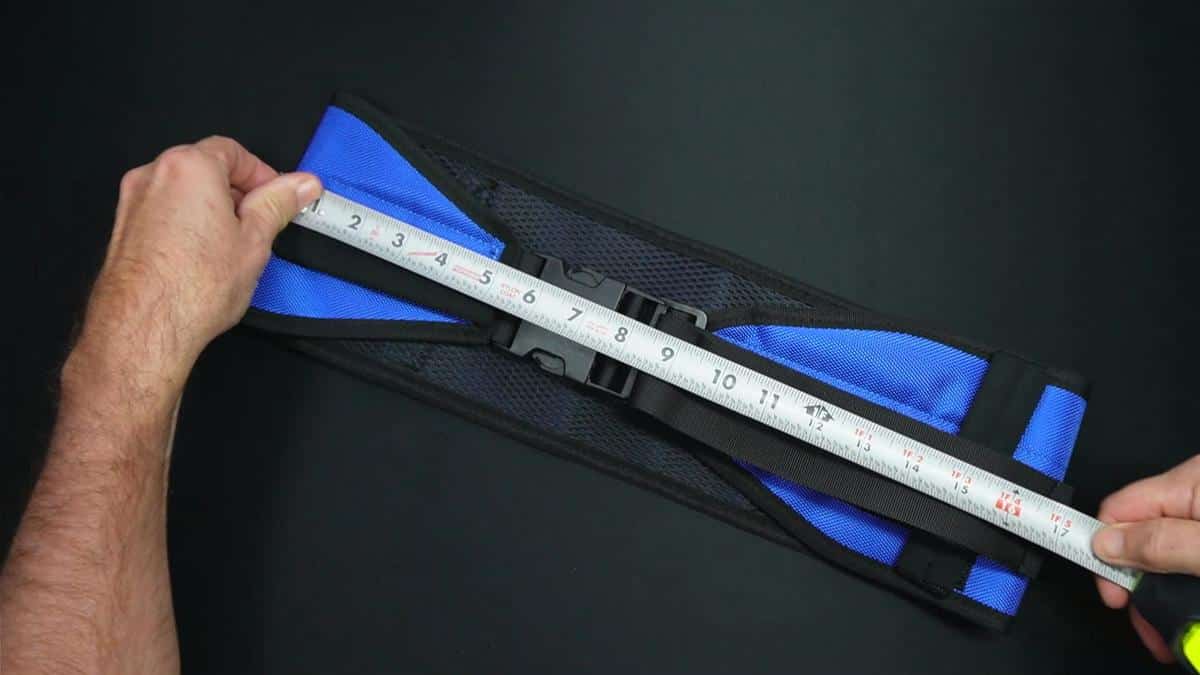
When I evaluated this product, I noticed that the belt measures just over five inches wide. That is noticeably wider than the single-strap gait belts you see in most home health catalogs, and that width matters for comfort.
A wider belt spreads the pressure across a larger area of the waist instead of creating a narrow band of concentrated force. For someone being transferred repeatedly throughout the day, that difference is significant.
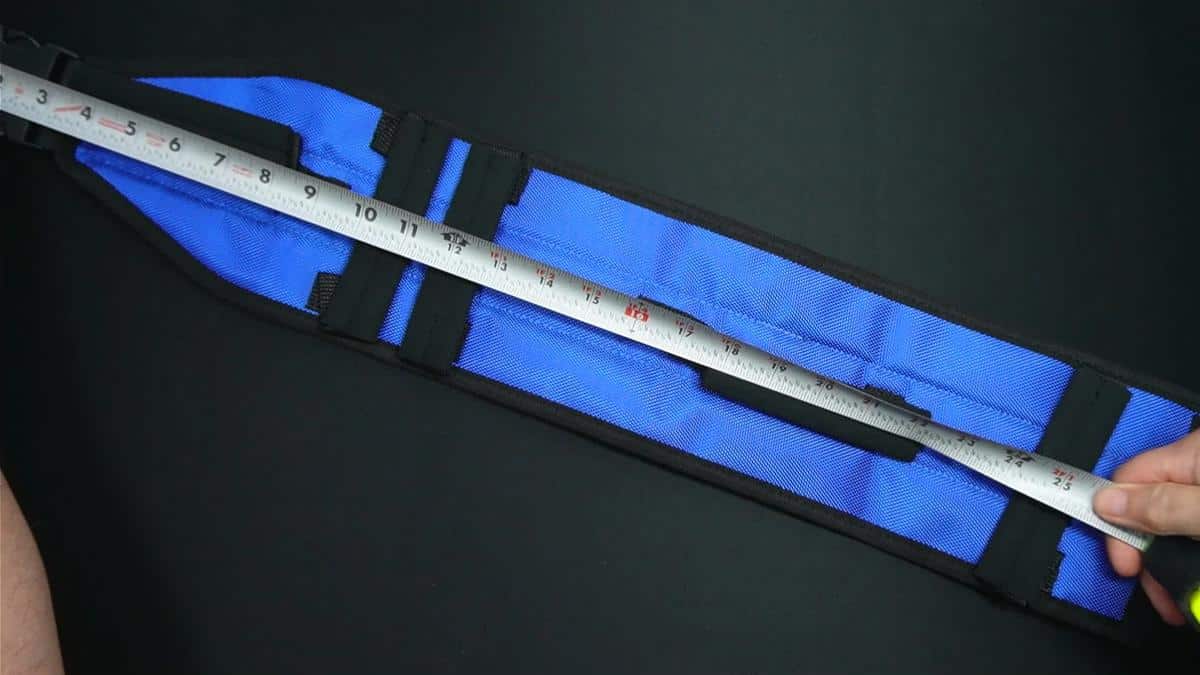
The adjustment range is generous. As I demonstrated in the video, the belt extends to fit a waist circumference of up to approximately 58 inches and tightens down to around 34 inches, accounting for clothing. That covers a wide range of body types, including larger individuals who may find standard gait belts fall short.
The material is 1680D PVC Oxford cloth, which sounds industrial but actually feels flexible and substantial in hand. It is not at all flimsy, and it bends naturally rather than holding a stiff shape. The inner surface has an air mesh fabric layer that adds breathability against the user’s skin.
Getting Started
The belt arrives ready to use right out of the package. There is no assembly or setup required.
To put it on, wrap the belt around the user’s waist over their clothing, thread the strap through the adjustment buckle to get the right fit, and snap the quick-release buckle closed. Snug but comfortable is the goal, not tight. You want it secure enough that it does not slide up the torso during a transfer.
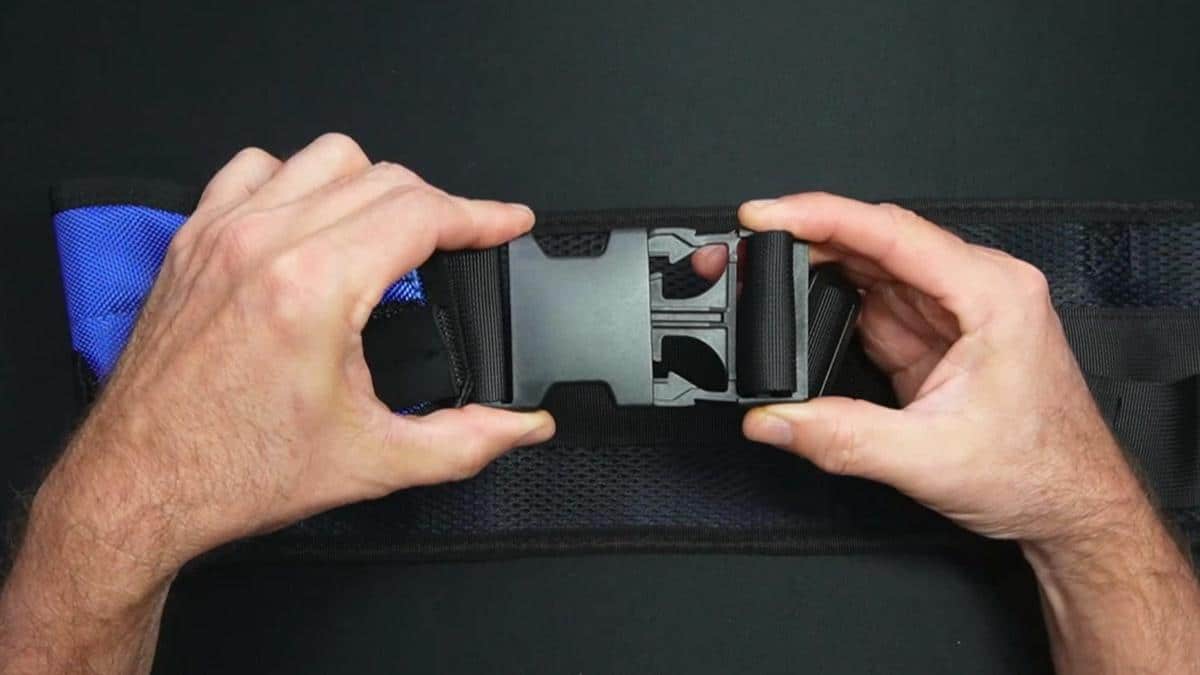
In the video, you can see that the quick-release buckle opens with a simple side squeeze and pops open automatically. No pulling, no fumbling. That matters when someone is standing and waiting for you to remove the belt.
I would recommend practicing the buckle operation a few times before using it in a real transfer situation. Thirty seconds of practice at the kitchen table means no hesitation when it counts.
Features That Matter to You
The seven-handle design is the standout feature of the Rhino Valley Gait Belt, and it is genuinely thoughtful engineering rather than a gimmick. Most gait belts offer one or two grip options. This one anticipates that every transfer is different.
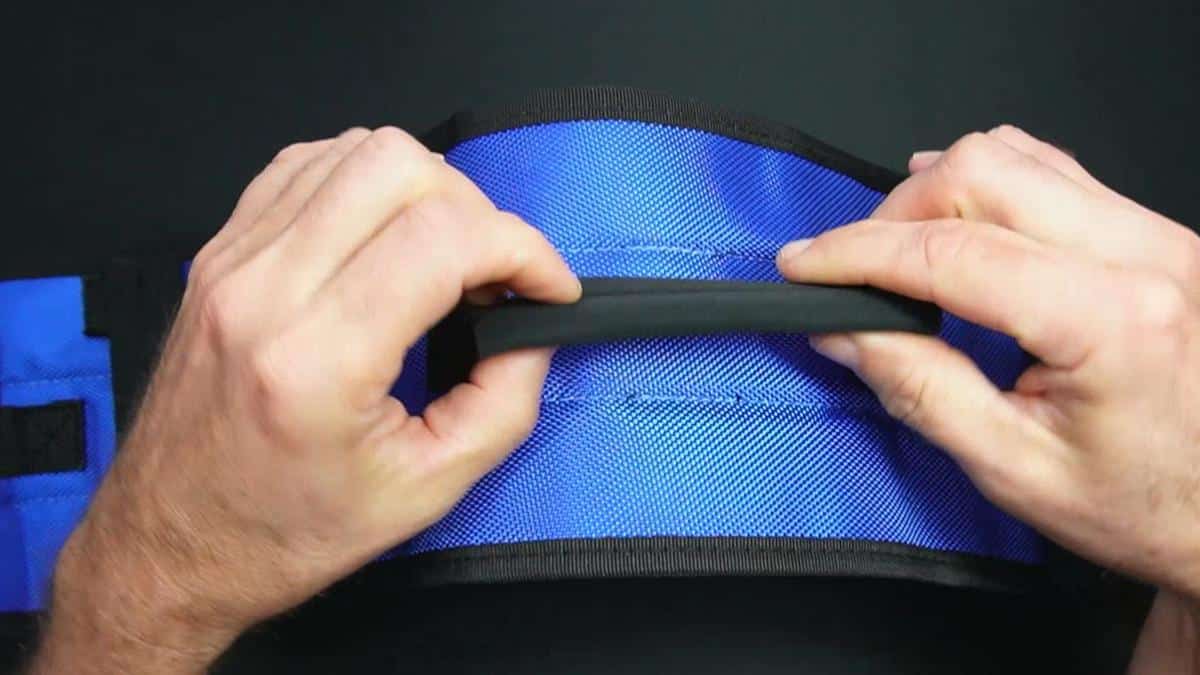
The handles themselves are padded with soft neoprene and have a non-slip surface. As I demonstrated in the video, that combination means you get a secure grip without hard plastic edges digging into your palm during a full-effort transfer. Your hands will thank you after a long caregiving day.
The reinforced stitching at every handle attachment point is something I specifically pulled on during my evaluation. The seams held firmly without any sign of stress. Good stitching is the kind of detail that does not matter until it matters enormously.
The quick-release buckle is another safety-forward detail. In a situation where someone needs to sit down quickly or is losing their footing, the last thing a caregiver needs is a buckle that requires two hands and three steps to open. This one releases with a single squeeze.
Real Life Experience
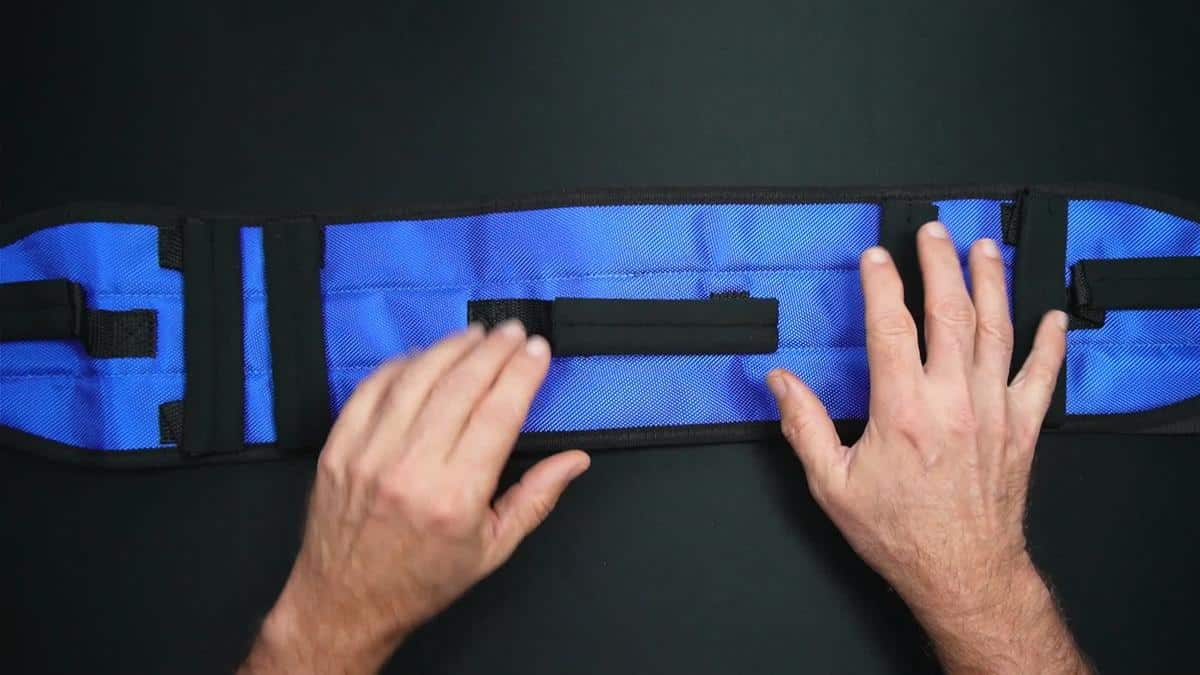
When I evaluated this product, I noticed that the fabric flexes naturally with movement rather than holding a rigid shape. That means it moves with the person wearing it, which reduces the chance of it shifting or bunching during a transfer.
The air mesh inner layer is a small detail with a meaningful real-world impact. Transfers take effort, and bodies get warm. A breathable inner surface keeps the belt from feeling like a heat trap, especially for someone wearing it through multiple transitions in a day.
As I demonstrated in the video, the belt can be used both for full sit-to-stand transfers and as a stability handle during walking. The horizontal side handles are specifically designed for the walking assist use case, giving the caregiver a low-profile side grip that feels natural while walking alongside someone.
Durability-wise, the stitching impressed me. In the video, you can see that pulling firmly on the handles produced no separation at the seam points. The area I would monitor over time is the buckle mechanism. It feels solid and well-made, but the buckle is the highest-stress component on any transfer belt and the most likely wear point with heavy daily use.
Cleaning is straightforward. A damp cloth handles most surface dirt, and the material does not appear to absorb moisture readily. For a tool that gets used in caregiving situations, easy cleanup is a practical necessity, not a luxury.
Will You Be Able to Use It?
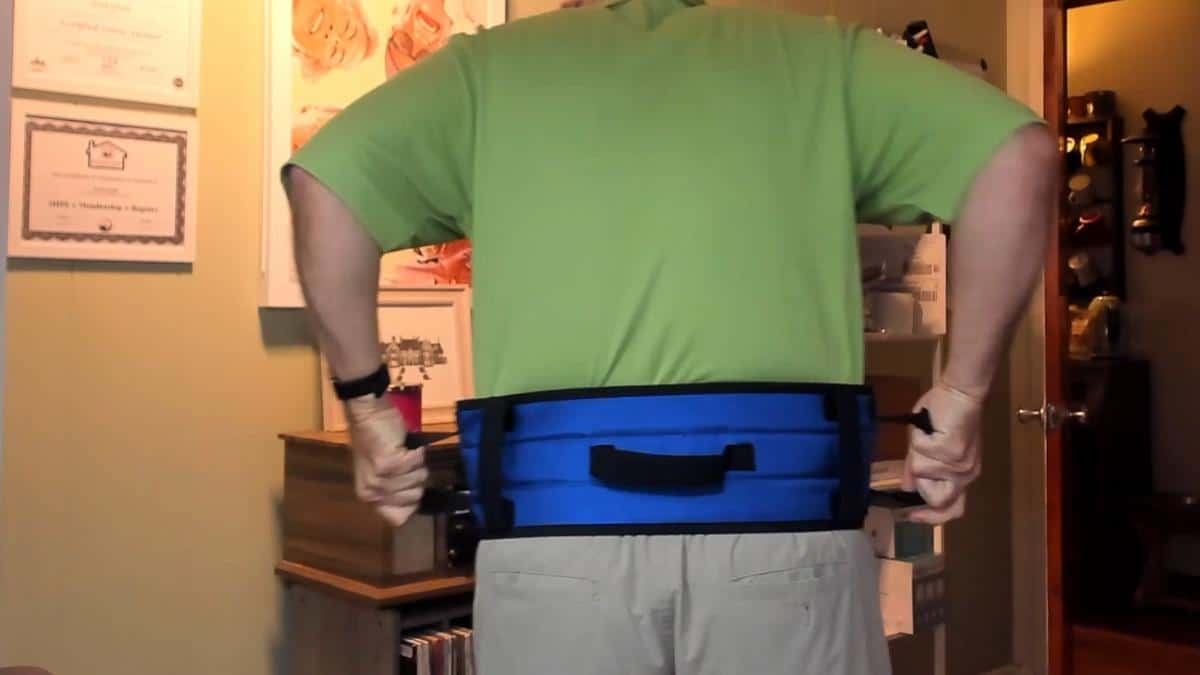
This belt is designed to be used by a caregiver on the person needing assistance. It is not a self-use mobility aid. The older adult wears the belt, and the caregiver uses the handles to assist with movement.
For the caregiver, basic hand strength and the ability to grip the neoprene handles are the main physical requirements. The padded handles reduce fatigue compared to hard-grip alternatives, which is helpful for caregivers with mild arthritis or hand sensitivity.
The adjustment range accommodates most adult body types, from slender frames to larger bariatric sizes. Proper fit is essential to function, so take a moment to adjust the belt correctly before each use rather than leaving it set from the last session.
Important Considerations
A gait belt is an assistive tool, not a substitute for professional training. If you are new to providing transfer assistance, I strongly encourage working with a physical therapist or occupational therapist who can show you proper body mechanics. The belt helps, but technique matters just as much.
Always consult with your doctor or occupational therapist before making health-related product decisions, especially when transfers are part of a rehabilitation plan.
This belt is not appropriate as a fall arrest device or for use with someone who is actively falling. It is a transfer and walking assist tool for controlled movement with a caregiver present.
For individuals with significant abdominal wounds, recent abdominal surgery, a colostomy, or fragile skin conditions around the waist, this type of belt may not be suitable. Consult a healthcare provider before use in those situations.
The belt requires a caregiver to be present and actively assisting. It does not provide independent mobility support on its own.
Help When You Need It
Rhino Valley sells through Amazon, which means customer service and return options are handled through Amazon’s standard policies. Amazon’s return window is typically 30 days for most products, giving you time to evaluate the fit and function.
For product-specific questions or issues, reaching out through the Amazon seller messaging system is generally the fastest path to a response. Check the product listing for any manufacturer warranty information at the time of purchase.
Understanding the Cost
Gait belts span a wide range in the market, from basic single-strap options to more specialized transfer systems. The Rhino Valley Gait Belt with 7 Handles sits in the mid-range category, and the seven-handle design, wide construction, and bariatric sizing represent genuine added value over budget single-grip alternatives.
Consider what you are replacing. If the current plan is grabbing an arm or hoping for the best, any investment in a proper transfer belt pays for itself in avoided injuries to both the caregiver and the person being helped.
For households where transfers happen daily, a well-made belt like this one is a long-term tool. Durable materials and reinforced stitching mean you are not replacing it every few months.
Making It Work for You
Always fit the belt snug, not loose. As I noted in the video, a loose belt will shift and slide during a transfer, which defeats the purpose. Snug but comfortable is the target.
Match the handle to the task. Use the vertical handles when helping someone rise to standing, and switch to the horizontal side handles when transitioning to a walking assist. That is exactly what those seven handles are designed for.
If the person you are helping is anxious about transfers, let them feel the belt on their waist before you start. Knowing that the caregiver has a firm grip point often reduces the natural instinct to tense up, which makes the transfer easier for both of you.
Inspect the belt periodically, especially the buckle and the stitching at handle attachment points. Any signs of fraying or buckle wear are your cue to replace the belt before it becomes a safety issue.
Consider pairing this belt with non-slip footwear for the person being transferred. The belt handles the upper-body assist; stable footing handles the rest.
Our Recommendation
The Rhino Valley Gait Belt with 7 Handles is a genuinely well-thought-out transfer belt, and I recommend it for family caregivers and home health aides who are doing regular transfers with older adults.
The seven-handle layout solves a real problem that single-grip belts ignore. Transfers are not one-size-fits-all movements, and having the right grip for the right moment reduces strain and improves safety for everyone involved.
If you are doing one or more transfers daily, or if the person you are helping is larger and existing belts have not fit well, this one is worth a close look. The wide construction, generous adjustment range, and bariatric accommodation make it a practical choice for a range of care situations.
If you are looking for something lighter and more minimal for occasional use with a very mobile individual, a simpler single-strap belt might serve you just as well. But for consistent caregiving work, the extra handle options and wider build of this belt are meaningful advantages.
Where to Get It
You can check current availability and read buyer reviews for the Rhino Valley Gait Belt with 7 Handles through the link below. Stock and pricing can change, so check the listing for the most current details.
Wrapping Up
A gait belt is one of those tools that sounds clinical and optional until the moment you actually need one. Then it becomes the thing that turns a risky, improvised transfer into a controlled, safe one for everybody involved.
Seven handles, a wide breathable build, quick-release buckle, and a fit range that covers most adults, the Rhino Valley Gait Belt with 7 Handles delivers on the things that matter most in a daily-use transfer aid.
If you are doing transfers at home right now, I would love to hear what has been the hardest part of figuring that out. Drop a comment or question below and let us know. That is exactly the kind of real-world insight that helps everyone in this community.