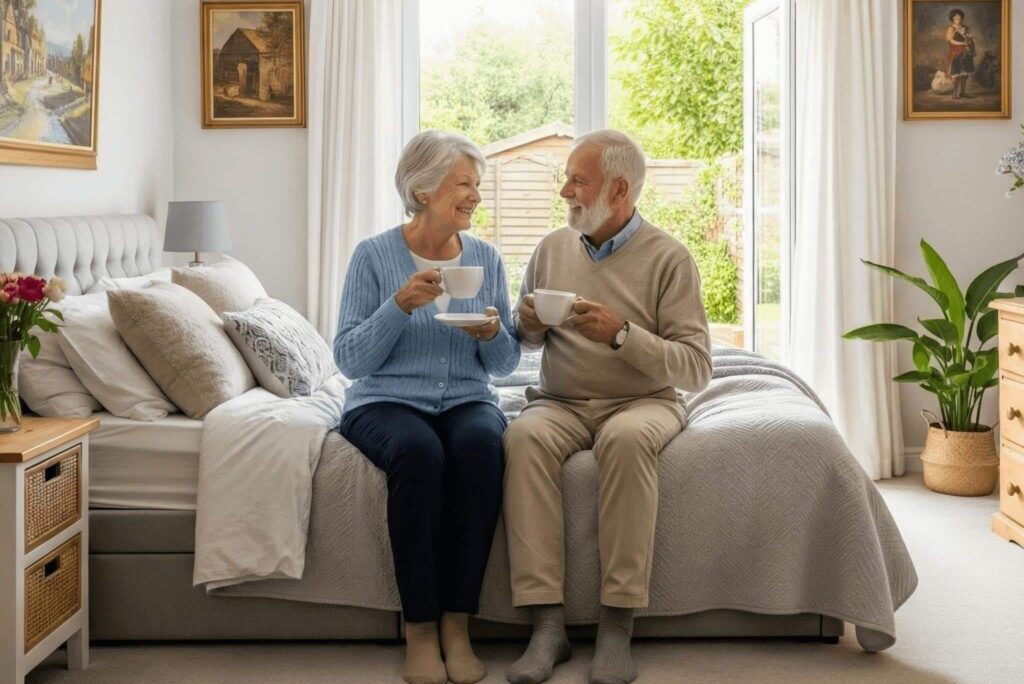
Have you ever caught yourself holding your breath as your parent climbs the stairs? Or noticed them finding excuses to stay downstairs all day, even skipping their afternoon nap rather than making the trip up?
You’re not imagining things. And if you’re reading this article, you already know something needs to change.
Here’s what might surprise you: the hardest part isn’t the actual move. It’s having the conversation without it feeling like you’re taking away someone’s independence. But what if I told you there’s a way to approach this that actually preserves dignity and autonomy—while dramatically improving daily safety and comfort?

The “3 Warning Signs Test” – When Stairs Become a Safety Issue
Most families wait too long to have this conversation. They wait for a fall, an emergency, or a crisis that forces the decision.
But your gut instinct is usually right long before that happens.
Warning Sign #1: Physical Hesitation or Avoidance
Watch for these specific behaviors:
Pausing at the bottom of stairs. That moment of hesitation—taking a breath, gripping the railing before starting—tells you everything. The person recognizes the challenge even if they haven’t said it out loud.
Planning entire days around minimizing stair trips. Keeping clothes downstairs. Avoiding the second floor after morning. Choosing to nap in a recliner rather than going upstairs to bed.
Making multiple excuses to delay going upstairs. “I’ll go up in a minute” turns into hours. Or you notice them waiting until you’re available to walk behind them.
These aren’t signs of weakness. They’re signs of wisdom—the body sending clear signals that the task requires too much effort or creates too much risk.
Warning Sign #2: Near-Misses or Falls
Here’s a sobering truth: by the time there’s an actual fall, the risk has been building for months.
Near-misses count. That moment of losing balance halfway up. Grabbing the railing urgently. The “I almost fell” that gets laughed off.
Research shows that one fall significantly increases the risk of future falls. But more importantly, near-misses indicate that balance, strength, or confidence is already compromised.
Physical evidence tells the story. Look for increased grip marks on walls. Scuff marks at inconsistent heights. A railing that’s suddenly looser from being gripped too tightly.
If your parent mentions even one close call, it’s time for this conversation.
Warning Sign #3: Lifestyle Limitations
Sometimes the warning signs aren’t about the stairs themselves—they’re about how life is reorganizing around avoiding them.
Behavioral changes: Doing laundry less frequently because carrying baskets upstairs is exhausting. Keeping duplicate toiletries on both floors. Creating “stations” so everything needed is accessible without a second trip.
Social withdrawal: Choosing not to go upstairs to get dressed for an outing. Declining invitations because getting ready requires too much energy. Spending most of the day in one chair on the main floor.
Sleep disruption: Anxiety about nighttime bathroom trips. Sleeping poorly because of stair-related worry. Choosing to sleep upright in a chair rather than risk stairs in the dark.
The “Trust Your Gut” Principle: If you’re worried enough to be reading this article, the concern is valid. You don’t need to wait for dramatic proof. Subtle changes in behavior are your early warning system.

Having the Conversation Without the Power Struggle
This might be the most important section of this entire article.
How you approach this conversation will determine whether it becomes a collaborative solution or a family battle that drags on for months.
Timing Matters More Than You Think
Never have this conversation immediately after a scare. Right after a near-fall or exhausting stair climb, emotions run too high. Your parent will feel defensive and you’ll sound panicked. Just like approaching the bathroom safety conversation, timing and tone determine whether the conversation succeeds or creates resistance.
Choose calm, private moments. Not in front of other family members. Not at family gatherings. One-on-one conversations allow honesty without performance or embarrassment.
Frame it as forward planning, not crisis management. The magic words: “I’ve been thinking about ways to make daily life easier” works infinitely better than “I’m scared you’re going to fall.”
Language That Preserves Dignity
The words you choose will make or break this conversation.
AVOID these phrases:
- “You’re too old/weak/frail for stairs”
- “I can’t keep worrying about you”
- “You need to admit you can’t do this anymore”
- “Everyone your age does this”
USE these instead:
- “I’d sleep better knowing you don’t have to navigate stairs multiple times a day”
- “What if we could make your daily routine easier and less tiring?”
- “I’ve been thinking about changes that would give you more energy for the things you actually enjoy”
- “Other people in your situation have found this makes life better, not more limited”
Notice the difference? One approach focuses on loss and inability. The other focuses on gains and choice.
The “Test Period” Strategy
This is your secret weapon for reducing resistance. If you’ve struggled with getting your parent to accept help in other areas, this approach can make all the difference.
Suggest trying it for one month. This removes the permanence that feels like surrender. “Let’s try this for a few weeks and see if you have more energy” feels manageable.
Many older adults discover something unexpected: they actually prefer not climbing stairs multiple times daily. The stair avoidance was already happening—this just makes it official and comfortable.
Track the benefits together. After two weeks, ask: “Have you noticed any difference in your energy levels?” Let the results speak for themselves.
Speaking to Yourself (For Grace)
If you’re the person whose independence is being questioned, this section is for you.
Reframe this as strategic planning, not giving up. Making this change on your terms—before a crisis forces it—is the ultimate act of taking control of your own story.
Consider the energy equation. How much energy do stairs consume that could go toward activities you actually enjoy? Morning coffee with friends. Working in the garden. Playing with grandchildren.
Ask yourself honestly: Are you avoiding the second floor already? If yes, you’re already living with the limitation. A first-floor bedroom just makes that limitation more comfortable.
Ready to discover more innovative strategies for healthy, comfortable aging? Subscribe to our newsletter for expert-tested tips and product recommendations designed specifically for older adults.
The Financial Reality
Here’s an argument that resonates across generations:
“This change now means we can age in place longer without needing to move.” Moving to a single-story home or assisted living costs tens of thousands of dollars. Creating a first-floor bedroom costs hundreds to a few thousand.
Avoiding emergency situations saves money and trauma. A fall leading to hospitalization and rehabilitation can cost $30,000-$50,000 and might require temporary or permanent facility placement anyway.
Making this change proactively keeps control in your hands.
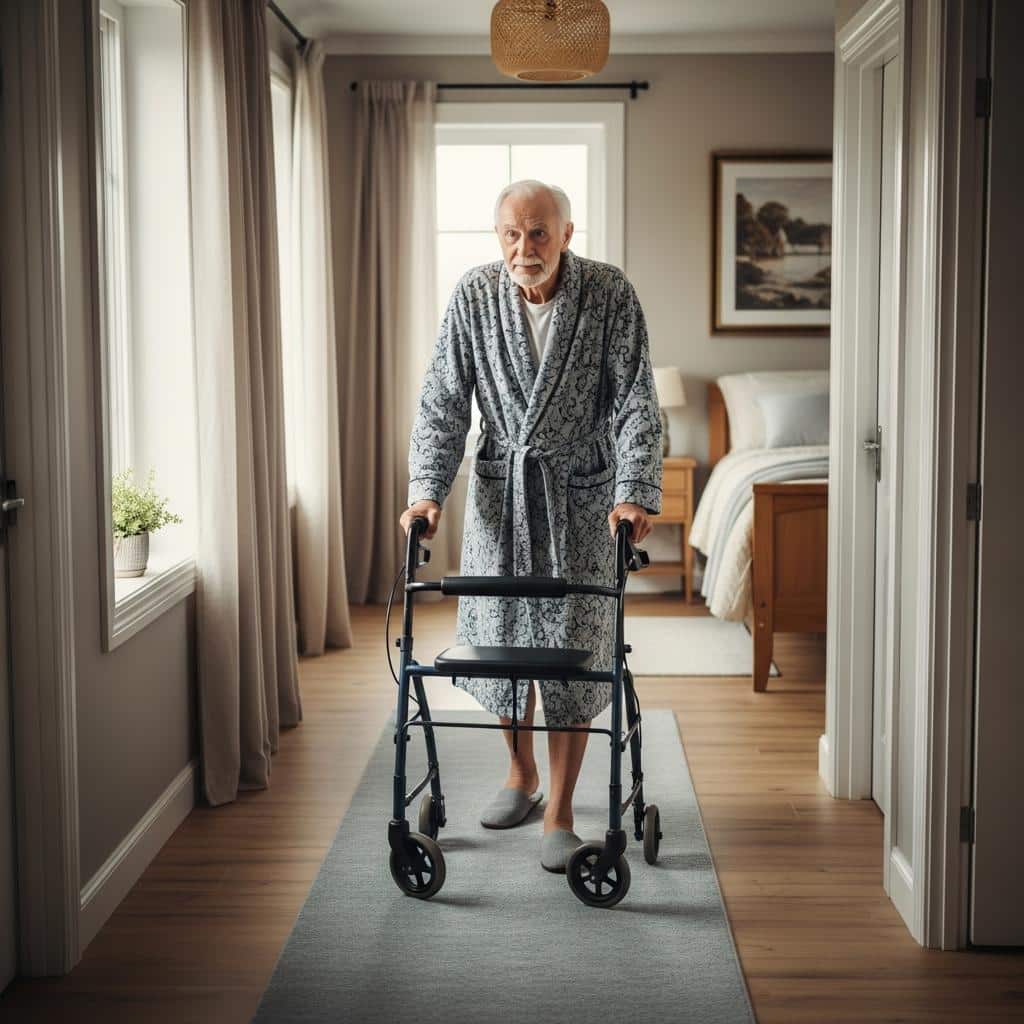
Converting a First-Floor Space Into a Real Bedroom
Here’s the good news: you probably don’t need major construction to create a comfortable, dignified first-floor bedroom.
Most homes have space that can be converted with thoughtful planning and minimal renovation.
Step 1: Choose the Right Room
Evaluate your options honestly:
Formal dining room: Often underused, usually good size, typically near kitchen and main living areas.
Den or office: May already have a door for privacy. Often positioned away from high-traffic areas.
Enclosed porch or sunroom: If climate-controlled and properly insulated, these can make beautiful bedrooms with lots of natural light.
Considerations that matter:
- Proximity to a bathroom (ideally 20 steps or less)
- Natural light (impacts mood and sleep quality)
- Privacy from main living areas (separation helps maintain dignity)
- Adequate space for a real bed plus basic furniture
- Flooring appropriate for safe walking
The room should feel like a retreat, not a medical space. If it doesn’t feel like somewhere you’d want to sleep, keep looking.
Step 2: Address Privacy Without Major Construction
Privacy concerns are often the biggest psychological barrier. No one wants to sleep in the middle of the living room.
Quick privacy solutions:
Room dividers and decorative screens create visual separation without permanent changes. Look for tall, stable options that complement your existing décor.
Curtains or pocket doors can create flexible privacy. Install a ceiling-mounted curtain track system for a cleaner look than tension rods.
Strategic furniture placement creates psychological boundaries. A bookshelf or console table positioned as a “wall” can define the sleeping space from living space.
French doors or frosted glass options maintain light flow while providing privacy. These work especially well for dining room conversions.
Sound considerations: White noise machines or quiet fans help mask household sounds and create a more restful environment.
Step 3: Essential Bedroom Elements
Creating a real bedroom—not a temporary sleeping space—makes this change feel less like giving up and more like gaining comfort.
Bed height matters: The bed should be high enough that standing up doesn’t require excessive effort, but not so high that getting in feels precarious. Generally, 20-23 inches from floor to mattress top works well for most older adults.
Bedside essentials within reach:
- Bedside table large enough for lamp, phone, water, and medications
- Multiple lighting options (overhead, bedside reading lamp, soft ambient)
- Easy-to-use light switches or touch lamps
- Outlet strips for charging devices within arm’s reach
Storage solutions that work:
- Under-bed storage for extra linens and seasonal clothing
- Wall-mounted shelves that don’t take floor space
- Compact dresser or wardrobe (not everything needs to move downstairs immediately)
- Hooks or a standing coat rack for next-day clothing
Personal touches that signal “this is my room”:
- Family photos and artwork from the upstairs bedroom
- Favorite bedding and pillows
- Comfortable reading chair if space allows
- Personal items that make it feel like home, not a hospital
Step 4: Practical Adaptations That Improve Daily Life
These details make the difference between a space that works and a space that’s loved. Many of these bedroom safety principles apply whether the room is upstairs or down—but they’re especially important when creating a new first-floor space.
Pathway to bathroom: Ensure clear, well-lit paths. Consider motion-activated nightlights along the route. Remove any threshold lips or transitions that could cause tripping.
Temperature control: First-floor temperatures often differ from upstairs. A small space heater or fan might be necessary for comfort.
Medication and morning beverage station: A small refrigerator (dorm-size) for medications requiring refrigeration or morning juice can reduce unnecessary trips to the kitchen before fully awake.
Window treatments for light control: Good blackout curtains for sleeping, but easy to open for natural light during the day.
Budget-Conscious Reality: Many of these changes require minimal expense. Focus on comfort and function over perfection. This can be accomplished gradually rather than all at once. The initial investment typically ranges from $500-$2,000 depending on what you already have available.
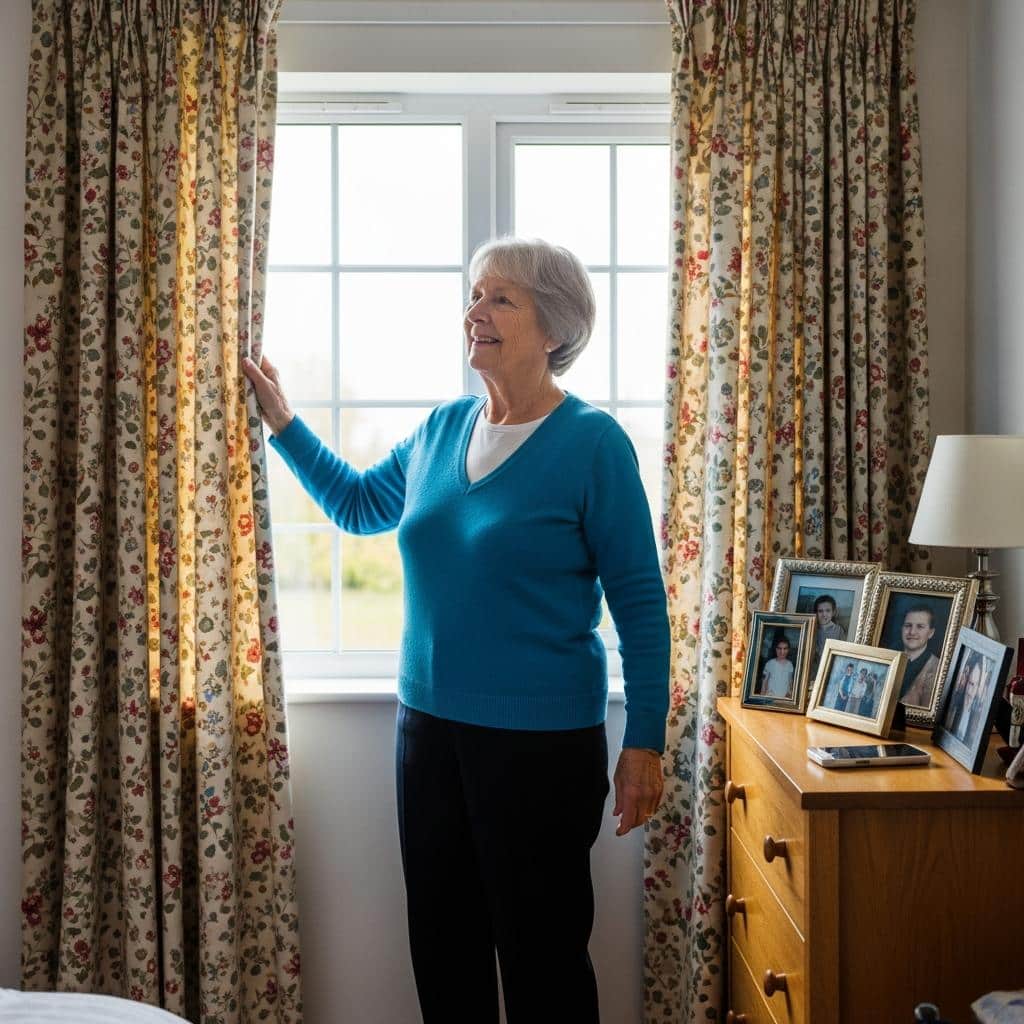
When Alternatives Make Sense (and When They Don’t)
Let’s be honest about stair lifts and other “compromise” solutions.
Stair Lifts – The Reality Check
When they work well:
- Person has consistent mobility challenges but good cognitive function and decision-making
- Stairway has adequate width (usually 32+ inches) and proper landings
- Household can manage maintenance and potential repairs
- Person is comfortable with mechanical assistance
The honest limitations:
Cost runs $3,000-$5,000 for straight staircases, much more for curved.
They require regular maintenance. When they break, you’re back to being unable to access the second floor safely.
They don’t address fatigue. Even with a stair lift, going upstairs still requires multiple transfers and energy.
Many people find them intimidating or anxiety-producing. The mechanical nature can feel precarious, especially for those with balance concerns.
The truth many won’t tell you: Stair lifts work better in theory than in practice for most older adults. They’re excellent for temporary situations (recovering from surgery) or very specific mobility patterns, but they often become expensive solutions that don’t get used.
Enhanced Stair Safety – When It’s Enough
Additional railings, improved lighting, non-slip treads can reduce risk for early-stage concerns. For a comprehensive look at all stair safety options, these modifications work as temporary solutions or for very mild mobility concerns.
These modifications work best when:
- Mobility challenges are very mild and not progressing
- The situation is temporary (recovering from a minor injury)
- Combined with reduced stair trips (keeping essentials on both floors)
The honest limit: These reduce but don’t eliminate risk. They’re bandaid solutions that can create false confidence. If you’re concerned enough to install significant safety modifications, you’re likely concerned enough to consider the first-floor bedroom seriously.
When Professional Assessment Helps
Occupational therapists can evaluate your home and recommend specific modifications based on individual mobility patterns.
Physical therapists can assess current capabilities and help predict future trajectory. They can also provide objective data that helps families make informed decisions.
These professionals often help families have difficult conversations with neutral expertise. Sometimes hearing “a first-floor bedroom would significantly improve your safety and quality of life” from a professional carries weight that family members’ words don’t.
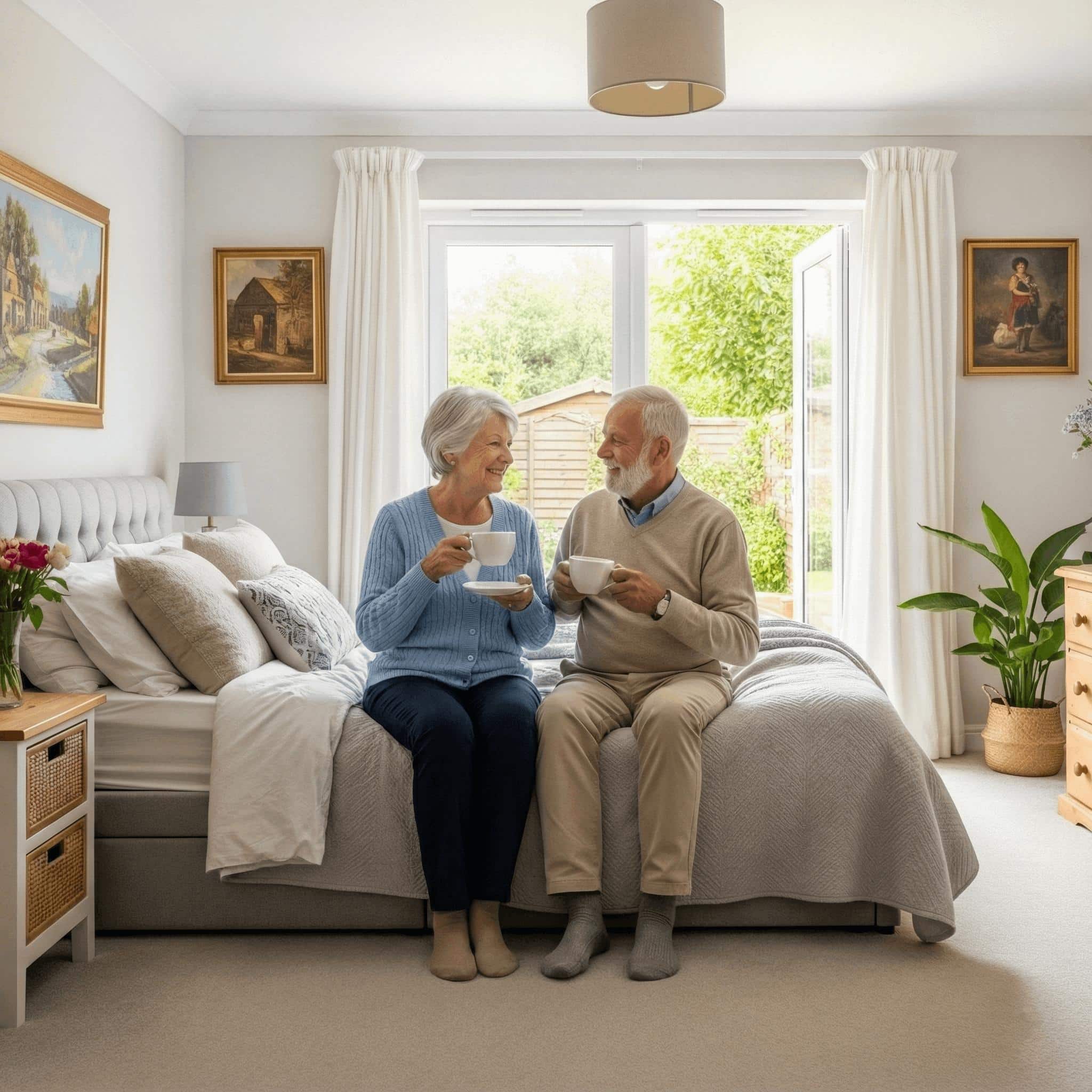
Maintaining Connection and Identity in the New Space
Here’s what nobody talks about: the emotional weight of leaving a bedroom you’ve slept in for decades.
This isn’t just about furniture. It’s about identity, memories, and the symbolic meaning of “your room.”
Preserving Memories and Identity
Bring cherished items immediately. Don’t leave the new space feeling temporary or institutional. The bedspread from upstairs. Family photos in familiar frames. The reading lamp that’s been on your nightstand for 30 years.
Arrange furniture similarly to the previous bedroom layout if that provides comfort. Familiarity reduces the sense of displacement.
Create a memory wall or display area specifically for family photos, grandchildren’s artwork, or meaningful mementos. This signals that this space is yours, with your history embedded in it.
The room should reflect personality, not look like a medical facility. Resist the urge to make it “practical” at the expense of personal. If you loved your floral curtains upstairs, bring floral curtains downstairs.
Addressing the “Upstairs” Question
The upstairs bedroom doesn’t need to be dismantled immediately. For many people, knowing it’s still “their room” during the adjustment period provides psychological comfort.
Gradually repurpose the space on the person’s timeline. Maybe it becomes a guest room. Maybe it stays as is for now. There’s no urgency to clear it out unless you need the space.
For adult children managing this transition: Don’t rush to clear out the space. Let your parent guide this timeline. Maintaining some connection to the upstairs can ease the transition.
Focus on Gains, Not Losses
Reframe what this change actually delivers:
More energy for activities that matter. No more arriving at social events already exhausted from getting ready.
Better sleep without stair-related anxiety. No more lying awake worrying about nighttime bathroom trips.
Easier access to family gathering spaces. Being on the main floor often increases social connection rather than reducing it.
Less isolation. You’ll likely spend more time with family simply because you’re where the activity happens.
The conversation shift: “I’m giving up my bedroom” becomes “I’m gaining energy and reducing daily stress.”
Ready to discover more innovative strategies for healthy, comfortable aging? Subscribe to our newsletter for expert-tested tips and product recommendations designed specifically for older adults.
Making This Decision on Your Own Terms
This conversation and transition isn’t easy. It touches on independence, aging, and change that nobody particularly wants.
But here’s the choice you’re really making: Do you want to make this change proactively, on your own terms, with time to create a comfortable space you love? Or do you want to wait for a crisis—a fall, an emergency, a hospitalization—to make this decision for you?
For adult children navigating this conversation: Approaching this with respect, concrete solutions, and focus on your parent’s wellbeing shows you honor their autonomy while prioritizing their safety. This comes from love, not control. If you’re managing your parent’s care from a distance, having this conversation early and establishing a safe first-floor space becomes even more critical for your peace of mind.
For older adults facing this decision: Choosing to make strategic changes that preserve your independence and safety isn’t surrender. It’s taking charge of your own story. It’s wisdom recognizing when adapting improves quality of life.
The families who handle this best are the ones who start the conversation before urgency forces it. They plan together. They create spaces that feel like homes, not medical facilities. They focus on what’s gained, not lost.
If you recognize the warning signs in your own life or in someone you love, don’t wait for a crisis to make this decision for you. Starting this conversation today means you control how and when it happens.
Have you navigated this transition—either for yourself or for a parent? What strategies helped make it feel less like a loss and more like a thoughtful adaptation? Share your experience in the comments. Your insight might be exactly what another family needs to hear right now.
![Older woman glow holder nighttime[1]](https://www.grayingwithgrace.com/wp-content/uploads/2026/02/older_woman_glow_holder_nighttime1-e1770642193342-450x300.jpg)
![Older couple evaluate bedroom safety[1]](https://www.grayingwithgrace.com/wp-content/uploads/2025/07/older_couple_evaluate_bedroom_safety1-e1751919444202-450x300.jpg)