
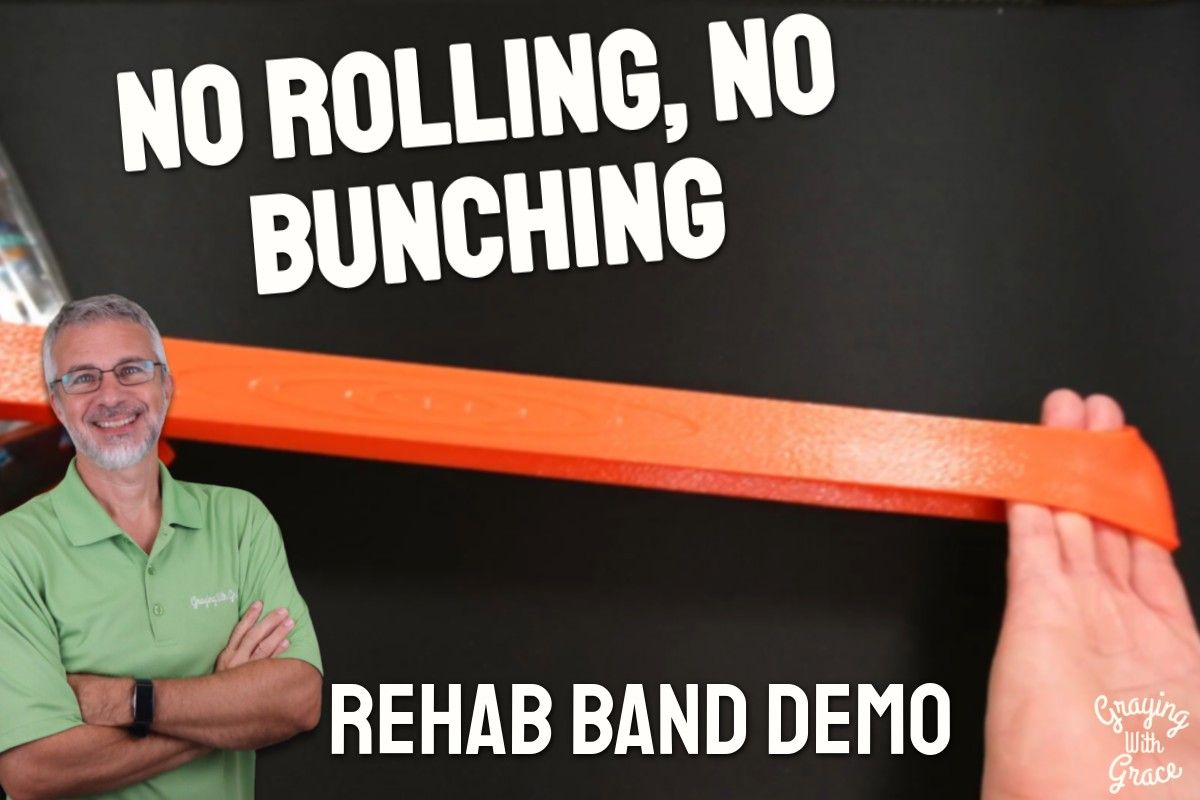
You reach for your resistance band, spend the first thirty seconds wrestling it into shape, and then it rolls up your leg mid-exercise like it has somewhere else to be. Sound familiar?
For older adults easing back into exercise after an injury — or anyone who just wants a simple, no-fuss tool that actually cooperates — that kind of frustration is a real barrier. And barriers are exactly what keep people from staying active.
As a Certified Senior Advisor and Senior Home Safety Specialist, I spend a lot of time evaluating fitness and rehabilitation tools specifically through the lens of how well they serve older adults. I was sent this band by Platinum Band to evaluate firsthand, and I want to share exactly what I found — the good, the honest, and the practical.
This review covers everything you need to know about the Pure Band Professional Grade Physical Therapy Resistance Band in orange light resistance — what it does well, where it falls short, and whether it belongs in your home workout routine or your physical therapy toolkit.


Quick Takeaways
- Solves: Band tangling, latex skin reactions, and the intimidation of starting resistance exercise after a break or injury
- Best for: Older adults in physical therapy or rehab, beginners, and anyone with latex sensitivities
- Worth the investment? Yes — especially compared to cheap bands that snap or lose elasticity within months
- Best feature for seniors: Latex-free, non-rolling design that stays put and doesn’t irritate sensitive skin
- Biggest limitation: If you already exercise regularly, the light resistance level may not challenge you enough on its own
How This Could Help You
Think about Margaret, 71, who had knee replacement surgery eight months ago. Her physical therapist gave her a home program to follow between appointments, but her old latex band left a rash on her thigh and kept rolling up during leg lifts. She ended up skipping sessions just to avoid the hassle.
Or consider her daughter Linda, who drives Margaret to appointments twice a week and worries constantly about whether Mom is actually doing her exercises at home. Linda wants a tool that is simple, safe, and genuinely useful — not something that ends up in a drawer.
The Pure Band Professional Grade Physical Therapy Resistance Band speaks directly to both of them.
For Margaret, the latex-free material eliminates the rash problem completely. The band is made from a thermoplastic elastomer material — that means no latex, no irritation, and no reason to skip a session because your skin is unhappy.
For Linda, knowing that the band is validated for physical therapy use — not just sold as a generic fitness toy — is genuine peace of mind. Physical therapists actively use and recommend flat resistance bands like this one for knee, hip, and back rehabilitation.
Can one simple band really make that big a difference in daily life? When it removes the obstacles that were keeping someone from doing their exercises at all — yes, absolutely.
Ready to discover more innovative strategies for healthy, comfortable aging? Subscribe to our newsletter for expert-tested tips and product recommendations designed specifically for older adults.
Important Details You Should Know
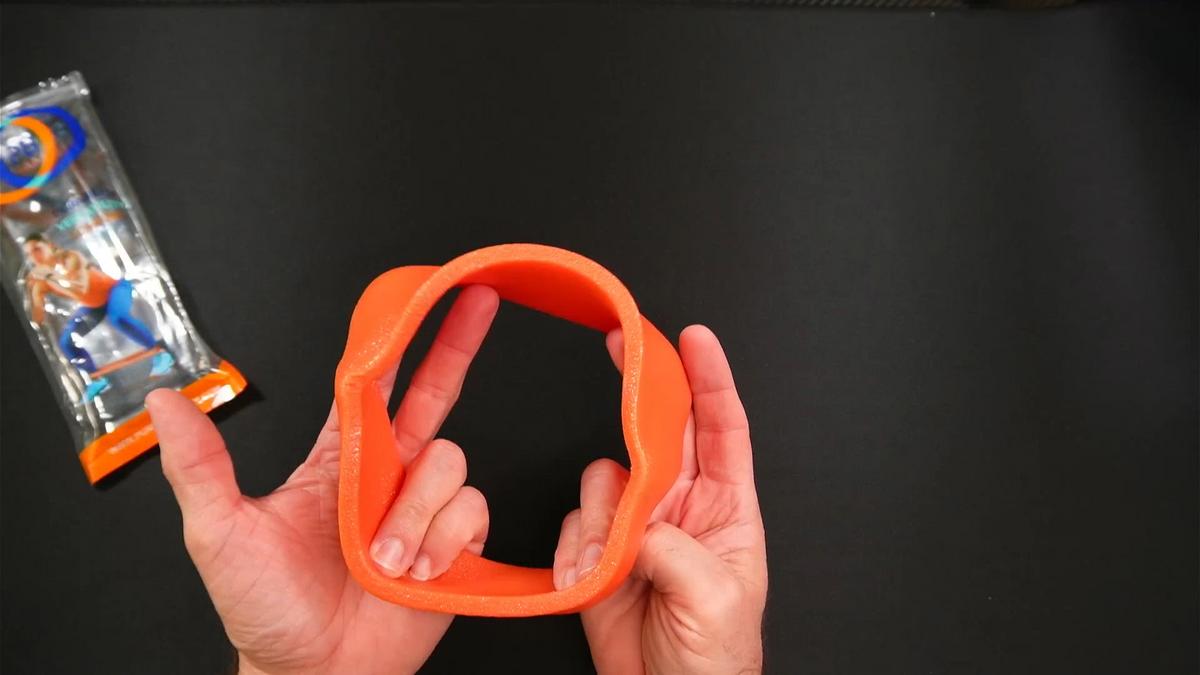
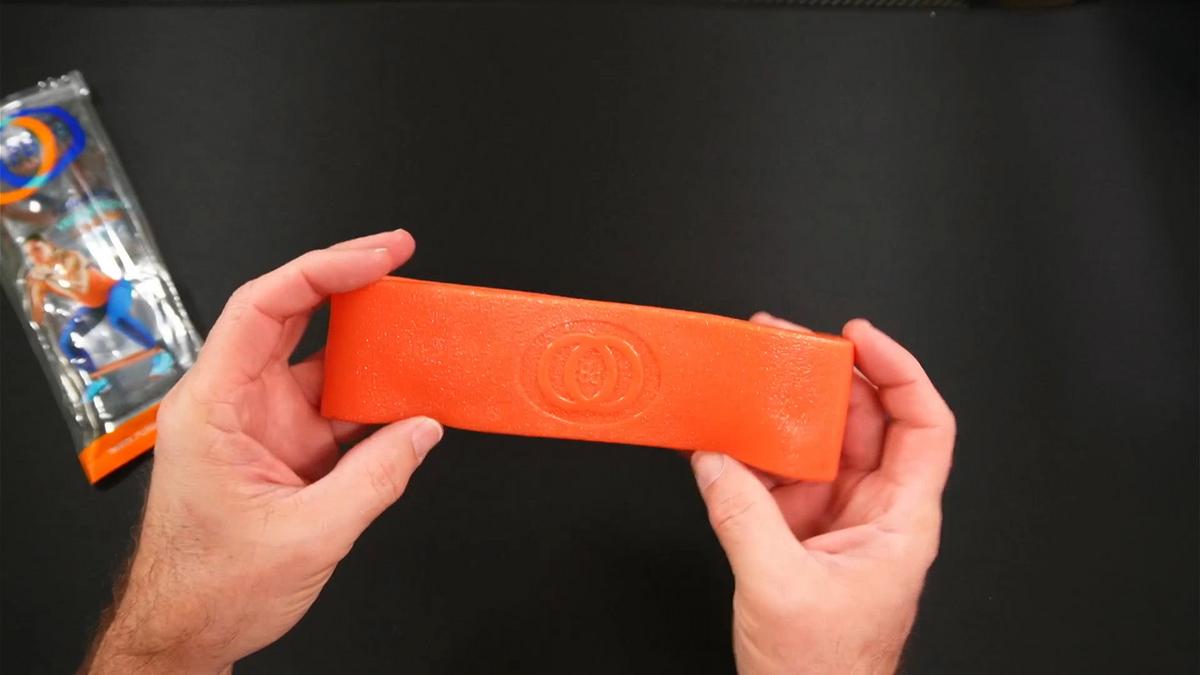
The band is a flat loop — no tubes, no handles, no hardware. When I evaluated this product, I noticed immediately how different the feel is compared to the bulkier tube-style bands with plastic handles.
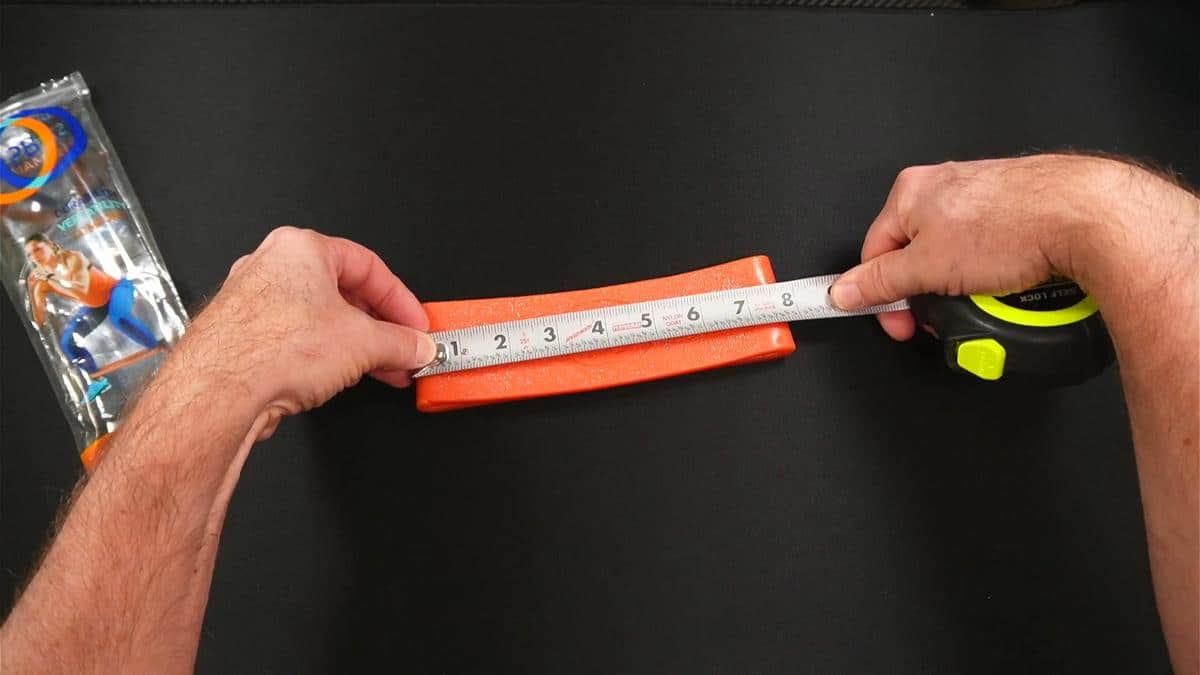
The loop itself measures just under eight inches in diameter — about seven and three-quarters inches — and is approximately two inches wide. That width is meaningful because it distributes pressure more evenly across your skin, which matters a lot for older adults with thinner or more sensitive skin.
It is long enough to use for both full arm and full leg exercises while still maintaining working resistance. You are not going to run out of band mid-movement, which is a real problem with shorter loops.
Platinum Band offers three resistance levels in this line: orange (light), blue (medium), and green (heavy). The colors are intentional — make sure you are ordering the resistance level you actually want, not just your favorite color.
The material is thick compared to many consumer-grade bands. That thickness contributes directly to durability and means the band holds its shape during use rather than rolling up on itself.
Getting Started
There is essentially no setup required. You take it out of the packaging and you are ready to go.
No box contents to inventory, no assembly, no charging. Just a band.
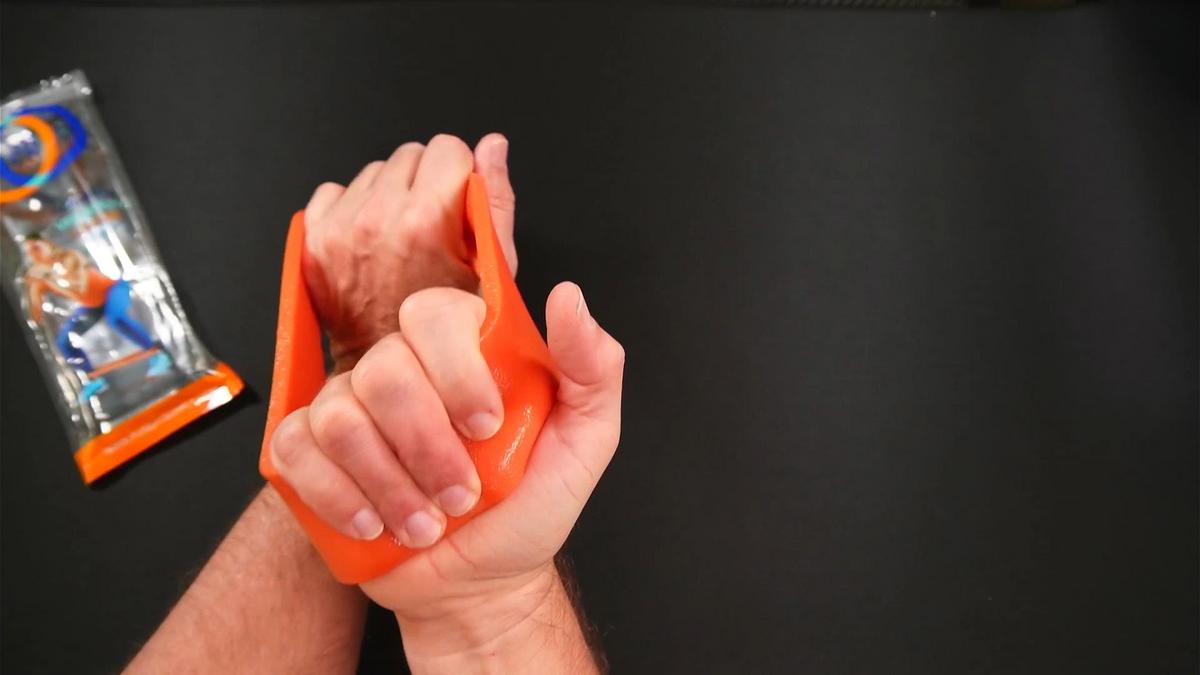
The brand provides illustrated exercise guides on their website, which is helpful if you are new to resistance band training and want a clear starting point. Gripping the band correctly does make a difference — in the video, you can see that wrapping the ends around your palms rather than gripping the flat surface gives you far better control and prevents it from slipping mid-exercise.
If you are following a physical therapist’s program, simply bring the band to your next appointment so your therapist can show you exactly how to use it for your specific exercises. That is always the smartest first step.
Features That Matter to You
Let’s talk about what actually makes this band useful in everyday life — not the marketing language, but the real-world details.
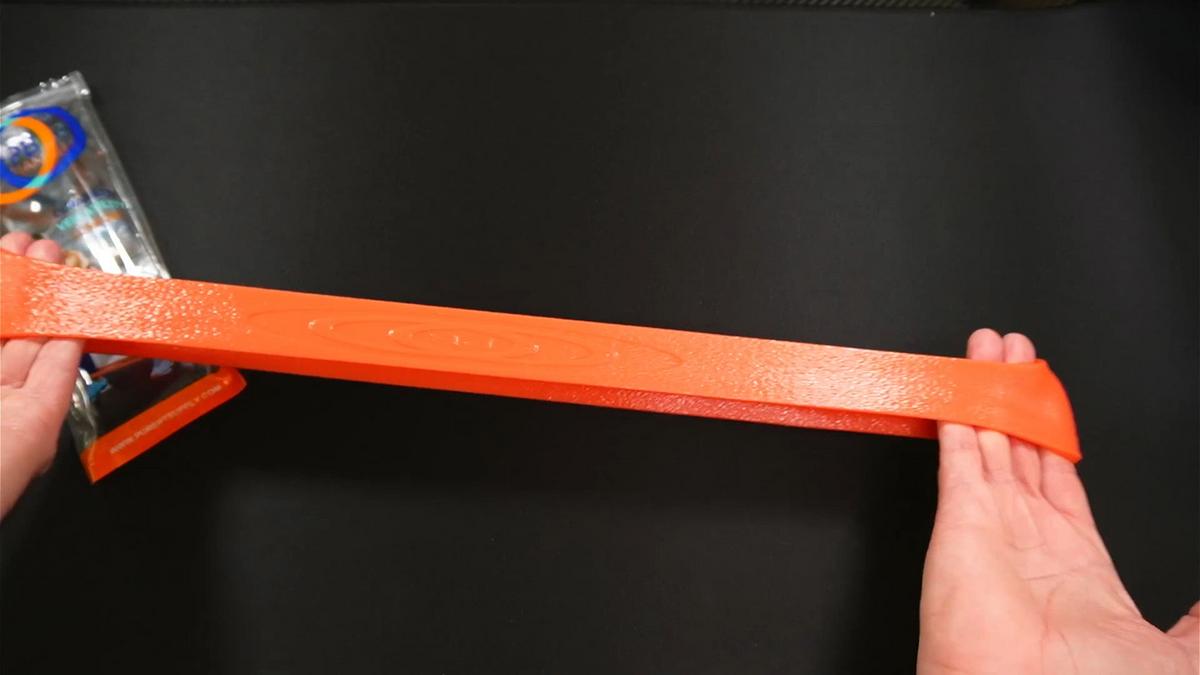
The non-rolling design is the first thing I want to highlight. As I demonstrated in the video, this band stays flat during use. It does not bunch up around your ankle or roll into a rope mid-exercise. That sounds like a small thing until you have lost your balance trying to fix a rolling band on your leg.
The Pure Band resistance band is also specifically designed to avoid pulling hair — which anyone who has used a resistance band around their thighs or upper legs knows is an unexpectedly painful issue. The engineering here reflects actual user frustrations, not just marketing claims.
For older adults with arthritis or reduced grip strength, the flat band format is genuinely more manageable than tube-style bands with narrow handles. Wrapping the band around your palm requires less pinching grip and distributes tension more comfortably.
The band can also be used seated or from a wheelchair. As I noted in the video, you can anchor the flat band under a chair leg for arm and shoulder exercises, or loop it around your legs and thighs for seated leg work. That seated accessibility is a significant advantage for anyone with limited standing stamina.
The light resistance level is genuinely appropriate for post-injury rehabilitation or for someone who has been sedentary and is starting fresh. It is not a watered-down version of a real workout — light resistance still provides measurable muscle engagement. It simply does not overwhelm joints or muscles that are still healing.
Real Life Experience
When I handled this band during my evaluation, the first thing that stood out was the material feel. It has a smooth, firm texture — not the sticky, slightly tacky feel you sometimes get with cheaper latex bands that cling to your skin uncomfortably.
In the video, you can see that when I stretch the band through a full range of motion, it maintains consistent tension without any weak spots or uneven pulling. That consistency matters for rehabilitation work, where uneven resistance can actually reinforce poor movement patterns.
As I demonstrated in the video, the band holds its shape during use without rolling or bunching. I stretched it repeatedly and it returned to its original flat form each time. That kind of material memory is what separates a band that lasts years from one that goes limp and warped after a few months.
Day to day, this band requires essentially no maintenance. Wipe it down with a damp cloth if needed. Store it flat or loosely looped — do not leave it stretched under tension or pinched in a drawer for long periods, as that can affect any elastic material over time.
For long-term durability, the thick construction and pre-shipment testing give me real confidence. As I noted in the video, Platinum Band emphasizes rigorous quality testing before each band ships. That is not just a marketing claim — it shows up in the material consistency and the way the band behaves under repeated tension.
Will You Be Able to Use It?
The honest answer for most older adults is yes — with minimal assistance needed and no special setup.
If you can wrap a band around your legs or hold it in both hands, you can use this tool. The flat format is more forgiving than tube bands, and the light resistance keeps the physical demand appropriate for people who are rebuilding rather than pushing peak performance.
Seated use is fully supported. If standing exercises are difficult due to balance concerns, hip pain, or stamina limitations, this band adapts to a chair-based routine without any modifications needed.
For older adults with significant hand weakness or severe arthritis, gripping the band for extended sets may still require some adaptation. A simple glove with grip texture on the palm can help, or your therapist can suggest alternative anchoring methods.
The band does not require any technical knowledge to use. If you can follow illustrated instructions or watch a short video, you have everything you need to get started independently.
Important Considerations
This band is not the right fit for everyone, and I want to be clear about that.
If you are already physically active and exercise regularly with moderate to heavy resistance, the orange light band will likely feel too easy. You would be better served starting with the blue medium or green heavy option from the same line.
If you have a specific injury or are following a medically supervised rehabilitation program, always bring this — or any new exercise tool — to your therapist before adding it to your routine. Resistance bands look simple, but improper use can aggravate certain conditions, particularly acute back injuries or post-surgical joints that are still healing.
There is no printed exercise guide in the box. If you are not already familiar with resistance band exercises, you will need to visit the brand’s website or find video guidance online before your first session. That is a minor inconvenience for most people, but worth knowing upfront.
Finally, if you have severe hand tremors or very limited upper body control, the flat band format may be difficult to anchor securely during some exercises. A caregiver or therapist can help adapt the setup for those situations.
Always consult with your doctor or physical therapist before beginning any new exercise program or adding new equipment to your rehabilitation routine.
Help When You Need It
The Pure Band is sold through Platinum Band’s Amazon storefront, which means returns and customer service go through Amazon’s standard process — generally one of the most straightforward return experiences available.
Amazon’s return window and buyer protection policies apply to this purchase, which provides a solid safety net if you receive a defective product or the band does not meet your expectations.
The brand also provides illustrated exercise guides on their website, which functions as a useful ongoing resource beyond the initial purchase. If you have questions about exercises or use cases, that is a good first stop before reaching out to customer support.
Understanding the Cost
The Pure Band resistance band sits in the mid-range of the resistance band market — not the cheapest option available, but significantly less than a full set of physical therapy equipment or a gym membership.
The value calculation here is straightforward: a cheap band that snaps in three months costs more over time than a durable one that lasts years. The thick material and pre-shipment testing are what justify the price differential over bargain alternatives.
If you find the light resistance is not enough as you build strength, you do not have to start over with a different brand. You can simply move to the blue medium or green heavy bands within the same Platinum Band lineup — which makes this a genuinely scalable investment rather than a one-time purchase you outgrow quickly.
Making It Work for You
Start with your physical therapist’s guidance if you have one. Bring the band to your next appointment and ask them to walk you through the specific exercises in your program using this tool.
If you are exercising independently, begin with just two or three exercises per session — leg lifts, bicep curls, and a seated row are excellent starting points. Short, consistent sessions are far more beneficial than long, infrequent ones.
Remember to wrap the band around your palms rather than pinching it flat between your fingers. As I demonstrated in the video, that grip technique gives you much better control and prevents the band from slipping during movements.
If the light resistance feels too easy after a few weeks, try doubling the band before upgrading to a heavier level. Looping the band twice shortens the working length and increases the resistance without requiring a new purchase.
Store the band somewhere visible — hanging on a hook near your chair or next to your bed — so it becomes a natural part of your daily routine rather than something you have to hunt down each time.
Our Recommendation
If you are an older adult rebuilding strength after an injury, easing back into exercise after a long break, or working through a home physical therapy program, this band earns a genuine recommendation from me.
The latex-free material, non-rolling design, and light resistance level address the specific frustrations and safety needs that matter most for this stage of life. It is not a gimmick — it is a well-constructed tool that physical therapists actually use and recommend.
If you are already at an intermediate or advanced fitness level, start with the blue medium or green heavy options instead. The light orange band will not give you enough of a challenge.
And if you are a caregiver looking for a safe, simple, evidence-backed exercise tool to support a loved one’s home recovery program — this is one of the most practical options in its category.
Where to Get It
You can check current availability and pricing for the Pure Band Professional Grade Physical Therapy Resistance Band through the link below. Be sure to confirm you are selecting the orange light resistance option, since the color and resistance level are linked — each color means something specific in this line.
Conclusion
A resistance band that actually stays flat, feels safe on sensitive skin, and is validated for the kind of gentle rehabilitation work that older adults genuinely need — that combination is rarer than it should be.
The Pure Band orange light resistance band from Platinum Band gets the fundamentals right in a way that makes a real difference in whether someone actually uses it or lets it collect dust.
Have you used flat resistance bands before, or are you more familiar with the tube-and-handle style? Drop a comment below — your experience might be exactly what another reader needs to hear to make their decision.
![Senior couple slow dance living room[1]](https://www.grayingwithgrace.com/wp-content/uploads/2025/12/senior_couple_slow_dance_living_room1-e1767117766207-450x300.jpg)
![Older woman balance exercise pool noodle[1]](https://www.grayingwithgrace.com/wp-content/uploads/2025/06/older_woman_balance_exercise_pool_noodle1-e1748520789517-450x300.jpg)


