You walk past the pool at the community center and wonder if there is an easy way to get moving without sore knees the next day. A pool noodle exercise routine may be one answer.
Those colorful foam tubes can add light support and resistance in the water.
This article covers simple noodle moves for the pool and for dry land, how to get started, water aerobics classes, and ways to get past rides, sore joints and nerves about the water.
Here is why pool noodles work for exercise. Unlike traditional weights or machines, these foam cylinders offer natural resistance that adjusts to your effort level.
The harder you push or pull, the more resistance you create.
It’s like having a personal trainer that adapts to your strength and energy on any given day.
Check with your doctor or therapist before trying any of these exercises, of course.

The Unexpected Discovery Behind This Fitness Revolution
Some physical therapists and water exercise classes use pool noodles for support and light resistance. Ask yours whether it suits you.
Why Pool Noodles Work Well for Exercise:
Buoyancy Benefits: The natural flotation creates a supportive environment that reduces joint stress while providing effective resistance. You’re working your muscles without the harsh impact of traditional exercises.
Adjustable Intensity: Whether you’re having a high-energy day or need something gentler, the water resistance automatically adjusts to your effort level. Push harder for more intensity, ease up when you need to.
Joint-Friendly Design: The buoyancy of water combined with the soft foam material means your joints experience less stress while your muscles get a complete workout.
Incredible Versatility: One pool noodle can stand in for several pieces of equipment, such as resistance bands, weights, balance boards, and support tools, all in one affordable foam tube.
You might be wondering: “But how do you actually exercise with a pool noodle?” The answer will surprise you with its simplicity and effectiveness.
The Game-Changing Pool Noodle Exercises
Water-Based Workouts That Work
The Noodle Bike (Cardiovascular Fitness)
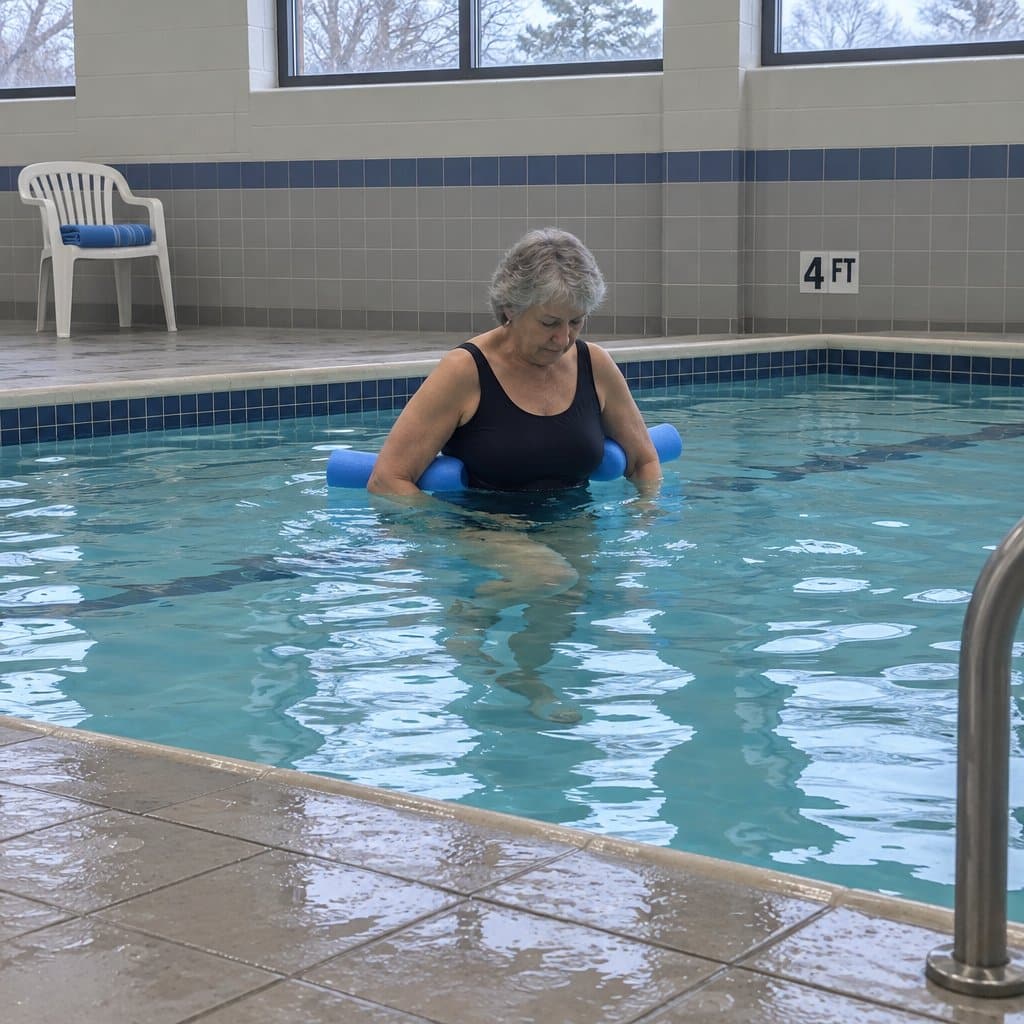
Stand in chest-deep water, place the noodle under your arms for support, and “pedal” your legs as if riding a bicycle. This low-impact cardio exercise gets your heart pumping without stressing your knees or hips. Start with 30-second intervals and work up to 2 to 3 minutes as your endurance improves.
The Resistance Press Series (Strength Training)
Hold the noodle with both hands and push it underwater in various directions: straight down, diagonally, side to side. The water creates natural resistance that strengthens your arms, shoulders, and core. Perform 10 to 15 repetitions in each direction, adjusting the speed to control intensity.
The Balance Challenge Sequence (Stability & Core)
Stand on one foot while holding the noodle horizontally for balance, then try gentle movements like lifting your knee or extending your leg. The slight instability of the water challenges your balance while the noodle provides security.
This builds core strength and improves stability for daily activities. For more balance ideas, see our guide on a 5-minute daily balance habit.
If you’re excited about trying these exercises but want more detailed guidance on creating a complete fitness routine, sign up for our newsletter where we share in-depth exercise guides and safety tips specifically designed for active older adults.
Beyond the Pool: Creative Land-Based Applications
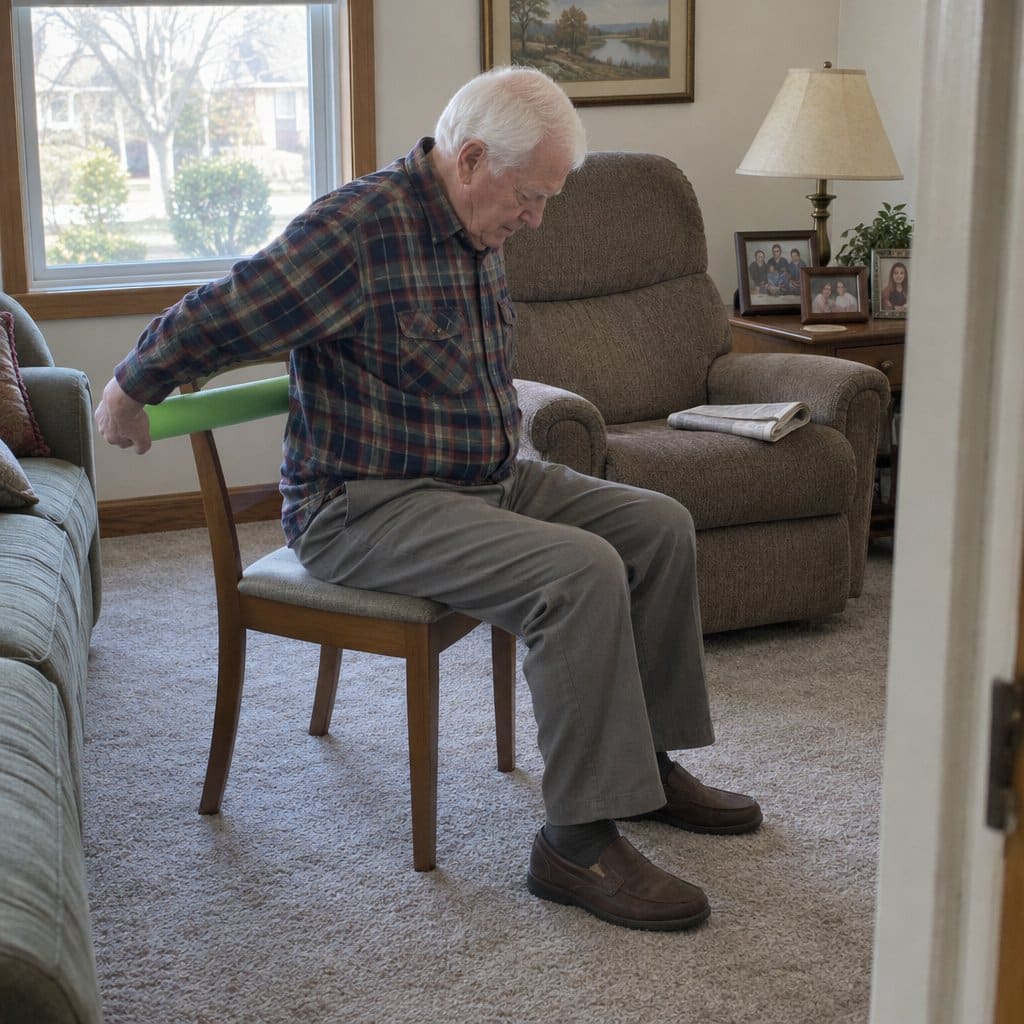
The Chair Workout Enhancement
Use a pool noodle to add resistance to seated exercises. Hold it behind your back and pull apart to work your upper back muscles, or place it between your knees and squeeze for inner thigh strengthening. The soft foam is comfortable against your body while providing effective resistance.
This approach pairs perfectly with activities designed for seniors with limited mobility to create a complete fitness routine.
The Flexibility Flow
Use the noodle to assist with stretching routines. Hold it overhead to enhance shoulder stretches, or use it to extend your reach during seated hamstring stretches. The length and flexibility of the noodle help you achieve better range of motion safely.
Getting Started: Your First Pool Noodle Workout
What You’ll Need:
- 1 to 2 pool noodles (medium density works best for most exercises)
- Access to a pool with varying depths
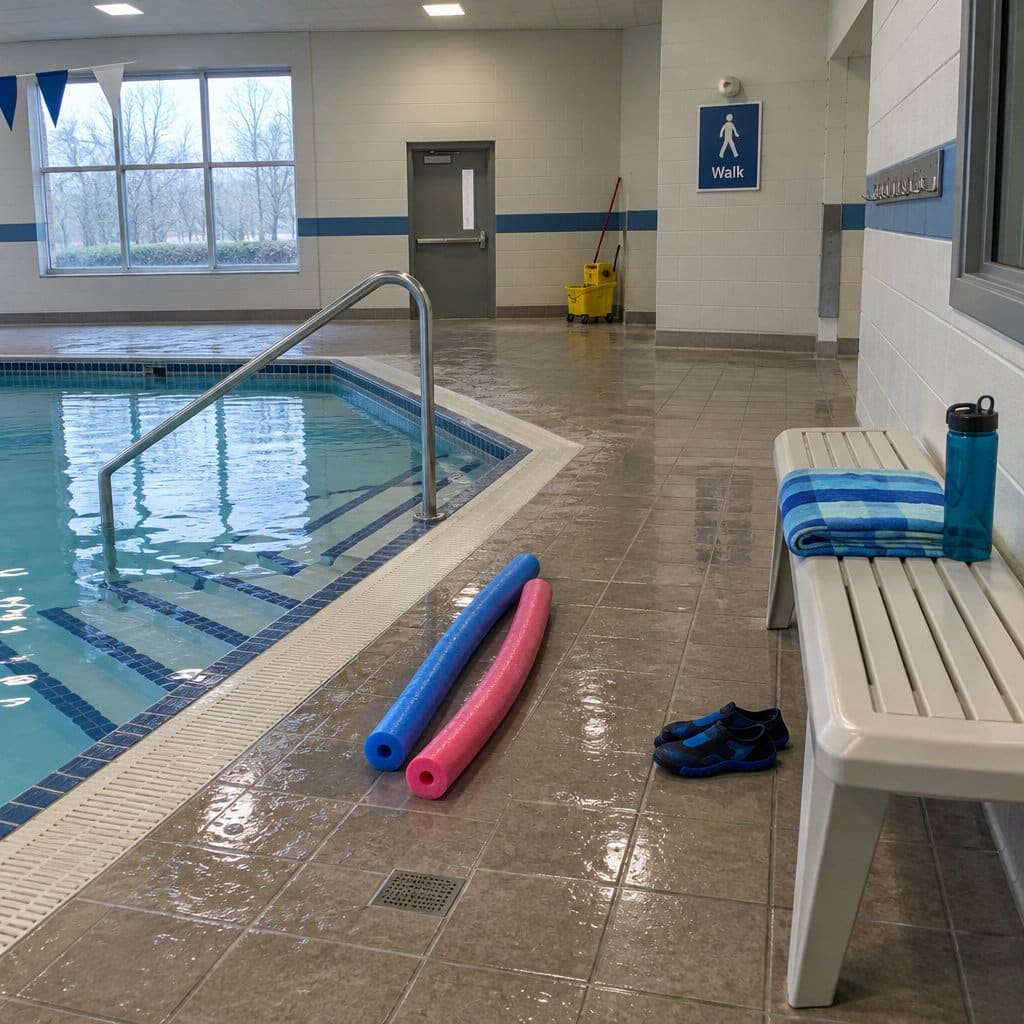
- Comfortable swimwear and water shoes for traction
- A waterproof timer or watch
Safety First:
- Ensure you’re comfortable in water at least waist-deep
- Start with exercises in shallower water until you build confidence
- Consider exercising with a friend or in a supervised pool environment
- Listen to your body and rest when needed
Your Beginner Routine:
- Warm-up: 5 minutes of gentle walking in the water
- Noodle Bike: 3 sets of 30 seconds
- Resistance Press: 2 sets of 10 repetitions in each direction
- Balance Challenge: Hold for 15 seconds on each foot
- Cool-down: 5 minutes of gentle stretching with noodle support
Start with this routine 2 to 3 times per week, gradually increasing duration and intensity as you become more comfortable and stronger. Remember, consistency is more important than intensity. Even small amounts of regular exercise can help.
You might also want to explore our no-cost fall prevention hacks to complement your new pool noodle routine.
Water Aerobics Classes for Seniors
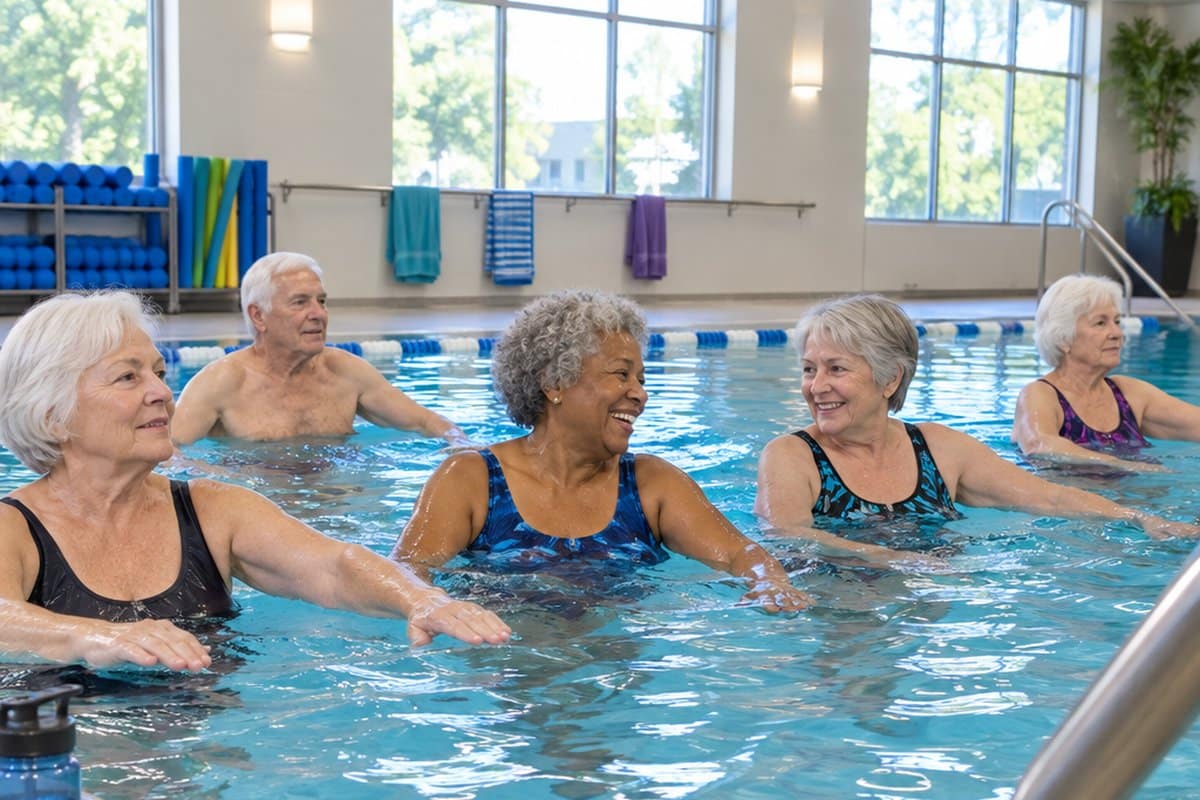
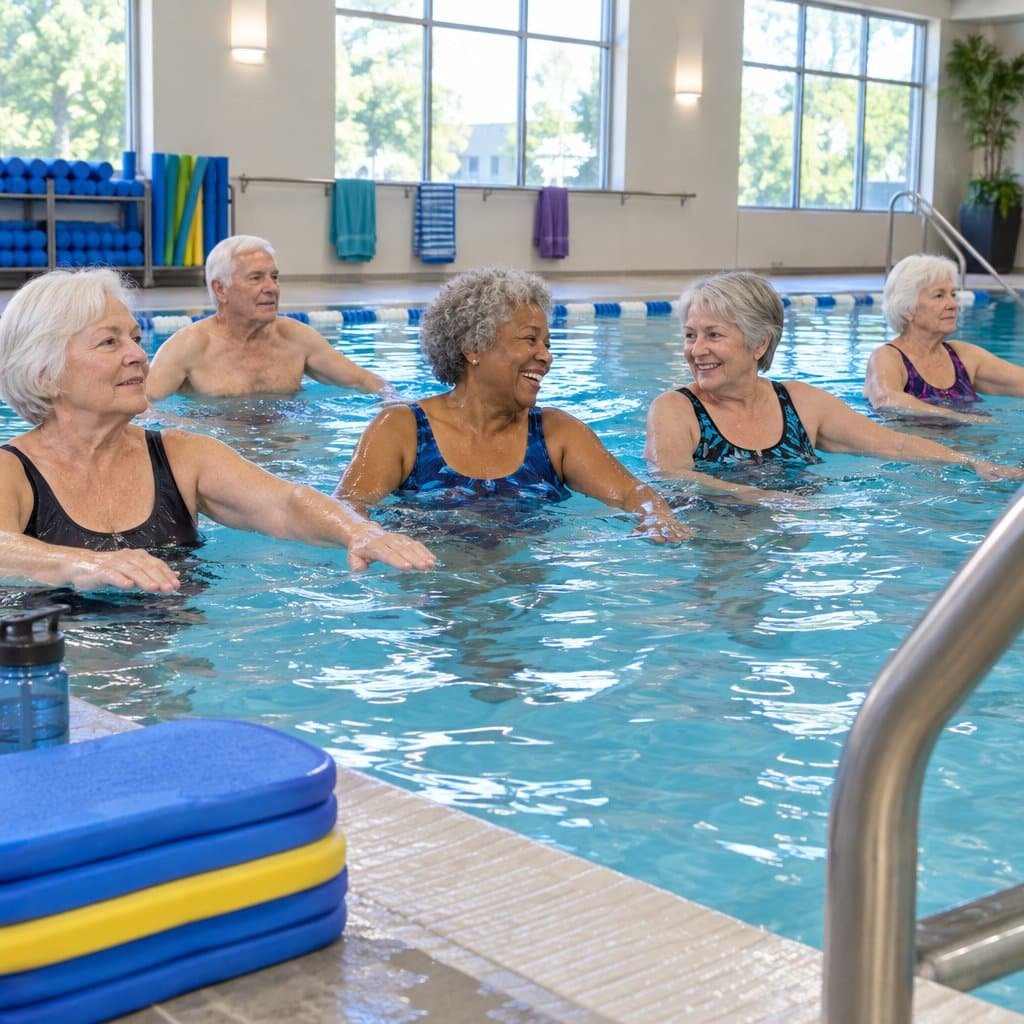
A group water aerobics class is another way to get into the pool, and it comes with a built-in crowd. Because of water’s natural buoyancy, the workout is easier on your joints. You can exercise without worrying about pain the next day.
You work your whole body in a class. It builds strength and flexibility, and it can raise your stamina and cardiovascular health too.
Classes are offered for all skill levels, from beginners to advanced swimmers. Many community centers and local pools run sessions designed specifically for seniors, so start by finding one that fits your schedule.
The social side matters as much as the exercise. You meet new friends and become part of a community, and sharing your progress and challenges with classmates adds support. It is also a good boost to your well-being.
Here is what to bring:
- Swimwear: Comfort is key, so choose a suit that gives you confidence.
- Water shoes: Pick a pair of non-slip shoes to prevent slipping.
- Towel and change of clothes: These keep you dry and warm after class.
- A water bottle: It helps you stay hydrated during your workout.
Once you are in the pool, start slow. Others may move at a different pace, and that is fine. Listen to your body, and remember that everyone was once a beginner. Check with your healthcare provider before starting a new fitness program, and respect your body’s limits.
If you like having a plan to follow, my 31-day wellness challenge for seniors pairs well with a weekly class.
The trade-off is that a class runs on its own schedule and at its own pace. You give up some flexibility compared with a noodle workout on your own time, but you gain the company and an instructor close by.
Keeping Your Pool Noodle Routine Fun and Lasting
A routine you enjoy is a routine you keep. A few simple habits make that easier.
Find a friend to join you. Exercise is more fun with company, and it is harder to skip a session when someone is waiting at the pool.
Set goals that are realistic, and celebrate every achievement, no matter how small. Moving at your own pace is the whole idea. There is no rush and no competition in the pool.
Mix up your routines. Different exercises keep things interesting, so rotate through your noodle moves instead of doing the same ones every time.
Enjoy the social side, too. Invite your peers along and trade a few stories between exercises. The shared laughs give you something to look forward to.
If you want more ideas for building healthy habits, I put together a 31-day wellness challenge for seniors that you can use alongside your pool time.
The trade-off is that a group takes some planning. Schedules have to match, so choose classes that fit your pace and start with beginner sessions to build your confidence.
Getting Past Rides, Sore Joints and Nerves About the Water
A few things can keep you out of the pool before you ever pick up a noodle. Each one has a plain fix.
If getting to the pool is the problem, try carpooling with friends. Many community centers also offer transport services, so ask what is available near you. You could even gather a group from your neighborhood and ride together.
If joint pain or limited mobility worries you, water is a good place to start. Its buoyancy takes stress off the body, so movements feel smoother and less painful. Take breaks when you need them.
If you already play on land and your joints complain afterward, read about pickleball elbow and knee pain and what to do about it.
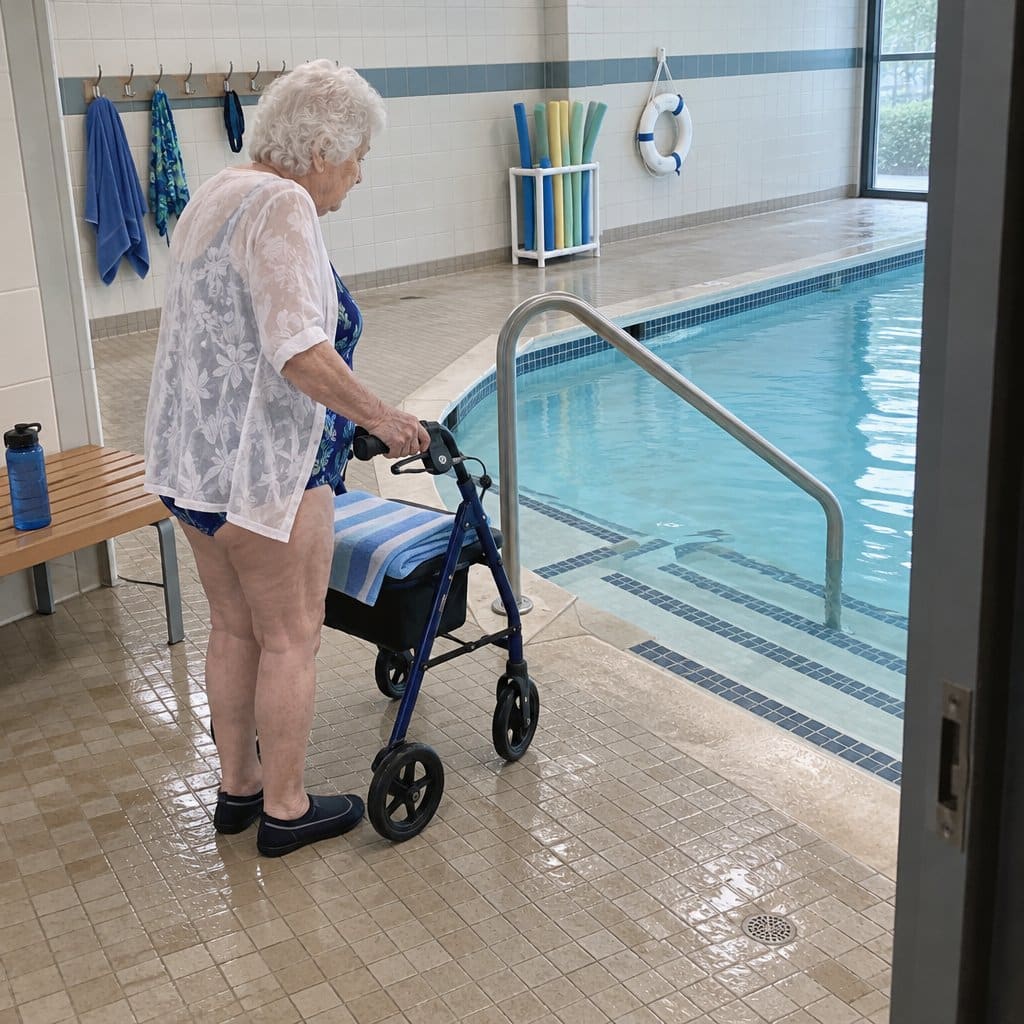
If you feel unsure about being in the water, begin in the shallow end, where you can stand comfortably. A trained instructor will look after your safety and help you gain confidence over time. In your first class, stay close to the instructor and mention that you are new.
If you worry about feeling out of place, remember that everyone starts somewhere. Classes have all skill levels, and the people in them are often friendly and share your goal of staying active.
Two small things help on the day. A pair of non-slip water shoes keeps your feet from slipping on wet floors. A water bottle within reach helps you stay hydrated during your workout.
The trade-off is that nerves do not always vanish after one visit. Confidence comes over time, so give yourself a few sessions before you decide how it suits you.
Making Pool Noodle Exercise a Lifestyle
Building Your Community:
Many seniors find that pool noodle exercises become more enjoyable when shared with friends. Consider starting a group at your local community center or suggesting it to your current exercise buddies. The social aspect makes staying consistent much easier and more fun.
Learn more about how active seniors are building connections and strengthening relationships through shared activities.
Seasonal Adaptations:
Don’t let winter stop your routine. Many community centers, senior centers, and therapy pools offer year-round access. Some exercises can even be adapted for home pools or hot tubs with proper modifications.
Tracking Your Progress:
Keep a simple log of your exercises, noting how you feel before and after each session. You may notice changes in balance, strength, and energy as you keep at it.
Progressive Challenges:
As you become stronger, try combining movements, extending exercise duration, or adding gentle ankle weights for extra resistance. The beauty of pool noodle exercises is that they grow with you.
If you’re looking for other engaging ways to stay mentally and physically active, consider exploring retirement hobbies that boost brain health to complement your physical fitness routine.
The most rewarding aspect of this approach is how it turns exercise from a chore into something new to try. You’re exploring creative ways to stay active.
For more innovative fitness ideas and comprehensive guides on staying active and healthy, join our newsletter community where we share the latest discoveries in wellness and independent living.
Your Pool Noodle Journey Starts Now
This simple foam tube represents something powerful: proof that staying fit and active doesn’t require expensive equipment or complicated routines. It requires creativity, consistency, and the willingness to try something new.
Whether you’re looking to maintain your current fitness level, recover from an injury, or simply add some fun to your exercise routine, pool noodles offer a gentle yet effective path forward. The water supports you while challenging you, and the noodle adapts to your needs on any given day.
Have you tried pool noodle exercises, or do you have other creative fitness discoveries to share? Tell us in the comments. Your ideas might inspire someone else to try something new!