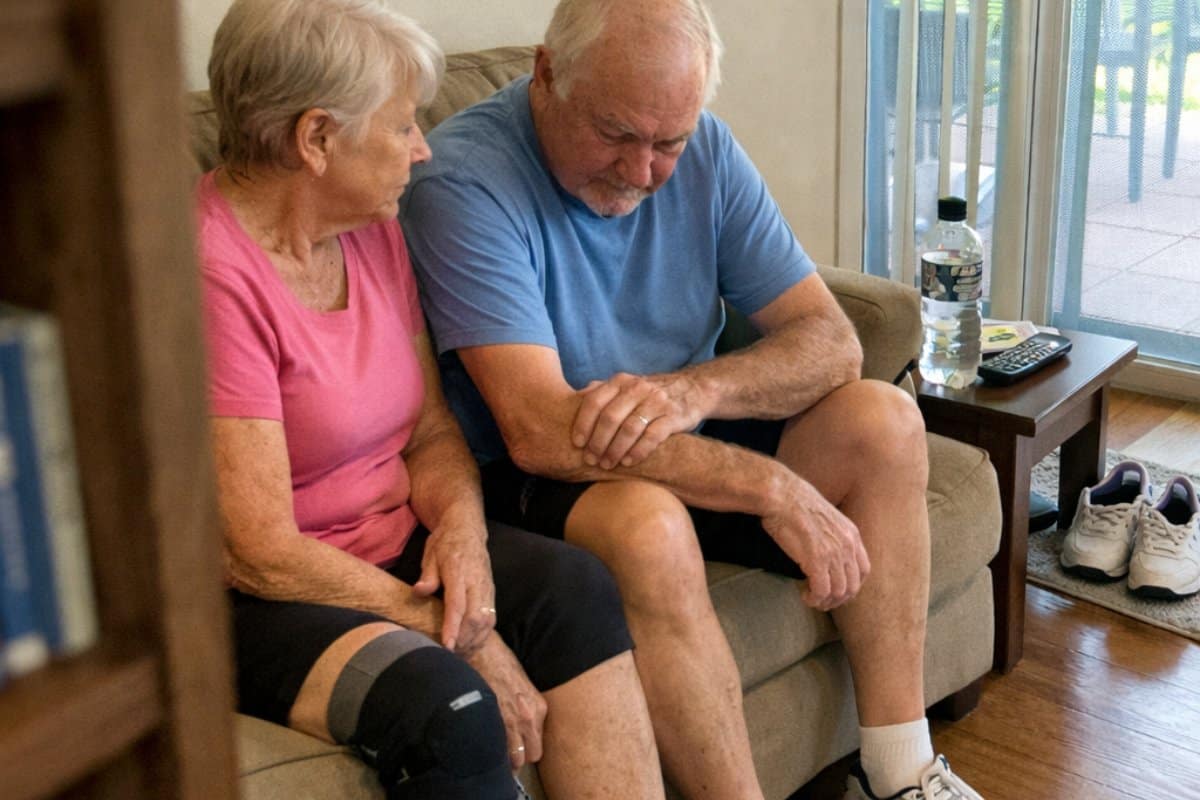
You finish a great session on the court. Maybe you won a few rallies, laughed with your partners, worked up a satisfying sweat. And then — somewhere on the drive home, or maybe the next morning — you notice it. A dull ache along the outside of your elbow. A stiffness in your knee that wasn’t quite there last season.
If that sounds familiar, you’re in very good company. Pickleball has become one of the genuine joys of active retirement — social, strategic, accessible, and genuinely fun. The fact that your elbow or knee is speaking up after a session doesn’t mean the sport is wrong for you. It means your body is giving you information worth understanding.
This article covers why these two joints — elbow and knee — tend to be the first to make themselves known in pickleball players over 65, what the sport specifically asks of aging joints, what fellow players commonly experience, and the most important signal of all: when to stop managing it yourself and see a clinician.
A note before we go further: If you’re dealing with pain that is persistent, worsening, or affecting your daily life — getting dressed, sleeping, carrying groceries — please see a doctor before anything else, including anything in this article. Nothing here is medical advice, and no piece of equipment substitutes for a clinical evaluation. Your health comes first, always.
The Pickleball Player’s Joint Check-In Checklist: Know What You’re Feeling, Know When to Call Your Doctor
Download this free checklist and know exactly what joint discomfort is normal recovery and what signals it’s time to see your doctor—so you can keep playing pickleball confidently without fear or guesswork.
Why Pickleball Is Hard on Aging Elbows and Knees Specifically
Pickleball isn’t uniquely dangerous. But it does place specific, repetitive demands on two joints that are already changing after 60 — and understanding those demands makes a real difference in how you interpret what you’re feeling.
How Pickleball Differs from Other Racket Sports
Compared to tennis, pickleball involves a shorter swing arc, a quicker wrist snap, and far more dinking — those repetitive small strokes near the net that define so much of the game at the recreational level. The paddle is lighter than a tennis racket, but the motion is more frequent and more compact, which means the forearm tendons absorb a different kind of repetitive load.
The court itself is smaller, which sounds gentler — but it actually means more frequent lateral shuffles, sharper direction changes, and quicker stops than a larger court would require. Your knees register every one of those.
Why Aging Joints Respond Differently
After 60, tendons lose some of their elasticity, cartilage doesn’t recover from load as quickly as it once did, and the connective tissue throughout both joints simply needs more time between sessions than it did at 45. This isn’t decline in the dramatic sense — it’s a normal shift in how bodies manage repetitive stress, and it’s something you can work with once you understand it.
Pickleball injuries in adults over 65 are becoming increasingly well-documented as participation in the sport has grown dramatically. Elbow and knee complaints are among the most commonly reported experiences. You are not doing something wrong, and you are not alone.
Knowing why your joints are responding this way isn’t bad news. It’s useful information — the kind that helps you have better conversations with a clinician if and when you need one.
The Elbow: What Pickleball Demands and What Players Commonly Experience


Elbow strain from racket sports in older adults is one of the most frequently reported pickleball complaints, and it shows up for very understandable reasons once you look at what the sport actually asks of the forearm.
What’s Happening at the Elbow
Clinicians often use the term “lateral epicondylitis” — or simply tennis elbow — to describe irritation of the tendon attachment on the outside of the elbow, caused by repetitive forearm and wrist activity. You may hear or search that term, so it’s worth knowing what it refers to: it’s essentially the tendon at that bony point on the outside of your elbow becoming irritated from repeated use.
“Pickleball elbow vs tennis elbow” is a common search, and for good reason — they share the same basic mechanism even though the sports feel different. The paddle’s snap motion and the repetitive grip of the pickleball game create similar repetitive strain on the same structures.
What Tends to Aggravate It
Players commonly report that several factors seem to make elbow soreness worse:
- Gripping the paddle too tightly throughout a session
- Playing through fatigue when form starts to break down
- Increasing play frequency too quickly — going from two days a week to five without giving the tendon time to adapt
- Using a paddle with a grip size that doesn’t fit the hand well (more on this in the final section)
What Players Commonly Report Feeling
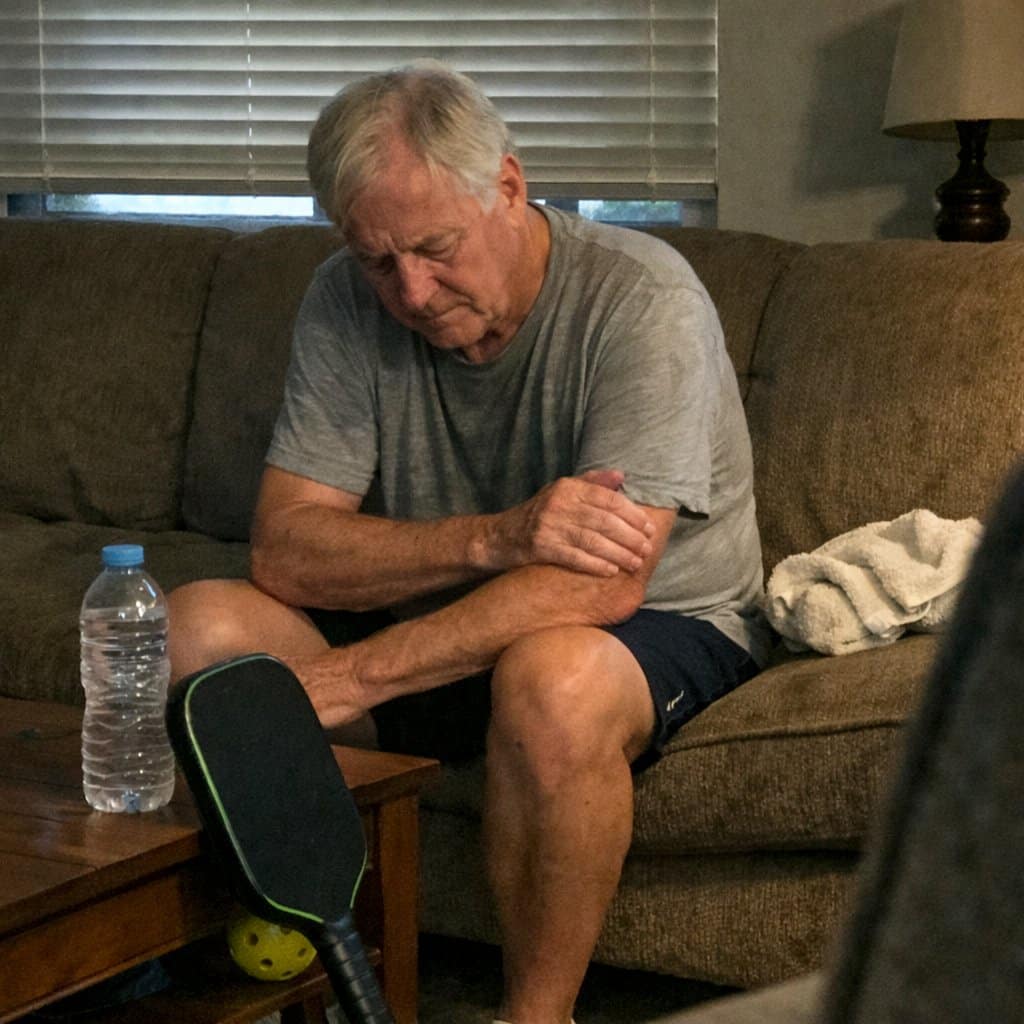
The experience tends to follow a recognizable pattern: an ache along the outside of the elbow, some discomfort when gripping or lifting objects off the court, and soreness that often shows up hours after play rather than during it. Many players describe feeling fine while playing and then noticing the ache the next morning.
What Many Players Reach For
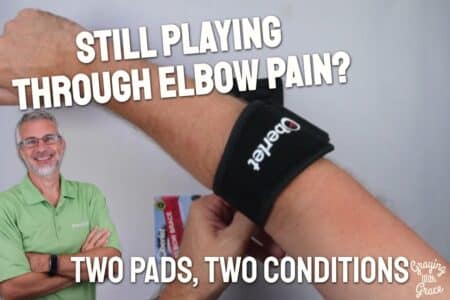
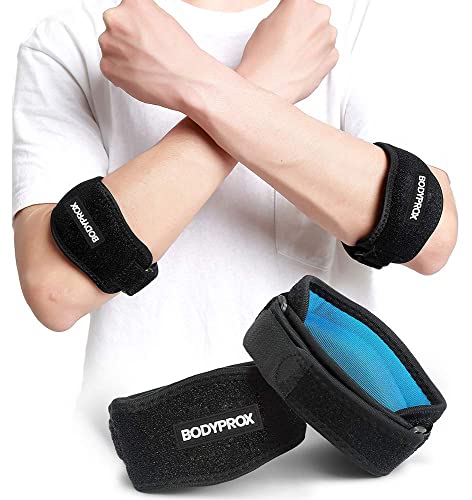
Many pickleball players over 65 incorporate a tennis elbow brace or forearm compression strap into their play routine. These are bands that wrap around the forearm just below the elbow, providing external support to the forearm muscles during activity. Some players prefer an elbow sleeve instead, which covers a broader area of the joint and provides compression along more of the arm.

The Oberlet Tennis Elbow Brace is one option players reach for when looking for forearm strap support during play.



The Signal to Stop Managing It Alone
If the soreness doesn’t settle between sessions, if it’s spreading into your forearm or wrist, or if you notice any numbness — that’s the moment to see a clinician before your next game, not after.
The Knee: What Pickleball Demands and What Players Commonly Experience


Knee discomfort after pickleball is distinct from elbow strain — it comes from a different type of load entirely, and it shows up for reasons that are tied directly to how the game is played on a hard surface.
What Pickleball Asks of the Knees
The demands are specific: lateral shuffling, quick direction changes, low-stance volleying near the net (what players call “the kitchen”), and repetitive stopping on a hard court surface. These aren’t the same as the sustained, forward-motion demands of walking or cycling. They’re short, reactive, and repeated over the course of an entire session.
For aging knees, the combination of joint fluid changes, years of cartilage wear patterns, and slower response in stabilizing muscles means these movements are more demanding than they were at 50. That’s not a reason to avoid them — it’s a reason to be thoughtful about them.
What Players Commonly Report Feeling
A recognizable set of experiences comes up again and again in pickleball communities:
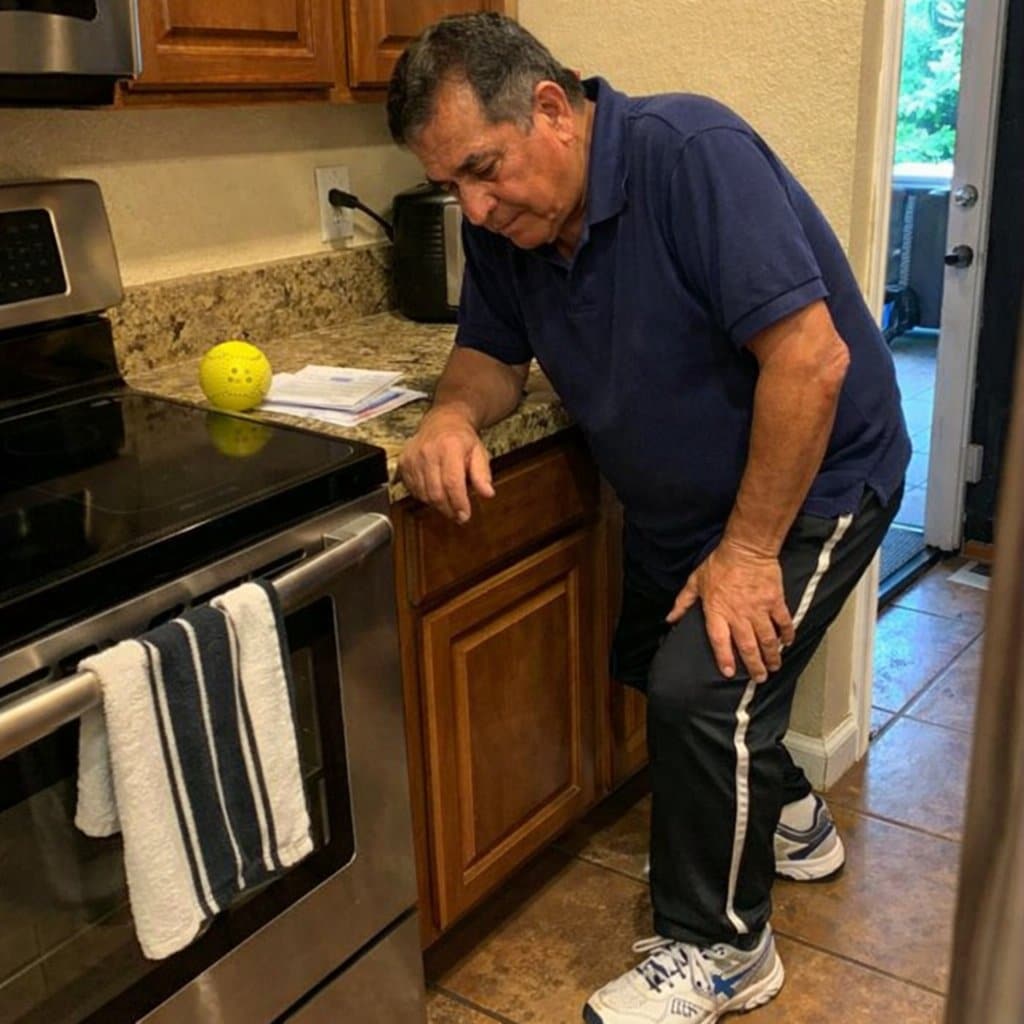
- Stiffness that sets in after sitting down post-game, or when getting up from a chair later that evening
- An ache in the front or inside of the knee that arrives a few hours after play
- Knees that “talk to them” the day after a session but settle before the next scheduled game
Many players describe this as their knees having a delayed reaction — they feel fine on the court and then stiffer the next morning.
What Tends to Aggravate It
Players frequently mention these as factors that make knee soreness worse:
- Playing consecutive days without rest days between sessions
- Hard concrete courts versus cushioned sport or tennis surfaces
- Footwear that doesn’t provide adequate lateral support
- Cold weather, when joints tend to feel stiffer and take longer to warm up
Want more practical guidance on staying active and comfortable as you age? Subscribe to the Graying With Grace newsletter for expert-tested tips and product recommendations designed specifically for older adults.
What Many Players Incorporate After Play
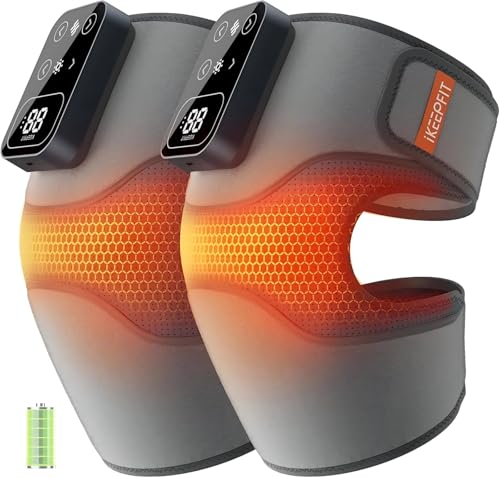
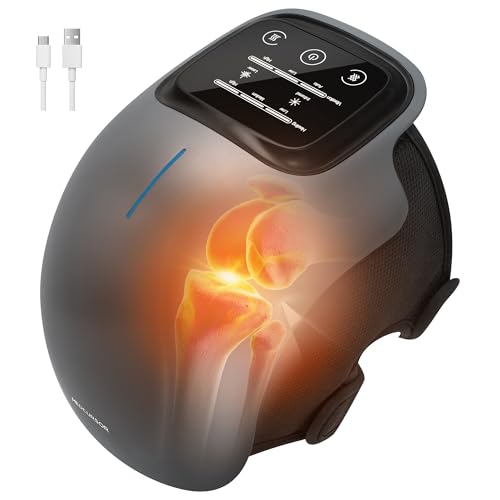
A number of players with sore knees have incorporated a heated knee massager into their post-game wind-down routine. These are wearable devices that wrap around the knee and provide gentle heat and vibration as part of an after-activity comfort routine. The KingPavonini Heated Knee Massager is one option players reach for in this category. Many players also wear knee compression sleeves during play itself, which wrap snugly around the joint during the session.


The Signal to Stop Managing It Alone
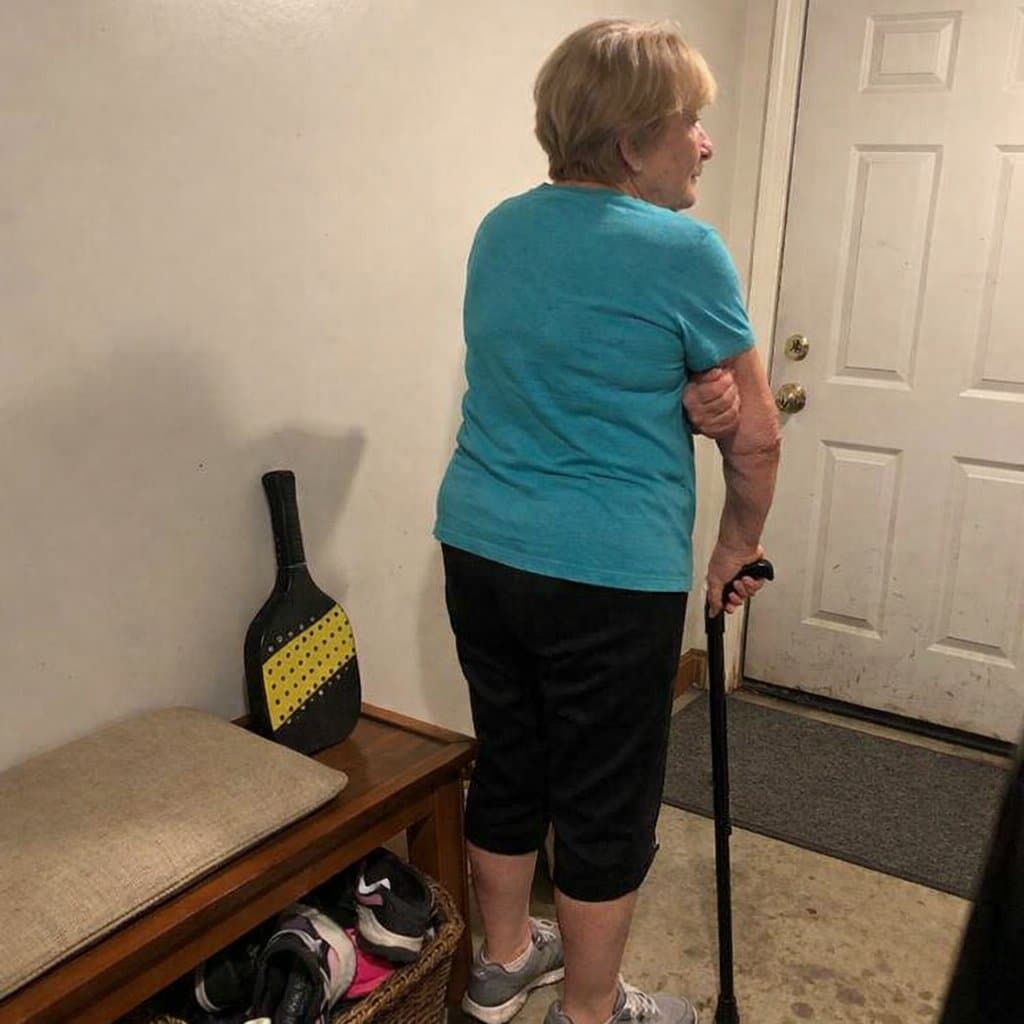
Swelling, locking, sharp or catching sensations, or pain that is present at rest — these are not “push through it” moments. See a clinician before returning to play if any of these show up. Staying active long-term means being smart about these signals when they appear.
When to See a Doctor: The Non-Negotiable Part of This Conversation
Comfort tools and thoughtful adjustments have their place in an active lifestyle. But they are not a substitute for clinical evaluation — and knowing when to make the call is one of the smartest things an active older adult can do.
Clear Signals That Mean It’s Time
Don’t wait through another session if you’re experiencing any of these:
- Pain that does not settle between sessions — the joint is still sore when you play again
- Swelling in either joint
- Any numbness or tingling in the arm or leg
- Pain that wakes you up at night
- Symptoms that are getting worse rather than plateauing or fading
The Difference Worth Knowing
There’s a meaningful distinction between joint discomfort that fades between sessions — something many pickleball players over 65 experience and monitor — and joint symptoms that are escalating, affecting daily life, or present at rest. The first is worth watching and discussing with your doctor. The second is a clinical matter, not a comfort-tool matter.
Seeing a Doctor Is What Active People Do
Getting a professional evaluation isn’t an admission of defeat — it’s what people who want to keep playing do to protect their ability to stay on the court. Early evaluation often leads to better outcomes and a faster return to the game you love.
A primary care physician is a fine starting point. They can refer you to an orthopedist or sports medicine specialist if the situation warrants it. My background is in aging and home safety — which is exactly why I can say plainly that this part of the conversation belongs with a clinician, not with an article.
The players who stay on the court longest aren’t the ones who push through everything. They’re the ones who know when to get expert eyes on a problem.
How Active Older Adults Are Being More Thoughtful on the Court


Beyond knowing when to see a doctor, there are practical observations from experienced pickleball players over 65 that are worth sharing — adjustments to how they play, not prescriptions for what to do medically.
Playing Approach Observations
Many experienced older players describe warming up longer before play than they used to — sometimes 10 to 15 minutes of easy movement before the first competitive rally. Others talk about being more deliberate about rest days, building them into the week rather than playing every available session. These aren’t medical recommendations; they’re simply what a lot of players report doing as they’ve learned how their bodies respond.


Paddle Grip Awareness
Players often mention that paddle grip size matters more than they expected for elbow comfort. A grip that’s too small tends to create more forearm tension; a grip that’s too large does the same. Most pickleball specialty shops can help with fit, and it’s a conversation worth having if you haven’t already. The difference can be meaningful.
Footwear Observations
Players frequently note that court-specific shoes — rather than running shoes or general athletic shoes — provide better lateral support for the stop-and-go demands of pickleball. Running shoes are designed for forward motion; the side-to-side demands of pickleball are a different ask entirely. If you haven’t looked at footwear with better lateral support, it’s worth exploring.
For anyone dealing with existing foot concerns alongside the knee soreness, orthopedic shoe options are worth a look as well — some players find that better overall foot support changes how load travels up through the knee during play.
Community as a Resource
Pickleball communities — both local clubs and online groups — are genuinely rich sources of peer experience. Connecting with other players over 65 often surfaces practical observations that aren’t in any formal guide: which courts in your area have cushioned surfaces, which warm-up routines seem to help, what footwear other players have tried. It’s the kind of real-world knowledge that complements whatever your clinician tells you.
If staying socially connected and mentally engaged is part of why you love pickleball, it’s worth knowing that the same instinct — staying active, staying curious, staying connected — drives a lot of the research on hobbies that support wellbeing in older adults. Pickleball fits right in that category.
The Bigger Picture
Joint discomfort after pickleball doesn’t have to mean the end of the sport. But it does invite a more thoughtful approach — how often you play, on what surfaces, with what kind of preparation, and with how much recovery built in between sessions. That thoughtfulness is a feature of playing smart, not a concession to aging.
The Pickleball Player’s Joint Check-In Checklist: Know What You’re Feeling, Know When to Call Your Doctor
Download this free checklist and know exactly what joint discomfort is normal recovery and what signals it’s time to see your doctor—so you can keep playing pickleball confidently without fear or guesswork.
Staying in the Game, Smartly


Pickleball elbow and knee pain show up for understandable, identifiable reasons — reasons tied to what the sport specifically asks of aging joints and how those joints are changing after 60. That’s true for the elbow, where repetitive forearm snap and paddle grip create load on the tendon attachment, and it’s true for the knee, where lateral movement and hard surfaces create a different but equally real set of demands.
Knowing what’s happening in your body, understanding when to see a professional, and being informed about what fellow players commonly experience puts you in a stronger position — on the court and in the doctor’s office. You’re not guessing anymore. You’re working with information.
If you’re thinking more broadly about how to support your joints and mobility as you stay active, resources on mobility and joint support options and on fall prevention are worth bookmarking — especially as your pickleball game keeps you moving in ways that demand good stability and balance.


And if you’ve been managing knee discomfort that affects more than just pickleball — getting in and out of chairs, sleeping comfortably — it’s worth knowing that things like adjustable sleep surfaces are something other active older adults look into when joint soreness starts affecting rest.
Staying in the game means being smart about the game. And reading articles like this one — asking the right questions, knowing when to call your doctor — is exactly what smart players do.
Have you noticed elbow or knee soreness after pickleball? What have you observed about your own body’s patterns? Drop your experience in the comments — your perspective might be exactly what another player needs to hear today.