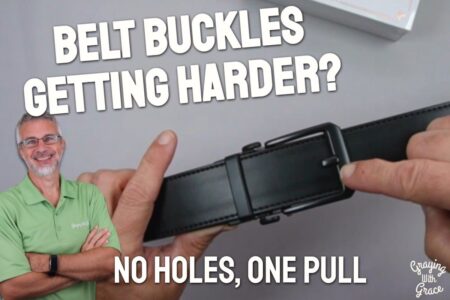
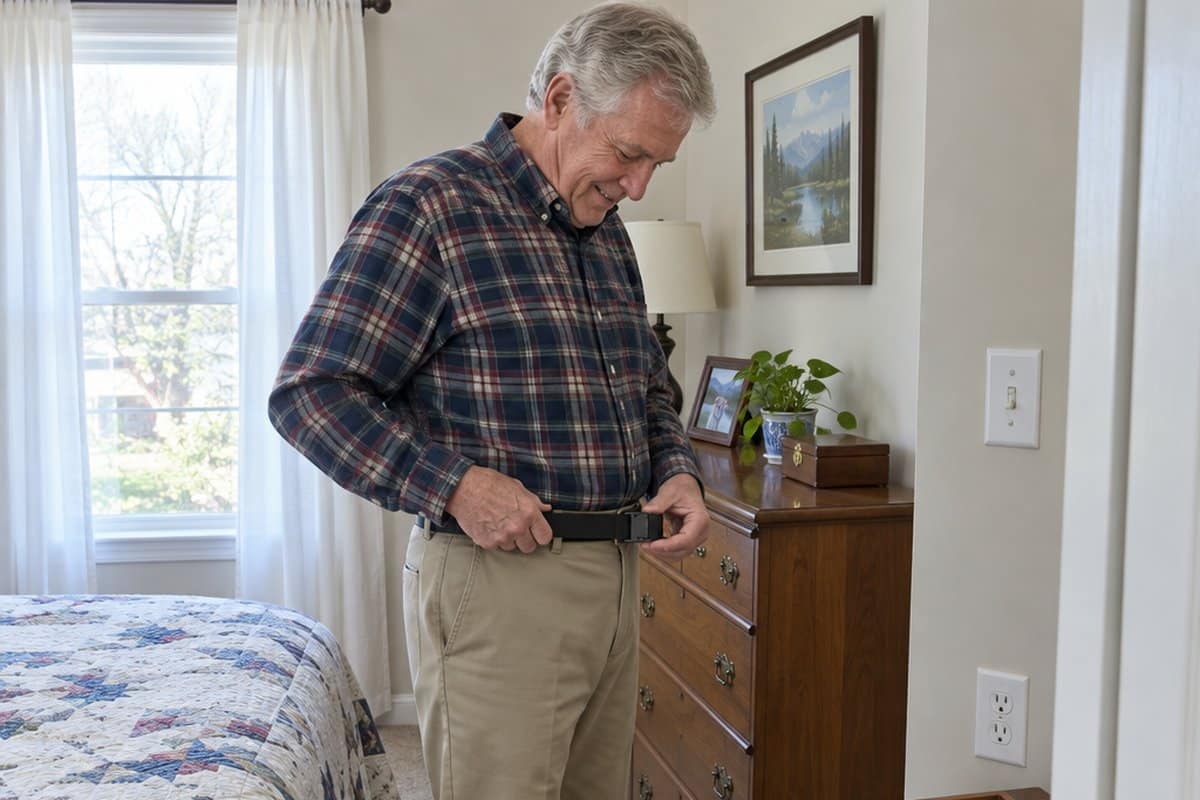
You buy a bigger belt, then a smaller one, and you still land between two holes. Or you stand at the mirror working a prong buckle with a hand that won't cooperate.
You're in the right place, and it isn't your fault. Being between belt sizes is common, and so is trouble threading a belt with stiff fingers or one hand.
Here's the twist: the problem usually isn't size at all. I'll walk you through ratchet belts with no holes and elastic belts with nothing to fasten, who each one suits, and what each one costs you in trade-offs.
Belts With No Holes Cheat Sheet
Download our free Belts With No Holes Cheat Sheet and discover the right closing style for your hands—so you can stop fighting with buckles and start dressing with confidence and comfort.
It's Not a Size Problem: How a Ratchet Belt Works
If your belt holes don't fit your waist, the real question isn't "what size?" It's "how does this belt close, and how finely does it adjust?"
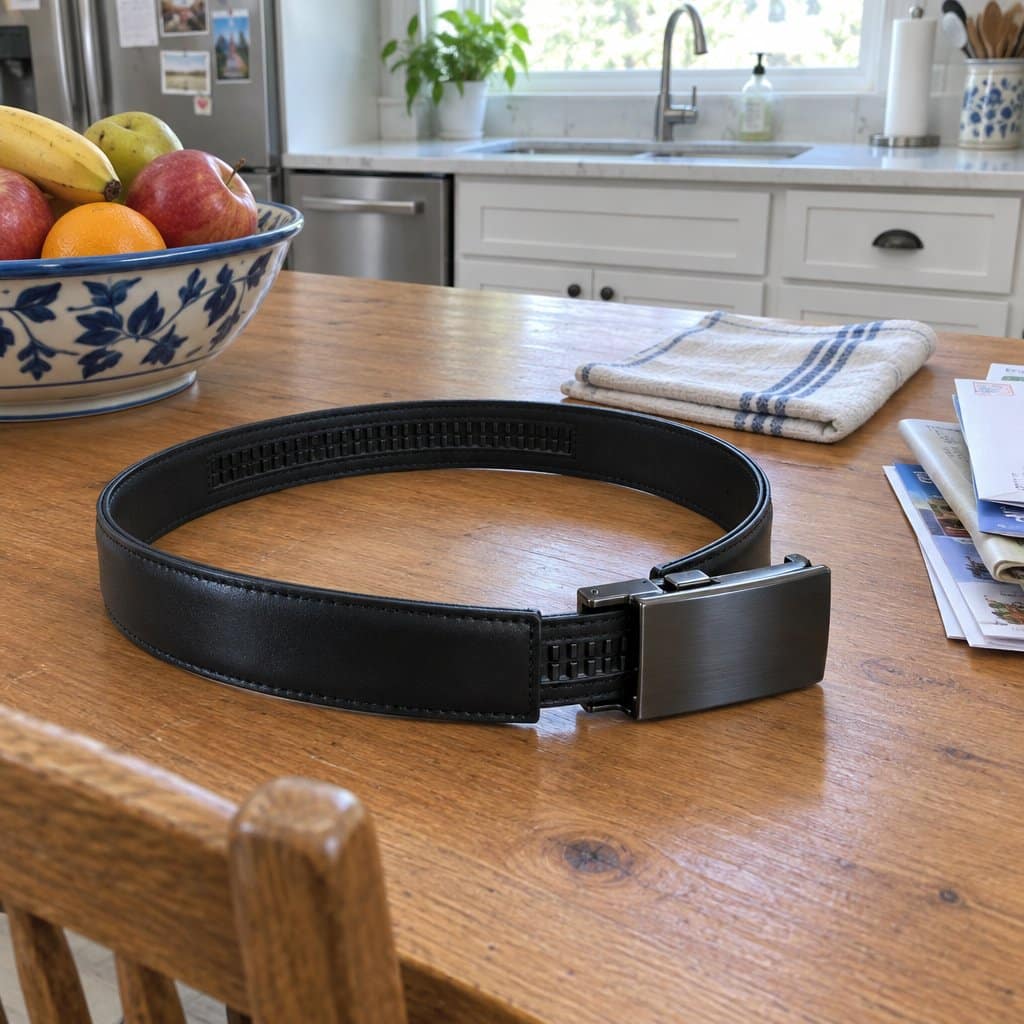
So, how does a ratchet belt work? Small teeth run along the back of the strap. You slide the strap through the buckle, and it clicks tighter one notch at a time. There are no holes at all, and a button or lever releases it.
That makes it a belt that adjusts in small increments. In my leather demos, each click moved the belt about a quarter inch.
It also suits a waist that changes during the day. Loosen a notch when you sit, then tighten it when you stand.
An elastic belt works differently. It has no buckle, so there's nothing to fasten.
The Trade-Off I Want You to Hear First
A ratchet belt gives you a precise fit and a crisp look. But you have to press a button or lever to release it, and some people find that harder than they expected.
Before you buy, press your thumb or the heel of your palm against a hard surface, like a countertop, using the same motion. If that feels easy, a ratchet belt is likely to work for you.
A quick way to decide:
- Can your hand press a small button or lever? Look at ratchet belts.
- Do you need to do it with one hand? Look for a one-button or two-tab release. I walk through a one-button buckle in my Easy Release Belt for Seniors with Weak Grip review.
- Is pressing a release the sticking point? Skip ahead to elastic.
Buying another size was never going to fix this. Changing how the belt closes will.
Nylon Ratchet Belts: Lightweight, Affordable, One-Hand Release
If you want click-to-fit without spending much, a nylon ratchet belt is where I'd start. It's light, it works as a belt without a prong buckle, and the ones below release with one hand.


The limits are plain. Nylon looks casual and work-like, so it's not for a suit. The release takes a small press.
Many ratchet belts also have to be trimmed to length, and a trimmed strap can't be put back. Before you order, check your belt loops for 1.5 inch clearance and read the listed size range.
JUKMO Quick Release Tactical Belt
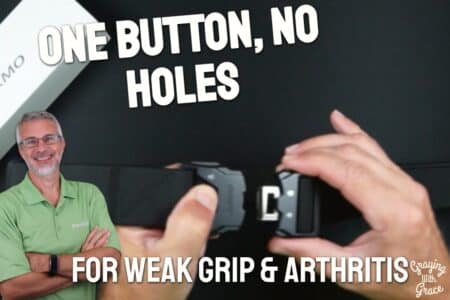
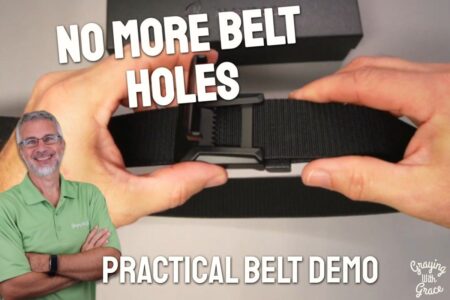
I filmed a demo of this one. It has no holes, and one button on the buckle releases it, even one-handed. You set the fit by cinching the strap.


The strap is heavy-duty nylon, 1.5 inches wide. The buckle is zinc alloy with a solid-feeling button and a steel hook, with no plastic parts. The strap has some give but doesn't stretch easily, which is what you want so your pants stay up.
For first use, feed the rounded end through the slot closest to the buckle opening and back through the other side. It arrives in a gift-quality box with an outer wrap, a nicer inner box and a sealable pouch.
The drawback: you can't cut it or custom adjust it. Measure your waist and check the length range and tail first. I'd pick it for anyone unhappy with where belt holes land, or anyone who doesn't want to fiddle with a prong.
JUKMO Tactical Belt
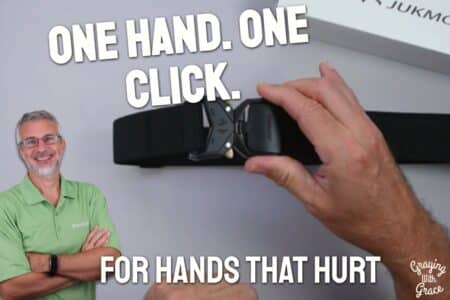
Want to skip the cutting altogether? I filmed this one too, and it arrives disconnected so you set the length without trimming. Feed the buckle end through the clamp, line up the edges and squeeze it down. During the day, lift the buckle side to adjust.
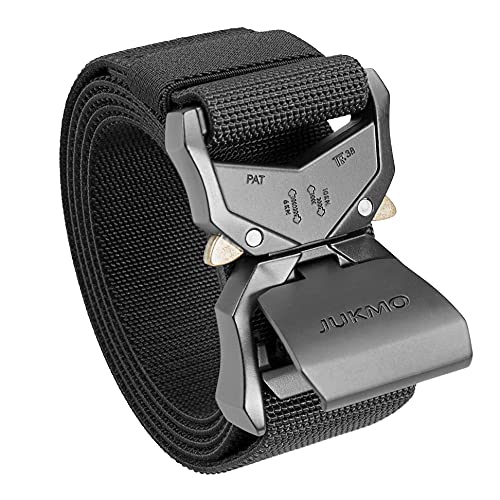

The aluminum alloy buckle opens by squeezing two tabs and snaps shut with a push, one-handed. I'd call it lightweight but real-metal feeling. The squeeze takes a bit of pinch, so try that motion first.
The nylon strap is 1.5 inches wide and flexible. In my video, it moves with you when you bend or squat, and I find it more comfortable than a standard leather belt. The buckle side is double X stitched, and it comes in a gift box with a separate inner box and a pouch.
It's very affordable. I'd suggest it for dads and grandfathers, anyone with arthritis or hand dexterity trouble, and anyone doing hiking, yard work, construction or wet outdoor jobs.
Three More Nylon Options I Demoed
- JUKMO Stretch Tactical Belt for Men: A ratchet-buckle nylon work belt that adjusts in precise clicks and releases with one hand. It suits anyone who moves a lot or needs a fast-off fit. More in my JUKMO Stretch Tactical Belt review.
- JUKMO Men's 1.5" Nylon Ratchet Belt: It has no holes and adjusts in small increments across the full strap. That makes a precise everyday fit easier without the dexterity demands of a prong buckle. Its box and video are at the top of this section.
- BELTROAD 4th of July Belt for Men: I demoed this ratchet-style nylon belt as well. It clicks to an exact fit without belt holes, which helps if your waist shifts through the day or small hole alignment is a nuisance.


Leather Ratchet Belts: Click-to-Fit That Looks Dressed
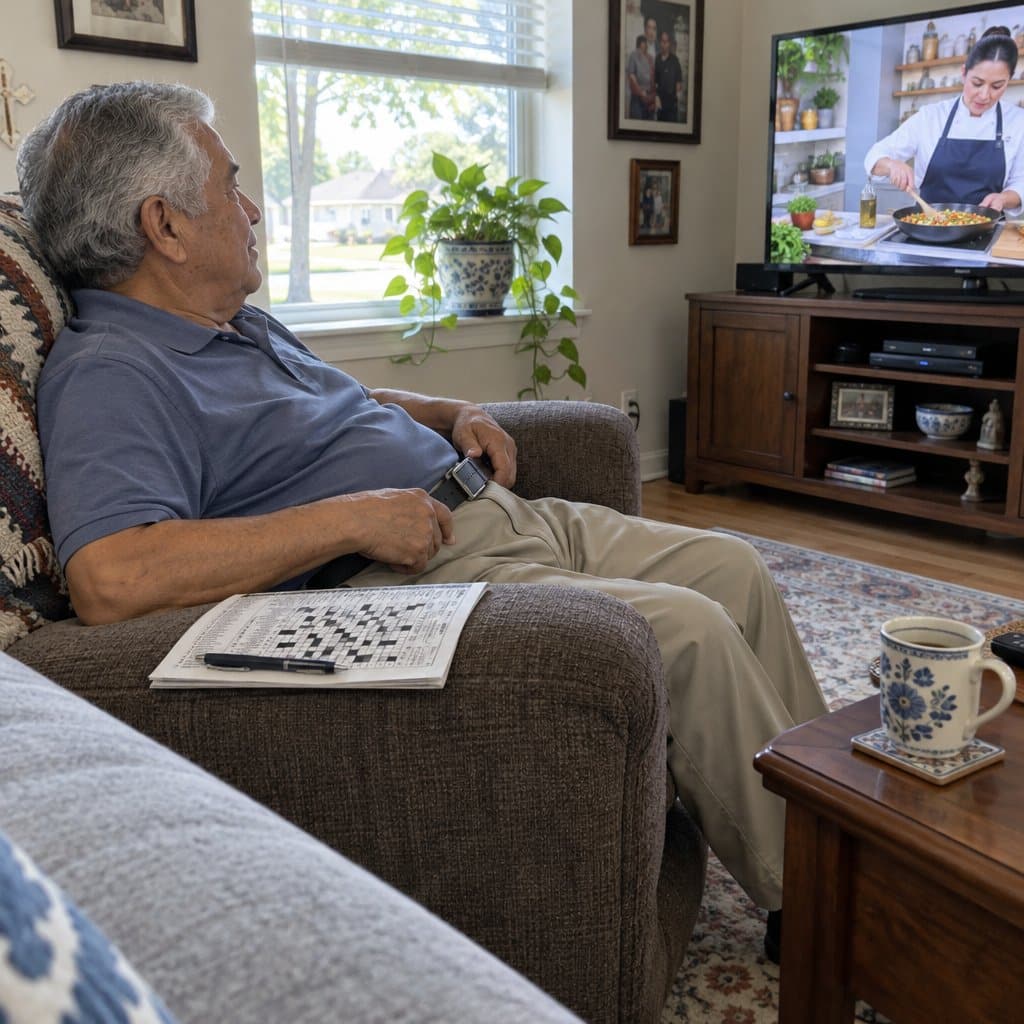
Want click-to-fit with a belt that looks right with slacks or at church? A leather ratchet belt is the answer.


The downsides are real. Leather costs more than nylon. Stiffer leather is harder to work and takes some break-in. A western-style buckle is larger and heavier.
The trim-to-fit step applies here too, and it's permanent.
JUKMO 1.5" Black Leather Ratchet Dress Belt
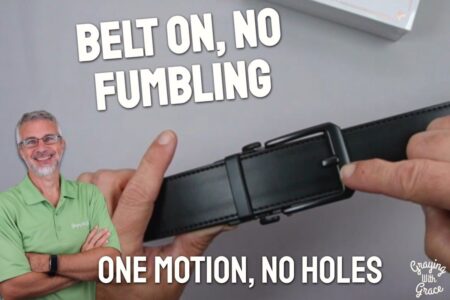
In my video, this belt is about 1.5 inches wide with no holes. The strap clicks into the buckle's teeth, and a lever on top and bottom releases it. Each click adjusts about a quarter inch, and the whole belt weighs about 8 ounces.
The leather is thick with smooth edges and even stitching, including around the teeth. The buckle is solid with little wobble, and it looks like a regular belt buckle. I'd wear it with jeans, dress slacks or a suit.
It comes in a gift box, with the belt wrapped in a protector and the buckle separate. Sizing is by range, not waist size, so check the listing chart. I pitched it as a gift for someone whose everyday tasks have gotten harder. My longer write-up is Leather Ratchet Belt for Men: Built for Easier Dressing.
BELTROAD Mens Ratchet Western Belt
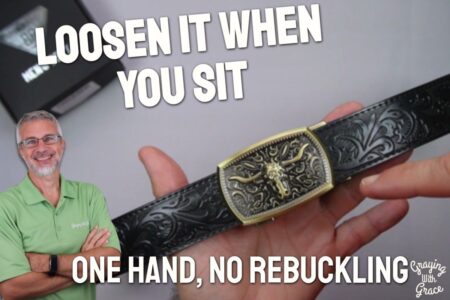
The BELTROAD has an embossed, tooled-look leather strap that's soft and flexible, with a metal alloy buckle. It weighs about 7 ounces, and the stitching is even. The embossing has raised edges.


Teeth on the back click in quarter inch steps. A thumb lever on the bottom releases it, and I said in my video it can be done one-handed with practice.
To trim it, pry open the flap on the back of the buckle with the included prying tool, mark the flat side, cut with good snips and reinsert. The buckle can also be popped off. New leather smells, so air it out.
It appeals to a different group than tactical nylon belts, and I think it suits older men and anyone whose waist changes during the day. Here's my BELTROAD western belt review.
How to Measure and Trim
- Measure at the waistline: Measure where the belt actually sits, not your pants size.
- Stay in the sizing range: On many ratchet belts the teeth don't run the full length, so match the listed ratchet belt sizing range.
- Mark the flat side: Wrap the belt around your waist and mark it. Never cut the rounded end.
- Cut last: Trim only after you've confirmed the fit. You can't undo a trimmed ratchet belt.

Elastic No-Buckle Belts: Nothing to Fasten
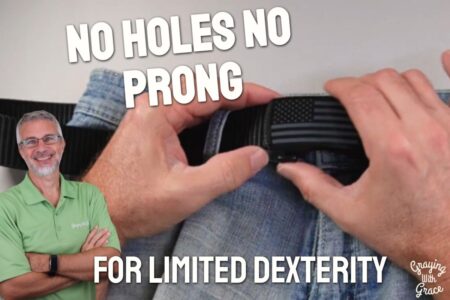
If you can't manage any buckle or button, or you don't want anything hard pressing at your waist, an elastic belt is the simplest answer. It's also a good fit when you want a belt a parent can put on alone, or one that's quick for a caregiver to help with.


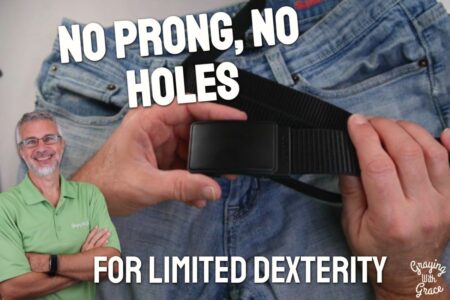
I demoed the WERFORU Men 2 Loop No Buckle Elastic Belt for Women Men. It threads between two loops and holds pants up comfortably, with no hardware to fasten and nothing pressing against your stomach. You can read more in my WERFORU review.
The limits: elastic holds less firmly than a ratchet belt. It may roll or slip with heavier pants, or with a tool or phone on your hip. Do elastic belts stretch out? Yes, over time. It also looks less formal.
So elastic wins on ease of closing, and ratchet wins on firm hold and a crisp look. If the release button is your sticking point, elastic is the answer.
Which One Fits Your Hand? A Quick Chooser
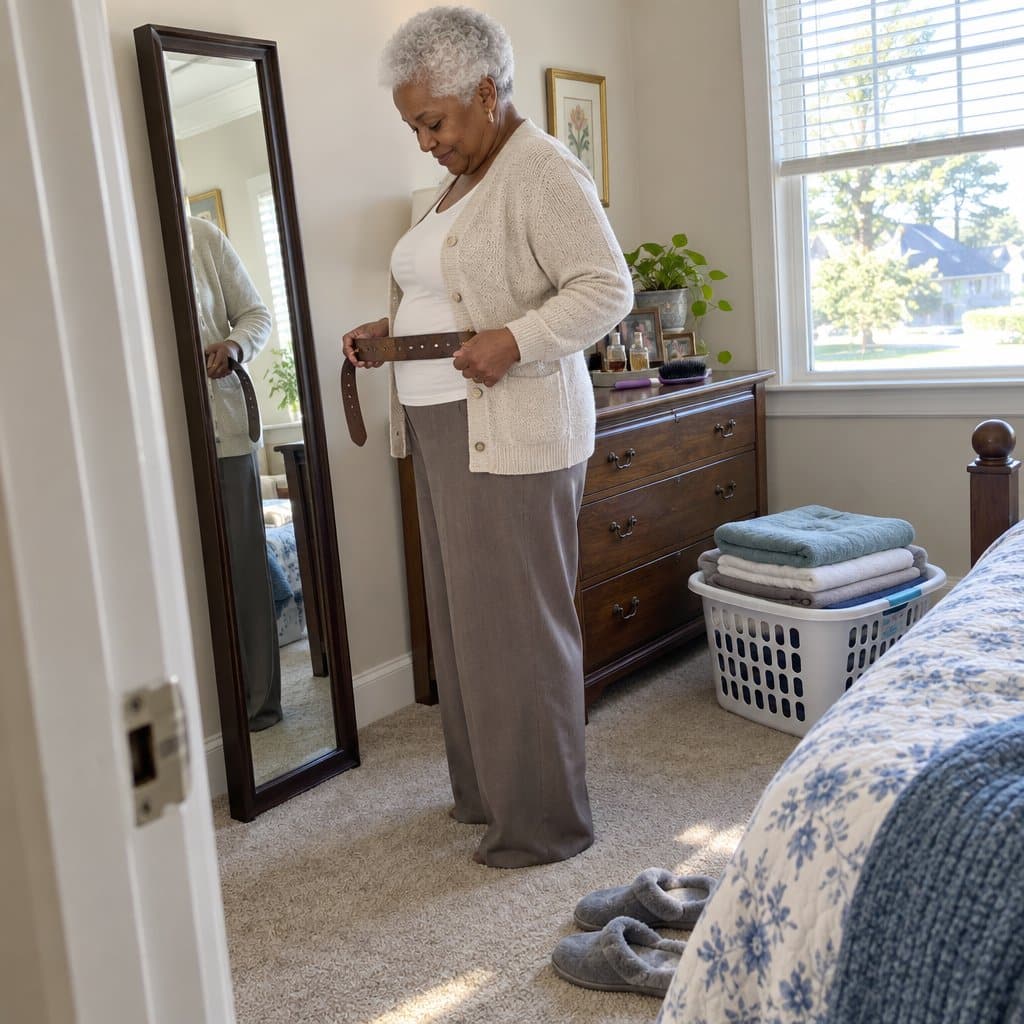
- Can press a small button or lever: Choose ratchet. Nylon suits casual and work, and leather suits slacks and church.
- Want no cutting: The JUKMO Tactical Belt is set without cutting.
- Cannot manage any buckle: Choose an elastic no-buckle belt.
- Waist changes through the day: Choose ratchet, loosening to sit and tightening to stand.
- Buying for a parent: Pick the closing style their hand handles, and confirm the length range before ordering.
Whatever you choose, measure your waist and check belt loop width first. For more ideas, see Easy Belts For Seniors. If one-handed dressing is the bigger goal, Adaptive Clothing for Stroke Patients covers more dressing aids for limited hand strength.
Belts With No Holes Cheat Sheet
Download our free Belts With No Holes Cheat Sheet and discover the right closing style for your hands—so you can stop fighting with buckles and start dressing with confidence and comfort.
The Belt Was Never the Wrong Size
The problem was never really size. It's how a belt closes and how finely it adjusts.
There are belts that let a man dress without a fight, and choosing one is a practical step toward independence. Getting dressed alone is well within reach.
If you'd like more practical dressing and home tips, sign up for my free newsletter. If you're a caregiver working out what else would make daily routines easier, my Home Safety and Independent Living Assessment is a good next step.
Which closing style has worked best for you or someone you care for? Share it in the comments.