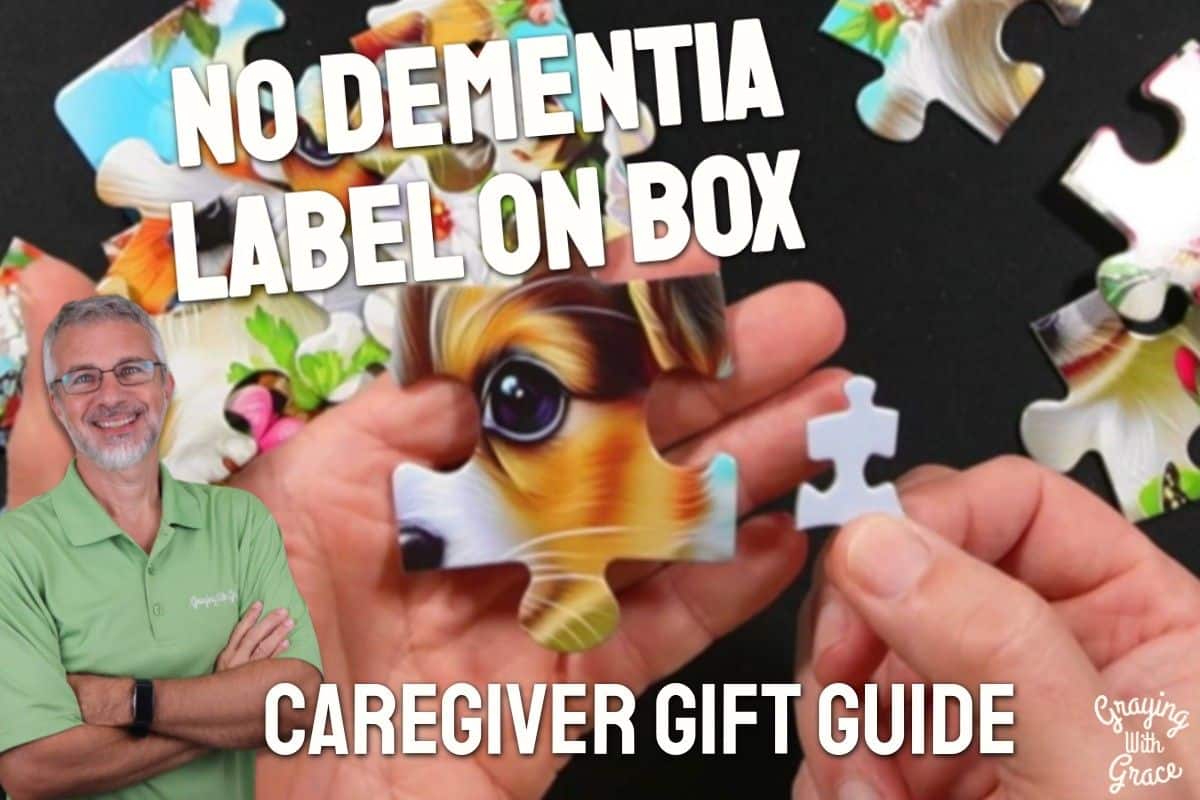
Finding an activity that actually holds a loved one’s attention — without causing frustration, confusion, or that heartbreaking moment when they push everything off the table and walk away — is one of the quietest struggles in dementia caregiving.
Standard puzzles are too complex. Children’s puzzles feel demeaning. And most “senior-friendly” options on the market are either flimsy novelties or just regular puzzles repackaged with a bigger font on the box.
I’m Scott Grant, a Certified Senior Advisor (CSA) and Senior Home Safety Specialist (SHSS) at Graying With Grace. I personally evaluated this set of six animal-themed puzzles from snspolt, and I want to give you an honest look at what makes them different — and where they fall short.


Quick Takeaways
- Solves real problems: Addresses frustration, physical access barriers, and the dignity gap between children’s puzzles and adult cognitive tools
- Best for: Older adults with mild to moderate dementia, Alzheimer’s, arthritis, vision decline, or reduced hand strength
- Worth the investment: Yes — especially for facilities or caregivers rotating activities over months or years
- Best feature for older adults: The 1:1 reference poster that matches the completed puzzle size, making it genuinely easier to work without getting lost
- Biggest limitation: Not challenging enough for cognitively sharp older adults who simply want a physical accommodation
How This Could Help You
Imagine your mom sitting at the kitchen table, working through a cheerful puppy puzzle piece by piece — calm, focused, smiling just a little when two pieces click together. That moment of quiet success is exactly what the snspolt 6-Pack 20-Piece Dementia Puzzles are designed to create.
For older adults with dementia or Alzheimer’s, the biggest obstacle to enjoying a puzzle isn’t desire — it’s scale. Too many pieces, too much visual noise, and the whole experience collapses into anxiety rather than engagement.
Twenty pieces is a sweet spot. It’s enough to feel like an accomplishment without being so overwhelming that the activity gets abandoned halfway through. Most people can finish one puzzle in a single sitting, which means they get to experience that satisfying sense of completion — and that matters more than most of us realize.
Are there days when your loved one needs something structured but low-stakes? Something they can do alone while you make lunch, or together with you when conversation feels hard? This set works both ways — no supervision required, no batteries, no rules to explain.
For caregivers, that kind of flexibility is genuinely valuable. You’re not setting up a complicated activity; you’re just sliding a puzzle out of its storage bag and placing it on the table.
Ready to discover more innovative strategies for healthy, comfortable aging? Subscribe to our newsletter for expert-tested tips and product recommendations designed specifically for older adults.
Important Details You Should Know
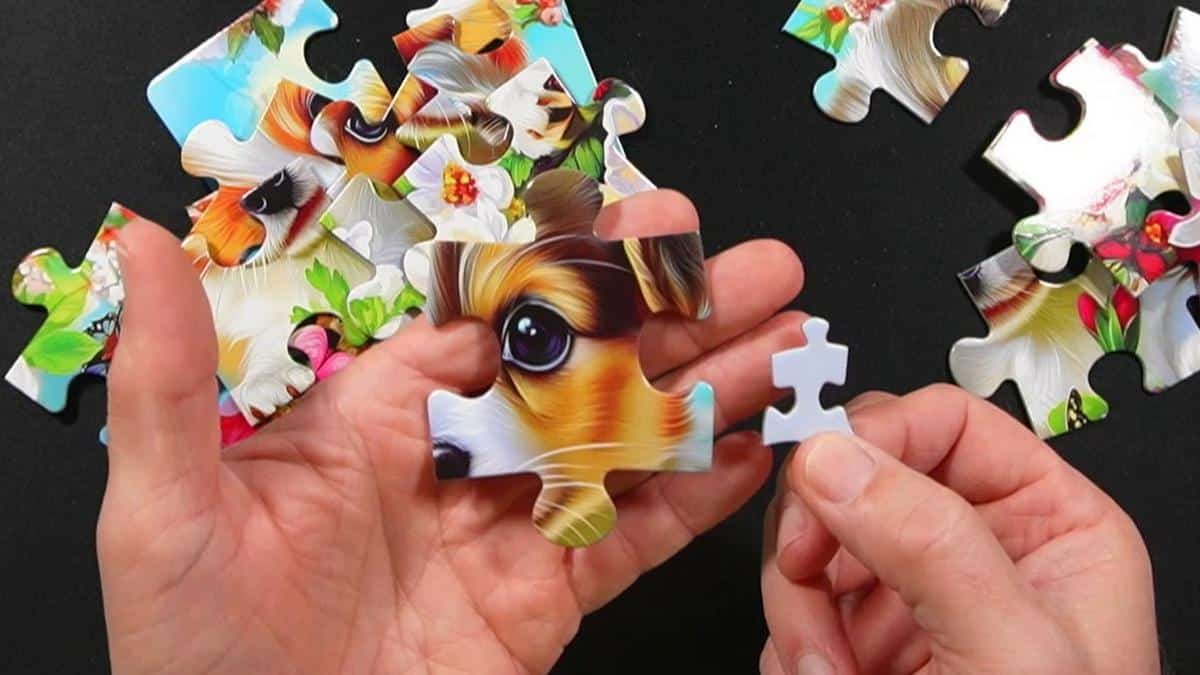
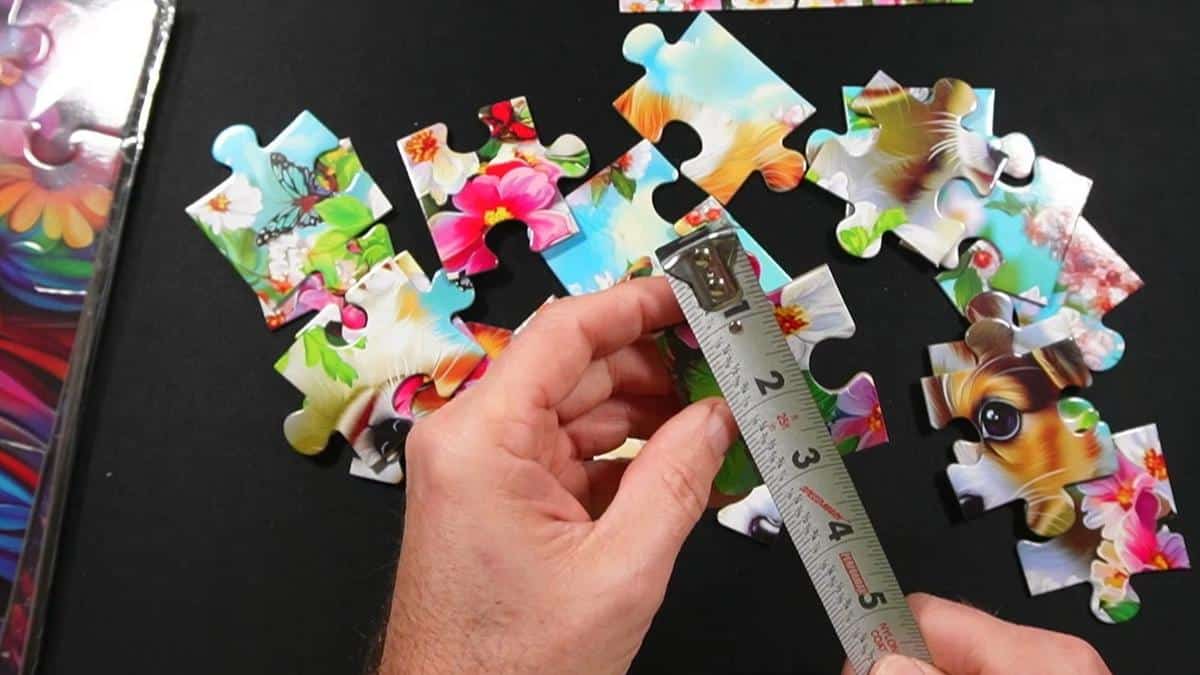
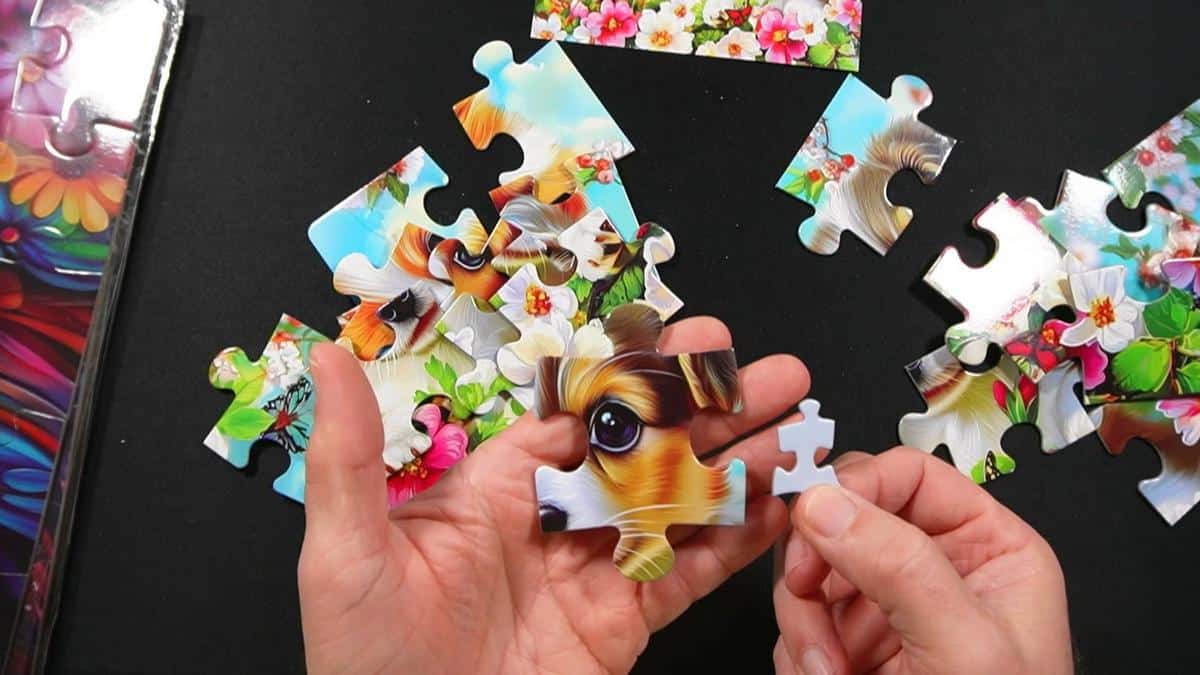
Each puzzle piece measures roughly three inches by two and a half inches — about the size of a large cracker. When I evaluated this product, I noticed they’re significantly bigger than standard puzzle pieces, so I held one up next to a piece from a 500-piece puzzle to show the size difference on camera. The comparison is striking.
The pieces have a quality finish — not slick enough to slide off the table, but smooth enough to glide easily when you’re moving them around. That balance matters a lot for someone with reduced grip strength or tremors.
The board thickness is substantial. These don’t feel like the flimsy cardboard you’d find in a dollar-store puzzle — they resist bending, and the tabs don’t fold over with normal handling. That durability is important when you’re planning to use these repeatedly over months or years.
The completed puzzle dimensions are sized to work on most tables or lap desks without crowding. Six puzzles total come in the set, each with its own resealable storage bag.

Getting Started
When you open the outer package, you’ll find six individually wrapped puzzles inside, each sealed in its own storage bag. The themes in this animal set include butterflies, cats, hummingbirds and flowers, a lake scene, a mandala elephant, and puppies.
Each puzzle comes with a reference poster — a printed image of the completed puzzle at the same 1:1 scale. Place it next to the puzzle frame while your loved one works, and it becomes an instant guide without feeling like a crutch.
There’s no setup required. No app to download, no batteries to install, no instructions to read aloud. You open the bag, spread the pieces face-up on the table, set the reference poster nearby, and you’re ready.
Caregivers who want to help can sit alongside and participate naturally. Those who want to let their loved one work independently can simply leave the puzzle on the table and check back in.
Features That Matter to You
The piece size is the first thing you’ll notice with the snspolt dementia puzzle set, and it’s the feature that matters most for daily usability. At roughly three inches by two and a half inches, these pieces are easy to see, easy to pick up, and easy to place — even for hands that don’t cooperate the way they used to.
As I demonstrated in the video, the pieces slide easily across a table surface, which means you don’t need to lift and reposition constantly. For someone managing arthritis or limited hand strength, that sliding action is genuinely helpful.
The high-contrast animal imagery is a thoughtful design choice, not just an aesthetic one. Research consistently shows that vibrant, bold colors help maintain engagement and visual recognition for people with dementia. These puzzles aren’t muted or pastel — they’re bright and easy to read visually.
The 1:1 reference poster is one of the most practical features in the set. Because the poster matches the completed puzzle exactly in size, older adults don’t have to mentally scale up or down when comparing a piece to the guide. That cognitive shortcut makes a real difference mid-puzzle.
The discreet outer packaging is worth calling out specifically. In the video, I showed the actual outer wrapper — just a simple sticker label, with no mention of dementia, Alzheimer’s, or cognitive decline anywhere on the outside. If you’re giving this as a gift to someone who is sensitive about their diagnosis, that detail matters enormously.
Real Life Experience
When I sat down to evaluate this set hands-on, the first thing I did was open the puppy puzzle and scatter the pieces on the table. As I demonstrated in the video, they separated easily straight out of the package — no prying, no frustration, no pieces stuck together from the factory.
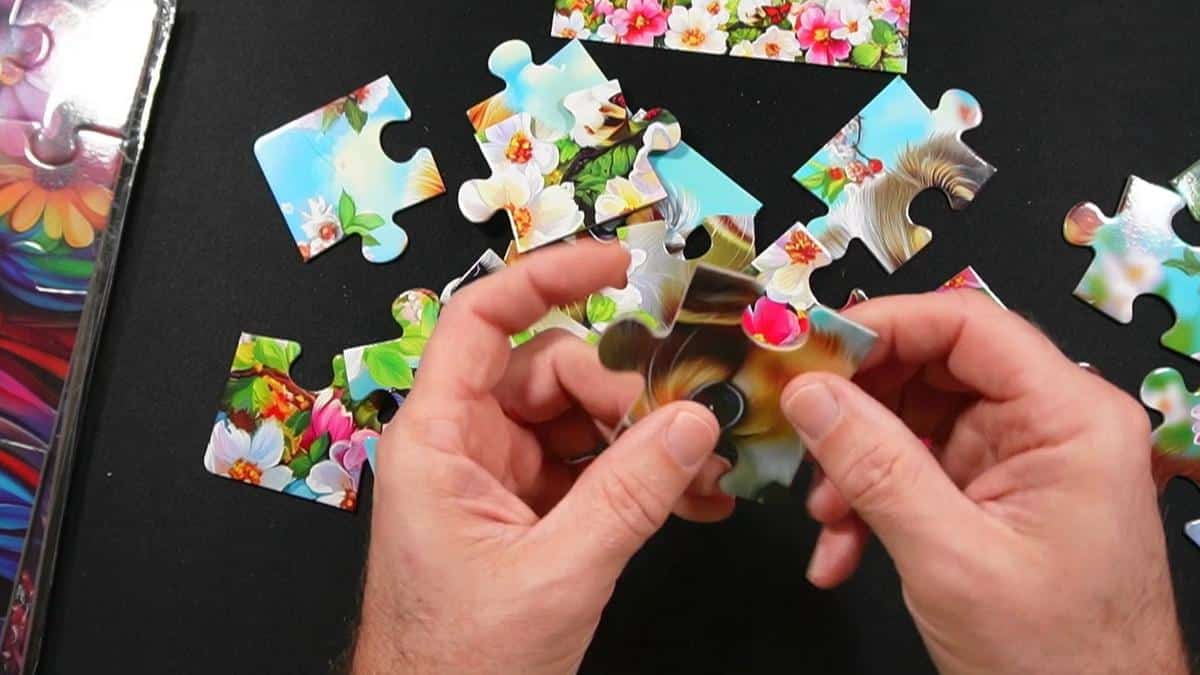
The feel of the pieces is reassuring. In the video, you can see that I bend a piece slightly to show its resistance — it springs back without creasing. That kind of durability means these puzzles will hold up through repeated daily use without the tabs folding over or the images wearing down.
When I evaluated the surface finish, I noticed it hits a nice middle ground. It’s smooth enough to glide when you’re pushing pieces around to sort them, but not so slick that pieces shoot off the table edge. For someone with tremors, that grip-without-sticking quality is genuinely helpful.
As I demonstrated in the video, the pieces move easily on a flat surface, which means your loved one can sort and organize without picking up every single piece. That’s a small detail, but it reduces the physical effort required and keeps the focus on the cognitive enjoyment.
Maintenance is as simple as it gets. When the session is finished, pieces go back into the labeled storage bag. No cleaning required, no special storage conditions. The bags keep sets organized and prevent the maddening experience of dumping out a puzzle only to realize a piece has been missing for three weeks.
Will You Be Able to Use It?
For older adults with arthritis, hand tremors, or reduced grip strength, the large piece format removes the biggest physical barrier to puzzle enjoyment. The pieces are substantial enough to pick up without fine-motor precision.
For those with age-related vision changes, the high-contrast imagery and bold colors make the puzzle visually readable without requiring reading glasses to distinguish one piece from another.
Independent use is absolutely possible. Many older adults with mild to moderate dementia can work through one of these puzzles on their own, especially with the reference poster in front of them. No caregiver assistance is required for the puzzle activity itself.
If your loved one is in a wheelchair or uses a hospital-style table, these puzzles work well on a flat tray surface. The pieces don’t require significant reach or a large work area to complete a 20-piece puzzle.
Important Considerations
If your loved one is cognitively sharp and simply needs larger pieces due to arthritis or vision challenges, the 20-piece format may feel too simple. These puzzles are genuinely designed for cognitive accessibility — they are not a physical accommodation added to a standard puzzle.
Individual piece replacement is not available as far as I can determine. If a piece goes missing, you can’t order a replacement. The good news is that the storage bags significantly reduce that risk, and the reference poster means a near-complete puzzle is still solvable and satisfying.
These puzzles are therapeutic tools, which means they work best when introduced thoughtfully. Dropping a puzzle in front of someone without context and walking away may not produce the engagement you’re hoping for. A brief, warm introduction — “I thought we might try this together” — goes a long way.
These are not designed for adults in the later stages of dementia who can no longer process two-dimensional images or manage intentional object placement. If your loved one is past that threshold, simpler sensory activities may be more appropriate. Always consult with your doctor or occupational therapist before making health-related activity decisions.
Help When You Need It
This product is sold through Amazon, so standard Amazon return policies apply. If you receive a damaged or incomplete set, the return process is straightforward through your Amazon account.
Manufacturer customer support information is not prominently listed, which is common for smaller import brands. For most issues — damaged pieces, missing items — Amazon’s buyer protection is your most reliable recourse.
As noted above, individual puzzle piece replacement does not appear to be available. This is a genuine limitation, though the storage bags and the manageable 20-piece count make piece loss far less likely than with larger puzzle sets.
Understanding the Cost
The snspolt 6-Pack 20-Piece Dementia Puzzle Set is priced as a complete therapeutic system — not just puzzle cardboard. When you factor in the six themes, six storage bags, and six reference posters, the per-puzzle cost is reasonable for what you’re getting.
For memory care facilities or adult day programs, the cost spreads across many users and many sessions. A set that holds up for two years of daily rotation in a care setting is a strong investment compared to flimsy alternatives that need replacing every few months.
For families, consider that older adults with dementia often enjoy repeating puzzles they’ve already solved. Recognition and muscle memory provide comfort, not boredom. So even after all six have been completed, they can be worked again — and again — without losing their value.
Making It Work for You
Start with the theme that’s most likely to resonate emotionally. If your dad was a dog lover his whole life, the puppy puzzle is your opener. That emotional connection to the subject matter increases engagement right from the start.
Place the reference poster to the left of the puzzle frame if your loved one is right-handed, or to the right if they’re left-handed. Keeping the guide in their natural sightline reduces the back-and-forth head movement that can be disorienting.
Try sorting the pieces into edge pieces and interior pieces before beginning. It’s a gentle way to extend the activity, add a small structure, and give your loved one an early win before the actual puzzle assembly starts.
Rotate themes regularly to maintain novelty. If you use one puzzle per week, six themes give you a month and a half of variety before cycling back — and by then, the first puzzle may feel fresh again.
For older adults who complete puzzles quickly and want more challenge, try removing the reference poster and having them work from memory. It’s a simple adjustment that raises the cognitive difficulty without changing the physical format.
Our Recommendation
This set earns a genuine recommendation for older adults with mild to moderate dementia, Alzheimer’s, or significant physical limitations that make standard puzzles inaccessible. The design decisions here are intentional and thoughtful — piece size, contrast, reference guides, storage, and discreet packaging all work together as a system rather than a collection of random features.
For cognitively sharp older adults who simply need larger pieces due to arthritis or vision changes, I’d suggest looking for a large-piece puzzle in the 48 to 100 piece range that provides more challenge without sacrificing accessibility.
For memory care facilities, adult day programs, or families who want a reliable rotation of cognitive activities, this six-pack offers strong value and durability. It’s the kind of product that earns its place in the activity cabinet and stays there.
If you’re shopping for a gift for someone navigating early to mid-stage dementia, the discreet packaging makes this one of the few therapeutic products you can wrap and give without it feeling clinical or heavy. That matters more than people expect until the moment arrives.
Where to Get It
You can check current pricing and availability for the snspolt 6-Pack 20-Piece Dementia Puzzles on Amazon using the link below. Stock and pricing can change, so it’s worth checking for the most up-to-date information.
Final Thoughts
The right activity at the right level of difficulty can turn a difficult afternoon into a genuinely good one — for your loved one and for you. That’s not a small thing.
This puzzle set gets the design decisions right where it counts most: piece size, visual clarity, achievable completion, dignity in presentation, and practical organization. It won’t solve every caregiving challenge, but as a tool for creating calm, purposeful engagement, it earns its place on the shelf.
Have you found a particular activity that consistently works for your loved one with dementia? I’d genuinely love to hear what’s landing for other caregivers — drop a comment below and let’s share what’s actually working.