
![Senior woman reading blanket hot soup[1]](https://www.grayingwithgrace.com/wp-content/uploads/2025/12/senior_woman_reading_blanket_hot_soup1-e1765216905219.jpg)
You’re sitting in your favorite chair, wrapped in a cozy sweater, feeling perfectly comfortable.
The thermostat reads 62°F.
You feel fine.
But here’s what might surprise you: your body could be slowly losing the battle with cold without you even noticing.
What if I told you that the very system your body uses to sense temperature isn’t working the way it used to? And that this invisible change could be putting your health at risk every single winter day?
The truth is, millions of older adults are living in homes that are too cold—and they genuinely don’t feel it happening. But once you understand what’s changed and why, you can protect yourself with a few simple adjustments.
Why Your Body’s Temperature Gauge Isn’t What It Used to Be
Here’s something most people don’t realize: aging actually changes how your body senses and responds to temperature.
As we get older, several things happen beneath the surface. Blood circulation naturally slows down, meaning less warm blood reaches your extremities. Your skin becomes thinner, providing less insulation. Your metabolism operates at a gentler pace, generating less internal heat.
And here’s the critical part: the nerve endings that signal “I’m cold” become less sensitive over time.
You might genuinely feel comfortable in a 62-degree room while your core body temperature is actually dropping to potentially dangerous levels. It’s not that you’re imagining comfort—your body’s sensors simply aren’t sending accurate alerts anymore.
Certain medications can make this even more pronounced. Blood pressure medications, sedatives, and some antidepressants can further dull your body’s temperature awareness.
Why does this matter so much in winter? Because hypothermia—yes, the serious condition you associate with being stranded in a snowstorm—can actually develop indoors in moderately cool temperatures, especially when exposure continues over hours or days.
Your body’s temperature gauge works like an older thermostat. It still functions, but it’s not as responsive as it once was.
The Room Temperature Rule Every Home Needs
Let’s get specific about the numbers that actually matter for your safety.
Your home’s main living areas should be kept at 70-72°F minimum. If budget is a concern, absolutely do not let temperatures drop below 68°F in rooms where you spend significant time.
Bedrooms can be slightly cooler—65°F is the absolute minimum—but many older adults sleep better and wake feeling better when bedroom temperatures stay around 68°F.
Here’s what many people don’t realize: that thermostat in your hallway might be lying about what’s happening in the rooms you actually use.
The bathroom you use every morning? It could be 5-10 degrees cooler than your thermostat reading. That bedroom where you spend 8 hours sleeping? Same story.
Temperature consistency matters just as much as the actual number. Your body handles steady warmth far better than fluctuating between 65°F and 72°F throughout the day.
Winter brings additional challenges beyond temperature control. Check out the senior snow day playbook to prepare for those times when you’re stuck inside for extended periods.
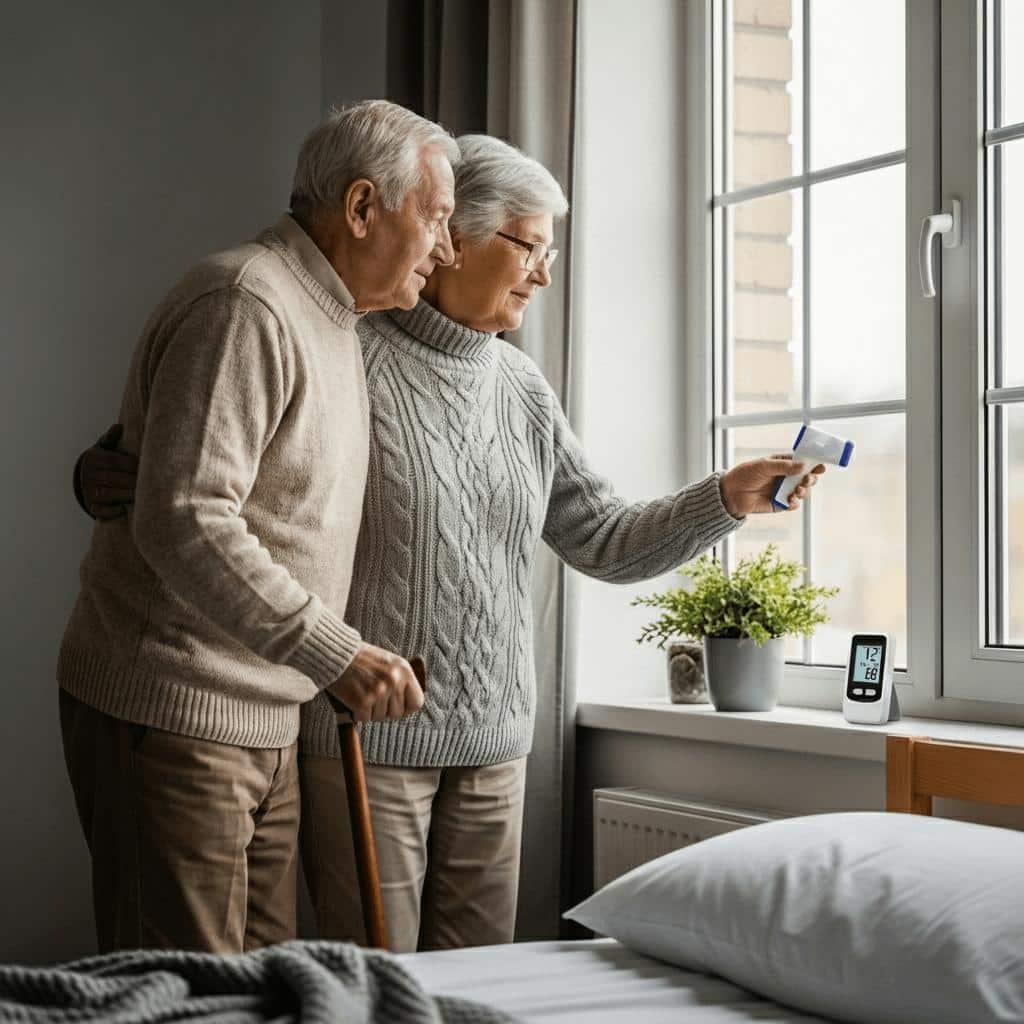
Your action step this week: Get an inexpensive digital room thermometer for under $15. Check the actual temperature in your bedroom, bathroom, and favorite sitting area at different times of day. You might be surprised what you discover.
Ready to discover more innovative strategies for healthy, comfortable aging? Subscribe to our newsletter for expert-tested tips and product recommendations designed specifically for older adults.

Smart Solutions for Temperature Monitoring
Technology has made staying safely warm much easier than it used to be—and you don’t need to be tech-savvy to use it.
Programmable Thermostats: Set It and Forget It
Modern programmable thermostats maintain consistent temperatures automatically. No more remembering to adjust settings morning and night.
Many models cost between $50-150 and either install easily or can be professionally installed for around $100-150. The energy savings often pay for the device within a year.
For those with family nearby: Some smart thermostats allow adult children to monitor home temperature remotely through a smartphone app. If you’re comfortable with this arrangement, it provides peace of mind without daily check-in phone calls. These are just one example of smart home devices that genuinely improve senior living without overwhelming you with complexity.
Room Temperature Monitors: The Truth-Tellers
Remember that room thermometer we mentioned? You can upgrade to smart temperature sensors that track conditions in individual rooms and send alerts to your phone or a family member’s phone if temperatures drop too low.
These typically cost $20-40 per sensor and work through WiFi. Place one in your bedroom and one in your main living area for comprehensive monitoring.
Why this matters: These sensors verify that your thermostat setting actually matches your room temperature. Many older homes have cold spots the main thermostat never detects.
Remote Monitoring for Caregivers
If you have adult children involved in your care, temperature monitoring systems can provide them reassurance without intrusive daily calls.
They’ll receive an alert only if something’s wrong—not constant updates. This means you maintain your independence and privacy while they have peace of mind.
Think of it this way: it’s like having a smoke detector that your family can also hear. Nobody’s watching you constantly; the system simply speaks up if help is needed.
Keep It Simple: Basic Digital Thermometers
Not interested in smart technology? That’s completely fine.
A simple $10-15 digital thermometer placed where you can see it easily serves as a reliable reference point. Check it when you wake up, at midday, and before bed. If it consistently reads below 68°F, adjust your thermostat accordingly.
If you or a loved one says “I don’t do technology,” there are simple solutions that actually work without requiring any learning curve. Sometimes the simplest solutions are the most effective.
The Layers Strategy That Actually Works
While maintaining proper room temperature is essential, strategic layering gives you an extra buffer of safety—and personal control over your comfort.
Your Base Layer: The Foundation
Start with thermal underwear or moisture-wicking long-sleeve shirts and leggings. Modern thermal fabrics are thin, comfortable, and surprisingly warm.
Look for materials like merino wool or synthetic blends designed for moisture management. These keep you warm without bulk and wash easily.
The Middle Layer: Your Insulation
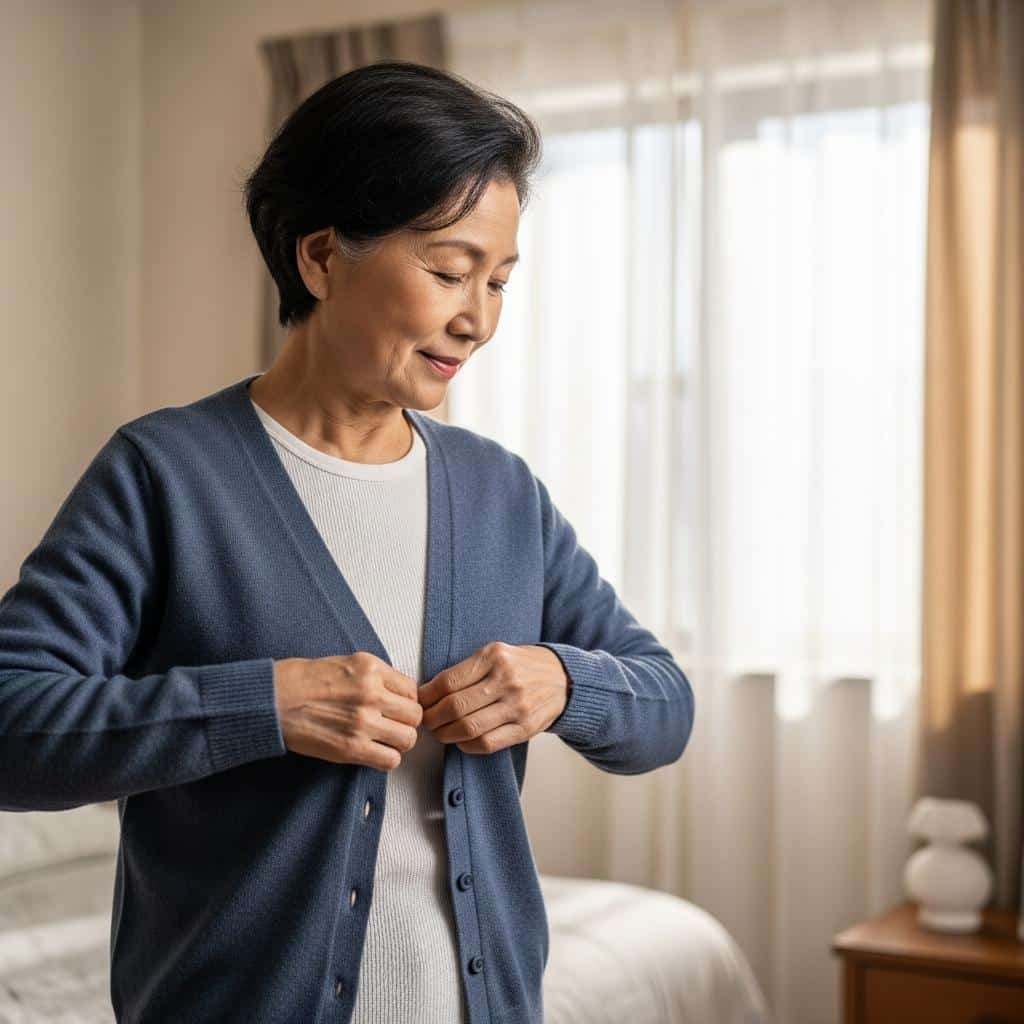
A fleece or wool sweater provides excellent insulation while remaining breathable. Choose pullovers or cardigans with front closures—no struggling with over-the-head styles.
Key consideration: Select sweaters with easy-to-manage buttons or zippers, not tiny buttons that challenge arthritic fingers.
The Outer Layer: Quick Adjustments
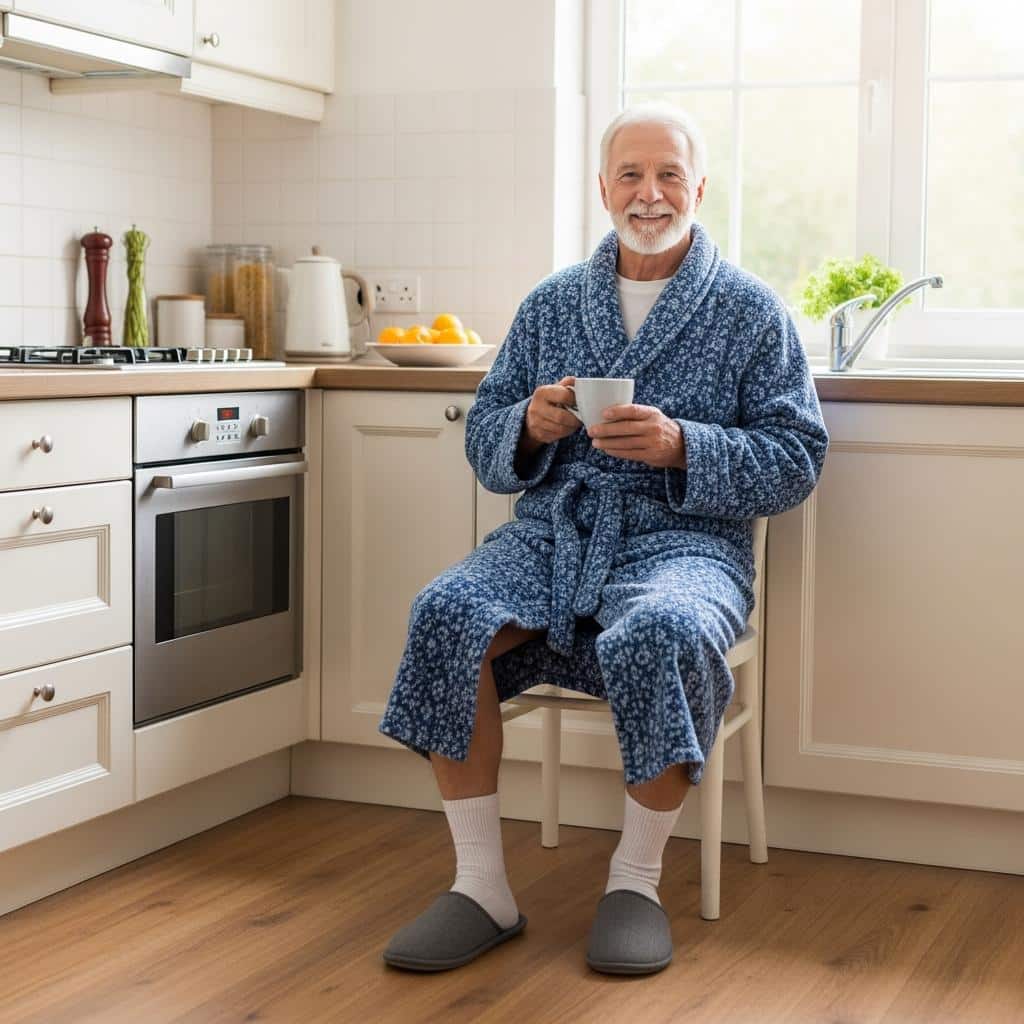
Keep a warm robe or cardigan in rooms where you spend time. When you settle in to read or watch television, this additional layer provides both warmth and comfort.
Choose robes with front closures and pockets. Pockets are perfect for keeping your hands warm and holding tissues or reading glasses.
Don’t Forget Your Feet
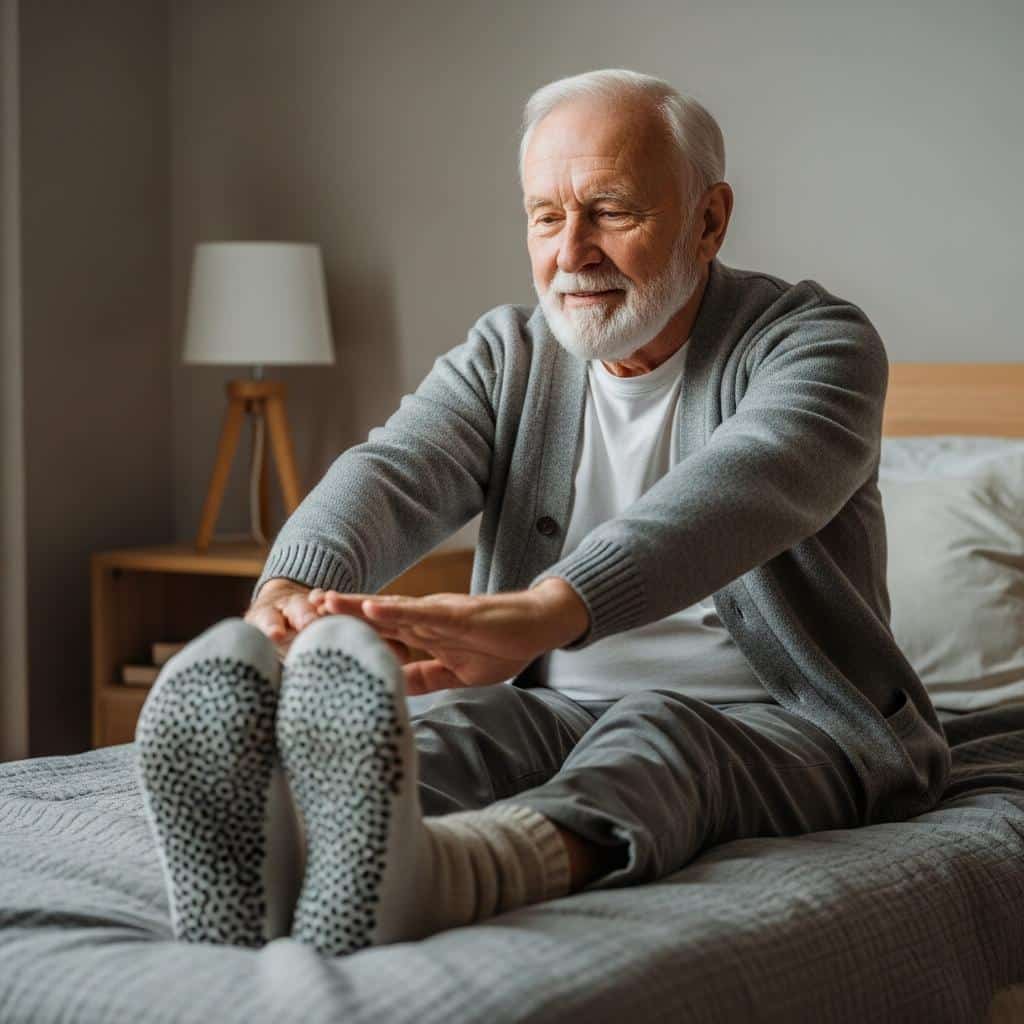
Warm socks are essential, but they must have grip. Look for socks with rubberized treads on the soles to prevent slipping on hard floors.
House shoes or slippers should also have non-slip soles. Cold feet not only feel uncomfortable—they can signal your core temperature is dropping.
Pro tip: Keep a basket of warm accessories in each main room. Include lap blankets, warm shawls, or extra sweaters. This way, you can add warmth without walking to another room.
The beauty of layering is control. You regulate your warmth without constantly adjusting the thermostat, and you can adapt quickly if you move between rooms or go outside.
Early Warning Signs and When to Take Action
Knowing what to watch for can prevent a minor issue from becoming an emergency.
Warning Signs of Cold Stress
Pay attention if you notice: unusual shivering, feeling confused or having trouble thinking clearly, slurred speech, unusual drowsiness or fatigue, or skin that feels cold even under your clothing.
Here’s what’s tricky: these symptoms can develop so gradually that you don’t realize they’re happening. You might just feel “a bit tired” or “not quite yourself.”
If You Notice These Signs
Act immediately, but calmly. Move to a warmer room or add layers of clothing. Have something warm to drink—tea, soup, or warm water work well. Avoid alcohol, which can actually lower your body temperature despite making you feel warmer.
If symptoms don’t improve within 30 minutes, or if confusion increases, call for medical help. Hypothermia is a medical emergency that’s much easier to treat early.
Prevention: Your Daily Routine
Build these habits into your day: Check your room thermometer when you wake up. Have at least one hot meal or warm beverage with each meal. Stay gently active during the day—movement generates body heat. Put on an extra layer before you feel cold, not after.
Creating a comprehensive home safety approach involves more than just temperature monitoring. Learn about the one room modification that prevents 90% of senior home accidents to ensure your entire living space supports your wellbeing.
For Family Caregivers
If you’re monitoring a parent’s or loved one’s safety, establish a daily check-in routine during cold months that feels natural, not intrusive.
A quick morning text or call: “Good morning! How did you sleep? What’s your thermostat set at today?” This provides accountability without hovering.
Watch for changes in their usual patterns—sleeping more than normal, seeming confused during conversations, or mentioning feeling tired repeatedly. These could signal cold stress developing gradually.
If you’re managing care from afar, discover more strategies for keeping long-distance aging parents connected and safe when you can’t be there in person.
Ready to discover more innovative strategies for healthy, comfortable aging? Subscribe to our newsletter for expert-tested tips and product recommendations designed specifically for older adults.
Taking Control of Your Winter Comfort and Safety
Your body’s changing temperature perception isn’t a limitation—it’s simply new information that calls for simple adjustments.
This week, take just one action: Check the actual temperature in the rooms where you spend the most time. If you discover they’re below 68°F, adjust your thermostat up a few degrees. That single change could make a significant difference in how you feel and how safely you’re aging in place.
Staying warm isn’t about losing independence. It’s about being informed and making smart choices that let you continue living exactly the life you want.
You’ve adapted to countless changes over the years with wisdom and resilience. This is simply one more adjustment—and now you have the knowledge and tools to handle it confidently.
What strategies have you found helpful for staying comfortably warm at home? Have you discovered any creative solutions we didn’t mention? Share your experience in the comments below—your insight could help a fellow reader stay safe and comfortable this winter.
![Senior couple sorting childhood items couch[1]](https://www.grayingwithgrace.com/wp-content/uploads/2025/12/senior_couple_sorting_childhood_items_couch1-e1767121287450-450x300.jpg)
![Senior couple cane declutter boxes living room[1]](https://www.grayingwithgrace.com/wp-content/uploads/2025/12/senior_couple_cane_declutter_boxes_living_room1-e1767121195712-450x300.jpg)
![Older couple filling small leaf bags[1]](https://www.grayingwithgrace.com/wp-content/uploads/2025/10/older_couple_filling_small_leaf_bags1-e1761590475742-450x300.jpg)
![Older man unlocking smart lock[1]](https://www.grayingwithgrace.com/wp-content/uploads/2025/06/older_man_unlocking_smart_lock1-e1748525137610-450x300.jpg)


