![Older man eye exam optometrist[1]](https://www.grayingwithgrace.com/wp-content/uploads/2026/05/older_man_eye_exam_optometrist1-e1778594813896.jpg)
You’ve been reading the same pill bottle label for years. Yesterday, you held it at arm’s length and still couldn’t make out the dosage.
You told yourself the lighting was bad. Or maybe the print got smaller. Or your glasses need cleaning again.
But here’s what’s really happening: your vision has been changing so gradually that you’ve unconsciously adjusted your entire life around it—and you didn’t even notice.
Vision decline is the most underreported health change in older adults. Not because it doesn’t matter, but because it happens so slowly that we dismiss each small shift as ‘just needing better light’ or ‘just getting older.’
The problem? By the time you notice something’s actually wrong, you’ve already been compensating for months. Maybe years.
The good news? Most vision changes are addressable when caught early. And the first step—a comprehensive screening—is often completely free.

Sign #1: You’re Holding Things Farther Away to Read Them
If you’ve started reading menus, labels, or your phone at arm’s length, your eyes are telling you something.
This isn’t about needing reading glasses for the first time. It’s about the instinctive reach that happens when your current glasses—or your natural vision—stops working as well as it used to.
Your eye’s lens loses flexibility with age. It’s called presbyopia, and it’s universal. But when you find yourself stretching your arm to its limit just to read a prescription bottle, you’ve moved past ‘normal aging’ into ‘time to update your prescription’ territory.
Here’s why this matters beyond convenience: medication errors increase when people can’t read labels clearly. Managing your medications safely becomes harder when you’re guessing at dosages or instructions.
You’re not managing fine if you’re squinting in dim bathroom light trying to read whether it says ‘1 tablet’ or ‘2 tablets.’
What to do: Schedule a basic eye exam to establish your current prescription needs. Even if you think you’re ‘getting by,’ getting by isn’t the standard.
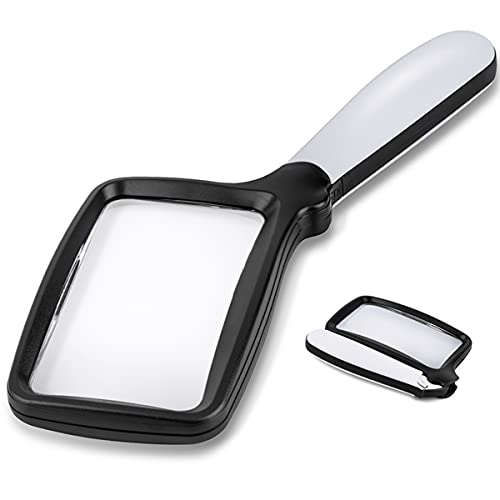
If reading has become uncomfortable, simple tools help immediately. A good lighted magnifier restores confident reading without strain. Large-print labels for commonly used items eliminate daily frustration.
The goal isn’t just to see better. It’s to stop working so hard to see at all.




Sign #2: You Need More Light Than You Used To
Your favorite reading chair used to be perfectly fine for evening books. Now you need to move to the kitchen table under the overhead light.
This isn’t preference. It’s biology.
Older eyes need two to three times more light than younger eyes to see the same level of detail. Your pupils don’t dilate as widely. Your cornea thickens slightly. Less light reaches your retina.
The result? Tasks that used to feel effortless now require concentration. And inadequate lighting doesn’t just cause eye strain—it creates fall risks when you can’t see edges, steps, or obstacles clearly.
Most people blame their environment (‘this room is too dark’) rather than recognizing their eyes’ changing needs. But strategic lighting improvements are among the easiest and most effective changes you can make.
What to do: Identify three places where you regularly read, work on hobbies, or perform detailed tasks. Honestly assess whether the lighting is adequate for your current vision.
Add task lighting where you need it. A clip-on reading light. A bright LED desk lamp. Motion-sensor lights in hallways and on staircases.


Ready to discover more strategies for maintaining independence and comfort as you age? Subscribe to our newsletter for expert-tested tips and practical solutions delivered weekly.
Good lighting isn’t accommodating weakness. It’s optimizing your environment for how your eyes actually work now.
Sign #3: You’re Having Trouble with Contrast and Depth Perception
You hesitate at the top of stairs. You misjudge curbs. You reach for a glass on the counter and your hand lands two inches off.
This isn’t clumsiness. It’s reduced contrast sensitivity and depth perception—two vision changes that happen independently from how well you read an eye chart.
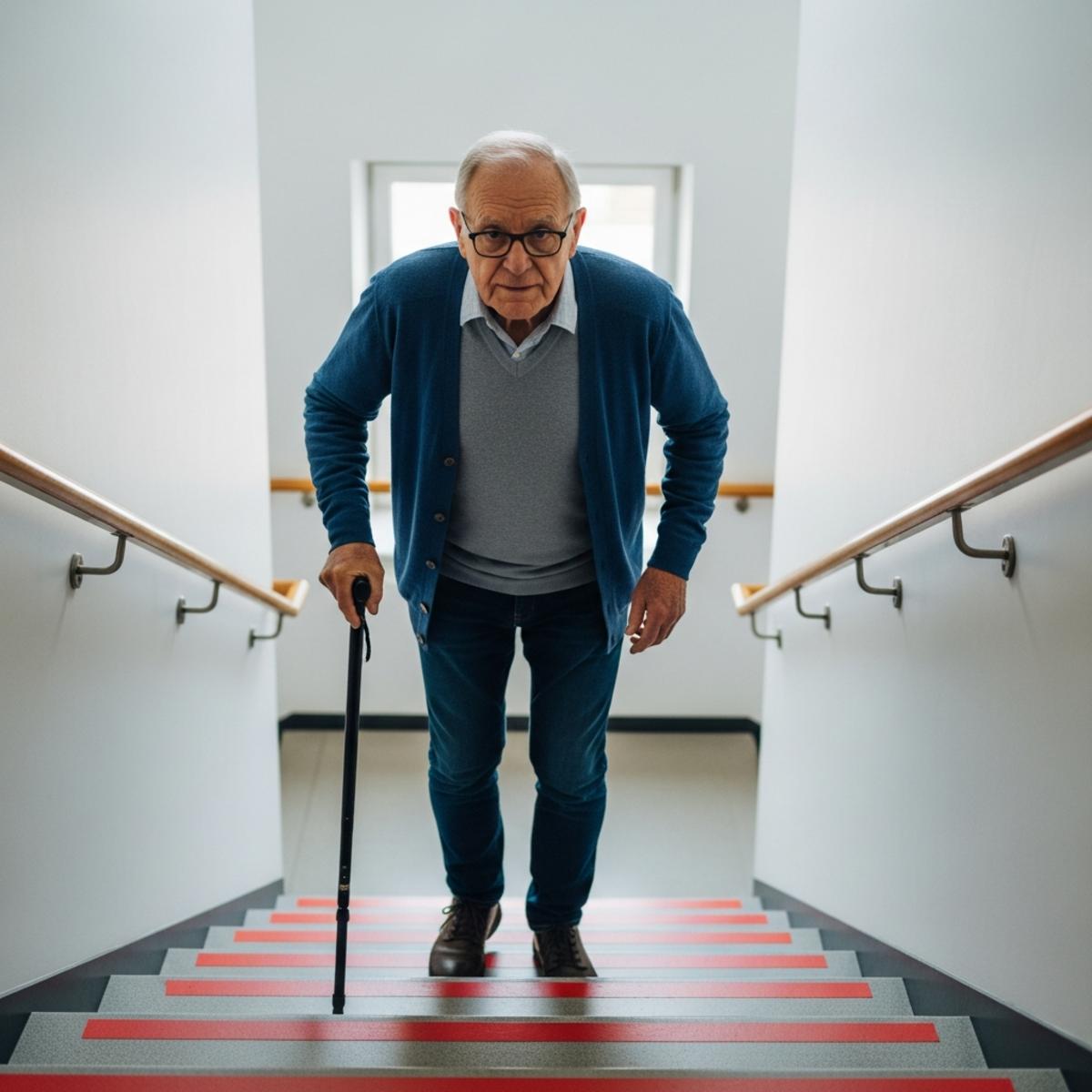
Contrast sensitivity is your ability to distinguish objects from their background. When it declines, stairs become dangerous because you can’t see where one step ends and the next begins. Especially in low light. Especially when steps are all the same color.
This is a genuine safety issue. Falls are the leading cause of injury in older adults, and reduced vision plays a major role.
What to do: Evaluate your home’s high-risk areas—stairs, bathroom edges, transitions between flooring types.
Add high-contrast marking. Bright tape on step edges. Colored cutting boards that contrast with the food you’re preparing. A high-contrast clock that’s actually readable from across the room.
These aren’t signs of decline. They’re smart home safety modifications that reduce unnecessary risk.


Sign #4: You’re Experiencing Glare Sensitivity
Oncoming headlights at night feel blinding. Computer screens seem too bright. You find yourself squinting outdoors even with sunglasses.
Increased glare sensitivity happens because your eye’s lens becomes less transparent with age. Light scatters instead of focusing cleanly. Your pupils also become smaller, which makes your eyes more sensitive to bright light contrasts.
For many older adults, this means avoiding night driving entirely. Or giving up computer time because it’s too uncomfortable. Or staying indoors on sunny days.
But glare sensitivity is manageable with the right strategies.
What to do: Notice which activities or times of day create glare problems. Then address them specifically rather than avoiding the activities entirely.
Polarized sunglasses reduce outdoor glare significantly. Anti-glare screen protectors make computer use comfortable again. Blue-light filtering glasses help with LED lighting and screens.
If night driving has become stressful, that’s worth discussing with your eye doctor. Sometimes a simple prescription update solves the problem. Sometimes it’s time to limit night trips. But you deserve to make that decision based on actual information, not just white-knuckling through every drive.
Managing glare isn’t limiting yourself. It’s removing obstacles to activities you still want to do.

Sign #5: You’re Avoiding Activities You Used to Enjoy
You stopped reading before bed. You quit your crafting group. You skip evening social events.
Maybe you told yourself you’re just tired. Or busy. Or not interested anymore.
But when you’re honest—really honest—vision played a role.
This is the sign that demands attention. When vision changes cause you to withdraw from things that used to bring joy, your quality of life shrinks.
People unconsciously adjust their behavior to avoid vision-related frustration. They stop reading because it’s too much work. They avoid evening activities because driving at night feels unsafe. They quit hobbies that require detailed work because it’s exhausting.
The emotional cost is significant. Social isolation. Loss of purpose. Depression.
And the tragedy is that most of these activities could continue with simple adaptations.
What to do: Identify one activity you’ve reduced or stopped. Ask yourself honestly whether vision played a role in that decision.
If it did, the activity is worth saving. Better lighting. Magnification tools. Updated glasses. These aren’t concessions to age. They’re strategic choices that let you keep doing what matters.
You don’t have to give up reading, crafting, or socializing. You just need the right support to do them comfortably.
The $0 Fix Most People Skip: Free Vision Screenings and Resources
Here’s something most people don’t know: comprehensive vision screening is often available completely free.
Your Medicare Annual Wellness Visit includes vision screening. Lions Clubs International offers free screenings at community events. Local health fairs provide basic vision checks.
Yet most older adults don’t take advantage of these resources. They wait until something’s obviously wrong. By then, treatable issues have progressed unnecessarily.
Early detection matters. Glaucoma caught early responds well to treatment. Cataracts can be monitored and addressed before they significantly impact daily life. Macular degeneration progression can often be slowed.
But only if you catch them early.
What you need to know:
• Vision screening vs. comprehensive exam: Screenings identify potential issues. Comprehensive exams diagnose and provide treatment plans. You need both.
• When to see an optometrist vs. ophthalmologist: Optometrists handle routine care and prescriptions. Ophthalmologists treat eye diseases and perform surgery. Start with an optometrist unless you have diagnosed eye disease.
• Free screening locations: Check your local Lions Club chapter, community health centers, and senior centers for scheduled screening events.
• Medicare coverage: Part B covers one glaucoma screening per year for high-risk patients. It covers diabetic retinopathy screening annually. Annual wellness visits include vision checks.
What to do: If you haven’t had a comprehensive eye exam in the past year, schedule one. If cost is a concern, start with a free community screening to identify whether follow-up is needed.
Some people use home vision testing tools—like Amsler grids for monitoring macular health—between professional exams. These aren’t replacements for professional care, but they help you catch changes early.
Proactive vision care isn’t admitting problems. It’s preventive maintenance that protects your independence.
Your Eyes Are Giving You Information
Vision changes are common. They’re often treatable. And they’re always worth addressing early.
Not because you’re declining. But because you deserve to live fully and safely.
The adaptations and tools I’ve described aren’t accommodations for weakness. They’re strategic choices that protect what matters most: your ability to read, drive, socialize, pursue hobbies, and manage your home independently.
Small changes caught early stay small. Ignored changes compound into safety issues, isolation, and loss of confidence.
You don’t have to accept frustration as inevitable. You don’t have to give up activities that bring you joy. And you certainly don’t have to wait until something’s ‘bad enough’ to address.
This week, take one action:
Schedule a comprehensive eye exam if you haven’t had one in the past year. Add task lighting to one area where you struggle. Try a simple magnification tool for reading. Research free screening options in your area.
Just one step. That’s all it takes to move from adapting unconsciously to taking control strategically.
What vision change have you been dismissing? What’s one thing you could do this week to address it? Share your experience in the comments—your insight might help someone else recognize what they’ve been missing.