![Older group herbal tea infusion winter social[1]](https://www.grayingwithgrace.com/wp-content/uploads/2025/12/older_group_herbal_tea_infusion_winter_social1-e1767119761234.jpg)
Everyone’s talking about “Dry January,” but here’s what they’re not telling you: there’s a different January challenge that could make a bigger difference in how you feel every single day.
What if I told you that something as simple as changing your drinking habits could ease your joint pain, sharpen your thinking, and make your medications work better—without giving up anything you enjoy?
The truth is, while younger people focus on alcohol, many older adults are facing a different problem entirely. And the solution might be sitting right in your kitchen.
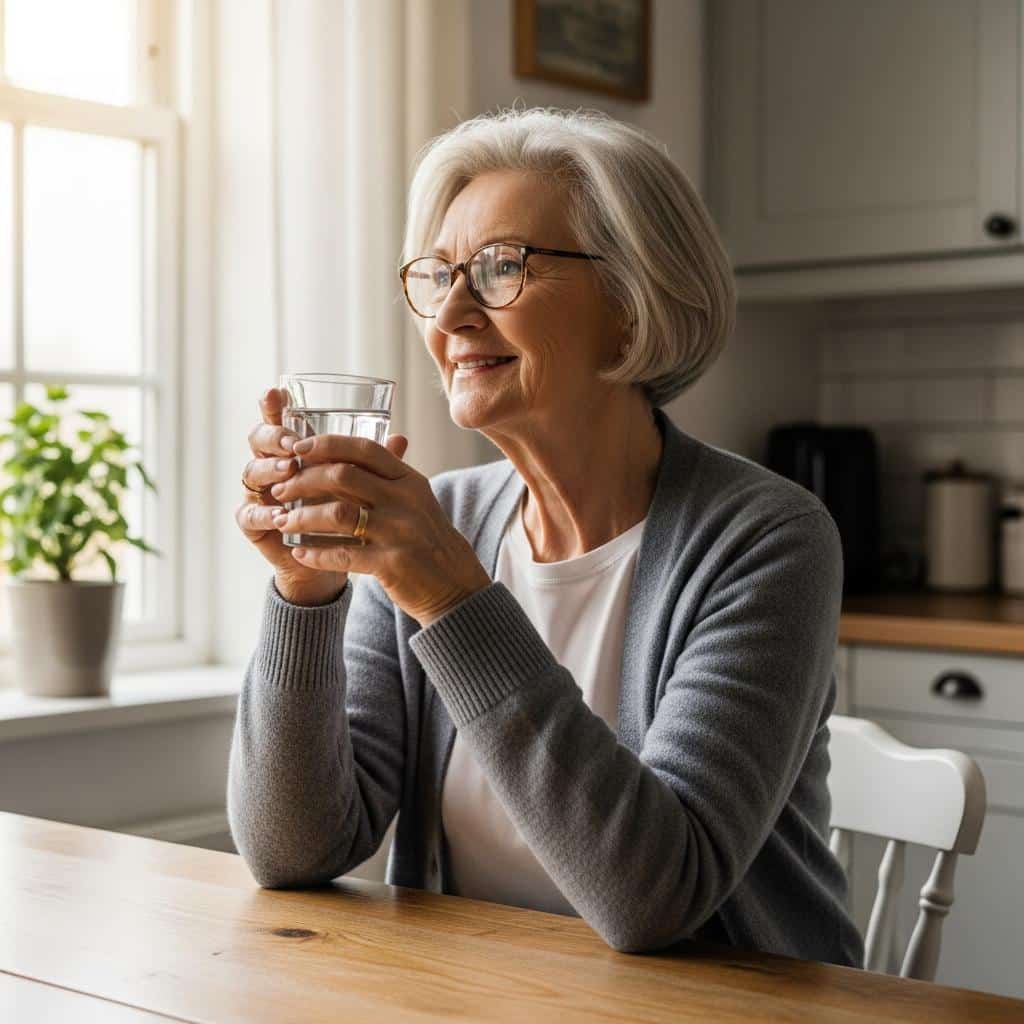
The Hidden Challenge That’s Making Your Joints Hurt More
Here’s the surprising reality: chronic mild dehydration is incredibly common among older adults, and it’s quietly making everything worse.
You might not feel thirsty. In fact, that’s part of the problem. As we age, our sense of thirst becomes less reliable, meaning you could be dehydrated without realizing it.
Consider what dehydration does to your body. Your joints lose cushioning. Your medications become less effective. Your energy drops. Even your thinking gets foggy.
The impact on arthritis alone is staggering. When you’re not drinking enough water, the synovial fluid that cushions your joints becomes less effective. That means more friction, more inflammation, and more pain with every movement.
Many older adults drink less because they worry about nighttime bathroom trips or medication side effects. But the cost of this caution might be higher than you think.

Why January Is the Perfect Month for This Challenge
Forget “Dry January.” Let’s talk about **”Hydration January”**—a challenge specifically designed for what your body actually needs.
January’s cold, dry air makes dehydration worse. Indoor heating sucks moisture from the air and from you. You’re less likely to feel thirsty when it’s cold outside.
Add winter medication schedules—blood pressure pills, diuretics, pain relievers—and your hydration needs actually increase during the coldest months.
Here’s the opportunity: 30 days of strategic hydration can create noticeable improvements in joint pain, medication effectiveness, cognitive clarity, and overall energy.
This isn’t about drinking gallons of water or making yourself uncomfortable. It’s about smart, consistent hydration that works with your body and your lifestyle.
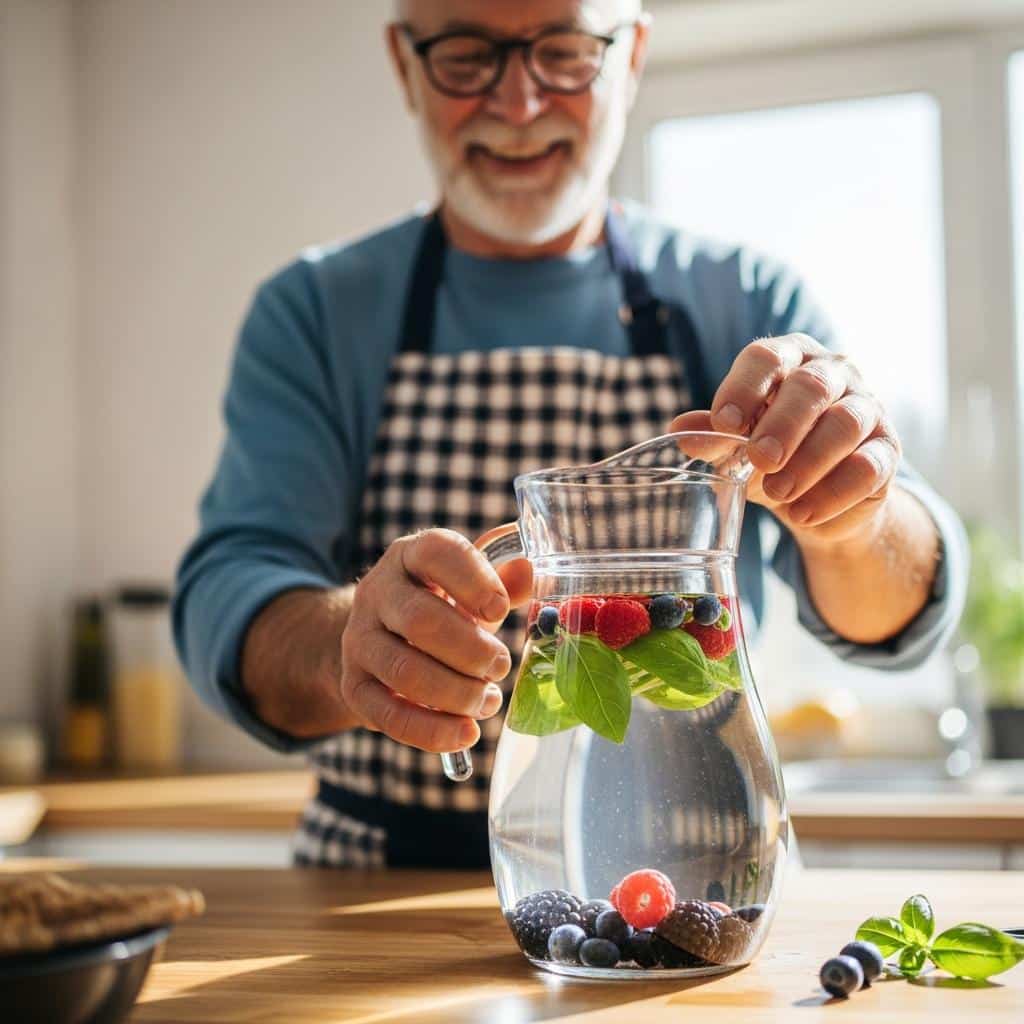
Your Hydration January Challenge: The Smart Way
Let’s make this practical and achievable, not overwhelming.
Calculate Your Personal Target
The formula: Take your weight in pounds, divide by two, and that’s your daily ounces. If you weigh 150 pounds, aim for 75 ounces (about 9 cups).
Adjust for your medications. If you take diuretics or blood pressure medications, talk with your doctor about your ideal intake. Some medications require more water, others less.
Consider your activity level. Active days need more hydration. Even gentle activities like gardening or walking increase your needs.
The Morning Routine That Changes Everything
Start with 8 ounces before coffee. This simple habit does three things: It jumpstarts your metabolism, prepares your digestive system, and ensures your morning medications absorb properly.
Room temperature water is easier on your system than ice-cold. Keep a glass by your bedside to drink first thing. If you’re interested in optimizing your morning routine for better health, starting with hydration is one of the most powerful changes you can make.
Then wait 20 minutes before coffee or tea. This gives the water time to work and prevents the dehydrating effects of caffeine from canceling out your good start.
This one habit—water before coffee—can account for 10% of your daily intake before you’ve even started your day.
Ready to discover more innovative strategies for healthy, comfortable aging? Subscribe to our newsletter for expert-tested tips and product recommendations designed specifically for older adults.
The Medication-Water Connection You Need to Know
Proper hydration makes your medications work better. When you’re dehydrated, medications concentrate in your system differently, potentially causing side effects or reducing effectiveness.
Blood pressure medications work more consistently with adequate hydration. Pain relievers process through your kidneys more safely. Even vitamins absorb better. Many seniors experience afternoon energy crashes that are directly linked to dehydration—fixing your water intake can eliminate that 4 PM slump entirely.
Time your water intake around medications. Take medications with a full 8-ounce glass, not just a sip. Then drink another glass 30 minutes later.
If you’re taking multiple medications, this strategy alone can improve how you feel throughout the day. For more comprehensive strategies on managing medications effectively, especially during busy times, proper hydration is always the foundation.
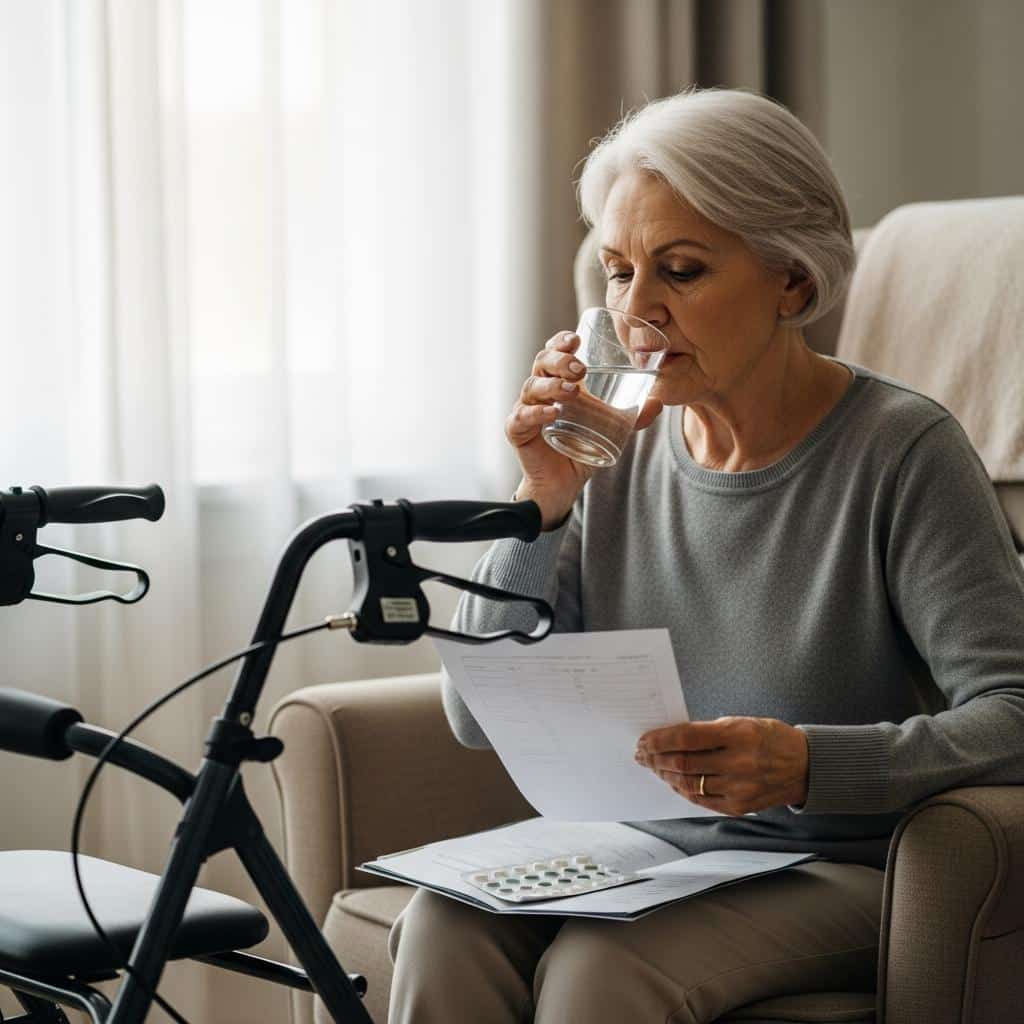
Five Flavor Solutions for “I Don’t Like Plain Water”
You don’t have to force down plain water if you genuinely don’t enjoy it. Smart infusions can make hydration something you actually look forward to.
The Citrus Morning Blend
Add lemon or orange slices to room-temperature water. The vitamin C boost supports joint health while making water more appealing.
Why it works: Citrus flavors are refreshing without being sweet, and they don’t interfere with medications.
The Cucumber-Mint Refresher
Slice cucumber and add fresh mint leaves. Refrigerate overnight for maximum flavor.
Why it works: Both ingredients have anti-inflammatory properties that support joint health naturally.
The Berry-Basil Combination
Muddle a few berries with basil leaves. The antioxidants provide additional health benefits.
Why it works: The subtle sweetness satisfies without added sugars, and berries support cognitive health.
The Ginger-Turmeric Power Blend
Add thin slices of fresh ginger and a pinch of turmeric. This creates a warming, slightly spicy drink.
Why it works: Both ingredients are powerful anti-inflammatories that can enhance the joint-health benefits of proper hydration. If arthritis pain is affecting your sleep or mobility, this combination addresses inflammation from multiple angles.
The Herbal Tea Alternative
Brew caffeine-free herbal teas and drink them at room temperature throughout the day. Chamomile, rooibos, and peppermint all count toward hydration.
Why it works: The ritual of tea-making can help establish consistent drinking habits, and the warmth is comforting in winter.
Making Infusions Convenient
Prepare pitchers the night before. You’re more likely to drink infused water if it’s ready when you are.
Use glass pitchers to avoid plastic flavors. Keep them visible in your refrigerator as a reminder.
Rotate flavors throughout the week to prevent boredom. Monday might be citrus, Wednesday cucumber-mint, Friday berry-basil.

The Technology That Makes Hydration Automatic
Modern solutions can eliminate the guesswork and create consistent habits.
Smart Water Bottles Worth Considering
Bottles with time markers show you exactly where you should be throughout the day. Simple, visual, no batteries required.
LED reminder bottles glow every hour to prompt a drink. Some even track your intake and sync with your phone.
Temperature-regulating bottles keep water at your preferred temperature for hours, removing the “it’s too cold” excuse.
The best choice depends on your lifestyle. If you’re active and out often, a reminder bottle helps. If you’re home most days, a simple marked bottle might be all you need.
Apps That Actually Help
WaterMinder sends customizable reminders based on your schedule and goals. It’s simple enough for tech newcomers but powerful enough to track patterns.
MyWater calculates your needs based on weight, activity, and weather. It shows correlations between hydration and how you feel.
The key is choosing technology that simplifies rather than complicates. If an app feels like work, you won’t use it consistently.
Tracking Progress: The Joint Pain Connection
Here’s where the challenge gets interesting: tracking helps you see the real impact of hydration on your daily comfort.
Your Simple Daily Log
Create a chart with three columns: Date, Water Intake, and Joint Pain Level (1-10 scale).
Add a fourth column for Energy Level if you want to track cognitive benefits too.
Track for the full 30 days. The first week establishes your baseline. Weeks 2-3 show the building effects. Week 4 reveals the full benefits.
What to Watch For
Most people notice joint improvements by day 10-14. Morning stiffness often improves first, then daytime pain levels decrease.
Energy and mental clarity can improve even sooner, sometimes within the first week. If you’ve been experiencing brain fog or memory lapses, proper hydration combined with morning movement can create remarkable improvements in cognitive function.
Medication side effects may lessen as proper hydration helps your body process medications more effectively.
The 30-Day Milestone
At the end of January, compare your first week to your last week. The differences in joint comfort, energy, and overall wellbeing often surprise people.
You might discover that what you thought was “just aging” was actually chronic mild dehydration all along.
Ready to discover more innovative strategies for healthy, comfortable aging? Subscribe to our newsletter for expert-tested tips and product recommendations designed specifically for older adults.
Beyond January: Making It Stick
The real goal isn’t just 30 days—it’s creating a sustainable habit that improves your quality of life permanently.
The Habit-Stacking Strategy
Link water to existing habits. After brushing your teeth? Drink a glass. Before each meal? Another glass. When you take medications? You’re already doing that.
These connections make hydration automatic rather than something you have to remember.
Adjusting for Your Life
Travel days need extra planning. Bring your water bottle, even if you can’t fill it until after security.
Social events often mean less water. Compensate before and after rather than worrying during the event.
Hot weather and exercise require increased intake. Your January baseline becomes your minimum for other seasons.
The Support System Advantage
Share your challenge with family. They can join you or simply remind you to drink water during visits.
Find an accountability partner doing Hydration January too. Daily check-ins create consistency.
Celebrate small wins. Each week you hit your goal is worth acknowledging.
Your Body Deserves This Simple Gift
While everyone else is focused on what they’re giving up for January, you’re choosing something better: giving your body what it actually needs.
Proper hydration isn’t just about drinking water. It’s about joint health, medication effectiveness, cognitive clarity, and feeling better every single day.
The beauty of Hydration January is that it’s entirely within your control. No expensive equipment, no complicated rules, no deprivation.
Just consistent, strategic hydration that supports your body’s natural ability to feel good and move comfortably.
Start tomorrow morning with that glass of water before coffee. Track your progress. Try one flavor infusion. See how you feel in a week.
Your joints—and your entire body—will thank you.
Have you tried increasing your daily water intake? What changes did you notice? Share your experience in the comments below—your insight might inspire someone else to start their own Hydration January journey.