
You walk into the kitchen and pause, wondering why you came in. It happens to nearly everyone. This article is about a 10-minute daily routine to help clear brain fog, that foggy, slow-thinking feeling that shows up on some mornings.
Some older adults also wonder about supplements for mental clarity, and I looked at one in my review of an NMN supplement for energy and clarity.
We will cover why the start of your day is a good time to look after your mind, a 10-minute routine and a longer 15-minute version (senses, movement, memory, challenge, intention), and a memory exercise you can do by your bed. If memory trouble is new, getting worse, or worrying you, check with your doctor.

The Hidden Epidemic Nobody Talks About
Brain fog isn’t a medical diagnosis. It’s a collection of symptoms that can make you feel like you’re thinking through molasses.
You might experience difficulty finding words, trouble concentrating on conversations, or that frustrating feeling of mental fatigue even after a good night’s sleep. Perhaps you walk into rooms and forget your purpose, or struggle to follow the plot of your favorite TV show.
Here’s what you need to know: These experiences don’t mean your mind is failing. They often result from three surprisingly common factors that are completely within your control.
The first culprit is chronic mild dehydration. Being even a little dehydrated can affect how clearly you think, and many people don’t drink enough water through the day.
The second factor is mental stagnation. Just like muscles, your brain needs regular challenges to stay sharp. When we fall into predictable routines without cognitive stimulation, mental clarity can decline.
The third issue is physical stagnation. Blood flow to the brain drops when we sit for long periods, leading to that foggy, sluggish feeling many people shrug off as normal.
Ready to discover more strategies for healthy, comfortable living? Subscribe to our newsletter for tips and product recommendations.
Why the Start of Your Day Is a Good Time to Look After Your Mind
Most people think of crossword puzzles or brain training apps when they want a sharper mind. The first part of the morning often gets overlooked.
The source of the idea is simple: how you start your morning can shape how clearly you think for the rest of the day. Have you ever noticed how much clearer your head feels after a good morning? That is the same idea at work.
Evening mental exercises can still help. But a morning routine gets in before the day’s rush of information and decisions, and it gives your mind a calm start.
It also helps to begin gently. A few easy morning movements can get blood flowing to the brain, and that is a kinder wake-up than a jarring alarm followed by a phone.
Say you reach for your phone the moment your eyes open. Setting it aside for a few minutes and moving a little first gives your mind a better runway.
One trade-off: a morning routine only works if you get to it. If mornings are rushed in your house, you may need to set things out the night before, or pick another time that suits you.
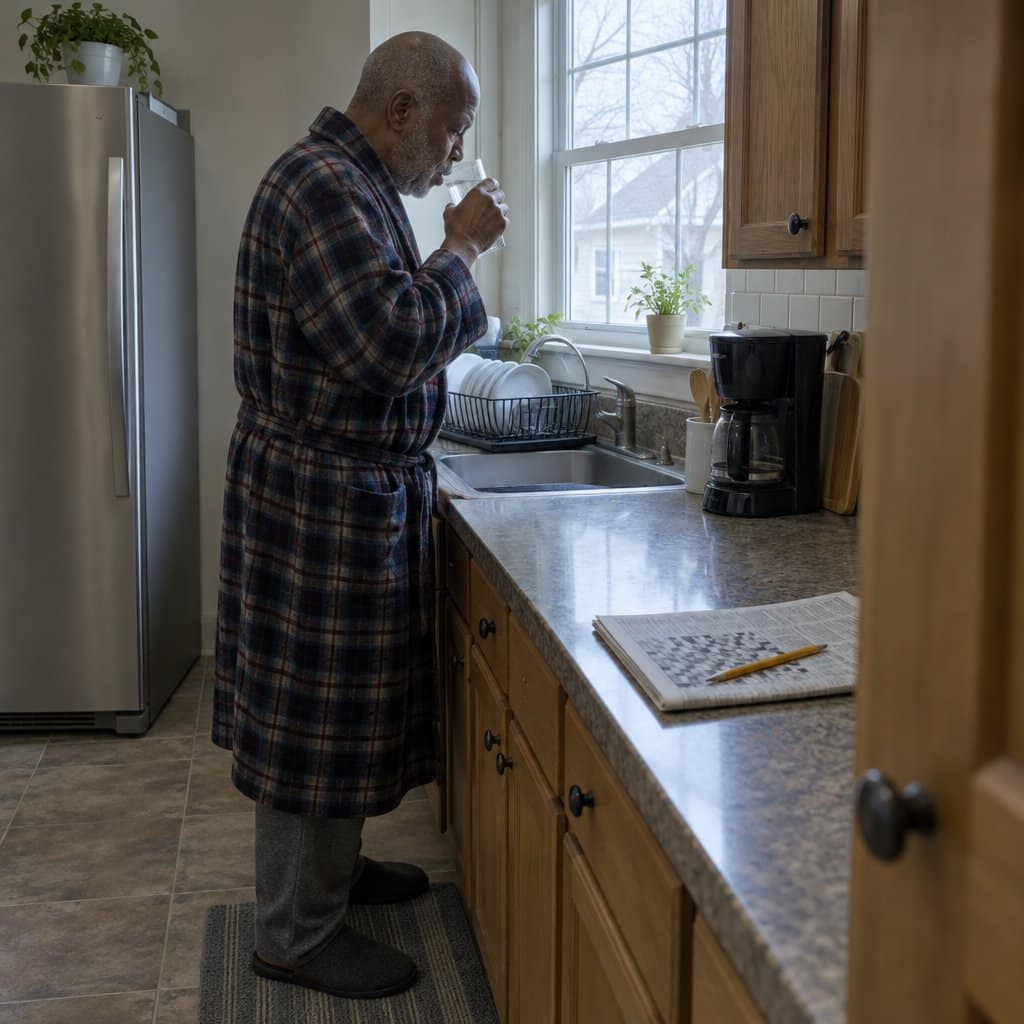
The “Sharp Mind” 10-Minute Morning Routine
This routine targets all three causes of brain fog with simple, enjoyable activities you can do from the comfort of your home.
The beauty of this approach is its simplicity. You don’t need special equipment, expensive subscriptions, or complicated schedules. Just 10 minutes each morning may help clear the mental cobwebs. Many people find it helps them start the day feeling more focused. If your energy also dips in the afternoon, a morning light routine for winter energy is another easy habit to add.
Minutes 1-3: The Hydration Reset
Start your routine with 16 ounces of room temperature water. Not ice cold, not steaming hot, just comfortable.
Why room temperature? It is easy on your stomach and easy to drink in one go. This isn’t just about quenching thirst. You’re giving your body the water it needs to start the day.
Many people wake up a little dehydrated after 7 to 8 hours without fluids. You may notice this simple step helps you feel clearer.
Minutes 4-7: The Cognitive Challenge
Choose one brain-stimulating activity that requires active thinking. This could be a crossword puzzle, sudoku, word search, or even a simple math challenge.
The key is rotation, so don’t do the same type of puzzle every day. Monday might be crosswords, Tuesday could be number puzzles, Wednesday might be word games. This variety keeps your mind working in different ways.
You might enjoy exploring entertainment apps and brain training games throughout the day, not just during your morning routine. Free resources like newspaper puzzles, library puzzle books, or simple smartphone apps work perfectly for this portion of your routine. If you’re wondering whether to pick memory games or brain training apps, I wrote about what actually works for seniors.
Minutes 8-10: Gentle Movement Activation
Finish with simple movements that increase blood flow to your brain. This doesn’t mean jumping jacks or complicated exercises.
Try gentle neck rolls, shoulder shrugs, seated spinal twists, or simply standing and doing arm circles. If you’re comfortable with it, a brief walk around your living room or stepping in place works wonderfully.
The goal isn’t intense exercise. It’s getting your blood moving. Gentle movement does that.

A Memory Exercise You Can Do by Your Bed
Keep a notebook and pen on your nightstand. Before you get up, write down a few things you remember. That is the whole exercise.
Start with three memories from yesterday. A meal, a conversation or something you did all count.
Next, write two memories from last week. Then finish with one memory from your childhood.
Reaching across different stretches of time makes your mind search in different places. Think of it as cross-training for your mind.
Writing the memories down is more active than reading the news, where you take in information and do little with it. If you enjoy this kind of recall practice, free memory apps are another way to build memory skills.
One trade-off: some mornings the childhood memory will not come right away. Give it a minute, and write down whatever surfaces, even if it is small.

A 15-Minute Morning Routine: Senses, Movement, Memory, Challenge, Intention
If you have a little more time than 10 minutes, here is a longer routine with five steps. It starts before you get out of bed and ends with a plan for the day.
Minutes 0 to 3, sensory wake-up. Still in bed, spend 30 seconds each on what you see, hear, feel and smell. Then take six deep breaths while you think of what you are grateful for today.
Minutes 3 to 5, movement. Before you reach for your phone, sit on the edge of the bed and rotate your ankles 10 times each direction. Roll your shoulders backward 10 times, and gently turn your head side to side 10 times. Then stand for 5 to 10 gentle knee bends. These gentle morning movements get blood moving.
Minutes 5 to 10, memory. Keep a notebook and pen by the bed. Write down three memories from yesterday, two from last week and one from your childhood. Searching through different stretches of time is a bit like cross-training for your mind, and it is a more active exercise than reading the news. If you like recall practice, free memory apps are another way to do it.
Minutes 10 to 13, challenge of the day. Rotate through a different kind of brain challenge each day, since variety works better than repeating one activity. Puzzles like crosswords and sudoku fit well here too.
- Monday: count backward from 100 by 7s
- Tuesday: name 15 blue things
- Wednesday: picture the walk from your bedroom to the kitchen
- Thursday: solve a simple puzzle kept by your bed
- Friday: list 10 words starting with today’s date
- Saturday: memorize a short poem or quote
- Sunday: sketch an object in your room
Pick the challenge the night before, so you are not spending your morning deciding.
Minutes 13 to 15, intention. Write down the three most important things you want to do today. Circle the one that matters most, then write one sentence about why. This is a calm, mindful way to keep your focus on what counts.
The routine needs no special equipment, apps or subscriptions, just things already in your home. The trade-off is time: 15 minutes is a real chunk of a morning, so start with the steps that appeal to you and add the rest as it fits.
Why This Simple Routine Works So Well
Here is why these 10 minutes are worth trying.
Your brain depends on water to do its work, so a glass of water first thing may help you feel clearer. Some people say it feels like turning on a light switch.
Cognitive challenges are good for you because your brain keeps making new connections throughout life. When you work on problem-solving activities, you give it something to chew on.
Gentle movement also gets your blood flowing, which is good for your whole body, brain included.

Making Your New Habit Stick
The most effective routine is the one you’ll actually do consistently. Here’s how to set yourself up for success.
Choose your perfect time. Most people find morning works best because it sets a positive tone for the entire day, but any consistent time works. Some prefer the routine as an afternoon pick-me-up or evening wind-down activity.
Prepare the night before. Set out your water glass, have your puzzle book ready, and choose tomorrow’s brain challenge. Removing barriers makes success more likely.
Track your progress simply. Use a basic calendar to mark successful days, or notice how you feel throughout the day. You may notice you feel more present in conversations.
Adjust for your comfort level. If standing movements aren’t comfortable, seated exercises work perfectly. Understanding balance exercises and your physical capabilities can help you modify the routine to match your needs.
Start with just one week. Commit to seven days and notice how you feel. If memory trouble is new, getting worse, or worrying you, check with your doctor.
Variations for Different Needs and Preferences
Your routine should fit your lifestyle and physical comfort level, not the other way around.
For those with limited mobility: All components work from a seated position. Hand and arm movements, seated twists, and even ankle circles get your blood moving.
For puzzle enthusiasts: Rotate between different types of challenges: word puzzles one day, numbers the next, visual puzzles another day. Card games for seniors can provide endless variety to keep your routine interesting.
For social butterflies: Turn the cognitive challenge into a social activity. Call a friend and do the puzzle together over the phone, or work on it with your spouse or partner.
For technology users: Apps like Lumosity, Peak, or even simple crossword apps can provide your daily cognitive challenge. Learning about health and wellness apps can itself become part of your mental exercise routine.
The routine adapts to you. You don’t have to adapt to it.
Ready to discover more strategies for healthy, comfortable living? Subscribe to our newsletter for tips and product recommendations.
Your Sharper Mind Starts Tomorrow Morning
Mental clarity isn’t something that just happens to you. You can support it with simple, consistent habits.
This 10-minute routine isn’t about promising miracle cures. It’s about giving your brain basic support: proper hydration, regular challenges, and a little movement.
You might find you feel more confident in conversations and have fewer “tip of the tongue” moments.
You might also find that maintaining your independence with proper home safety becomes easier when your mind feels sharp and focused. Small steps toward cognitive wellness often ripple out into improved confidence and quality of life.
Your brain has carried you through decades of experiences, learning, and growth. Taking 10 minutes each morning to support its continued health seems like a pretty good investment, doesn’t it?
What’s stopping you from trying this routine for just one week? It’s only 10 minutes.