
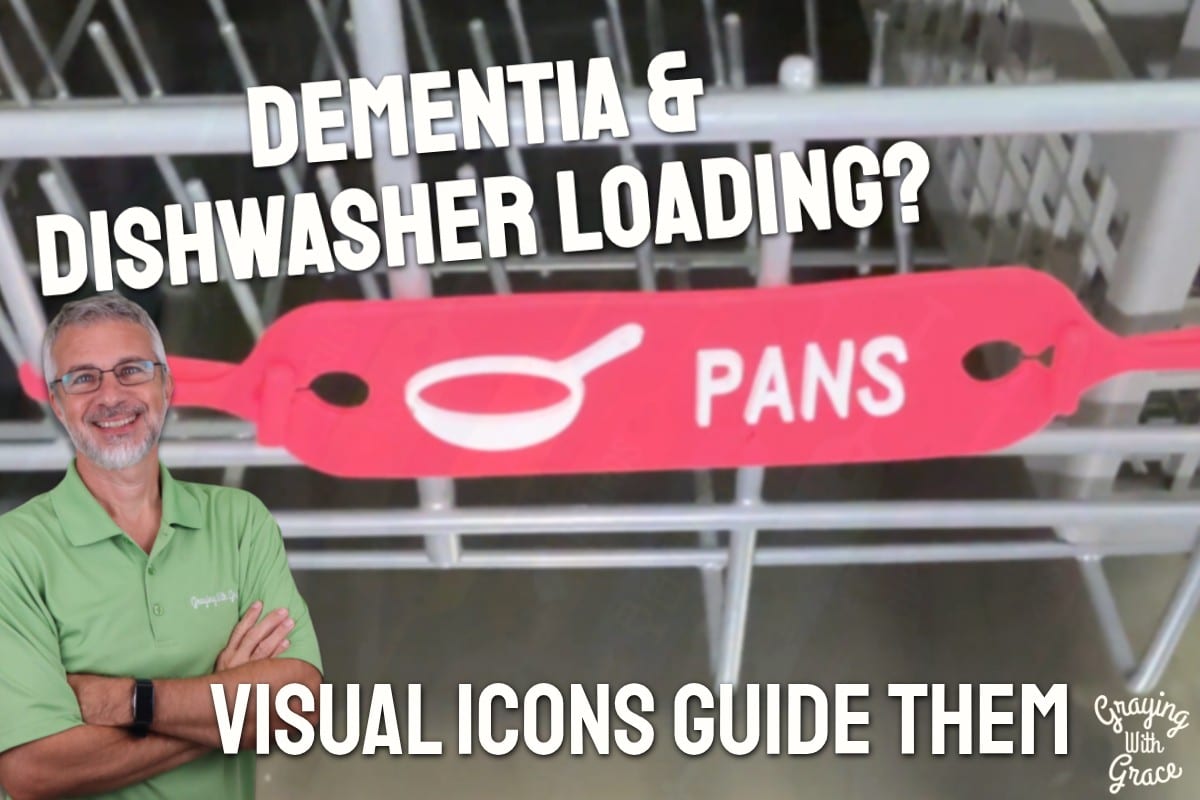
Ever open the dishwasher and find the cups jammed in with the pots, the cutlery scattered every which way, and nothing lined up the way you’d like? If you’re helping an aging parent or spouse with household tasks, or you’ve noticed that unwritten kitchen routines are suddenly causing more confusion than they used to, you’re not alone.
This is one of the most common frustrations families run into when navigating dishwasher confusion among family members, especially when memory changes are part of the picture. It’s a small thing on the surface, but it can chip away at someone’s confidence and independence in the kitchen every single day.
As a Certified Senior Advisor (CSA®) and Senior Home Safety Specialist (SHSS®), I spend a lot of time looking at simple tools that make daily routines easier and less stressful for older adults and the people who love them. I got my hands on this product and tested it myself before writing this review.
This says whether the brand sent the product or Scott bought it himself.
In this review, I’ll walk you through exactly how these dishwasher loading guide labels work, who they’re really designed for, and whether they’re worth adding to your kitchen routine.


Quick Takeaways
- Problem it solves: confusion over where dishes belong, which leads to overcrowded racks, blocked spray arms, and family arguments about “doing it wrong”
- Who benefits most: older adults with memory changes, children learning chores, and caregivers who want a low-conflict way to build routine
- Worth the investment: yes, for households that genuinely struggle with dishwasher loading disagreements or need visual memory support
- Best feature for seniors: raised icons that work without needing to read a single word
- Biggest limitation: the labels only help if they’re placed where the person loading the dishwasher can actually see them
Who This Is For
If you’re caring for a spouse or parent living with dementia and you’ve noticed that everyday tasks like loading the dishwasher have become a source of stress instead of a source of purpose, the GuidingTag Dishwasher Loading Guide Labels give them a simple visual anchor to follow. Instead of relying on memory or verbal reminders, they can look at a color and an icon and know exactly what goes where.
If you’re trying to find a visual dishwasher loading system for a grandchild who’s just learning chores, this same set does double duty. It’s genuinely marketed toward families with kids, and Scott’s own testing confirmed the icons work well for anyone who isn’t yet a confident reader.
If you’ve been searching for reusable kitchen chore labels because sticky notes and verbal reminders keep failing, this waterproof, heat-safe silicone system is built to survive the wear and tear a paper system never could.
How This Could Help You
Let’s be honest: nobody wants to nag their spouse or parent about “loading it wrong” every single day. That kind of friction adds up, and it can make someone with memory changes feel embarrassed or defensive about a task they used to do without a second thought.
The GuidingTag labels take the guesswork and the nagging out of the equation. Instead of a person needing to remember ten different rules, they just match the item in their hand to the color and icon on the rack.
Does this actually reduce dishwasher confusion among family members? In my testing, the answer was a clear yes, because the visual cue removes the need for anyone to explain the system out loud every time.
Will it help someone who struggles with letters or has trouble reading due to dementia? Yes. As I demonstrated in the video, every single tag has a raised icon alongside the text, so reading isn’t a requirement for using the system correctly.
Are these actually reusable dishwasher signs, or will they fall apart after a few washes? The silicone construction is designed specifically to survive heat, water, and repeated cycles, which is exactly what a household needs from a long-term labeling system.
Important Details You Should Know
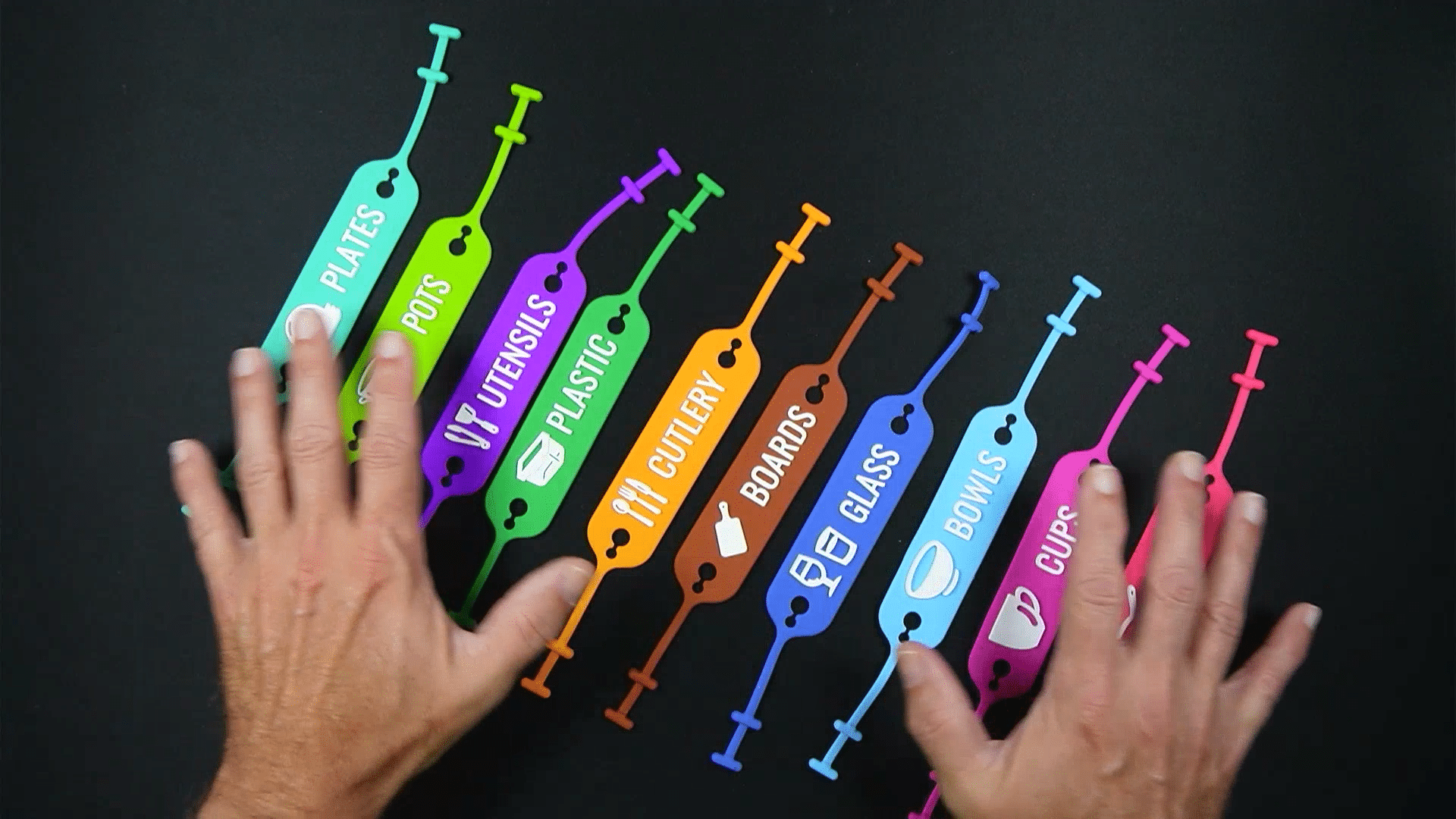
This set includes ten color-coded tags, covering plates, pots, utensils, plasticware, cutlery, boards, glasses, bowls, cups, and pans. That’s essentially every category you’d typically load into a standard dishwasher.
Each tag is made from 100% food-grade, BPA-free silicone. That means no worries about chemicals leaching onto your dishes, and no concern about the tags degrading in high heat.
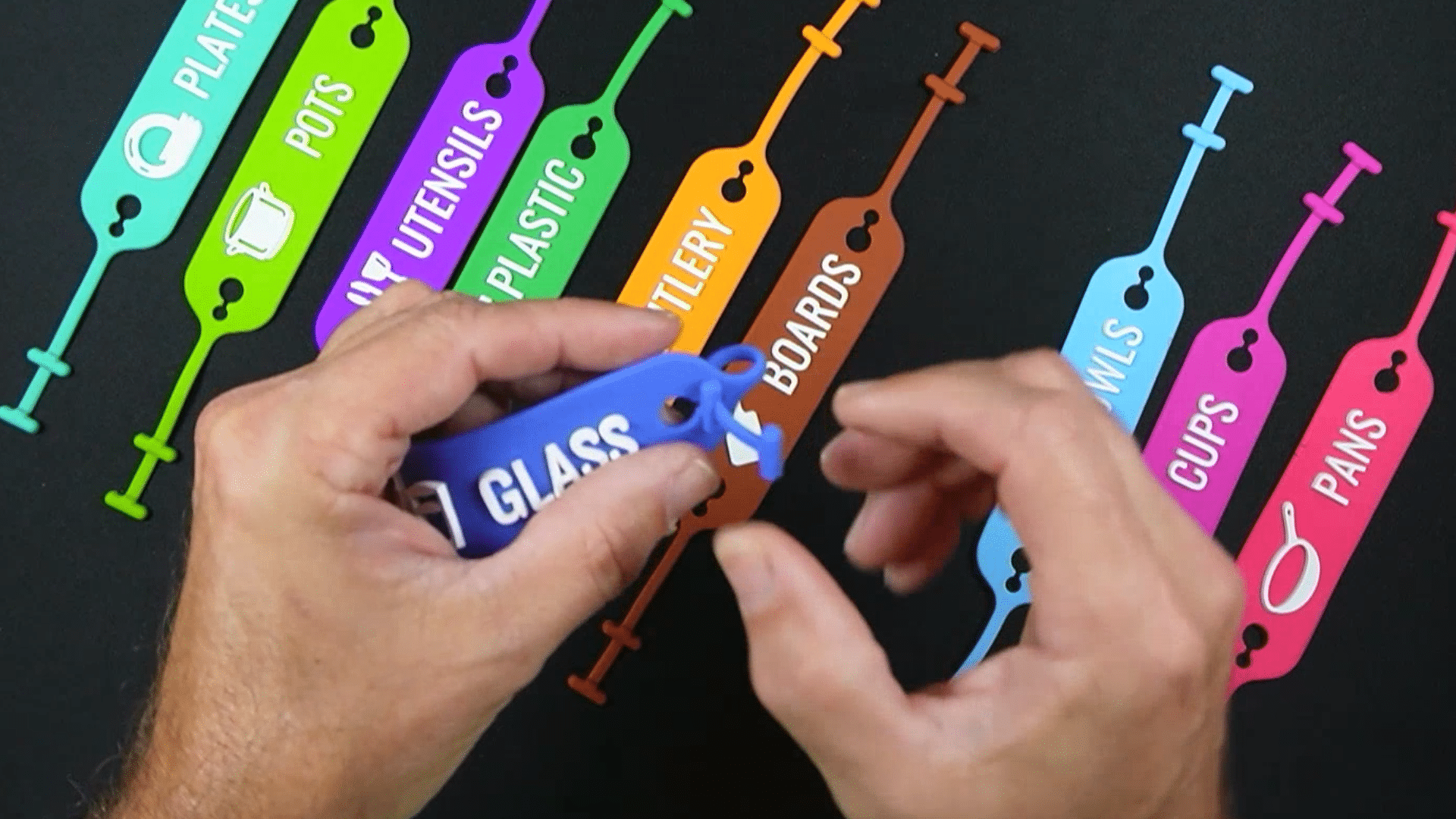
They’re designed with a universal fit in mind, so they attach to virtually any standard dishwasher rack or basket, whether that’s the top rack, bottom rack, or the small silverware basket. As I demonstrated in the video, the little strap and loop system wraps around a wire rack and cinches tight with a simple twist.
Durability-wise, these are built to handle raised icons and text that won’t fade, peel, or wash away over time. That’s a meaningful upgrade over paper labels or dry-erase systems that degrade within weeks.
Getting Started
In the box, you’ll receive the complete set of ten color-coded silicone tags, each pre-formed with an attachment strap built right in.
Setup is refreshingly simple. You loop the strap around a wire on the rack, pull the tab through, and give it a small twist to form a secure loop.
If you want a tighter fit, you can pull the strap through the next loop before twisting. No tools, no adhesive, and no permanent installation required.
One tip I picked up during my own testing: attach the labels from the perspective of the person actually loading the dishwasher. In most kitchens, that means facing the sink, since dishes usually travel from sink to rack in one motion.
Ready to discover more innovative strategies for healthy, comfortable aging? Subscribe to our newsletter for expert-tested tips and product recommendations designed specifically for older adults.
Features That Matter To You
For an older adult navigating memory changes, the biggest win here isn’t the organization angle, it’s the independence angle. Being able to load a dishwasher correctly without needing a reminder every time preserves a small but meaningful piece of daily autonomy.
The color-coded system does a lot of heavy lifting. Bright, distinct colors catch the eye quickly, which matters for anyone whose attention span or visual processing has changed with age.
The raised icons and text add a tactile, dual-sensory layer that print alone simply can’t offer. You can see it, and in many cases, you can feel it too.
Because the GuidingTag labels are repositionable, caregivers can adjust the layout as needs change, whether that’s simplifying the system over time or rearranging based on which rack gets used most.
Real Life Experience
When I evaluated this product, I laid out a full set across an empty rack to see how visible the tags really were, and I was genuinely impressed with how clearly the colors popped even from across the kitchen.
In the video, you can see that the tags attach with a simple strap-and-loop mechanism, no adhesive, no tools, just a quick twist that locks them into place on any wire rack.
As I demonstrated in the video, if you want to reposition a tag, you simply pull the strap back through, slide it to a new spot, and re-loop it, which makes the whole system flexible as routines evolve.
I also tested how the tags handle high heat cycles, and true to the product’s claims, there was no melting, warping, or falling off through repeated washes.
One detail I want to highlight: as I noted in the video, this system works well for both ends of the age spectrum, kids learning chores for the first time and older adults, including those living with dementia, relearning a familiar task through visual guidance rather than verbal instruction.
Will You Be Able To Use It?
If you or your loved one has reasonable hand dexterity, attaching these tags takes just a minute or two per label. The stretchy silicone strap requires a gentle pinch and twist, not significant grip strength.
For someone with more limited dexterity, a caregiver or family member can handle the initial setup in under fifteen minutes for the whole dishwasher.
Once installed, using the system requires no physical effort beyond simply loading dishes as usual, just now with a visual guide to follow.
Always consult with your doctor or occupational therapist before making health-related product decisions, especially if fine motor limitations are a significant factor in daily life.
Important Considerations
This isn’t a supervision replacement. For someone in a later stage of dementia who needs consistent hands-on assistance, visual labels can help but won’t fully replace a caregiver’s presence during the task.
Vision impairment is worth considering too. While the colors and raised icons are helpful, someone with significant low vision may need additional support beyond what these labels alone can provide.
These labels also assume a fairly standard dishwasher rack design. While the universal strap system fits most racks, unusually shaped or nonstandard baskets may require some creative placement.
And remember, as I mentioned in the video, placement matters enormously. Labels tucked in a spot that’s hard to see from the loading position won’t deliver the benefit they’re designed for.
Help When You Need It
As with most Amazon-sold home products, customer support and returns are handled through the standard Amazon marketplace process, giving you a familiar and straightforward path if something arrives damaged or doesn’t meet expectations.
Because the tags are sold as a complete set, replacement of an individual tag typically means reaching out to the seller directly through Amazon’s messaging system.
Understanding The Cost
I won’t quote specific pricing here, but I will say this: compared to the ongoing frustration, wasted water from re-washed loads, and family tension that comes from a disorganized dishwasher, this is a genuinely low-cost solution to a recurring daily problem.
Because the GuidingTag Dishwasher Loading Guide Labels are reusable and built to survive repeated heat cycles, you’re not looking at a recurring purchase the way you might with disposable labeling systems or dry-erase solutions.
If you’re comparing reusable dishwasher signs across brands, look closely at whether icons are raised (tactile) versus simply printed, since that difference matters a lot for older adults and young children alike.
Making It Work For You
Start by involving the person who’ll be using the system in the setup process, if possible. Letting someone choose where their favorite category goes can boost buy-in and a sense of ownership.
Attach labels at eye level from the loading position, and as Scott noted in the video, that typically means facing the sink.
Revisit placement every few months. As routines evolve or as a caregiving situation changes, it’s easy to reposition tags without needing to buy a new set.
Pair this system with a simple verbal walkthrough the first few times, then step back and let the visual cues do the work.
Our Recommendation
I genuinely like this product, and I think it earns its place in a lot of kitchens, especially those supporting someone with memory changes or a young child learning routines for the first time.
It helps most when the core problem is confusion, not physical limitation, since the system relies on sight and simple motor skills rather than strength.
Choose this product if you’re looking for a low-cost, low-effort way to reduce daily kitchen friction and support independence.
Look elsewhere if you need a full task-supervision solution for advanced dementia care, since this is a visual aid rather than a caregiving replacement.
Where To Get It
For current availability and full product details, check out the GuidingTag Dishwasher Loading Guide Labels directly through the link above.
Conclusion
At the end of the day, small tools like this one can make a real difference in the daily rhythm of a household caring for an aging parent or spouse. It’s not flashy, but it’s practical, thoughtful, and genuinely useful.
If dishwasher confusion has been a recurring source of stress in your home, this is a simple, affordable place to start.
I’d love to hear from you: have you tried a visual system like this at home? Drop a comment and let me know how it’s working for your family.







![Older man installing motion nightlight[1]](https://www.grayingwithgrace.com/wp-content/uploads/2025/06/older_man_installing_motion_nightlight1-e1748523974550-450x300.jpg)


