

You wake up at 3 a.m. to silence. The house is completely still. And for a few seconds, you don't know whether that silence means everything is fine — or whether it means your loved one is already halfway to the front door.
That moment is what most families describe when they tell me they finally decided to do something. Not the close call itself. The silence before they knew.
Most families buy a door alarm first. It makes sense — it feels like the obvious last line of defense. But here's the problem: by the time a door alarm fires, the person with dementia is already at the threshold. Sometimes already outside. The alarm answered the wrong question. The right question is where were they five minutes before that?
Nighttime wandering is not a single event. It's a sequence. It starts when someone's weight leaves a mattress. It moves through a hallway or living room. It ends at an exit. Each stage in that sequence has a device designed for it. Choosing only one device means monitoring one stage and leaving the others completely open.
This guide maps each device type to its place in that sequence, names the trade-offs honestly, and helps you build a layered system that fits your actual home — not a generic floor plan.
Dementia Wandering Alert System: Printable Shopping Guide
Download this printable shopping guide to evaluate and select the right dementia wandering alert system for your home—complete with a pre-visit checklist, realistic specs to compare, and examples of proven devices so you can make a confident purchase that actually works for your situation.
What to Look For
Before you compare individual products, you need to understand what separates a reliable alert system from one that either misses events or wakes you up so often you start ignoring it. These are the specifications that actually matter.
Alert delivery method and range. Wireless pager systems advertise ranges of 100 to 500 feet. That number is open-air range. Through walls, floors, and concrete construction, real-world range is typically 40 to 60 percent of the listed figure. A bedroom two floors above a monitored room may not reliably receive a signal rated for 300 feet in a field. Test your specific receiver placement before depending on it.
Alarm volume. For a caregiver sleeping in a separate room, the receiver needs to reach at least 85 decibels. Many pager-style receivers top out at 70 dB — adequate on a nightstand in the same room, not adequate through a closed door or down a hallway. Check the spec before purchasing, not after.
Sensor sensitivity and reset time. Bed sensor pads should reset within 3 to 5 seconds of re-occupation. A pad calibrated for a 200-pound person may not reliably trigger for someone under 120 pounds. Look for adjustable sensitivity and confirm the listed weight range covers your loved one.
Power source and battery backup. A device that requires wall power with no battery backup goes silent during any power interruption. At minimum, the receiver unit should have battery backup. Confirm whether the device alerts you to low battery or a power failure — this is a stated feature, not a default.
False-alarm controls. Motion sensors with adjustable sensitivity and pet-immunity modes — typically rated for animals under 40 to 55 pounds — reduce nuisance alerts. Note that pet-immunity modes work by angling detection upward, which can also reduce detection of a person who has fallen or crouched low.
Ease of caregiver use. A system that requires a smartphone app to arm or check status is a system that a spousal caregiver at 2 a.m. will eventually stop using. Prioritize physical controls, clear indicator lights, and audible low-battery warnings.
Bed Sensor Pads with Alerts
A bed sensor pad detects the earliest moment in the nighttime wandering sequence — the instant a person’s weight leaves the mattress — giving a caregiver the longest possible window to respond before the person with dementia is mobile and moving through the house.


A bed sensor pad catches the earliest moment in the wandering sequence: the instant a person's weight leaves the mattress. That makes it the only device type in this guide that can alert you before your loved one is fully upright and mobile.
For caregivers whose greatest fear is a fall on the way to the bathroom — not necessarily an exit attempt — this is the most critical device in the sequence. It gives you the longest possible response window.
A bed sensor is best suited to households where the person with dementia sleeps in a separate bedroom, where they tend to move slowly after rising, and where the caregiver can realistically reach them within a minute or two of the alert firing.
Where a bed sensor alone falls short: it only covers the bed. It does not monitor the hallway, the living room, or any exit. If your loved one moves quickly after rising, the window between alert and door may still be very short. A bed sensor without at least one downstream device leaves the middle and end of the wandering sequence completely unmonitored. And if your loved one sleeps in a recliner rather than a bed, you'll need a chair pad variant — a standard mattress pad won't help.
The trade-off is directional: a bed sensor gives you the earliest alert but requires the fastest caregiver response. A door alarm gives you a later alert but covers the exit regardless of how quickly you respond. Used together, they provide both early warning and a backstop.
Pay close attention to pad dimensions, sensitivity adjustability, cord length, and whether the surface is washable. A 12-by-12-inch pad suits a chair. A larger pad is more appropriate for a mattress where someone may shift position during sleep. Cord length matters in real-world setup — a short cord that must be tucked under a mattress or routed across the floor creates a tripping hazard for the caregiver responding in the dark.
Even the most sensitive bed pad has a response lag between the alert and your arrival. No bed sensor eliminates that time gap — it only reduces it. Measure the realistic walk time from your bedroom to the monitored room. That number tells you whether a bed sensor alone is enough, or whether you need additional layers.
Smart Caregiver Bed Alarm for Elderly Adults
This is a wired, corded system from Smart Caregiver Corporation — a company that has focused on fall and wandering prevention for many years. The pad connects directly to a bedside alarm unit, which sounds locally when weight leaves the sensor. It doesn't include a remote pager receiver, so the alert fires in the room where the pad is placed, not in a caregiver's bedroom down the hall.
That design makes this best suited for situations where a caregiver sleeps in the same room as the person being monitored, or where a local alarm sound is part of the intended response — the noise itself is meant to alert the caregiver nearby or slow the person who has risen. It is not the right choice if you need an alert to travel to a separate bedroom.
The honest limitation here is range — or rather, the absence of it. There is no pager component. If your room is separated by a wall or a floor, this system won't reach you. Consider it a room-level alert, not a house-level one, and layer it accordingly if your situation requires wider coverage.
Lunderg Wireless Early Alert Bed & Chair Alarm Set
This Lunderg set covers both a bed and a chair with two separate sensor pads and a single wireless receiver — which addresses one of the most common real-world setups, where a person with dementia spends time in a recliner during the day and transfers to a bed at night. One receiver monitors both locations.
The wireless pager component means the alert travels to wherever the caregiver places the receiver, which can be a separate bedroom or a common area. That's the key functional difference from a corded, room-only alarm. Lunderg markets this as an early alert system, meaning it's designed to fire before the person is fully mobile — the pad triggers on pressure change, not on full exit.
The limitation to name directly: wireless range is always shorter through walls and floors than the advertised open-air figure. If your home has thick walls or multiple stories between the pad and your bedroom, test the receiver placement on day one — don't assume coverage because the box says 300 feet.
Smart Caregiver Bed Exit Alarm with Wireless Pager
This system from Smart Caregiver pairs a pressure-sensitive bed pad with a wireless pager receiver, which places it a step up from their corded-only options. The pager is the component that makes overnight caregiving from a separate room realistic — the alert comes to you rather than requiring you to be in the room.
The pad is designed to detect weight loss from the mattress surface, and the wireless signal travels to the pager receiver the caregiver keeps within reach. For a caregiver sleeping across the hall or in an adjacent room, this combination addresses the core problem: knowing the moment weight leaves the bed, with enough lead time to respond.
The limitation is consistent across all pad-plus-pager systems: if your loved one rises and moves quickly, the window between pad trigger and your arrival at their room may be short. This system shortens the gap — it doesn't close it completely. Add a door alarm downstream if your loved one is mobile and fast after rising.
Lunderg Wireless Early Alert Bed Alarm System
This Lunderg system focuses on the bed specifically — one pad, one wireless receiver. The early-alert design means the sensor is intended to trigger before the person has fully shifted their weight off the mattress, not after they're already standing. That earlier trigger point is the differentiating claim in this category, and it matters if your response window is tight.
The wireless receiver can be placed in a separate room, which is the minimum requirement for any overnight monitoring setup where the caregiver and the person with dementia sleep in different spaces. Lunderg includes volume adjustment on the receiver, which allows a caregiver to set a level that will wake them through a closed door without being so startling it causes its own problems.
The honest limitation: early-alert sensitivity can also mean a higher false-alarm rate. A person who shifts position during normal sleep, or who sits up briefly and lies back down, may trigger the pad before any wandering begins. If your loved one is a restless sleeper, test sensitivity settings carefully in the first week rather than assuming the default will work.
Smart Caregiver Bed and Chair Exit Alarm System
This is a corded system from Smart Caregiver that covers both a bed and a chair pad with a single alarm control unit. Like the other corded Smart Caregiver option, the alarm sounds locally at the unit rather than transmitting to a remote receiver. The dual-pad design is useful for daytime and nighttime monitoring within the same room — one pad for the recliner during waking hours, one for the bed at night.
The practical scenario this fits best: a caregiver or family member is present in or near the same room most of the time, and the alarm sound itself is the intended trigger for response. In an assisted living room, a single-room apartment, or a setup where a family member is sleeping nearby, local alarm sound is sufficient.
Where this doesn't fit: any setup where the caregiver needs to be alerted from a different room, floor, or part of the house. For overnight care from a separate bedroom, a wireless pager system is the more appropriate choice. This system is better understood as a room-level safety layer than a house-level monitoring tool.
Lunderg Large Wireless Bed Alarm System
The "large" in this product's name refers to the pad size — a larger surface area than Lunderg's standard bed alarm pad. Pad size matters more than it might seem. A standard small pad placed on one side of a queen or king mattress can be avoided entirely if the person sleeping on the opposite side rolls or shifts their exit point. A larger pad increases the probability that any exit from the mattress surface triggers the sensor.
This system includes the wireless receiver component, which means the alert travels to a separate room rather than sounding only at the bedside. For caregivers monitoring a larger bed — or a person who moves around during sleep and might shift their sleeping position — the larger pad offers meaningfully better coverage than a compact version.
The limitation is the same as all surface-placed pads: a person who moves the pad during the night, or who consistently exits from the uncovered side, will create gaps in detection. Placing the pad under a thin fitted sheet reduces direct contact and may reduce the chance of nighttime disturbance to the pad's position.
Door and Window Entry Alarms
Door and window entry alarms serve as a reliable backstop at the final stage of the wandering sequence, triggering the moment an exterior door or window is opened and providing a last-layer alert regardless of what happened earlier in the sequence.
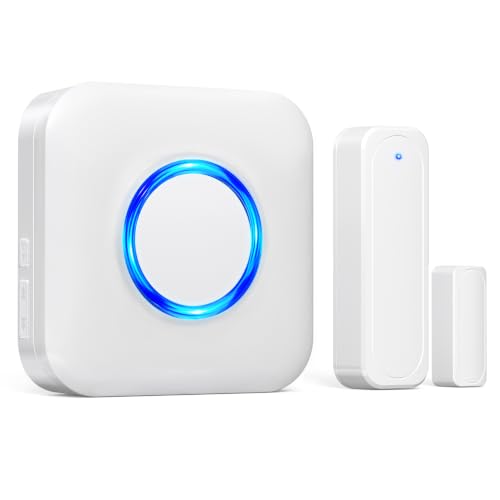
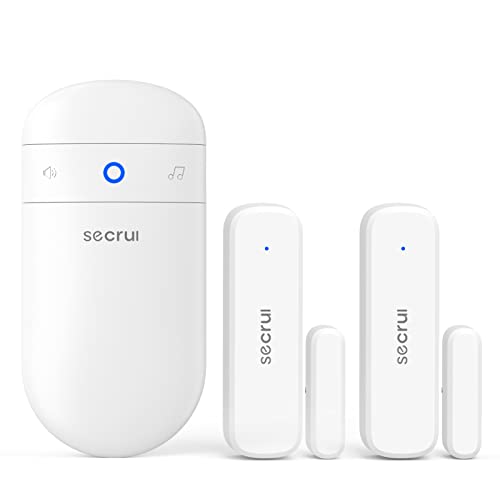
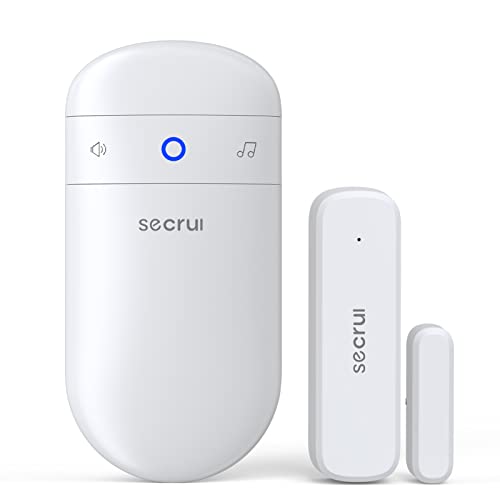


A door alarm covers the last moment in the wandering sequence — the point at which someone reaches an exterior door or window and attempts to open it. This is a backstop device, not an early-warning device.
Its value is that it fires regardless of what happened earlier in the sequence. If the bed sensor wasn't triggered, if the motion sensor was off, or if your loved one moved more quickly than expected, the door alarm is the final layer before an exterior exit.
Door alarms are best suited as part of a layered system — covering every exterior opening that someone with dementia could reach, providing confirmation at the exit point even when upstream devices have already alerted you. They're also appropriate for homes with multiple exits that each need independent monitoring.
Where a door alarm alone is insufficient: by definition, a door alarm activating means the person has already reached the exit. A caregiver sleeping upstairs or in a distant room may not have enough time to intercept before the door opens. Used without upstream devices, it is the only warning — and it arrives at the last possible moment.
The most useful feature in this category for multi-exit homes is distinct chimes per door. A half-awake caregiver should be able to identify which exit triggered without leaving their room. Look for systems where the receiver supports multiple sensors with different tones, easy battery-only installation, and a receiver loud enough to penetrate a closed bedroom door.
Door alarms cannot tell you where the person is — only that they've reached a specific opening. They don't cover hallway movement, interior wandering, or windows that aren't equipped with a sensor.
Satisure Wireless Sensor Alarm for Home
The Satisure system uses a magnetic contact sensor mounted on the door frame and a wireless receiver that chimes when the contact is broken — meaning when the door is opened. Installation requires no tools beyond possibly a level and a tape measure; the sensors attach with adhesive backing, which makes repositioning straightforward if the first placement isn't ideal.
Magnetic contact alarms are among the lowest false-alarm devices in this entire category. They do not respond to sound, vibration, or pet movement. They respond only to physical separation of the magnetic contact — which means the door opened. That specificity is exactly what overnight dementia care needs from an exit-point device.
The limitation is coverage specificity: this alarm covers only the door or window it's installed on. Every additional exit that needs monitoring requires an additional sensor. In a home with a front door, a back door, a garage entry, and a sliding glass door, that's four sensors minimum — and the receiver needs to be compatible with all of them. Confirm sensor and receiver compatibility before purchasing multiples.
SECRUI Door Chime — 2-Sensor 1-Receiver
This SECRUI package includes two sensors and one receiver, which immediately addresses the multi-exit problem without requiring separate purchases. For a home where the two most likely exit points are the front and back doors, this kit covers both from a single receiver.
The chime system is wireless and battery-powered, meaning no wiring and no dependence on a home Wi-Fi network. The receiver can be placed in the caregiver's bedroom on a nightstand. If the receiver volume is sufficient to penetrate a closed door — confirm this with an actual test — this becomes a viable two-door overnight monitoring setup right out of the box.
Distinct chimes per door are the feature to confirm before purchase. If both sensors trigger the same sound on the receiver, a caregiver waking to an alert won't know which exit to head to first. Chime differentiation is what turns a door alarm into useful directional information at 3 a.m.
SECRUI Door Chime for Home/Business Entering
This version of the SECRUI door chime is designed for single-entry monitoring — the configuration most appropriate for a home where there is one primary exit of concern and the goal is a clear, reliable alert when that specific door opens.
The magnetic contact design means false alarms are extremely rare. Unlike motion sensors, which can be triggered by air movement, pets, or other household occupants, a magnetic contact alarm fires on one condition: the door opened. For a caregiver who has experienced frustrating false alarms with motion-based systems, this specificity is a meaningful relief.
The practical limitation is the same as any single-sensor door alarm: it covers one opening. A person with dementia who knows — or discovers by trial — that the alarmed door isn't the only exit in the house may route around it. Multi-exit homes need multi-sensor coverage. This device is the right starting point for a single primary exit; plan for additional sensors if your home has secondary exits that could be reached.
Satisure Wireless Door Sensor Chime When Door Opens
This Satisure model follows the same magnetic contact principle — sensor on the frame, chime at the receiver when contact breaks. The wireless design means no drilling through walls or running cable; installation is a matter of placement and adhesive.
For a caregiver who is new to door alarm systems and wants a straightforward, no-configuration starting point, this type of device fits that need. There are no sensitivity adjustments to navigate, no Wi-Fi setup, and no app required. The device either detects an opening or it doesn't.
Battery life and low-battery notification are the practical concerns to watch over time. A door alarm with a dead battery is functionally identical to no door alarm — and sensors installed out of sight on door frames are easy to forget. Set a calendar reminder for quarterly battery checks from the day of installation. Don't rely on remembering to check.
Sanjie Wireless Door Chime Entry Alarm
The Sanjie door chime covers the same basic function — magnetic contact sensor triggering a wireless receiver when a door or window opens. The receiver supports multiple sensors, which gives this system flexibility for homes that need coverage at more than one entry point from a single receiver.
Multi-sensor compatibility matters significantly in overnight dementia care. A person with dementia may not approach the most obvious exit. Back doors, garage entries, and sliding glass doors are all potential exit points that are sometimes overlooked in initial setups. A receiver that can handle multiple sensors allows coverage to expand as needed without purchasing an entirely new system.
The receiver volume and chime customization are the specifications to confirm. For overnight use where the receiver will be in a bedroom with the door closed, a receiver that tops out at a low volume will not reliably wake a sleeping caregiver. Test the actual volume in your actual bedroom with your actual door closed — not in the daytime with the house quiet.
SECRUI Wireless Door Chime for Home Door Opening
This SECRUI model is positioned for broader coverage — the receiver handles multiple sensors, and the system supports different chime tones for different doors. That chime differentiation is the most practically important feature in this product for overnight dementia care.
When a caregiver wakes to a door alarm at 3 a.m., they need to know immediately which exit triggered. If front door and back door produce the same sound, the caregiver loses seconds — and possibly more — determining where to go. Distinct tones per sensor turn an alert from a general alarm into directional information.
The limitation consistent across all magnetic contact door alarms: once the alarm fires, the person has already opened the door. The alarm is reactive, not preventive. This is exactly why door alarms work best as the final layer in a multi-device system, with a bed sensor and possibly a motion detector upstream to catch the wandering sequence earlier.
Motion Sensors with Caregiver Alerts
Motion sensors fill the coverage gap between the bed and the exit, alerting a caregiver when someone is moving through a hallway or common area so the wandering sequence can be intercepted before a person with dementia reaches any door.


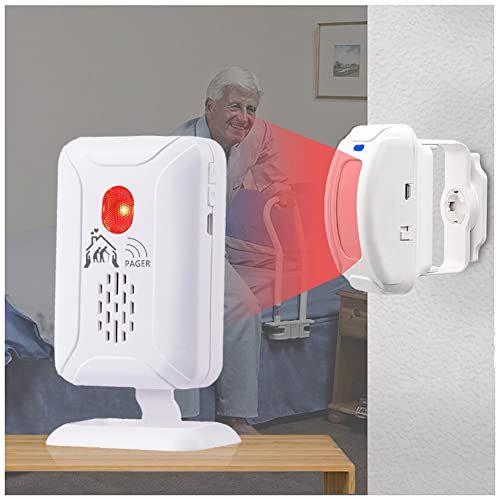
Motion sensors cover the middle of the wandering sequence — the hallway, landing, staircase, or common area between the bedroom and any exit. This is the coverage gap that neither a bed sensor nor a door alarm reaches on its own.
A motion detector positioned in a hallway or at the top of a staircase can alert a caregiver when someone is mobile and moving through the house — after they've left the bed, but before they reach any exit. In a three-layer system, that's the middle layer: bed sensor catches the exit from bed, motion detector catches movement through common areas, door alarm catches arrival at the exit point.
Motion sensors are best suited to homes with long hallways or open floor plans, situations where a bed sensor has proven impractical, or setups where the caregiver wants to know that movement is purposeful and directional rather than a brief bedside stand.
Where motion sensors are the wrong primary choice: they have the highest false-alarm rate of the three device types in this guide. Any movement — a pet, another family member, a curtain in an open window — can trigger the alert. In households with pets above 40 to 55 pounds, or with other family members moving through monitored areas at night, nuisance alerts will degrade caregiver trust in the system.
The key variables to compare within this category are detection range, detection angle (90 degrees covers a corridor; 120 degrees covers a room), alert delivery method, and whether the unit offers a time-delay or sensitivity adjustment. Mounting height also matters — most residential motion detectors are designed for 6- to 8-foot installation, and placement outside that range affects detection reliability.
No motion sensor can distinguish between the person being monitored and any other movement source. The question isn't whether false alarms will occur — they will. The question is whether the device offers enough sensitivity control to keep them manageable without reducing coverage.
EverNary Wireless Indoor Motion Sensor Alarm
This EverNary system pairs a passive infrared motion sensor with a wireless receiver, designed specifically for indoor fall prevention and caregiver alert scenarios. The receiver is the component that delivers the alert to the caregiver — in a separate room, on a nightstand, or wherever coverage is needed.
The indoor-specific design is worth noting. Outdoor motion sensors are calibrated for broader environmental movement; indoor sensors designed for this use case tend to have tighter detection parameters, which helps reduce false triggers from air movement or minor environmental shifts. For a hallway monitoring application, indoor calibration is the right starting point.
The honest limitation: EverNary's pet immunity claims should be tested against your actual pets. Immunity ratings are based on animal weight and movement height — a 30-pound dog that jumps on furniture may still trigger a sensor rated for animals under 40 pounds. Test the placement before depending on it overnight.
EverNary Wireless Caregiver Pager Motion Sensor Alarm
This EverNary model emphasizes the caregiver pager component — the receiver is pager-style, designed to be kept at a bedside or worn, and the alert travels wirelessly from the motion sensor to that receiver when motion is detected. The pager format is preferable to smartphone notifications for overnight use because it doesn't depend on Wi-Fi, doesn't require a phone to be unlocked, and produces a consistent audible alert.
The motion sensor coverage area and mounting height are the placement variables to get right. A sensor mounted too high will miss a person who has fallen; mounted too low, it may be triggered by pets or low airflow. The manufacturer's mounting recommendations are the starting point, but the geometry of your specific hallway — width, ceiling height, any bends — will determine optimal placement.
This device works as a standalone middle-layer alert, but it works best when paired with upstream and downstream devices. Motion in a hallway is useful information; knowing it started because the bed pad triggered two minutes earlier is better information. Layering is what turns individual alerts into a coherent picture.
Smart Caregiver Wireless Motion Sensor Alarm System with Pager
Smart Caregiver's wireless motion sensor system is one of the more established options in this category, coming from a company with a long focus on senior fall and wandering prevention. The system includes both the motion sensor and a wireless pager receiver, and it is designed for residential indoor use in exactly the scenarios described in this guide.
The pager receiver is compatible with other Smart Caregiver devices, which matters if you are building a multi-device system within the same brand. A bed sensor pad and a motion sensor that both alert to the same pager receiver simplifies the overnight monitoring setup significantly — one device on the nightstand, multiple sensors throughout the home.
The limitation is the same as all motion-based systems: it cannot distinguish between the person you're monitoring and any other movement in the detection zone. In a home where another family member or a pet moves through the monitored hallway at night, false alerts are likely. Sensitivity adjustment and thoughtful placement are the tools for managing that — not eliminating the possibility of false alerts entirely, but reducing their frequency to a manageable level.
EverNary Caregiver Pager Wireless Motion Sensor Alert
This EverNary variant offers caregiver pager alert delivery with a motion sensor designed for room or hallway placement. The pager format, as with the other EverNary pager-style systems, is the practical advantage for overnight use — no smartphone dependency, no Wi-Fi requirement, consistent audible alert when motion is detected.
Detection angle is the specification to pay attention to when comparing this to other EverNary models. A wider detection angle (120 degrees or more) suits an open common area or living room; a narrower angle (90 degrees) is better for a corridor where you want detection limited to movement along a specific path. Placing a wide-angle sensor in a narrow hallway may produce detection spill into adjacent rooms, which increases false-alarm potential.
For a caregiver who already has a bed sensor in place and wants to add a middle-layer alert, this type of device fills the hallway gap without requiring a completely different system. Confirm receiver compatibility if you're adding this to an existing pager setup from the same brand.
SYNLETT Wireless Caregiver Alert System with Call Buttons and Motion Sensor
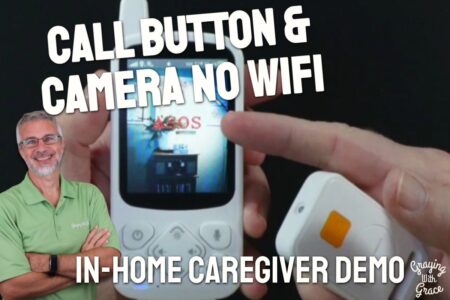
The SYNLETT system in this configuration adds call button capability alongside the motion sensor — which means the receiver can be triggered by the person with dementia pressing a button, in addition to automatic motion detection. That dual-input design makes this system more versatile than a pure motion sensor in households where the person being monitored sometimes seeks help intentionally.
For mid-stage dementia where a person may still have moments of clarity and might press a call button during distress, this combination can provide both proactive monitoring and responsive alerting. As dementia progresses, the motion sensor component carries more of the functional load.
The honest limitation of dual-function systems: complexity. More inputs mean more potential for confusion — both for the caregiver interpreting alerts and for the person with dementia who may inadvertently trigger or interact with the call button. For a straightforward nighttime wandering prevention setup where simplicity is the priority, a dedicated motion sensor may serve better than a multi-function system.
SYNLETT Wireless Bed Alarm with Motion Sensor and Caregiver Pager
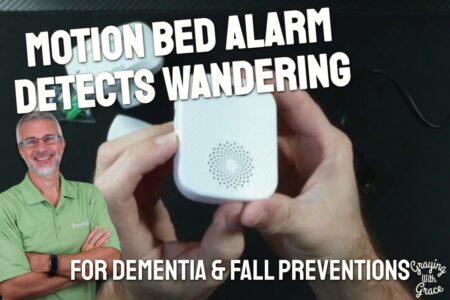
This SYNLETT configuration combines a bed alarm function with a motion sensor in one system — covering two stages of the wandering sequence from a single product. The bed alarm component alerts when weight leaves the pad; the motion sensor provides a secondary alert if movement is detected in the monitored area.
For caregivers who want to start with two layers of coverage without purchasing and configuring two entirely separate systems, this combination approach reduces setup complexity. One pager receiver handles alerts from both inputs.
The trade-off in combined systems is usually specificity. A dedicated bed sensor pad may offer finer sensitivity calibration than the bed component of a combined unit. A dedicated hallway motion sensor may offer more placement flexibility than a motion sensor bundled with a pad system. If your situation requires precise calibration of either component — for example, a very light-weight individual where pad sensitivity is critical — separate dedicated devices may serve better than a combined unit. If simplicity and two-layer coverage are the priority, this type of combination system is a reasonable starting point.
Nesthao Upgraded Bed Sensor Alarm and Fall Prevention with Caregiver Pager
The Nesthao system appears in the motion sensor section because it functions as a dual-alert device — combining bed sensor pad capability with a caregiver pager receiver and motion detection elements. The "upgraded" designation suggests iterative improvement on sensitivity and range over earlier versions, though the meaningful specifications to confirm remain the same: pad sensitivity for your loved one's weight, pager range through your home's actual walls, and receiver volume through your bedroom door.
This type of combined system addresses the gap that pure motion sensors leave — they can't tell you the sequence of events, only that motion occurred. When a bed pad and a motion component share a receiver, a caregiver can sometimes infer more from the timing of alerts than from either alone.
The limitation worth naming directly: the more functions a single device attempts to serve, the more important it is to confirm each function works in your specific environment before depending on it. Test the pad sensitivity, test the pager range, and test the receiver volume — separately and in combination — before the first night you rely on it.
Frequently Asked Questions
How early does a bed sensor alert before my loved one reaches the door?
This depends entirely on how quickly the person moves after rising. A bed sensor alerts the moment weight leaves the pad. If your parent takes two to three minutes to orient themselves and walk through the house, that's your window. If they move quickly and purposefully, the window may be under a minute. Measure the realistic walk time from your bedroom to the monitored room. That number tells you whether a bed sensor alone gives you enough lead time, or whether you need a motion sensor in the hallway to add another alert point before the exit.
Can I use just a door alarm, or do I need multiple devices?
A door alarm is better than nothing, but it is the last layer of protection — not the first. By the time it fires, your loved one is already at the threshold. It tells you someone reached the exit, not that they left the bed, not that they're crossing the hallway. Families who rely only on a door alarm are choosing to have no warning until the wandering sequence is nearly complete. For most overnight dementia care situations, at least two device types — a bed sensor and a door alarm — provides meaningfully better coverage than a door alarm alone.
How do I reduce false alarms without reducing coverage?
This is the central tension in building a dementia alert system. For bed sensors, ensure the pad size fits the sleeping position and that sensitivity is calibrated for the person's actual weight. For motion sensors, choose units with sensitivity adjustment and pet-immunity modes, and position them to minimize coverage of areas where pets or other household members move at night. For door alarms, magnetic contact sensors are the lowest false-alarm option in this guide — they respond only to physical door opening, not to movement, sound, or vibration. If false alarms are driving you toward disabling a device, adjust sensitivity settings first. Disabling a device entirely is the most dangerous outcome of a false-alarm problem.
What if my loved one removes the bed sensor pad during the night?
This is a real limitation of surface-placed pads. Some families place the pad under a fitted sheet or a thin mattress pad to reduce direct contact and discourage disturbance. Devices designed to mount under the mattress rather than on top are less likely to be moved, though they may be slightly less sensitive. If pad removal is a recurring issue, pairing the bed sensor with a motion detector in the same bedroom provides a backup — if the pad is removed, motion in the room may still trigger an alert when the person rises.
Do these devices work if the power goes out?
Only if they have battery backup. Many plug-in units do not continue operating during a power failure. Before purchasing, confirm whether the control unit and receiver operate on battery backup during an outage, and whether the device alerts you when power is interrupted or battery is low. This is especially important in areas with frequent outages — a device that goes silent during a storm is not providing protection when you most need it.
Is there a wireless option that doesn't require Wi-Fi or a smartphone?
Yes — and for many overnight caregiving situations, a dedicated pager-style system is more reliable than a smartphone-dependent one. Pager receivers operate on radio frequency rather than a home Wi-Fi network. They work during internet outages and don't require the caregiver to keep a phone charged and within reach. For spousal caregivers who are not comfortable managing app notifications at 2 a.m., a pager-style receiver is the more practical choice. Look for this feature specifically when comparing systems — it is not universal across all wireless options.
Hacks and Practical Advice
Start with the bed sensor, not the door alarm. Most families buy the door alarm first because it's the most obvious last resort. Buy the bed sensor first. It gives you more lead time. Add the door alarm as a backstop, not a starting point.
Walk the sequence yourself, at night, with the lights off. Before placing any device, make this walk: from the person's bed, through their most likely path, to every exterior door. Identify where the hallway is dark, where they might turn, where a fall is most likely, and where you'd want to know they had reached. That walk tells you exactly where each device belongs. You can't place a motion sensor effectively from a product listing — you need to see the path yourself.
Test every device at the volume it will use overnight. Alarm volumes that seem adequate in a quiet afternoon will tell you nothing about whether they'll wake you through a closed door at 3 a.m. Test at night, with your bedroom door closed, from your actual sleeping position. If you can't hear it clearly, the volume setting needs to change or the receiver needs to be repositioned.
Label your door alarm chimes on day one. If your receiver supports distinct chimes per door, write down which chime corresponds to which door and tape that list to the receiver unit. A half-awake caregiver responding to an alert at 3 a.m. cannot reliably remember this without a reference. Make the information immediately visible without having to think about it.
Set a quarterly battery check for every device. Put it on a calendar from the day of installation. Sensors installed on door frames or under mattresses are out of sight and easy to forget. A dead battery in a door alarm is functionally identical to having no door alarm at all.
Do not disable a device because of false alarms before adjusting its sensitivity. The most dangerous outcome of a persistent false-alarm problem is turning the device off entirely. Most systems have sensitivity adjustments that can reduce nuisance triggers without eliminating coverage. Check the settings, reposition the sensor, or reduce detection range before deciding the device doesn't work. Disabling it removes a layer of protection. Adjusting it keeps the layer in place.
Dementia Wandering Alert System: Printable Shopping Guide
Download this printable shopping guide to evaluate and select the right dementia wandering alert system for your home—complete with a pre-visit checklist, realistic specs to compare, and examples of proven devices so you can make a confident purchase that actually works for your situation.
Building a System That Lets You Sleep
A door alarm tells you someone reached the exit. A bed sensor tells you someone left the bed. A motion detector tells you someone is moving through the house. Each device covers one moment in the wandering sequence. No single device covers all three.
The families I've worked with who sleep better at night are not the ones with the most devices. They're the ones who understood which gaps existed in their specific home and placed the right device at each one. That's not a complicated analysis — but it requires knowing the sequence first, and knowing which stage your current setup leaves unmonitored.
Building a layered system does not require a professional installation or a significant budget. It requires one bed sensor, one door alarm on the primary exit, and — if your home's layout has a long middle path — a motion sensor in the hallway between them.
Start with the bed sensor. Add the door alarm. Walk the path and decide whether a motion sensor in the middle closes a gap that matters in your home.
If you're not sure which combination makes sense for your specific setup — how many exits to cover, whether a motion sensor will create more nuisance than coverage in your layout, or which bed sensor sensitivity is right for your loved one's weight — reach out directly. Use the contact page to ask one specific question about your situation. No purchase required. Just a direct answer from someone who has helped families work through this exact decision.
For a broader look at overnight safety beyond alert devices, the full fall prevention checklist at Graying With Grace gives you a complete picture of where the risks are and which changes have the most impact. And if bathroom safety is a concern for nighttime movement, the bathroom safety products guide covers the modifications that matter most in that specific room.
You're not looking for perfection. You're looking for a system that closes the most dangerous gaps in your specific home. That's an achievable goal — and once it's in place, you'll know what that silence at 3 a.m. actually means.




![Older man installing motion nightlight[1]](https://www.grayingwithgrace.com/wp-content/uploads/2025/06/older_man_installing_motion_nightlight1-e1748523974550-450x300.jpg)


