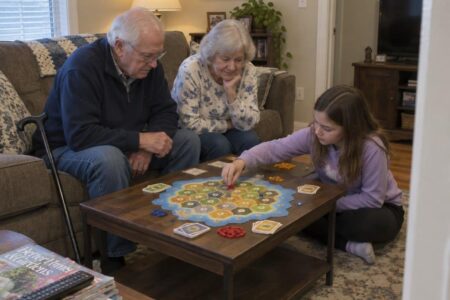
Has shuffling two decks for canasta started to hurt your hands? Or maybe you’ve started handing the deck to whoever at the table can still do it without wincing.
If that sounds familiar, you probably want to know whether a card shuffler actually fixes the problem. Or is it one more gadget for the drawer?
I’m Scott Grant, a Certified Senior Advisor (CSA®) and Senior Home Safety Specialist (SHSS®) at Graying With Grace. I loaded decks, timed passes and ran a worn-out deck through this machine on camera before writing a word of this review.
This video is sponsored by Lotus, who paid me to show you how it works and sent the product at no cost.
Below, I’ll walk you through what the Lotus card shuffler V2 does well and what you still do yourself. You’ll also see which cards work, which don’t, and who I think it fits.

Quick Takeaways
- Problem it solves: the riffle, the part of shuffling that tends to hurt, especially with two decks for canasta or a thick UNO or Phase 10 stack
- Who benefits most: card players with arthritis, a weak grip or tired hands who still want to play
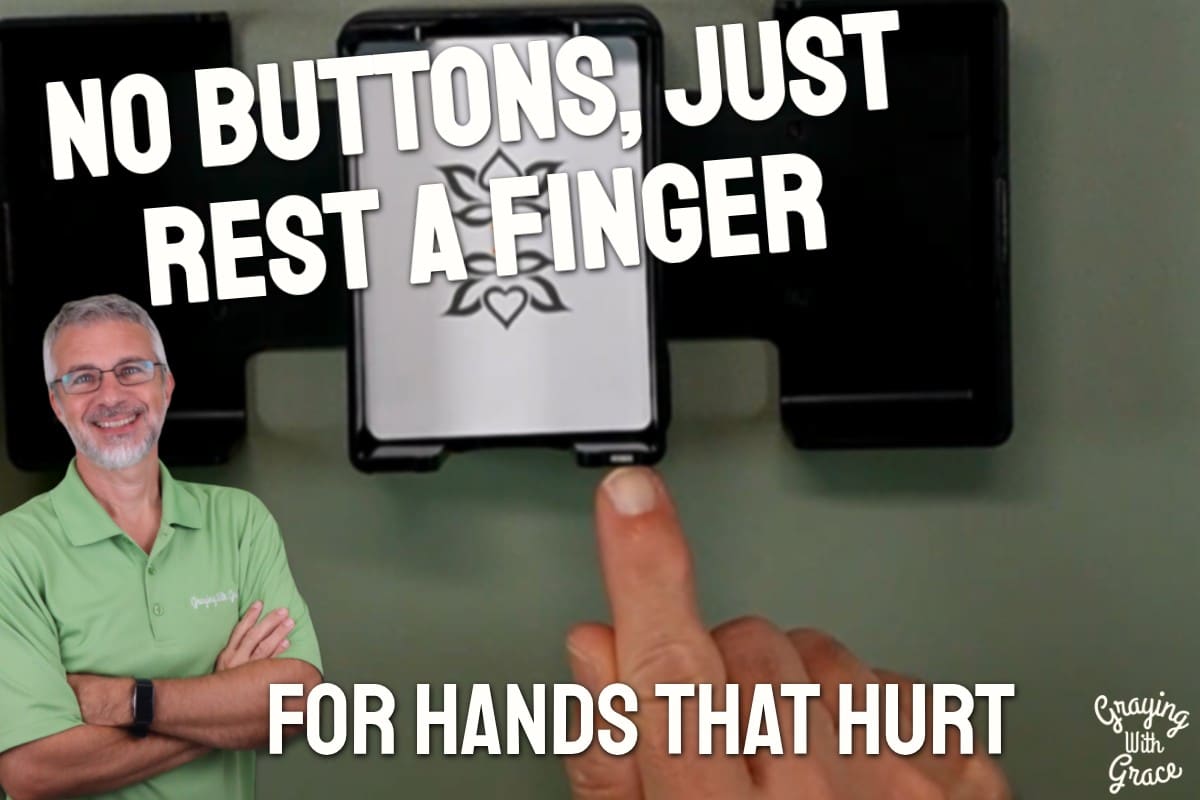
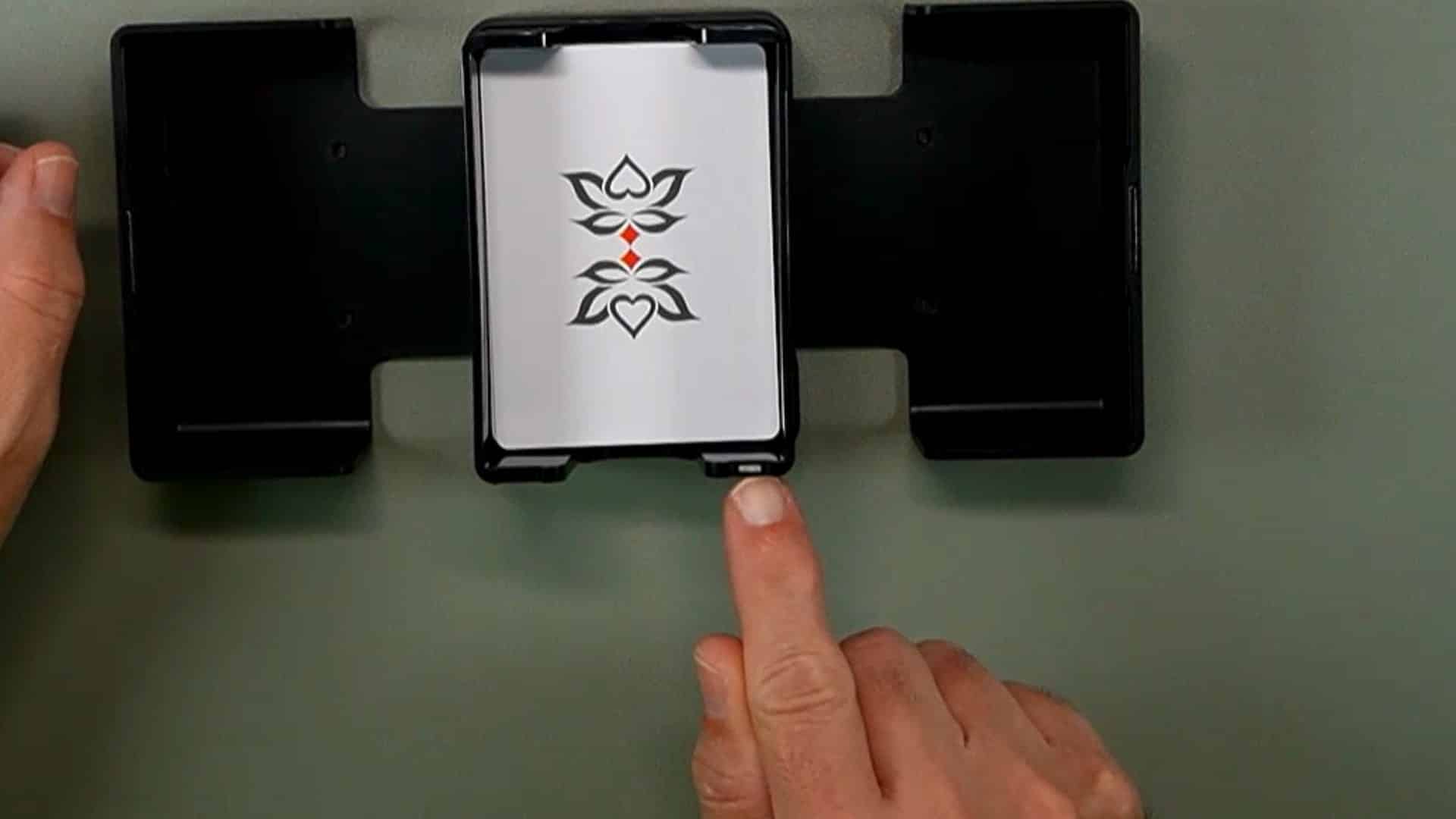
- Best feature: a touch sensor that starts a pass with a resting fingertip, a pinky or even a knuckle
- Biggest limitation: it isn’t hands-free, because you still load the deck and restack the piles between passes
- Where to buy: only at play-lotus.com, and code GWG10 takes 10% off
Who This Is For
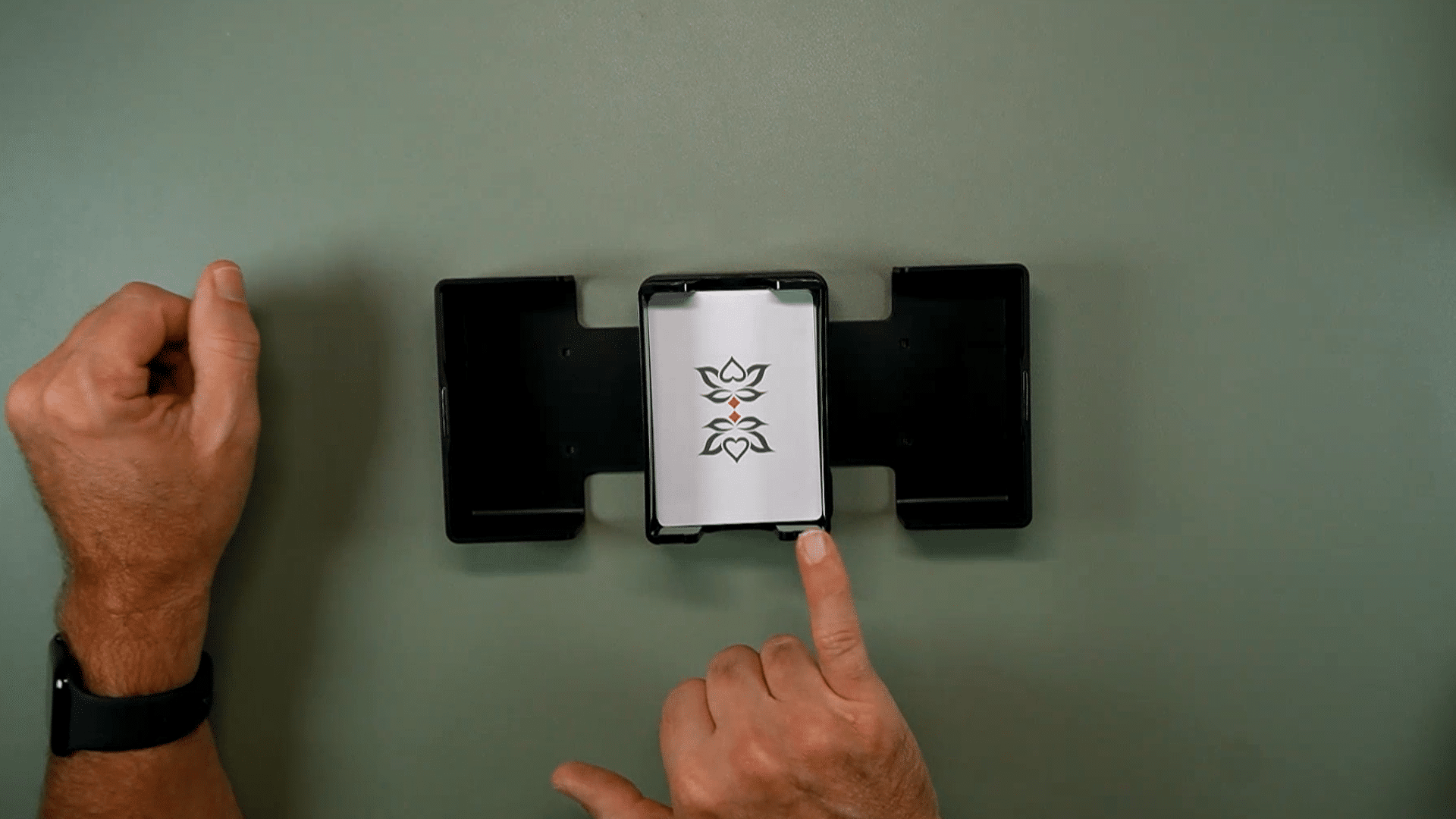
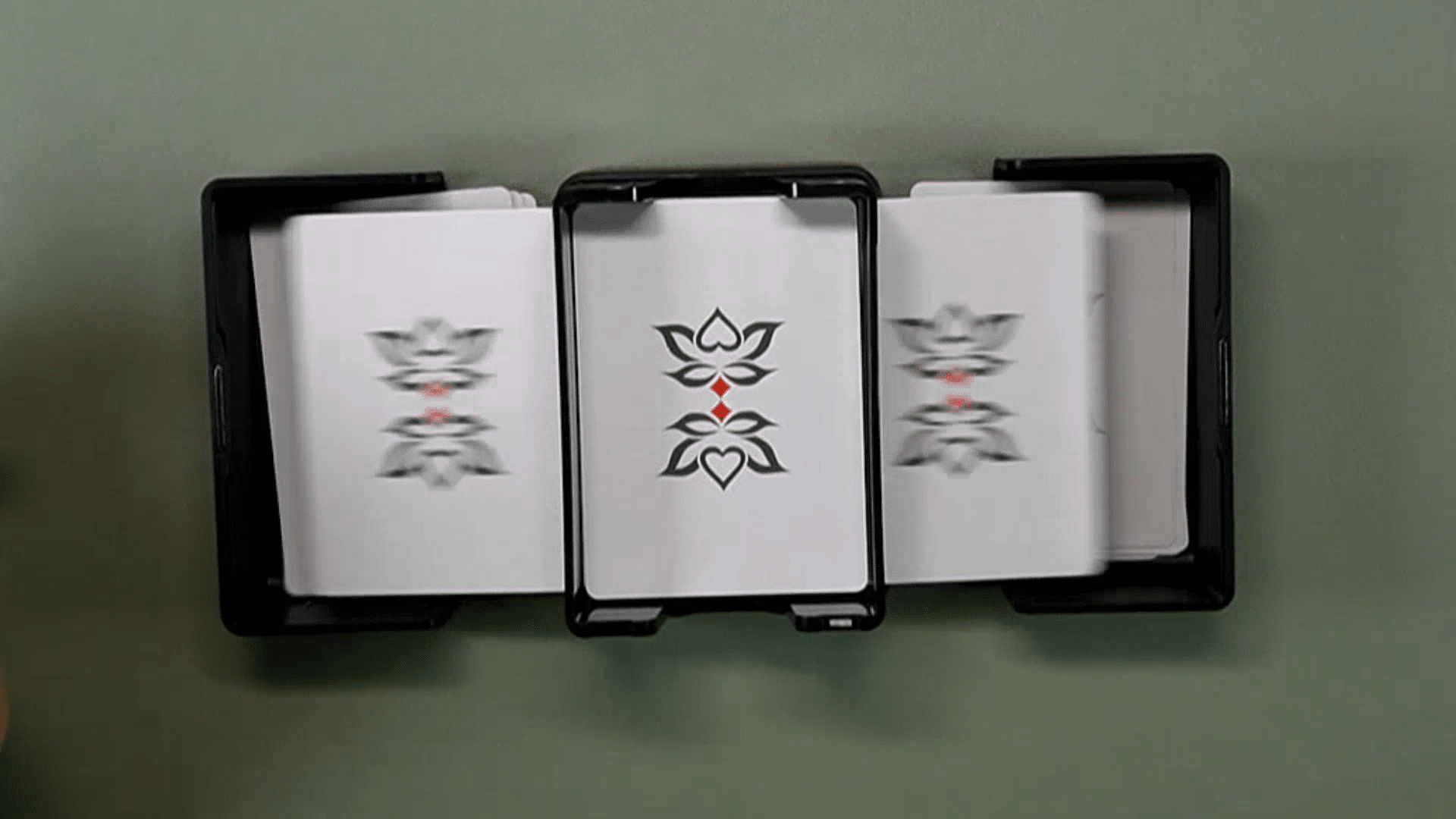
If you’re the one who always ends up shuffling because your hands are “the good ones,” the Lotus card shuffler takes that job off your plate. You load the deck, rest a finger on the sensor, and the machine does the riffle.
Two-deck games are where it earns its keep. Canasta, a big UNO deck or a stack of Phase 10 cards are exactly the loads it was built for, and it works out on its own whether you’ve loaded one deck or two.
If you’re an adult child who has noticed a parent quietly skipping card night, this is a simple way to keep them in the game. It also makes a practical gift for the card player in your family whose hands have slowed down.
How This Could Help You
Is an automatic card shuffler worth it if you only play now and then? For a once-a-year holiday game, probably not.
For a weekly canasta group, it can be the difference between playing and sitting out. You shuffle between every round, so the one step that leaves your fingers stiff comes up again and again.
It won’t make card night pain-free, and it isn’t a medical device. It doesn’t treat or relieve arthritis; it hands the repetitive riffle to a small motor instead of your knuckles.
If hand pain reaches well beyond card games, your doctor or an occupational therapist is the right person to talk to about it.
Important Details You Should Know
It weighs about 279 grams, just under 10 ounces. That’s light enough to tuck in a drawer or carry to a friend’s house.
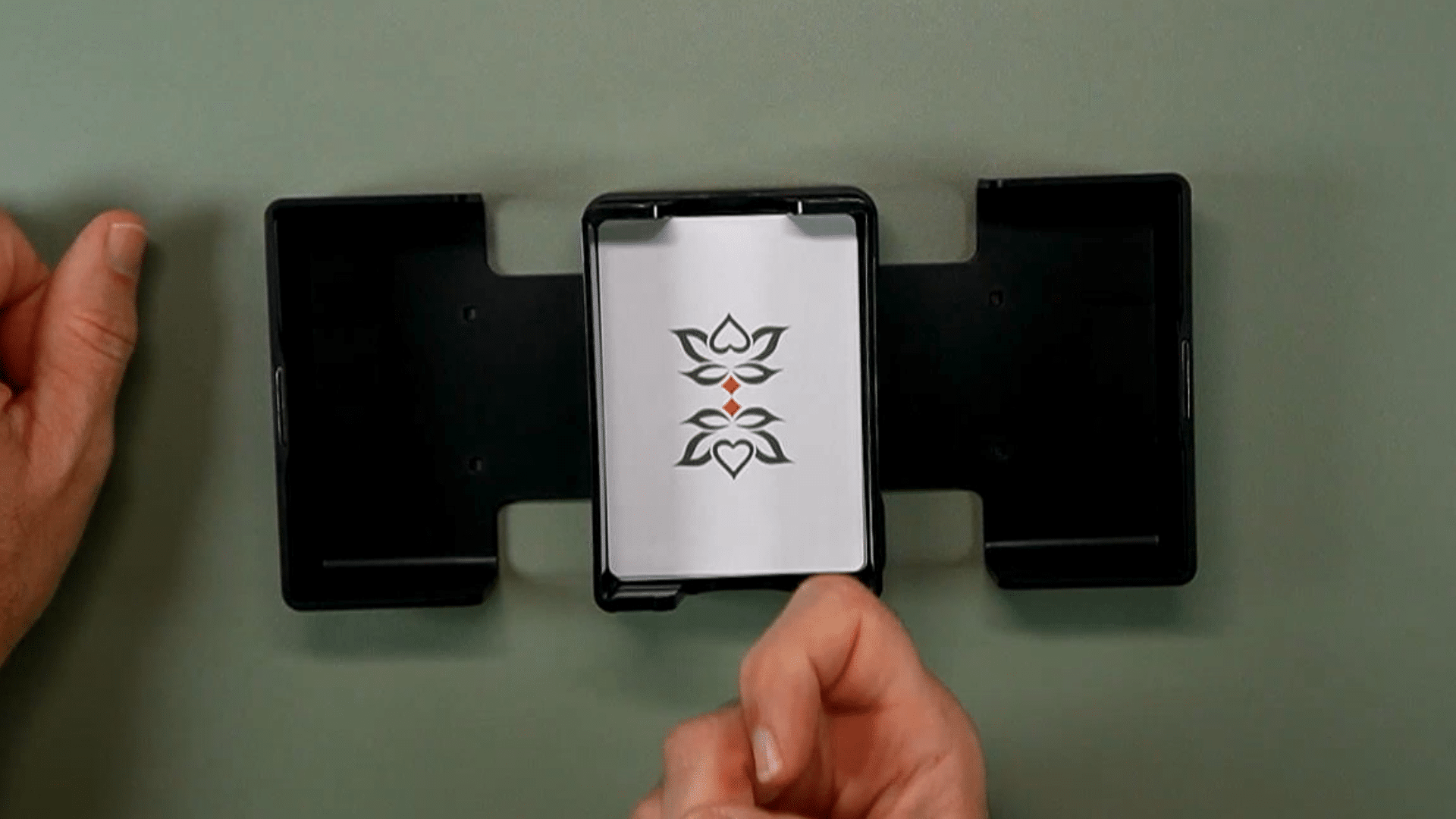
The side trays fold out to use and fold back in to close, with the cards still inside. You can slide it back into its original box for a little extra protection on the shelf.
It’s sized for standard poker-size cards, two and a half by three and a half inches, like Bicycle decks. Narrower cards such as UNO and Phase 10 fit too, and the opening is right at that poker size.
Getting Started
In the box you’ll find the shuffler, a deck of cards so you can play right away, and a 9-volt battery already in place.
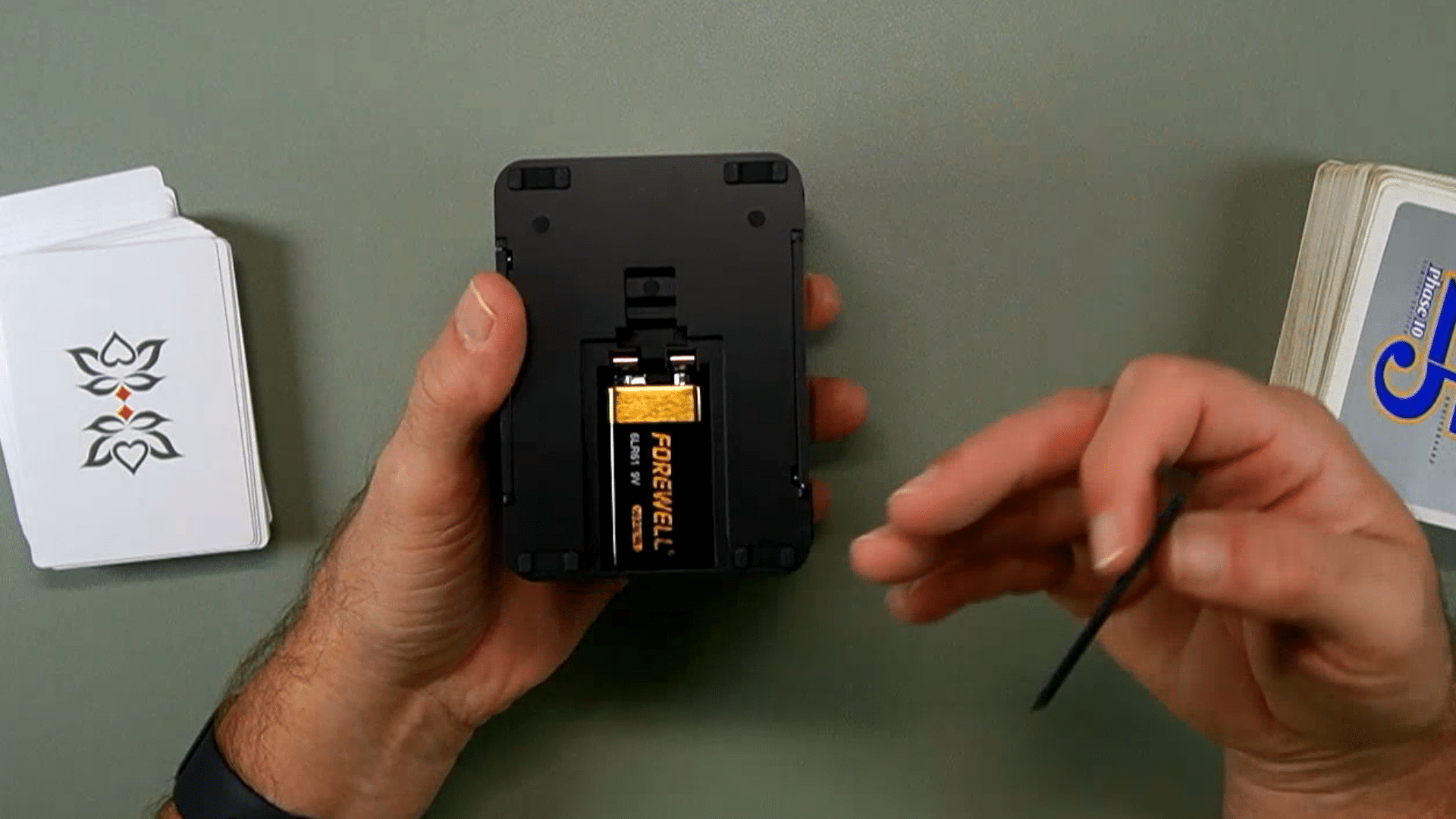
Setup takes one step: pull out the little plastic tab so the battery makes contact. There’s no app, no pairing and nothing to charge.
If you can set a deck of cards down on a table and pick it back up, you can load this shuffler. That’s the whole physical requirement for loading.
Features That Matter To You
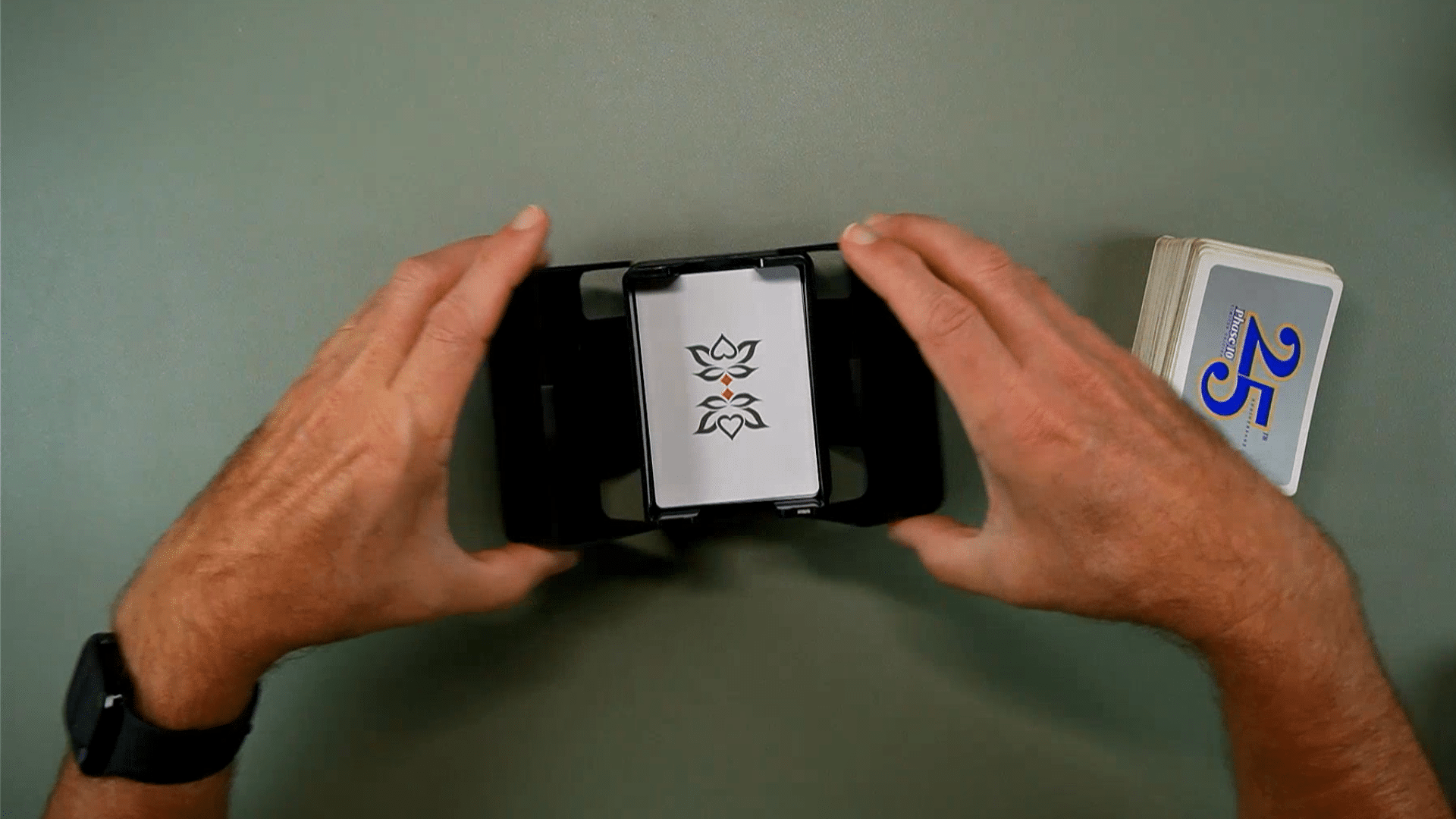
The feature I’d point to first is the touch sensor. There’s no button to push and no force needed, so nothing strains sore joints.
You don’t even need your index finger to start a pass. In the video, a pinky starts it, and so does a knuckle, which matters if your fingertips are the tender part.
A second sensor reads whether you’ve loaded one deck or two. There’s nothing to select and nothing to get wrong.
Loading is drop-in rather than split-tray. Instead of dividing the deck in half and setting each half on a side tray, you set the whole deck in the middle of the Lotus card shuffler and it does the rest.
The 9-volt battery is replaceable rather than rechargeable. If it runs down mid-game, you pop in a fresh one and keep playing instead of waiting on a charger.
Real Life Experience
The first deck I ran through it wasn’t a new one. It was a stack of Phase 10 cards that are probably 10 or 15 years old, and it shuffled the full stack in one go without my touching the sensor again.
The instructions recommend premium cards, and new cards will feed most reliably. I wanted to see what it does with the worn deck most of us have in a kitchen drawer, and it handled it.
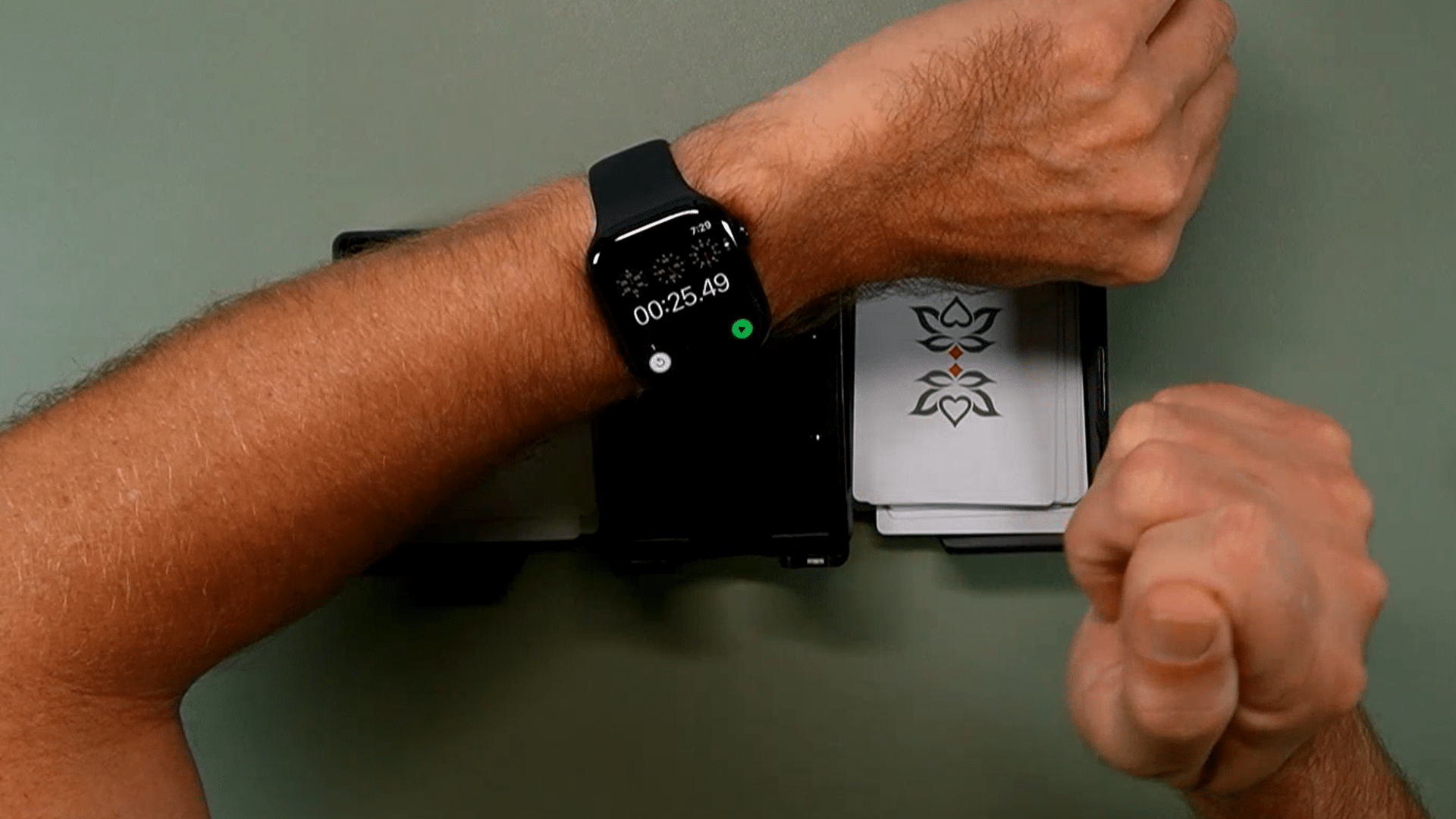
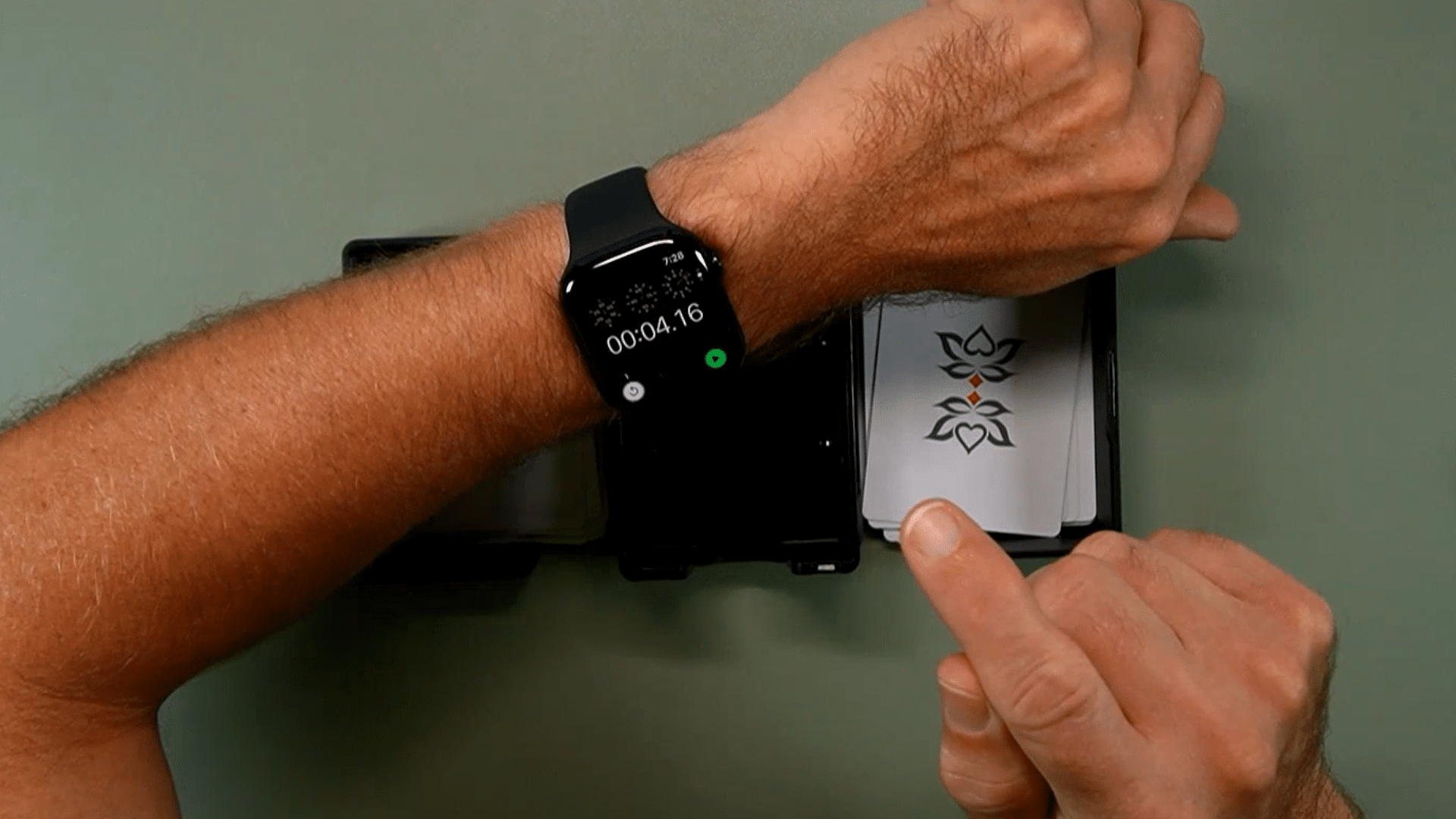
I timed one pass with a full deck at 4.16 seconds. Lotus suggests about three passes for a casual home game, and three passes, including my restacking between them, took about 25 seconds.
If you want the deck as mixed as it gets, seven passes brings one deck to near-random, which lines up with the well-known math on riffle shuffling. A double deck may need a few more.
You can hear it running: there’s a motor, and you hear the cards move. I kept talking over it at my normal voice, so card-table conversation carries on.
Lotus rates one 9-volt for 500-plus shuffles. At three passes a hand, that’s roughly 160 to 170 hands before you’d think about the battery.
Will You Be Able To Use It?
If you can set a deck down and pick it back up, you can load it. That’s a low bar, and that’s the point.
Starting a pass takes a resting finger, a pinky or a knuckle on the sensor. There’s no gripping, pressing or twisting.
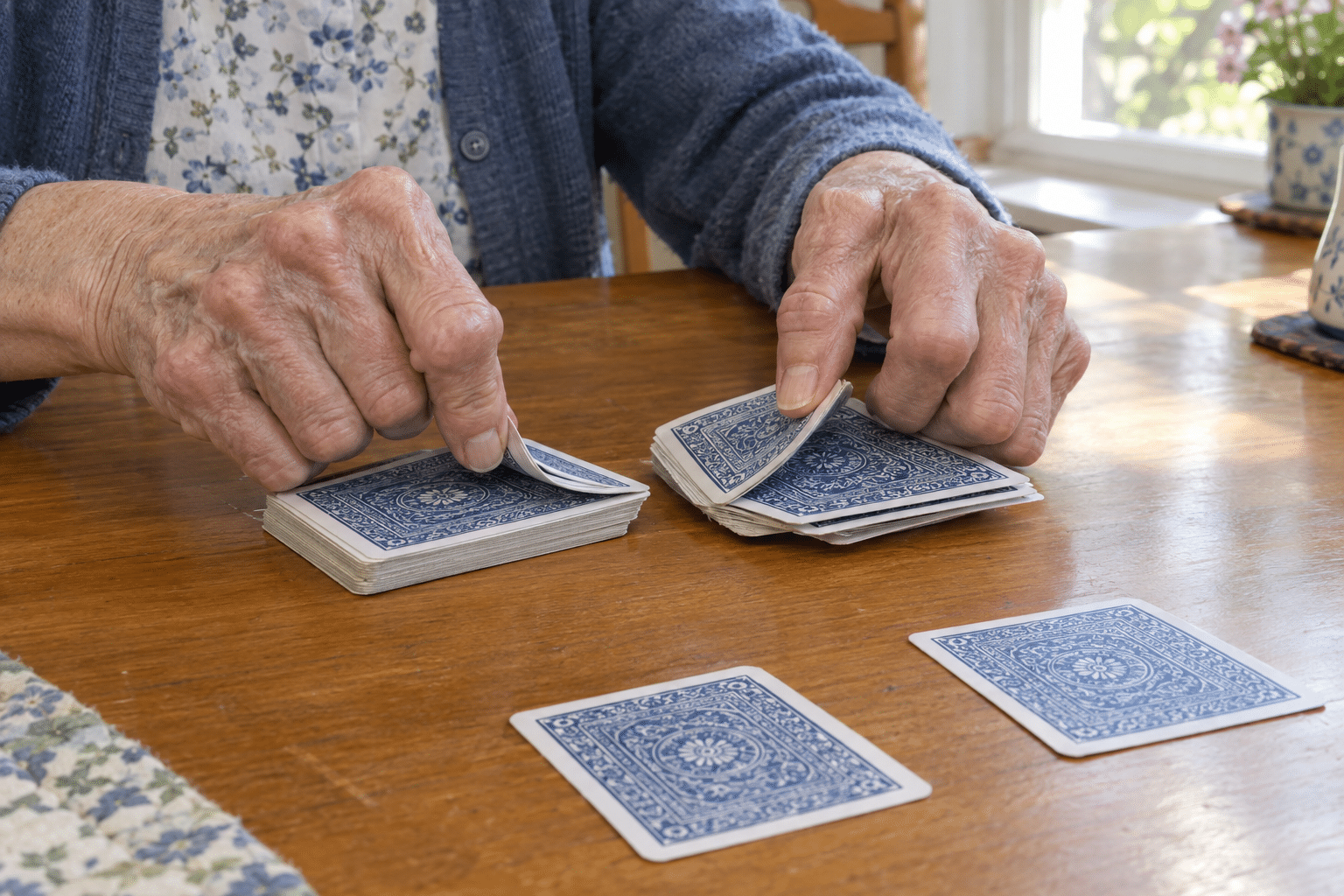
It isn’t hands-free, though. You still load the cards, lift and restack the two piles between passes, and swap the battery when it runs down.
The battery door is small, and the old 9-volt has to be pulled out of its snap. If stiff fingers make that hard, it’s a two-minute job to hand to a family member every few hundred shuffles.
Important Considerations
Most sleeved cards won’t feed, and that’s true of most automatic shufflers, not only this one. Tarot decks and Giant UNO cards are too big to fit.
Bridge-size decks depend on the finish. Some Bicycle cards feed well, while very slick ones may slip and need a few extra passes for a good mix.
If someone has significant memory loss, remember it’s still a short sequence: load, touch, restack, repeat. A caregiver may need to run that sequence for them.
Help When You Need It
The Lotus card shuffler V2 is sold only at play-lotus.com, not on Amazon, so purchases and support go through Lotus directly. Their email is info@play-lotus.com.
As of October 2026, you can ask for a return within 30 days of delivery, even after you’ve opened and used it. Keep the original box, because returns go back in it, and a one-year warranty covers manufacturing defects after that.
Replacement batteries are ordinary 9-volts from any grocery or hardware store. You’re never waiting on a special part.
Understanding The Cost
Compared with the cheaper split-tray shufflers, the Lotus card shuffler costs more. The drop-in loading and the touch sensor are what the extra money buys.
Shipping is free in the US, and code GWG10 takes 10% off at checkout. Check the link for the current price.
If you’re weighing it against a cheaper one, ask how much splitting the deck and pressing a button bother your hands. Some cheaper ones run on a rechargeable battery, so the gentler design is the trade.
Making It Work For You
Stick to standard poker-size decks, paper or plastic, for the smoothest feeding. Keep a spare 9-volt in a drawer so you’re never stuck mid-game.
For a casual family game, three passes is plenty. Save seven passes for when you want the deck as mixed as it gets.
If holding and sorting your hand is hard too, a card holder pairs well with the shuffler. I’ve covered one in my rotating card holder review for arthritic hands, and you’ll find more ideas in my list of gifts for people with arthritis.
Our Recommendation
If shuffling is the part of card night that hurts, or the part you’ve started avoiding, I think the Lotus card shuffler V2 earns its place at the table. The touch sensor and drop-in loading were clearly designed for hands that find gripping hard.
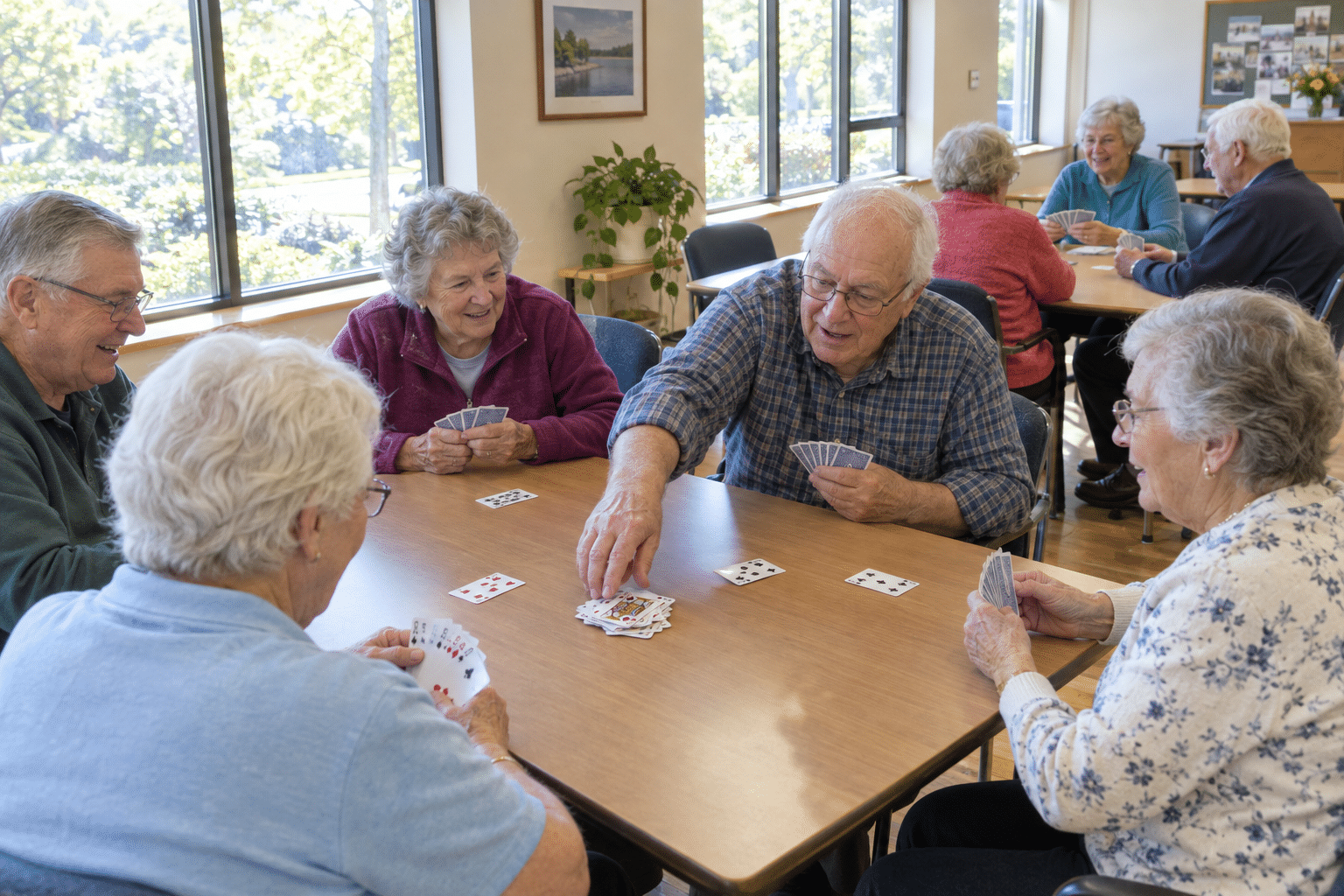
It fits people who play often, especially two-deck games like canasta. It also fits caregivers looking for a simple way to keep a loved one in a favorite game.
If you rarely play, or mostly use sleeved or oversized cards, it’s not the right fit, and that’s worth knowing before you buy. For more ideas once shuffling is sorted, see my list of simple card games for older adults.
Where To Get It
The Lotus card shuffler is sold only at play-lotus.com. Code GWG10 takes 10% off.
Conclusion
This shuffler won’t fix sore hands. It takes one painful, repetitive job off them so you can enjoy the game itself.
Which card game would you get back into if shuffling weren’t in the way? Tell me in the comments.