![Older man forward reaching toilet paper holder[1]](https://www.grayingwithgrace.com/wp-content/uploads/2026/01/older_man_forward_reaching_toilet_paper_holder1-e1770044956752.jpg)
You reach for the toilet paper and feel it—that subtle shift in your body, the momentary instability as you twist to the side. Most people dismiss this feeling as nothing, but your body is giving you accurate information.
That unstable sensation isn’t oversensitivity. It’s biomechanics.
Occupational therapists assess toilet paper holder placement as a legitimate fall risk factor during home safety evaluations. Most homes get it wrong—not because anyone is careless, but because holders are installed for aesthetics or builder convenience without considering how reaching mechanics affect balance.
The good news? This is fixable today, often without tools, always without professional help. Small adjustments in holder position can significantly improve your bathroom safety at zero cost.
The Complete Bathroom Fall Prevention Checklist: Room-by-Room Safety Assessment
Identify every hidden fall risk in your bathroom and implement practical, affordable fixes—with a step-by-step checklist that takes just one hour to complete and prevents the injuries that could change everything.
The Reaching Mechanics Problem—Why Side Placement Creates Instability
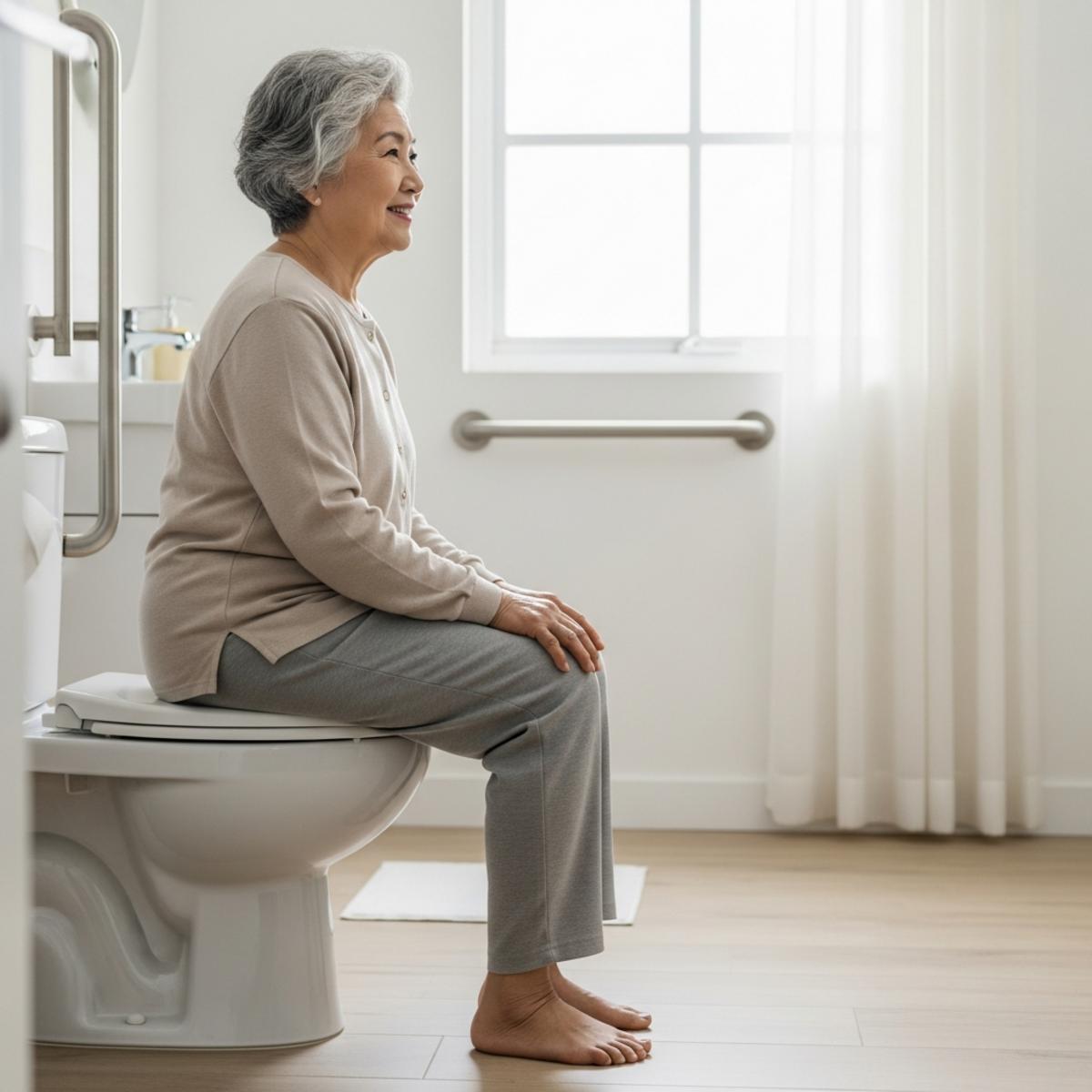
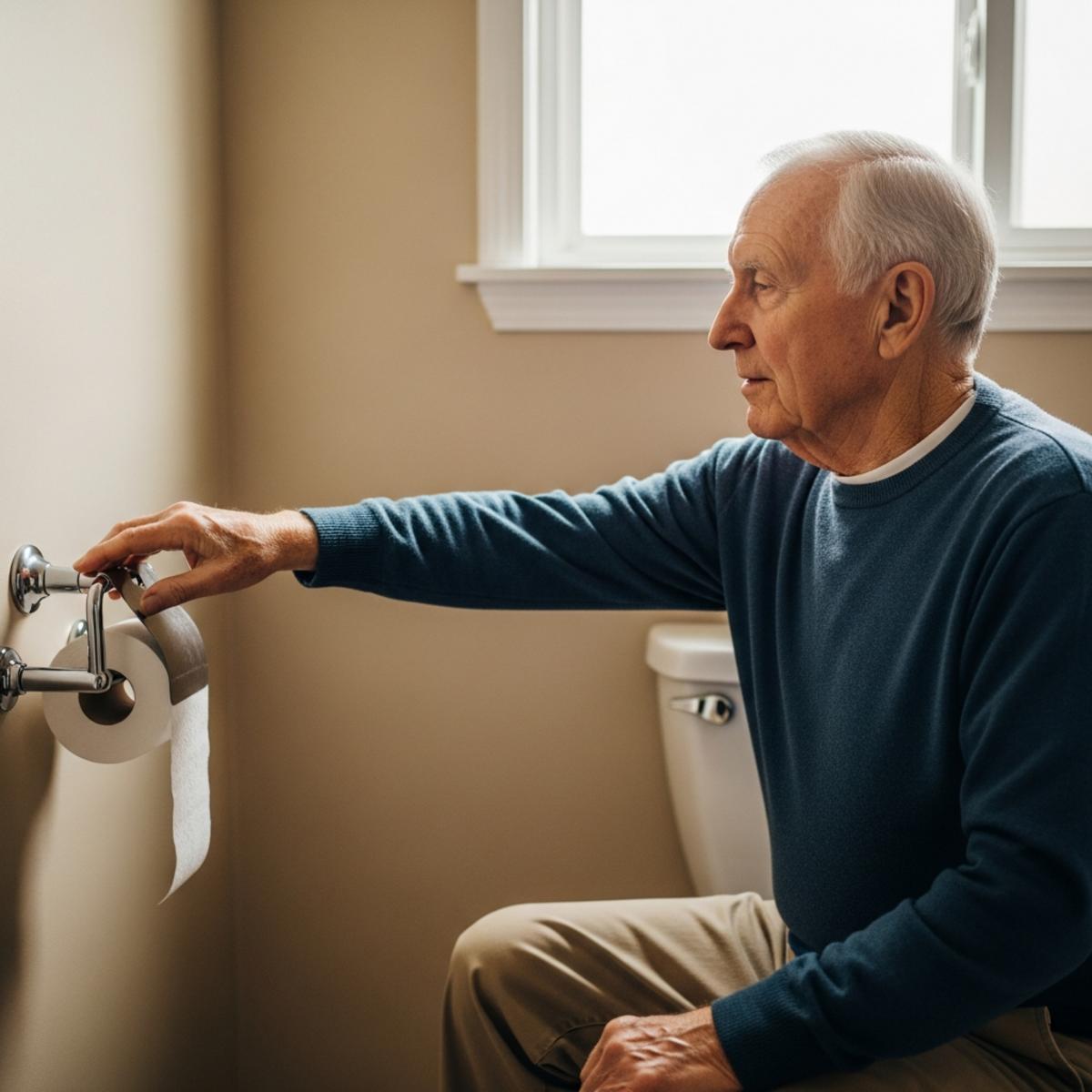
When you’re seated on a toilet, your base of support is already reduced compared to standing. Your weight rests on a small surface area, and your center of gravity sits higher relative to your support base.
Now add torso rotation to reach a holder mounted to your side or behind you.
Twisting your upper body shifts your center of gravity toward the direction you’re reaching. The farther you reach, the more your weight moves outside your base of support. This creates instability—the same mechanical principle that makes you wobble when you lean too far in any direction.
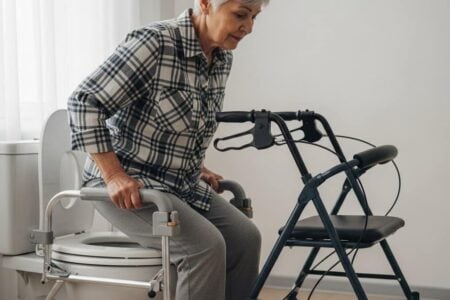
One-handed support makes it worse. When you grip toilet paper with one hand, you can’t use both arms to catch yourself if you start to lose balance. You’re literally reducing your safety options while simultaneously creating an unstable position.
For people with reduced core strength, balance issues, or mobility challenges, this combination becomes genuinely dangerous. But even if you’re steady on your feet most of the time, the seated position plus rotation plus one-handed reaching creates unnecessary risk.
Your instinctive feeling that side-reaching feels unstable is correct body awareness that deserves attention, not dismissal.



Test Your Current Setup
Sit on your toilet right now. Notice how far you need to twist to reach your holder. Pay attention to whether you feel balanced or slightly off-center. That feeling tells you everything you need to know about whether your placement needs adjustment.
The Optimal Placement—Where Your Holder Should Actually Be
Occupational therapists recommend specific measurements for toilet paper holder placement: 8-12 inches in front of the toilet edge, 26 inches above the floor.
These numbers aren’t arbitrary. They’re based on biomechanics and natural arm position during seated reaching.
Forward placement eliminates torso rotation entirely. When the holder sits in front of you, you reach straight forward—no twisting required. Your center of gravity stays centered over your base of support. You remain stable throughout the entire motion.
The 26-inch height matches the natural position of your arm when you’re seated and reaching forward comfortably. You don’t have to strain upward or bend downward. Your shoulder stays in a neutral position, reducing unnecessary stress.
Mount the holder slightly toward your dominant-hand side of center—not far to the side, just enough that reaching feels natural. For most people, this means 2-4 inches off centerline, still well within forward reach.
The Simple Measurement Test
Sit on your toilet. Extend your arm naturally forward without twisting your torso. The comfortable endpoint of that reach is where your holder belongs. If you’re considering bathroom safety modifications, this placement should be your starting point.
Before permanently mounting, test the position. Hold a roll of toilet paper at the proposed location and practice reaching for it. Does it feel stable? Can you tear paper easily without twisting? If yes, you’ve found the right spot.
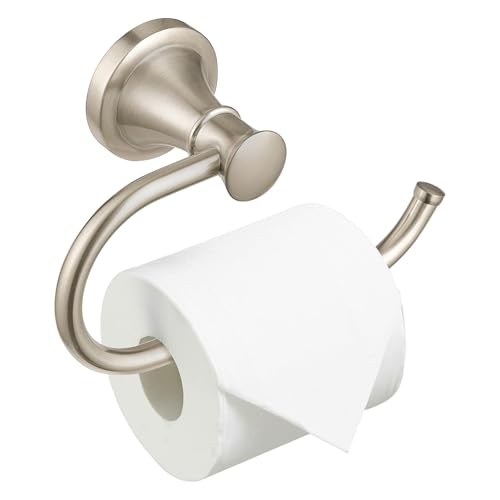
For renters or anyone wanting to avoid new wall holes, adhesive mounting strips work well for lightweight holders. Battery-powered screwdrivers make repositioning straightforward if you’re comfortable doing basic mounting.


Ready to discover more ways to make your home safer and more comfortable? Subscribe to our newsletter for expert-tested tips and practical solutions designed specifically for older adults and their caregivers.

The Dangerous Positions—Where Holders Shouldn’t Be
Several common placements create specific fall risks that most people don’t recognize as hazards.
Behind the toilet requires backward twisting—the most biomechanically unstable position. Your spine isn’t designed for this rotation while seated. Reaching behind you shifts your weight backward and to the side simultaneously, creating compound instability.
Opposite wall mounting forces full torso rotation. You’re essentially turning your entire upper body 90 degrees or more while maintaining balance on a small seated base. This position also encourages overreaching, where you extend your arm beyond comfortable range to grab paper.
Too high placement requires upward reaching that shifts your center of gravity upward and forward. Combined with the pulling motion needed to tear paper, this creates a tipping hazard, especially for people with balance challenges.
Too low mounting forces you to bend forward and down, which can cause dizziness or loss of balance when you sit back upright. The change in head position affects your inner ear and blood pressure, creating momentary disorientation.
Blocking grab bar access creates a terrible choice: reach for safety support or reach for toilet paper. If your holder sits between you and your grab bar, you’re forced to reach across or over the holder, which defeats the purpose of having the grab bar.
Recessed holders require reaching into a wall cavity at an awkward angle. Your hand position becomes constrained, making it harder to tear paper cleanly. This often leads to pulling harder, which increases instability.
These placements weren’t designed with fall prevention in mind. They were installed based on standard construction templates or aesthetic preferences without considering actual usage mechanics.
Identify which dangerous position describes your current setup. Understanding the specific risk it creates is the first step toward fixing it.

The Grab Bar Conflict—Coordinating Your Safety Features
Toilet paper holders and grab bars both serve your safety, but poor planning can make them work against each other.
Grab bars take priority in placement decisions. Their position is determined by biomechanics of sitting, standing, and transferring—critical safety functions that outweigh toilet paper access.
If your holder sits between you and your grab bar, you’ve created a reaching-over obstacle. Every time you need the bar for support, you must navigate around the holder. In an emergency situation where you need that grab bar quickly, the holder becomes a barrier.
Forward holder placement naturally avoids this conflict. When your holder sits in front of the toilet edge, it stays clear of the grab bar areas beside and behind the toilet. You can reach safety support without obstruction.
If your bathroom layout requires the grab bar exactly where forward placement would put the holder, mount the holder slightly to the opposite side—still forward, just offset enough to keep grab bar access completely clear.
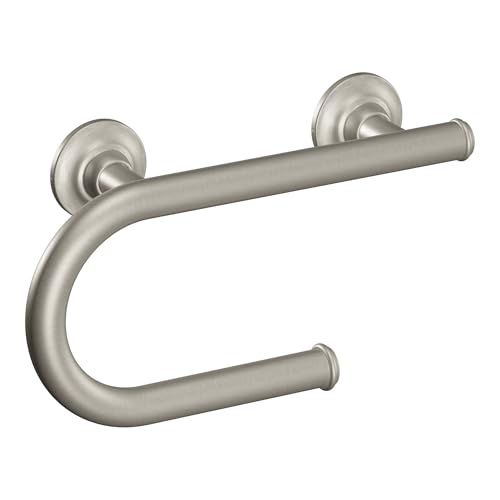
Some people solve both needs with grab bars that have integrated toilet paper holders. These combination fixtures ensure both features are optimally placed because they’re designed together. Another option: keep a countertop holder within easy forward reach as your primary source, leaving wall space for grab bars.
The standing reach test reveals planning problems: if you must stand to reach your toilet paper, placement is wrong. You should be able to reach paper comfortably while remaining fully seated.
Map out your bathroom layout considering both holder and grab bar positions before making changes. This prevents having to remount multiple times. If you’re working on comprehensive bathroom safety, coordinate all modifications together.

Left vs. Right and Personal Considerations
While forward placement is universally safer, exact positioning depends on your individual body and abilities.
Most people naturally reach with their dominant hand. Right-handed people typically prefer holders slightly to their right of center; left-handed people prefer slightly left. But “slightly” is key—we’re talking 2-4 inches off center, not far to the side.
Arthritis or weakness in your dominant side might require opposite placement. If right-hand arthritis makes gripping difficult, mounting the holder to your left allows you to use your stronger hand. The holder should still be forward, just positioned for your non-dominant side.
Wheelchair users need customized placement based on their transfer approach and chair positioning. The standard guidelines don’t account for wheelchair armrests, footrests, or transfer mechanics. Test actual reaching from your seated position in your chair to find optimal placement.
People using other mobility aids may need adjustments based on how those aids position them relative to the toilet. There’s no one-size-fits-all answer—your reaching pattern determines correct placement.
Emergency Backup Strategy
Keep an extra roll within easy forward reach on your counter or shelf. This backup eliminates panic if you discover you’re out of paper mid-use. It also provides an alternative if you’re having an unusually difficult day with balance or mobility.
Test your personal reaching pattern while seated. Extend your arms in different directions—straight forward, slightly left, slightly right. Which direction feels most stable and natural? That’s your answer, regardless of what standard guidelines suggest.
The Complete Bathroom Fall Prevention Checklist: Room-by-Room Safety Assessment
Identify every hidden fall risk in your bathroom and implement practical, affordable fixes—with a step-by-step checklist that takes just one hour to complete and prevents the injuries that could change everything.


Making the Change Today
Toilet paper holder placement is a legitimate safety consideration that most homes get wrong. But unlike many home modifications, this one is easily fixable.
Repositioning an existing holder requires minimal tools—often just a screwdriver. If you’re mounting a new holder, adhesive strips work for lightweight models, avoiding wall damage entirely. No special skills required, no professional installation necessary.
The improvement in daily safety is immediate. Forward placement eliminates the twisting motion that creates instability. You reduce fall risk every single time you use the bathroom—multiple times per day, for as long as you live in your home.
Do the seated reach test today. Measure your current holder position against the recommended guidelines: 8-12 inches forward, 26 inches high, slightly toward your dominant side. If your placement doesn’t match, you know what to adjust.
This might seem like a minor detail, but occupational therapists specifically assess it during safety evaluations for good reason. Small changes in positioning create measurable differences in stability and fall risk.
Your instinct that awkward reaching feels unsafe is correct. Trust that instinct and make the adjustment. Like many home safety improvements, the simplest changes often provide the most consistent daily benefit.
Have you checked your toilet paper holder placement? Share your before and after experience in the comments—your insight might help someone else improve their bathroom safety today.