![Older couple pottery wheel studio[1]](https://www.grayingwithgrace.com/wp-content/uploads/2026/02/older_couple_pottery_wheel_studio1-e1771334326831.jpg)
You sit down with your morning coffee and pull out today’s crossword puzzle. You’ve been doing this for years now—your daily brain workout. You’re proud of yourself for staying mentally sharp, for not letting your mind go soft in retirement.
And you should be proud. You’re doing something. You’re making an effort. That matters.
But here’s what recent neuroscience research reveals: that crossword puzzle you’ve mastered? It’s maintaining your brain. But it’s not building it. Not anymore.
The most powerful cognitive protection after 60 doesn’t come from puzzles you’ve learned to solve efficiently. It comes from struggling with something you’ve never done before—and sticking with it long enough to get better.
Your 90-Day Skill Learning Roadmap: Build Your Brain in 3 Months
Get your step-by-step 90-day roadmap that shows you exactly how to learn a new skill after 60, move past the frustration that stops most people, and achieve measurable cognitive benefits in just three months—no special talent required.
The Neuroplasticity Advantage: Why New Beats Familiar
Your brain builds new neural pathways when it encounters unfamiliar challenges. That’s neuroplasticity—your brain’s ability to form new connections throughout your entire life.
When you do your 1,000th crossword puzzle, you’re using pathways you’ve already built. You’re good at it because those connections are strong and efficient.
But when you pick up a ukulele for the first time?
Or attempt to speak Spanish?
Or learn to edit photos on your computer?
Your brain has to forge entirely new trails.
Think of it this way: Puzzles are like walking the same path through the woods every day. The path stays clear and easy to follow. Learning a new skill is like blazing a completely new trail—your brain has to work harder, connect different regions, build fresh pathways.
That uncomfortable feeling when you’re learning something new? That’s not a sign you’re too old or not good at it. That’s your brain doing exactly what you want it to do—growing.

What the Research Actually Shows About Skill Learning
Researchers at the University of Texas conducted a fascinating study. They divided older adults into groups and assigned different activities for 15 hours per week over three months.
One group learned digital photography and photo editing software. Another learned quilting patterns and techniques. A control group did familiar activities like crossword puzzles and listening to music.
The results? Only the groups learning complex new skills showed measurable improvements in memory and cognitive function.
The key factors? The activities required sustained attention, engaged multiple cognitive processes simultaneously, and demanded constant problem-solving as skills developed.
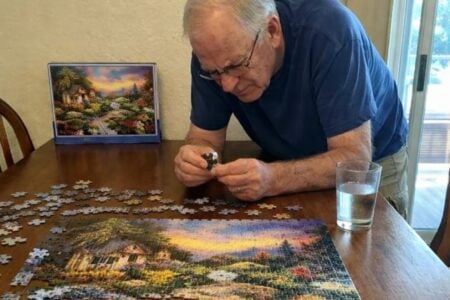
Compare someone doing daily Sudoku—a familiar mental exercise—to someone learning photo editing software. Both require concentration. But only one demands you constantly acquire new knowledge, master unfamiliar tools, and apply creative problem-solving to novel situations.
The sweet spot isn’t what feels comfortable. It’s what makes you think “this is hard, but I’m getting it.”
Too easy doesn’t help. Overwhelming difficulty makes you quit. The ideal learning challenge sits right in that zone where you struggle just enough to stay engaged—but see progress when you practice.
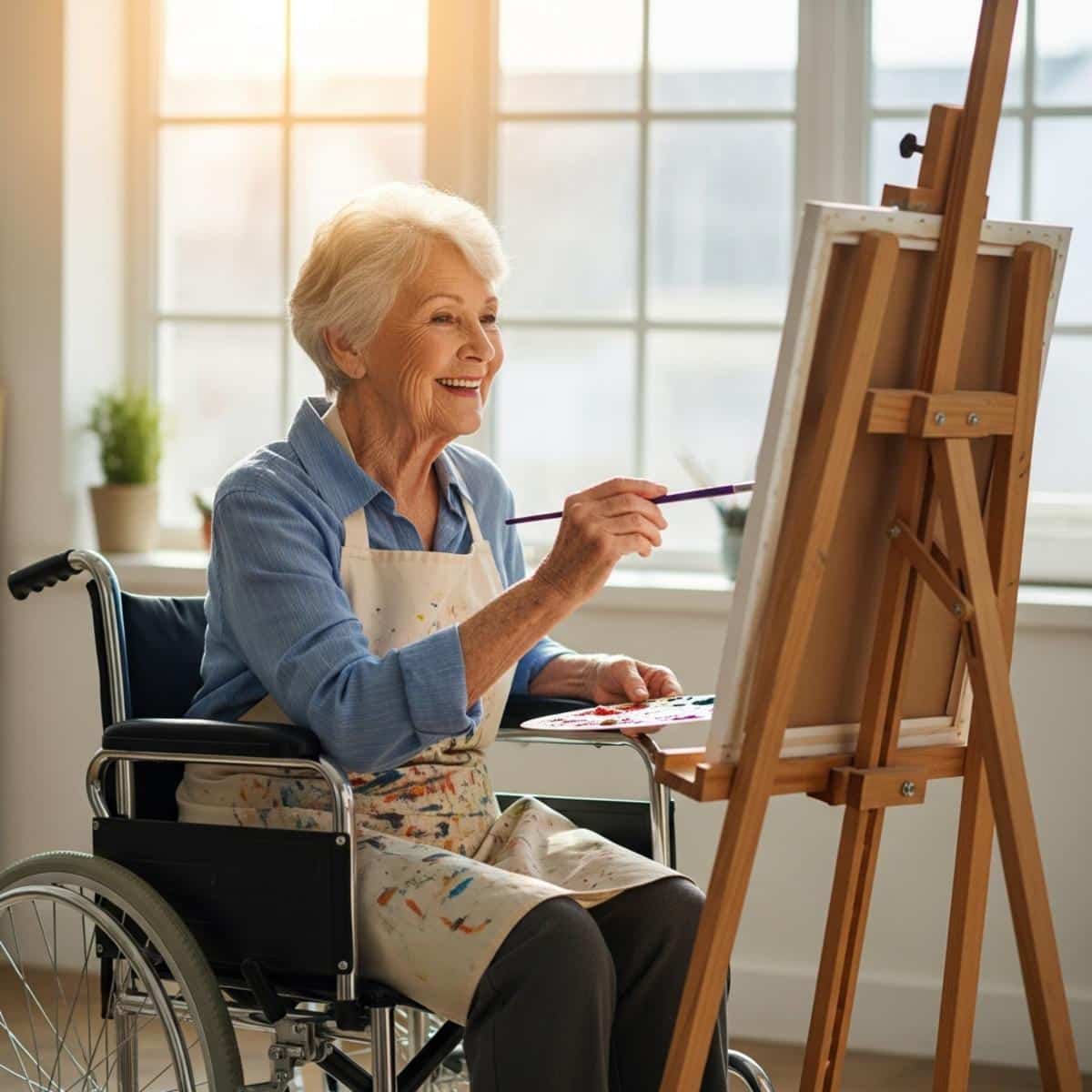
The Top Brain-Protective Skills Worth Learning
Certain skills provide particularly powerful cognitive benefits because they engage multiple brain systems at once.
Musical Instruments
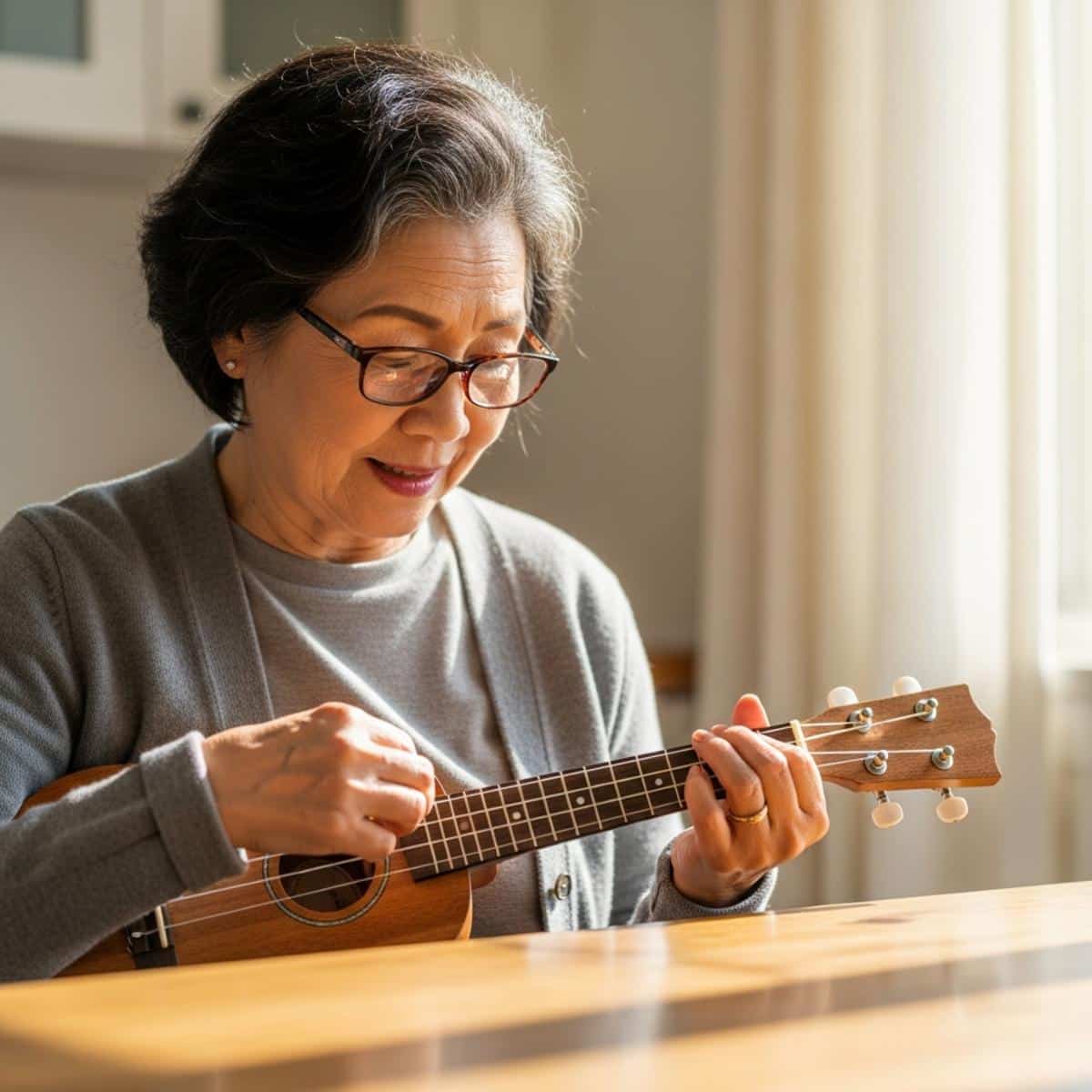
Learning piano, ukulele, or guitar combines motor learning (finger placement), memory (notes and chords), auditory processing (hearing what you play), and reading (sheet music or tabs).


The ukulele is actually one of the easiest instruments for beginners. Four strings instead of six. Soft nylon strings that don’t hurt your fingers. Chords that use simple finger positions.
You’re not trying to become a concert performer. You’re giving your brain the workout that comes from coordinating physical movement with mental processing.
New Languages
Learning Spanish, French, or Italian strengthens memory through vocabulary acquisition and builds pattern recognition through grammar rules.
You don’t need fluency for cognitive benefits. Even basic conversational ability forces your brain to think in new ways, switch between language systems, and recall vocabulary under pressure.
Apps like Duolingo or Babbel make starting accessible. Community college classes add social interaction to the learning process.
Digital Creation Skills
Photography, video editing, or graphic design teach you to see the world differently while mastering new technical tools.
Modern smartphones make photography accessible. Free editing software like GIMP provides powerful capabilities without expensive subscriptions.




These skills combine artistic creativity with technical problem-solving—a particularly potent combination for cognitive health.
Ready to discover more ways to keep your mind sharp and your life fulfilling? Subscribe to our newsletter for expert-backed strategies designed specifically for older adults who want to thrive.
Choose based on genuine interest, not what seems “most beneficial.” You’ll stick with learning that genuinely engages you. Motivation matters more than which specific skill you pick.

The Social Learning Bonus You Can’t Get From Puzzles
Group learning environments add cognitive and emotional benefits that solitary puzzles simply can’t provide.
When you take a photography class at your senior center, you’re not just learning camera settings. You’re discussing composition with classmates. Explaining your creative choices. Getting feedback. Seeing problems solved in ways you hadn’t considered.
Social interaction during learning enhances cognitive benefits. Teaching what you’ve learned to others strengthens your own understanding.
Accountability helps too. When you know your Italian conversation group meets Thursday morning, you’re more likely to practice Tuesday night.
Reduced isolation matters for brain health almost as much as the learning itself. The coffee and conversation before class aren’t distractions from learning—they’re part of what makes learning powerful for your overall wellbeing.
Group classes also normalize the struggle. You see others wrestling with the same challenges. You realize difficulty doesn’t mean you’re failing—it means you’re learning.
That said, individual learning is absolutely valuable too. YouTube tutorials, library books, and online courses all work. The key is sustained engagement with something genuinely new to you.

How to Start (And What to Expect)
Starting is simpler than you think. You don’t need expensive equipment or formal training to begin.
Free and Low-Cost Resources:
• YouTube offers tutorials for virtually any skill—search “beginner [skill] for seniors”
• Your library card likely provides access to learning platforms like Creativebug or LinkedIn Learning
• Local senior centers run classes specifically designed for older adults
• Community colleges offer non-credit courses at reasonable prices
• Apps like Duolingo (languages) or Simply Piano (music) guide you step-by-step


The 3-Month Commitment
Commit to at least three months before deciding if a skill works for you. Research shows that’s the minimum time investment to see real cognitive benefits and feel genuine progress.
The first two weeks will feel hardest. Everything is unfamiliar. You’ll feel clumsy. You might question whether you can actually do this.
Push through to week three. That’s when small victories start appearing. A chord that suddenly sounds right. A sentence in Spanish that comes naturally. A photo that captures what you intended.
By month two, you’ll notice the shift from “I can’t do this” to “I’m getting better at this.”
Realistic Expectations
You’re pursuing progress, not perfection. Enjoyment matters more than mastery.
Some days you’ll practice for 30 minutes and feel accomplished. Other days, 10 minutes is enough. Both count.
Learning at 70 isn’t about becoming an expert. It’s about giving your brain the kind of challenge that keeps it growing, building, adapting.
The struggle isn’t a bug—it’s the feature. That’s your brain doing exactly what you want it to do.
Your 90-Day Skill Learning Roadmap: Build Your Brain in 3 Months
Get your step-by-step 90-day roadmap that shows you exactly how to learn a new skill after 60, move past the frustration that stops most people, and achieve measurable cognitive benefits in just three months—no special talent required.
Your Brain Is Still Growing—Give It Something to Grow On
Puzzles have their place. Keep doing your crosswords if you enjoy them. They maintain cognitive function and provide pleasant routine.
But if you want true cognitive protection—the kind that builds new pathways, strengthens multiple brain systems, and keeps your mind genuinely sharp—you need the challenge of novel skill acquisition.
Your brain at 70 is still capable of remarkable growth. Neuroplasticity doesn’t shut off at retirement. You’re not too late. You’re not too old.
You’re exactly the right age to finally learn that thing you’ve always wanted to try.
This week, take one small step. Watch one YouTube tutorial for a skill that intrigues you. Check your senior center’s class schedule. Download a language learning app. Order a beginner ukulele.
Your brain is waiting for you to give it something new to work with.
What skill have you always wanted to learn? What’s stopping you from starting this week? Share in the comments—your story might inspire someone else to begin their own learning journey.