Retevis RB48 Walkie Talkies Review: A Senior Safety Guide
What happens when your cell phone loses signal at exactly the wrong moment? If you live on a large rural property, enjoy outdoor activities with family, or simply want a reliable way to stay connected with a loved one when technology fails you, that question matters a lot.
Communication gaps are more than an inconvenience for older adults and their caregivers. They can be genuinely dangerous. The good news is that a dependable pair of two-way radios can fill that gap without monthly fees, internet service, or a steep learning curve.
I’m Scott Grant, a Certified Senior Advisor (CSA) and Senior Home Safety Specialist (SHSS) at Graying With Grace. I personally evaluated the Retevis RB48 FRS Walkie Talkies — a rugged, military-grade two-pack designed for all-day outdoor use — and I want to share exactly what I found, including who these will genuinely help and where they fall short.
This review covers everything from unboxing and setup to battery life, durability, and real-world senior safety scenarios. I also recorded a hands-on video walkthrough you can watch below.


Quick Takeaways
- Solves: Communication dead zones where cell phones fail, battery anxiety during long outdoor days, fragile radios that break after one drop
- Best for: Older adults on large properties, caregivers monitoring loved ones outdoors, families preparing for emergencies
- Worth the investment? Yes — the military-grade durability and 20-hour battery life make these far more cost-effective long-term than cheaper walkie talkies that fail quickly
- Best senior feature: Simple big-button push-to-talk operation with a Roger beep confirmation so you always know your message got through
- Biggest limitation: Range drops considerably inside buildings — test your specific environment before relying on them indoors
How This Could Help You
Imagine an older parent spending a Saturday afternoon working in the back corner of a two-acre property while their adult child is inside the house. No cell signal back there. If something goes wrong — a fall, a bee sting, unexpected chest pain — how do they call for help?
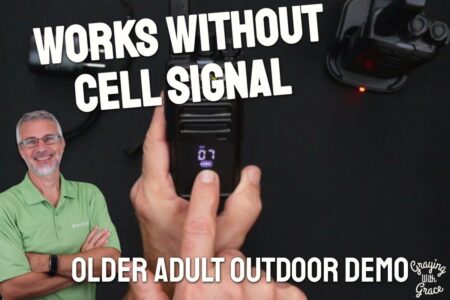
The Retevis RB48 FRS Walkie Talkies are designed precisely for situations like that. They work completely independent of cell towers, Wi-Fi, or any monthly service. As long as both units are on the same channel and within range, communication is instant.
These radios are also a smart solution for family outings at large festivals, state parks, or sporting events where crowds scatter and cell service gets congested. You can stay in contact even when everyone else’s phone is struggling.
For caregivers, the peace of mind is real. You can check in on a loved one doing yard work, taking a walk, or fishing at a pond without hovering. That balance — connection without crowding — supports independence for older adults and reduces anxiety for families.
Ready to discover more innovative strategies for healthy, comfortable aging? Subscribe to our newsletter for expert-tested tips and product recommendations designed specifically for older adults.
Important Details You Should Know
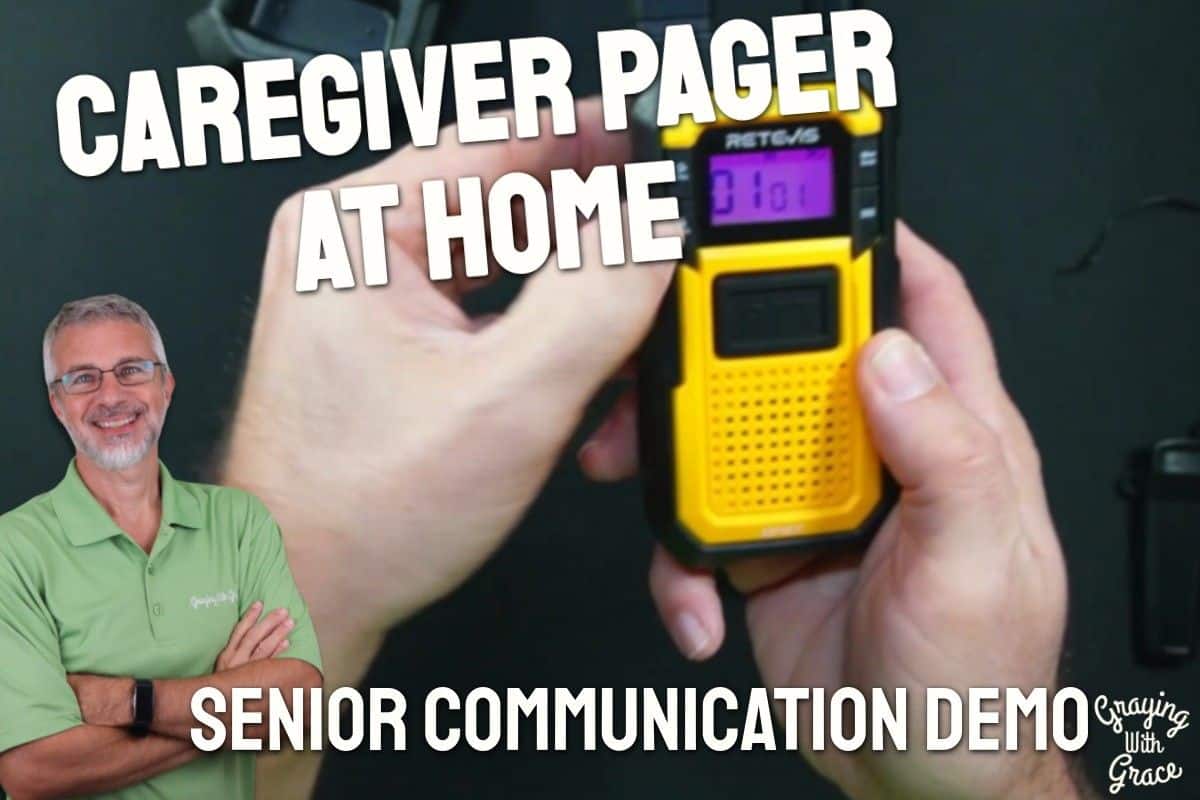
Each unit measures a bit larger than a basic consumer walkie talkie, but that extra size exists for a reason — it houses a bigger battery and more rugged internal construction. As I noted in the video, they feel solid and substantial in the hand, not flimsy or hollow.
They’re light enough to carry comfortably on a belt clip all day. If you prefer wearing one around your neck, the included lanyard works, though you may want to pick up a longer aftermarket lanyard for a more comfortable hang.
The bright yellow-orange color is intentional. It makes the radio easy to spot on a table, in a bag, or in the hand of a senior outdoors — a genuine safety feature, not just a design choice.
The silicone button covers and rubberized grip mean these feel secure even with wet hands, which matters if you’re gardening, fishing, or caught in a rainstorm. Build quality is noticeably above typical consumer-grade radios in this category.
Getting Started
As I demonstrated in the video, unboxing is straightforward. Inside the package you’ll find two walkie talkie units, a USB-C charging cable with a Y-splitter, a charging block, a docking charge station, two belt clips, two lanyards, and an owner’s manual.
The two units come pre-paired and ready to use right out of the box. There’s no app to download, no account to create, and no pairing sequence to fumble through.
When I evaluated this product, I noticed that attaching the belt clips requires removing two small screws and reattaching them through the clip — a simple process, but worth knowing ahead of time if you have limited hand dexterity. A family member or caregiver can handle that step easily in just a few minutes.
Charging is equally simple. In the video, you can see that setting the units in the docking cradle turns an indicator light red while charging and green when complete. You can also charge directly via the USB-C cable if you prefer — no cradle required.
Features That Matter to You
The most important feature for older adults is also the simplest: push-to-talk operation. When I evaluated this product, I noticed there are actually two push-to-talk button options — one on the front and one on the side — so you can use whichever grip feels more natural to you. The buttons are large, rubberized, and require minimal pressure, which matters if arthritis makes small touchscreens frustrating.
The Roger beep is a feature I genuinely appreciate for older adults, especially anyone with mild hearing loss. After you release the talk button, a short tone confirms your message was transmitted. No more wondering whether the other person heard you.
As I demonstrated in the video, the Retevis RB48 also announces channel numbers out loud when you cycle through them. If reading a small screen is difficult for you, that audio readout is a thoughtful touch that most competing radios skip entirely.
The built-in NOAA weather alerts automatically notify you of severe weather emergencies — no extra steps required. For older adults living in areas prone to storms, tornadoes, or flash floods, that feature alone could be critically important.
There’s also an SOS function that sends an emergency signal at the press of a button. It’s not a substitute for calling 911, but in a situation where verbal communication is difficult, sending a rapid alert to a caregiver holding the other unit is a meaningful safety layer.
Real Life Experience
In the video, you can see that the setup from box to working communication takes only a few minutes — and that’s including attaching the lanyards and placing the units in the charging cradle. There’s no frustrating pairing process, no password entry, nothing like that.
When I evaluated this product, I noticed the screen displays a bright, easy-to-read channel number with large digits. For anyone who struggles with tiny text on small screens, this is a welcome design choice.
The 20-hour battery rating is based on intermittent use — the natural pattern of talking, listening, and standby time throughout a day. As I explained in the video, the more you talk continuously, the faster you’ll use power, but a full day of normal outdoor activity on a single charge is very realistic. Pop them in the cradle overnight and they’re ready again by morning.
As I demonstrated in the video, these have been tested with over 1,000 drops from six feet onto hard surfaces and continue working perfectly afterward. That’s not a marketing claim — it’s documented engineering. Most of the customer reviews online back that up with their own drop stories.
Day-to-day maintenance is minimal. The sealed, silicone-covered design means there are no exposed ports to clean or protect during normal use. If they get muddy or wet, a quick rinse and wipe-down is all they need.
Will You Be Able to Use It?
If you can press a button and speak, you can use these walkie talkies. The operation is genuinely that simple for daily use — power on, confirm the channel matches, press the talk button, speak, and release.
The larger rubberized buttons are notably more accessible than touchscreens for older adults with arthritis or reduced finger strength. The physical knob on top controls power and volume, which is intuitive even for people who find menus confusing.
The menu settings — things like Roger beep, channel scan, and vibration — are available if you want to customize, but you absolutely don’t need to touch them for basic daily use. The default settings work fine right out of the box.
If someone has significant vision impairment, the channel announcement audio feature helps. For someone with severe dexterity limitations, attaching the belt clip or threading the lanyard may require caregiver assistance once during initial setup, but daily use after that is independent and easy.
Important Considerations
These radios are not the right fit for someone who needs real-time location tracking. They provide voice communication only — no GPS, no text messaging, no location sharing. If location monitoring is a primary need, a dedicated medical alert system or GPS tracker may be a better solution.
Range expectations need to be realistic. As I explained in the video, the rated range reflects open outdoor terrain with no obstructions. Inside a home with thick concrete or metal walls, range drops considerably. I strongly recommend testing the radios at your specific property before depending on them for safety communication.
For older adults with moderate to advanced dementia, the multi-button interface may cause confusion. A simpler single-button medical alert device may be more appropriate in those cases.
The IP67 waterproof rating is excellent for rain, splashes, and accidental drops in water, but these are not designed for extended submersion. Don’t plan on using them while swimming or kayaking in deep water.
Always consult with your doctor or occupational therapist before making health-related product decisions, particularly if you are evaluating communication tools as part of a broader safety plan.
Help When You Need It
Retevis has an established customer service presence. Verify the current warranty terms on the product page before purchasing, as warranty periods can change. If you experience a defect within the warranty window, manufacturer support is available.
The 2-pack structure itself is a built-in backup — if one unit has an issue, you aren’t completely without communication while it’s being resolved.
Replacement batteries are available if capacity degrades after years of heavy use, which is a reasonable expectation for any rechargeable lithium-ion battery over time.
Understanding the Cost
The Retevis RB48 FRS Walkie Talkies sit at a premium price point within the consumer walkie talkie category — but not an unreasonable one given what you’re getting. Military-grade certification, IP67 waterproofing, and a 20-hour battery are features that cheaper radios simply don’t offer.
The better comparison is total cost over time. Inexpensive walkie talkies that break after a year or two actually cost more across five years than a durable set you buy once. These are built to last, which matters when you’re buying safety equipment, not a toy.
There are no ongoing subscription costs, no monthly fees, and no service contracts. You buy them once and use them. That’s a meaningful long-term value compared to medical alert systems or cell-based tracking devices that charge monthly.
Making It Work for You
Before relying on these for safety communication, take them to the edges of your property or activity area and test the range. Know your reliable communication distance in your specific environment — not just the rated maximum.
Charge both units every evening as part of a routine, the same way you charge a phone. That habit ensures both radios are always at full capacity when you need them most.
If wearing the radio around your neck is more convenient than a belt clip, pick up a longer aftermarket lanyard. As I mentioned in the video, the included lanyard is a bit short for comfortable neck wear but works fine for other carry options.
Consider keeping one unit in a consistent, visible location — like a charging cradle on the kitchen counter — so it’s always easy to find in an emergency. The bright yellow color helps, but a designated spot removes any guesswork entirely.
If you want added audio privacy, a compatible earpiece can plug directly into the accessory port. That’s a great option for noisy environments or for older adults who prefer not to broadcast conversations in public.
Our Recommendation
The Retevis RB48 FRS Walkie Talkies earn a genuine recommendation from me, particularly for older adults living on larger properties and for caregivers who need dependable communication without relying on cell coverage.
The combination of simple push-to-talk operation, big rubberized buttons, 20-hour battery life, and proven drop-and-water resistance makes these well-suited to the way older adults and families actually use communication tools in the real world.
If your primary need is GPS location tracking, text communication, or a medical alert response system, look elsewhere — these don’t offer those features. But for reliable voice communication that works anywhere, requires no monthly fees, and won’t shatter the first time it gets dropped? These are a strong choice.
Emergency preparedness households should absolutely consider these. The NOAA weather alert feature and complete independence from cell infrastructure make them valuable additions to any emergency kit.
Where to Get It
You can check current pricing and availability for the Retevis RB48 FRS Walkie Talkies on Amazon. The 2-pack ships ready to use with everything you need included.
Conclusion
Staying connected with the people you love — and having a reliable way to call for help when you need it — is one of the most practical investments in safety and independence an older adult or caregiver can make.
The Retevis RB48 delivers on its core promise: rugged, simple, no-fuss communication that works when and where cell phones don’t. After my hands-on evaluation, I’m confident these belong in the tool kit of any family that takes safety seriously.
Have questions about how walkie talkies might work in your specific situation? Drop them in the comments below — I read every one and I’m happy to help you figure out if these are the right fit for your needs.