
You’re sitting across from your mom, and the photo album is right there on the coffee table. You don’t know what to say. She doesn’t seem to recognize the room she’s been living in for three years. The silence is heavy.
What you don’t know yet is that album might be the most powerful tool available to you right now — and it costs nothing.
If dementia caregiving has ever left you feeling helpless, like you’re losing someone who is still right in front of you, you are not alone.
That feeling is real, and it is exhausting. But there is a clinically supported approach called reminiscence therapy, and the tools it requires are almost certainly already in your home. Let me show you exactly how to use it.
What Reminiscence Therapy Actually Is — And Why Researchers Are Paying Attention
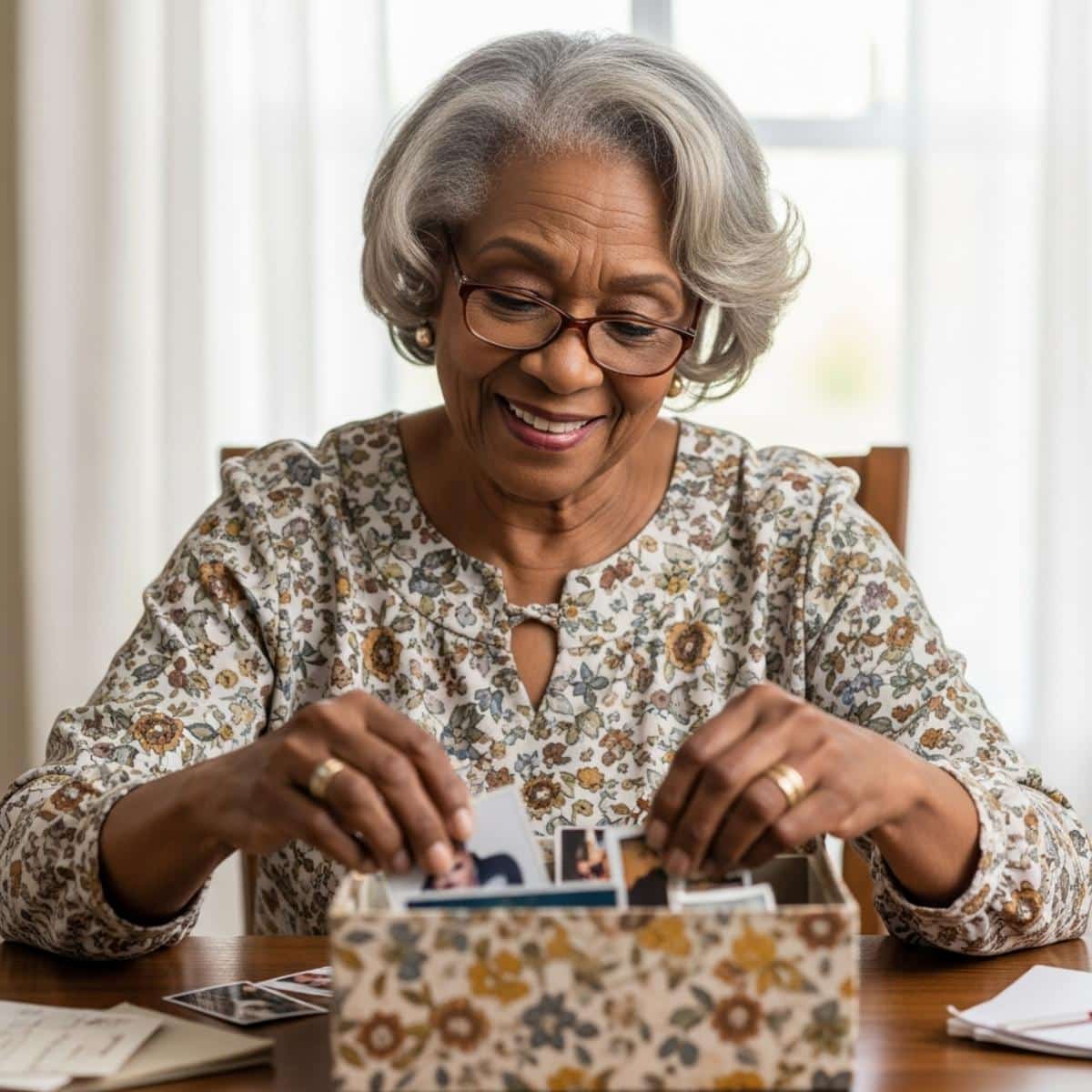
Reminiscence therapy is not a folk remedy or a creative distraction. It is a structured, research-backed approach that uses photos, music, familiar objects, and personal life history to stimulate long-term memory and emotional connection in people living with dementia.
Researchers consistently report three meaningful outcomes from reminiscence therapy:
- Reduced agitation and anxiety during and after sessions
- Improved mood and emotional wellbeing that can last hours beyond the session itself
- Stronger connection between caregiver and the person receiving care
Here is the neurological reason this works: dementia tends to erode short-term memory first, while long-term memory — especially memories tied to strong emotion — often remains more accessible for much longer. Reminiscence therapy works with that reality instead of fighting it.
There are two forms. Formal reminiscence therapy is facilitated by trained professionals in clinical or memory care settings. Informal reminiscence activities are something any family member can facilitate at home, today, without any special training or certification.
This is not about helping your loved one remember. It is about meeting them where their memory still lives — and finding each other there.
For caregivers who want to extend this beyond structured sessions, digital photo frames like those from Aura or Nixplay can rotate familiar images throughout the day, keeping visual triggers present in your loved one’s environment even when you are not there.





Building a Life Story Box — A Simple Afternoon Project That Changes Everything

A Life Story Box is one of the most effective reminiscence tools a caregiver can build. It is a physical collection of personally meaningful items from your loved one’s past, and it takes a single afternoon to assemble.
What to Include
- Photographs organized by era: childhood, young adult years, working years, family milestones
- One or two tactile objects: a familiar keepsake, a small tool they once used, a piece of fabric they’d recognize
- A handwritten note in a familiar handwriting
- A familiar fragrance if possible — a scent linked to a specific memory
How to Build It
- Gather photos from family members — anyone who has prints sitting in boxes
- Organize them loosely by decade, not in any rigid order
- Add two or three small objects with genuine personal meaning
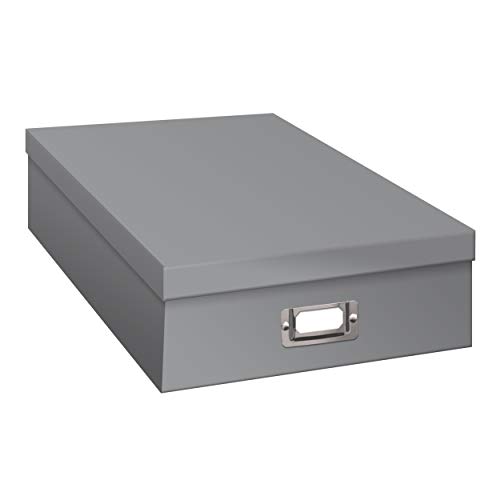
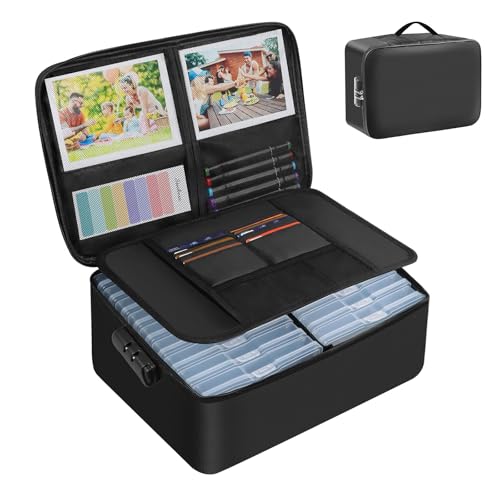
- Store everything in a shoebox, binder, or decorative box that is easy to access during visits
Family members who live at a distance can contribute by mailing photos or scanning and printing images to include.
The difference between a visit without a plan and one where you open a Life Story Box together is significant. The objects do the talking when words are hard to find. A photo from a summer job, a keychain from a favorite car, an old recipe card — any of these can open a 20-minute conversation that leaves both of you feeling genuinely connected.
You are not trying to quiz your loved one. You are creating a bridge back to moments where they feel known and at home.
For caregivers who want a version of this that runs automatically throughout the day, Memoryboard functions as a digital reminiscence tool that displays rotating familiar photos on a dedicated screen — essentially a curated Life Story Box that works even when you are not present.




If you are also navigating questions about the right care setting for your loved one, understanding the difference between memory care and skilled nursing facilities can help you make that decision with clarity rather than in crisis.
A 20-Minute Session Framework Any Family Member Can Follow

You do not need clinical training to run a reminiscence session. You need a simple structure, genuine curiosity, and a willingness to follow your loved one’s lead.
The Three-Part Framework
Open (2–3 minutes)
- Settle in somewhere comfortable and quiet
- Reduce background noise — turn off the television
- Offer something warm to drink
- Introduce a photo or object without pressure: “I found this picture and thought you might enjoy seeing it.”
Explore (12–15 minutes)
- Ask open-ended, feeling-based questions:
- “What do you remember about this place?”
- “Who made you feel happy when you were young?”
- “What was that like for you?”
- Never quiz for facts. Never ask “Do you remember when…?”
- Follow their energy. If something sparks interest, stay there longer.
- If emotion comes up, allow it. Do not redirect or rush past it.
Close (3–5 minutes)
- Acknowledge what was shared: “I really loved hearing about that.”
- Avoid abrupt endings — give a minute or two to wind down gently
- Leave on a warm, unhurried note
Why Shorter, Consistent Sessions Work Better
A 20-minute session three times a week will outperform a 90-minute session once a month. Frequency builds familiarity and comfort. Shorter sessions also reduce fatigue for your loved one and for you.
There is no such thing as a failed reminiscence session. If your loved one smiles, grows calm, or speaks even a few words, something meaningful happened.
Want more practical, caregiver-tested strategies like this delivered to your inbox each week? Subscribe to the Graying With Grace newsletter for trusted guidance designed specifically for family caregivers and older adults.
The science behind this approach also connects to broader research on how family connection functions as medicine for seniors — reducing inflammation, improving emotional wellbeing, and supporting cognitive health in measurable ways.
The Most Powerful Memory Trigger Most Caregivers Overlook

Music consistently unlocks memories and emotional responses more powerfully than almost any other stimulus — and it is completely free to access.
The reason comes down to what researchers call the “reminiscence bump.” The music a person heard between the ages of roughly 15 and 25 was encoded during a period of heightened emotional intensity. Those memories are often among the most durable in the brain, even as dementia progresses.
How to Use Music in Your Sessions
- Identify the decade of your loved one’s youth. If they were born in 1942, their peak music years were roughly 1957 to 1967.
- Search Spotify or YouTube for playlists from that era. Search terms like “1960s hits,” “songs from 1958,” or “early Motown” will surface ready-made playlists immediately — no subscription required for basic YouTube access.
- Play it softly in the background before you begin a session. Let it set the emotional atmosphere before you introduce any photos or objects.
- Let a specific song open a conversation. You do not need a playlist curated by a music therapist. Three or four songs from the right era are enough to see what opens up.
Signs That Music Is Connecting
- A shift in facial expression
- Humming or singing along, even partially
- Tapping fingers or feet
- Spontaneous speech about a memory
A visit that begins with a familiar song playing softly creates a fundamentally different emotional atmosphere than one that begins in silence or with a television in the background. Try it once and you will understand why music therapists consider it one of their most reliable tools.



This approach pairs naturally with the session framework above and works just as well whether you are visiting in person or setting up a playlist on a device your loved one can access independently. For caregivers thinking about how to reduce senior loneliness and isolation through structured memory engagement, the research on reminiscence activities offers a clear and hopeful path forward.
The One Mistake That Shuts Down Reminiscence Conversations — And What to Do Instead

The single most common error family caregivers make during reminiscence conversations is correcting factual inaccuracies — and it immediately closes the door that reminiscence therapy is trying to open.
Your loved one misremembers a name. They blend two different memories together. They describe something that could not have happened quite that way. Your instinct is to gently correct them.
Do not.
Correction signals to the person with dementia that they have failed. It creates shame, withdrawal, and agitation — the exact opposite of what you are trying to build.
What to Do Instead
Follow the emotional truth rather than the factual accuracy. If your loved one speaks warmly about a memory, even an imperfect one, that warmth is real and worth honoring.
Replace correction with curiosity:
- “Tell me more about that.”
- “That sounds like a wonderful time.”
- “What was that like for you?”
- “I love hearing you talk about that.”
These phrases keep the conversation alive. They validate your loved one’s experience without requiring accuracy. They signal that you are here to connect, not to test.
In reminiscence therapy, emotional truth matters more than factual accuracy. Your loved one’s feelings about their memories are always valid, even when the details shift.
This principle also applies broadly to how you communicate during caregiving. Understanding what senior care centers actually do — and the questions that reveal quality care can help you advocate more effectively if and when your loved one’s needs change.
For caregivers managing the full weight of this journey, understanding how an unsafe home affects a senior’s brain and body is another dimension of care worth addressing — because the environment your loved one lives in shapes their emotional baseline every single day.
Start Today: One Photo, One Song, One Connection
Reminiscence therapy is not a clinical procedure reserved for specialists. It is a structured, compassionate approach that any caregiver can begin using today — with a photo album, a box of old keepsakes, and a playlist from the right decade.
Chooser to sit down with a Life Story Box or a familiar song is not a small gesture. Research consistently shows it improves quality of life for people living with dementia. It reduces agitation. It strengthens connection. And it gives you something real and meaningful to offer on the days when everything else feels out of your hands.
Pick one element from this article. One photo. One song. One open-ended question. Try it during your next visit.
Then come back and share what happened in the comments. Your experience might give another caregiver the courage to try it too.
And if you are navigating the harder conversations around dementia care decisions — including how to talk with your loved one about safety concerns at home — know that you do not have to figure it all out at once. One connection at a time is enough.