![Keep adult child parent caring conversation couch[1]](https://www.grayingwithgrace.com/wp-content/uploads/2026/05/keep-adult_child_parent_caring_conversation_couch1-e1778617175987.jpg)
Most people only think about home safety after something goes wrong. A fall. A close call. A frightening phone call from across the country.
But the real damage starts long before any of that — quietly, invisibly, in the daily friction of navigating a home that isn’t quite right.
If you’ve noticed a parent hesitating at the top of the stairs, or you’ve caught yourself gripping a towel bar that isn’t anchored, you’ve already felt it. You just may not have had a name for it.
I’ve spent more than 20 years working with older adults and their families. What I’ve seen repeatedly is this: the home environment is one of the most powerful — and most overlooked — influences on a senior’s brain health, physical vitality, and emotional wellbeing. And the good news is that the fix is often faster and simpler than most people expect.
Your Home Is Sending Stress Signals to Your Brain — Even When You Don’t Notice
An unsafe home doesn’t just create physical risk. It creates a low-level, chronic stress response that quietly erodes memory, sleep, and cardiovascular health.
Here’s what’s happening beneath the surface.
When your brain perceives environmental uncertainty — uneven floors, dim hallways, cluttered pathways — it interprets that uncertainty as a potential threat. The result is a low-grade cortisol response, triggered not by a single dramatic event but by dozens of small navigational calculations happening every single day.
Over time, chronically elevated cortisol affects memory consolidation, disrupts sleep architecture, and places measurable strain on the cardiovascular system. In older adults, whose stress-recovery systems are already working harder, this accumulation matters.
What makes this particularly difficult to catch is that it operates below conscious awareness. Seniors often don’t feel anxious. They feel tired. Foggy. Less motivated. The unsafe home doesn’t announce itself — it just slowly drains the energy needed to fully engage in life.
Think about two versions of the same morning. In one, the path from bedroom to kitchen is clear, well-lit, and familiar. Movement feels easy. In the other, every step requires a small mental calculation — is that rug going to shift? Is this enough light? Can I grab something if I lose my balance?
The second scenario is exhausting in ways that compound over months and years. Home safety isn’t just about preventing falls. It’s about protecting the mental and physical energy seniors need to live fully.


The Shrinking World Problem Nobody Talks About
When one area of the home feels unsafe, something predictable happens: people stop using it.
That sounds minor. It isn’t.
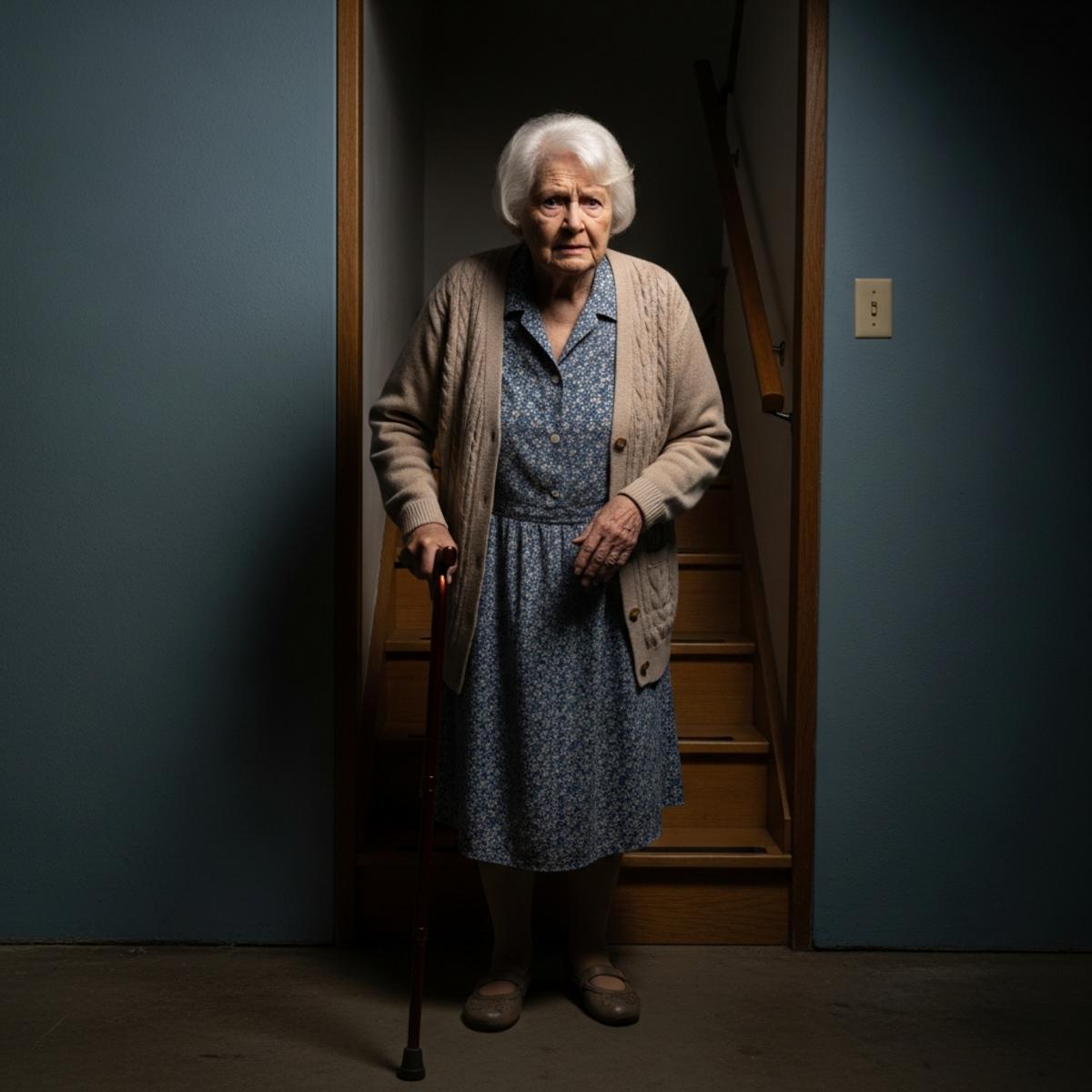
I’ve seen it dozens of times. A senior stops going down to the basement laundry room because the stairs feel unsteady. At first, it’s just laundry that piles up. But that avoided staircase quietly expands. She stops doing things that require those stairs. She starts feeling slightly less capable. That feeling bleeds into other areas.
This is what researchers call the activity restriction spiral — and it’s one of the most underappreciated dynamics in senior health. Avoiding one unsafe area leads to avoiding adjacent activities. That reduced movement accelerates physical deconditioning. Deconditioning makes more areas feel harder to navigate. The spiral tightens.
Studies consistently show that seniors living with unaddressed home safety concerns are significantly more likely to experience depression and social withdrawal — not because of their health conditions, but because their environment has quietly narrowed their world.
This is why understanding what to do after a senior experiences a fall is only part of the equation. The more important work is interrupting the spiral before it starts.
Addressing the unsafe area isn’t about accommodating decline. It’s about keeping the world from shrinking.
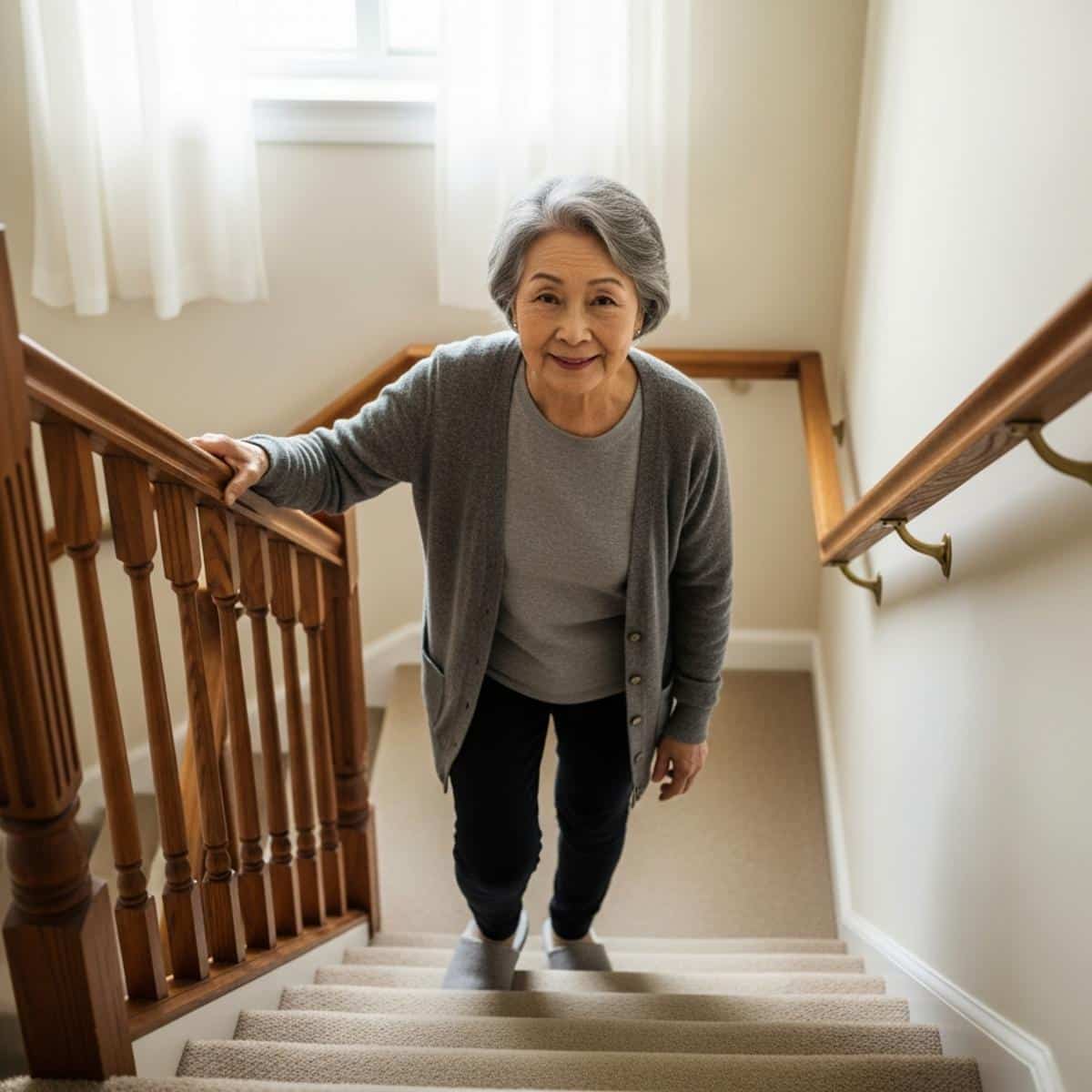
What Poor Lighting Is Doing to Sleep, Balance, and Nighttime Safety
Lighting is one of the most underestimated factors in senior health — and it affects far more than just visibility.
Here’s what inadequate lighting actually does:
It Disrupts Depth Perception and Balance
As we age, our visual acuity changes. The brain needs more contrast and more light to accurately judge distances and surface changes. Dim environments force the brain to compensate — and that compensation costs energy and increases the margin for error on every step.
It Interferes With Sleep
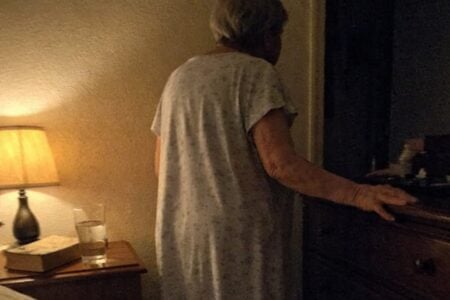
Nighttime bathroom trips are one of the highest-risk moments in a senior’s daily routine. When a senior wakes at 2 a.m. and flips on a harsh overhead light to navigate to the bathroom, that light exposure disrupts melatonin production and makes returning to sleep harder. Poor sleep the following night increases fatigue, which increases fall risk the next day. It’s a compounding cycle.
It Creates Compounding Risk
A senior who sleeps poorly is less alert. A less alert senior navigates their home less carefully. A home navigated less carefully creates more close calls. More close calls create more anxiety. More anxiety means more stress hormones. More stress hormones disrupt sleep further.
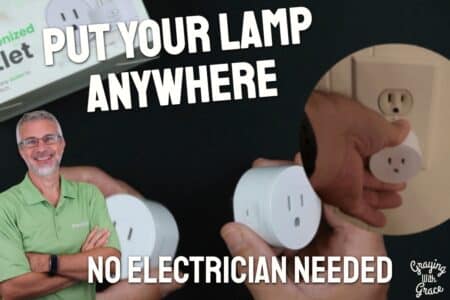
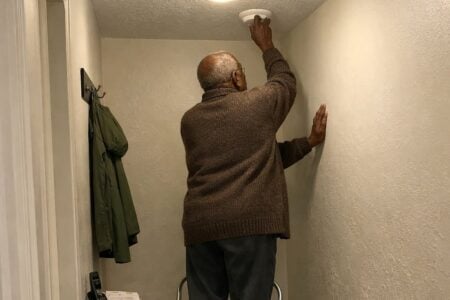
Soft, motion-activated nightlights placed in hallways and bathrooms interrupt this cycle at the source. They provide enough light to navigate safely without triggering the melatonin-disrupting brightness of overhead fixtures — and they require no effort from someone who is half-asleep.
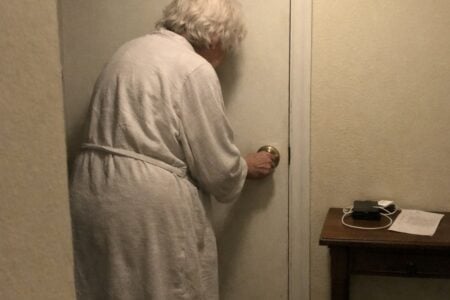
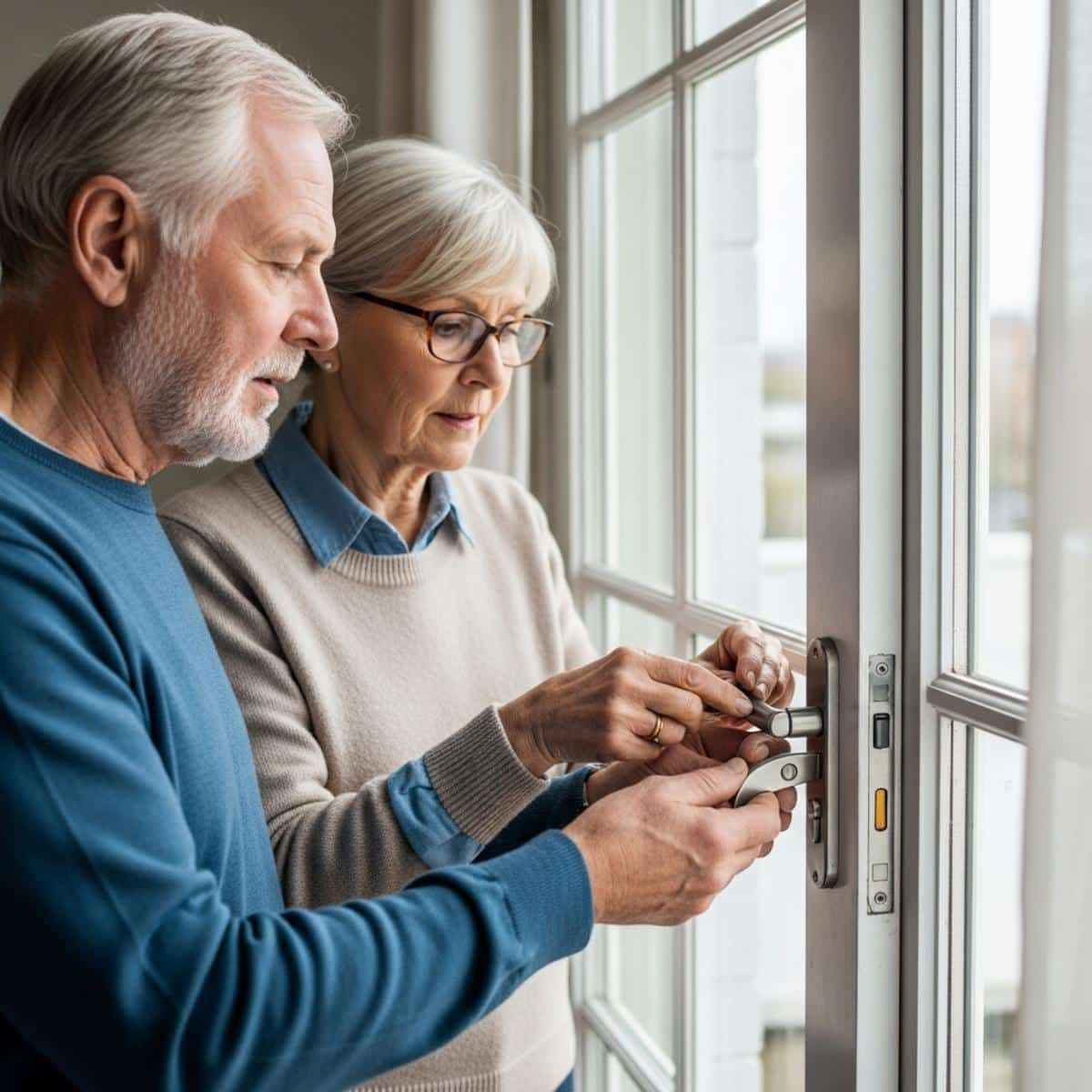
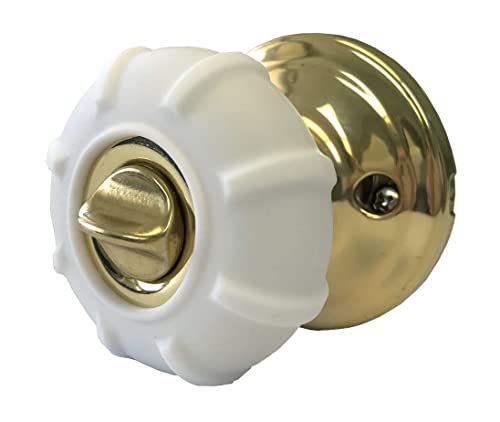
Small changes in lighting are also a natural companion to other low-effort modifications — like replacing round doorknobs with lever-style handles that reduce the grip strain that slows seniors down during nighttime navigation.



Want more practical, expert-tested home safety strategies delivered straight to your inbox? Subscribe to our newsletter for trusted recommendations designed specifically for older adults and the people who care for them.
The 5 Zones That Matter Most — And the Order That Matters
You don’t need to overhaul an entire home. When I work with families on home safety, I assess five specific zones first — in a specific order — because that sequence follows the routes seniors travel most frequently and during their highest-risk moments.
The 5 Priority Zones (In Order)
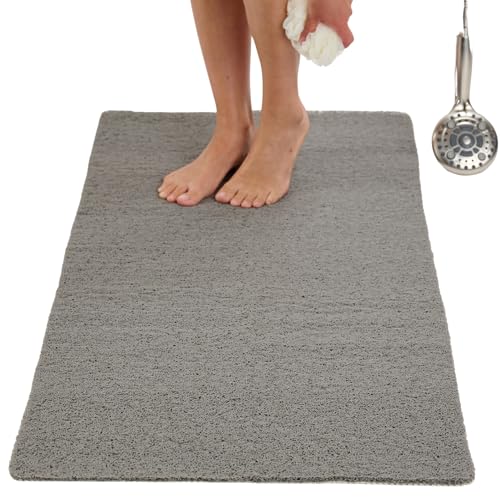
- Bathroom — Wet surfaces, awkward transfers, and nighttime vulnerability make this the single highest-risk room in the home. A weighted, non-slip bath mat is one of the fastest, most impactful changes you can make here.
- Bedroom-to-bathroom path — This route is traveled multiple times nightly, often in low light and reduced alertness. Motion-activated lighting and clear pathways matter most here.
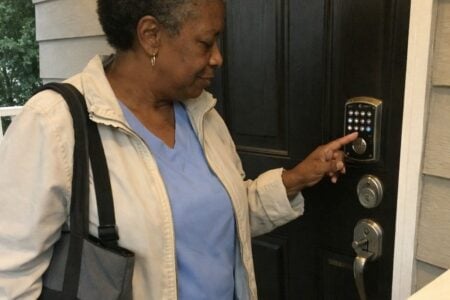
- Main entrance and exit — Transitions between outdoor and indoor surfaces, thresholds, and steps at entry points are common sites for falls and close calls.
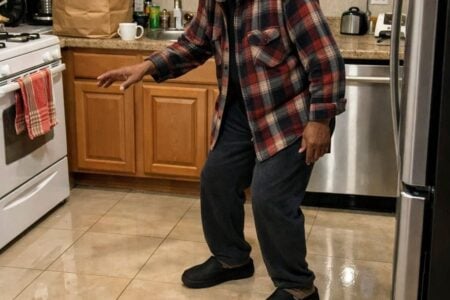
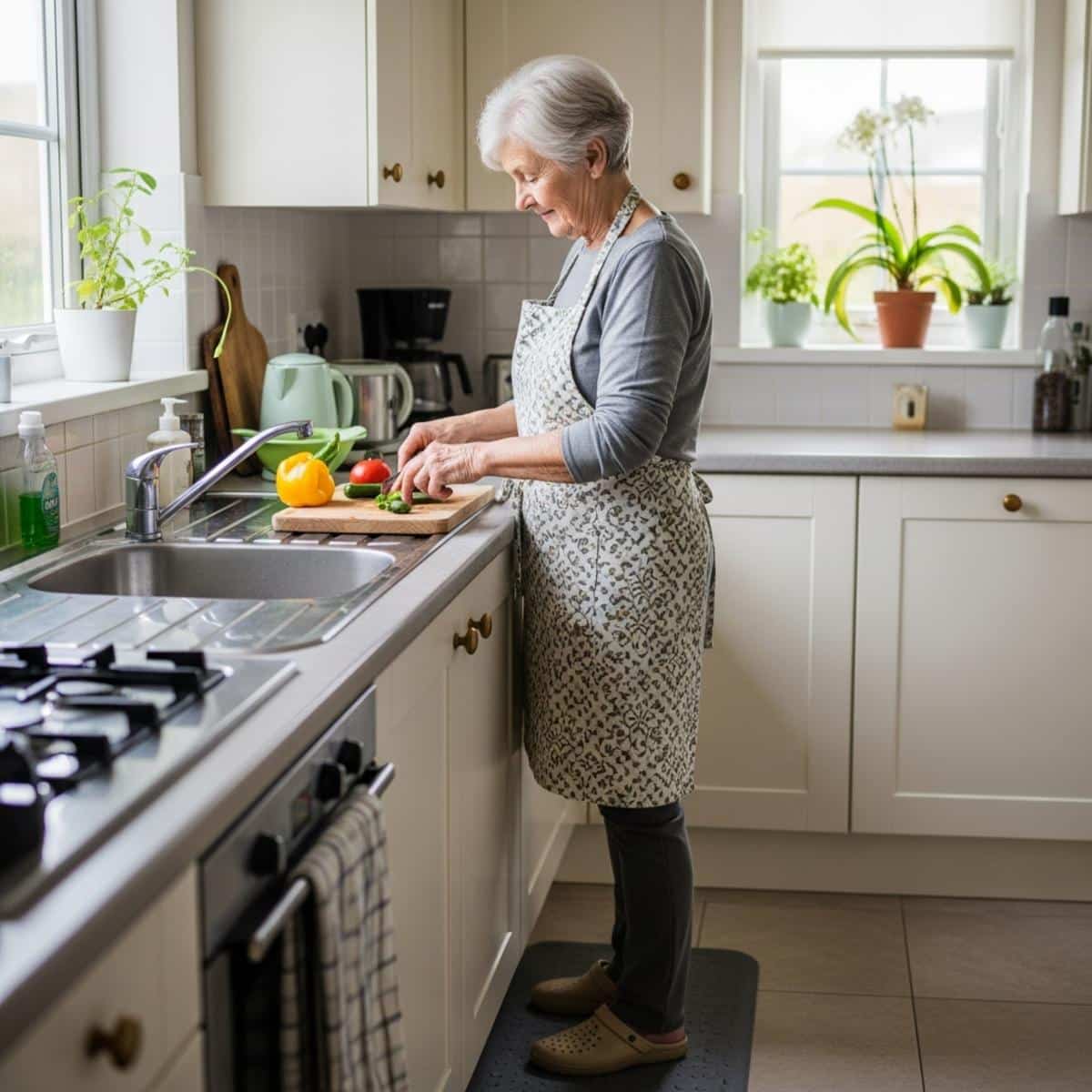
- Kitchen — Reaching, bending, and wet floors create daily friction. Cabinet organizers that reduce overhead reaching and non-slip mats near the sink address the most common hazards.
- Primary staircase or step transitions — This includes any single step between rooms or levels, which is a frequently overlooked hazard.



The ‘Trip Hazard Triangle’
Most falls don’t happen in the most obvious places. They happen in a predictable three-point pattern:
- Flooring transition zones — Where carpet meets hardwood, or tile meets vinyl
- Furniture edge areas — The space immediately adjacent to chairs, tables, and beds
- Low-traffic corners — Where clutter naturally accumulates and gets forgotten
For caregivers supporting a loved one through mobility changes, tools like bed assist rails for easier sit-to-stand transitions address the furniture edge hazard directly — one of the most common and preventable fall moments.
The distinction worth making: non-slip mats, motion nightlights, cabinet organizers, and removable bed rails are DIY changes you can make today. Stair handrails and anchored grab bars are worth professional installation — but they don’t have to happen first. Start with the quick wins.
The 15-Minute Audit — And How to Talk About It With Someone Who Doesn’t Think They Need It
The audit itself takes 15 minutes. The harder part, for most caregivers, is the conversation that comes before it.
The 15-Minute Walkthrough
Move through each of the five zones in order. In each zone, look for three things specifically:
- One lighting gap
- One flooring or transition hazard
- One place where a grip point is missing or unreliable
That’s it. You’re not trying to identify every possible risk. You’re identifying the highest-friction points — the places where the daily mental and physical load is greatest. Addressing three to four of these makes an outsized difference.
For seniors doing this independently: this is an act of home stewardship, not an acknowledgment of vulnerability. You’re taking charge of your environment, the same way you’d service a car before a long trip. Managing your own home with intention is one of the most powerful ways to protect your independence.
For Caregivers: Language That Actually Works
The most common mistake caregivers make is arriving with a mental checklist of everything that looks risky. That approach puts seniors on the defensive immediately.
What works better: ask your parent to walk you through their morning routine. Let the friction points surface through conversation, not inspection.
Language that preserves autonomy and opens the conversation:
- ‘I want you to have the energy for the things you enjoy — can we look at a couple of spots together?’
- ‘I read something interesting about how lighting affects sleep. Can I show you something that might help?’
- ‘I’m curious about your morning routine — can you walk me through it?’
What to avoid:
- Pointing out risks without asking permission
- Framing any change as something that’s ‘needed’
- Arriving with solutions before you’ve listened
If you’re navigating a situation where a loved one is resisting help, understanding how to support senior independence while still advocating for safety starts with meeting them where they are — not where you think they should be.

The Brain and Body Consequences Are Real — And So Is the Fix
The science is clear: an unsafe home creates chronic stress, accelerates physical deconditioning, disrupts sleep, and quietly narrows a senior’s world — often long before any dramatic event occurs.
But here’s what that science also tells us: environments can be changed. And when they are, the benefits are immediate and compounding.
Better sleep. Less cognitive load. More physical confidence. A world that feels larger, not smaller.
Whether you’re a caregiver who has been quietly worried for months, a professional looking for a sharper framework for family conversations, or an older adult who simply wants to protect the independence you’ve worked hard to maintain — the 15-minute audit is your starting point.
Pick one zone. Spend five minutes in it right now. Identify the one friction point that’s been quietly draining energy.
That’s the first act of genuine care. Everything else follows from there.
What zone came to mind first while reading this? Share what you found — or what change you made — in the comments below. Your experience might be exactly what another reader needs to hear.