You keep telling yourself “not yet.”
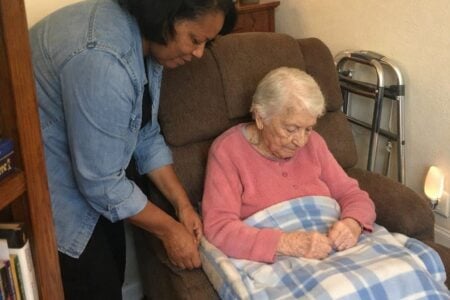
You watch your parent struggle to button their shirt, forget whether they’ve taken their medication, or grip the counter just to cross the kitchen. You lie awake running the same loop—Is it time? Am I missing something? What if I’m wrong?
You’re not looking for a reason to give up on them. You’re looking for a sign that you’re doing right by them.
The guilt, the uncertainty, the fear of getting this wrong—those aren’t signs that you care too little. They’re signs that you care so much that the decision feels impossible to make clearly.
This checklist is designed to cut through that emotional fog. It won’t make the decision for you. But working through these nine questions—honestly, and ideally with your family or a care professional—will give you a much clearer picture of what’s actually happening.

How to Use This Checklist
This isn’t a verdict. It’s a conversation tool.
No single question here signals that a transition is required on its own. What matters is the pattern across multiple questions—and whether that pattern has been building over weeks or months, not just during one difficult stretch.
Go through this list with your spouse, a sibling, or the care professional who knows your parent best. Caregivers often explain away individual warning signs to avoid the painful conversation ahead. A shared framework makes that harder to do.
It also helps to understand where assisted living fits in the broader picture: most families move through a continuum of care—in-home support → assisted living → memory care → skilled nursing. Assisted living is not the end of the road. It’s often the step that prevents a crisis from forcing a harder decision later.
Using a checklist isn’t cold or clinical. It’s one of the most loving things you can do—because it means you’re taking your parent’s real needs seriously instead of managing your own discomfort.

Questions 1–3: Safety Inside the Home
When the home itself becomes a source of danger, that’s one of the clearest signals that more support is needed.
Question 1: Has your parent had a fall, near-fall, or unexplained injury in the last six months?
Falls are one of the leading triggers for accelerated care transitions. What happens after a senior falls matters enormously—but a pattern of falls, near-misses, or unexplained bruises signals a safety environment that home modifications may no longer adequately address.
One fall is concerning. A recurring pattern is a signal that deserves serious attention.
Question 2: Are basic activities of daily living becoming unsafe or going undone?
Bathing, dressing, preparing meals, managing medications—distinguish between occasionally needing help and being unable to complete these tasks safely or consistently.
Skipped medications, dishes piling up, wearing the same clothes for days in a row—these are observable facts, not impressions.
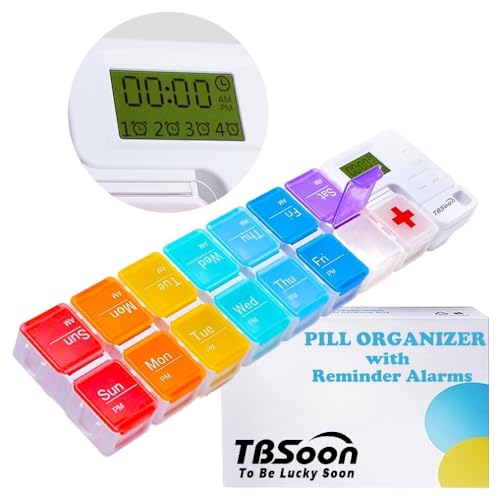
Families often start with tools like pill organizers and structured medication reminders to manage the medication piece. When those stop being enough, it’s a sign that the underlying challenge has grown.




Question 3: Is the home becoming a hazard in ways that can’t be reasonably modified?
Some homes—multi-story layouts, cramped bathrooms, difficult entryways—present structural barriers that grab bars, non-slip bath mats, and bed rails cannot fully solve.
When the physical environment keeps presenting new risks despite your best modifications, that’s a pattern worth documenting.




Questions 4–6: Medical Complexity and Cognitive Changes
When the level of medical oversight required exceeds what family caregivers can safely provide, the conversation about assisted living becomes necessary—not optional.
Question 4: Are medical needs becoming too complex to manage at home?
Managing multiple prescriptions, chronic conditions, wound care, or post-hospitalization recovery can exceed what family members are realistically equipped to handle safely—even with professional in-home support.
Assisted living communities have licensed nursing staff and structured medication management built in. That’s not a luxury. For many families, it’s a safety requirement.
Question 5: Have there been two or more hospitalizations or ER visits in the past year?
Recurring hospitalizations often signal that the current care arrangement isn’t adequately managing an underlying situation.
This pattern—not any single event—is a meaningful indicator that something in the current setup isn’t working.
Navigating a parent’s care transition is one of the hardest things a family faces. Subscribe to the Graying With Grace newsletter for trusted guidance, practical tools, and compassionate support—delivered weekly to caregivers who are doing their best.
Question 6: Are you noticing signs of cognitive decline that create safety or supervision concerns?
There’s a meaningful difference between normal forgetfulness and changes that affect judgment, safety awareness, or the ability to be left alone.
Getting lost in familiar environments, leaving the stove on, or becoming confused about time and place are observable, documentable signals—not just impressions. Understanding the difference between memory care and standard assisted living options becomes critical here, because the right level of care depends on the specific nature of the cognitive changes you’re seeing.






Questions 7–8: Social Isolation and Emotional Wellbeing
Loneliness and withdrawal aren’t inevitable parts of aging. They’re warning signs that the current living situation may no longer be meeting your parent’s emotional and social needs.
Question 7: Has your parent become significantly isolated or stopped engaging in activities they once enjoyed?
Social isolation is as dangerous to health as many physical conditions. Research consistently links it to accelerated cognitive decline, depression, and reduced longevity.
If your parent has stopped calling friends, given up hobbies, or rarely leaves the house, the current living arrangement may be deepening their isolation rather than protecting them. The health benefits of consistent family connection and social engagement are well-documented—and when those connections fade, the consequences are real.
Question 8: Is your parent expressing loneliness, fear, or feeling like a burden?
This is one of the most painful things a caregiver can hear—and one of the most important signals to take seriously.
An assisted living community offers structured social opportunities, planned activities, and consistent peer interaction that family caregivers—stretched across work, children, and their own health—cannot replicate on their own.
Choosing a community where your parent has daily social engagement and peer connection is not placing them somewhere. It is connecting them to something.

Question 9: The One Sign Caregivers Almost Always Skip
This is the question most adult children instinctively set aside as irrelevant. It isn’t.
Question 9: Is caregiving affecting your own health, relationships, or ability to function?
Caregiver burnout is not a character flaw. It is a predictable outcome of providing care without adequate support.
Observable signs include:
- Disrupted sleep, night after night
- Missing your own medical appointments
- Strained relationships with your spouse or children
- Declining performance at work
- Persistent anxiety, irritability, or depression you can’t shake
Here’s the hard truth: a burned-out caregiver cannot provide safe, attentive care. Your declining health is not a separate problem from your parent’s care—it is part of the caregiving picture.
A caregiver who dismisses their own exhaustion as irrelevant isn’t being selfless. They’re operating on a reserve that’s running out. Getting your parent into the right supported environment is what allows you to show up as a loving, present son or daughter—rather than an overwhelmed, depleted one.
Protecting your own health is not selfish. It is one of the most responsible caregiving decisions you can make.

What to Do After the Checklist
No single “yes” on this list makes the decision for you. But when three, four, or five of these questions are answered honestly with “yes”—and that pattern has been building for weeks or months—that deserves a serious family conversation, not another round of “let’s wait and see.”
Use this checklist as a family alignment tool. When siblings or spouses are each reacting from their own emotions, a shared framework gives everyone a neutral starting point. The pattern across the list speaks more clearly than any one person’s feelings in the moment.
The question that feels hardest to answer honestly is the one that deserves the most attention. Most families can identify one question they keep brushing past. That’s usually the one that matters most.
This decision is not about giving up on your parent. It is about ensuring they have the level of care, safety, and connection that your love for them demands. The fact that you’re asking these questions at all is proof of how seriously you’re taking your responsibility to them.
Print or screenshot this checklist. Go through it together with your family or care team. And if you want to understand more about what different care settings actually offer, knowing what senior care centers actually do before you start touring communities will make every conversation you have more productive.
When you’re ready to take the next step, you won’t be doing it because you gave up. You’ll be doing it because you finally saw clearly—and chose accordingly.
Which question felt most difficult to answer honestly? Share it in the comments. That one deserves the most attention—and you don’t have to work through it alone.