
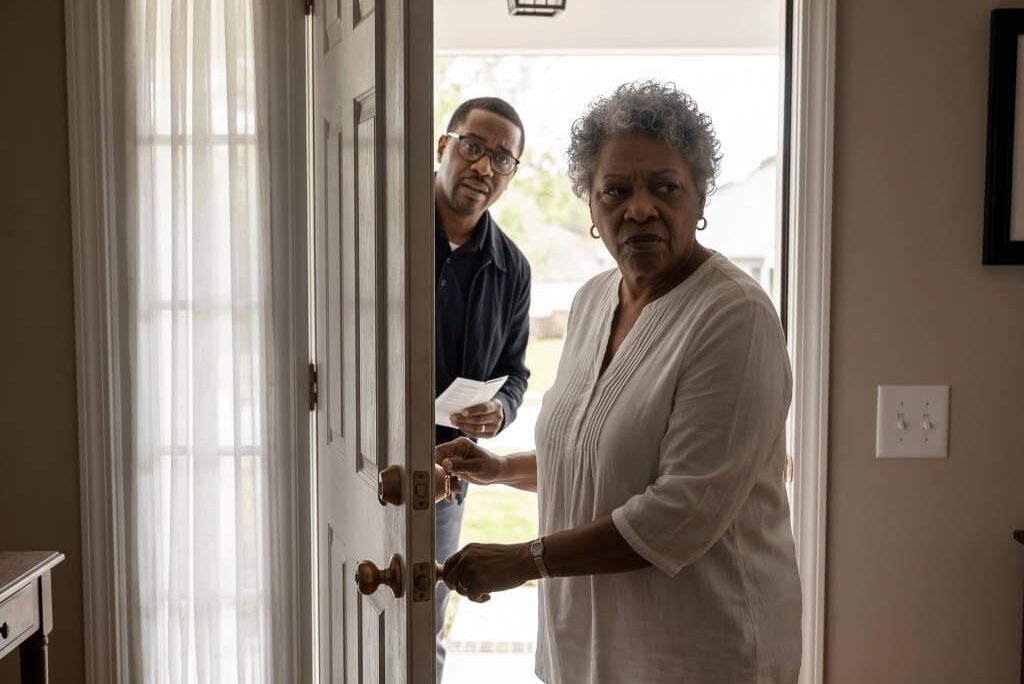
It’s a warm summer afternoon. You’re inside with the windows open when you hear a knock at the door. A man in a clean polo shirt is standing on your porch, pointing up at your roof. He says he noticed some loose shingles while finishing a job down the street — just wanted to give you a heads-up. He’s offering a free inspection. No obligation. He seems genuinely helpful.
It feels neighborly. It might be the oldest scam running.
These contractors aren’t bumbling amateurs. They’re professionals who have rehearsed their approach, chosen their neighborhoods deliberately, and perfected a pitch designed to feel like a favor. Being approached doesn’t say anything about you — it says you own a home. And that’s all they needed to know.
By the end of this article, you’ll know exactly what they say, exactly what to watch for, and exactly what to do — whether you’re reading this before anyone knocks, or after something has already been signed or paid.
Summer is peak season for these scams. Let’s get ahead of it.
The Front Door Defense: A Home Repair Scam Protection Checklist for Homeowners
Download this straightforward, printable checklist to confidently protect yourself from door-to-door contractor scams—with a simple five-minute verification system that eliminates fraudulent contractors before they ever step foot on your property.
The Door-Knock Script: What Scammers Say (And How to Recognize It)
These aren’t strangers fumbling through an awkward pitch. They use pressure-tested scripts designed to create urgency and bypass your natural caution before you’ve had a chance to think.
The “Storm Damage” Approach
The most common opening line sounds almost identical no matter who’s delivering it:
“I was just working a few houses down and noticed your roof took some damage from that last storm. I’d hate to see it get worse before winter. We can take a quick look — no charge, no obligation.”
It sounds considerate. It sounds like something a good neighbor might say. That’s not an accident.
Phrases That Should Stop You Cold
Listen for these specific lines — they appear in scam pitches again and again:
- “Your insurance will cover this — you won’t pay a dime.”
- “I can only hold this price today. We have another job starting Monday.”
- “I just want to protect you before it gets worse.”
- “We have leftover materials from another job nearby, so we can do it cheaper.”
That last one often shows up in driveway sealing scams: a crew with a truck full of asphalt offers to seal your driveway at a steep discount because they have “extra” from a job around the corner. The offer disappears the moment you ask for time to think.
Why These Scripts Work
They mimic the behavior of genuinely helpful tradespeople. A real contractor might also notice damage on a home and mention it. The difference is what happens next.
A legitimate roofing company leaves a business card, offers a written estimate, and follows up when it’s convenient for you. A scammer is standing on your porch asking for a signature before he leaves.
The pressure is the tell. That urgency you feel in the moment — that’s the scam working. Now you know what it feels like.
Your Go-To Response
If someone knocks uninvited offering a free inspection, you can say this:
“I don’t make decisions at the door. Leave your license number and company name, and I’ll call you back.”
A legitimate contractor will respect that completely. A scammer won’t, and his reaction will tell you everything you need to know.

Door-to-Door Contractor Red Flags: What to Watch For Before You Sign
Knowing the warning signs turns a gut feeling into a checklist. Here’s what separates a licensed professional from someone working a scam.
Red Flags You Can Spot Before You Sign Anything
- Same-day-only pricing. Any contractor who tells you the price disappears tonight is using manufactured urgency to prevent you from verifying his credentials.
- Cash-only demands. Legitimate contractors accept checks made out to a business. Cash requests — especially for large upfront deposits — are a significant warning sign.
- Unmarked trucks. Professional contractors typically have company names, phone numbers, or identifying information on their vehicles. Blank trucks with out-of-state plates deserve extra scrutiny.
- Pressure to file an insurance claim immediately. This is a red flag even when real damage exists. You always have the right to get an independent assessment before contacting your insurer.
- Reluctance to provide a written contract. No legitimate contractor should start work without one. If they’re hesitant to put it in writing, don’t let them on your property.
- No verifiable license or insurance. Asking for credentials is not rude. Every licensed, legitimate contractor expects this question and welcomes it.
The Contrast That Makes It Clear
Imagine two people at your door after a hailstorm. One hands you a business card with a state license number and says, “Take a look, check us out, and call us when you’re ready.” The other keeps redirecting back to urgency every time you ask a question.
That contrast is your answer.
Asking for credentials isn’t skepticism — it’s exactly what every licensed professional expects from a careful homeowner. A professional has nothing to hide.
Ready to discover more practical strategies for staying safe and independent at home? Subscribe to our newsletter for more tips: Join here

How to Check If a Roofer Is Licensed in Your State — Before You Let Anyone on Your Roof
This is the single most effective step you can take — and it takes about three minutes.
Step-by-Step: The 5-Minute Verification Process
Step 1: Ask for the contractor’s full business name, state license number, and proof of insurance. Write it down. A legitimate contractor will hand this over without hesitation.
Step 2: Open your phone or computer and search: [your state] contractor license lookup.
Every state has a licensing board with a free, public search tool. You can search by name or license number and see whether the license is active, whether it’s in good standing, and whether any disciplinary actions have been filed.
Step 3: Check the insurance certificate. It should show current coverage dates. If you want to be thorough, you can call the insurance company directly and ask them to confirm the certificate is valid — fraudulent certificates exist, and a quick call catches them.
Step 4: Search the company name online. Look for reviews, a physical address, and a working phone number. A business with no web presence and no local address is worth questioning.
What You’re Looking For
- Active license status
- No disciplinary actions or complaints
- Insurance coverage dates that are current
- A verifiable local business address
This process eliminates the vast majority of fraudulent contractors before anyone sets foot on your property. Think of it the same way you’d think about verifying any professional — a doctor, a lawyer, a financial advisor. Savvy homeowners verify. Always.
Bookmark your state’s contractor licensing lookup page now, before you ever need it. That’s the kind of preparation that keeps you in control.
If you use a smartphone to do this research, a guide like our comparison of the easiest smartphones for seniors can help you find a device that makes quick lookups simple and straightforward.
Already Signed or Paid? Here’s What to Do After a Contractor Scam
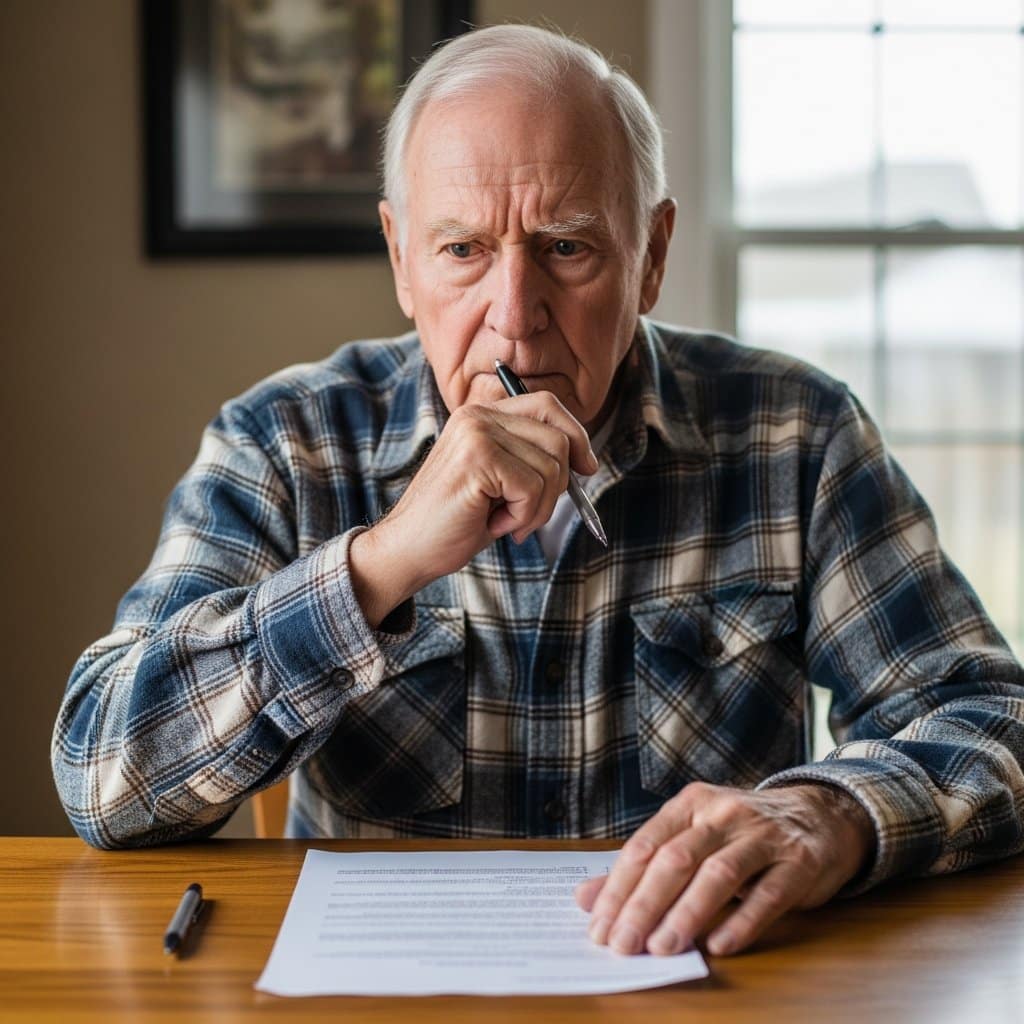
If something has already been signed or money has already changed hands, you are not out of options. Move quickly — time matters here.
If You Signed a Contract at the Door
Federal law and most state laws give you a 3-business-day right to cancel most contracts signed at your home. This is called the “cooling-off rule,” and it applies to the majority of door-to-door sales contracts.
Act immediately:
- Write a cancellation letter — keep it simple: your name, the date, the contractor’s name, and a statement that you are canceling the contract under your right to cancel.
- Send it by certified mail with return receipt requested. Keep a copy for yourself.
- Do not let any work begin while this is in process.
If You Already Made a Payment
- Paid by credit card? Contact your card issuer the same day and dispute the charge. Credit card companies have strong consumer protections for situations like this, and acting quickly improves your outcome significantly.
- Paid by check? Contact your bank immediately — if the check hasn’t cleared, they may be able to stop it.
- Paid by cash? Report the contractor to your state’s contractor licensing board and your state attorney general’s consumer protection office. Document everything: the date, time, a description of the person, the truck, any license plate you noticed, and any paperwork left behind.
When to Contact Law Enforcement
If a contractor took payment and did no work — or disappeared after taking a deposit — contact your local police department. Bring all of your documentation with you.
Being deceived by someone who does this professionally is not a personal failing. What matters now is moving quickly and calmly. These steps work — but only if you use them promptly.
For additional tools that help you stay connected and informed — including apps that make it easier to file complaints or look up resources — our guide to the best tablets for seniors covers user-friendly options worth knowing about.

The Before-You-Sign Contractor Checklist (Share This With Someone You Love)
Print this. Keep it near the front door. Send it to a neighbor. This is a tool for confidence — not a sign of vulnerability. Pilots use checklists. Surgeons use checklists. Now you have one too.
✅ Before You Sign Anything, Run Through This List:
- Did this contractor knock uninvited and pressure a same-day decision?
- Did they provide a full business name, state license number, and proof of insurance — in writing?
- Did I verify their license on my state’s contractor licensing board website?
- Did I confirm their insurance certificate is current and valid?
- Did I search the company name online and find a verifiable local address and phone number?
- Did I receive a written contract with a full scope of work and itemized pricing before any work began?
- Did I get at least one additional estimate before agreeing to a price?
- Did I give myself at least 24 hours before making any decision?
For adult children: Share this checklist before the summer, not after a close call. A quick text with this article link is a conversation-starter — not a lecture.
You can also keep a copy next to the products that help you monitor your home safely and the safety resources that give you peace of mind year-round.

The Front Door Defense: A Home Repair Scam Protection Checklist for Homeowners
Download this straightforward, printable checklist to confidently protect yourself from door-to-door contractor scams—with a simple five-minute verification system that eliminates fraudulent contractors before they ever step foot on your property.
The Pause Is Your Most Powerful Tool
Summer home repair scams succeed because they’re designed by people who do this for a living — not because homeowners aren’t paying attention.
You now have the scripts they use, the red flags that signal a scam, the verification steps that take three minutes, and the recovery options if something has already happened. That changes everything.
Here’s the single most powerful thing you can do the next time someone shows up at your door with an offer that feels urgent: pause.
No legitimate contractor will ever refuse to give you 24 hours to verify their credentials and think it over. That pause — that one quiet, confident moment — is the most effective defense available.
Share this article with one person before the end of the week. A neighbor, a sibling, a friend who lives alone. Scam prevention works best when it travels.
Have you been approached by a door-to-door contractor this summer? Have a tip that helped you spot a scam before it cost you? Share it in the comments — your experience might be exactly what someone else needs to hear.
And if you found this helpful, you might also want to explore our guide to products specifically designed for older adults living independently — because staying safe at home goes well beyond who’s knocking at the door.


![Keep feat elderly woman walker family living room conversation[1]](https://www.grayingwithgrace.com/wp-content/uploads/2026/05/KEEP-FEAT-elderly_woman_walker_family_living_room_conversation1-e1779544485375-450x300.jpg)

![Keep older woman video call tablet kitchen warm smile[1]](https://www.grayingwithgrace.com/wp-content/uploads/2026/05/KEEP-older_woman_video_call_tablet_kitchen_warm_smile1-e1778624028172-450x300.jpg)
![Keep older couple computer woman cane protective[1]](https://www.grayingwithgrace.com/wp-content/uploads/2026/05/KEEP-older_couple_computer_woman_cane_protective1-e1778616055742-450x300.jpg)
![Group of seniors sharing simple grocery saving tips[1]](https://www.grayingwithgrace.com/wp-content/uploads/2026/01/group_of_seniors_sharing_simple_grocery_saving_tips1-e1769521429158-450x300.jpg)
![Elderly man with cane looking up recurring charge[1]](https://www.grayingwithgrace.com/wp-content/uploads/2026/01/elderly_man_with_cane_looking_up_recurring_charge1-e1769520115610-450x300.jpg)


