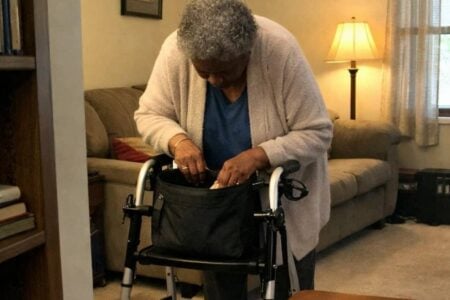
Your mom sets her phone on the counter, her water on the end table, and her glasses somewhere nobody can find them, all while she gets around with her walker. And when you offer to carry something, she waves you off.
A walker bag is a gift that doesn’t start an argument about help.
This checklist covers what to look for in the bag, what to put inside, and how to hand it over.
The Walker Bag Checklist: Everything to Pack (and How to Give It Without Starting an Argument)
Download this free checklist to pack a thoughtful walker bag that keeps your parent organized and independent—without ever mentioning safety or starting an argument.
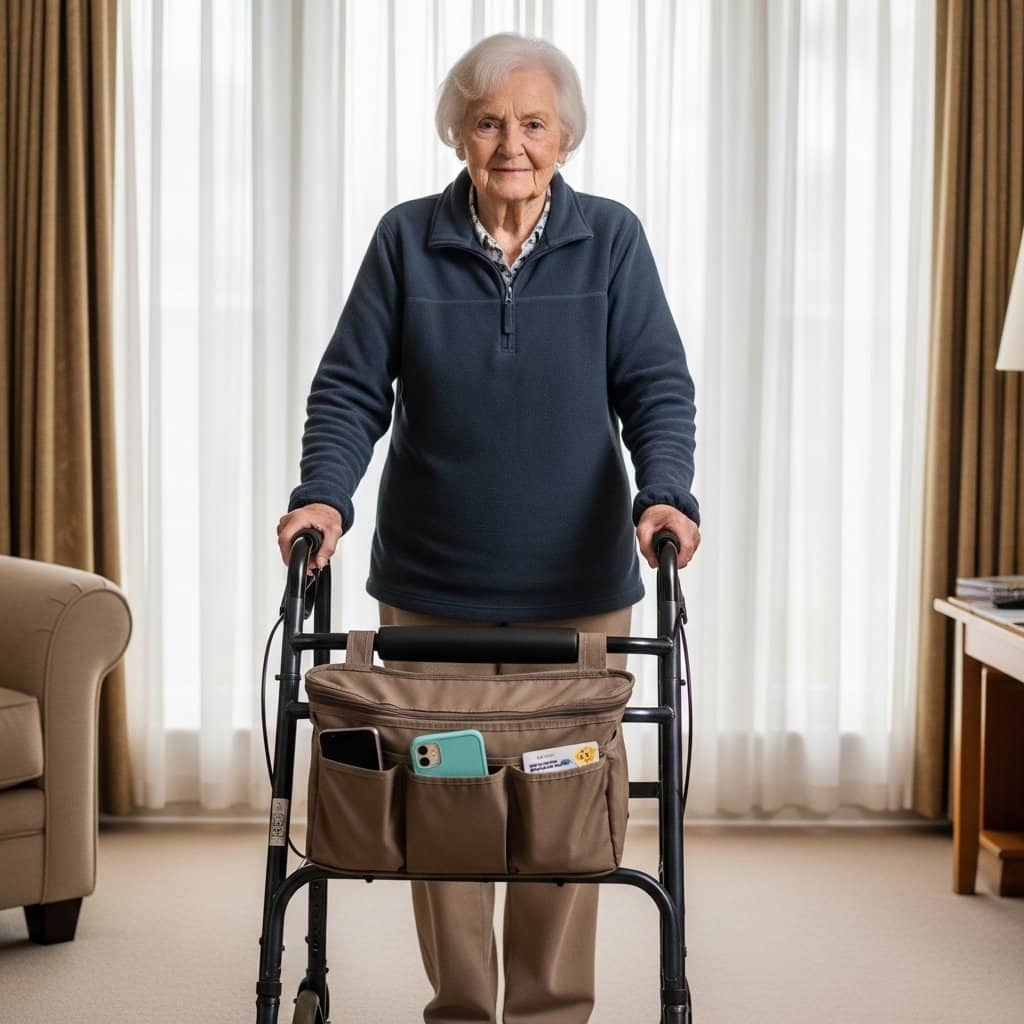
It’s Not a Medical Accessory. It’s a Convenience Upgrade.
The reason resistant parents push back on mobility accessories isn’t stubbornness for its own sake. It’s because these items feel like admissions — like accepting one more piece of evidence that things are getting harder.
Reframing changes everything.
The Language Shift That Lowers Resistance
“I got this for your walker” lands very differently than “I put together a little kit so your things are always where you need them.”
The first signals concern. The second signals thoughtfulness. Same product, completely different emotional response.
Think about it this way: a stylish tote bag or a well-organized desk caddy never made anyone feel like they were declining. A walker bag, positioned the right way, is no different.
Lead With Convenience, Not Safety
I’ve seen this dynamic play out in dozens of families. The parent who refuses a grab bar because it “looks like a hospital” will happily use one framed as a bathroom renovation. The parent who won’t accept a pill organizer will use one gifted as a “travel kit.”
The product doesn’t change. The framing does — and that’s what makes the difference between a gift that gets used and one that collects dust in a closet.
You’re not buying a medical device. You’re giving your parent a way to keep everything they already carry within easy reach.
What to Look for in a Walker Bag Before You Buy
Before you start filling a walker bag, you need the right bag. The wrong one creates frustration and ends up abandoned after a week.
Attachment Style Matters Most
Look for universal clips or hook attachments that work across most walker frames. Bags designed for one specific walker model are a gamble — and if the attachment fails mid-walk, the whole concept fails with it.
For more on attachment and what else keeps a bag from tipping the walker, see this look at how to choose a walker bag that stays stable.
Size, Weight, and Balance
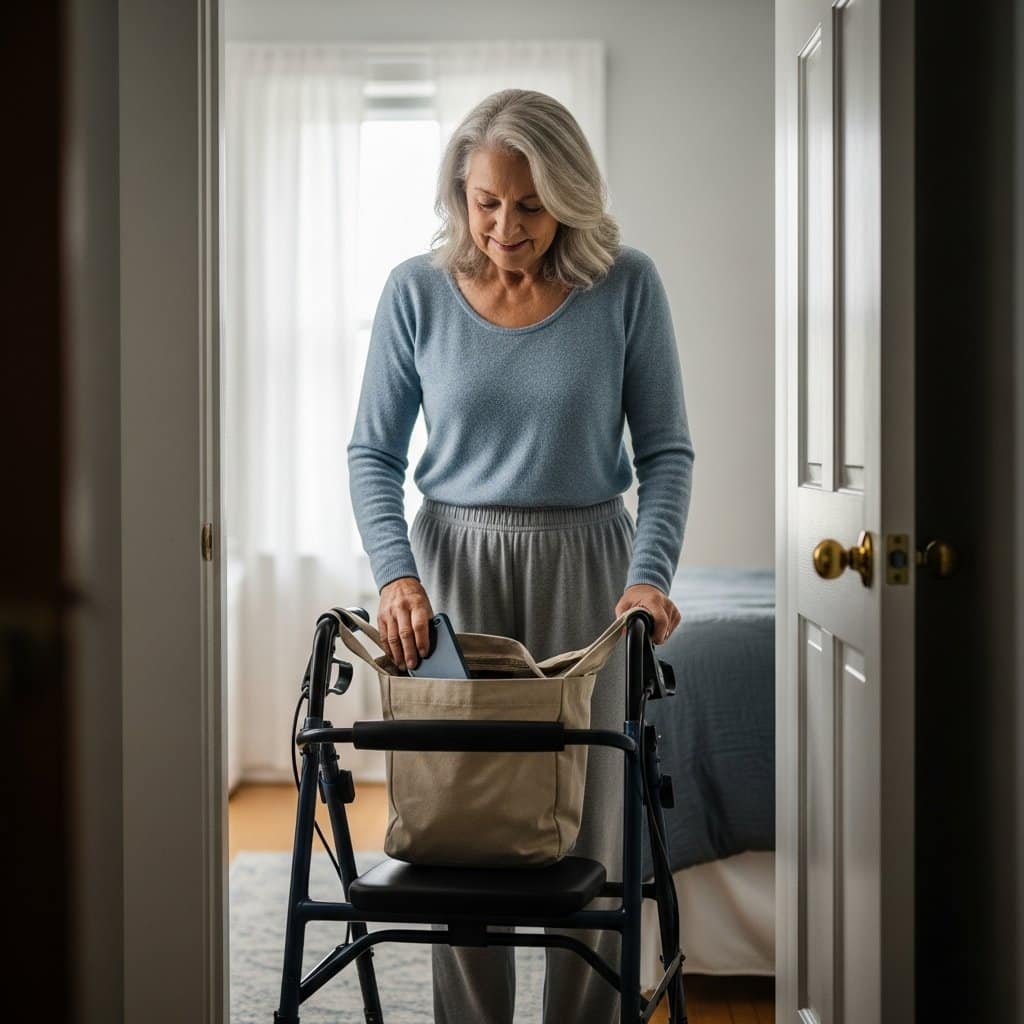
The bag should be large enough to hold daily essentials without adding so much weight that it shifts your parent’s balance. If it’s overstuffed and lopsided, it becomes a problem instead of a solution.
Easy Access Is Non-Negotiable
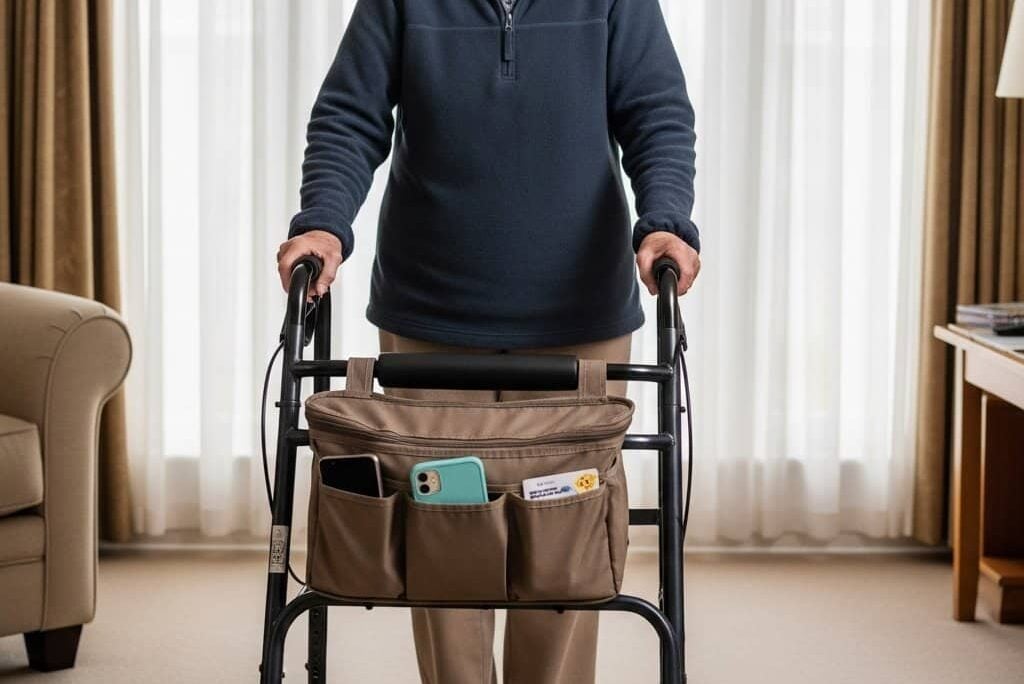
Open-top designs or wide zipper openings mean your parent can grab what they need without bending, fumbling, or fighting with a clasp. The harder it is to get into, the less it gets used.
Look for Washability and Neutral Styling
Fabric that wipes clean or goes in the washing machine makes the bag practical long-term. And neutral colors with a non-clinical look matter more than you might think — your parent is far more likely to use something that doesn’t announce itself as a “mobility aid.”
A sturdy, well-designed walker bag with secure attachment and easy-access pockets is worth investing in.


The best one is the one your parent will actually use — which means appearance and ease of access are just as important as durability.
For a broader look at mobility accessories that balance function and dignity, the guide to mobility aids for seniors is a helpful reference point.
The Walker Bag Checklist: Everyday Essentials
A walker bag is only as useful as what’s inside it. Here’s what to pack — and notice that none of these items sound medical. Every single one sounds like a practical quality-of-life upgrade, which is exactly how to present it.
The Essentials List
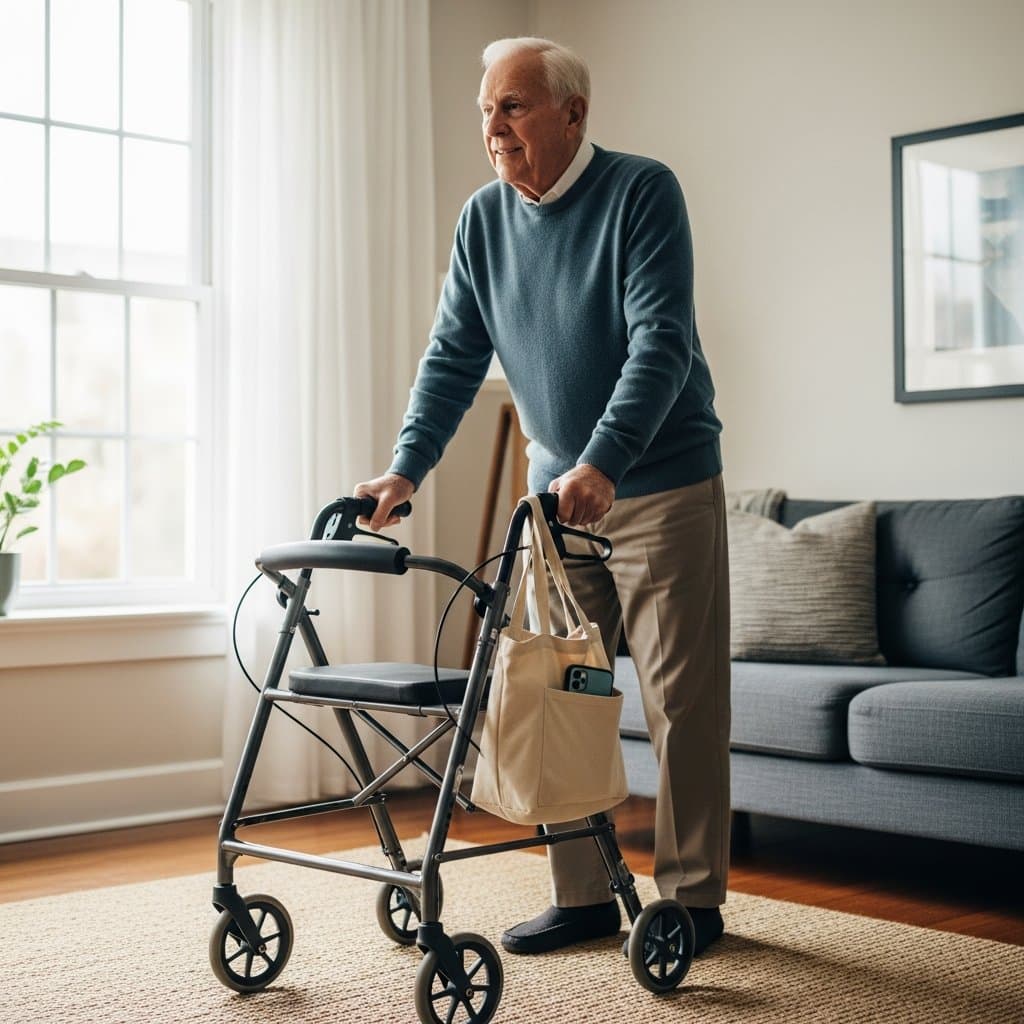
- Phone and charger or charging cable — The most important item of all. A phone left in the other room is a phone that can’t be reached in an emergency. This keeps it close without anyone having to say why.
- Water bottle or insulated spill-proof tumbler — Hydration is easy to forget, and a one-handed, spill-resistant tumbler fits neatly in most side pockets.
- Daily medications or pill organizer — For parents who take midday medications, keeping a weekly pill organizer with daily compartments in the bag prevents missed doses without making it feel like a medical system.
- Reading glasses and case — One of the most-searched-for items in any home. Keeping a pair in the walker bag means they’re always in one place.
- Small notepad and pen — For jotting down appointments, shopping lists, or questions to bring up at the next doctor’s visit. Simple and always appreciated.
- TV remote or tablet — For parents who move between rooms, this prevents the universal frustration of a remote left behind in the wrong chair.
- Emergency contact card — A laminated card with key phone numbers tucked into a pocket. No conversation required — it’s just good organization.
- Small wallet or card holder — Keys, ID, and a debit card, without the need to carry a full purse or bag from room to room.
None of this requires a difficult conversation. You’re not solving a fall risk — you’re solving the problem of things being in the wrong place at the wrong time.
If your parent manages medications independently and that system is working well, the guide to automatic pill dispensers offers additional options worth knowing about.
Subscribe to our newsletter for more tips: Join here
Practical Walker Accessories That Independent Seniors Actually Use
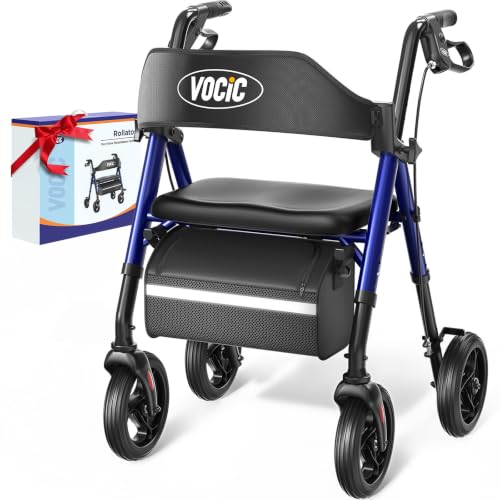
HOMLAND Foldable Rollator Walker




Beyond the bag, a few simple add-ons extend what a walker can do — without anything feeling like medical equipment.
Walker Cup Holder or Tray Attachment
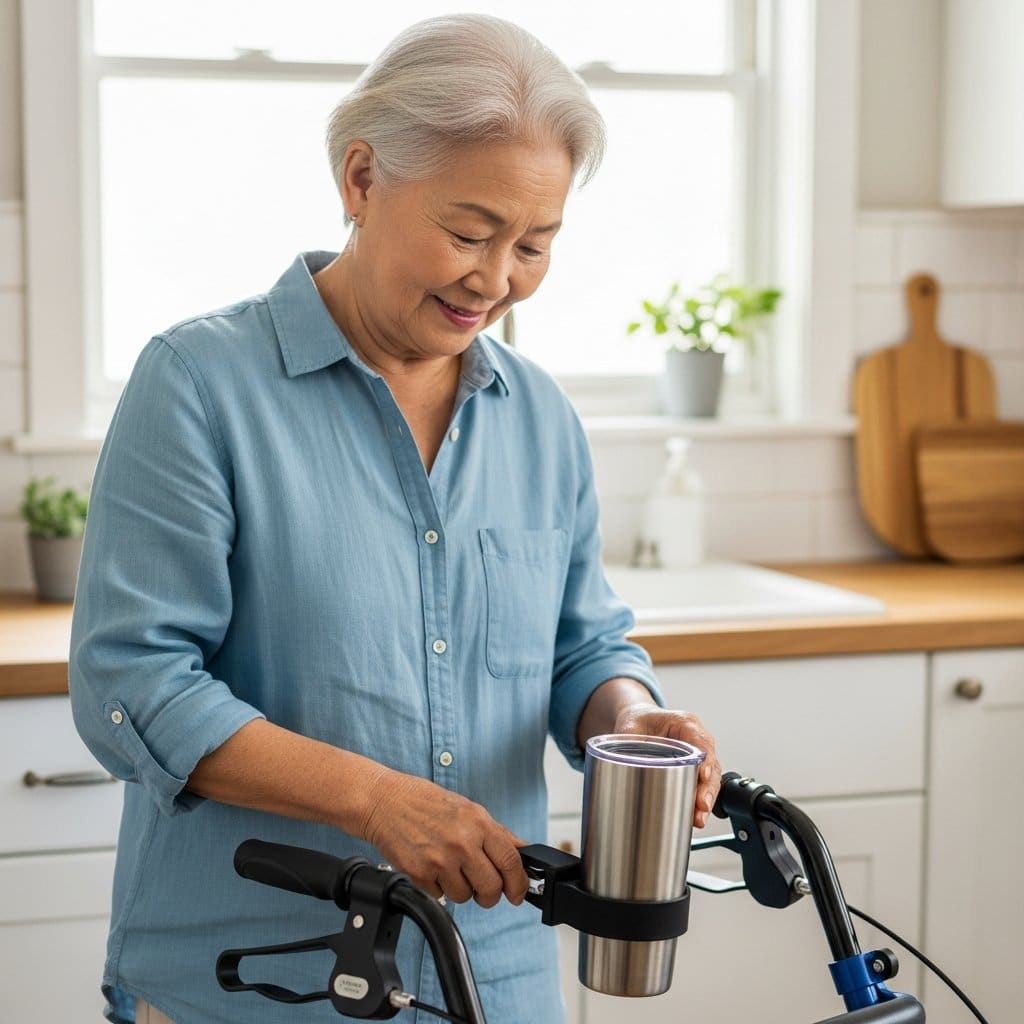
This is especially useful for parents who like their morning coffee on the move. A clip-on cup holder keeps drinks stable during slow walks around the house.


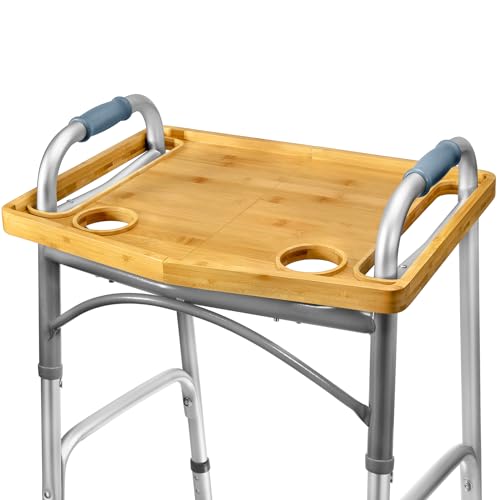

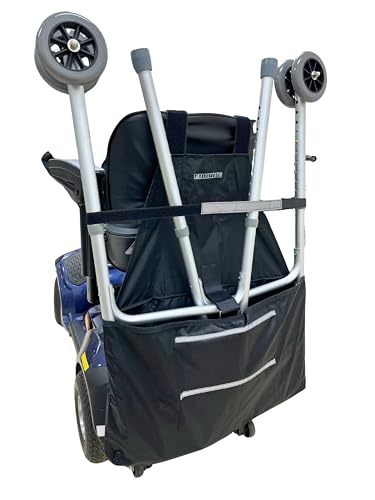

Frame it as a way to protect the floors and furniture, not as a mobility aid — and it’ll be received much better.
Tennis Balls or Glide Caps for Walker Legs
These reduce noise and prevent floor scratching. Present it as a home-protection upgrade, and you’ll get zero pushback.
Clip-On LED Light or Small Flashlight
Useful for nighttime bathroom trips, but frame it as a power-outage preparedness tool.
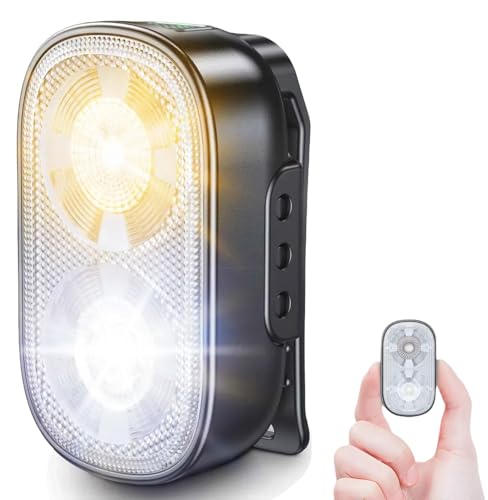


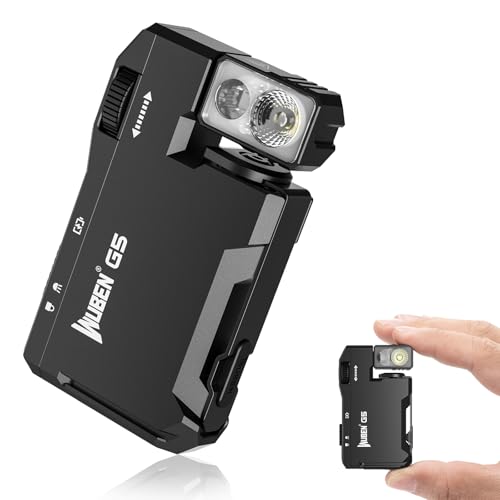

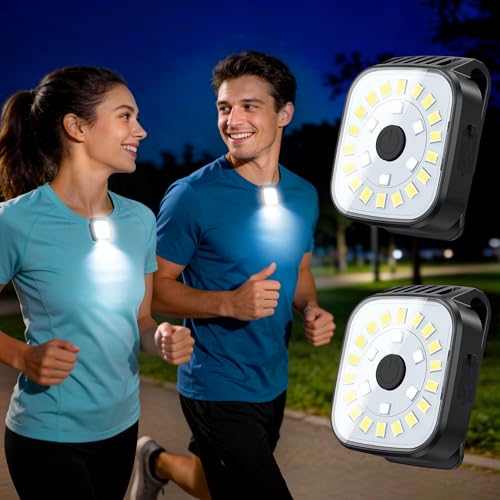

Practical. Non-medical. Easy to accept.
For more ideas on nighttime safety that don’t feel clinical, the guide to night lights for seniors has options worth pairing with this kind of kit.
Wristlet or Simple ID Bracelet
A subtle, wearable backup for the emergency contact card. Style it as a fashion accessory and it becomes something your parent may actually want to wear.
These aren’t medical upgrades — they’re quality-of-life additions that any practical, organized person would appreciate.
How to Give the Walker Bag Without Making It Awkward
The bag is packed. The checklist is done. Now here’s the part that actually determines whether any of this works.
Lead With Convenience, Not Concern
“I put together a little kit so your things are always where you need them” is the right opener. “I’m worried about you” is not.
One sounds like a gift. The other sounds like a warning. Your parent will respond to whichever one you lead with.
Make It Feel Curated, Not Clinical
Wrap it. Include a handwritten note. Present it the way you’d present any other gift — because that’s what it is. The presentation signals how to receive it.
Skip the Safety Speech
Don’t attach a lecture about falls, health concerns, or what might happen if things don’t change. Let the gift speak for itself. The moment you tie it to a safety concern, it stops being a gift and starts being a critique.
Let Them Customize It
After you hand it over, ask if there’s anything else they’d like to add to it. This shifts the dynamic from you solving a problem to the two of you making something together — and that shift matters enormously to a parent who values their independence.
Follow Up Casually
A week later, ask what they’ve been keeping in it. Not whether it’s helping them stay safe — just what’s in it now. That question invites them to be the expert on their own system, which is exactly where they want to be.
Your parent doesn’t want to feel managed. They want to feel loved. The way you give this matters as much as what you give.
For more on navigating the emotional side of this kind of caregiving, the guide to helping older adults while respecting their dignity captures the same spirit well — it’s worth a read if this dynamic feels familiar.
The Walker Bag Checklist: Everything to Pack (and How to Give It Without Starting an Argument)
Download this free checklist to pack a thoughtful walker bag that keeps your parent organized and independent—without ever mentioning safety or starting an argument.
The Bottom Line on the Walker Bag Checklist
A walker bag checklist isn’t a medical solution. It’s a practical gift that helps a resistant parent stay organized, independent, and in control — on their terms.
You now have everything you need: what to look for in the bag, what to put in it, and how to hand it over without a single uncomfortable conversation.
The best caregiving often happens quietly. Not through big interventions, but through small, thoughtful gestures that make life a little easier without making a loved one feel less capable. This is one of those gestures.
If you found this checklist useful, save it for the next gift occasion — or share it with another caregiver in your circle who’s navigating the same thing. And if your parent already uses a walker bag, I’d love to hear what they keep in it. Drop it in the comments below — your idea might be exactly what someone else needed to hear.
For more on home safety strategies that work without resistance, or to explore walking aids that pair well with everyday independence, both are natural next steps from here.