
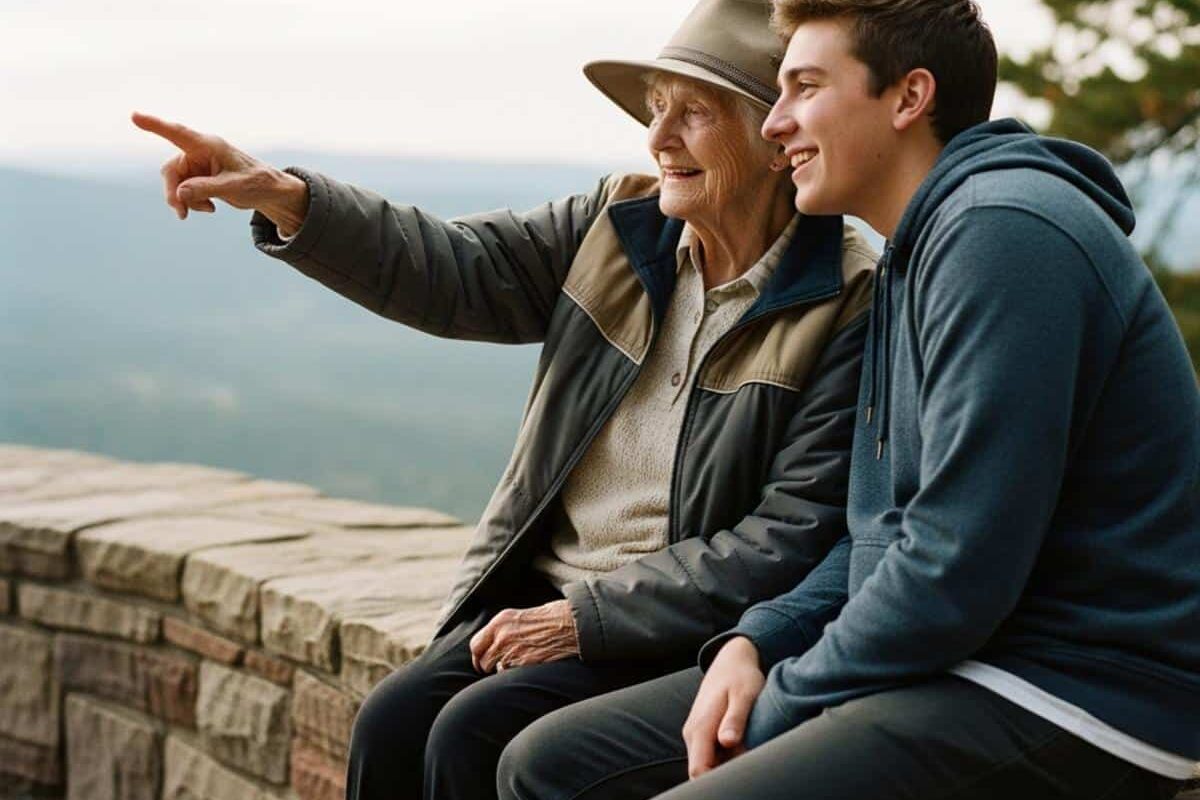
Have you ever stood at the entrance of a national park and quietly wondered if the experience you remembered — the one that moved you decades ago — is still available to you?
That quiet hesitation is more common than you might think. But here’s what most older adults don’t know: the National Park Service has made extraordinary investments in accessibility, and the programs designed specifically for senior visitors are some of the best-kept secrets in American travel.
What’s waiting for you is far better than you assumed. Let me walk you through exactly what’s available.
Accessible National Parks Cheat Sheet for Senior Visitors
Download our free guide to having difficult conversations with aging parents—practical scripts and strategies that help you address health, finances, and care needs without shame or avoidance.
Your $80 Lifetime Pass to Over 2,000 Federal Sites
The America the Beautiful Senior Pass is, without question, one of the most remarkable deals in American travel — and most seniors have never heard of it.
What it is: A lifetime pass available to any U.S. citizen or permanent resident aged 62 or older for a one-time fee of $80.
What it covers:
- Entrance fees at over 2,000 federal recreation sites
- Every national park, national monument, national forest, and Bureau of Land Management site in the country
- All passengers in a non-commercial vehicle — not just the cardholder
That last point matters enormously for intergenerational trips. One pass covers you, your adult children, and your grandchildren riding in the same vehicle.
How to get it: Purchase online through the USGS store at store.usgs.gov, or pick one up in person at any federal recreation site entrance.
I think of this pass as a formal declaration: the federal government considers national parks a benefit you’ve earned and fully deserve. Take them up on it before your next trip.
Practical note: If you’re planning to add some stability for uneven terrain, many older adults pair park visits with a foldable walking cane that stands on its own — having it available removes pressure without limiting how far you can explore.



What the NPS Accessibility Program Actually Provides
Most visitors never ask about it. That’s a significant missed opportunity.
The National Park Service is legally required under the Americans with Disabilities Act and the Architectural Barriers Act to provide specific accessibility accommodations — and knowing how to request them before you arrive changes the entire experience.
What most major parks provide:
- Accessible parking (often closer to trailheads and overlooks than standard lots)
- Accessible restrooms throughout the park
- Paved or compacted-surface trails designed for wheelchairs and walkers
- Audio guides and large-print materials at visitor centers
- Fully accessible visitor centers with exhibits and orientation films
- Ranger-led programs that require zero hiking
The pre-trip step most people skip: Contact the park directly before your visit. Ask specifically about current accessible trail conditions, shuttle availability, and which ranger programs require no physical exertion. Every major park has an accessibility coordinator — a brief email or phone call can unlock an entirely different level of experience.
Consider two visitors arriving at the same park. One arrives unprepared and finds the main trail inaccessible that day. The other called ahead, reserved accessible parking, joined a ranger-led morning geology talk, and drove a scenic route with identical views — zero hiking required. Same park. Radically different experiences.
Accessible accommodations aren’t a lesser version of the park. They’re a smarter entry point to the same wonder.
Where to start: Visit nps.gov and search your destination park’s accessibility page. Every park lists specific features, accessible trail descriptions, and contact information for their accessibility coordinator.
The Most Accessible National Parks for Older Adults
Not all parks are created equal when it comes to accessibility infrastructure. Knowing which ones have invested most heavily in paved trails, shuttle systems, and scenic road access helps you plan with confidence rather than uncertainty.
What to look for in any park:
- Paved or hard-packed trail surfaces
- Accessible shuttle or tram systems that reach major viewpoints
- Relatively flat terrain near key attractions
- Scenic highlights accessible directly from parking areas or vehicles
- Fully accessible visitor centers with substantial exhibits
Parks consistently recognized for strong accessibility:
Grand Canyon South Rim — Sections of the Rim Trail are fully paved, accessible shuttle stops serve the entire rim, and the views from accessible overlooks are identical to what any hiker sees. This is genuinely one of the most accessible dramatic landscapes in the world.
Acadia National Park — The historic carriage roads offer compacted gravel surfaces ideal for walkers and wheelchairs. The accessible visitor center, scenic drives to summit areas, and multiple pullouts for ocean views make this a standout.
Yellowstone — Boardwalk trails to geothermal features like Old Faithful and the Grand Prismatic Spring are specifically designed for accessibility. Multiple road-accessible wildlife viewing pullouts mean you can watch bison and elk without leaving your vehicle.
Rocky Mountain National Park — Trail Ridge Road is the highest continuous paved road in the United States. You can reach genuine alpine scenery at over 12,000 feet entirely by vehicle — no hiking required.
Shenandoah National Park — Skyline Drive offers 75 overlooks along its 105-mile route, most accessible directly from the car, with short accessible walks at select stops.
Choosing a more accessible park isn’t compromising. It’s smart trip planning that delivers more enjoyment with less unnecessary strain.
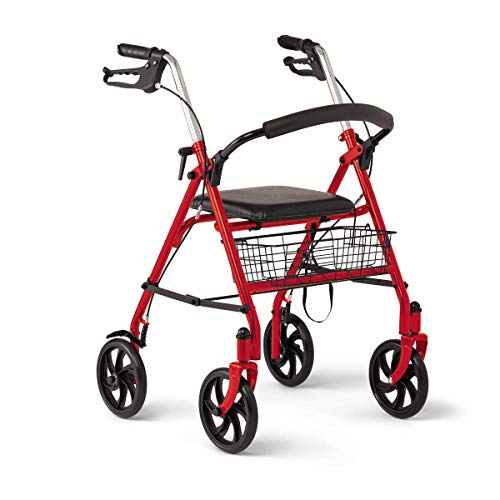
Planning tip: If you’re considering a rollator for longer days on paved paths, the HOMLAND Foldable Rollator Walker is worth a look — its memory foam seat means you can rest anywhere, which completely changes how long and far you can comfortably explore.



Ready to discover more ways to stay active, confident, and connected in your next chapter? Subscribe to our newsletter for expert-tested tips and practical recommendations designed specifically for older adults.
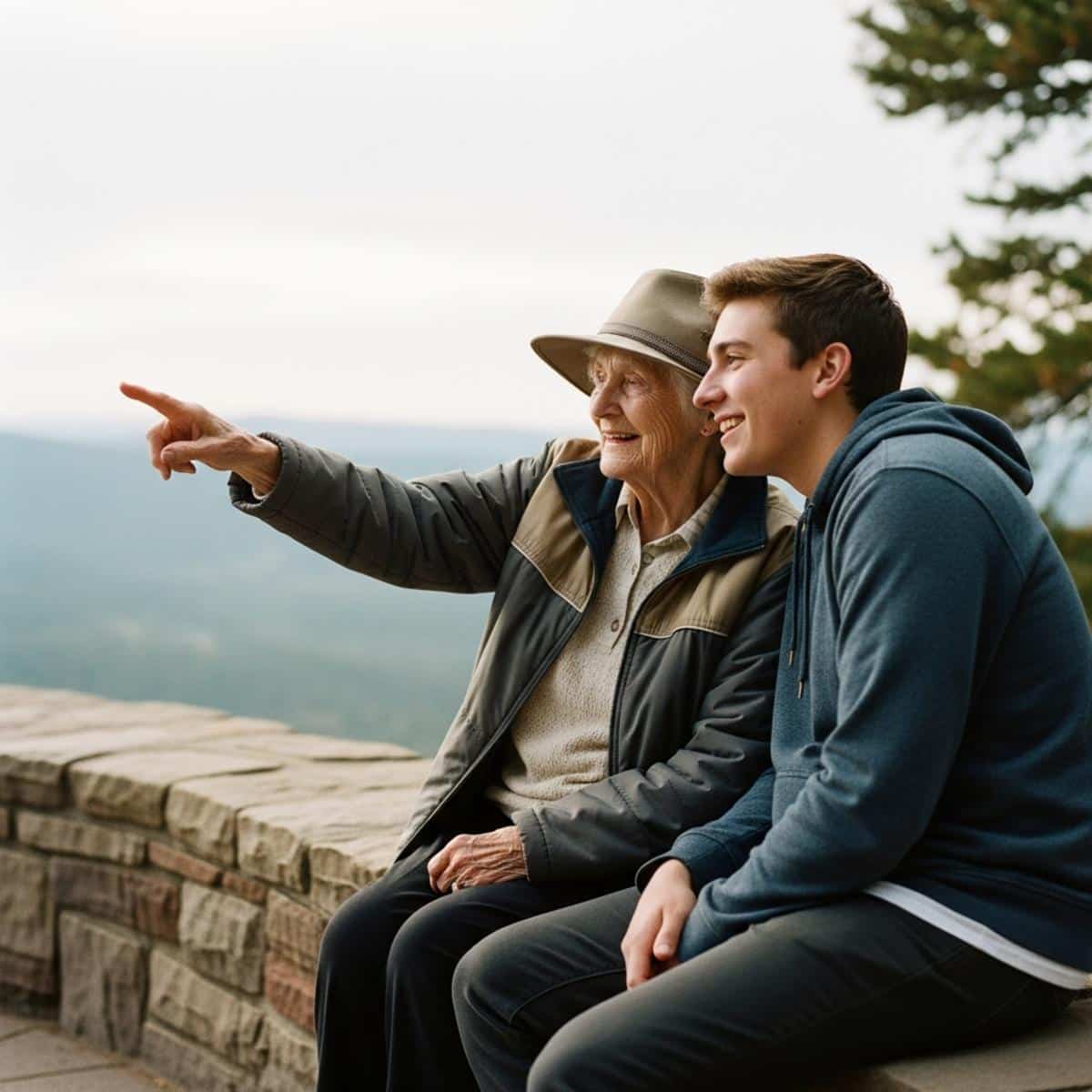
Ranger Programs and the Hidden Engagement Layer Most Visitors Miss
Here’s what I’ve found after exploring parks with older adults: the best national park experiences often have nothing to do with hiking.
Most visitors walk past the ranger program boards and keep moving. That’s a genuine loss — because those programs are frequently the most memorable part of any visit.
What ranger programs typically include:
- Evening campfire talks on park history, geology, and wildlife
- Morning wildlife spotting walks (often slow-paced and narrated)
- Geology and ecology presentations at visitor centers
- History tours of historic structures — most requiring minimal movement
Something most people don’t know: While the Junior Ranger program is widely seen as a children’s activity, many parks actively welcome adults to participate. Earning a badge through observation and learning — not strenuous hiking — is genuinely rewarding, and it’s a natural shared activity with grandchildren.
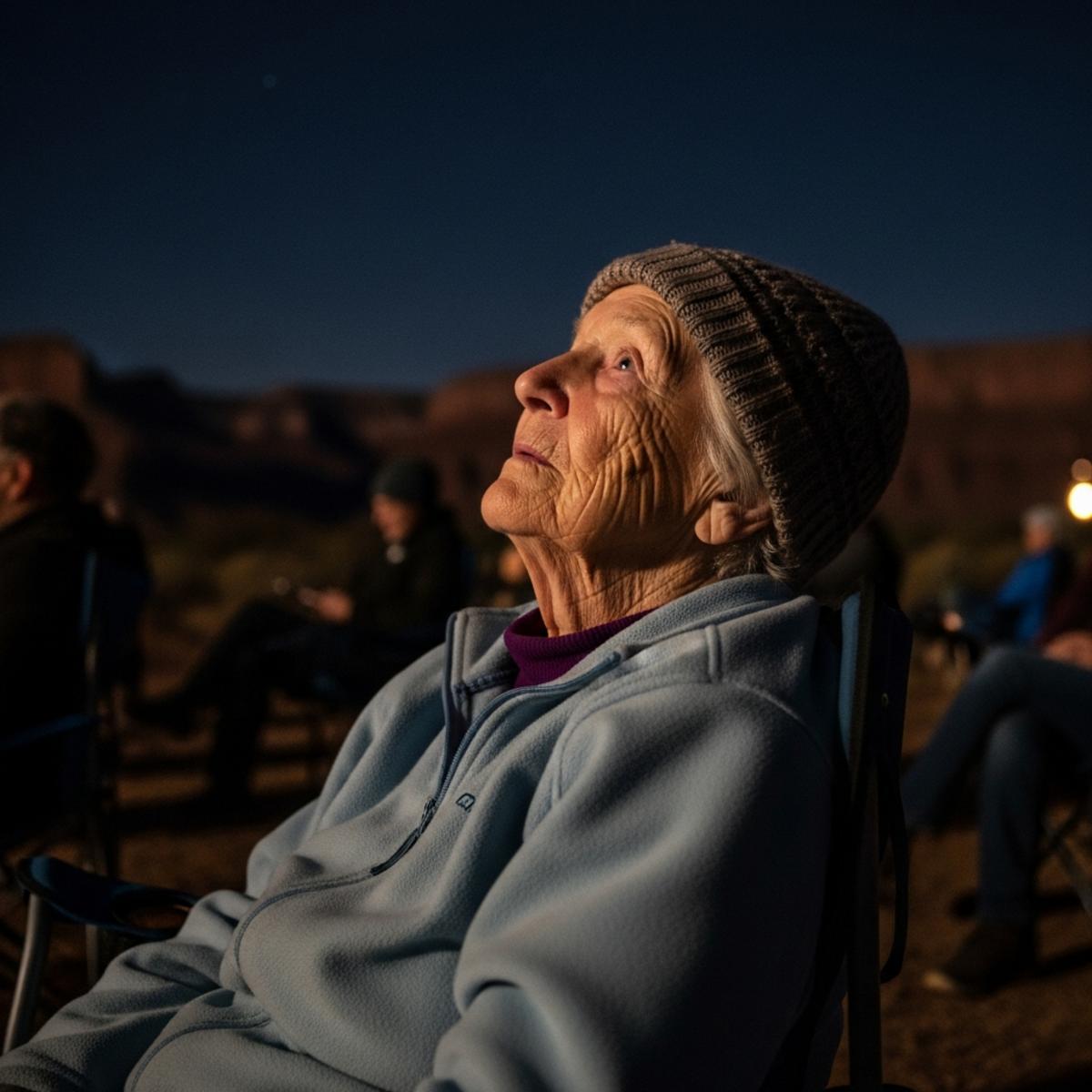
Evening astronomy programs are a hidden gem. Grand Canyon, Joshua Tree, and Bryce Canyon all offer ranger-led stargazing specifically designed for seated or low-mobility participation. Bryce Canyon in particular has some of the darkest skies in the continental U.S. — and the program requires nothing more than showing up and looking up.
How to find programs: Download the free NPS app before your trip. It lets you browse every upcoming ranger program at any park by date, type, and physical requirement. Spending 15 minutes with this app before you leave home is one of the highest-value uses of trip planning time I know.




The most enriching park experience isn’t measured in miles walked. It’s measured in moments of genuine discovery — and those are available to everyone.
This connects to something I’ve seen repeatedly: staying engaged with nature, learning, and new experiences is one of the most powerful things you can do for long-term wellbeing. The science on nature exposure and senior health backs this up — even 20 to 30 minutes of outdoor engagement produces measurable benefits for mood, blood pressure, and cognitive function.
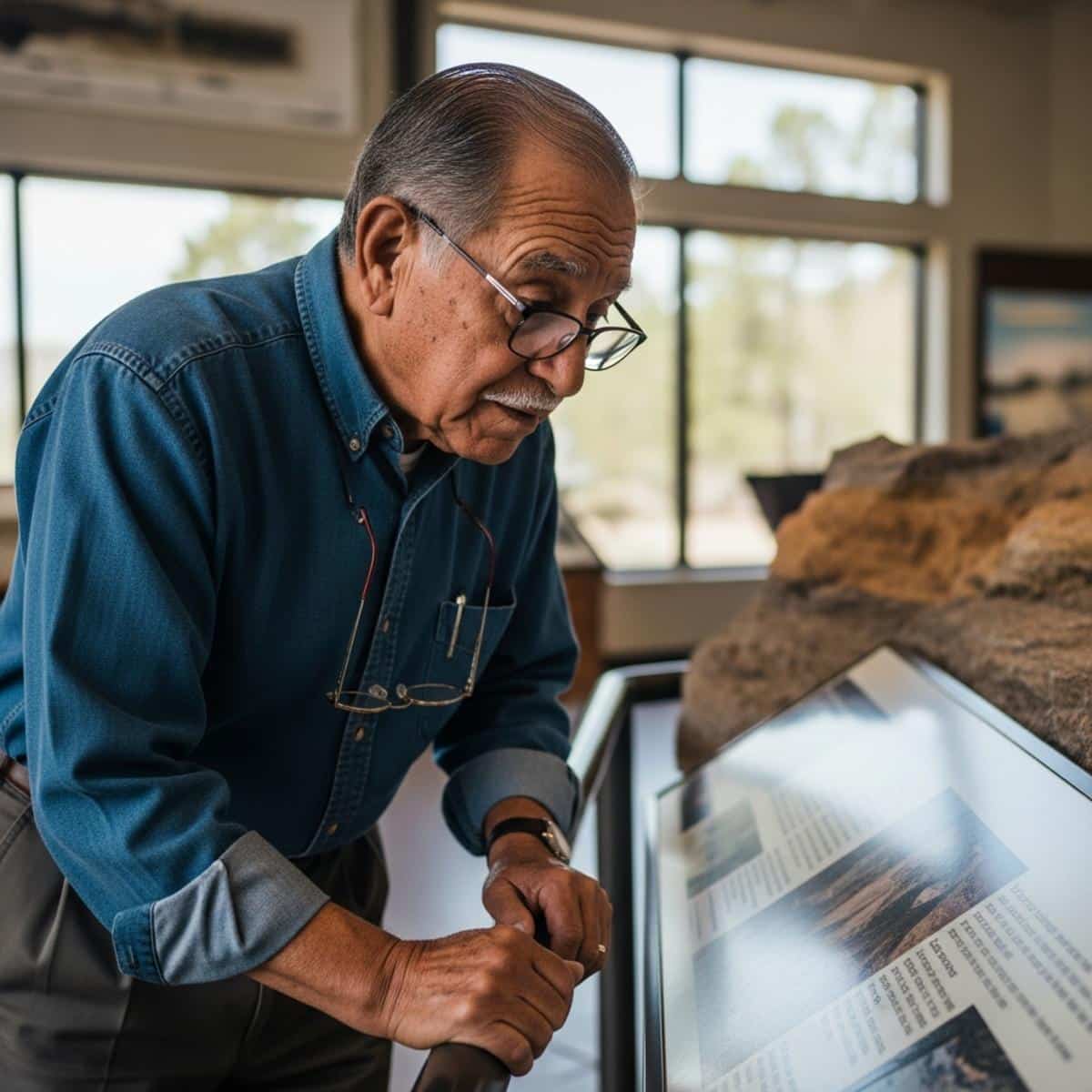
Timing, Packing, and Planning an Intergenerational Trip That Works
When you go, what you bring, and how you structure the day can be the difference between an exhausting trip and an extraordinary one.
Best timing for senior visitors:
- Shoulder seasons (late April–May and September–October) offer the best combination of comfortable temperatures, reduced crowds, and full accessibility infrastructure
- Early morning arrivals (before 9 a.m.) secure accessible parking and avoid peak heat and congestion — this is more important than most people realize
- Weekdays consistently offer significantly better accessible parking availability than weekends at every major park
Practical packing for older adult park visitors:
- More water than you think you need — dehydration at altitude affects older adults faster than most expect
- Layered clothing — park temperatures shift dramatically between morning and afternoon
- Wide-brim hat, UV-blocking sunglasses, and sunscreen (especially critical at elevation)
- Daily medications plus a small first-aid kit with blister treatment
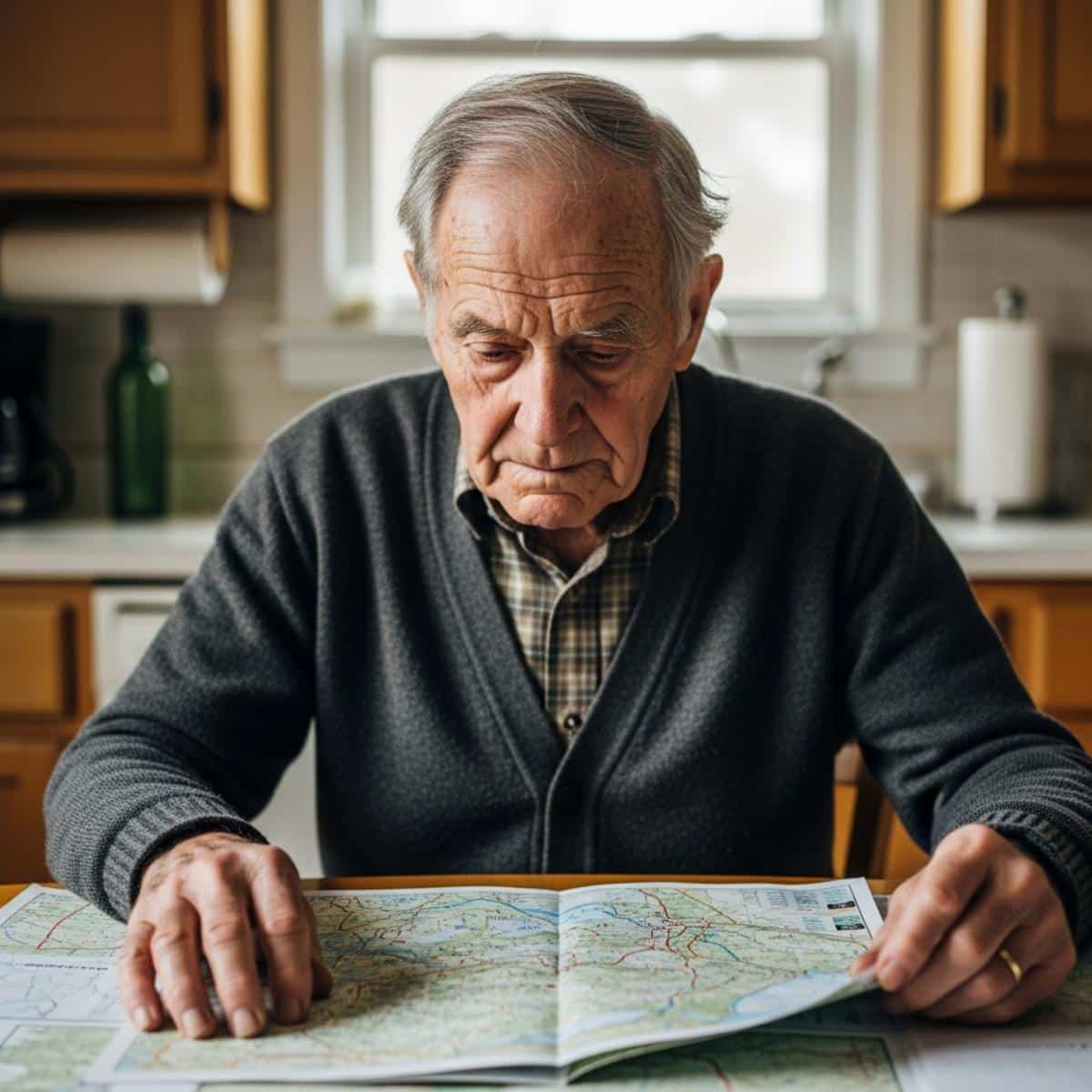
- Printed or downloaded offline maps — cell service is genuinely unreliable in most parks
Intergenerational trip planning:
Build the day around two anchor activities — one matched to grandchildren’s energy, one matched to your pacing. Let each group lead one activity.
Use the ‘split and reconnect’ approach: grandchildren hike a short loop while you enjoy a scenic overlook or visitor center exhibit. Reunite for lunch or a ranger program. Everyone gets their best version of the day.
For anyone managing energy levels across longer days, understanding your own patterns matters. The research on afternoon fatigue in seniors is worth reviewing before a multi-day trip — small scheduling adjustments around your natural energy curve make a real difference.
Also worth considering: national parks are one of the most powerful settings for the kind of meaningful intergenerational connection that creates lasting memories. A shared ranger talk or a slow walk to an overlook often lands more deeply than any structured activity.
Accessible National Parks Cheat Sheet for Senior Visitors
Download our free guide to having difficult conversations with aging parents—practical scripts and strategies that help you address health, finances, and care needs without shame or avoidance.
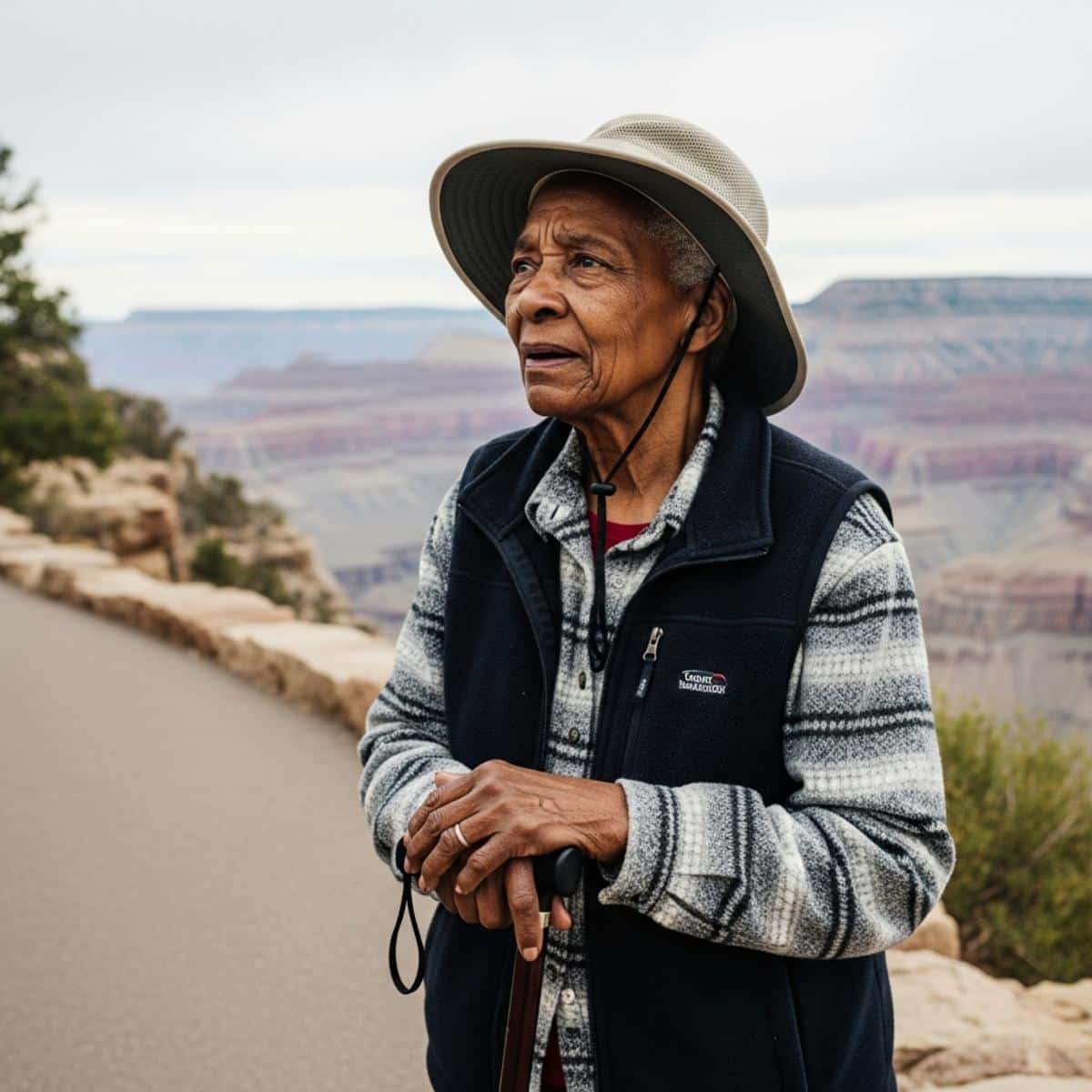
Your Next Step Starts This Week
National parks were never meant to be conquered. They were meant to be experienced.
The America the Beautiful Senior Pass, the NPS Accessibility Program, the ranger programs, the scenic drives, the astronomy talks under Bryce Canyon’s sky — none of this requires you to be the version of yourself from 30 years ago. It requires you to show up, which you’re entirely capable of doing.
Your decades of curiosity make a national park visit richer, not smaller. You know what you’re looking at. You understand the history. You appreciate the quiet in ways that younger visitors often don’t.
Choose one concrete step this week:
- Purchase your America the Beautiful Senior Pass at store.usgs.gov
- Download the free NPS app and browse ranger programs at a park you’ve always wanted to visit
- Visit nps.gov, find a park from the accessible parks list above, and look up its accessibility page
Then put a date on the calendar. These places are waiting for you — and they’ve been quietly preparing for your visit for longer than you know.
Which park is calling you? Drop it in the comments — and share this with someone who needs to hear that their national park days are far from over.



![Older woman wheelchair riverside walkway[3]](https://www.grayingwithgrace.com/wp-content/uploads/2026/06/older_woman_wheelchair_riverside_walkway3-e1780477605210-450x300.jpg)


![Senior couple slow dance living room[1]](https://www.grayingwithgrace.com/wp-content/uploads/2025/12/senior_couple_slow_dance_living_room1-e1767117766207-450x300.jpg)


