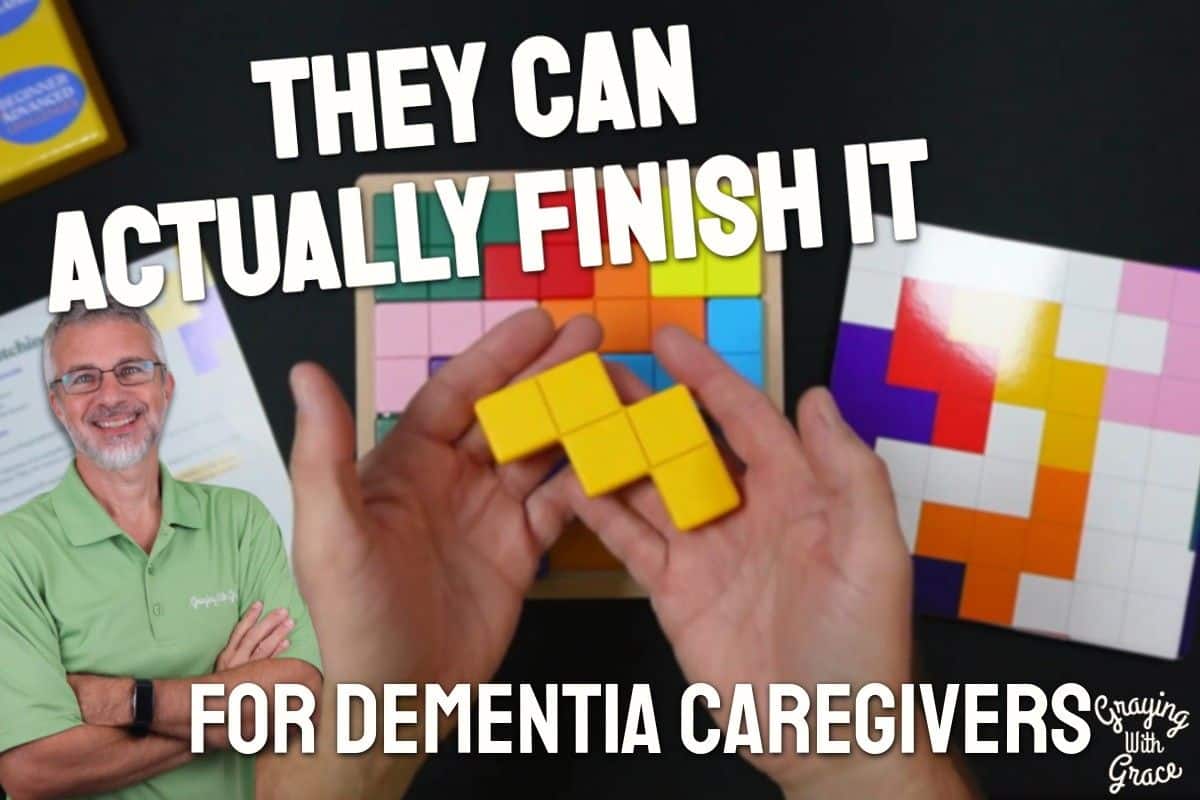
Finding activities that genuinely engage a loved one with dementia — without frustration, without tears, and without turning into a battle of wills — is one of the hardest parts of caregiving.
Most puzzles are too complicated. Most games move too fast. And most activities end with scattered pieces on the floor and a senior who has completely checked out.
That is exactly the problem the Keeping Busy Tile Matching Memory Game was designed to solve. As a Certified Senior Advisor (CSA) and Senior Home Safety Specialist (SHSS), I personally evaluated this kit so I could give you a straight answer on whether it actually works for memory games for seniors with cognitive decline.
Here is what I found.

Quick Takeaways
- Solves: The struggle to find dementia activities for seniors that are completable, calming, and genuinely engaging
- Best for: Older adults with mild to moderate memory loss, whether at home, in assisted living, or in a memory care setting
- Worth it? Yes — the three difficulty levels and durable build make this a practical long-term tool, not a one-week novelty
- Best feature for seniors: Each round is short enough to finish, which gives players a real sense of accomplishment
- Biggest limitation: May not hold attention for those in more advanced stages of dementia who need very high levels of sensory stimulation
How This Could Help You
Have you ever watched a loved one stare blankly at a jigsaw puzzle because it was simply too overwhelming? That moment of giving up is heartbreaking for everyone in the room.
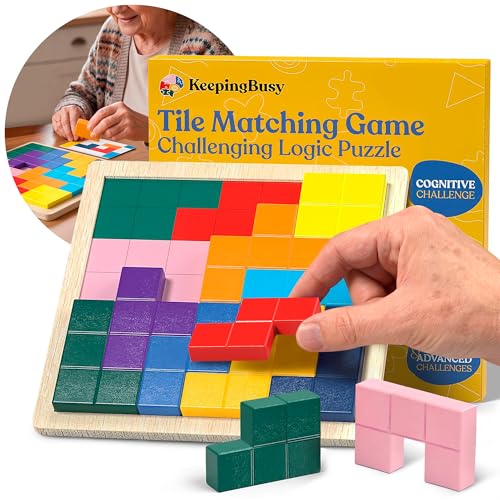
The Keeping Busy Tile Matching Memory Game approaches activities for seniors with memory loss from a completely different angle. Instead of one intimidating challenge, it offers a contained, completable activity that a person with dementia can start and finish in a single sitting.
Are puzzles good for dementia patients? Research consistently says yes — but only when the puzzle is appropriately scaled. A 500-piece jigsaw is not appropriate. This kit is.
The three-level system is what makes this genuinely practical for keeping dementia patients busy. At the simplest level, the template card shows every piece in its correct position — the player simply matches what they see. At the middle level, some pieces are filled in on the template and others are left blank, requiring the player to think independently to finish. The most challenging level uses the wooden board alone, no template at all.
That progression means you can meet your loved one exactly where they are today, and adjust as their needs change.
For caregivers wondering how to engage someone with Alzheimer’s at home, this kind of structured hands-on activity hits the sweet spot between stimulating and achievable. The bright colors draw visual attention naturally, and the act of physically placing each piece keeps hands and minds working together.
This also works beautifully as a social activity. Sitting beside your loved one and working through a template together creates moments of connection without pressure or performance. That matters enormously for quality of life.
Ready to discover more innovative strategies for healthy, comfortable aging? Subscribe to our newsletter for expert-tested tips and product recommendations designed specifically for older adults.
Important Details You Should Know
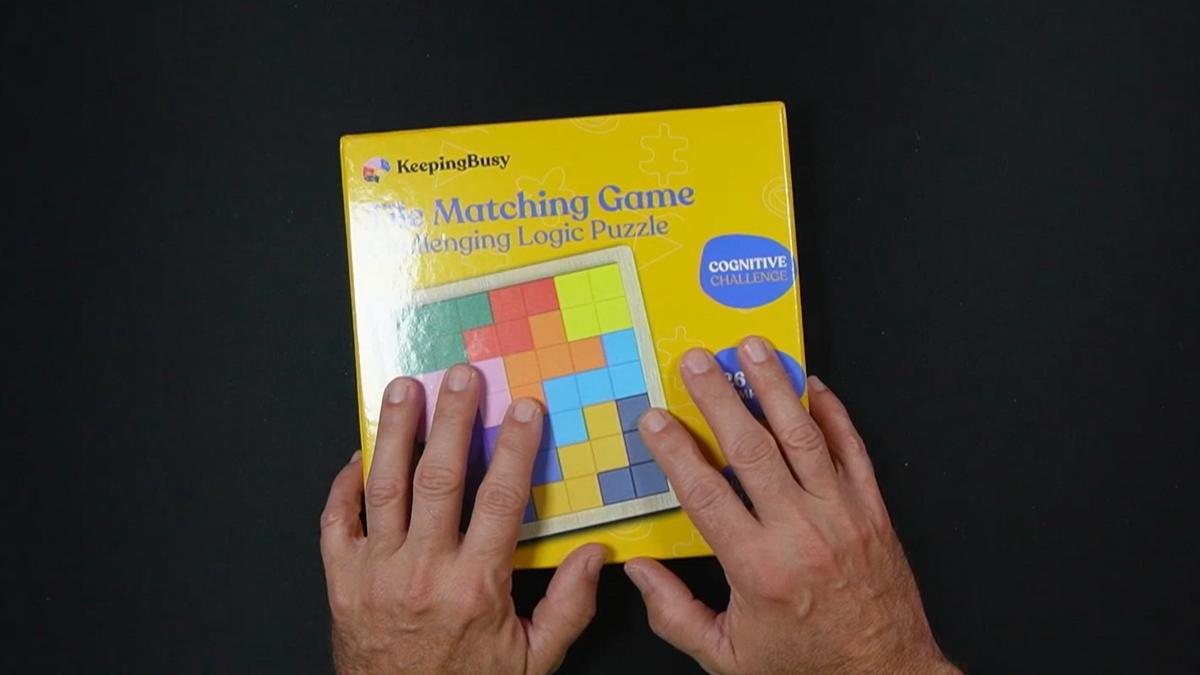
The playing board measures 8 inches square. As I demonstrated in the video, that size fits comfortably on a wheelchair tray or a standard activity table without crowding the space.
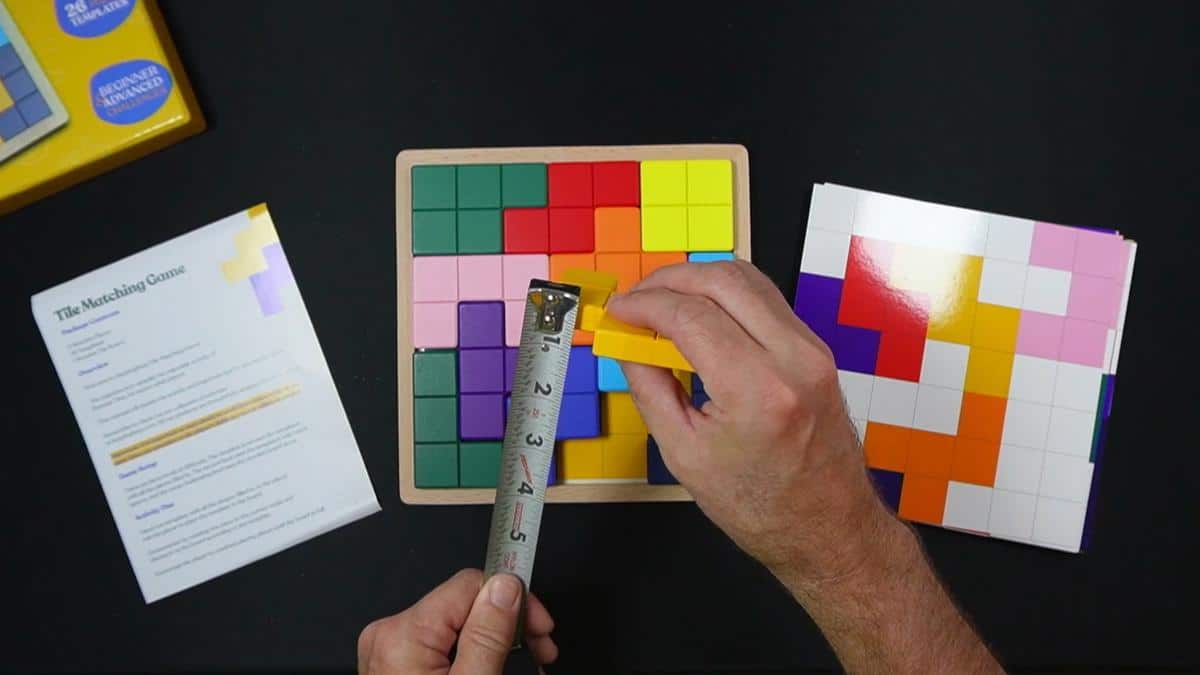
Each individual square on the tiles measures one inch by one inch, and each full tile piece is three inches by three inches and a half-inch thick. That is a meaningful size — chunky enough to grip confidently, but not so bulky that it becomes awkward to handle.
The tiles themselves are solid painted wood — not hollow, not pressboard. When I evaluated this product, I noticed the finish is smooth and sealed, similar in quality to a well-made child’s wooden block. That kind of construction holds up to repeated daily use without chipping or splintering.
The storage box is made of heavy-duty pressboard, and it is built to last. It closes securely, keeps all 11 pieces organized, and is compact enough to slip into a bag for a visit to a memory care facility or a family gathering.
The kit includes 26 template cards, the playing board and frame, the 11 wooden tiles, and a simple instruction sheet. Everything you need is in the box from day one.
Getting Started
Setup is about as simple as it gets. Open the storage box, place the board on a flat surface, choose a template card, slide it into the frame, and you are ready to play.
The instruction sheet walks through all three activity levels in plain language. As I noted in the video, it is short and easy to read — no jargon, no complicated diagrams.
A caregiver, occupational therapist, or family member may want to sit with the player during the first few sessions to demonstrate how the tiles rotate and fit. After that initial introduction, many players with mild to moderate dementia can engage with the simpler template levels independently.
No batteries, no charging, no apps. Just wood, color, and a simple task to complete. That simplicity is genuinely one of its strongest qualities.
Features That Matter to You
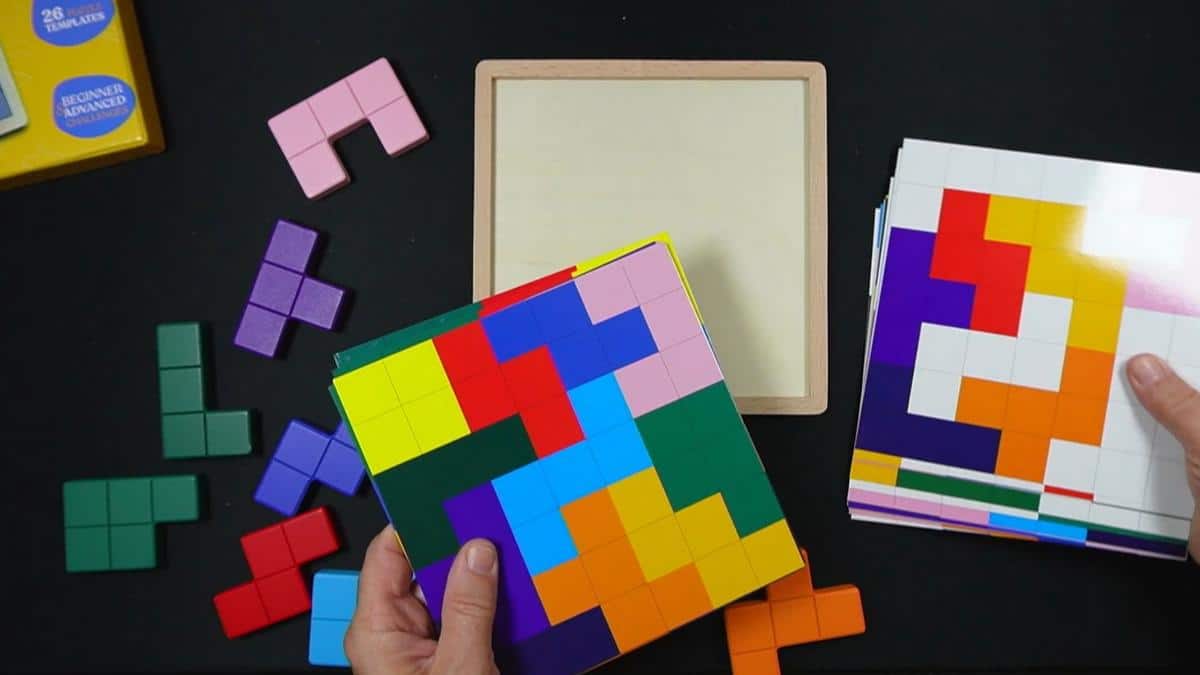
The thick, chunky tiles are the standout physical feature here. When I evaluated this product, I noticed that each tile has real weight to it without being heavy — substantial enough to feel satisfying in the hand, light enough that most older adults can handle them without fatigue.
Those tiles are not going to slide around or scatter like flimsy cardboard pieces. That stability alone reduces frustration significantly during play.
The bright, high-contrast color design is not just decorative. For older adults with mild vision changes, bold colors make it easier to distinguish pieces and match them to the template. Engagement follows naturally when the visual experience is clear and inviting.
The rotating piece mechanic adds a gentle layer of spatial reasoning. In the video, you can see that the tiles are inspired by classic interlocking shapes — think that famous block-stacking video game from the 1980s. Players have to consider how to turn a piece to make it fit, which keeps the brain actively problem-solving without becoming overwhelming.
The Keeping Busy Tile Matching Memory Game also supports fine motor skill maintenance beautifully. Every time a player picks up a tile, reads the template, and places the piece correctly, they are working hand-eye coordination and finger dexterity at the same time. It does not feel like therapy — it feels like finishing something real.
Real Life Experience
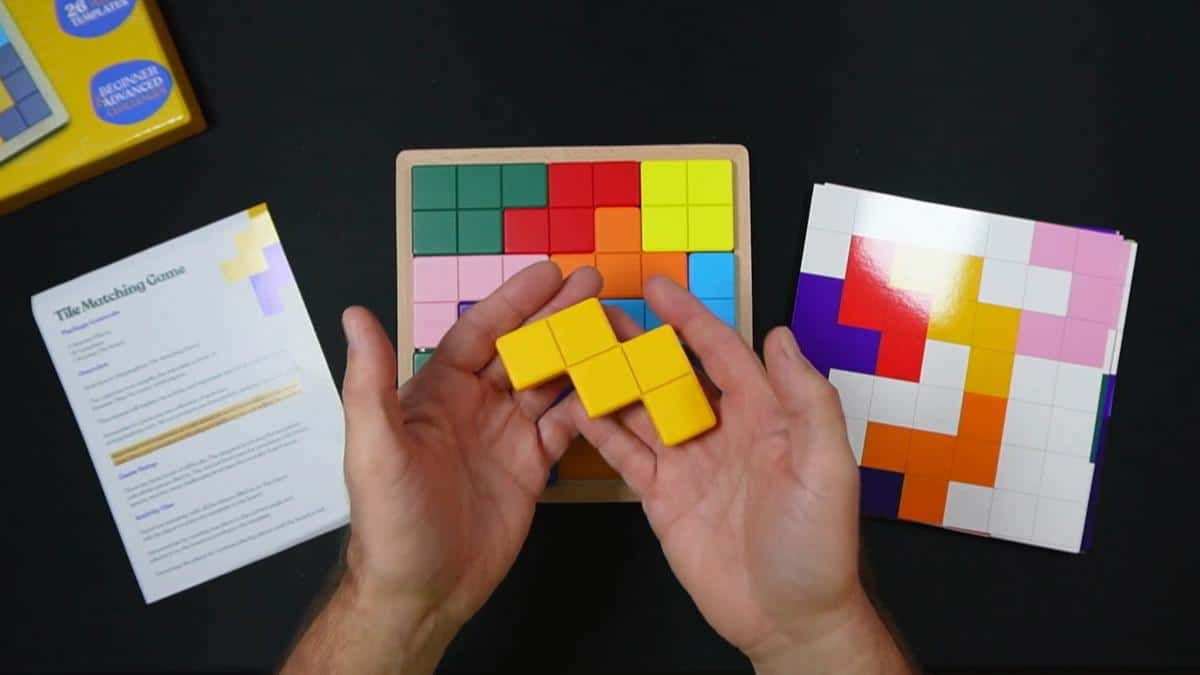
In the video, you can see that the tiles have a genuinely satisfying heft when you hold them. They feel purposeful — not like a cheap toy, but like something made to be handled repeatedly by real people with real hands.
As I demonstrated in the video, even the second difficulty level — the one with some blank spaces on the template — requires a meaningful amount of independent thinking to complete. It is not a pushover, but it is absolutely achievable. That balance is hard to get right, and this kit manages it well.
One detail I appreciated: the template cards can be rotated in four directions, which means 26 templates effectively become many more unique configurations. When I evaluated this product, I noticed that reusing the same template card in a different orientation genuinely changes the puzzle experience. That is a smart design choice that extends the life of the kit considerably.
The storage box impressed me more than I expected. As I noted in the video, it is built from heavy-duty pressboard — solid enough for therapy settings and senior centers where things get handled frequently and enthusiastically.
Day to day, this kit requires almost no maintenance. Wipe the tiles with a dry cloth if needed, keep them away from moisture, and they should hold up to daily use for a very long time. The painted finish is sealed well, and solid wood construction means there is no hollow interior to crack or warp.
Will You Be Able to Use It?
The half-inch thick tiles are designed specifically for adult hands, and most older adults with mild to moderate hand strength will be able to pick them up and place them without difficulty.
For someone with moderate arthritis or reduced grip strength, the chunky size is genuinely helpful. These are not the tiny fiddly pieces that make most puzzles a nightmare for aging hands.
The simplest template level can be completed independently by many players with early to mid-stage dementia, especially once they have had a session or two to understand how the activity works. The harder levels will typically benefit from a caregiver or family member nearby to offer gentle encouragement.
Players with significant vision loss may find the template cards difficult to read clearly, even with the bright color design. Good lighting at the activity table makes a real difference.
Important Considerations
This kit is designed for mild to moderate dementia. If your loved one is in a later stage of the condition and has very limited attention span or significant physical limitations, the activity may not hold their engagement consistently.
The board is compact at 8 inches square, which is a genuine advantage for portability — but it also means the workspace is not particularly forgiving if a player tends to sweep items off surfaces. Consider placing the board on a non-slip mat or tray with raised edges in those situations.
The template cards appear to be standard cardstock, not laminated. Handle them with care and store them in the box when not in use to keep them in good condition over time.
Always consult with your doctor or occupational therapist before making health-related product decisions, especially when selecting cognitive activities for a loved one with dementia.
Help When You Need It
The kit is designed and made in the USA, which typically reflects a higher standard of quality control and customer service responsiveness. For specific warranty details, return policies, or replacement part availability, I recommend checking the product listing directly on Amazon where current seller policies will be listed.
Given the durable construction of the wooden tiles and storage box, the need for replacements should be minimal under normal use conditions.
Understanding the Cost
When you compare the Keeping Busy Tile Matching Memory Game to other dementia activity kits on the market, the value proposition is strong. You are getting a solid wood kit designed specifically for this population, with 26 templates and three difficulty levels — that is a lot of reusable engagement for the investment.
Paper-based or cardboard activity kits in this category tend to wear out quickly and often offer far less variety. The durability of this wooden construction means the cost per use drops steadily the longer it stays in rotation.
For families, caregivers, and activity directors in memory care or assisted living settings, this kit has the build quality to justify regular daily use rather than occasional novelty play. It is priced for the real world, not a premium luxury market.
Making It Work for You
Start with the easiest template level every single time — even if your loved one has used the kit before. Beginning with a success builds confidence and sets a positive tone for the session.
Rotate the template cards in different orientations to keep the activity feeling fresh without introducing entirely new challenges. As I noted in the video, turning a familiar template on its side genuinely changes the experience.
For players who become frustrated easily, sit beside them and work through a template together rather than watching. Side-by-side participation feels collaborative, not corrective, and it removes the pressure of being observed.
Good overhead lighting makes a meaningful difference. Set up the activity at a well-lit table, ideally in the morning when energy and focus tend to be at their best for most people with dementia.
If the kit is being used in a group setting like a senior center or memory care community, consider designating it as an individual activity rather than a competitive one. The goal is always personal accomplishment, not comparison.
Our Recommendation
The Keeping Busy Tile Matching Memory Game earns a genuine recommendation from me. It solves a real problem — the shortage of completable, appropriately scaled memory games for seniors with cognitive decline — with a well-built, thoughtfully designed product.
It is best suited for older adults in the mild to moderate stages of dementia who can still respond to visual cues and benefit from hands-on tactile activity. It works equally well at home, in assisted living, or in a professional memory care environment.
If your loved one is in the early stages of significant cognitive decline and you are looking for something that feels like meaningful engagement rather than busywork, this kit is worth a serious look. The three difficulty levels give it a flexibility that most activity products simply do not offer.
If your loved one is in a very advanced stage of dementia with extremely limited physical mobility or attention span, a different type of sensory activity — like a weighted blanket, textured fidget tool, or music-based engagement — may be a better starting point.
Where to Get It
You can find the Keeping Busy Tile Matching Memory Game on Amazon — the link will take you directly to the current listing where you can check pricing, availability, and recent buyer reviews. I always recommend reading through the reviews from verified purchasers, as they often include helpful real-world observations from families and caregivers just like you.
Conclusion
Keeping someone with dementia engaged, calm, and experiencing genuine moments of accomplishment is not a small thing. It is one of the most meaningful gifts you can offer them on a difficult day.
The Keeping Busy Tile Matching Memory Game is a practical, durable, and genuinely well-designed tool that makes those moments more possible. Three difficulty levels, solid wooden construction, and 26 templates give this kit real staying power in ways that cheaper alternatives simply cannot match.
If you have tried this kit with a loved one, or if you have another activity that has worked beautifully for someone with dementia, I would love to hear about it in the comments below. Your experience might be exactly what another caregiver needs to read today.