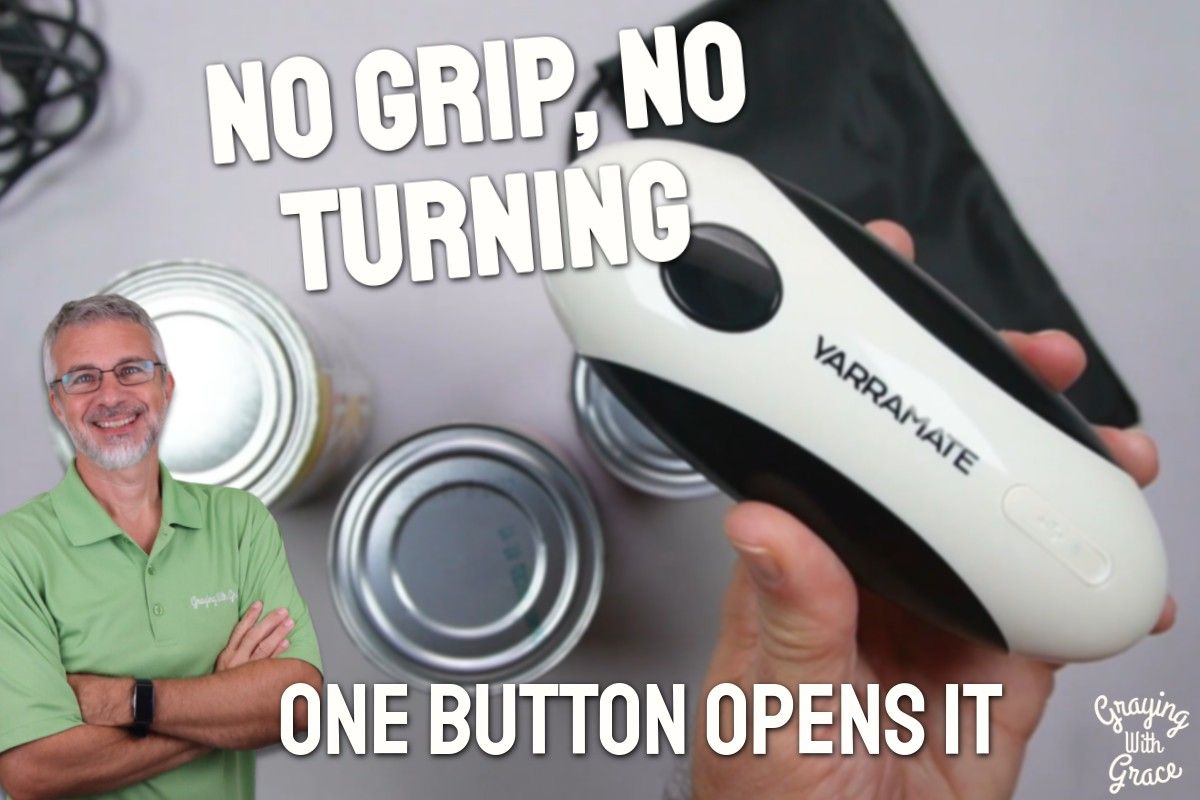
If opening a can of soup has quietly turned into a small battle, you are not alone. The grip, the twisting, the awkward wrist angle — what used to take five seconds now takes real effort. And if arthritis, weakness, or reduced hand strength has crept into your daily routine, that struggle is completely understandable.
A good electric can opener can quietly erase that frustration from your day. No grip required. No twisting. Just one button press and a smooth, safe result.
I am Scott Grant, a Certified Senior Advisor (CSA) and Senior Home Safety Specialist (SHSS) at Graying With Grace. I personally tested the YARRAMATE Automatic Electric Can Opener in my own kitchen over the course of about a week, opening multiple cans of different sizes, so I could give you an honest, practical picture of what this little gadget can actually do for you.
This review covers everything from how easy it is to use, to battery life, safety, and who will benefit most — and who might want to look elsewhere.


Quick Takeaways
- Solves: The grip, twisting, and wrist strain of manual can openers
- Best for: Older adults with arthritis, reduced grip strength, or hand fatigue
- Worth it? Yes — it is a genuinely useful, well-designed kitchen tool at a fair price point
- Best feature for seniors: Truly hands-free after a single button press — no holding required
- Biggest limitation: Will not work on pop-top or pull-tab style cans
How This Could Help You
Picture this: it is lunchtime, you reach for a can of tomato soup, and that familiar dread creeps in. The manual can opener feels like it requires more hand strength than you have today. Sound familiar?
That is exactly the problem the YARRAMATE Automatic Electric Can Opener is designed to solve. You place it on the rim of the can, press one button, and walk away. It spins itself all the way around, stops on its own, and waits for you to press the button once more to reverse and release.
So how do you use an electric can opener like this one? It could not be simpler. You position the device so the can edge sits between the two wheels, press the single button, and the opener does the rest entirely on its own. Your hands never need to stay on it.
For anyone asking how to use an electric can opener safely, the smooth-edge side cut is a key detail here. Because it cuts along the side of the lid rather than the top, the rim left behind has no sharp edges. That means no accidental cuts when reaching in for the lid — a real safety win for older hands that may not feel every sharp edge as easily as they once did.
Think about the meals this makes easier. Canned beans, soups, tomatoes, sauces, tuna — these are daily staples. Removing the physical barrier to opening them can genuinely help you stay more independent in your own kitchen, on your own schedule.
Ready to discover more innovative strategies for healthy, comfortable aging? Subscribe to our newsletter for expert-tested tips and product recommendations designed specifically for older adults.
Important Details You Should Know
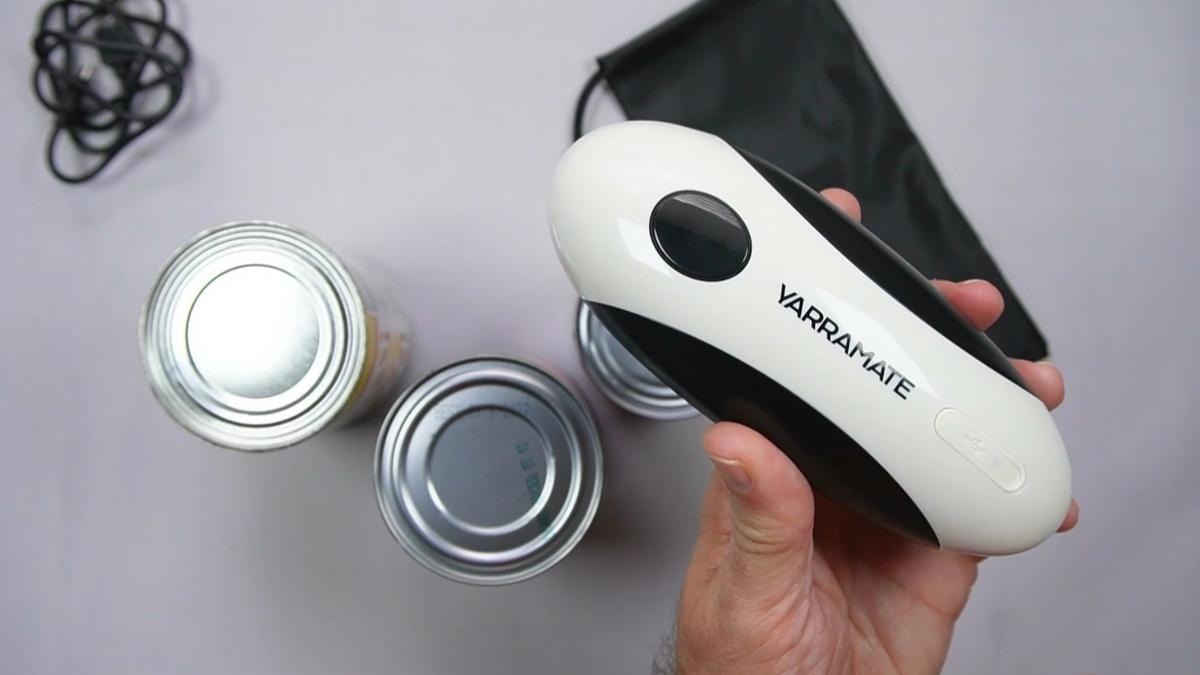
The YARRAMATE is compact — roughly the size of a large marker, measuring about 6.3 inches long and just over 2.5 inches wide. It weighs in at around 11 ounces, so it is lightweight enough to handle comfortably without fatigue.
It is built from ABS plastic and stainless steel. That combination feels solid in hand — not cheap or flimsy. The stainless-steel cutting blade is what handles the side-cut action, and it stays completely clear of the food inside the can.
It is small enough to slide into a kitchen drawer, and it comes with a fabric storage bag to keep it protected when not in use. If you ever want to toss it in a bag for travel or a stay at a family member’s home, that bag makes it easy to pack.
Getting Started
The box includes the YARRAMATE electric can opener itself, a USB-C charging cable, and the storage bag. Setup is essentially zero — there is nothing to assemble.
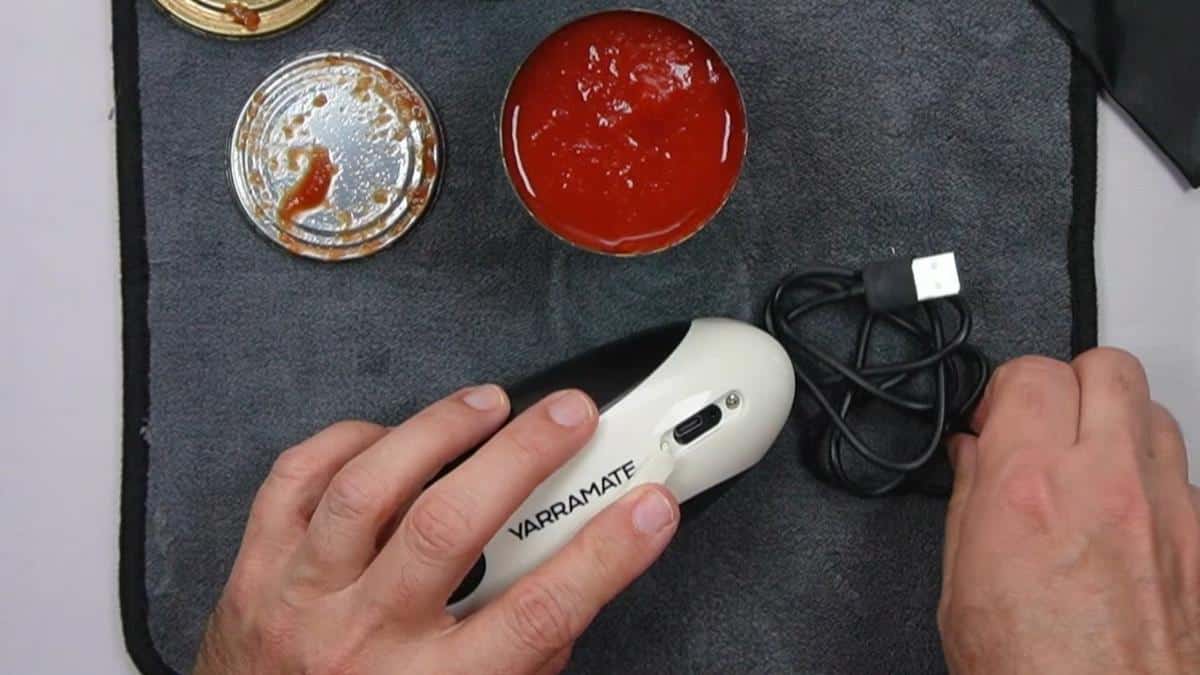
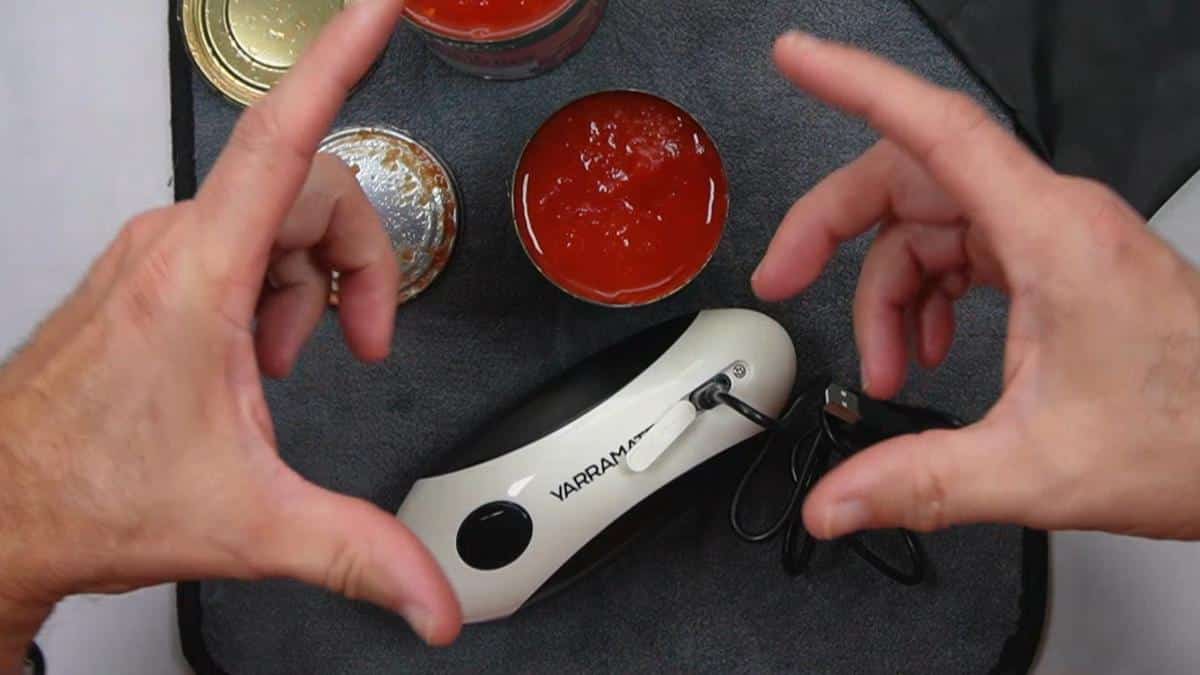
Before first use, charge it up using the included USB-C cable. Remove the small rubber cover on the side of the device to access the charging port, plug it in to any standard USB charging block, and give it about two hours to reach a full charge.
Once charged, it is ready to go. No pairing, no programming, no manual to decode. That simplicity is genuinely refreshing.
Features That Matter to You
The single-button operation is the standout accessibility feature here. For anyone managing arthritis, tremors, or reduced hand strength, the fact that you press once and step back is a genuine game-changer. As I demonstrated in the video, your hands do not need to stay on the device at all — it drives itself around the rim completely on its own.
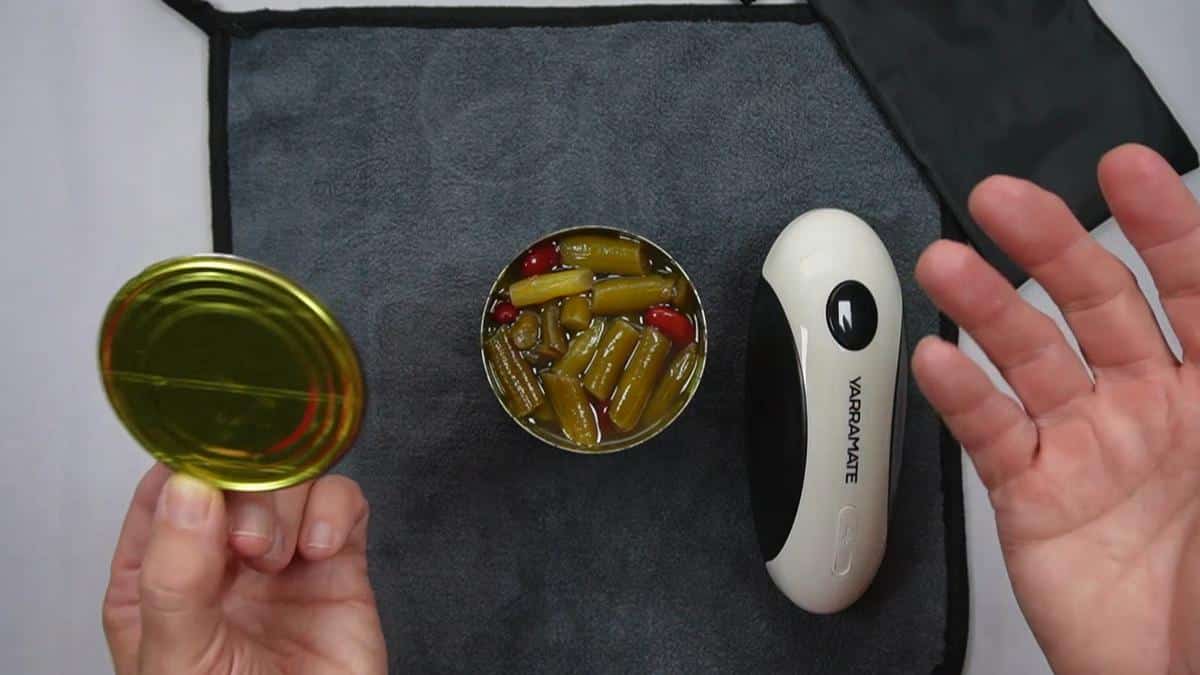
The smooth-edge side cut deserves its own spotlight. When I evaluated this product, I noticed right away that the rim left behind after opening was genuinely smooth to the touch. Traditional can openers — manual or even some electric models — cut from the top and leave a jagged metal edge. This one cuts around the side, eliminating that hazard entirely.
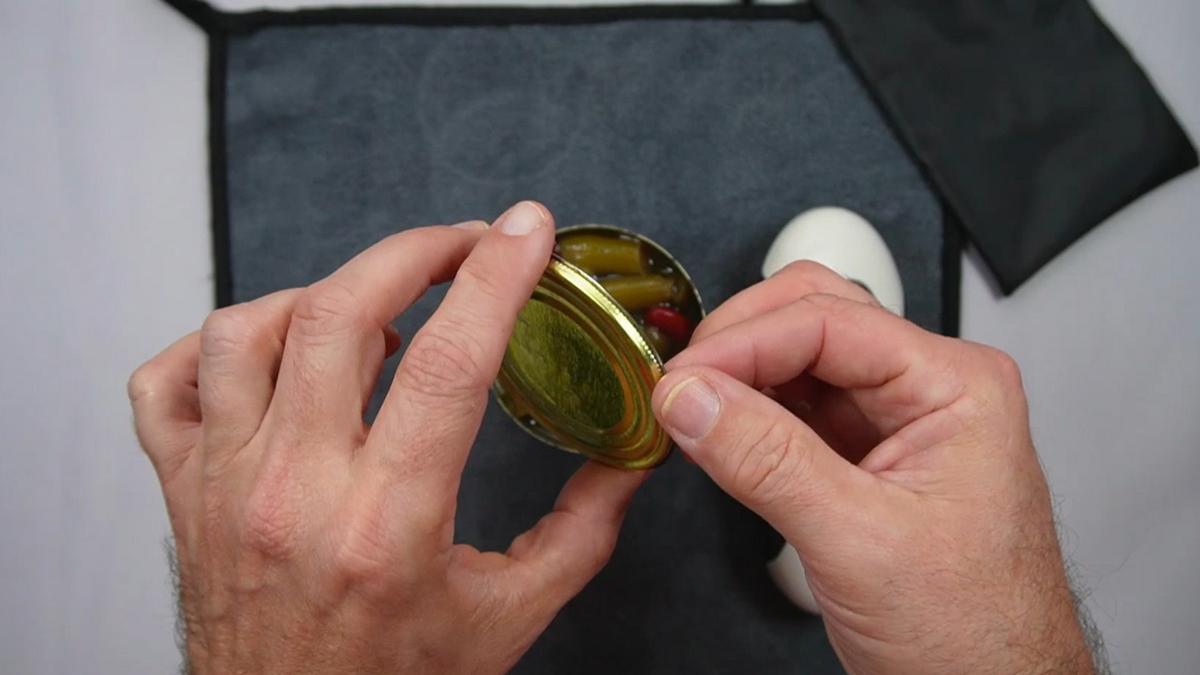
The built-in lid remover on the end of the device is a small but practical touch. In the video, you can see that after the opener completes its cycle, the magnetic end lifts the lid free. But if the lid is being stubborn, the small integrated lever on the opposite end lets you pry it loose without touching the sharp side at all.
The YARRAMATE Automatic Electric Can Opener also operates quietly — under 75 decibels — which is roughly the volume of a normal conversation. No startling buzzing or grinding noises that might be unsettling for someone with sensory sensitivities.
USB-C recharging means no hunting for batteries. As I showed in the video, you simply uncover the port, plug in the included cable, and charge. It is the same connector used by most modern smartphones, so chances are good you already have a compatible charging block at home.
Real Life Experience
I used the YARRAMATE in my own kitchen for about a week, testing it on several different can sizes. It worked consistently every time — no skipping, no stalling, no drama.
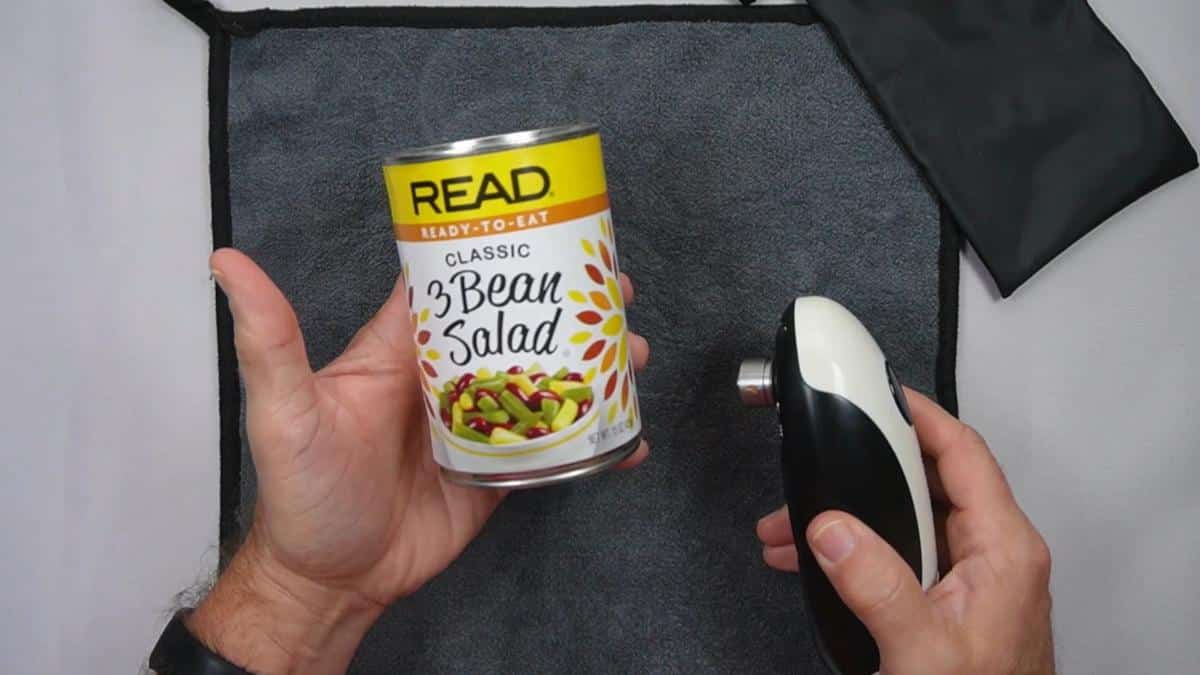
As I demonstrated in the video using a standard 15-ounce can of bean salad, the process takes roughly 20 seconds from button press to finished cut. It is not instant, but it is absolutely not slow either. You press the button and can walk away or handle another kitchen task while it does its thing.
When I evaluated this product on a smaller can of tomato sauce, it handled that just as cleanly. The device adjusts to different can diameters naturally — you just position it and let it go.
Cleaning is straightforward. A quick wipe-down with a damp cloth after use keeps the blade area clean. It is not dishwasher safe, but the simple wipe-clean design means maintenance takes about ten seconds.
One full charge lasts between 80 and 200 cans, depending on size. For most households, that means charging it perhaps once every several months. That kind of reliability removes the nagging worry of wondering whether it will work when you need it.
In the video, you can see that I addressed a concern from a reviewer who said their unit stopped working after three cans. My honest take: with any mechanical product, an occasional defective unit slips through. One negative review surrounded by a sea of positive ones is an outlier, not a pattern. If yours ever stops working unexpectedly, return it — that is what Amazon return policies are for.
Will You Be Able to Use It?
If you can press a single button with one finger, you can use this opener. That is genuinely the full physical requirement after the device is positioned on the can.
Positioning the opener does require placing it on the can rim and aligning it between the two wheels — a motion that takes light, brief contact. For someone with significant tremors or very limited hand mobility, a caregiver might help with that initial placement, while the person themselves presses the button independently.
The device is light enough that lifting and handling it should not be a challenge for most older adults. It is not bulky or awkward to hold during those few seconds of positioning.
Important Considerations
This opener is not compatible with pop-top or pull-tab cans. As I noted in the video, the pull tab sits on top of the lid and gets in the way of the device spinning around the rim. If most of your cans are the pull-tab variety, this tool will not help with those.
It also works specifically with standard round cans. Unusual shapes or very shallow lids may present a challenge with positioning.
For someone living with moderate to advanced dementia, the two-button process — press to start, press again to reverse and stop — may be confusing without guidance. A caregiver operating it on their behalf would be the safer approach in that situation.
Always consult with your doctor or occupational therapist before making health-related product decisions, particularly if hand or wrist conditions are a concern.
Help When You Need It
The YARRAMATE is sold through Amazon, which means returns are handled through Amazon’s standard return process — generally reliable and straightforward if something goes wrong.
The product does not advertise an extended manufacturer warranty beyond standard coverage, so keep your purchase confirmation handy. Customer support can be reached through the Amazon seller contact system.
Replacement parts are not separately listed, but given the compact and integrated design, the unit itself is the replaceable component if needed — and the price point makes that a reasonable option if it ever comes to that.
Understanding the Cost
The YARRAMATE Automatic Electric Can Opener sits in a very accessible price range for this category. Handheld electric can openers vary widely in quality and cost, and this one offers a genuinely strong feature set — smooth edge cut, USB-C charging, built-in lid remover, and storage bag — without pushing into premium territory.
When you consider the long-term value — no batteries to buy, a long charge life, and durable ABS and stainless-steel construction — the ongoing cost is essentially zero after purchase.
For someone spending money on pain relief, adaptive tools, or kitchen aids already, this is a low-cost upgrade that can meaningfully reduce daily frustration. That is a good return.
Making It Work for You
Keep the opener charged and stored in its bag in an easy-to-reach drawer. Leaving it buried at the back of a cabinet means you are less likely to reach for it when you need it.
Get into the habit of pressing the button, letting it go, and using those 20 seconds to grab a bowl, stir something on the stove, or simply rest your hands. Let the tool do the work it was designed to do.
If positioning the opener on the can is tricky on a particular day, try stabilizing the can by placing it on a non-slip mat or damp cloth first. That small adjustment can make a big difference in getting the opener seated correctly on the first try.
After opening, use the built-in lid remover on the end of the device before reaching for the magnet if the lid is not lifting cleanly. It only takes a gentle leverage motion to free it safely.
Our Recommendation
The YARRAMATE Automatic Electric Can Opener earns a confident recommendation from me. It does exactly what it promises — opens cans with one button press, leaves a smooth safe edge, and requires no sustained grip or hand strength from you.
It is the right choice if you are dealing with arthritis, reduced hand strength, wrist pain, or simply want to take one small frustration completely off your plate. It is also a smart gift choice for a family member or parent who has been quietly struggling with this in the kitchen.
Look elsewhere if the majority of cans you open are the pull-tab variety, or if you need something that works with non-standard can shapes. For those situations, a different tool will serve you better.
Where to Get It
You can find the YARRAMATE Automatic Electric Can Opener on Amazon — check the link for current pricing and availability. It is an affiliate link, which means it costs you nothing extra and helps support the work we do here at Graying With Grace.
Conclusion
A can opener should not be the hardest part of making lunch. The YARRAMATE removes the grip, the twist, and the sharp edge from the equation entirely — and replaces all of that with one button press.
If that sounds like relief, it probably is. Give it a try and let your kitchen feel a little easier starting today.
Have you already made the switch from a manual can opener, or are you still wrestling with one? Drop a comment below — I would love to hear what your experience has been like.