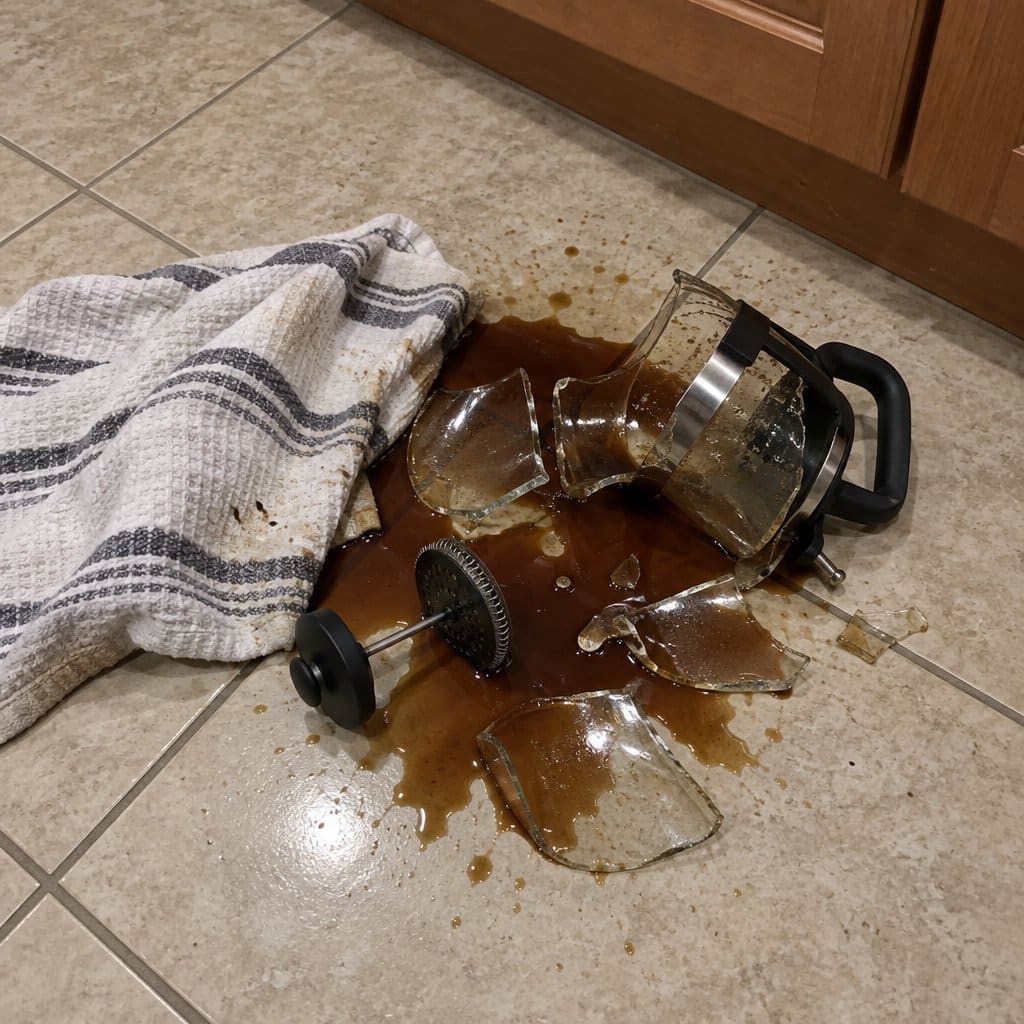
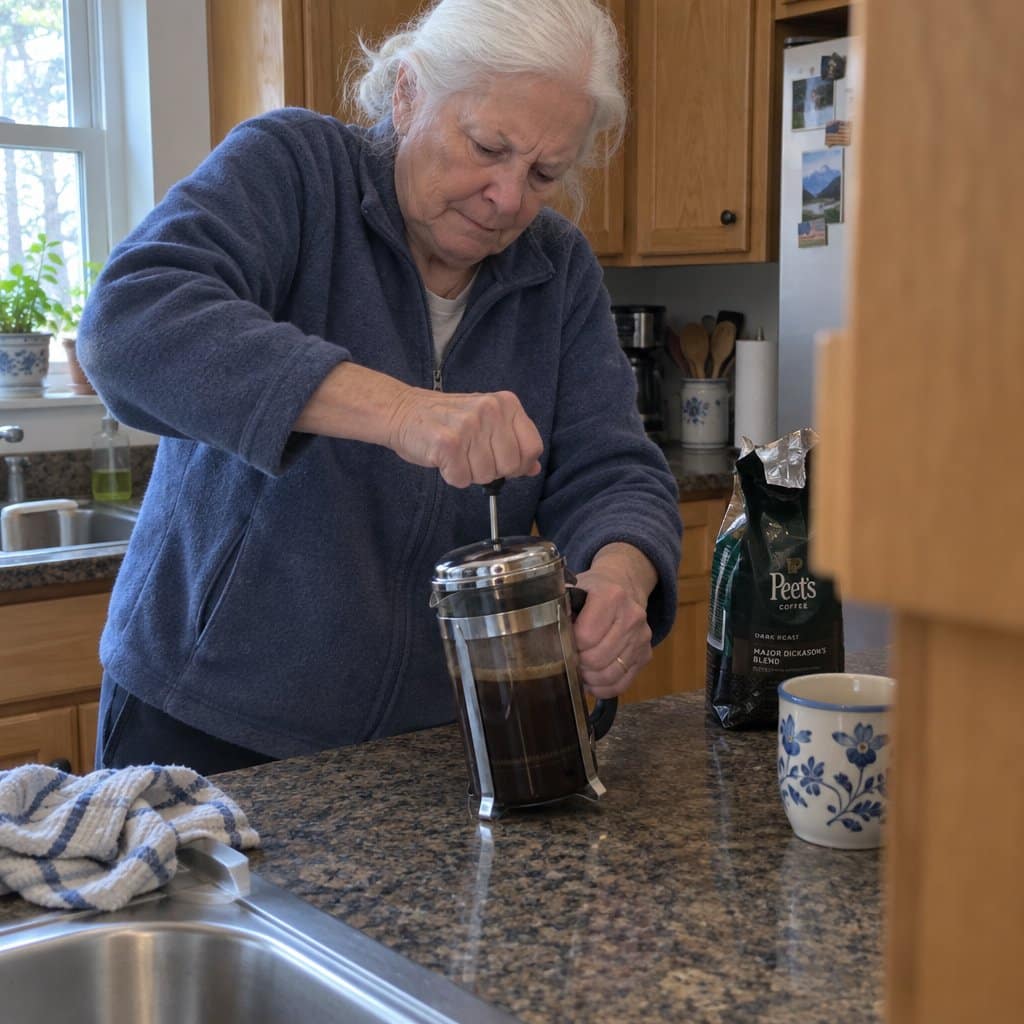
You press the plunger down and it fights you — both hands needed, carafe skidding across the counter, coffee splashing up the sides.
Or it plunges too fast and a muddy surge of grounds floods the cup.
Either way, what should be a calm, deliberate morning ritual turns into a minor battle before you’ve had a single sip.
French press coffee is worth doing right. It produces a richer, more complex cup than drip — fuller body, more nuance, more of what the beans actually have to offer.
For anyone who’s been brewing it for years, the press itself is part of the morning. It shouldn’t be the problem.
This article cuts through the noise by evaluating French press coffee makers on the four criteria that actually matter when hands have stronger opinions and patience gets shorter: plunger resistance, durability, filter quality, and how many pieces come apart for cleaning.
Every pick below gets assessed against that same framework — so you can match your specific frustration to the right press without wading through a hundred Amazon reviews.
French Press Buyer’s Cheat Sheet for Seniors
Download your free French press buyer’s guide and skip the guesswork—find the exact press that matches your hands, your kitchen, and your morning patience in just five minutes.
What Actually Matters When Choosing a French Press
Most French press product pages are useless for this decision. Capacity and color are easy. The specs that separate a daily pleasure from a daily frustration almost never appear in the listing.
Here are the four criteria used to evaluate every press in this roundup:
- Plunger effort and smoothness — How much force does the plunge actually require, and does the piston move evenly without catching? This is about filter mesh density, piston-to-carafe fit, and whether the base stays planted.
- Glass vs. stainless durability — Glass lets you watch the bloom; stainless survives a drop. Wet hands plus a hard tile floor changes the math on which material makes sense.
- Grinds-in-cup performance — How much sediment reaches the cup? This is determined almost entirely by filter mesh tightness and whether the press uses a single or double filtration layer.
- Piece count for cleaning — Some presses separate into three parts; others into eight. Most product pages don’t list this number, but it is one of the most important practical factors for daily use.
This isn’t about finding something simpler. It’s about finding something better-engineered for the way you actually use it.

Best for Grit-Free Coffee: ESPRO P3 or P7 French Press

The Engineering Behind the Clean Cup
The most common French press complaint — gritty, chewy coffee — comes down to a single design limitation: a standard single-mesh filter can’t catch fine particles, and some of those particles are always finer than the mesh. The ESPRO solves this with a double micro-filter, two concentric mesh layers with tighter tolerances than most standard presses. The design is specifically engineered to stop the sediment that gets through a single screen.
The plunger on the ESPRO moves with consistent, smooth resistance — not the sudden give that sends grounds surging, and not the stiff fight that needs two hands to finish. The resistance is even from top to bottom, which makes it easier to control the speed of the plunge.
Glass or Stainless?
The ESPRO comes in both versions. The P3 uses a glass carafe and suits someone who wants to see the brew develop; the P7 is stainless and built for durability and heat retention. If you’ve already broken a carafe — or if you’re shopping for a parent who has — the P7 is the more practical answer.
The Honest Limitation
The price point is higher than most presses on this list. The filter assembly also has more components than the simplest presses, though the pieces click together rather than thread apart, which makes reassembly more intuitive. If grinds-in-cup is not your primary frustration, a less expensive press may be the better fit.
This is the press for someone who: values a completely clean cup above everything else and is willing to pay for precision engineering to get it.
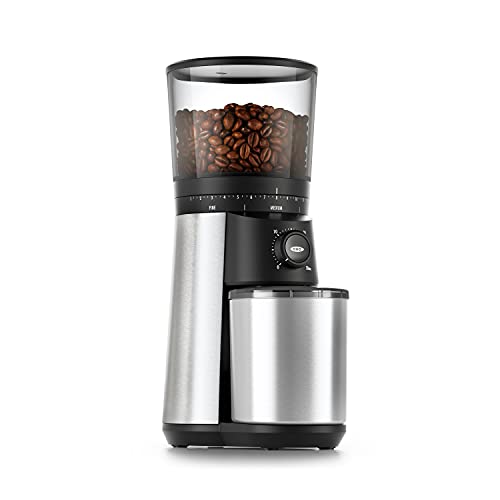
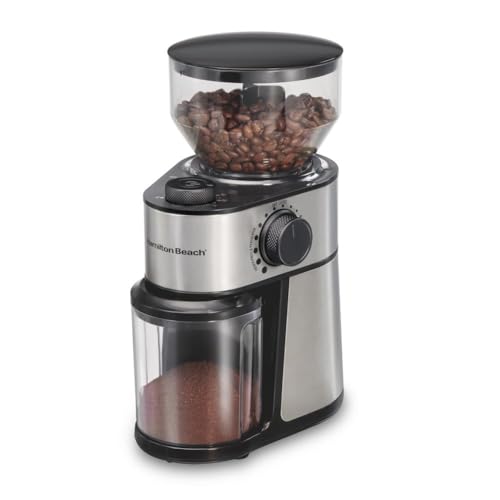
One pairing worth knowing: the filter quality a press like the ESPRO delivers is only as good as the grind going in. A burr grinder produces a consistent particle size that a micro-filter can actually stop — blade grinders produce a mix of coarse and dust that overwhelms any filter. If you’re brewing with pre-ground or a blade grinder, the double filter still helps, but it’s not working at its full advantage.

Easiest to Press Down: Bodum Chambord or Brazil
When Plunger Resistance Is the Real Problem
If your main frustration is that your French press fights back — both hands needed, wrist straining, carafe sliding — then plunger resistance is the entire decision. Some presses simply move more smoothly than others, and Bodum’s standard models are among the most widely recognized for a plunger that doesn’t demand force.
The engineering reason is straightforward: plunger resistance is determined by filter mesh density, piston-to-carafe fit, and the carafe’s inner diameter. A wider carafe means less pressure per square inch on the downstroke. Bodum’s wide-base design contributes real stability during pressing — the carafe stays planted rather than lifting with the plunger.
The Honest Limitation
The standard mesh filter in most Bodum models allows more fine sediment into the cup than a double-filter press like the ESPRO. That’s a real tradeoff worth knowing before you buy. The glass carafes in this line also have a breakage reputation — they’re borosilicate glass and more durable than cheap alternatives, but they are still glass.
This is the press for someone who: finds their current press too hard to plunge and is comfortable with a small amount of sediment in exchange for smooth, effortless operation.
Ready to discover more practical tools and tips for enjoying your daily rituals with less frustration? Subscribe to our newsletter for more tips: Join here

Best If You’ve Already Broken One: Stainless Steel French Presses
Glass vs. Stainless — The Real Comparison
A shattered glass carafe is a rite of passage for most French press owners. After that first break, the calculation changes: wet hands, a hard floor, a heavy carafe full of hot liquid. That’s a genuine safety concern, not just an inconvenience.
Stainless steel presses eliminate the breakage problem entirely. They also retain heat longer than glass — useful if mornings are unhurried and the press sits on the counter while you read or make breakfast. The tradeoff is that you lose the visual cue of watching the brew develop, and stainless interiors can be harder to inspect for cleanliness.
Brands Worth Knowing in This Category
A few stainless options are consistently well-regarded:
- Stanley Classic French Press — Double-wall vacuum insulation keeps coffee hot for an extended period; wide mouth makes cleaning easier; built with the same durability philosophy as Stanley’s travel gear.
- Mueller French Press — A more affordable entry into stainless; four-layer filter system for better sediment control; straightforward piece count for cleaning.
- Fellow Clara French Press — Focused on brew temperature stability; double-wall stainless; designed with a cleaner aesthetic for those who care about what’s on the counter.
None of these are presses I’ve personally handled, but their specs and design intent align well with the durability-first criteria — and double-wall insulation in particular is a genuine functional benefit, not just a marketing feature.
The Honest Limitation
Stainless presses can be harder to clean thoroughly if the interior narrows toward the base. You’re cleaning blind — no visual confirmation that the inside is actually clear. A long-handled bottle brush solves this, but it’s worth factoring in.
This is the press for someone who: has broken a carafe (or is worried about breaking one) and wants the coffee ritual without the safety risk of glass.
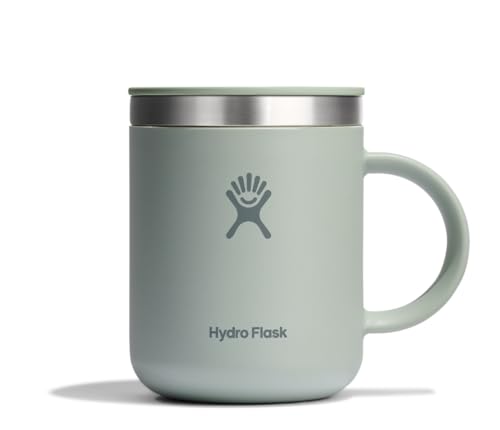
When you do brew a full press and want to drink it over the course of an hour without reheating, a good insulated mug extends the pleasure of a French press brew in a way a standard ceramic mug simply can’t. It’s a natural companion to any stainless press — the same insulation philosophy, extended to the cup.


Easiest to Clean: Fewer Parts, Less Scrubbing


Piece Count — The Number Most Product Pages Don’t List
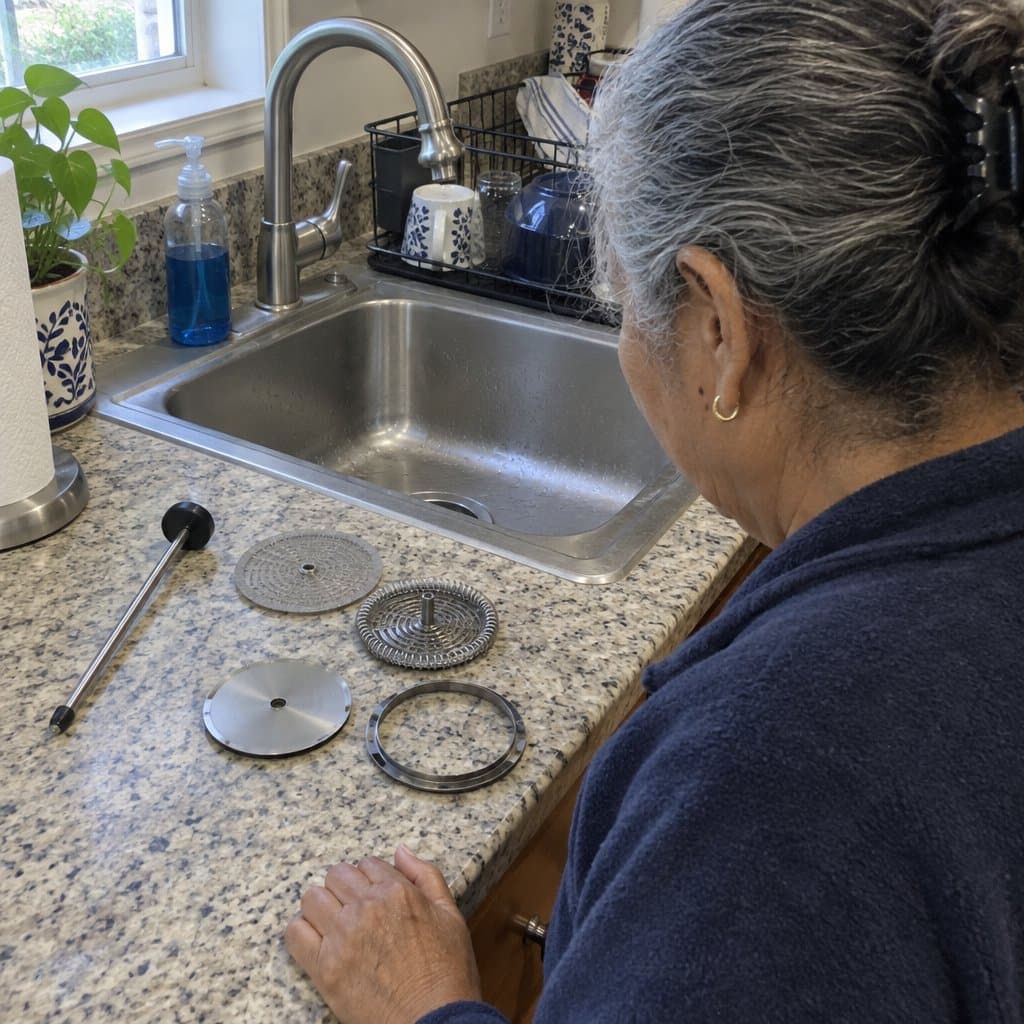
The anatomy of a standard French press plunger includes: the rod, a cross plate, a flat screen, a spiral plate, and an outer mesh. That’s five components before you get to the lid and carafe. Some presses require all five to be separated and scrubbed individually. Others are designed with integrated filter assemblies that reduce the real cleaning task to two or three pieces.
In my experience working with older adults, the complaint I hear most often about kitchen tools isn’t that they’re hard to use — it’s that they’re tedious to clean. A press that’s satisfying to brew with but takes ten minutes to reassemble after washing rarely stays in daily rotation.
Presses That Simplify the Cleanup
- OXO Brew French Press — The filter assembly is designed to be removed as a single unit and rinsed; the piece count is genuinely lower than most standard presses. The wide carafe opening also makes it easier to reach the bottom for a thorough rinse.
- ESPRO (revisited here) — Despite having a more sophisticated filter, the assembly clicks together rather than threading, which makes reassembly faster and less fiddly than the piece count might suggest.
Dishwasher Compatibility
Most lids and plunger rods are dishwasher-safe; glass carafes vary by brand and should be checked individually. Bodum’s borosilicate carafes are generally top-rack safe, but confirming with the specific model before you run it is worth the thirty seconds.
The Honest Limitation
The simplest-to-clean presses sometimes sacrifice filter tightness. There is a real tradeoff between cleaning ease and sediment control — a press with fewer, simpler filter parts tends to allow more grinds through than one with a more complex filter assembly. If both sediment and cleaning ease matter to you, the ESPRO sits closest to solving both, but it costs more to do it.
This is the press for someone who: finds detailed cleaning tedious or hard on the hands, and wants the piece count as low as possible without giving up a quality brew.
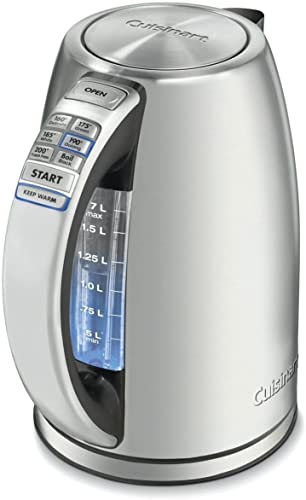
One more variable worth controlling: water temperature. French press brewing is more sensitive to temperature than drip — water that’s too hot makes the coffee harsh and bitter; too cool and the extraction falls flat. A kettle that holds in the 195–205°F range removes that variable from the morning routine entirely. It’s a small thing that makes a consistent difference in what reaches the cup.


French Press Buyer’s Cheat Sheet for Seniors
Download your free French press buyer’s guide and skip the guesswork—find the exact press that matches your hands, your kitchen, and your morning patience in just five minutes.
The Right Press for Your Specific Frustration
A Quick-Reference Summary
- Grinds in the cup? → ESPRO P3 or P7 (double micro-filter, smooth consistent plunge)
- Plunger fights back? → Bodum Chambord or Brazil (smooth plunge, stable base, wider carafe diameter)
- Already broken a carafe? → Stainless press (Stanley, Mueller, or Fellow Clara — durability without glass risk)
- Cleaning is the problem? → OXO Brew or ESPRO (simplified filter assemblies, lower real piece count)
The Decision Lens That Actually Works
Brand recognition and Amazon star ratings are not useful filters for this decision. The four criteria — plunger effort, durability, filter quality, and cleaning piece count — are. Every press on this list is a real contender for someone; none of them is the right answer for everyone.
French press coffee is one of life’s small, daily pleasures worth getting right. Choosing a press that works with your hands, your schedule, and your patience isn’t lowering your standards — it’s raising them. The ritual deserves tools that are up to it.
If you want to think through the rest of your kitchen setup with the same practical eye — tools that actually work well and hold up — the guide to kitchen utensils for arthritic hands is worth a look, as is the full roundup of lightweight cookware for seniors for anyone rethinking the broader kitchen. For morning routines that extend beyond the press, the best coffee makers for seniors covers drip, pod, and single-serve options if French press ever isn’t the right fit for a particular day. And if you’re shopping for a parent and want a broader view of what makes daily kitchen tasks easier, the must-have products for older adults living alone guide covers the full picture.
What drove you to this article — grinds in the cup, a broken carafe, a plunger that pushed back? And what did you end up choosing? Share it in the comments. That kind of specific, real-world detail is exactly what helps the next reader find their answer faster.