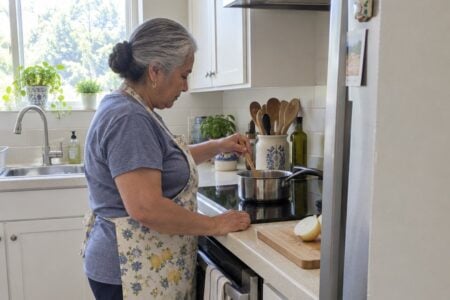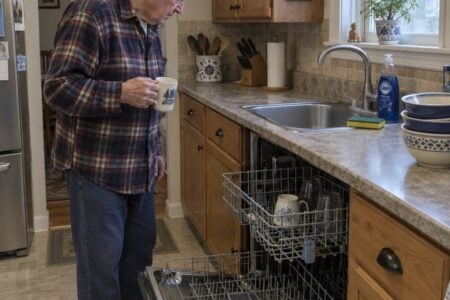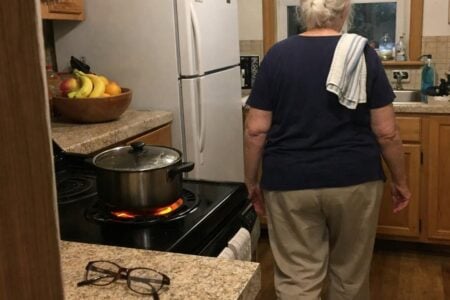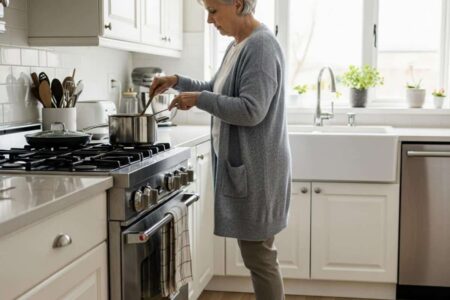
My neighbor called me last spring, voice tight. Her husband had eaten leftover chicken that had been sitting in the refrigerator for five days. He hadn't smelled it, hadn't questioned it—he'd just eaten it. She had no idea until he was sick.
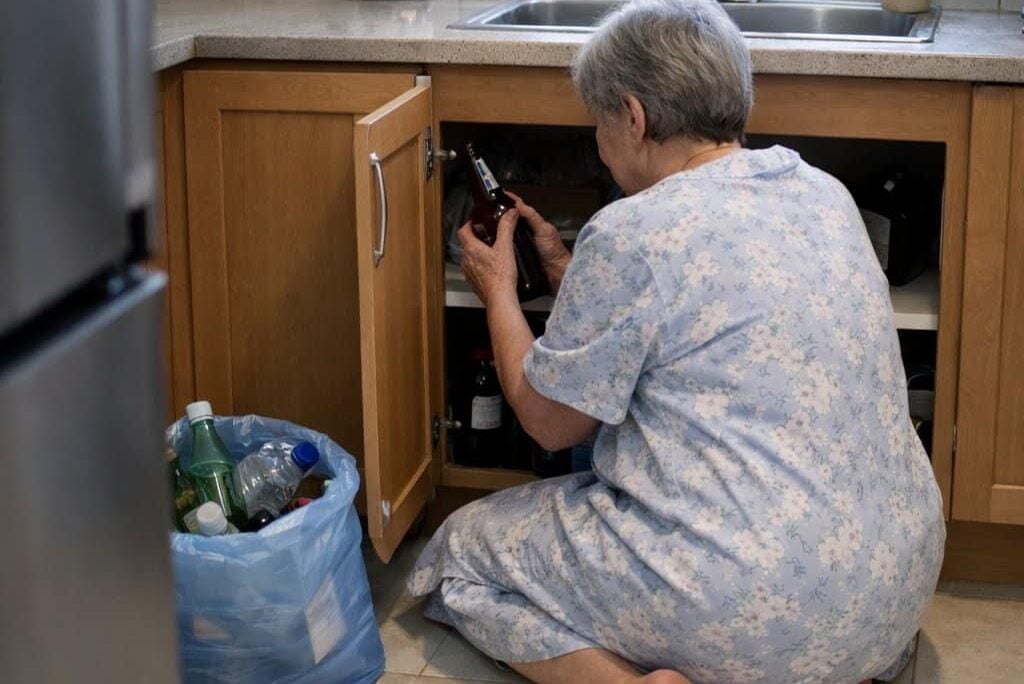
That call is not unusual. In homes where someone is living with dementia, the kitchen becomes the room where the most preventable harm happens. Not because of dramatic accidents, but because of quiet ones: the cleaning spray pulled out from under the sink, the stovetop left on after a forgotten attempt at breakfast, the reach into a low cabinet that ends in a fall.
Three specific injury patterns drive most of the harm in dementia households:
- Ingestion of chemicals, medications, or spoiled food from unsecured cabinets and appliances
- Burns or cuts from unsupervised appliance use
- Falls from instability while reaching into lower cabinets or bending into the refrigerator
The instinct when you recognize these risks is to lock everything immediately. That instinct is understandable, but it creates its own problems. A kitchen full of locked doors is disorienting for a person with dementia. It removes the familiar routines that still provide comfort and structure. And it creates daily friction for the caregiver—often someone managing their own arthritis, fatigue, and a hundred other responsibilities.
The better question isn't whether to lock cabinets. It's which specific cabinets contain a genuine hazard, and which lock you can actually operate a hundred times a week without it becoming its own source of harm.
Dementia Cabinet & Appliance Lock Shopping Guide
Download our step-by-step shopping guide to choose the right cabinet and appliance locks for your specific home layout, door type, and physical capability—so you can secure hazards in minutes, not hours, without costly mistakes or trial-and-error returns.
What to Look For
Before you look at a single product, walk through every cabinet and appliance in your kitchen and write down only what's inside that could cause injury if accessed. That list—not a general anxiety about the room—is your lock list. Most kitchens have two to four genuinely hazardous locations. Everything else should stay open.
Once you have your list, here's what to evaluate for each lock type.
Installation method. Magnetic locks require drilling into the cabinet frame—typically into ½-inch to ¾-inch particleboard or plywood. If you're renting, or if the cabinets are solid wood above ¾ inch, magnetic locks may not be feasible. Adhesive locks attach without drilling, but their rated load (usually 20–30 lbs) assumes clean, dry, smooth surface application. Cabinet surfaces that are laminate, textured, or regularly wiped with household cleaners will lose adhesion faster than painted wood or bare wood. Surface prep matters more than most buyers realize.
Magnet strength and key distance. Magnetic cabinet locks typically activate through the cabinet door at 1–2 inches. Thicker solid-wood doors or doors with internal metal hardware may block the magnetic signal entirely. Test before you commit. The magnetic key must be stored where the caregiver can reach it easily—but genuinely out of the sightline of the person with dementia. A height of 5.5 to 6 feet works well for most households.
Grip and operation force. If you have arthritis or reduced grip strength, the force required to open a latch every single day matters as much as its security rating. Before purchasing any adhesive latch product, simulate one-handed operation—because that is exactly how you will use it when your other hand is holding something. If it feels awkward on the first try, it will be painful by the thirtieth.
Visibility and aesthetic disruption. Magnetic locks are completely hidden inside the cabinet. Adhesive latches are visible on the exterior. Locking boxes are the most visible intervention of all. This is not just about appearances—visual changes to a familiar kitchen environment can increase confusion and agitation in a person with dementia. Less visible is generally better, where the security level is sufficient.
Child-safety ratings versus dementia suitability. Locks rated for children aged 2–5 are commonly used for dementia safety, but the comparison only goes so far. A person with dementia may be more persistent than a toddler, or may use tools. Mechanical complexity matters more than the rated age range. A simple spring latch that a two-year-old can't open may not hold up to sustained, focused pulling by an adult.
Reversibility. Any lock requiring drilling cannot be removed without patching and repainting. If you're in a rental or planning to resell the home, know this before you buy.
Magnetic Cabinet Locks
Magnetic cabinet locks install completely inside the cabinet, hiding all hardware from view, so the kitchen looks and feels normal while genuinely blocking access to cleaning supplies, medications, and other high-hazard contents. A handheld magnetic key held against the door exterior is the only way to open the latch, making this the highest-security option for households where the person with dementia cannot be given access to the release mechanism.
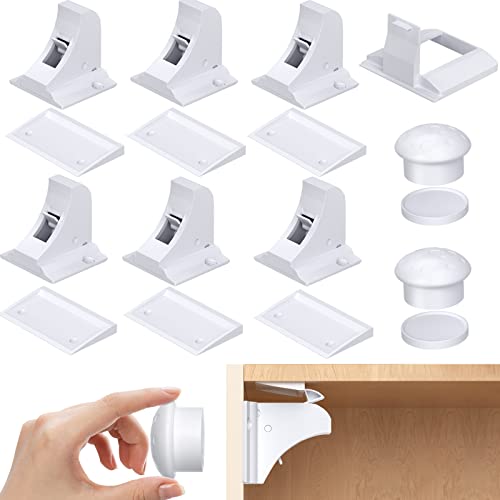


Magnetic cabinet locks mount entirely inside the cabinet—on the door and on the frame—so nothing is visible from the outside. A small handheld magnetic key, held against the exterior of the door, releases the latch. Without the key, the door will not open regardless of how hard it's pulled.
This type is the right choice for under-sink cabinets containing cleaning supplies, dishwasher pods, or drain cleaners. It's also appropriate for any cabinet holding medications that haven't yet been relocated to a lockbox, and for households where preserving the kitchen's normal appearance is a priority—either to reduce disorientation for the person with dementia or to ease resistance from family members who are uncomfortable making the home "look like a care facility."
Magnetic locks are the wrong choice for renters who cannot drill. They also don't work reliably on doors thicker than ¾ inch solid wood, or on doors with internal metal hardware that may interrupt the magnetic signal. And they're a poor fit for any household where the magnetic key might be misplaced—because a lost key means the cabinet is inaccessible until the lock is defeated by force.
One practical note before the reviews: card-style magnetic keys are easier to manage than wand-style keys. A flat card can be hung on a small hook at 5.5 to 6 feet—above typical sightlines—and retrieved with one hand. Wand-style keys are harder to hang and easier to lose in a junk drawer.
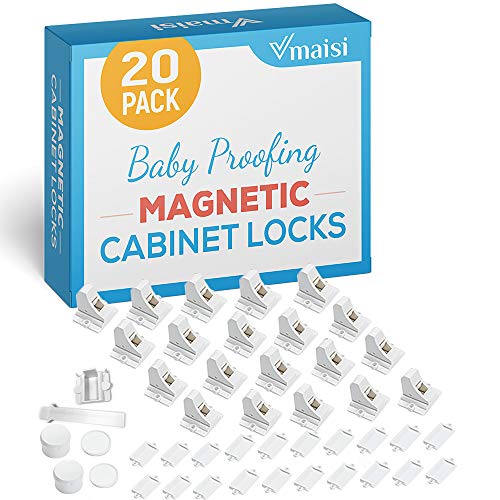
Vmaisi 20 Pack Magnetic Cabinet Locks with 2 Keys
This is a drill-mount magnetic lock system that installs inside the cabinet door and frame, with no visible hardware on the exterior. The 20-lock kit makes it a practical choice for households with several genuinely hazardous cabinets to secure in one purchase.
The two included magnetic keys are flat-card style, which is the easier format to manage for caregivers. They can be hung on a hook at height, retrieved one-handed, and stored out of the sightline of the person with dementia without much planning.
Installation requires drilling into the cabinet frame, which makes this unsuitable for renters. The magnetic activation range is standard—expect reliable performance on typical ¾-inch cabinet doors, but test on thicker solid-wood doors before committing the full set. The plastic housing is adequate for normal use but is not designed to withstand sustained, forceful pulling, so assess honestly whether the person you're protecting is in a stage where that's a likely behavior.
AOSITE Child Safety Magnetic Cabinet Locks 6 Pack with 2 Keys

A six-lock drill-mount kit suited for households that have completed their hazard inventory and identified a smaller number of specific cabinets to secure. The smaller pack size reduces waste when you've done that inventory honestly and found that three or four locations is the real number.
The two magnetic keys are flat-card format. The latch mechanism is a standard spring-release design that activates at close range through the cabinet door. Performance on standard particleboard and plywood cabinets is reliable; as with all magnetic locks in this category, thicker solid-wood doors or doors with embedded metal hardware warrant a compatibility test before full installation.
This lock is a reasonable starting point for a caregiver who wants to secure a small number of high-hazard locations—under the sink, a cleaning supply cabinet—without committing to a large kit before confirming the approach works for their specific cabinet construction.
Vmaisi Adhesive Magnetic Cabinet Locks — 12 Locks and 2 Keys
This version of the Vmaisi magnetic lock system uses adhesive mounting rather than screws, which makes it the right choice for renters or for cabinets where drilling is not possible. No tools are required for installation.
The trade-off for skipping the drill is that adhesive performance is entirely dependent on surface preparation. The instructions specify wiping the cabinet surface with isopropyl alcohol and allowing 24–72 hours of cure time before putting the lock under load. Skipping or shortening that step is the most common reason adhesive magnetic locks fail early—especially in kitchens where heat, humidity, and cleaning products degrade adhesive bonds over time.
For caregivers who cannot or will not drill, this is a legitimate alternative to the screw-mount version. But it belongs on lower-hazard cabinets—pots, baking supplies, pantry items—rather than on the under-sink cabinet holding drain cleaner, where adhesive failure would have more serious consequences.
Aurblozen 10 Pack Magnetic Cabinet Locks for Child Safety
A ten-lock drill-mount system with a mid-range pack size that works well for households securing a combination of under-sink, cleaning supply, and pantry cabinets in one installation session.
The latch design is a standard magnetic-release mechanism that installs inside the door and frame. The key is included and operates at close range through the door exterior. As with other drill-mount magnetic locks, performance is reliable on standard ¾-inch doors; thicker solid wood or doors with integrated metal hardware should be tested individually before the full installation.
One consideration for dementia households specifically: if the person you're protecting is at a stage where they use tools or apply sustained pressure to cabinets, verify that the housing strength is appropriate. If that's a concern, a lockbox that consolidates all hazardous items into a single secured container may be a more reliable solution than individual cabinet locks.
Vmaisi Adhesive Magnetic Locks — 24 Pack with 4 Keys and Cradle
The largest adhesive magnetic lock kit in this review set, and the only one that includes a cradle—a wall-mounted holder for the magnetic key that simplifies storage at height. That detail matters for caregiver households. A key that has a dedicated mount at 5.5 to 6 feet is a key that will actually be returned to the right place after every use.
This is an adhesive-mount system, so the surface preparation requirements apply fully: clean, smooth cabinet surface, isopropyl alcohol wipe, 24–72 hours of cure time before loading. In a kitchen with laminate or textured cabinet fronts, adhesive longevity will be shorter than on painted wood—plan to check bonds quarterly and replace any that feel loose before they fail.
The 24-lock quantity and four-key set makes this appropriate for households with multiple caregivers who share access across a larger kitchen, or for families securing an extensive number of lower-hazard locations alongside a smaller number of high-hazard ones.
Safety 1st Adhesive Magnetic Cabinet Locks — 12 Pack
An adhesive magnetic lock system from a widely distributed brand, with a 12-lock pack that suits a mid-sized kitchen installation without overcommitting to a large quantity.
The adhesive-mount format means no drilling is required, which makes this viable for renters. The magnetic key releases the latch through the door exterior. As a recognized brand in the child safety space, the lock design has been through product safety review cycles, which provides some baseline confidence in the mechanism.
Surface preparation remains the deciding factor for long-term adhesion. In high-humidity kitchen environments—near the dishwasher, above the stove, or under the sink where cleaning products are stored—adhesive bond longevity should be monitored closely. The under-sink location in particular is both a high-hazard target and a high-humidity environment; a screw-mount magnetic lock or a locking storage box may be the more reliable intervention there.
Adhesive Latch and Strap Locks
Adhesive latches and strap locks attach to cabinet exteriors without drilling, making them the right choice for renters or for cabinets with unusual shapes where magnetic locks are not practical. They provide a meaningful deterrent for lower-hazard locations and can be installed in minutes, giving caregivers a fast interim solution while evaluating longer-term changes to the home.


Adhesive latches and strap locks attach to the outside of cabinet doors using industrial-strength tape—no drilling, no tools. They work as a latch you pinch or press to release, or as a flexible strap looping between two handles or knobs. Nothing goes inside the cabinet.
This type is appropriate for renters, for cabinets with unusual shapes or double doors where magnetic locks aren't practical, and for lower-hazard locations where the goal is mild deterrence rather than hard security. They install quickly, which makes them a reasonable interim solution while you evaluate longer-term changes.
They are the wrong choice for high-hazard cabinets. The adhesive load rating—typically 20–30 lbs—assumes clean, dry, smooth-surface application. In real kitchen conditions, that assumption fails more often than product descriptions suggest. Cleaning products, heat, and humidity all degrade adhesive bond over time. A cabinet holding drain cleaner should not rely on adhesive alone.
For caregivers with arthritis, this is the type that requires the most honest pre-purchase testing. The standard operation is a pinch-and-press motion. Try it one-handed, standing at the cabinet height, before buying in quantity. If the motion is uncomfortable on day one, it becomes painful at daily repetition.
Skyla Homes Child Safety Cabinet Locks — 2 Pack, White
A two-pack adhesive latch in white, suited to households that want a small quantity for a targeted installation on one or two specific cabinets. The white finish blends into painted cabinet surfaces more cleanly than black alternatives, which reduces the visual disruption to the kitchen environment—a real consideration in dementia households where familiarity matters.
The latch mechanism requires a press-and-pull motion to open. Caregivers should test this motion with their own hands before purchasing, particularly if arthritis affects the fingers or thumb. Two packs make this a low-commitment entry point—you can test the adhesive performance on your specific cabinet surface before buying a larger quantity.
This is appropriate for pantry cabinets, baking supply shelves, or other lower-hazard locations where the goal is redirection rather than hard security. For under-sink or cleaning-supply cabinets, the combination of adhesive mounting and a visible exterior latch makes a magnetic lock or locking storage box the more appropriate choice.
Baby Proof Me RV Fridge Lock and Child Safety Cabinet Latch — 6 Count, Black
A six-count pack of adhesive latches marketed specifically for RV and refrigerator use in addition to standard cabinets. The RV designation reflects the product's adhesive formulation, which is tested against the vibration and temperature fluctuation typical of mobile environments—conditions that are in some ways more demanding than a fixed kitchen cabinet.
The black finish is more visible than white options, which is worth considering in households where visual changes to the kitchen environment affect the person with dementia's orientation. The latch mechanism is a standard adhesive pinch-release design.
The six-count quantity and multi-surface marketing make this a practical choice for caregivers who need to cover both cabinet latches and a refrigerator strap in a single purchase, though the adhesive rating should still be verified against the specific appliance surface before relying on it for a high-hazard location.
Roocickee 10 Pack Cabinet Locks with 3M Adhesive
A ten-pack adhesive latch system using 3M adhesive tape, which is among the better-performing adhesive formulations available in this product category. The 3M backing provides a stronger initial bond and longer-lasting adhesion than generic adhesive tape alternatives, which matters in kitchen environments where cleaning products and humidity degrade bonds over time.
The latch design is a standard press-to-release mechanism. One-handed operability should be tested before committing to the full ten-pack, particularly for caregivers with reduced grip strength.
The ten-count quantity suits a household with several lower-hazard locations to address—pantry shelves, baking cabinets, storage areas—alongside one or two higher-hazard locations secured by a more robust method. Using this latch on the under-sink cabinet is possible but requires rigorous surface preparation and quarterly bond checks.
Vmaisi Multi-Use Adhesive Strap Locks for Baby Proofing
A strap-style adhesive lock rather than a rigid latch, which changes the use case meaningfully. The strap design is suited for cabinets with two handles or knobs that are close together—looping the strap between them creates a physical barrier without requiring precise alignment with a cabinet frame.
For dementia households, the strap format works well on double-door pantry cabinets or on cabinets where handles are positioned in a way that makes rigid latches awkward to mount. The strap is also more visible than a recessed latch, which is a trade-off to consider in terms of kitchen aesthetics and the person with dementia's orientation to familiar spaces.
Caregivers with arthritis should evaluate the strap removal mechanism specifically. Strap locks typically require sliding or unhooking a tab, which can be easier than a press-and-pinch latch for some hand configurations and harder for others. Testing before purchase is the honest recommendation.
Munchkin Xtraguard Child Safety Cabinet Locks — Double Locking Latches
A double-locking adhesive latch that requires two sequential actions to open—a feature that increases resistance to access by someone with dementia who may use persistent pulling or simple problem-solving, but who is less likely to execute a two-step release sequence.
The double-lock mechanism is a genuine functional distinction from single-action latches. For caregivers assessing whether standard child locks hold up to a person with dementia who is persistent at cabinets, this is worth considering before stepping up to a magnetic lock system.
The adhesive mounting limitations apply here as they do to all products in this category. The double-action release also requires slightly more hand coordination to operate, which may be a factor for caregivers with significant arthritis. Test the mechanism with your own hands before purchasing in quantity.
Goodv Child Safety Cabinet Locks — 10 Pack
A ten-pack adhesive latch with a flexible tab release that is designed for single-handed operation. The tab mechanism differs from a press-and-pinch design—it can be operated with a downward thumb press rather than a grip-and-squeeze motion, which may be easier for caregivers with arthritis affecting the fingers.
The flexible tab design also reduces the surface contact area of the release mechanism, which means less force is required than with rigid pinch latches. This is a meaningful practical distinction, not a marketing claim—the difference in required grip force is noticeable.
At ten units, this is appropriate for households with multiple lower-hazard locations to address. The same surface preparation requirements apply: clean surface, isopropyl alcohol wipe, full cure time before loading. The flexible tab design does not change the adhesive bond requirements.
Refrigerator and Appliance Locks
Refrigerator and appliance locks address a specific, documented problem: a person with dementia who is repeatedly accessing the refrigerator or large appliances in ways that create genuine risk, such as eating spoiled food or attempting to use the stove unsupervised. These locks are designed to secure large appliance doors without requiring cabinet hardware, using adjustable straps or bolt mechanisms that fit a range of refrigerator and freezer configurations.

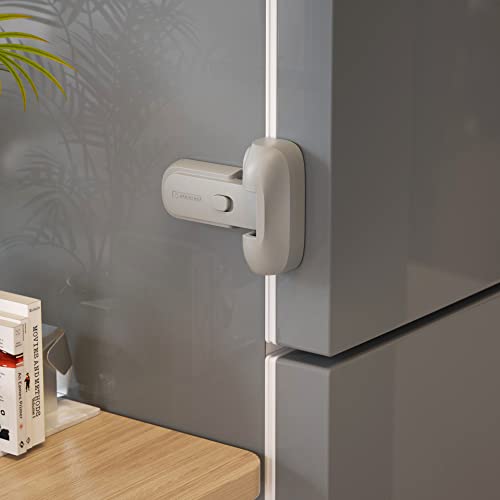


Refrigerator and appliance locks are purpose-built for large appliances rather than cabinet doors. Refrigerator locks typically use a strap-and-loop or bolt mechanism anchored to the appliance body. They address a specific, documented problem: a person with dementia who is repeatedly accessing the refrigerator in ways that create genuine risk—eating spoiled food, consuming inappropriate items, or opening the refrigerator compulsively in a way that disrupts daily household function.
This type is the right choice when you have a documented, specific refrigerator problem. It is the wrong choice as a default first step before any problem has occurred. Locking a refrigerator that a person with dementia still uses appropriately removes independence unnecessarily and can accelerate frustration and agitation.
One point that belongs at the front of this section: a refrigerator lock without a safe food alternative is just frustration. For every appliance you lock, have a plan for where the person with dementia can go instead. An unlocked snack drawer, a basket of approved foods on the counter, a small lower cabinet with familiar items—the lock is a redirect, and a redirect only works if the destination exists.
Verify appliance compatibility before purchasing any strap lock. Handle configurations and hinge placements vary significantly across refrigerator models, and a lock designed for a single-door refrigerator will not fit a French-door model correctly.
HomeBrella 2-Pack Child Proof Fridge Lock with Adhesive — Adjustable Straps
An adhesive-mount refrigerator strap lock in a two-pack, designed for standard single-door and top-freezer refrigerator configurations. The adjustable strap accommodates a range of refrigerator handle widths, which makes it more versatile than fixed-width lock designs.
Adhesive performance on refrigerator surfaces is subject to the same surface preparation requirements as cabinet adhesive locks, with one additional variable: refrigerator exteriors are often painted metal, which responds differently to adhesive tape than wood or laminate. Wipe the surface thoroughly with isopropyl alcohol and allow full cure time before placing the lock under the pulling force of daily use.
The two-pack format suits households where both the refrigerator and a secondary appliance—the freezer drawer, a second refrigerator—need to be addressed simultaneously. For a single refrigerator installation, one lock is sufficient and the second can be held in reserve.
EUDEMON Child Proof Refrigerator Lock — Single Pack, Updated Design
A single-unit refrigerator lock with an updated release mechanism designed to reduce the operation difficulty for adults compared to basic strap locks. The EUDEMON line carries a Mom's Choice Gold Award designation, which reflects product safety review rather than dementia-specific testing but provides a baseline reference point for quality evaluation.
The lock is designed for single-door and top-freezer refrigerator configurations. The release mechanism should be tested for one-handed operability before relying on it for daily use—refrigerator locks are opened many times per day by every household member, and a mechanism that requires two hands or significant grip force becomes a genuine problem at that frequency.
For households where the primary concern is a person with dementia eating spoiled food from the main refrigerator, this lock addresses the mechanism of access directly. Pair it with an accessible alternative food source—a basket of approved snacks on the counter—to reduce agitation associated with the locked refrigerator.
EUDEMON French Door Refrigerator Lock — Single Pack, Latest Design
Purpose-built for French-door refrigerator configurations, which have a fundamentally different handle and hinge arrangement than single-door models. Most standard refrigerator locks are designed for single-door handles and will not fit correctly on French-door refrigerators—this product addresses that gap directly.
The French-door design typically presents two handles meeting near the center of the appliance, and this lock is engineered for that geometry. Verify your specific refrigerator's handle placement and gap measurement against the product dimensions before purchasing.
Operation mechanism for this design should be evaluated for ease of daily use. French-door refrigerators are among the most frequently accessed appliances in most kitchens—both caregivers and other household members will operate this lock many times daily. If the release mechanism requires significant grip force or two-handed operation, it will create substantial daily friction for caregivers with arthritis.
HomeBrella 2-Pack Child Proof Fridge Lock — No Tools Required
The tool-free installation version of the HomeBrella refrigerator lock, which uses adhesive mounting without any hardware. This makes it viable for households where the refrigerator surface cannot be drilled or where a non-permanent installation is needed.
Adhesive performance on refrigerator surfaces is the key reliability variable here. Refrigerator exteriors experience temperature fluctuation near the door seals and are frequently touched and wiped—both factors that accelerate adhesive degradation. The initial adhesive bond should be checked after the first two weeks of use, and quarterly thereafter, by pulling gently on the strap to confirm it is still firmly anchored.
At two units, this format suits households securing both the main refrigerator and a secondary freezer or beverage refrigerator without a high quantity commitment. The no-tool installation makes it a fast interim solution while evaluating whether a more permanent locking approach is warranted.
Jool Baby Child Safety Strap Locks — 8 Pack
A multi-purpose strap lock set designed for use on refrigerators, cabinets, drawers, toilets, and other household surfaces. The strap design adapts to a variety of handle configurations and surface arrangements, which makes this a versatile option for households where hazards are distributed across multiple appliance types rather than concentrated in one location.
For dementia households, the versatility of a strap lock system means a single product type can address the refrigerator, a toilet lid (if that has been identified as a safety concern), and several cabinet locations—reducing the number of different lock mechanisms the caregiver has to manage and operate daily.
The eight-unit quantity supports a comprehensive installation across multiple rooms. Each application carries the same surface preparation requirements. The strap operation mechanism should be evaluated for one-handed use before committing to the full set.
FresherAcc Fridge Freezer Refrigerator Cabinet Lock — 2 Pack, Adjustable
An adjustable strap lock designed for French-door refrigerators as well as standard single-door configurations, which gives it broader applicability than fixed-width lock designs. The adjustable strap length accommodates a range of appliance handle spacings.
The two-pack format suits a household securing a refrigerator and freezer simultaneously, or a household that wants a backup unit on hand. The lock design is tool-free installation, using adhesive or a strap-around method depending on the handle type.
As with all strap locks in this category, the release mechanism determines daily usability for caregivers with arthritis. Evaluate the specific release action—clip, slide, or press—against your own hand function before purchasing. A lock that is difficult to open quickly becomes a source of caregiver frustration rather than a safety solution.
Locking Storage Boxes and Cabinets
Locking storage boxes and cabinets consolidate all hazardous items into a single secured location, replacing the need to lock multiple individual cabinets throughout the kitchen and preserving the familiarity of every unlocked space the person with dementia can still access freely. One combination or key lock replaces many, reducing the daily management burden on caregivers while keeping medications, cleaning concentrates, and other high-hazard items genuinely out of reach.


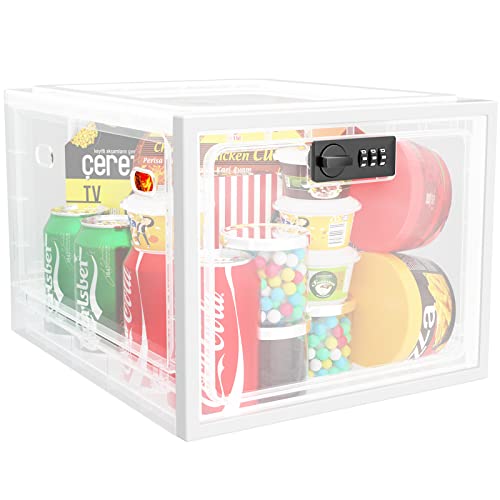


Locking storage boxes and cabinets take a different approach than any of the other product types in this article. Instead of securing individual cabinets throughout the kitchen, this approach consolidates all hazardous items into a single secured container. One lock replaces many.
This type suits households that want to preserve maximum kitchen normalcy—leaving most cabinets completely accessible—while securing medications, cleaning concentrates, sharps, or other high-hazard items in one location. It also suits caregivers who cannot manage multiple magnetic keys or latch types across a complex kitchen layout.
A lockbox is the wrong choice if the person with dementia becomes focused on the box itself. A visible, prominent locked container can become a source of fixation or determined effort. Placement matters: inside a closet, inside a larger cabinet, or on a high shelf reduces both visibility and access opportunity.
Freestanding lockable cabinets over 30 inches tall should be anchored to the wall. Most safety guidelines recommend anti-tip hardware for any freestanding storage of that height; check whether hardware is included with the specific product before purchasing.
Interior dimensions matter more than exterior size for this product type. Measure your medication bottles, spray canisters, and any other items you plan to store before ordering. A lockbox that won't fit your specific items is a problem that cannot be solved after delivery.
iBune Large Medication Lock Box with Code — Clear, Large Size
A combination-lock clear storage box with a coded release mechanism, designed for medication storage in household settings including the kitchen and refrigerator. The clear construction allows contents to be verified visually without opening the box—a practical feature for caregivers who need to confirm medication supplies at a glance.
If medications are your main worry, we also cover locking pill dispensers and medication storage for seniors, including which options prevent repeat doses.
The combination lock mechanism is generally easier for caregivers with arthritis to operate than a key-based lock, because it requires no fine motor grip on a small key. Entering a numeric code requires only finger pressure on buttons or a dial turn, which most people with mild-to-moderate arthritis can manage more reliably. Battery maintenance is not required for mechanical combination locks.
Interior dimensions should be verified against your specific medication containers before purchasing. The "large" designation in the product name refers to relative scale within the iBune product line, not an absolute size category—measure your bottles and verify the listed interior measurements fit your needs.
Biliitim Medicine Lock Box — 10L, Lockable Storage for Fridge/Snacks
A 10-liter lockable storage box designed for use in the refrigerator as well as on countertops or shelves. The refrigerator-compatible design is a meaningful distinction: it allows hazardous or restricted food items—medications that require refrigeration, restricted snacks, spoilage-prone items—to be secured inside the refrigerator rather than requiring the entire refrigerator door to be locked.
This approach is less disruptive than a full refrigerator door lock. The main refrigerator remains accessible for appropriate use; only the specific items inside the locked box are restricted. For households where the refrigerator problem is specifically about a person with dementia accessing medications or a small category of restricted foods—rather than the refrigerator contents broadly—this is a more targeted solution.
Verify that the box dimensions fit your refrigerator shelf configuration and that the lock type is operable for the caregiver who will be accessing it most frequently.
iBune Large Medication Lock Box with Code — Clear, Medium Size
The medium-size version of the iBune clear combination lockbox, suited for households with a smaller medication inventory or for situations where the large version would not fit the intended storage location.
The same combination-lock advantages apply here as with the larger version: no key to manage, no battery requirement for a mechanical dial, and visual confirmation of contents without opening. The medium size is more portable, which introduces one honest limitation: a determined adult can carry a lightweight box away from its storage location. If portability is a concern, verify the weight of the filled box and consider whether wall-mounting or securing the box inside a larger cabinet is appropriate.
The clear construction and combination lock make this a practical medication management tool in households where the primary concern is unauthorized access to pills or liquids rather than securing large quantities of cleaning supplies.
Lockabox One — Compact Lockable Storage Box for Food, Medicines, Tech
A compact, key-lock storage box marketed for food, medication, and technology storage. The Lockabox One is a recognized product in the assistive living and dementia care space—its compact form factor and hygienic design (dishwasher-safe interior) make it practical for food-related storage applications.
The key lock requires small-key operation, which is the primary limitation for caregivers with significant arthritis. The key is small and requires a standard grip-and-turn motion. Before purchasing, evaluate whether key operation is manageable for the person who will access the box most frequently—if not, a combination lock box is the more appropriate choice.
The compact size makes this suited for medication storage, restricted snacks, or a small number of specific items rather than bulk cleaning supply storage. Its portability is also relevant: like any lightweight box, placement strategy matters. Storing it inside a larger cabinet or on a high shelf reduces both visibility and the possibility that it becomes a target of focused attention.
Lalifebuss Large Lock Box — 24 Litre Combination Lockable Storage
A 24-liter combination lock storage box, the largest pure lockbox in this review set. The 24-liter capacity accommodates bulk cleaning supplies, multiple medication categories, sharps containers, and other items that smaller lockboxes cannot hold.
The combination lock mechanism avoids the small-key management problem for arthritic caregivers. At 24 liters, this box is large enough to hold essentially all kitchen-area hazardous items in one location—which reduces the total number of locks to manage throughout the kitchen from many to one.
At this size, the freestanding weight and stability of a filled box are real considerations. Verify whether the product includes anti-tip hardware or can be wall-mounted, and plan the storage location accordingly. A 24-liter lockbox placed on a high shelf in a kitchen closet is both secure and unobtrusive; the same box placed on a countertop is conspicuous and potentially a focus of attention.
JINGUR Metal Storage Locker Cabinet with Locking Door and Adjustable Shelf
A metal locker-style cabinet with a keyed lock and an adjustable interior shelf—a step up in permanence and security from plastic lockboxes. The metal construction resists both impact and sustained manipulation in a way that plastic lockboxes cannot, which matters in households where the person with dementia is physically persistent at locked storage.
The adjustable shelf allows interior organization of different item sizes—spray canisters, medication bottles, and small appliances can all be stored appropriately without wasted space. The keyed lock requires key management, which is a real consideration for multi-caregiver households.
At cabinet size, this product requires thoughtful placement. It is not portable in the way a small lockbox is, which is a security advantage—it cannot be carried away. It should be wall-anchored per standard safety guidance for freestanding storage over 30 inches tall. Placement inside a utility closet or pantry reduces its visibility to the person with dementia while keeping it accessible to caregivers.
Chefeggukk Large Medicine Lock Box — Dual 3-Digit Combination Locks, 24L
A 24-liter lockable storage box with two independent 3-digit combination locks rather than one—a design feature that provides a higher level of access security than a single-lock design. Each lock must be independently opened, which adds one step to the release sequence.
The dual combination lock design is relevant in dementia households where a single-lock combination might be observed and memorized over time. Two sequential codes on different locks present a significantly more complex problem-solving challenge.
The 24-liter capacity suits bulk storage of the same category as the Lalifebuss box reviewed above. The combination locks avoid key management entirely, which is the appropriate choice for households where the primary caregiver has arthritis or where multiple caregivers need access without key coordination. Battery maintenance is not required for mechanical combination locks, which is one less maintenance task in an already demanding caregiving environment.
Frequently Asked Questions
Do I need to lock every cabinet in the kitchen?
No. Start with a written list of what's actually inside each cabinet—not a general sense that the kitchen feels unsafe. Most kitchens have two to four locations that contain genuine hazards: under the sink, a cleaning supply shelf, a medication cabinet, or a liquor cabinet. Locking everything else adds daily friction for the caregiver without reducing meaningful risk for the person with dementia, and it removes access to familiar spaces that still provide comfort and structure.
My parent with dementia has figured out simple child locks before. What's actually more effective?
Standard spring-latch child locks can sometimes be solved by a persistent adult through trial-and-error pulling. Magnetic key-based locks require an external tool—the magnetic key—that the person with dementia does not have. Without the key, the latch cannot be opened by force alone. That's a meaningful security difference, not just a more expensive version of the same mechanism. Behavioral approaches—distracting activities, alternative accessible spaces, familiar routines—work alongside locks, not instead of them. If the person is drawn specifically to a certain cabinet, ask what they're looking for there. Sometimes the answer leads to a better solution than a lock.
I have arthritis. Which lock type is easiest for me to operate repeatedly?
Magnetic locks require only swiping a flat card or key near the cabinet surface—no grip, no press, no squeeze. For most caregivers with arthritis, this is the lowest daily effort of any lock type reviewed here. Combination lockboxes require button or dial operation, which most people with mild-to-moderate arthritis can manage. Adhesive pinch latches require the most finger strength and are the type most likely to become painful at daily repetition—test any pinch latch one-handed at cabinet height before purchasing. Refrigerator strap locks vary significantly by release mechanism; evaluate the specific action before committing.
Can I use regular childproof cabinet locks for dementia safety?
Yes, with honest caveats. Standard childproof locks are the baseline and work for many households and many stages of dementia. The difference is that a person with dementia may bring different problem-solving to a locked cabinet than a toddler would—sometimes more persistent, occasionally tool-using, sometimes more focused on a specific location over time. For lower-hazard cabinets at earlier dementia stages, standard childproof latches are a reasonable starting point. For high-hazard locations or for households where the person with dementia has already defeated simple locks, magnetic key-based locks provide a meaningfully higher level of security.
What do I do if the person with dementia becomes agitated or upset about locked cabinets?
First, preserve access to every non-hazardous cabinet. The goal is never to lock everything—it's to lock a small number of specific locations while leaving the kitchen as familiar and navigable as possible. Second, provide clearly available alternatives. If the refrigerator is locked, there should be an accessible snack basket on the counter. If cleaning supplies are locked, familiar household items that are safe should remain visible in their usual places. Third, avoid locking any cabinet that the person with dementia was independently using appropriately until there is a specific, documented reason to do so. Locking access preemptively—before a problem has actually occurred—removes independence earlier than necessary and can accelerate agitation.
How do I know if what I've put in place is actually working?
Check each secured area weekly. Look for signs of tampering—pulled latches, adhesive that's lifting, a strap that's been stretched or bent. If a lock has been defeated or compromised, upgrade to a higher-security option at that location. If no accessing incidents have occurred in 30 days and the locks are intact, the current setup is appropriate for this stage. Dementia progresses. Reassess your setup every six months, or sooner if you notice new accessing behaviors or changes in the person's physical capability or persistence. What is sufficient at mild cognitive impairment may not hold at a moderate stage.
Hacks and Practical Advice
The most useful thing I can tell you before you order anything: start with a written list, not a shopping cart.
Walk through your kitchen—every cabinet, every appliance—and write down only what's inside that could cause harm if accessed. Cleaning concentrates, drain cleaner, medications, raw meat, spoiled food, sharp tools. That list, not a general anxiety about the room, is what you're securing. Everything else stays open.
Test adhesive latches with your non-dominant hand before buying in quantity. Stand at the cabinet, simulate the motion one-handed, as you'll actually do it when your other hand is full. If the pinch-and-press is uncomfortable on the first try, it will be genuinely painful thirty days in. Know this before you buy ten.
Magnetic key placement is a security decision. A key hanging on a hook at eye level near the stove is visible to everyone in the kitchen, including the person with dementia. Mount a small hook at 5.5 to 6 feet—above normal sightlines for a shorter person—and return the key to it after every use. A key that lives in a kitchen drawer has effectively become a non-security.
Every lock needs a redirect destination. For every cabinet or appliance you lock, plan where the person with dementia can go instead. An unlocked snack drawer, a basket of approved foods at counter height, a familiar item left in reach of a now-locked location. The lock redirects access; the redirect destination needs to actually exist, or the lock just creates frustration.
Check adhesive bonds every three months. Pull gently on each adhesive-mounted lock to confirm the bond is still firm. Kitchen humidity, heat, and cleaning products degrade adhesive steadily. Replace any lock that feels loose before it fails—especially at high-hazard locations. Adhesive failure at an under-sink cabinet is not a slow-building problem; it's a sudden one.
Reassess every six months. Dementia progresses, and the security level appropriate for today may not be adequate in six months. New accessing behaviors, increased persistence, or changes in physical capability are all signals that the current setup needs to be reconsidered. Set a calendar reminder now rather than waiting for a problem to prompt the reassessment.
Dementia Cabinet & Appliance Lock Shopping Guide
Download our step-by-step shopping guide to choose the right cabinet and appliance locks for your specific home layout, door type, and physical capability—so you can secure hazards in minutes, not hours, without costly mistakes or trial-and-error returns.
Conclusion
The goal of dementia cabinet locks was never to make the kitchen inaccessible. It was to remove a small number of genuine hazards while leaving as much familiarity and freedom intact as possible—for the person with dementia, who still deserves a home that feels like home, and for the caregiver, who has to operate whatever you install dozens of times every single day.
A kitchen full of locked doors is its own kind of harm. So is a kitchen with no locks at all, when the specific hazards are real. The answer is in between those two extremes, and it starts with a list—not a mood.
Walk through your kitchen today. Write down what's in each cabinet. Identify the two, three, or four locations that contain something genuinely dangerous. That list tells you what to secure, which lock type fits each situation, and—just as importantly—what to leave completely alone.
If you want a structured, room-by-room framework for doing exactly this assessment across your entire home, my Home Safety and Independent Living Assessment walks through the process systematically, matching real hazards to targeted solutions rather than general recommendations. It's designed for the family caregiver who doesn't have time to research everything from scratch—which is most of us.
You're doing something hard, and you're doing it because you love someone. Getting the locks right is one part of that. Getting them right without exhausting yourself in the process is the other part.