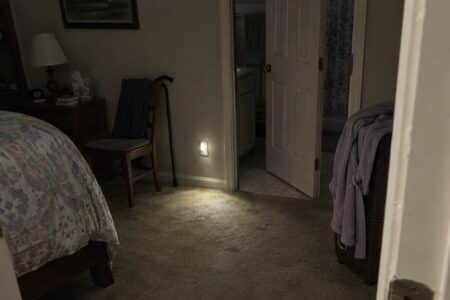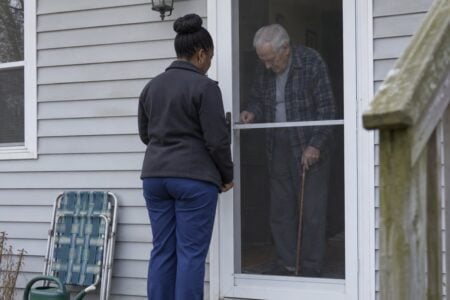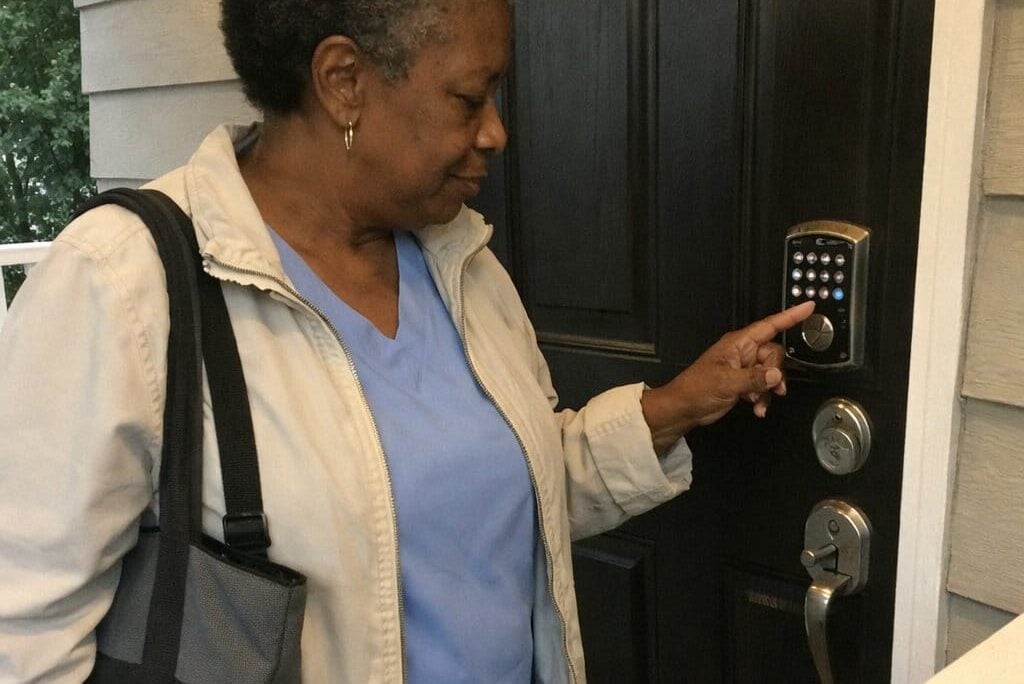
Here's the door emergency most people never think about: not a break-in, but a lockout. A senior fumbling with a key in the rain while stiff fingers refuse to cooperate. A home health aide standing at the door with a key copy that stopped working. A daughter three states away who gets a call that her mother has fallen — and the paramedics need a code nobody has.
These are the real door-security emergencies that happen in senior households. None of them are solved by buying a tougher lock if a single kick near the strike plate would split the door jamb in two seconds anyway.
This article solves two problems at once: removing the fine-motor demands of keyed entry, and making sure the right people can always get in — or out — when it actually matters.
I'll be direct about one thing before we go further. The slickest technology in this category fails if nobody maintains the batteries. And the most secure deadbolt is irrelevant if the jamb pops on the first kick. The right product depends less on tech preference than on who else needs access and how honestly the household can sustain ongoing maintenance.
This article walks through four product types in the order most readers should consider them — starting with simpler solutions and working toward more complex ones. The best answer is usually the least complicated one that actually solves the real problem.
Smart Lock & Keypad Deadbolt Shopping Guide
Download this printable shopping guide and bring it to the store to confidently choose between keypad deadbolts, smart locks, and easy-turn options—so you find the lock that actually solves your access problem without overcomplicating your life.
What to Look For
Before any product appears, these are the specifications that actually matter. Most product listings bury or omit several of them.
ANSI/BHMA Grade Rating Residential deadbolts are graded 1, 2, or 3. Grade 1 (the commercial standard) withstands 250,000 open/close cycles and 10 door strikes at 75 ft-lbs of force. Grade 2 withstands 150,000 cycles and 6 strikes. Grade 3 is builder-grade and fails both tests. For a senior living alone, Grade 1 or Grade 2 is the minimum. Many smart locks sold online do not list their ANSI grade on the product page — that omission is worth noting before you buy.
Backset and Cross-Bore Dimensions Standard US doors use a 2-3/8" or 2-3/4" backset (the distance from the door edge to the center of the knob hole) and a 2-1/8" cross-bore (the hole the lock body sits in). Most smart locks and keypad deadbolts fit both — but measure your existing hole before buying, especially in older homes where non-standard sizing is common.
Door Thickness Standard residential doors are 1-3/8" to 1-3/4" thick. Most smart locks fit this range. Check the manufacturer spec sheet before ordering, particularly for older solid-wood doors or steel exterior doors that may run thicker.
Battery Life and Low-Battery Warning Smart locks and keypad deadbolts typically run on 4 AA batteries, with manufacturer estimates ranging from 6 months to 2 years depending on usage. Look for audible low-battery alerts. For any household where the resident lives alone, a mechanical key override is non-negotiable.
Key Override Backup Any electronic or keypad lock intended for a senior living alone must include a physical key override cylinder. This is the fire-egress and battery-failure backup. Products that eliminate the key cylinder entirely — some Bluetooth-only locks do this — are the wrong choice for this audience.
Interior Operation in an Emergency For egress in a fire or medical emergency, the interior side of any deadbolt must be operable without a code, a phone, or a functioning battery. Most single-cylinder keypad deadbolts meet this standard because the interior side is a freely turning thumbturn or knob. Double-cylinder deadbolts (which require a key on both sides) are not appropriate for seniors and should not be installed without explicit understanding of the fire-egress risk.
Connectivity Type for Smart Locks Wi-Fi locks connect directly to the home router — typically 2.4 GHz, so confirm the router supports it, since some newer mesh systems default to 5 GHz only. Z-Wave and Zigbee locks require a compatible smart home hub. Bluetooth locks work within approximately 30 feet but do not support remote access without an add-on bridge. I'll name the connectivity type for each smart lock product so you know exactly what you're getting.
Strike Plate and Jamb Reinforcement Standard builder-grade strike plates use 3/4" screws that anchor only into the door casing, not the structural framing. A 3" screw reaching the stud adds meaningful kick resistance. A reinforced strike plate — typically 18-gauge steel or heavier, with multiple screw holes — combined with 3" screws is the most cost-effective security upgrade in this entire article. Keep this in mind as you read through the lock sections, because it applies to every lock type here.
Keypad Usability Specifics Backlit keys (for low-light entry), large button spacing (minimum 5/8" between key centers), and tactile feedback matter for older adults with reduced dexterity or low vision. Capacitive touchscreens require more precise contact than physical buttons — an important distinction for arthritic hands.
Keypad Deadbolts
Keypad deadbolts remove the fine-motor demands of keyed entry by replacing the lock cylinder with a numeric keypad, requiring no app, no Wi-Fi, and no hub to operate. They are the right solution for seniors who struggle with key-turning due to arthritis, grip weakness, or reduced dexterity, and for any household that wants simpler shared access without ongoing technology maintenance. If you would rather skip the deadbolt change, a combination key lock box for emergency access is another way to let family or responders in without a hidden key.


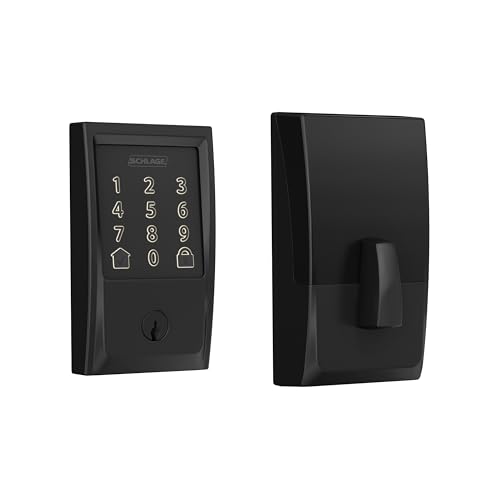


A keypad deadbolt replaces a standard keyed deadbolt with a standalone numeric keypad — no app required, no Wi-Fi, no hub. You enter a 4–8 digit code to unlock from outside; the interior side operates with a freely turning thumbturn or lever.
This is the right solution for a senior who struggles with keys due to grip weakness, arthritic fingers, or reduced fine motor control, and who has no need for multiple remote users or timed access codes. It's also the right solution for someone who is skeptical of technology and will not reliably maintain an app-based system.
Keypad deadbolts are not the right choice when multiple people need separate, revocable codes that can be changed from a distance. Most basic keypad deadbolts support only 1–6 stored codes and must be reprogrammed physically at the door. They're also not ideal for anyone who won't reliably check and replace batteries — without a functioning battery, entry depends entirely on the key override cylinder.
Compared to smart locks: simpler (no app, no Wi-Fi dependency, no hub required) but more limited in access management. Compared to easy-turn thumbturn deadbolts: more capable for households with more than one regular visitor. Neither type addresses the door jamb — that's covered in the door reinforcement section below, and it applies to any lock you choose.
TEEHO TE001 Keyless Entry Deadbolt
The TEEHO TE001 is a standalone keypad deadbolt with physical, tactile buttons — not a capacitive touchscreen. That distinction matters for arthritic hands, because physical buttons give feedback on contact and don't require the precise pressing force that touchscreens demand.
The lock supports multiple user codes and includes an auto-lock function, which is one of the most useful features for seniors who are accustomed to leaving the door unlocked. The keypad is backlit, which makes nighttime entry workable without fumbling for a light source. A physical key override cylinder is included as a backup.
The honest limitation: TEEHO is a smaller brand and does not consistently publish its ANSI grade rating. If grade certification matters to your purchase decision, contact the manufacturer directly before buying. The lock is otherwise a straightforward keypad deadbolt that avoids unnecessary complexity.
Schlage Electronic Keypad Deadbolt, Camelot Trim, Satin Nickel

Schlage is one of the few residential lock manufacturers that consistently publishes ANSI Grade 2 certification on its keypad deadbolts. That certification means the lock body has been independently tested for both cycle durability and forced-entry resistance — not just claimed by the manufacturer.
The Camelot trim is a traditional style that blends with most residential door hardware. The keypad uses physical buttons with tactile response, and the programming interface is handled directly on the keypad without a separate tool or app. Code capacity is limited compared to smart locks, but adequate for a household with one or two regular visitors.
The honest limitation here is that code changes require physical access to the door. If an aide's access needs to be revoked remotely, this lock cannot do that. For households where remote code management matters, the smart lock section covers that need directly.
Kwikset Powerbolt 250 Keypad Deadbolt, Matte Black
The Kwikset Powerbolt 250 is one of the most widely installed keypad deadbolts in residential use, which means replacement parts, installation guides, and installation help are easy to find. The 10-button layout provides more spacing between keys than some compact keypads, which benefits users with thicker or less precise finger placement.
Kwikset's SmartKey re-key technology is built into this model, meaning the lock cylinder can be re-keyed without a locksmith if the physical key backup ever needs to be changed. That's a practical feature for a household that has distributed key copies over the years and wants to start fresh.
The honest limitation: Kwikset deadbolts typically carry ANSI Grade 2 or Grade 3 certification depending on the model variant — confirm the specific grade for the version you're purchasing. The auto-lock feature requires initial setup at the keypad, which is a one-time task but should be completed before the lock goes into regular use.
Schlage Encode Smart WiFi Deadbolt, Century Trim, Matte Black
The Schlage Encode sits at the boundary between this section and the smart lock section. It functions as a standalone keypad deadbolt — no hub required — but also connects directly to Wi-Fi for app-based access management. A reader who wants keypad simplicity today but may want remote access capability later can start with keypad-only use and add the app when needed.
ANSI Grade 1 certification is published for this model, which is the highest residential standard available. The physical keypad uses backlit buttons with tactile response. Up to 100 access codes can be stored and managed either at the door or through the Schlage Home app.
The honest limitation: Wi-Fi connectivity means battery life is shorter than a pure keypad deadbolt — plan for more frequent battery changes, and set a calendar reminder from the start. This lock is reviewed again in the smart lock section for readers evaluating it in that context.
Schlage Electronic Keypad Deadbolt, Camelot Trim, Matte Black
This is the matte black finish variant of the Schlage Camelot keypad deadbolt reviewed above in satin nickel. The hardware and function are identical — ANSI Grade 2 certification, physical tactile buttons, direct keypad programming, and a physical key override cylinder included.
Finish choice is worth taking seriously for exterior doors. Matte black tends to show less weathering and fingerprint residue than polished finishes, which can be a practical consideration for a frequently used entry door.
The honest limitation is the same as the satin nickel version: code changes require physical presence at the door. Remote code management is not available on this model. For households where that capability is needed, the smart lock section is the right next stop.
Veise RZ-A Electronic Keypad Deadbolt, Matte Black
The Veise RZ-A is a budget-positioned keypad deadbolt with physical buttons and a backlit keypad. For households where cost is the primary constraint and the access situation is simple — one senior, one or two trusted visitors, no remote management needed — it covers the basic use case.
The lock includes a physical key override and an auto-lock feature. Multiple user codes are supported, with programming handled at the keypad. The matte black finish is a clean match for contemporary door hardware.
The honest limitation: Veise is a newer brand without an established track record for long-term durability, and ANSI grade certification is not clearly published for this model. It is a reasonable option for a secondary entry door or a lower-traffic situation, but for a primary exterior door in daily use, a Schlage or Kwikset with published grade certification is a more defensible choice.
Smart Locks with App and Shared Codes
Smart locks connect to a smartphone app to enable remote locking, time-limited access codes for caregivers and aides, and activity logs that confirm who entered and when. They solve the shared-access problem that keypad deadbolts cannot: managing multiple visitors from a distance without distributing physical keys.
A smart lock connects to a smartphone app via Wi-Fi, Z-Wave, Zigbee, or Bluetooth, enabling remote locking and unlocking, timed access codes, activity logs, and in some cases voice assistant integration.
This is the right solution for households where multiple people need independent access — a home health aide, a neighbor, an adult child — and where the family wants to manage that access from a distance without distributing physical keys. It's also the right solution when an adult child needs to unlock the door remotely for emergency responders. If you've ever wondered whether the aide actually showed up, an activity log answers that question.
Smart locks are the wrong choice when no one in the household is prepared to maintain the system: monitor battery levels remotely, troubleshoot connectivity drops, and update firmware when prompted. They're also not ideal for homes with an unreliable or slow Wi-Fi router, or where the router sits far from the front door. A smart lock with a dead battery and no key override is a worse outcome than a keyed lock — and that outcome is entirely predictable without a maintenance plan.
Smart locks offer maximum access flexibility and are the only type that enables remote unlocking. But they require the highest ongoing maintenance and the most stable infrastructure. If no one will actively manage the system, a keypad deadbolt is the better choice.
One note that applies to every product in this section: app-managed systems create a dependency on an engaged family member or caregiver. That dependency is real and should be named plainly before purchase. Whoever sets up the lock needs to be the person who maintains it — and that person should know they've accepted that role.
ULTRALOQ Bolt SE Wi-Fi Smart Lock

The ULTRALOQ Bolt SE connects via Wi-Fi natively — no hub required for remote access. It supports Matter over Thread, which means it is compatible with major smart home ecosystems including Apple Home, Google Home, and Amazon Alexa, giving caregivers flexibility in how they manage access.
The lock supports multiple access codes with the ability to set time-limited codes through the app. That's the feature that matters most for home health aide situations: you can issue a code that works only during scheduled care hours and expires automatically. A physical key override cylinder is included.
The honest limitation: Matter over Thread connectivity requires a Thread border router in the home — typically a recent Apple HomePod, Nest Hub, or Amazon Echo. If the home doesn't have one of those devices, remote access requires a different setup path. Confirm the home's smart home ecosystem before purchasing this model.
Schlage Encode Smart WiFi Deadbolt, Century Trim, Matte Black
Reviewed above in the keypad deadbolt section for its standalone functionality, the Schlage Encode earns a second look here for its smart lock capabilities. It connects directly to Wi-Fi — no hub, no bridge — and supports up to 100 access codes managed through the Schlage Home app. ANSI Grade 1 certification is the hardware foundation.
The activity log is one of the most useful features for adult children managing a parent's care from a distance. Every lock and unlock event is timestamped in the app, which provides a practical way to confirm that a caregiver arrived and departed as expected. Temporary and timed codes are supported for aide access management.
The honest limitation remains battery life — Wi-Fi connectivity drains batteries faster than keypad-only operation. Plan for quarterly battery checks at minimum, and set up the low-battery alert in the app so the notification goes to whoever is managing the system remotely, not just to the lock itself.
Tapo Smart Wi-Fi Deadbolt, DL100

The Tapo DL100 is a Wi-Fi smart lock that uses tactile physical buttons rather than a capacitive touchscreen — the same usability advantage that matters in the keypad deadbolt section applies here. For an older adult who occasionally needs to enter a code directly at the door, physical buttons are more forgiving than a glass panel.
The lock connects to the Tapo app, which is part of the TP-Link smart home ecosystem. Remote locking, access code management, and activity logs are all supported without a hub. A physical key override is included.
The honest limitation: the Tapo ecosystem is less established in the smart lock category than Schlage or Kwikset. Firmware update history and long-term app support are harder to evaluate for a newer entrant. For a household where long-term reliability is the priority, a longer-track brand is a lower-risk choice. For a household comfortable with the Tapo ecosystem already, this lock is a cost-competitive option.
ULTRALOQ U-Bolt Pro WiFi Smart Lock with Door Sensor
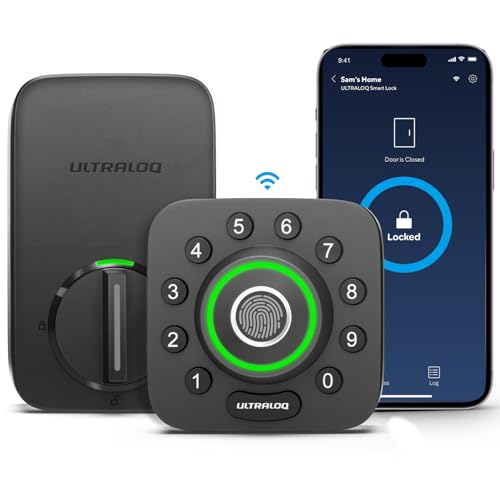
The ULTRALOQ U-Bolt Pro adds a door sensor to the standard smart lock feature set. The door sensor detects whether the door is physically closed — separate from whether the deadbolt is engaged. That distinction matters when a senior has closed the door but not fully latched it, or when a caregiver leaves without confirming the door is shut.
The lock supports multiple unlock methods including keypad, fingerprint, and app, with Wi-Fi connectivity for remote access. Up to 100 fingerprint records and multiple access codes are supported. A physical key override is included.
The honest limitation: fingerprint readers can be unreliable for older adults with worn fingerprint ridges or dry skin — a common issue. If fingerprint entry is intended as the primary method, test it thoroughly in the first week before relying on it. The keypad code is the more reliable primary method for most seniors.
Philips Smart Lock with Built-in WiFi

The Philips Smart Lock connects directly via Wi-Fi for app-based remote access without requiring a hub or bridge. Philips is a brand with established recognition in consumer electronics, which provides some confidence in long-term firmware support — a meaningful consideration for a lock expected to function reliably for years.
The lock supports multiple access codes and remote locking through the Philips Home Access app. A physical key override cylinder is included. The keypad interface uses physical buttons, which is the right choice for this audience.
The honest limitation: Philips entered the smart lock market more recently than Schlage or Kwikset, and the depth of the ecosystem integration is narrower. Voice assistant compatibility and third-party smart home connections should be verified against the specific smart home devices in the home before purchasing.
Kwikset Halo Wi-Fi Smart Lock, Matte Black

The Kwikset Halo connects via Wi-Fi without a hub and supports remote access through the Kwikset app. Kwikset's Obsidian touchscreen design is a sleek option, though the capacitive touchscreen format means arthritic hands should be tested on the panel before committing to this as the primary entry method.
The lock supports up to 250 access codes — significantly more than most competitors — and allows codes to be time-limited or scheduled through the app. For a household managing multiple caregivers, visitors, and family members, that code capacity is genuinely useful. SmartKey re-keying is included, which allows the physical key backup to be re-keyed without a locksmith.
The honest limitation: the capacitive touchscreen is the primary usability concern for this audience. It works smoothly in normal conditions but can be less responsive with very dry or cold hands. If the front door is exposed to cold weather, test the touchscreen in those conditions before deciding this is the right model.
Easy-Turn Thumbturn Deadbolts
Easy-turn thumbturn deadbolts address the interior side of the door, replacing a small standard thumbturn with a larger, more ergonomic shape that requires less grip strength to operate. They are the no-tech, no-battery, no-maintenance solution for seniors whose primary difficulty is rotating the interior bolt due to arthritis or post-stroke hand weakness.


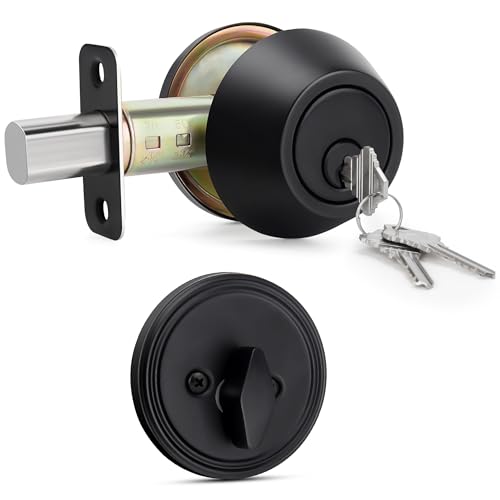


An easy-turn thumbturn deadbolt is a standard single-cylinder deadbolt fitted with an oversized, ergonomically shaped thumbturn on the interior side. This is the no-tech, no-maintenance option.
It's the right solution for a senior whose primary problem is gripping and rotating a standard thumbturn from inside — common with arthritis, post-stroke hand weakness, or reduced grip strength. If the issue is interior operation, this solves it completely, with no batteries, no app, and no ongoing maintenance.
Easy-turn thumbturn deadbolts do not solve the exterior entry problem. The user still needs a key to enter from outside. They are the wrong choice when the issue is unlocking the door from outside without a key, or when access needs to be shared with multiple visitors. They are not sufficient when an adult child needs remote access capability.
This is the simplest, lowest-maintenance, and lowest-cost solution — but the most limited in what it changes. It solves interior egress ease and arthritic interior operation. It solves nothing about exterior keyless entry or shared access. If exterior key-turning is the real difficulty, a keypad deadbolt is the right answer instead.
For seniors managing mild mobility challenges at home, reducing the number of friction points in daily routines — including door operation — is a meaningful part of staying safely independent.
BESTTEN Single Cylinder Deadbolt
The BESTTEN single-cylinder deadbolt is a traditional deadbolt format with a standard thumbturn on the interior side. It's worth including here as a baseline comparison point: many seniors don't need a specialized thumbturn — they need the existing deadbolt replaced with a fresh, well-fitted one that operates smoothly.
BESTTEN deadbolts are widely available and fit standard US door preparations (2-3/8" and 2-3/4" backset, 2-1/8" cross-bore). The thumbturn is a conventional wing design, which provides adequate torque for most grip strengths.
The honest limitation: the BESTTEN thumbturn is not oversized or ergonomically shaped for reduced grip strength. If the interior thumbturn operation is the primary concern, the Mul-T-Lock or a larger-diameter thumbturn option will serve better. This lock is the right choice when the existing lock simply needs replacing with a reliable standard deadbolt.
Gaurqiah Single Cylinder Deadbolt, Oil Rubbed Bronze
The Gaurqiah deadbolt in oil rubbed bronze is a traditional single-cylinder format. The oil rubbed bronze finish suits older home hardware styles and tends to show less wear than polished finishes on high-contact surfaces.
The lock fits standard US door preparations and includes a key override cylinder. The thumbturn design is a conventional wing shape. Installation is straightforward for anyone comfortable with basic screwdriver work.
The honest limitation: Gaurqiah is a value-positioned brand without published ANSI grade certification on this model. For a primary exterior door in daily use, a Schlage or Kwikset with published grade certification offers more documented durability. For a secondary door or a lower-security application, the Gaurqiah is an affordable option.
Gaurqiah Single Cylinder Deadbolt, Black
This is the matte black finish variant of the Gaurqiah deadbolt reviewed above. Hardware and function are identical; the finish choice is the differentiator.
Matte black is a popular exterior door finish that pairs well with contemporary door hardware and shows less weathering than polished options. If the existing door hardware is matte black and consistency matters, this variant maintains that aesthetic.
The honest limitation is the same as the oil rubbed bronze version: no published ANSI grade certification, and Gaurqiah is a newer brand without a long performance track record. Use the same purchasing logic: appropriate for secondary or lower-traffic doors, less ideal as the sole deadbolt on a primary exterior entry.
Mul-T-Lock Hercular Single Cylinder Deadbolt, Oil Rubbed Bronze
Mul-T-Lock is a security-focused brand with a reputation in the commercial and high-security residential market. The Hercular deadbolt is one of the more robust options in this section, with a drill-resistant, pick-resistant cylinder and a solid brass construction.
The thumbturn on this model is a larger diameter than most residential deadbolts, which provides meaningfully more torque for hands with reduced grip strength. That's the specific feature that earns it a place in this section. The increased thumbturn size is a genuine usability improvement for arthritic hands.
The honest limitation: the Mul-T-Lock Hercular is priced above the other deadbolts in this section, and the physical key it uses is a patented, high-security key that must be duplicated through authorized dealers — not at a standard hardware store. That's a security advantage but a convenience trade-off. For households where key duplication is routine, confirm the nearest authorized dealer before purchasing.
SNBTLA Square Deadbolt Lock, Matte Black
The SNBTLA square deadbolt is a modern-profile lock with a square-edged design that suits contemporary door hardware. The matte black finish is consistent with current architectural trends for exterior doors.
The lock fits standard US door preparations. The thumbturn is a conventional design. For households where the primary motivation is replacing an aging or difficult-to-turn deadbolt with something fresh and well-fitted, this is a straightforward option.
The honest limitation: SNBTLA is a newer brand without published ANSI grade certification or a long performance track record. The square profile is an aesthetic choice; the underlying security performance is not independently documented at the level of Schlage or Mul-T-Lock. Choose accordingly based on the door's role in the home.
Kwikset 780 Deadbolt, Satin Chrome
The Kwikset 780 is a standard residential deadbolt with Kwikset's SmartKey re-keying capability. SmartKey allows the lock cylinder to be re-keyed to a new key without a locksmith, using a small re-keying tool. For a household that has distributed key copies over time and wants to consolidate access, re-keying is a meaningful practical feature.
The satin chrome finish is a neutral, widely compatible option that pairs with most existing door hardware. The thumbturn is a conventional wing design, and the lock fits standard US door preparations. ANSI Grade 2 certification is typical for Kwikset 780 models — confirm for the specific variant at purchase.
The honest limitation: the standard thumbturn on the Kwikset 780 is not ergonomically enlarged. If interior thumbturn operation is the primary concern, the Mul-T-Lock Hercular's larger diameter thumbturn is a better fit. The Kwikset 780 is the right choice when the re-keying capability and brand reliability are the primary priorities.
Door Reinforcement Kits
Door reinforcement kits fix the most common forced-entry failure point that every lock in this article shares: a builder-grade strike plate secured with short screws that anchor only into the door casing, not the structural framing. A reinforced plate with 3-inch screws reaching the stud is the most cost-effective security upgrade available, and it works alongside any lock type.

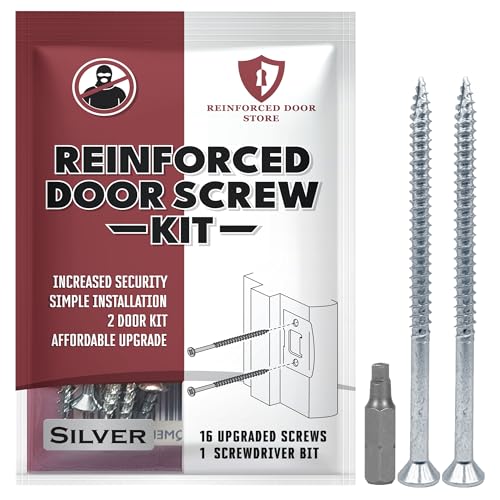


A door reinforcement kit addresses the actual most common point of forced-entry failure: the door jamb, not the lock. Standard builder-grade strike plates are secured with 3/4" screws that anchor into the door casing only — not the structural framing. Under a forceful kick, the wood splits and the door opens regardless of how strong the deadbolt is.
Reinforcement kits typically include a heavy-gauge steel strike plate (18-gauge or heavier), a door edge guard, and 3" screws that reach past the casing into the stud framing. This is the right addition for any door — in combination with any lock type in this article — where real-world forced-entry resistance matters.
Door reinforcement kits are not a substitute for the lock itself. They don't replace a deadbolt, add keyless entry, or solve any fine-motor access problem. For renters, installation may require landlord permission and may involve non-reversible modifications to the door frame.
This is the only product type in this article that directly addresses physical forced-entry resistance. Every other product here — regardless of grade or price — can be defeated if the jamb splits. Reinforcement kits are a complement to any lock choice, not a competitor. And they're often the most cost-effective security upgrade you can make to a door.
Bathroom safety modifications follow the same principle: small, targeted improvements in high-risk spots make a bigger difference than expensive overhauls.
HELEMAN Door Strike Plate Reinforcement
The HELEMAN strike plate is a heavy-duty replacement for the standard builder-grade plate most doors ship with. It mounts over the existing strike plate recess and is designed to be secured with longer screws — 3" screws that reach the structural stud behind the casing, rather than the 3/4" screws that come standard.
This is the most targeted intervention in this section: replace the plate, use longer screws, and the door's kick resistance improves substantially at minimal cost. The installation requires a screwdriver and the included or purchased 3" screws — no chisel work, no mortising.
The honest limitation: a surface-mount plate does not embed flush with the door frame. That's a minor aesthetic difference but a practical trade-off: the easier installation comes with a slightly raised profile. For most exterior residential doors where function matters more than finish detail, this is a worthwhile exchange.
Reinforced Door Screw Kit for Strike Plates and Hinges
This product takes a different approach: instead of replacing the strike plate, it provides the right screws to make the existing plate (or a replacement plate) actually reach the structural framing. The kit includes 3" screws sized for strike plates, deadbolt plates, and hinges.
It's worth noting that hinge-side reinforcement matters as well as the strike side. A door kicked near the hinge can fail differently than one kicked at the strike plate — a full-door reinforcement approach addresses both.
The honest limitation: this product assumes the existing strike plate is adequate and only the screw depth is the problem. If the existing plate is thin or narrow — typical of builder-grade hardware — replacing the plate entirely and then using longer screws is a more complete fix. Use this kit as the right first step or as a complement to a new strike plate.
Dewuyanse 7-Inch Extended Door Strike Plate, Stainless Steel, Black
A 7-inch extended strike plate covers significantly more door frame surface area than the standard 2–3 inch plates most doors come with. That extended length spreads the force of a kick across a larger section of the frame, reducing the likelihood that a single point of contact splits the wood.
Heavy-duty stainless steel construction at this length is a meaningful upgrade. The matte black finish suits contemporary exterior door hardware. Installation with 3" screws is the right approach — confirm screw length at installation.
The honest limitation: a longer plate requires the existing mortise recess in the door frame to align with the new plate's strike opening, or minor chisel work to extend the recess. For a handy homeowner, this is a straightforward task. For anyone less comfortable with that work, a local handyman can complete it in under an hour.
BHJZYDXR Black MP9454 Reinforcement and Strike for 1-3/8" Doors
This reinforcement plate is specifically sized for 1-3/8" door thickness with a 2-3/8" backset — the thinner end of the standard residential door range. Older homes and interior-converted exterior doors sometimes fall into this category, and a plate designed for the wrong backset won't align with the deadbolt opening.
If your door measures 1-3/8" thick and the backset is 2-3/8", this plate is designed to fit correctly without modification. The reinforcement adds steel coverage over the strike area with mounting holes designed for longer screw installation.
The honest limitation: the fit specificity here is both the feature and the constraint. Confirm your door's exact thickness and backset before purchasing this model. A plate that doesn't align with the deadbolt throw opening provides no benefit and requires return shipping.
PRIME-LINE Jamb Repair and Reinforcement Kit, 59-1/2 In.

The Prime-Line kit is a full-length jamb reinforcement solution — 59-1/2 inches of steel channel that runs the height of the door jamb, not just the strike area. This approach addresses the full door frame, not just the single point where the deadbolt engages.
For a door that has already experienced frame damage, or for a door where the wood framing has softened or compressed over time, full-length reinforcement is the more complete fix. The steel channel distributes any future kick force across the entire height of the jamb rather than concentrating it at the strike plate.
The honest limitation: full-length installation is more involved than a strike-plate-only replacement. Depending on the door's existing trim and casing, some fitting or trimming of the channel may be required. For a senior's home, hiring a handyman for installation is a reasonable cost that ensures the screws actually reach the structural framing.
POROHOM 59-1/2 In. Jamb Repair and Reinforcement Kit
The POROHOM kit is another full-length jamb reinforcement option at the same 59-1/2 inch length as the Prime-Line above. Full-length jamb reinforcement addresses the complete door frame rather than the strike area alone, which is the more thorough approach for any door where the framing integrity is a concern.
The kit is designed to cover both the jamb frame and the lock strike area, providing combined coverage in a single installation. For a door that will also receive a new keypad deadbolt or smart lock, pairing the lock installation with jamb reinforcement at the same time is the efficient approach.
The honest limitation: the same installation consideration applies here as with the Prime-Line kit — full-length reinforcement is a more involved project than a strike-plate swap. And one caution that applies to both full-length kits: even the best jamb reinforcement does less for a hollow-core door than for a solid-core wood or steel exterior door. Exterior doors should be solid-core; if yours is hollow-core, that's the higher-priority fix.
Frequently Asked Questions
Do I really need a smart lock, or will a keypad deadbolt work just as well?
A keypad deadbolt is enough if the only problem is key-turning difficulty and there's one or two people who need access. A smart lock adds real value only when someone needs to manage access from a distance, issue time-limited codes, or view activity logs. Smart locks also add ongoing maintenance requirements — battery monitoring, connectivity management, app updates — that a keypad deadbolt does not. Start with the simpler solution unless the shared-access problem is real and someone is committed to maintaining the system.
What happens if the battery dies in a smart lock or keypad deadbolt?
Any lock purchased for a senior living alone must have a physical key override cylinder. When the battery dies — and it will — the key override is the backup. Most modern keypad and smart locks include this, but confirm before purchasing. Some products also allow emergency power via a 9-volt battery touched to external contacts on the keypad, which temporarily powers the lock for code entry. Know which method your lock uses before the battery dies, not after.
Can a home health aide get a temporary code that expires when they stop coming?
Yes — but only with a smart lock that supports timed or temporary access codes. Basic keypad deadbolts store codes permanently until someone physically reprograms them at the door. Smart locks with app-based access management allow codes to be set for specific time windows and revoked remotely. If managing aide access is the primary concern, a smart lock is the right choice — but confirm the specific model supports timed codes, because not all do.
Is a door reinforcement kit difficult to install?
Installation difficulty varies by product type. A strike-plate reinforcement that surface-mounts over the existing plate requires only a screwdriver and longer screws — straightforward for most adults. A flush-mount plate that requires a mortised recess in the door frame requires a chisel and more time. Full-door reinforcement kits that include the full jamb height are more involved. For a senior's home, hiring a handyman for installation is a reasonable and low-cost option that ensures screws actually reach the stud framing.
Will any of these locks work if there's a power outage?
Yes. None of the products in this article depend on household power — all are battery-operated. Wi-Fi-connected smart locks lose their remote-access capability during an internet outage, but local operation (keypad entry, interior thumbturn, key override) continues to function. This is worth communicating clearly to families who assume a power outage disables the lock entirely.
My parent has dementia and keeps forgetting the code. Is a keypad deadbolt still a good idea?
This deserves a direct, honest answer. Keypad deadbolts and smart locks are not the right primary solution for someone with moderate to advanced dementia who cannot reliably remember a code or operate a new interface. For this situation, a caregiver-managed smart lock combined with an interior door alert or wander-prevention system is a better approach — and the family should consult with their care team about whether independent access to exterior doors is appropriate at all. If your loved one is earlier in their cognitive journey, landline phones designed for seniors with dementia are one example of how simplified interfaces can still work well; the same design principle applies to locks.
Hacks and Advice
Start with the jamb, not the lock. Before purchasing any new lock, pull back the existing strike plate and look at the screws. If they're shorter than 3 inches, replace them. This takes fifteen minutes and costs under five dollars in hardware-store screws. It does more for real-world forced-entry resistance than any lock upgrade.
Set the auto-lock timer on the first day. Most keypad deadbolts and smart locks include an auto-lock feature that re-engages the bolt after 30, 60, or 90 seconds. Seniors who are accustomed to leaving the door unlocked during the day sometimes disable this feature — then forget to lock up at night. Enable auto-lock from the start, while the habit is being built.
Store the physical key for every electronic lock in a secure, accessible location. The key override is only useful if someone can find the key when the battery dies. A lockbox mounted near the door — or a key on file with a trusted neighbor — is the practical backup. Don't assume the key override will be remembered in a stressful moment. Key safes are a purpose-built solution for exactly this situation.
Add a battery change reminder to a calendar or pill organizer schedule. Most keypad and smart lock batteries last 6–12 months in normal use. Adding a semiannual battery check to whatever routine reminder system the household uses prevents the battery-failure lockout. Don't rely on the low-battery warning alone.
Test the keypad in low light before relying on it. Backlit keypads matter more than most product listings emphasize. Test the lock at night or in low-light conditions within the first week. If the keypad is difficult to read, that's a usability problem that won't improve with familiarity.
Give every person with access a working code before they ever need it. The worst time to realize a caregiver's code doesn't work is when she's standing at the door with her arms full. Test every code immediately after programming, from the outside, before the original programming session ends.
For arthritic hands, test the thumbturn with the non-dominant hand. Most people test lock operation with their dominant hand, which tends to be stronger. The real test is with the non-dominant hand, in the early morning before hands have warmed up. That's the condition most likely to cause difficulty — and the condition most likely to be overlooked at purchase. For related strategies on managing arthritis in daily tasks, kitchen utensils designed for arthritic hands follow the same principle of matching the tool to the actual challenge.
For smart locks: confirm your router broadcasts 2.4 GHz before buying. Most Wi-Fi smart locks require a 2.4 GHz signal. Newer mesh Wi-Fi systems sometimes default to 5 GHz or use band steering that makes 2.4 GHz hard to isolate. If the lock can't connect to the router reliably, remote access doesn't work reliably. Check this before the lock arrives, not after installation.
Smart Lock & Keypad Deadbolt Shopping Guide
Download this printable shopping guide and bring it to the store to confidently choose between keypad deadbolts, smart locks, and easy-turn options—so you find the lock that actually solves your access problem without overcomplicating your life.
The Right Door for the Life Behind It
The most important insight in this article is not which lock is best. It's that the lock itself is rarely the weakest part of the system.
A kicked door jamb, a dead battery, a code no one can remember, and a caregiver who was never given access in the first place — these are the failure modes that actually happen. The right combination of products in this category, chosen based on who needs access, how much ongoing maintenance is realistic, and whether the door frame can withstand a serious test, closes all of those gaps at once.
The goal is a front door that the person living there can operate reliably every day. One that the right people can get through in an emergency. And one that nobody can walk through who shouldn't be able to. None of that requires the most expensive lock in the category. It requires choosing the right type for the actual problem.
For readers who want to continue building out a whole-home safety approach, the broader picture of home safety products for independent living covers the other rooms and situations that matter just as much as the front door.
Walk your front door through the four sections of this article right now and identify the single gap that is most likely to matter in your home:
- Is the problem grip and key difficulty from outside? That's a keypad deadbolt situation.
- Is the problem shared access — aides, family, emergencies from a distance? That's a smart lock situation.
- Is the problem interior egress ease for arthritic hands? That's an easy-turn thumbturn, and it's a fifteen-minute fix.
- Is the problem that the door frame hasn't been reinforced since the house was built? That's a door reinforcement kit and a box of 3-inch screws.
Most homes have one of these gaps that is more urgent than the others. Solving the right one first, completely, is more valuable than buying more technology than the household can honestly maintain.
If you'd like help thinking through the full picture — not just the door, but the whole home — share your situation in the comments below. Whether you're managing your own home or coordinating care for someone you love, the right starting point is identifying the one gap that matters most right now.