
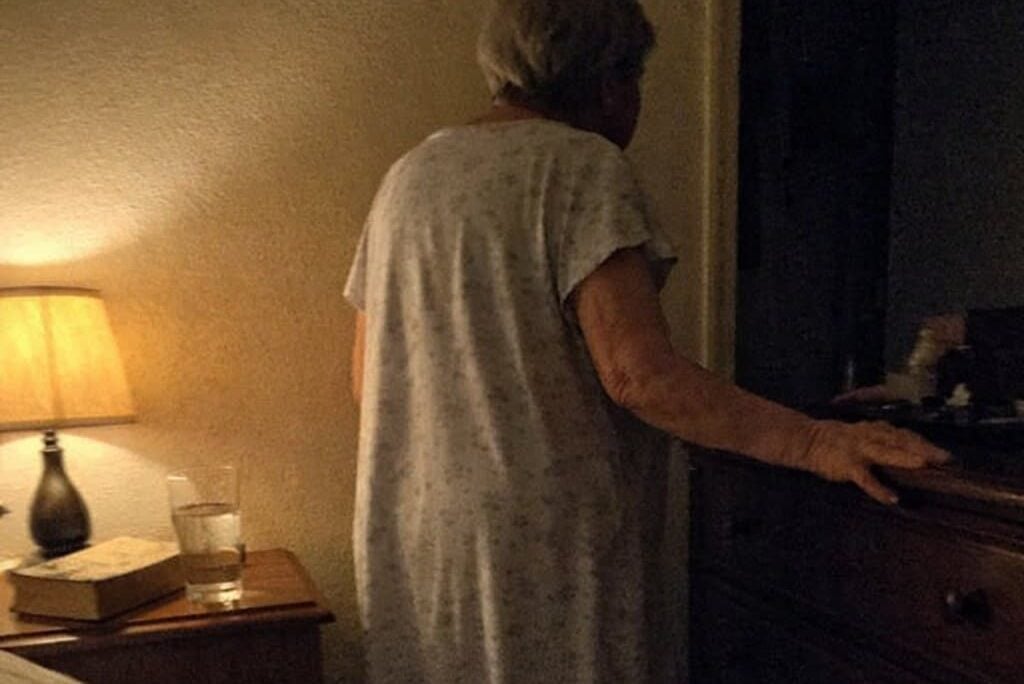
There is a specific injury pattern that almost no one talks about — and it happens in homes that look perfectly safe. An older adult reaches for a tall dresser during a stumble. The dresser comes forward with them. The anchor that would have stopped it is still in the original packaging, or was installed into drywall three years ago and has been quietly pulling free ever since.
Anti-tip hardware is overwhelmingly marketed as a childproofing product. Pediatric-safety campaigns drive almost all of the awareness around it.
But the household where the risk is highest is often the one where a 70-something adult is furniture-walking through the bedroom every morning — steadying a hand on the dresser, palm-pressing the bookcase as they round the corner — not the one with a toddler. That gap in awareness is what this article corrects.
There are two distinct hazard types to address here. The first is unsecured tall furniture that can tip under the lateral load of a person grabbing it for balance. The second is unpadded hard edges and corners — glass table edges, fireplace hearth corners, sharp-cornered end tables — that become serious impact points when someone goes down.
Think of the fall radius: the arc of floor space where an older adult is most likely to land, centered on where they sit and along the paths they walk most. Every sharp surface inside that radius is a risk that can be reduced before it becomes an injury.
Anti-Tip & Edge Guard Shopping Guide
Download this pocket-sized shopping guide to identify exactly which furniture needs anchoring, what to look for before you buy, and how to install it correctly—so you can shop with confidence and know you’ve chosen the right products the first time.
What to Look For
Knowing which product to buy is secondary to knowing what makes a product actually work in a real home. These criteria apply whether you are reading a product listing online or standing in a hardware store aisle.
Load rating and strap tensile strength Anti-tip straps are typically rated by the weight of furniture they can restrain — not the force of a person grabbing the piece. A tall dresser loaded with clothing can weigh 150–300 pounds. When a person grabs it during a stumble, the lateral force applied differs from the static weight. Look for straps rated to at least 200 lbs of restraint force. That rating is only as meaningful as the anchor point it connects to.
Stud anchoring versus drywall anchoring — this is the central safety distinction Standard drywall holds approximately 5–10 lbs with a basic anchor. A toggle bolt improves that to roughly 50 lbs in clean drywall. A screw driven into a wall stud can hold 100 lbs or more depending on screw length and stud condition. An anti-tip strap anchored into drywall with a toggle bolt can appear completely secure and fail under the sudden lateral load of a falling adult. Before installing any strap, locate the studs behind the wall. A basic stud finder costs under $20 and is available at any hardware store. Studs are typically spaced 16 inches on center. This is not optional fine print — it is the core installation decision for this entire product category.
Strap material and hardware quality Look for nylon or polyester webbing rather than thin cord. Wall brackets and furniture brackets should be metal, not plastic. Adjustability matters because furniture heights and wall-to-furniture distances vary from room to room.
Edge and corner guard adhesive requirements Adhesive-backed guards depend entirely on surface preparation. Clean, dry, grease-free surfaces are the baseline. Glass and metal surfaces require guards rated for non-porous materials — not all adhesive foam guards will bond reliably to a glass coffee table. Clear polyurethane guards rated for both porous and non-porous surfaces are more versatile but generally more expensive.
Guard material — clear polyurethane versus foam versus silicone
- Clear polyurethane: Low visual profile, bonds to glass and wood, can yellow over time in direct sun.
- Foam: Softer impact absorption, more visible, better for high-traffic corners that will be contacted repeatedly.
- Silicone: More flexible, holds on curved and beveled edges, generally longer-lasting adhesion.
Corner radius and coverage length Corner guards are available from roughly 1-inch coverage on each face up to 3 inches. Hearth corners and thick countertops need wider coverage. Thin table edges take narrower guards. Edge guards sold by the roll are measured in linear feet — a standard coffee table perimeter is approximately 10–14 linear feet; a fireplace hearth apron varies widely by design.
Furniture Anti-Tip Straps and Anchors
Tall furniture becomes a serious hazard when an older adult grabs it for balance during a stumble — anti-tip straps anchor dressers, bookshelves, and wardrobes securely to wall studs so they cannot tip forward under a sudden lateral load.

![[2 Sets] Furniture Anchors for Baby Proofing, Heavy Duty Anti](https://m.media-amazon.com/images/I/31-Llt2k4tL._SL500_.jpg)


Anti-tip straps are hardware connections between the back of a tall piece of furniture and the wall behind it. They are the correct solution for any tall, narrow piece with a high center of gravity that would tip forward if someone grabbed the front edge during a stumble. In most homes, the priority pieces are: tall dressers, armoires, wardrobe cabinets, freestanding bookshelves, filing cabinets, china hutches, and standalone pantry cabinets.
Any piece taller than roughly 30 inches that could receive a lateral load from a person grabbing it for balance belongs on this list. The taller and narrower the piece relative to its depth, the more urgent the anchoring. If you regularly steady yourself against a specific piece of furniture — even casually, even without thinking about it — that piece is a priority regardless of its height.
Anti-tip straps are the wrong solution when the nearest wall anchor point is drywall only, with no stud within reach. In that situation, furniture repositioning or replacement is safer than a strap that creates a false sense of security. Low, wide pieces with a stable footprint — a wide credenza, a low media console — generally do not need straps unless they sit on casters or a sloped surface.
The central honest trade-off: a strap anchored into a stud is highly effective. A strap anchored into drywall can fail silently and give everyone in the home the impression the furniture is secured when it is not. That distinction is the most important thing to understand before any installation begins.
When thinking about the bedroom — where most nighttime furniture-walking happens along the route to the bathroom — the dresser and any tall shelving unit should be the first pieces assessed.
AODIOU Furniture Anchors Anti-Tip Safety Straps Kit
This kit is designed for heavy furniture, with a stated 400 lb capacity. That figure refers to what the strap assembly can hold when properly anchored — which means anchored into a stud, not drywall. The higher weight rating gives meaningful headroom for loaded dressers and double-stacked bookshelves.
The kit targets a straightforward installation: strap connects furniture back to wall bracket, wall bracket goes into the wall. Whether this is a realistic solo installation depends on whether a stud is accessible directly behind the furniture piece. If a stud finder confirms solid anchor placement, most adults can complete this without a second person.
The honest limitation here applies to every kit at this price tier: the weight rating is the ceiling, not the guarantee. The anchor point — stud versus drywall — determines the real-world performance. If the instructions do not emphasize stud anchoring, treat that gap seriously before proceeding.
Sduphs Furniture Anchors Anti-Tip Straps — 2 Sets
This listing comes as two complete sets, which makes it practical for households addressing multiple pieces at once — a common situation when someone is doing a systematic room-by-room assessment rather than a single fix. Two dressers, or a dresser and a bookcase, can be handled in a single purchase.
The two-set format also invites a useful habit: anchor the most urgent piece first, then return to the second piece with the benefit of having done the installation once. That first installation teaches you where the stud falls, which tools are needed, and what clearance your furniture requires. The second installation is consistently faster.
As with all strap kits in this category, the hardware quality of the wall bracket matters more than the strap itself. Verify that the bracket included is metal before installation. A plastic bracket on the wall side is the weakest link regardless of strap rating.
Booda Brand Furniture Anchors — 10 Pack
A 10-pack is the right format for a whole-home approach. If the goal is to assess every tall piece in the home and address each one, buying in bulk is more economical than purchasing individual kits per room. This is the format that makes sense for a family member doing a comprehensive safety walkthrough of a parent’s home in a single afternoon.
The larger quantity also accounts for installation learning curve. Some anchor placements require adjustment — a stud may fall two inches from where you expected, or a piece of furniture may sit closer to the wall than the strap’s minimum length. Having extra hardware on hand means not stopping the project to reorder.
Ten units address more furniture than most people expect to anchor when they start the process. The bedroom, the living room bookcase, and the kitchen pantry cabinet together may account for four to six pieces. Having extras is not wasteful — it is the difference between finishing the job and leaving two pieces unaddressed.
QuakeHold! Furniture Strap Kit — Antique Brown, 15 in
QuakeHold products come out of the earthquake preparedness market, not the childproofing market — a meaningful distinction. Earthquake preparedness requires hardware that performs under sudden, violent lateral force. That is exactly the load type applied when a person grabs a piece of furniture during a stumble. The engineering context is different from a toddler-bumping scenario, and the product reflects it.
The antique brown finish is a practical detail that matters in rooms with wood furniture and warm-toned décor. A visible black or white strap on the back of a mahogany dresser looks conspicuous. The finish does not change the function, but it does change whether the installation bothers anyone aesthetically — which affects whether it stays in place long-term.
At 15 inches, the strap length accommodates most furniture-to-wall distances. Very deep furniture pieces set away from the wall may require measurement before purchase to confirm fit.
QuakeHold! Furniture Strap Kit — Black, 15 Inch
The black version of the QuakeHold kit serves the same function as the antique brown with a finish suited to darker furniture, painted walls, or rooms where the strap will not be visible regardless of color. The earthquake-market engineering background is the same, and the 15-inch strap length is identical.
For households with a mix of furniture finishes, buying both colorways and matching each strap to its piece is a reasonable approach. It is a small detail, but in a home where the owner cares about how rooms look — and most people who have furnished their homes over decades do — small details affect whether safety hardware gets used or removed.
The honest limitation of any 15-inch strap: measure the distance between the back of the furniture and the wall before ordering. A piece sitting on thick carpet, or a dresser with a rear foot rail, may have more clearance than expected. Confirming the measurement first prevents a return.
Picture Hang Solutions PHS Anti-Tip Furniture Anchors — Holds 400 lb
The PHS kit is marketed toward the furniture-anchoring task specifically, with a 400 lb stated capacity. The distinction worth noting with this product is the hardware design — reviewing the product details for bracket construction and strap material before purchase is worth the extra minute, particularly for heavy pieces like loaded wardrobes or full bookshelves.
Any 400 lb rated kit needs to be evaluated against the anchor point, not just the strap. The same principle applies here as with every other kit in this section: a 400 lb strap anchored into toggle-bolt drywall does not deliver 400 lbs of real-world protection. The stud anchor is what unlocks the rating.
For households doing a comprehensive home safety review — particularly one that includes both furniture anchoring and bathroom modifications — this kit addresses the tall-furniture portion of that project and fits alongside broader fall-prevention efforts.
Corner and Edge Guards
Hard, sharp surfaces — glass table edges, fireplace hearth corners, wood furniture corners — become impact points when someone falls, and edge guards cushion those surfaces to reduce injury severity within the fall radius of any sitting or walking area.


Corner and edge guards are protective coverings applied to hard, sharp surfaces that would cause injury on contact during a fall. They do not prevent the fall — they reduce the severity of the impact when contact happens. That distinction matters, but it does not make them less important. A person who stumbles into an unpadded fireplace hearth corner or a glass table edge faces a different outcome than one who contacts a padded surface.
The relevant surfaces in most homes are: glass-top coffee tables, glass dining tables, wood and granite table corners, fireplace hearth corners and aprons, countertop corners at cabinet height, and the corners of low wood furniture directly in the path of travel. The fall radius concept applies here — every hard, angular surface within that arc around a favorite chair or along the bedroom-to-bathroom route deserves assessment.
Corner guards are the wrong solution when sharp-cornered furniture sits directly in a walking path. A pointed end table in a narrow hallway should be relocated first, padded second. Guards reduce impact severity; they do not change the geometry of the space. They also cannot compensate for furniture with an unstable base — a wobbly glass table needs stabilizing before its edges are protected.
The central trade-off in this category: clear polyurethane guards are visually unobtrusive and appropriate for glass surfaces, which makes them suitable for living rooms and dining rooms without creating an institutional look. But they require scrupulously clean, dry surfaces to maintain adhesion. On a frequently wiped glass table, adhesion failure is the most common reason these products stop working. Foam guards are more forgiving in installation but more visible. Matching material choice to surface type and maintenance habits matters as much as matching it to appearance preference.
Understanding the injury patterns that occur during falls — and where in the home those falls most commonly occur — helps identify which surfaces to prioritize.
CalMyotis Corner Protector — Furniture Corner Guard & Edge Safety Bumpers (Foam)
This foam corner guard set covers the high-traffic corner scenario — wood table corners, furniture edges, and similar surfaces where repeated contact is more likely than a single-impact fall event. Foam provides softer impact absorption than clear polyurethane and is more forgiving on installation, which matters on wood surfaces that have been waxed or finished over years.
The visibility trade-off is real. Foam guards in this category are typically available in white or black, neither of which disappears against a wood dining table. For rooms where aesthetics are a priority, this is a relevant consideration. For rooms where function matters more than appearance — a bedroom, a hallway — the visibility is a non-issue.
Surface prep remains the primary determinant of how long these stay on. Cleaning the corner with isopropyl alcohol before applying the adhesive — not soap and water, which leaves residue — is the single most effective step for extending adhesion life.
Suwine 12 Pack Clear Corner Protector — Table Protectors
A 12-pack of clear guards addresses the math problem in a typical living or dining room: a coffee table has four corners, a dining table has four more, and a sideboard or console adds additional contact points. A single kit that covers 12 corners handles one room comprehensively without requiring a second order.
Clear guards are the appropriate choice for glass-top tables and light-colored wood furniture where a foam guard would be conspicuous. The installation requirement for clear adhesive guards is stricter: the surface must be clean, completely dry, and free of any cleaning product residue before the guard is pressed on. Isopropyl alcohol is the correct prep solution.
The honest limitation of clear guards on glass: adhesion degrades faster on surfaces that are frequently cleaned with household sprays. Plan to inspect these monthly and re-adhere any lifting edge before it detaches fully. A guard that is partially lifted is itself a surface irregularity that can catch skin or clothing.
TenLaitech 8 Pack Large Clear Corner Protectors
The “large” designation in this product refers to the coverage area on each face of the corner. A larger guard covers more of the surface on both sides of the corner, which matters on thick countertops, fireplace hearth corners, and furniture with wide edge profiles. A guard that only covers the very tip of a corner leaves the adjacent flat surface unprotected — which is where a falling adult actually makes contact.
For fireplace hearth corners specifically, a larger coverage area is the right specification. The hearth apron is typically stone or brick, and the corner where the vertical and horizontal faces meet is one of the higher-consequence impact points in a living room. A standard small corner guard may not cover enough surface area to be effective there.
Clear construction maintains the appearance of stone or brick surfaces without the visual interruption of foam padding. The adhesive compatibility with non-porous stone surfaces should be confirmed before purchase — not all clear guards bond reliably to polished granite or slate.
KAIYUER Clear Edge Protector Strip — 1.57 in x 9.84 FT
Edge guard strip sold by the foot addresses the linear coverage problem that individual corner guards cannot solve. A glass coffee table has four corners, but it also has four straight edges — and a person going down may contact the straight edge rather than the corner. Strip coverage fills that gap.
At just under 10 feet, this roll covers the perimeter of a standard coffee table and leaves material remaining. A typical rectangular coffee table at 48 inches by 24 inches has a perimeter of roughly 12 linear feet — meaning one roll covers approximately 80% of a standard table, which may be adequate if the shorter edges (the ends) are the primary concern.
At 1.57 inches wide, the strip provides meaningful cushion on thin table edges. Confirming that the strip width matches the edge profile of the furniture before installation prevents the common problem of a guard that overhangs the surface and lifts at the free edge.
CHENYA Clear Soft Corner Protectors Strip — 0.8 in x 6.6 FT
The narrower profile of this strip — 0.8 inches versus the 1.57-inch KAIYUER above — makes it the appropriate choice for thin-edged furniture where a wider strip would overhang and lift. Glass dining tables with thin metal or glass edges, modern side tables with narrow profiles, and cabinet door edges are better served by a narrower guard that sits flush on both faces.
At 6.6 feet, this roll is better suited to targeted application — a specific table edge of concern, or the edge of a glass shelf — rather than a full-perimeter wrap. For a single hazardous surface along a regular travel path, this length is sufficient and avoids waste.
The soft, flexible material conforms to slight curves and angled edges more readily than rigid clear polyurethane. That flexibility makes it worth considering for surfaces that are not perfectly straight — an older piece of furniture with a slightly bowed edge, or a counter with a subtle radius.
CalMyotis Corner Protector — Furniture Corner Guard & Edge Safety Bumpers (Clear)
The clear version of the CalMyotis corner guard set is designed for situations where the foam version would be too visible and a subtle profile matters. Living room furniture, glass tables, and dining room pieces in homes where the owner has invested in the room’s appearance are the appropriate application.
Clear guards in this format — individual pre-formed corner pieces rather than strip — offer the installation advantage of being self-contained. Each guard covers one corner completely without cutting or fitting. For someone installing guards across multiple pieces in an afternoon, that saves time compared to measuring and cutting strip material.
The critical installation note applies here with particular emphasis: clear adhesive guards on glass must be installed on surfaces cleaned with isopropyl alcohol, pressed firmly for the full dwell time specified by the manufacturer, and left undisturbed for 24 hours before the table is used. Skipping any of those steps is the most common reason clear guards detach within weeks. Done correctly, they can remain effective for a year or more before needing inspection.
Frequently Asked Questions
Does it matter whether I anchor into a stud or drywall?
Yes — significantly. Wall studs are typically wood framing members that can hold 100 lbs or more when properly anchored. Standard drywall, even with toggle bolts, holds substantially less and can fail under sudden lateral force — the exact load applied when a person grabs furniture during a stumble. Before installing any anti-tip strap, locate the studs using a stud finder (under $20 at any hardware store). Studs are typically spaced 16 inches on center. If no stud falls within reach of your furniture, either reposition the piece or consult a handyman about alternative anchoring before relying on a drywall toggle for a load-bearing application.
My dresser is against a wall with tile or plaster — can I still use anti-tip straps?
Plaster walls are firmer than drywall and can hold more weight, but they require appropriate masonry or plaster anchors rather than standard drywall toggles. Tile walls present additional complexity — drilling into tile risks cracking, and the backing material varies. In both cases, consult a hardware professional before installation. Anchoring into baseboard trim or using a furniture foot anchor that secures the base to the floor is a viable alternative when the wall is not a reliable anchor point.
Will clear edge guards actually stay on a glass coffee table?
They can, but surface preparation is non-negotiable. Glass must be cleaned with isopropyl alcohol immediately before installation — not soap and water, which leaves residue — and the guard must be pressed firmly and allowed to set for 24 hours before the surface is used. On glass tables that are frequently wiped with household cleaners, adhesion life is shorter than on wood surfaces. Inspect clear guards monthly and re-adhere or replace any guard with a lifting edge.
What furniture in my home most urgently needs anti-tip anchors?
Prioritize tall, narrow pieces in the rooms you use most and along the routes between them. In most homes, that means the bedroom dresser, any tall bookcase or shelving unit, and any wardrobe or armoire. Next, assess furniture along the bedroom-to-bathroom route, which is high-traffic at night when coordination and vision are reduced. If you catch yourself steadying against a particular piece regularly, that piece is a priority regardless of its height.
Are corner guards a childproofing product or do they actually serve older adults?
The marketing is dominated by childproofing imagery, but the underlying hazard is equally material for older adults. The fall radius around a fireplace hearth, a glass coffee table, or a sharp-cornered end table is where a stumbling adult lands. The product functions identically regardless of who is in the home. The primary relevant difference for an older adult is aesthetic: clear polyurethane guards are worth the additional cost and surface-prep effort if preserving the look of the room matters — and for people who have furnished their homes over decades, it often does.
How often should I check anti-tip straps and adhesive guards after installation?
Anti-tip straps should be checked every six months. Grasp the furniture piece at chest height and apply gentle lateral pressure — the piece should not shift or the strap go taut in a way that suggests the wall anchor is loosening. Visually inspect the wall anchor point for cracking in the drywall or plaster around the screw. Adhesive edge and corner guards should be checked monthly by running a finger along every edge. Any lifting edge should be re-adhered immediately or the guard replaced — a guard that is partially detached provides no protection and can itself become a trip hazard.
Hacks and Advice
Walk your routes before you buy anything. Before ordering a single product, walk the two or three routes you use most often — bed to bathroom, chair to kitchen. Note every surface you touch for balance. This tells you which pieces need anchoring and which corners fall within your fall radius. A shopping list built from a real walkthrough is more useful than one built from a general room inventory.
Buy a stud finder before you buy straps. A basic magnetic or electronic stud finder costs $10–25. Knowing where your studs are before the straps arrive tells you immediately whether installation is straightforward or whether you need to adjust the furniture position or call for help. This step is not optional — it determines whether your installation actually works.
Use isopropyl alcohol, not all-purpose cleaner, before applying adhesive guards. Soap and water leave a film. All-purpose cleaners leave residue. Isopropyl alcohol (70% or higher) evaporates cleanly and gives adhesive the best possible bonding surface. This is the single most common installation mistake that leads to guard failure within weeks.
Anchor at the top third of the furniture, not the middle. Anti-tip straps are most effective when attached near the top of the furniture piece. A strap anchored at the midpoint of a 6-foot bookcase provides significantly less resistance to tipping than one anchored at the 4- to 5-foot mark. Most kit instructions specify this — but it is worth emphasizing because installers sometimes choose a lower point to avoid drilling near crown molding.
Check annually after any temperature or humidity extremes. Both adhesive guards and wall anchor hardware are affected by seasonal expansion and contraction. A strap that was secure in October may have loosened by March in a home that runs dry heat all winter. Add an annual furniture safety check to a regular home-maintenance task — changing HVAC filters, testing smoke detectors — so it actually happens.
Do not pad your way around a relocation problem. If a sharp-cornered end table sits directly in a narrow walking path, padding its corner is the second step. The first step is to ask whether the table belongs in that location. Corner guards reduce impact severity — they do not change the geometry of the space. Furniture arrangement decisions are free, and they are often more effective than any product.
Anti-Tip & Edge Guard Shopping Guide
Download this pocket-sized shopping guide to identify exactly which furniture needs anchoring, what to look for before you buy, and how to install it correctly—so you can shop with confidence and know you’ve chosen the right products the first time.
Conclusion
The homes most in need of anti-tip anchors and edge protection are rarely the ones that have received them — because the product category has been claimed by a different safety conversation. That gap is correctable with an afternoon and the right hardware. But only if the installation is done correctly. A strap anchored into drywall instead of a stud is not a safety measure. It is a false signal that the problem has been addressed.
Doing this work well is a form of planning ahead — the same kind of thoughtful preparation that has defined good decisions throughout life. It does not change how the home looks or how daily routines work. It changes what happens on the day a stumble occurs.
If you are reading this because something already happened — a near-miss, a fall, a conversation that worried you — I want to point you directly to the first things to do after a senior falls, because the furniture work is one part of a larger picture worth reviewing.
For everyone else: start with the walkthrough. Note the surfaces you touch. Pick the two most urgent pieces and address those first. Then come back for the rest.
I would genuinely like to know which furniture pieces or routes you had not considered before reading this. Share what you found in the comments — your observation might be the one that helps someone else see their own home differently.





![Keep adult child parent caring conversation couch[1]](https://www.grayingwithgrace.com/wp-content/uploads/2026/05/keep-adult_child_parent_caring_conversation_couch1-e1778617175987-450x300.jpg)


