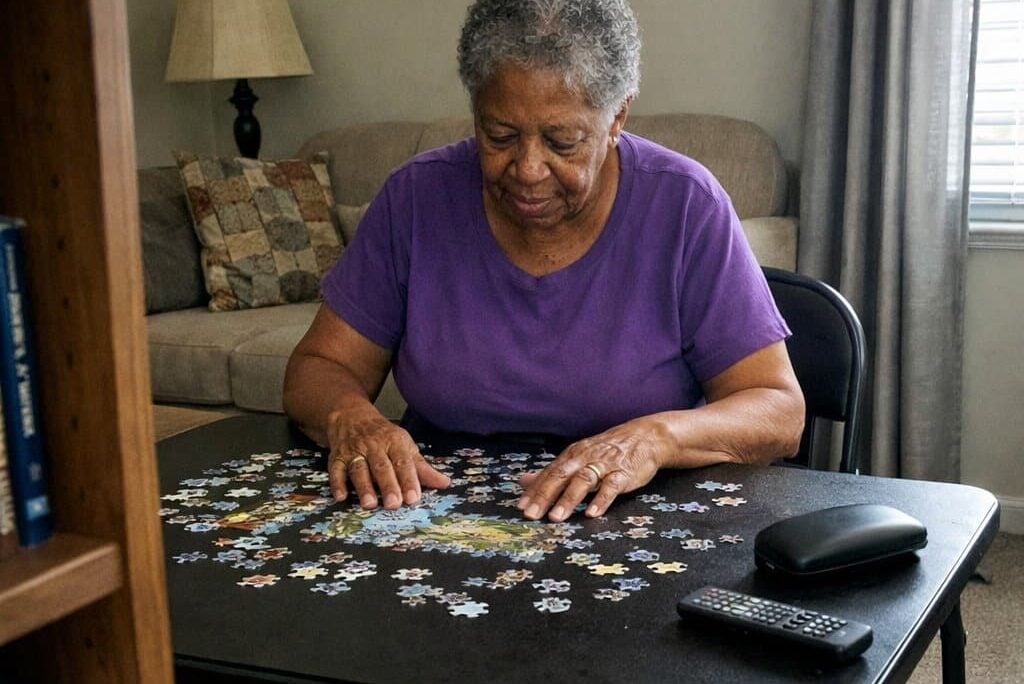
You’re standing in front of the puzzle aisle — or maybe scrolling through Amazon at 11 p.m. — holding a 500-piece puzzle in one hand and a 48-piece puzzle in the other. And you genuinely don’t know which one to bring home.
You don’t want to hand your mom something that leaves her frustrated and staring at the table. But you also don’t want to hand her something so simple it feels like an insult. You want to get this right.
Here’s the thing: you’re not overthinking this. Piece count really does matter. The number of pieces in a puzzle isn’t arbitrary — it’s one of the most practical variables you can control when choosing an activity for someone living with dementia. Match it right, and you get engagement, focus, and maybe even a smile. Match it wrong, and you get a pushed-away puzzle and a bad afternoon.
This guide walks you through exactly how to match puzzle difficulty to cognitive stage — so you can stop second-guessing and start connecting.
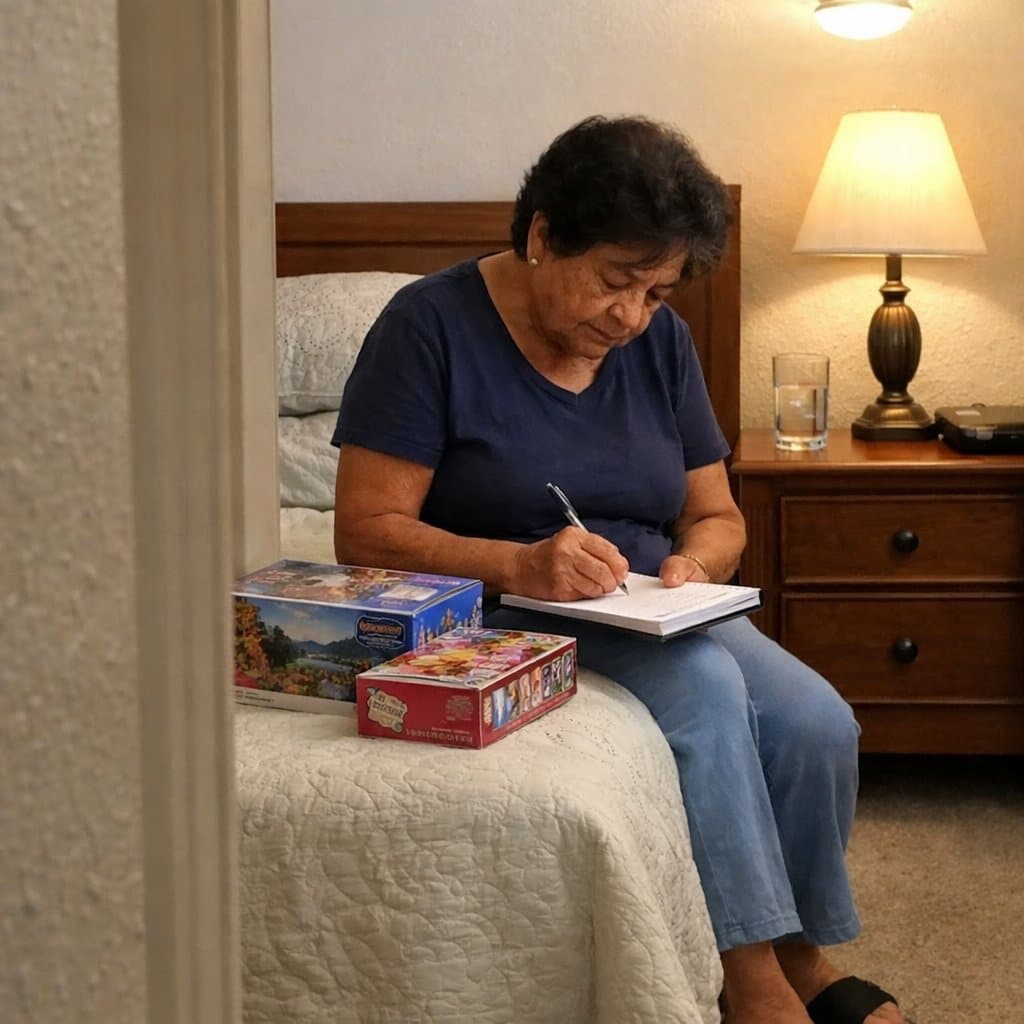
The Dementia Puzzle Matcher: A Quick-Reference Guide to Piece Count by Stage
Download this stage-by-stage puzzle guide and stop guessing at piece counts—match the right difficulty level to your loved one’s abilities so every session ends in calm, engagement, and success instead of frustration.
Why Puzzle Piece Count Actually Matters for Someone with Dementia
It’s Not a Minor Detail — It Determines Whether the Activity Works at All
Dementia affects the parts of the brain responsible for spatial reasoning, working memory, and the ability to hold a visual plan in mind. That means a puzzle that feels easy to you can feel genuinely overwhelming to your loved one — not because they’re not trying, but because the cognitive machinery that makes puzzles manageable is working differently now.
A puzzle with too many pieces creates frustration instead of engagement. And frustration has a lasting effect: once someone with dementia associates an activity with feeling lost or defeated, they’re much more likely to refuse it next time.
Too Simple Creates a Different Problem
On the other side, a puzzle that’s far too easy can feel patronizing. It reduces motivation and strips away the dignity that comes from genuine effort and genuine success.
The goal is to find the sweet spot — enough visual complexity to feel meaningful, not so much that it triggers shutdown. Getting the piece count right isn’t about lowering expectations. It’s about clearing the path so your loved one can actually enjoy the activity and feel capable doing it.
This matters more for dementia than for typical age-related cognitive changes, because the gap between “engaging” and “overwhelming” is narrower and shifts over time.
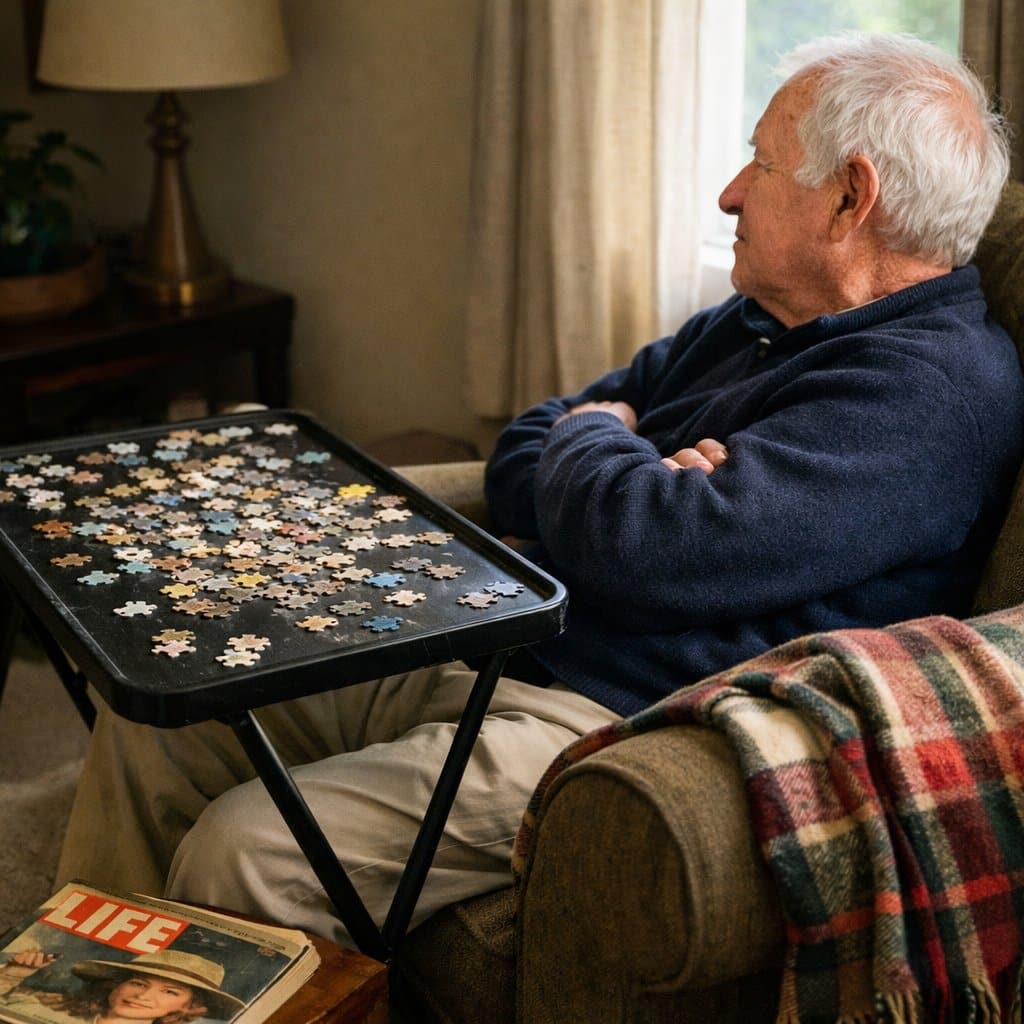
Early-Stage Dementia — When 100 to 300 Pieces May Still Work
What This Stage Looks Like Day to Day
In the early stages of dementia, many people are still managing daily routines largely on their own. They may repeat questions or lose track of recent conversations, but they can follow multi-step tasks, hold a visual goal in mind, and engage meaningfully with moderately complex activities.
At this stage, puzzles in the 100–300 piece range are often still accessible — especially when the image is familiar, high-contrast, and visually clear. Landscapes, animals, gardens, and nostalgic scenes all work well because they give the brain strong visual anchors to work from.
Image Choice and Piece Size Matter as Much as Quantity
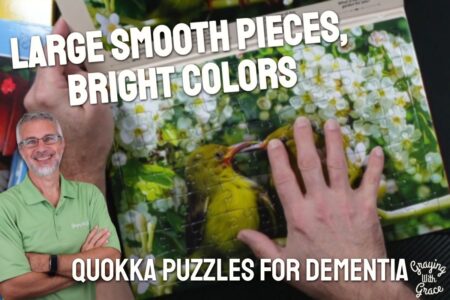
Even at this stage, staying engaged in meaningful activities works best when fine motor frustration is removed from the equation. Large piece jigsaw puzzles designed for adults reduce the fumbling and sorting difficulty that can come with small, standard-sized pieces — making the experience smoother even when cognitive capacity is relatively intact.
Watch for these signs that the piece count may be creeping too high:
- Long periods of staring at the puzzle without making a move
- Increasing agitation or visible sighing
- Sliding pieces off the table or turning them face-down
- Asking to stop within the first few minutes
A Practical Illustration
Imagine a caregiver who brings home a 300-piece landscape puzzle for a parent in the early stages of dementia. Their parent works it slowly, takes breaks, and finishes it across two sessions — with real satisfaction at the end. Six months later, that same puzzle sits untouched after ten minutes of frustrated attempts.
That shift is normal. It’s information, not failure. It means it’s time to adjust.
Action point: If your loved one is in the early stages, start with a familiar image in the 100–300 piece range using large pieces. Pay attention, and be ready to move down when the frustration signals appear.
For adults who benefit from senior-friendly large piece formats, there are jigsaw puzzles specifically designed with bigger pieces and high-contrast imagery to make the experience more manageable and more enjoyable at this stage.


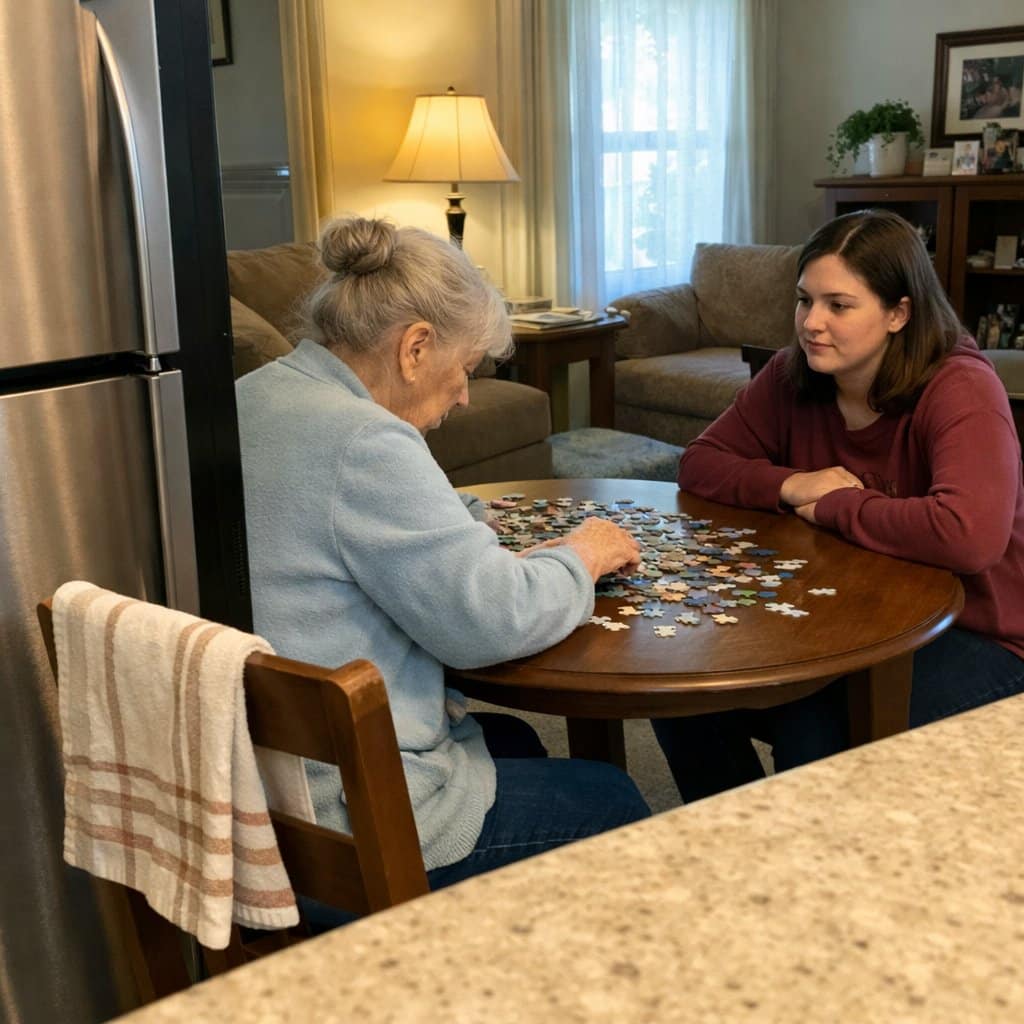
Mid-Stage Dementia — Why 48 Pieces Is the Recommended Starting Point


What Mid-Stage Dementia Looks Like in Real Life
At this point, daily tasks that used to be automatic now require more support. Following a sequence of steps — like sorting pieces by color and then by shape — becomes harder to sustain. Attention windows are shorter. Spatial reasoning has shifted enough that a large field of pieces can feel like visual noise rather than a solvable challenge.
This is where most caregivers are when they come to me asking about puzzles — and this is where the 48-piece recommendation comes from.
Why 48 Pieces Hits the Sweet Spot
Forty-eight pieces provides enough visual complexity to feel like a real activity — not a toy, not a child’s game — while keeping the field manageable enough that the brain can actually find a foothold and make progress.
Dementia activity puzzles designed specifically for this population typically pair that piece count with larger, easier-to-handle pieces, higher contrast between image elements, and simpler compositions. A single large flower. A familiar dog breed. A bowl of fruit. These images don’t require the brain to parse dense visual detail — they invite it in.
Shorter Attention + Fewer Pieces = A Completed Puzzle
Here’s a reframe worth holding onto: a completed 48-piece puzzle feels like an achievement. A half-finished 200-piece puzzle feels like a failure. You’re not designing for the puzzle — you’re designing for the feeling at the end of the session.
Starting at 48 pieces isn’t giving up. It’s setting your loved one up to feel capable, successful, and engaged — which is the entire point of the activity.
Action point: If you’re unsure where to start, begin with a 48-piece puzzle designed for adults with dementia. Watch engagement and frustration levels carefully, then adjust up or down from there.
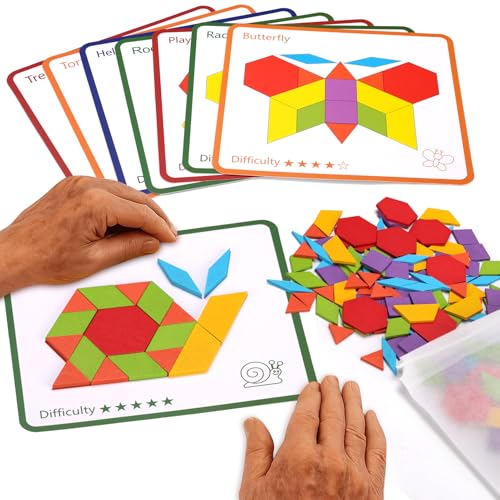
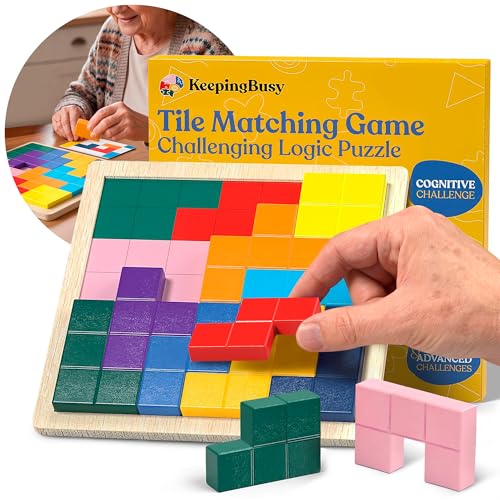
There are 48-piece jigsaw puzzles made specifically as dementia activity puzzles — with oversized pieces, simple familiar imagery, and formats that work well for shorter attention windows and reduced fine motor precision.



Ready to discover more trusted strategies for supporting a loved one with dementia at home? Subscribe to our newsletter for expert-tested activity ideas and caregiver resources delivered straight to your inbox. Subscribe to our newsletter for more tips: Join here
Late-Stage Dementia — Fewer Pieces, More Sensory Focus




Redefining What a Successful Puzzle Session Looks Like
In the later stages of dementia, the goal isn’t puzzle completion. It’s engagement, comfort, and a moment of calm connection — and that’s still absolutely worth pursuing.
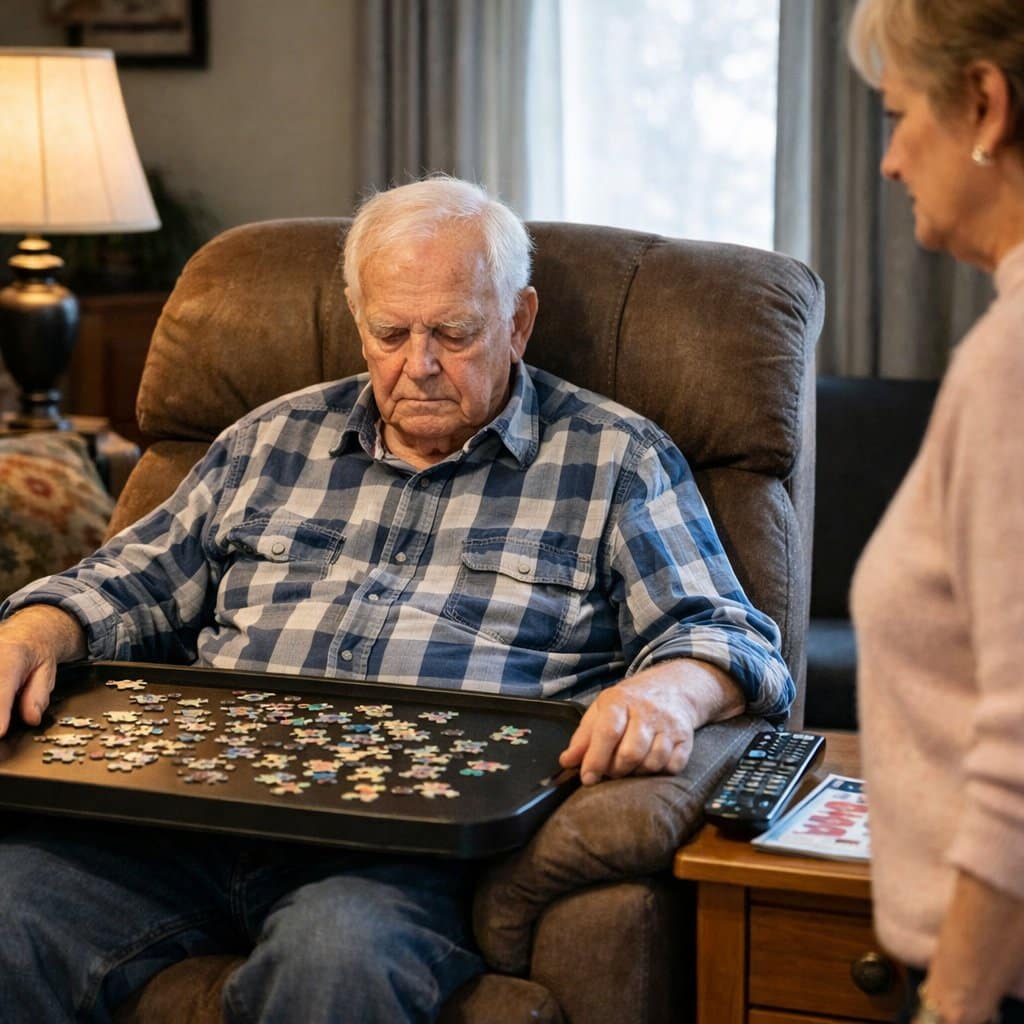
Attention windows may be very short. Following sequential steps becomes difficult. But the tactile experience of holding a large puzzle piece, turning it over, setting it down — that still has value. A smile counts. A few minutes of calm focus counts. A moment of togetherness counts.
What This Stage of Puzzling Actually Looks Like
Some people in later stages of dementia will work 4–6 pieces with assistance. Others may simply enjoy sorting pieces by color, touching the textures, or watching someone else assemble the puzzle nearby. All of that is meaningful engagement.
Simple, familiar activities at this stage work best when they’re collaborative — you sit beside your loved one and work alongside them, rather than presenting the puzzle as a task to complete independently.
When to Transition to Other Activities
If puzzles — even very simple ones — consistently produce agitation or disengagement within a minute or two, it may be time to shift toward other sensory activities: sorting objects by color, handling familiar textures, or listening to music from a meaningful era.
Action point: For later-stage dementia, focus less on piece count and more on texture, color, and togetherness. Work the puzzle beside your loved one rather than placing it in front of them as a solo task.
Signs the Puzzle You Chose Is Too Hard — and What to Do Next
Observable Signals to Watch For
You don’t need a checklist or a clinical assessment. You need to know what to look for during the session itself. These are the clearest signs that the current puzzle is beyond where your loved one is today:
- Repeating the same move — picking up the same piece, putting it down, picking it up again — without progress
- Visible agitation: sighing, pushing pieces, tensed posture
- Sliding pieces off the table or turning them face-down
- Staring at the puzzle for long stretches without engaging
- Asking to stop within the first few minutes of starting
Treat these signals as useful feedback — not failure on anyone’s part. They simply mean the current puzzle is asking for more than the brain can comfortably offer right now.
How to Adjust In the Moment
You don’t have to end the session. Try putting some pieces away to reduce the field. Switch to working together instead of watching. Or swap to a different, simpler image.
Finding the right activity tools for someone with dementia is an ongoing process, not a one-time decision. What worked well two months ago may need adjusting as needs change — and checking in regularly is part of good caregiving, not a sign that something went wrong.
Keep a Simple Session Log
I recommend keeping a quick note on your phone after each puzzle session. Just one or two lines:
- What piece count did you use?
- What was the image?
- How long did they engage before frustration or fatigue set in?
Over a few sessions, patterns emerge. And those patterns make every future puzzle decision easier and faster.
Action point: Adjusting mid-session or moving to a lower piece count isn’t giving up on your loved one. It’s meeting them where they are today — and that’s exactly what thoughtful caregiving looks like.
The Dementia Puzzle Matcher: A Quick-Reference Guide to Piece Count by Stage
Download this stage-by-stage puzzle guide and stop guessing at piece counts—match the right difficulty level to your loved one’s abilities so every session ends in calm, engagement, and success instead of frustration.
Putting It All Together
A Simple Starting Framework
Here’s the short version you can come back to whenever you need it:
- Early stage: 100–300 pieces, large format, familiar high-contrast images
- Mid-stage: 48 pieces, large pieces, simple familiar imagery — this is your recommended starting point
- Later stage: 4–12 pieces or collaborative sorting; focus on sensory engagement and togetherness over completion
You Already Know Your Loved One Best
Use this framework as a starting point, then trust what you observe. Meaningful activities for someone with dementia don’t require perfection — they require attention, flexibility, and the willingness to adjust.
The fact that you’re asking this question at all tells me you’re already showing up with the kind of care and intention that makes a real difference. You’re not overthinking it. You’re just trying to give your loved one a good afternoon. That matters more than you know.
If you’re in mid-stage territory and still unsure, start with a 48-piece puzzle. Watch the session. Adjust from there. And if something worked — or didn’t — share it in the comments below. The caregiving community here learns from each other, and your experience might be exactly what another caregiver needs to hear today.
![Bubble word search dementia activity 1200 x 800 px[1]](https://www.grayingwithgrace.com/wp-content/uploads/2025/01/bubble-word-search-dementia-activity-1200-x-800-px1-450x300.jpg)