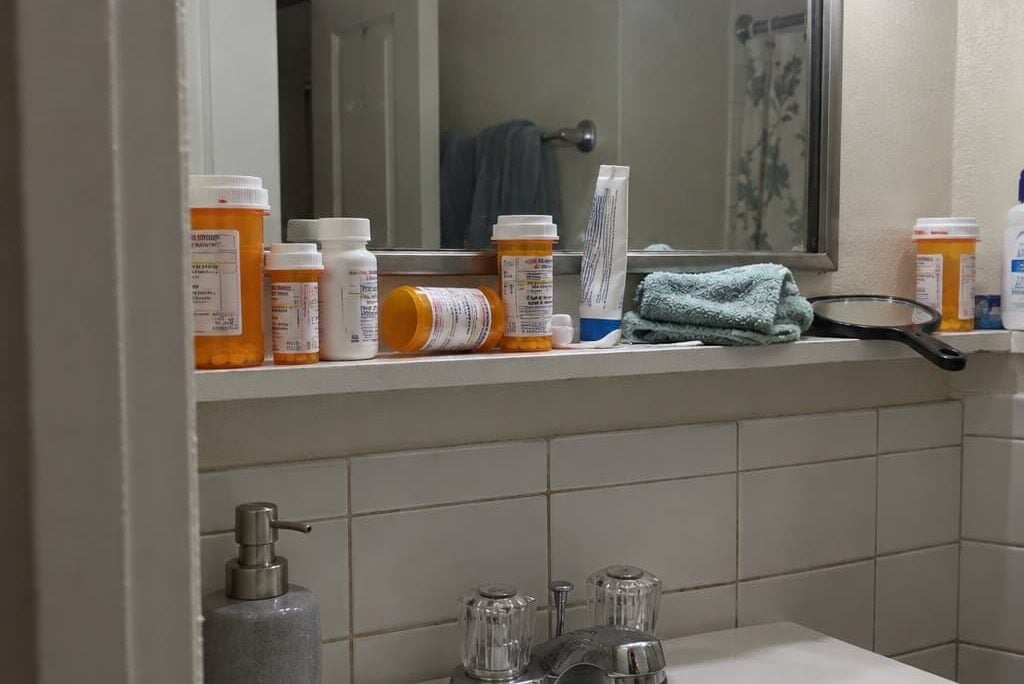
If you're shopping for a smarter pill organizer, pause on one question first. Is the problem organization, or is it access and timing?
A standard organizer sorts pills. It can't stop a repeat dose or tell anyone about a missed one. Those jobs belong to different products at different prices, and buying the wrong tier is the most common (and most expensive) mistake I see. This guide helps you pick the right one the first time.
Pill Organizer & Dispenser Shopping Guide
Use this printable shopping guide to choose the exact pill organizer or dispenser that prevents missed doses, stops medication errors, and matches your family’s actual routine—no more guessing or buying the wrong product.
What to Look For
These are the specs that rule products in or out. Check them before you look at color or price.
- Capacity: Most automatic dispensers hold 28 doses, which is four weeks at once-daily dosing. Confirm the cup fits the largest pill in the regimen.
- Alarm volume and type: Look for at least 80 dB at arm's length. Then check whether it's alarm-only or also sends caregiver texts or app alerts, because the alert channel matters as much as the volume.
- Locking mechanism: Key locks are simple for a caregiver to manage. PIN or combination locks avoid lost keys, but they can be hard if arthritis limits fine motor control.
- Power backup: For a senior living alone, aim for at least 24 hours of battery backup through an outage.
- Missed-dose alert delay: This runs from about 30 minutes to 2 hours by model. Shorter is better if your parent lives alone.
- Refill interval: Most need refilling every 2 to 4 weeks. If you visit less often, plan a backup.
- Compartment size and contrast: For organizers, look for compartments at least 1.5 inches wide and high-contrast lettering.
- Materials: Choose BPA-free surfaces and a tray you can remove and wash.
If your parent lives alone, the wider picture matters too. I cover it in my list of must-have products for elderly people living alone.
Automatic locking pill dispensers
These dispensers solve the repeat-dose and missed-dose problem by releasing each dose on schedule, locking the rest away, and alerting a caregiver. They suit seniors who can no longer reliably track what they have taken.


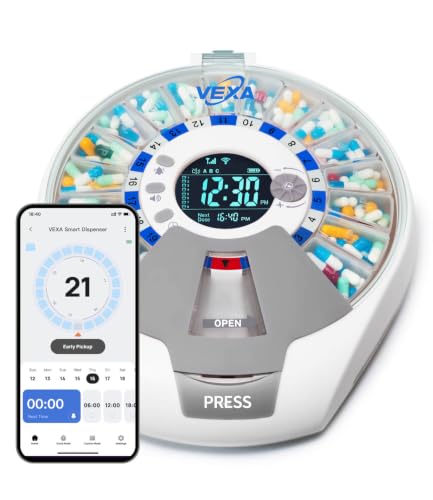

An automatic dispenser holds a multi-week supply and releases the right dose at the programmed time. It locks the rest away between doses and alerts someone when a dose is missed.
It suits seniors with repeat-dose risk, early or moderate memory loss, or a complex schedule. It also suits any home where no caregiver is present at dose time. If one double dose has already happened, this is your tier.
It's the wrong choice when drug interactions need clinical supervision. It's also overkill for a stable, simple regimen with no timing errors. Missed doses can lead to falls and other trouble, and I explain how a safer home setup helps prevent those. No dispenser replaces a trained caregiver's judgment, and a filler who programs it wrong can create the very error it's meant to prevent.
VEXA VitaMate Pro 21 Smart Pill Dispenser

I demoed this one, and you can see it in my video. What stood out is the rising pod, which lifts each dose up within reach. There's no twisting or gripping, which matters for arthritic hands.
The triple alert (buzzer, LED and app push notification) works offline and even if the phone is silenced. The app also sends real-time caregiver notifications. The catch is the higher upfront cost, and the app and Wi-Fi setup may need a family member's help once. It holds 21 days, so plan refills on that schedule.
LiveFine Auto WiFi Pill Dispenser
This is a 28-day Wi-Fi dispenser with a locking lid. It suits a household where a caregiver wants a full month between refills and some remote visibility.
I haven't handled it, so check the listing for exactly which alerts reach your phone. A Wi-Fi model also depends on your parent's home internet staying connected.
MedReady Automatic Pill Dispenser (Sound Alarm Only)
This is the stripped-down option: a 28-day supply with a sound alarm and no app. It fits a senior who lives with someone who can hear the alarm and respond.
The limit is the alert channel. If nobody is nearby, a missed dose goes unreported to the people who need to know.
Locking medication boxes
Locking boxes keep every prescription and over-the-counter product secured in one place. They solve the unsecured-access problem for homes where timing is not the concern.
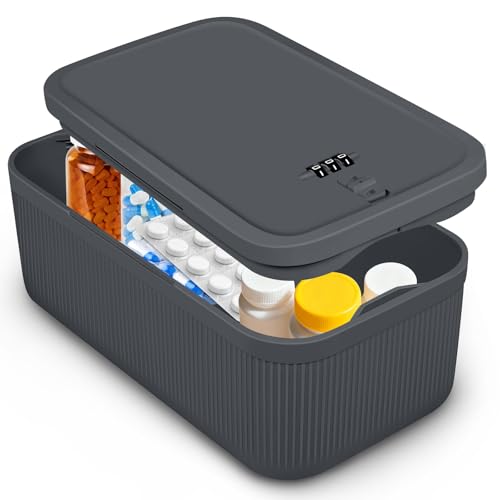


A locking box stores every prescription and over-the-counter product in one secured place. It doesn't automate dosing or send alerts. You unlock it at dose time and lock it again.
It suits homes where the problem is access, such as visitors or grandchildren who shouldn't reach the supply. It also works when a caregiver oversees doses in person and wants everything secured between visits.
It's the wrong choice if memory is the issue. A locking box can't stop a second dose if your parent forgets they already opened it.
Lockabox One 10L Medication Lock Box
At 10 liters, this is roomy enough for full prescription bottles, inhalers and supplements in one place. That suits a bedside shelf or cabinet where everything stays put.
It's bulky for travel. Check the lock type on the listing and make sure the person who needs to open it can operate it.
Vaultz Locking Medicine Case
This is a portable briefcase-style case with a combination lock. It fits a caregiver who carries medications between homes or takes them on trips.
The caveat applies to every box: a confused or determined senior can get past a lock given time. A written code left taped nearby defeats the purpose entirely.
Weekly and monthly pill organisers
Organizers sort pills by day and time so a senior with a stable, simple regimen can see what has been taken. They solve the organization problem when no timing or access issues exist.
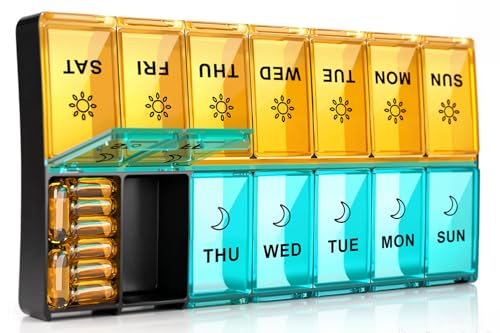

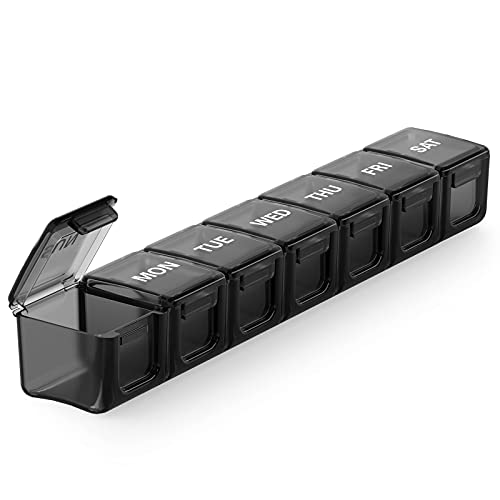


A standard organizer sorts medication by day and time slot. It has no lock, no alert and no access control. Weekly models cover 7 days, and monthly models cover 28 to 31.
It suits an independent senior with a simple, stable regimen and no history of timing errors. It's the right tier only when organization is the sole gap.
It's the wrong choice the moment a repeat or missed dose has happened, even once. Many people store organizers by the bed, so a dim walk to fetch pills is a fall risk. Good night lights for seniors help with that.
Betife Large Weekly Pill Organizer, 3X a Day

I demoed this organizer, and my video shows it in use. The one-pull drawer design removes the pinching and snapping of standard flip-top lids. It takes one finger and no gripping. The compartments are sized for large softgels like fish oil and CoQ10.
The day pods detach, so you can travel without carrying the full week. The trade-offs: 21 separate drawers means more pieces to fill each week. The listing also gives no dimensions, so it's hard to judge fit in a bag or drawer before buying.
Mossime XL Pill Organizer, 2 Times a Day
This is an extra-large, twice-a-day weekly organizer, a good fit for a morning and evening routine. The larger compartments help with bigger capsules.
Like every organizer, it leaves dosing accuracy entirely to the senior's memory. If that's already slipping, this tier won't catch the failure.
Frequently Asked Questions
What is the difference between a locking pill dispenser and a locking medication box? A locking dispenser releases one dose at a time on a schedule and locks the rest. A locking box just stores everything under a lock without controlling when or how much is taken.
How do I know if my parent needs an automatic dispenser or just a locking box? If a repeat or missed dose has happened once, or they can't track what they've taken, choose the dispenser. If the issue is only unsecured access, a box may be enough.
Can a senior with arthritis operate an automatic pill dispenser? Most drop pills into an open cup, so dose time takes little hand strength. Programming and refilling usually fall to a caregiver, so check that the refill tray comes out without a hard grip.
Do automatic pill dispensers work during a power outage? Most have battery backup, but the duration varies. Confirm at least 24 hours for a senior living alone.
Hacks and Advice
- Treat one incident as your trigger: If a repeat or missed dose has happened once, move up a tier. Don't wait for it to happen twice.
- Keep the backup key or code away from the home: A key on the same shelf defeats the lock. Give it to the caregiver instead.
- Set a refill reminder two days early: Dispensers fail silently when empty. A two-day buffer prevents a missed dose.
- Test the alarm where your parent actually sits: An 80 dB alarm in the bedroom may not carry to the kitchen.
- Ask the pharmacist about blister packs: Many pharmacies offer them for a fee. Refills go faster, and you skip counting pills.
Pill Organizer & Dispenser Shopping Guide
Use this printable shopping guide to choose the exact pill organizer or dispenser that prevents missed doses, stops medication errors, and matches your family’s actual routine—no more guessing or buying the wrong product.
Conclusion
The question is simple. Is the problem organization, access control, or timed dosing? An organizer handles organization. A locking box handles access. An automatic dispenser handles timing and repeat doses.
Today, look at your current setup and ask: has a missed dose, repeat dose or unsecured-access problem happened in the past month? That answer tells you which tier you need. If you're unsure where medication safety fits into aging in place, take my Home Safety and Independent Living Assessment as your next step. If you're caring from a distance, my guide to technology for monitoring elderly parents remotely is a good next read.
Which tier does your family need? Share your experience in the comments. It may help another caregiver.