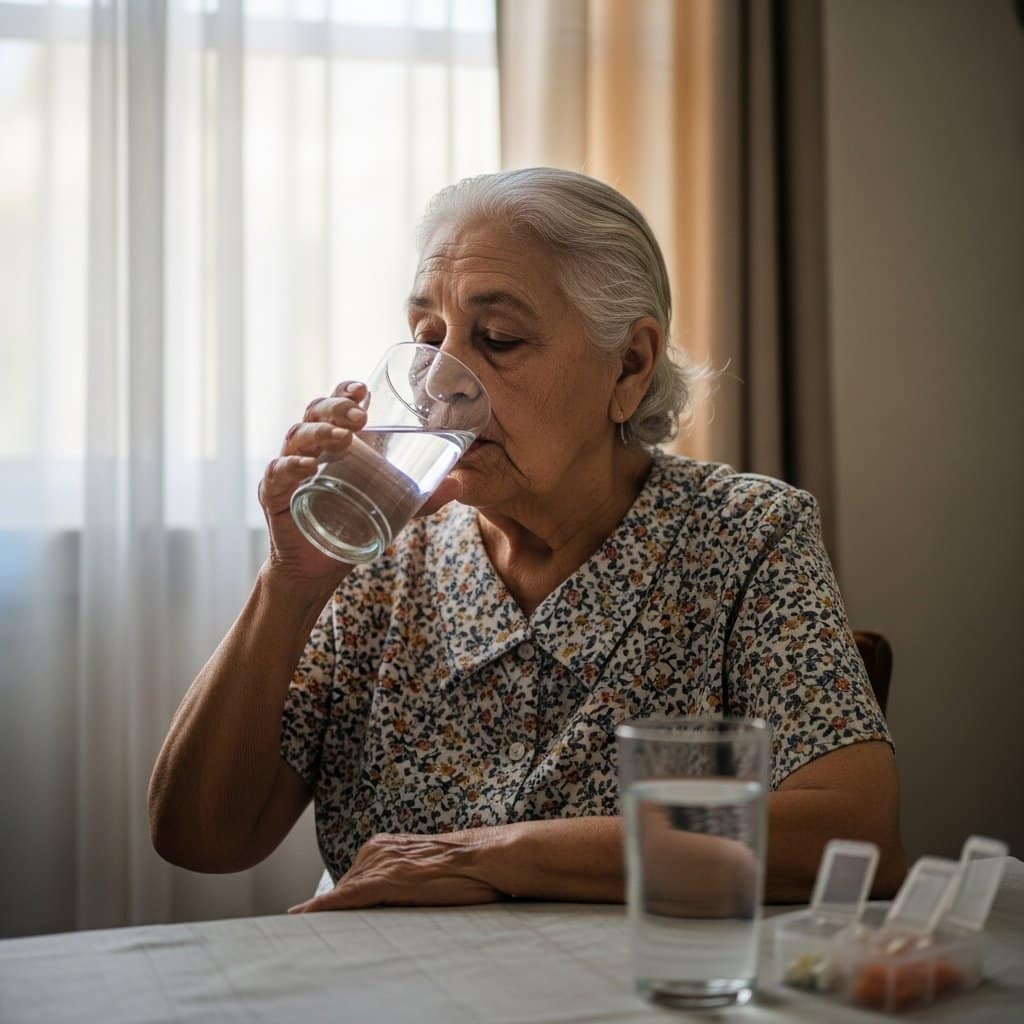
They did everything right.
They kept the windows open. They reminded Mom to drink her water. They called to check in twice before noon. But what they didn’t know — what no one had ever told them — was that the blood pressure medication and the allergy pill she took every single morning were quietly shutting down her ability to cool herself. By early afternoon, she was confused, flushed, and dangerously overheated.
This isn’t a rare story. It’s one I’ve seen catch families completely off guard — loving, attentive caregivers who had no idea that medications that cause heat sensitivity in seniors even existed as a category of concern.
Here’s the truth: this is one of the most under-communicated risks in senior summer care. It’s not about negligence. It’s a blind spot that even well-meaning doctors often don’t flag at prescription time.
This article walks through the five medication categories that impair your parent’s heat response, how to find out whether their prescriptions are on the list, and the practical steps to take before summer’s hottest days arrive.
The Senior Medication & Summer Heat Safety Checklist: What Every Caregiver Should Do Before the Hot Days Hit
Get the complete checklist that helps you identify medication-heat risks and build a protective summer plan—covering pharmacy calls, hydration schedules, cooling strategies, and emergency warning signs in one actionable guide.
Why Seniors on Medication Face a Different Kind of Heat Risk
The Body’s Cooling System Doesn’t Age Gracefully
When body temperature rises, healthy adults sweat, feel thirsty, and redirect blood flow toward the skin to release heat. These mechanisms work automatically — until they don’t.
After age 60, all three of these responses naturally become less efficient. Sweat glands don’t activate as readily. Thirst signals arrive late or not at all. Blood vessels don’t dilate as quickly.
That alone raises the baseline risk on a hot day.
Medications Add an Invisible Layer
Certain commonly prescribed drugs don’t just coexist with that age-related vulnerability — they actively suppress the body’s cooling responses. Some block sweating. Some blunt thirst. Some interfere with the cardiovascular response that helps manage heat stress.
And here’s what makes this especially tricky: most families are never told any of this at prescription time.
This isn’t about seniors being fragile. It’s about a specific, identifiable pharmacological interaction with summer heat — one that’s entirely manageable once you know it exists.

The 5 Medication Categories That Turn Up the Heat Risk
1. Diuretics (“Water Pills”)
Diuretics are prescribed for blood pressure, heart failure, and fluid retention — and they’re extremely common in older adults.
The problem in summer: they increase fluid loss through urination, which means your parent may already be mildly dehydrated before the heat of the day even begins. Do diuretics make heat more dangerous for seniors? Yes — and significantly so. They accelerate dehydration faster than most caregivers realize.
2. Beta-Blockers
Beta-blockers are a standard treatment for high blood pressure, heart arrhythmias, and heart failure.
In heat, the heart normally speeds up to pump more blood to the skin for cooling. Beta-blockers reduce that heart rate response, limiting the body’s ability to manage the cardiovascular demands of heat stress. The connection between beta-blockers and heat exhaustion risk is well-recognized in pharmacology — but rarely discussed in a caregiver context.
3. Antidepressants (SSRIs and Tricyclics)
Both older tricyclic antidepressants and newer SSRIs can impair sweating and alter the body’s internal thermostat.
The effect is subtle enough that a parent on antidepressants and overheating in summer may simply seem “a little off” before symptoms escalate. This category is particularly easy to overlook because the medications themselves seem unrelated to temperature regulation.
4. Antihistamines
This one surprises most families — especially because antihistamines are available over the counter and seem harmless.
First-generation antihistamines like diphenhydramine (sold as Benadryl and found in many sleep aids) are strongly anticholinergic, meaning they suppress sweating and can cause a rapid rise in body temperature. Antihistamines and heat stroke risk in elderly individuals is a documented concern — and many seniors take these nightly without any awareness of the summer implications.
5. Anticholinergic Medications
This is the broadest category, and it overlaps with some of the above.
Anticholinergic drugs are used for overactive bladder, COPD, GI issues, Parkinson’s, and more. They work by blocking a specific nerve signal — and one of the consequences is significantly impaired sweating. Anticholinergic drugs and heat sensitivity in seniors are closely linked, and this class of medication appears in more prescriptions than most families realize.
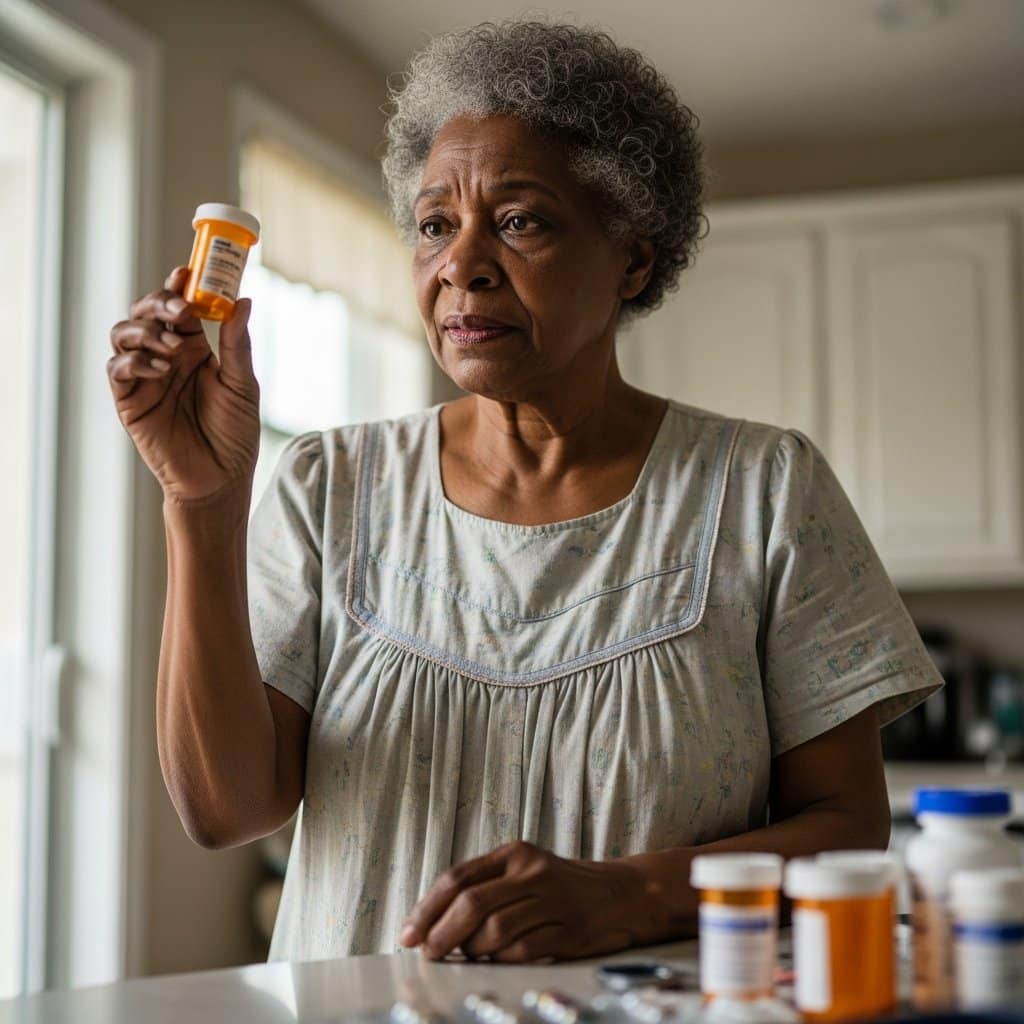
Here’s what I want you to do right now: Pull up your parent’s medication list. For each drug, call the pharmacy and ask: “Does this medication affect heat tolerance or sweating?” This is a free service. Pharmacists are trained for exactly this question, and a five-minute call could be the most protective thing you do this summer.
Knowing this list isn’t cause for panic — it’s protective power.
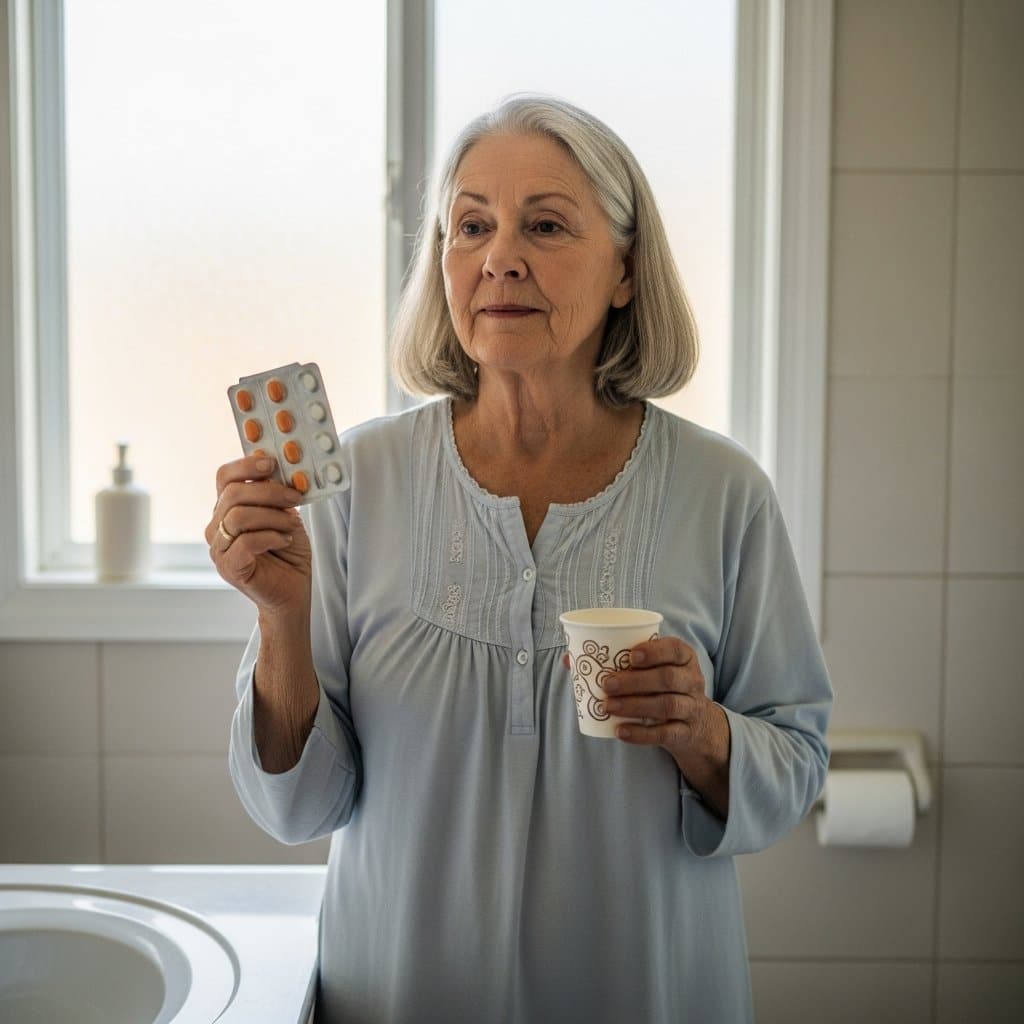
Some caregivers also find it helpful to use a smart pill organizer that tracks when medications are taken and alerts if storage temperatures become unsafe

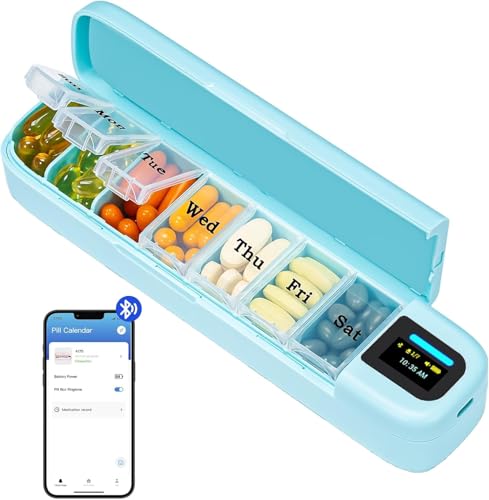


— especially useful in summer when both timing and temperature matter more than usual.
Want more practical guidance on keeping your parent safe through every season? Subscribe to our newsletter for more tips: Join here
Practical Steps to Reduce the Risk Before Heat Arrives
Adjust Medication Timing — With Guidance
Some medications may cause fewer heat-related problems when taken during the cooler parts of the day. Ask the prescribing physician or pharmacist: “Given the summer heat, is there a better time of day for my parent to take this medication?”
This is an especially useful question for diuretics and anticholinergics. The best time of day for elderly to take medications in summer may shift seasonally — and most doctors won’t raise this unless you do.
Build a Hydration Schedule
Seniors on diuretics or anticholinergics often don’t feel thirsty even when they’re dehydrated. Waiting for thirst signals in this population isn’t a reliable strategy.
Instead, build a hydration schedule with set times: morning, mid-morning, lunch, mid-afternoon, and dinner. Don’t wait for your parent to ask for water. Offer it proactively. Senior dehydration from medication in summer heat can escalate quickly, especially during heatwaves.
A hydration tracking system or insulated smart water bottle designed to remind elderly users to drink at scheduled intervals
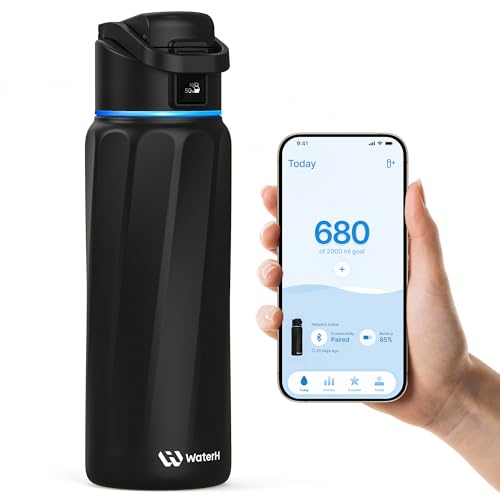


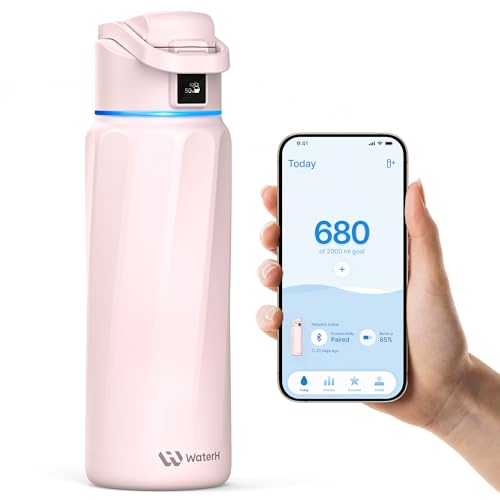

can take the memory burden off both the senior and the caregiver.
Keep the Home Environment Cool
Peak heat hours — roughly 11 a.m. to 4 p.m. — are when medication-related heat risk is highest.
For seniors living at home, keeping indoor temperatures stable is critical. Many families use personal cooling fans or portable cooling devices designed for senior bedrooms





to manage heat in individual rooms, especially when whole-home air conditioning isn’t available or efficient.
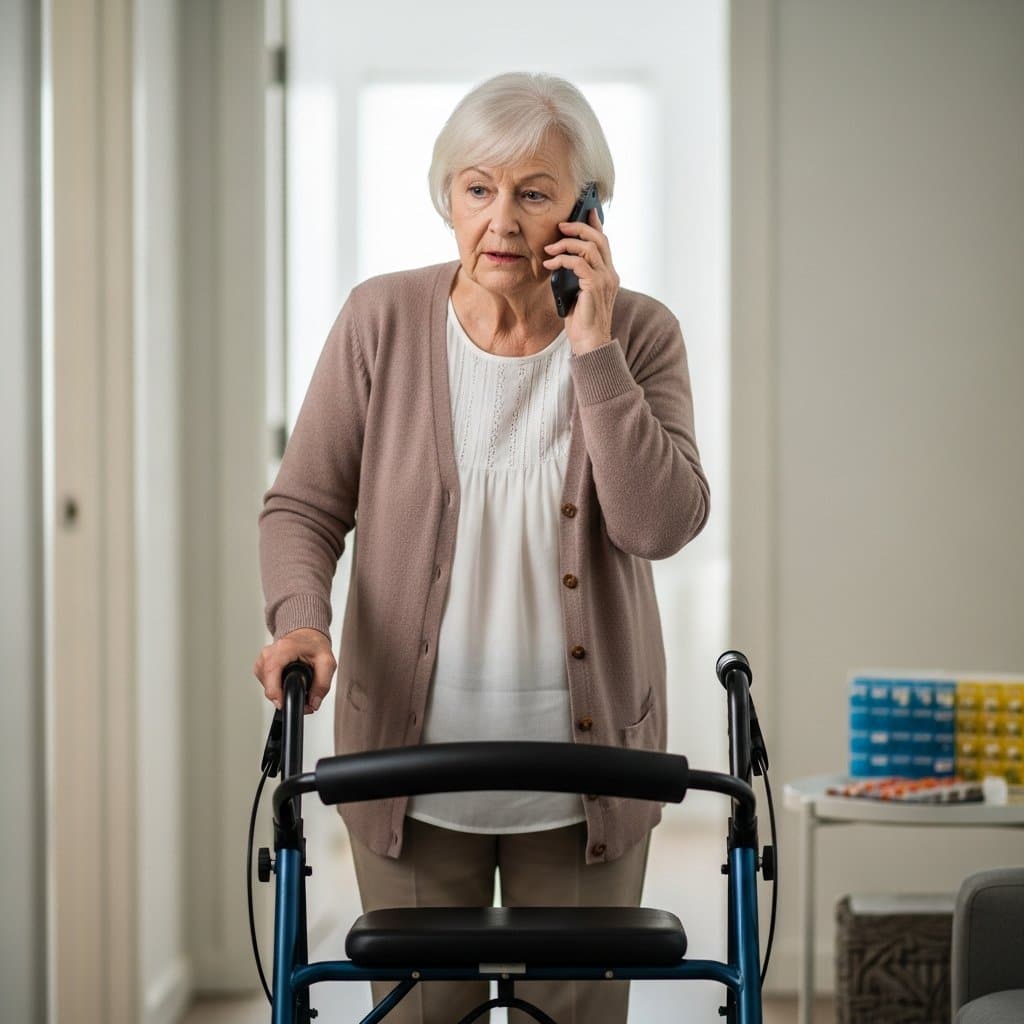
If your parent lives alone, check in by phone during peak heat hours and establish a clear protocol for what to do if they don’t answer.
Know When to Call the Doctor
If your parent takes any of the five categories above, a short pre-summer call to their prescribing physician is worth the five minutes.
You don’t need to request a full appointment. A nurse line or patient portal message works. Ask three things:
- Does any of my parent’s current medication affect heat tolerance or sweating?
- Should any medications be taken at a different time during summer months?
- Are there specific warning signs I should watch for with these prescriptions in the heat?
Should I call the doctor before summer if my parent takes diuretics? Yes — and this is exactly why.
How to Tell If a Parent Is Overheating — and Whether Medication Is the Cause
Standard Heat Exhaustion Signs
The classic symptoms of heat exhaustion include heavy sweating, weakness, dizziness, pale skin, a fast weak pulse, nausea, and muscle cramps.
These are real warning signs — but in seniors on the medications listed above, the picture can look completely different.
The Critical Difference With Medicated Seniors
Here’s what most families don’t know: a parent on anticholinergics or antihistamines may not sweat at all, even when their body temperature is dangerously high.
No sweat doesn’t mean no heat illness. It may mean the opposite. When sweating is pharmacologically suppressed, heat builds up silently and rapidly.
The signs to watch for instead:
- Unusual confusion or disorientation — one of the earliest and most underrecognized signs in older adults on these medications
- Flushed, hot, dry skin — the absence of sweat on a hot day is a warning sign, not a reassurance
- Rapid heartbeat even while resting
- Complaints of headache or nausea without an obvious cause
Don’t Rely on Self-Reporting
Impaired thirst perception means your parent may genuinely not feel as hot as they are. If you’re with them or checking in by phone, ask them to describe how they feel — but also check their skin temperature directly with a touch to the forehead, neck, or arms.
When to call 911: confusion, loss of consciousness, hot and dry skin with no sweating, or a body temperature above 103°F.
When to move indoors, hydrate, and monitor: heavy sweating, weakness, dizziness — with full orientation and no rapid deterioration.
Knowing the difference between heat exhaustion vs. heat stroke in medicated seniors is genuinely lifesaving information. You don’t need a medical degree to act on it — you just need to know what to look for.
For seniors living alone, many families have added a medical alert device



so their parent can call for help immediately if they become confused or symptomatic during a heat event — especially critical when the caregiver isn’t physically present. A medical alert watch with fall detection can provide that safety net without requiring the senior to reach a phone.
How to Talk to the Doctor — and What to Ask
This Call Is Normal — and Important
Calling the doctor before summer to ask about medication heat risk is not an overreaction. It’s responsible caregiving. You’re not questioning their treatment plan — you’re adding a seasonal variable they may not have flagged.
Most physicians and pharmacists genuinely appreciate when a family member proactively raises this concern. It signals engaged, informed caregiving.
The Three Questions Worth Asking
When you talk to the doctor or pharmacist, keep it simple:
- “Does any of my parent’s current medication affect heat tolerance or sweating?”
- “Should any medications be taken at a different time of day during summer months?”
- “Are there heat-related warning signs specific to these medications I should watch for?”
That’s it. If the answer to question one is yes, questions two and three follow naturally.
And if you want to check first before calling? Ask the pharmacist. How to check if a parent’s medication causes heat sensitivity is exactly the kind of question your local pharmacy is equipped to answer — fast, free, and without an appointment.
The goal of this conversation isn’t medication changes. It’s informed preparation. You’re not asking the doctor to fix something — you’re asking them to help you protect your parent this summer.
The Senior Medication & Summer Heat Safety Checklist: What Every Caregiver Should Do Before the Hot Days Hit
Get the complete checklist that helps you identify medication-heat risks and build a protective summer plan—covering pharmacy calls, hydration schedules, cooling strategies, and emergency warning signs in one actionable guide.
This Summer, You’re Already Ahead of Most Families
The medications that help your parent manage blood pressure, allergies, mood, or bladder function are doing real, necessary work. This isn’t about fearing those prescriptions — it’s about understanding one specific, seasonal variable so you can manage it.
Most families never know this risk exists until something happens. You now know it before summer’s hottest days arrive. That matters more than you might think.
Here’s where to start today:
- Pull out your parent’s medication list
- Run through the five categories: diuretics, beta-blockers, antidepressants, antihistamines, anticholinergics
- Call the pharmacy if any of those categories appear — it takes five minutes and costs nothing
- Build a hydration schedule and review the home cooling plan before peak heat season begins
And if you’re managing multiple medications and fall prevention risks at the same time, know that small, practical adjustments — taken before a crisis — consistently make the biggest difference in keeping older adults safe and independent.
If this article gave you something useful, please share it with a sibling, a neighbor, or another caregiver in your life. This is exactly the kind of thing that falls through the cracks in a busy caregiving schedule — and passing it on takes thirty seconds.
Have questions about your parent’s specific situation, or have you navigated summer medication risks with a loved one? Leave a comment below — your experience may be exactly what another caregiver needs to hear.