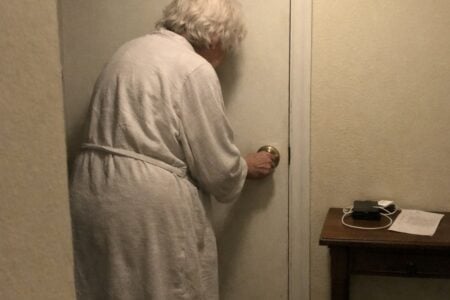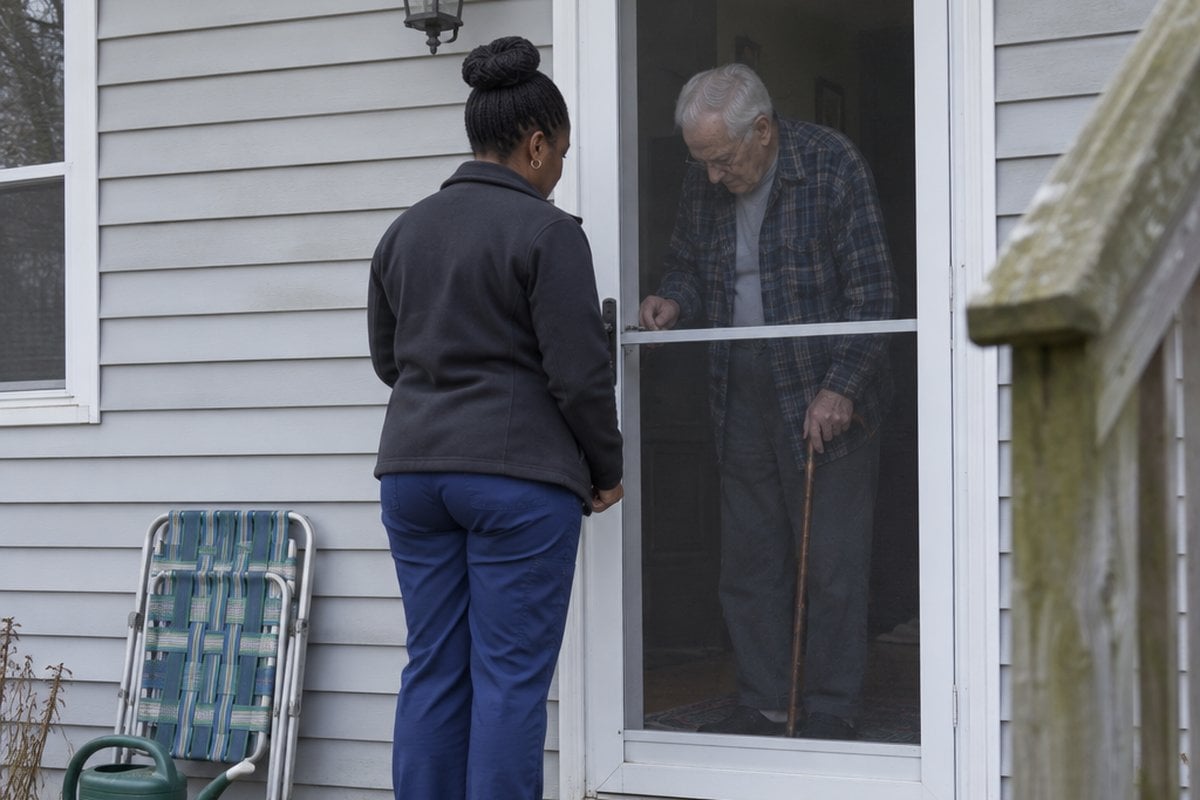
If you fall or feel unwell while home alone, responders may have to break a door to reach you. Aides and family need a safe way in too.
This guide is the shortcut. Choose the mount type first, then the product. That one choice decides who can use the box and how hard it is to defeat.
Key Lockbox Buying Checklist
Download this practical checklist to choose the right key lockbox for your home in minutes—no guesswork, no overspending, just a secure way to give trusted people emergency access when you need it.
What to Look For in a Key Lockbox
Here is what rules a key lockbox in or out before you compare brands.
- Mount type: Wall-mounted or shackle. This is the deciding factor. A wall-mounted box is harder to remove. A shackle box travels and needs no drilling. The next two sections cover the trade-off.
- Body material: Ask for a zinc alloy or similar die-cast metal body. On portable models, add a hardened-steel shackle. Plastic is easier to break.
- Code mechanism: A 4-digit code allows 10,000 combinations. 10-button or 12-button models allow more variations. Choose a resettable code you can change without tools, plus a cover that hides the dial or buttons.
- Weather rating: Look for stated weather-resistant construction, a rubber or silicone keypad cover, and a sealed or draining design. In cold climates, check the stated operating temperature range.
- Interior capacity: A house key plus a fob or two needs roughly 3 inches by 2 inches by 1 inch inside. Confirm the stated interior dimensions.
- Shackle opening (portable): Measure your door handle or railing first. Then confirm it fits the stated opening size.
- Installation (wall-mount): Check the included screws, their length, and which surfaces they suit (brick, concrete, wood, siding). Mounting into masonry or a solid framing member matters more than the box. Note whether masonry anchors are included.
- Responder compatibility: Access depends on local fire and EMS policy. Call your local fire department's non-emergency line and ask what they recognize. Some areas use a separate responder-specific lock system, not a consumer box.
Realtor lockbox versus key safe: Realtor boxes are built for temporary, frequently changing access by licensed agents. They are not designed for long-term household use. A residential key safe is the right category.
Who it's not for: A lockbox does not replace a monitoring service, such as a caregiver call button. It also does nothing if no one knows the code.
Ready to discover more innovative strategies for healthy, comfortable aging? Subscribe to our newsletter for expert-tested tips and product recommendations designed specifically for older adults.
Wall-Mounted Key Lockboxes
For older adults in a settled home who want the most secure fixed way to give family, aides, and responders access. A wall-mounted box is harder to remove or spot than a hanging one.


A wall-mounted lockbox is a metal box screwed into brick, masonry, concrete, or solid framing, usually beside the front door.
It suits you if you are settled in your home, have one main entry, and have a wall that takes drilled anchors. It is the most secure fixed option, with the code shared selectively among family, aides, and a monitoring service.
It's the wrong choice if you rent and can't drill, split time between two homes, may soon move to a care facility, or have thin vinyl siding with nothing solid behind it.
Placement matters. Set the box on a side porch wall or in a recessed corner, away from street sightlines. A box visible from the sidewalk tells a stranger there is a key inside.
The trade-off versus portable: It is much harder to remove or spot than a shackle over a handle. The cost is drilling, and a location that is hard to change later.
Installation is simple. Mark with a level, drill pilot holes, and use masonry anchors on brick. Plan on a drill and 30 to 60 minutes. Michael, or a handy neighbor, can do it. If you need help, see home repair help for seniors. A lockbox also sits well alongside other products for older adults living alone.
Vewaci Wall-Mounted Key Lock Box

I demoed this one, and you can see it in my video. The resettable code means you control access after every caregiver or contractor visit, with no locksmith needed.
The oversized keypad buttons work well for limited dexterity. It also fits standard house keys, car keys, and access cards in one compact unit.
The downsides are worth knowing. Installation time varies a lot by wall material, and masonry runs longer than the listing suggests. The listing also cites no independent weatherproof rating, so performance in very wet climates is unverified.
Master Lock 5-Key Combination Safe 5401D
This is a compact 5-key box from a long-established lock brand. It suits a single front door where you want a small, plain box that holds a key and a fob without drawing attention.
I haven't handled it, so check the stated interior size against your keys. A small box can be a tight fit for a bulky fob.
Portable Key Safes
For renters, people who move between homes or a care facility, and anyone who needs short-term access without drilling. A hanging key safe can move with you when plans change.


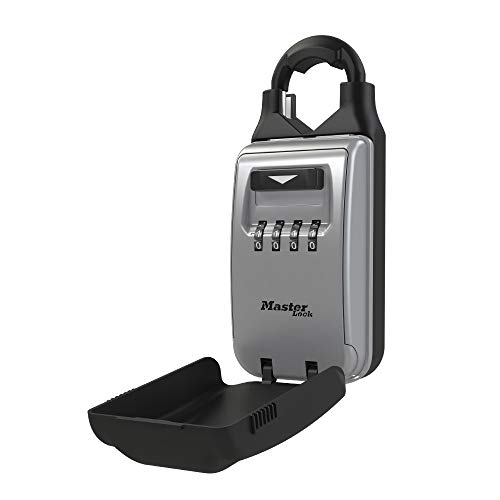

A portable key safe has a hardened shackle that hangs on a door handle, railing, or similar fixture. It opens with a combination code.
It suits you if you move between home and a care facility, rent and can't drill, or need short-term access during rehab recovery. It also works for a stretch of in-home care, such as when you hire a live-in caregiver.
It's the wrong choice for a long-term main access point if the box is visible from the street, such as a front handle facing a public sidewalk. It's also wrong anywhere someone could cut or pry the shackle with simple tools.
The trade-off versus wall-mount: It travels and needs no drilling, but it is less resistant to forced removal. That convenience is a real security compromise.
Hang it at a side or back door, on a railing out of sight from the street, or low behind a planter or gate. Treat it as temporary or secondary. If you head into rehab, the same box can go with you or stay with family. Move to a wall-mount once things settle.
Master Lock 5420EC Set Your Own Combination Portable Lock Box
This model has a set-your-own combination and an adjustable shackle, with room for several keys. That suits someone who needs to move the box between doors or homes.
I haven't handled it. Measure your handle against the stated shackle opening first. Like any hanging box, it can swing and bang on the door, and it may not fit a lever-style handle.
Iron Lock Medium Key Lock Box with 15-in Steel Cable Shackle
The 15-inch steel cable wraps around railings and thick fixtures that a rigid shackle won't fit. That helps when your door has a lever handle or an odd railing.
The downside is that a cable is generally easier to cut than a hardened-steel shackle. Keep it out of street view, and use it as a secondary or temporary option.
Subscribe to our newsletter for more tips: Join here
Frequently Asked Questions
Do paramedics use key lockboxes? It depends on your local fire and EMS policy. Call the non-emergency line and ask before you buy.
How often should I change the code? Change it whenever an aide, contractor, or family member no longer needs access, and at least once a year.
Can renters use a key lock box for the house? Yes. A portable key safe that hangs on a door handle or railing needs no drilling, but check your lease.
Is a key lockbox safe? A well-placed metal box is a reasonable trade-off. A wall-mounted box set out of street view is harder to defeat than a portable one.
Hacks and Advice
- Walk the street test: Stand on the sidewalk, then in a passing car's sightline. If you can see the box, move it. It costs nothing.
- Keep a code log: Write down who has the code and when you gave it. Change it when anyone leaves the care circle.
- Share on a timeline: The monitoring center, the home health agency, and an adult child need access at different times. Avoid one static code shared widely. If you are setting up remote monitoring for a parent, plan the code at the same time.
- Test it before you need it: Open the box with the code, then put the key back. Check that the key actually works in the lock.
- Annual check: Retighten the screws, test the code, and look for rust or a stiff dial. Access planning also belongs in your fall prevention checklist.
The most common mistake is buying on shipping speed and hanging the box where the street can see it.
Key Lockbox Buying Checklist
Download this practical checklist to choose the right key lockbox for your home in minutes—no guesswork, no overspending, just a secure way to give trusted people emergency access when you need it.
Conclusion: Mount Type First, Product Second
Choose the mount first. Wall-mount fits a stable living situation. Portable fits movers and renters.
If you want help matching a lockbox to your home, my Home Safety and Independent Living Assessment is the next step.
Today, walk outside your front door. Look at where a lockbox would and would not be visible from the street or a passing car. Then decide which mount type fits that spot before you shop.
Where would you put yours? Share your plan in the comments. Your idea might help someone else.