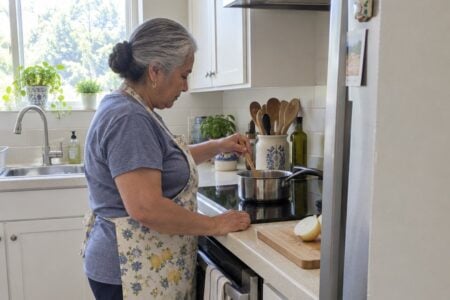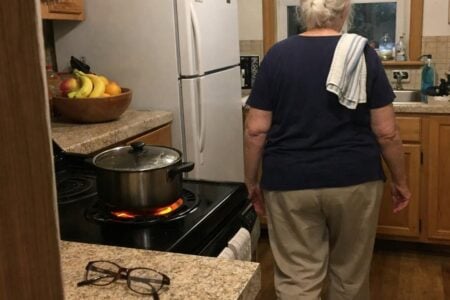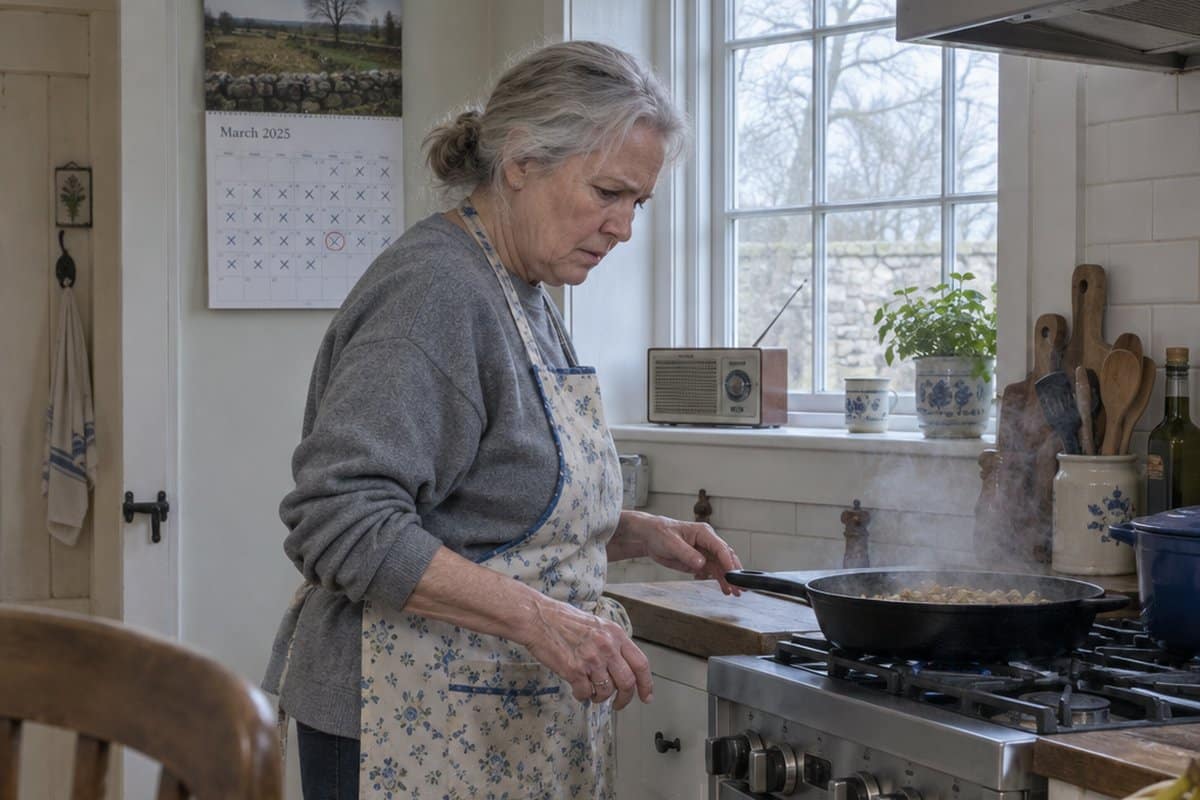
Most people picture a fire extinguisher as the answer to a kitchen fire. But it asks for grip strength, steady aim and confidence with a pressurized cylinder.
A fire blanket kitchen plan asks for much less. This guide compares the two options so you can match the tool to the person who will actually use it.
If you’re in a hurry, my top picks are right here, and the details on each one are further down the page.


Kitchen Fire Blanket and Extinguisher Checklist
Download this practical checklist to find the right fire blanket or extinguisher for your kitchen and ability—no guesswork, no overwhelming options, just clear steps to keep yourself safe.
What to Look For
Check these before you spend anything. They matter more than brand.
For fire blankets:
- Size: Kitchen blankets are commonly sold from about 40 x 40 inches (1 x 1 meter) up to 47 x 47 inches or larger. It should cover a pan or burner with some overhang, but not tangle in your hands.
- Material: Fiberglass is common. Check the stated temperature rating on the product page.
- Standards: Look for a stated standard such as EN 1869 (European) or a UL listing. Standards differ by region, and not every product states one.
- Tabs and container: Two pull tabs release the blanket from a soft pouch or hard case. Ask whether arthritic hands could grip them.
- Mounting: Place it where you can reach it without reaching over the burner. Match the height to your reach, standing or seated.
For small ABC extinguishers:
- Rating: ABC covers ordinary combustibles, flammable liquids and electrical fires. You may also see "K-class" for kitchen grease. Many home ABC units are used in kitchens, but check the label.
- Weight: Home units hold roughly 2 to 5 pounds of agent, and the whole unit weighs more. Choose one you can lift and hold steady with one hand.
- Gauge and handle: Look for a gauge in the green zone, a pull pin and a squeeze handle that doesn't need excessive force.
- Discharge time: Small units often empty in only 8 to 15 seconds. That's why aim and speed matter.
- Mounting: Mount it near an exit, not beside the stove.
Shelf life: Blankets state a lifespan on the label, and most should be replaced after use. For extinguishers, check the gauge monthly and follow the service or replacement guidance.
The best fire tool is the one the person who needs it can operate alone, under stress.
Ready to discover more innovative strategies for healthy, comfortable aging? Subscribe to our newsletter for expert-tested tips and product recommendations designed specifically for older adults.
Kitchen Fire Blankets: Pull, Drop, Step Back
A stovetop fire needs a tool that works without grip strength, aim or training. A kitchen fire blanket lets you pull the tabs, cover a small pan fire and step back.
A kitchen fire blanket is a sheet of fire-resistant fabric stored in a pouch or case. You pull the tabs, hold it in front of you like a shield, lay it over the flames and step back. It cuts off the oxygen.
It suits older adults with limited grip, reduced hand strength or nerves about pressurized equipment. It's also a good fit if you live alone, because it needs no aiming, no cylinder and no force.
It's the wrong choice once a fire has spread past one point, such as to walls, cabinets or curtains. Then you leave and call emergency services. It also fails if it hangs where you'd have to reach over the flame.
Here is the trade-off. A blanket needs no strength, aim or training, but it only covers a small, contained fire. An extinguisher reaches further, but it asks for grip and nerve.
The steps are short:
- Pull the tabs.
- Hold the blanket in front of you as a shield.
- Lay it over the pan, away from you.
- Turn off the burner if it's safe, leave the blanket in place and follow the product's cooling instructions.
A clear path to the blanket matters as much as the blanket. My guide to hidden kitchen fall risks can help you spot clutter and awkward reaches. If you also want to stop a burner from being left on, see stove shut-off devices and knob covers.
Prepared Hero Emergency Fire Blanket, 39 x 39 in
This is the smallest of the three I'm writing up. That makes it easier to shake out and hold in front of you in a compact kitchen.
The catch is coverage. A smaller blanket leaves less overhang on a wide pan, so check your largest pot against the dimensions. Look on the listing for a stated standard too.
WUERLI Fire Blanket, 40 x 40 in, 2 Pack
The two-pack lets you keep one by the stove exit path and one elsewhere, such as near a grill or in a workshop. Two is also handy if someone lives in a separate unit.
The downside is that you're buying a second blanket you may not mount well. Check how the tabs are built, the container type and whether any standard is stated before you rely on it.
Prepared Hero Emergency Fire Blanket XL, 47 x 71 in
This one is much larger, so it covers more. It suits a bigger range or an open kitchen where a fire could be wider.
The trade-off is handling. A blanket this size is harder to manage in a small kitchen, and a long drop can tangle. Pick it only if you can hold it up as a shield without struggling.
Small ABC Fire Extinguishers: A Backup for a Capable Adult
Some households want a tool that reaches further and handles more fire types. A small ABC extinguisher suits a capable adult as a backup, mounted near an exit.
An ABC extinguisher is a pressurized cylinder with a pull pin, a squeeze handle and a nozzle. It's rated for several fire types.
It still earns a place in the home. Its job just changes from "the plan" to "the backup." That is good planning, not a demotion.
It suits a household where a caregiver or physically capable adult is regularly around. It also works as the backup for a visiting adult child or neighbor. Mount it near an exit, and choose a weight that person can control.
It's not a reliable solo tool if you have limited hand strength, arthritis in the hands or worry about pressurized equipment. It's also a poor primary plan if you'd have to cross the fire to reach it. For lightweight options, see my guide to easy-to-use fire extinguishers for older adults.
The trade-off runs the other way. An extinguisher handles more fire types and works from a distance, but it demands grip, aim and nerve, and it can empty in seconds. A blanket is simpler but covers only a small fire.
If you're a family member who is the capable adult, think about what else helps your parent. My guide to assistive devices covers the wider picture.
Kidde Basic 110 Fire Extinguisher, 1-A:10-B:C
This is the lightest of the three here. It's commonly listed at about 4 pounds filled, so confirm the weight on the listing.
It's a disposable unit, so it can't be refilled, and it's sized for small fires. The short discharge leaves little margin for poor aim.
Ougist ABC Dry Chemical Fire Extinguisher, 5 lb, 2-A:10-B:C
This has 5 pounds of agent, and a higher rating than the 110. That suits a capable adult who wants more capacity.
The filled weight is above 5 pounds, so it's harder to hold steady with one hand. Check the listing for the full weight, the gauge and whether a mounting bracket is included.
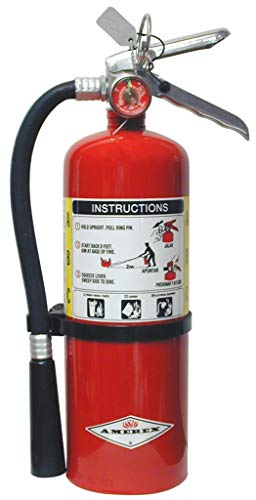
Amerex B500 5 lb ABC Dry Chemical Fire Extinguisher
The Amerex B500 is a 5 pound ABC unit with a commercial-style build. It suits a household that wants something more durable.
Expect it to be heavier than the lighter units, and confirm the filled weight on the listing. A heavier unit can be hard to keep aimed for several seconds, so only choose it for a capable adult.
Subscribe to our newsletter for more tips: Join here
Frequently Asked Questions
Do I need a fire blanket in my kitchen? It's a strong choice for older adults who may struggle with an extinguisher, for contained stovetop fires.
Are fire blankets safe for grease fires? They're commonly used on small, contained pan fires. Follow the product's instructions, and leave if the fire spreads.
Where should I mount a fire blanket in the kitchen? Place it where you can reach it without reaching over the burner, along your exit path and at a height you can reach.
Do fire blankets expire? Check the manufacturer's stated lifespan on the label. Replace one after use or if it's damaged.
Hacks and Advice
- Do the reach test today: Stand where you cook and see whether you can reach your fire tool without crossing the stove. Repeat it seated if that applies.
- Practice the pull: Handle the blanket's tabs in its packaging, or feel the extinguisher's pin and handle, when it's safe. Don't discharge anything.
- Know the escape rule: If a fire spreads beyond the pan, leave and call emergency services. No tool is worth a delay.
- Keep it visible: Don't store either tool in a cupboard or behind other items.
- Check annually: Look at the extinguisher gauge monthly, and check label dates on both tools yearly. Replace anything damaged or past its stated life.
Kitchen Fire Blanket and Extinguisher Checklist
Download this practical checklist to find the right fire blanket or extinguisher for your kitchen and ability—no guesswork, no overwhelming options, just clear steps to keep yourself safe.
Choose the Tool You Can Use Alone
The right tool is the one the person who needs it can use alone. For many older adults, a fire blanket kitchen setup is that tool. An extinguisher is a good backup when a capable adult is around.
Choosing the simpler tool is smart planning. It protects your independence rather than giving it up. For more on why that matters, see why independence helps older adults thrive.
Walk through your kitchen today. Ask plainly whether the person most likely to face a stovetop fire could operate what's on the wall now. If you're unsure, that's your starting point, and my Home Safety and Independent Living Assessment is a good next step.
What is mounted on your kitchen wall right now, and could you use it with one hand? Tell me in the comments, and share this with someone who cooks alone.