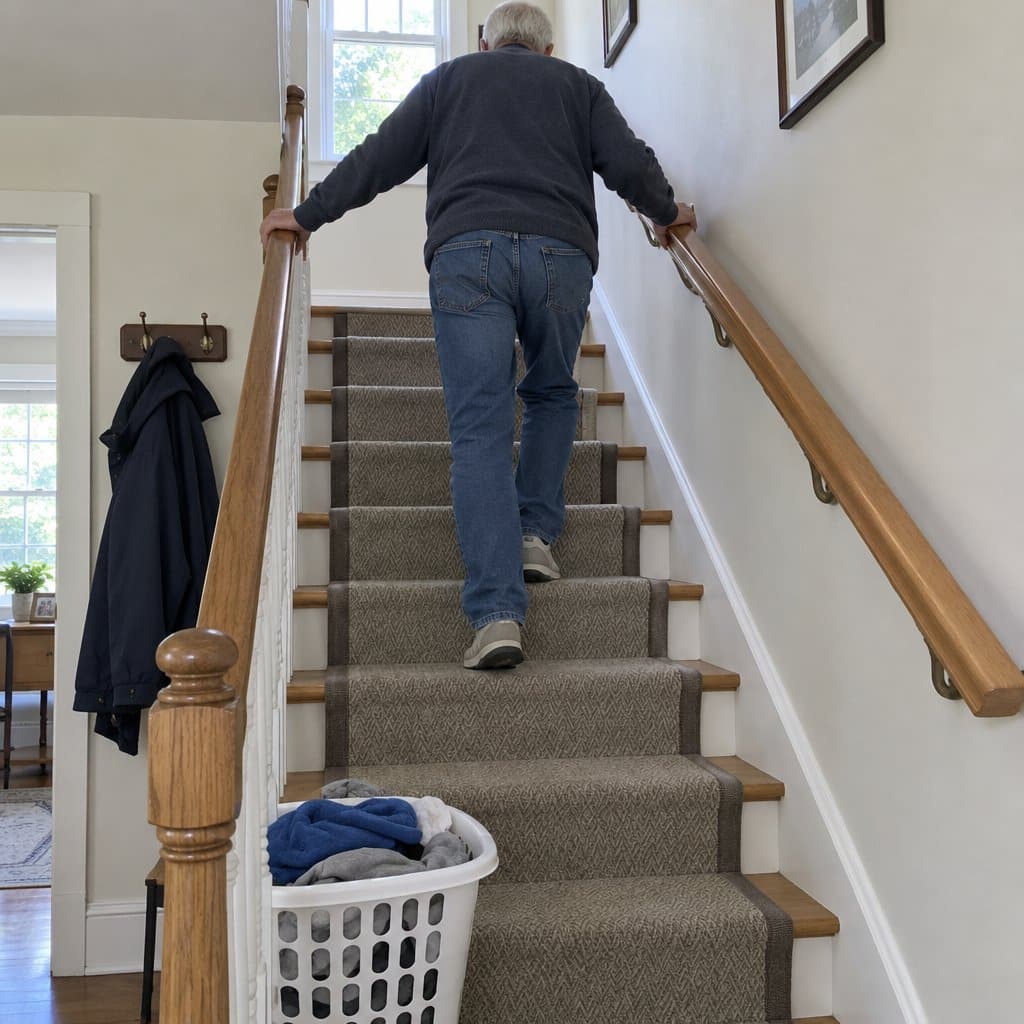
You stop at the bottom of the stairs, hand on the rail, thinking about the stairlift quote in the kitchen drawer. The number was too big, so it went back in.
If you can’t afford a stairlift, you’re not being dramatic, and you’re not alone. Stairs too hard to climb at home are often the reason people worry about leaving.
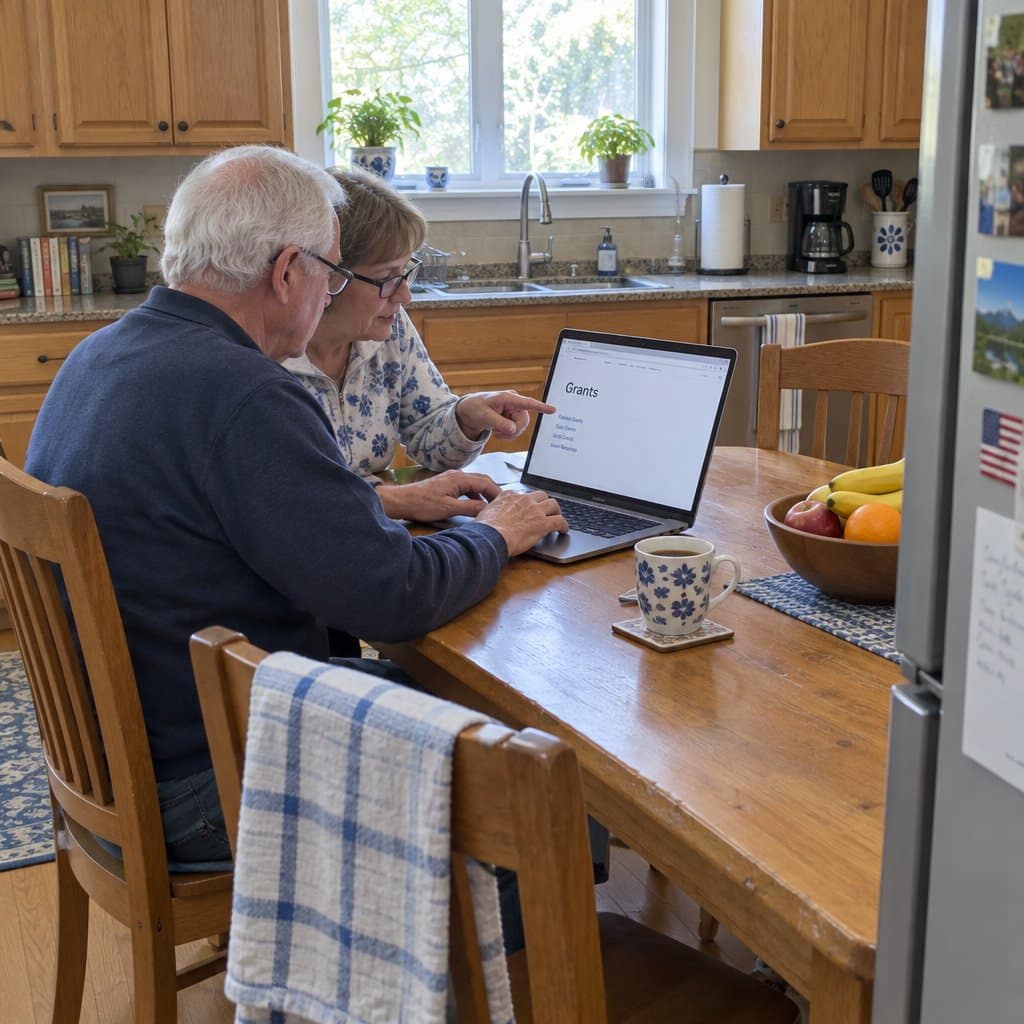
Help exists, including grants for stair lifts, but it’s scattered and nobody hands you the list. One call makes a good first step, and many people don’t know to start there.
This is general information. Rules vary by state and change every year, and I’m a Certified Senior Advisor, not an attorney or benefits counselor.
Stairlift and Home Modification Funding Plan
Get a step-by-step calling plan that reveals exactly which government programs, nonprofits, and grants can help pay for your stairlift or home modifications—so you can stop searching and start making your home safer this month.
Start Local: Your Area Agency on Aging and Medicaid Waivers
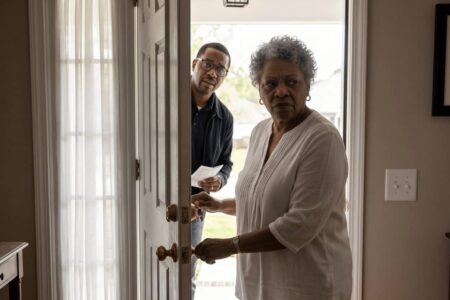
Here’s the call I’d make first. Your local Area Agency on Aging connects older adults and families to programs in your community, and that often includes home modification help.
Find Yours With the Eldercare Locator
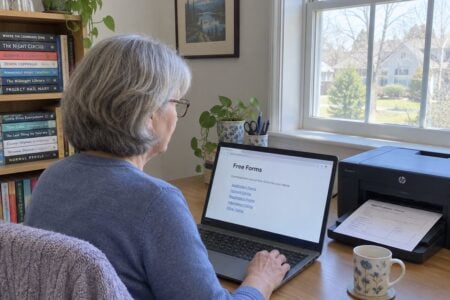
The Eldercare Locator is a free national service. You can search by phone or online, and it points you to the agency that covers your address.
When you reach them, say you’re looking for help paying for a stairlift, ramp or other home modifications, and ask what’s available locally. Ask about waitlists too, and what else they can connect you to while you wait.
Picture a woman who makes one call and hangs up with leads she didn’t know existed. That can happen, because the agency knows what’s nearby.
You’re not asking for a handout. You’re using services that exist for exactly this reason.
Ask About Medicaid Waivers
In some states, a Medicaid home and community-based services waiver can cover home modifications for people who qualify. Ask the agency or your state Medicaid office whether your state’s waiver does, and how to apply.
Eligibility and funding differ by state and change, so get the current details from them.
What About Medicare?
Does Medicare pay for a stairlift? Generally, no, so don’t wait on it. Confirm current coverage with Medicare directly.
It also helps to know what you’re trying to fund. My guide to stairlift types and costs explains why your staircase decides so much.
Before you call, write down three questions:
- What home modification help is available here?
- Is there a waitlist?
- What else should I ask about?
For Veterans: VA Grants for Home Changes
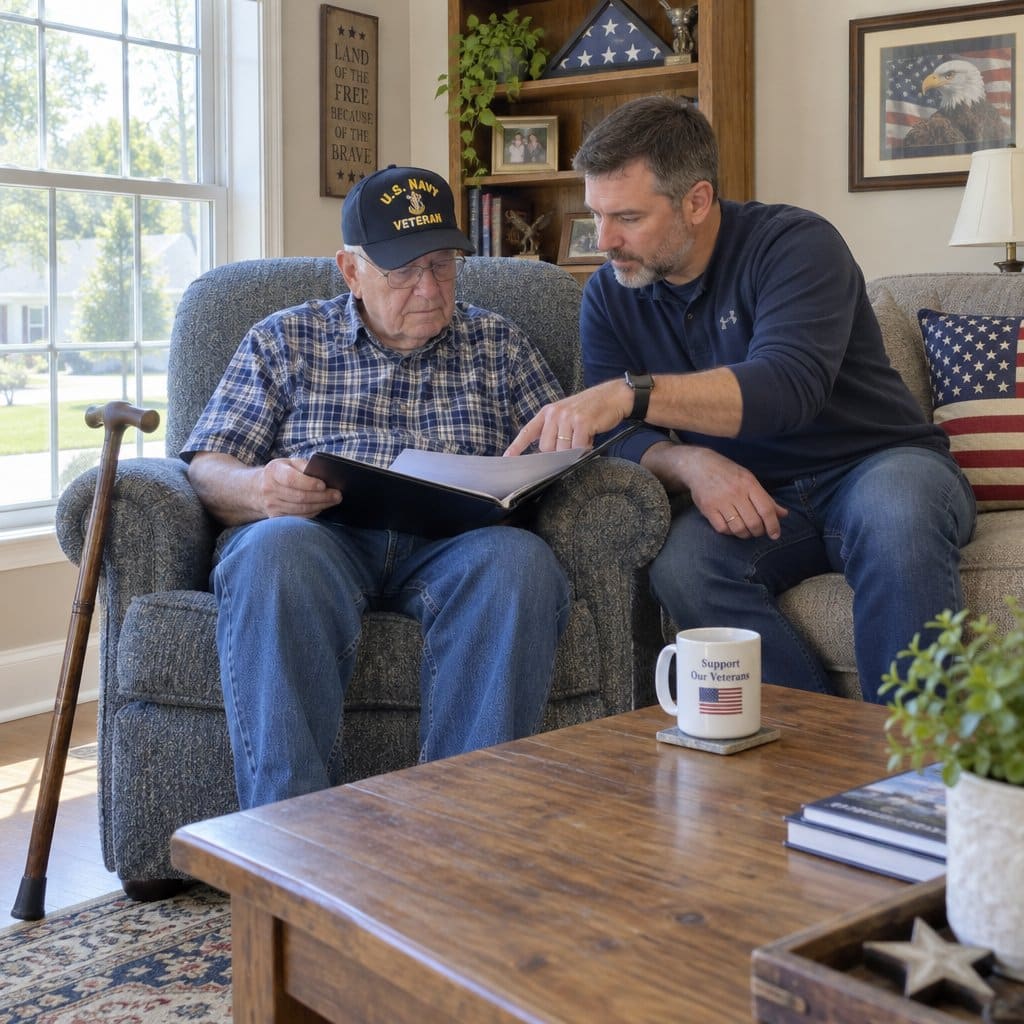
If you or your spouse served, the VA may have grants for home changes. Many families never ask.
HISA and Adapted Housing Grants
The VA HISA grant (Home Improvements and Structural Alterations) is for medically necessary changes to a home. The VA also offers adapted housing grants for veterans with certain service-connected disabilities.
Eligibility depends on the veteran’s situation, and the VA makes that decision. Check VA.gov, your local VA office, or a VA prosthetics or social work contact.
A county or state Veterans Service Officer can also help with applications at no charge.
Imagine a son helping his father, a veteran, get in and out of the house. They price a ramp and never think to ask the VA, simply because nobody mentioned it.
Benefits earned through service are not charity. Ask even if you’re unsure you qualify, because the VA can tell you.
Your next step: call your local VA office or a Veterans Service Officer and ask specifically about HISA and adapted housing grants.

Rural Homeowners: USDA Section 504 Home Repair
If you live in a rural area, the USDA Section 504 home repair program may help. It offers grants and loans to eligible rural homeowners to repair or improve their homes, including removing safety hazards.
“Rural” Covers More Than You’d Think
Eligibility depends on where you live and your household circumstances, and the rules change. Check with your USDA Rural Development state or local office, or on the USDA website.
Picture a homeowner just outside a small town who assumes the program isn’t for her. Checking her address is the only step between her and an answer.
Don’t rule yourself out before someone has looked at your address. Look it up with USDA Rural Development, or call the state office.
Nonprofits, Assistive Technology Programs and Loan Closets
Nonprofits often fill the gaps, and some of the help is free or very low cost. If you’re searching for a free wheelchair ramp for seniors, this is where I’d look.
Four Places to Call
- Rebuilding Together: local affiliates often do free home repair and safety work for homeowners who qualify.
- Habitat for Humanity: some local affiliates run a home repair program. Availability varies, so call yours.
- Your state assistive technology program: every state has one. Many offer device demonstrations, short-term loans, reuse programs or information on financing.
- A loan closet: community groups, churches, senior centers and some local agencies lend medical equipment such as ramps, walkers and shower chairs, often at little or no cost. Your Area Agency on Aging can tell you where to find one.
The downside is that volunteer programs can have waitlists and limited capacity, and they may not do every kind of job. Call to check current rules.
Many of these programs also do bathroom safety work, so see my guide to grants for bathroom modifications. For other local options, read how to get home repair help.
Picture a family who borrows a ramp from a loan closet to get their dad home from the hospital. They use that time to look into a permanent option.
Borrowing equipment is a smart, practical bridge, not a lesser choice. Search for your local Rebuilding Together or Habitat affiliate, your state assistive technology program and a nearby loan closet, then call all three.
Lower-Cost Options While You Wait
You don’t have to wait for a grant to make your home safer. I’d reduce the biggest risk first, while the paperwork moves.
These are low cost alternatives to a stairlift, and they’re stopgaps, not replacements for a professional assessment. Ask an occupational therapist or your Area Agency on Aging about a home safety assessment. Prices vary a lot, so compare before you buy.
Modular Ramps
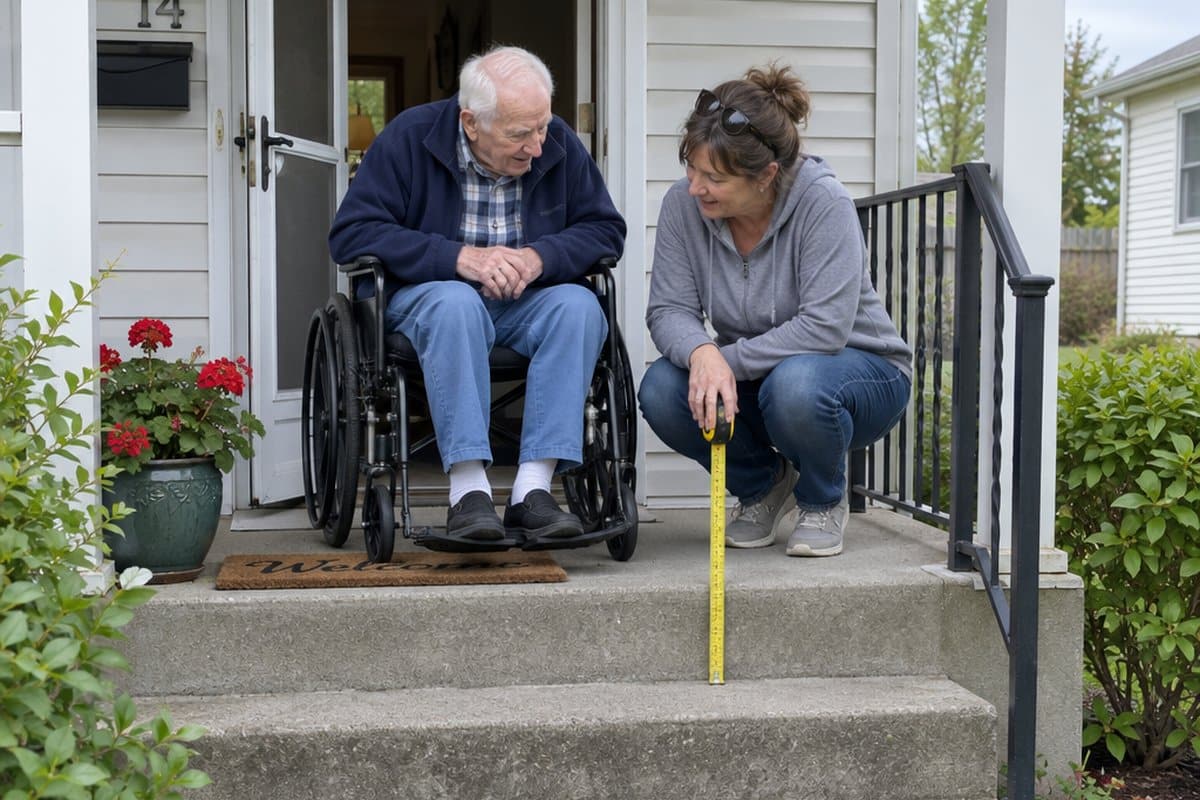
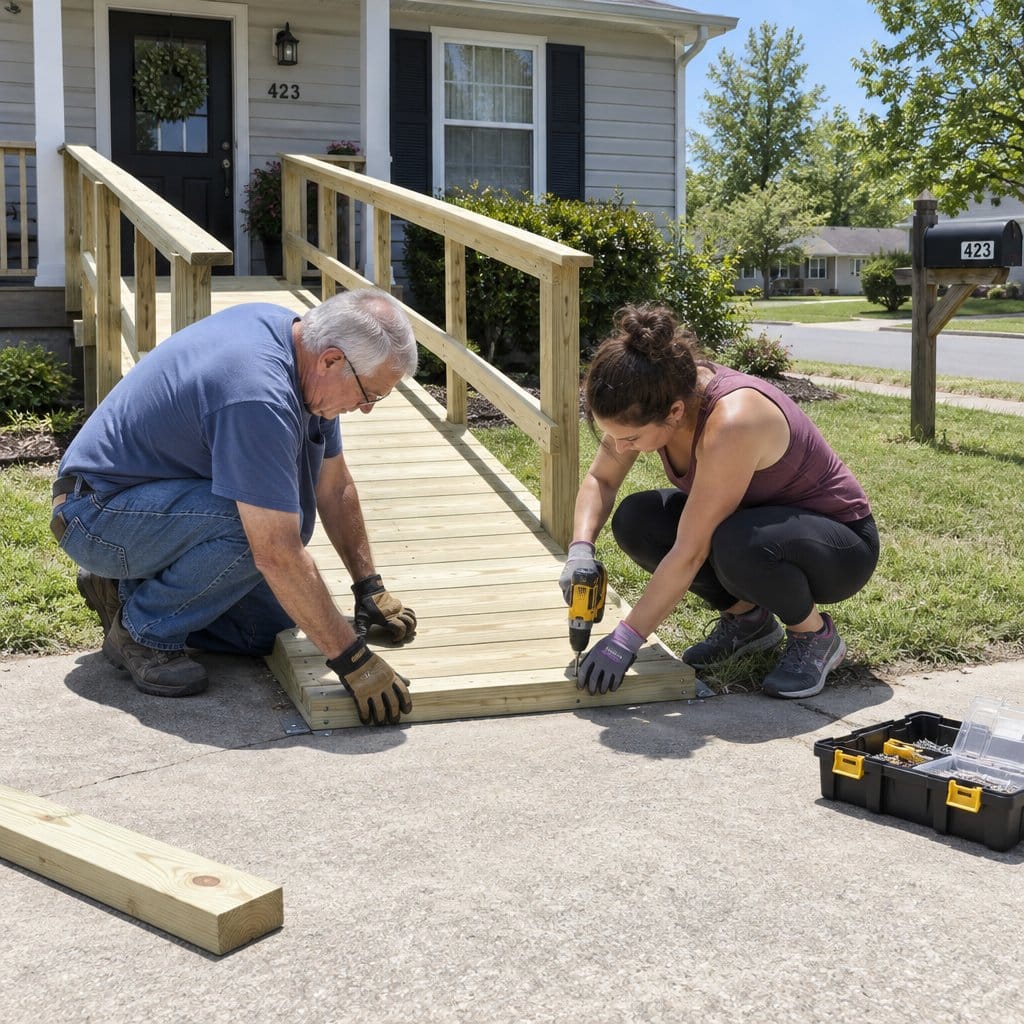
A modular wheelchair ramp is built from sections you assemble, adjust and often take apart later. It suits entry steps, a porch or a few stairs, and it’s one answer to how to pay for a wheelchair ramp when a built-in ramp is out of reach.
Measure the rise of your steps, check you have room for the length it needs, and think about the surface in rain and snow. The downside is that it takes up visible space and needs enough room to keep a safe slope. My wheelchair ramp guide covers slope and width.


For a single step, a portable wheelchair ramp is worth a look too.
Threshold Ramps
A threshold ramp is a short ramp that smooths the lip at a door or room entry. It suits a low threshold that catches a foot, a walker or a wheelchair.
The downside is that it only solves small height changes, so measure first. My threshold ramp guide shows how to match one to your door.


Grab Bars
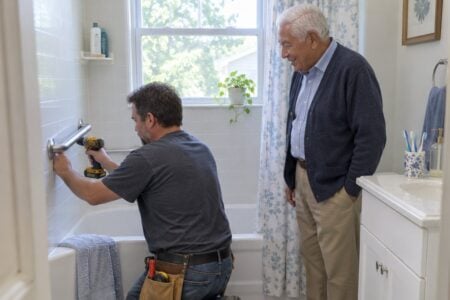
Grab bars give you a steady handhold at the tub, shower, toilet or a hard-to-step entry. A bar you’ll put your weight on must be anchored into the wall structure, not just a drywall anchor or suction, and a handyman or installer can do that.
The downside is that installation matters more than the bar. See my picks of shower grab bars for what to look for. The suction bar below is a balance aid for travel or a light touch, never a stand-in for an anchored bar.


Two More Ideas
- A second stair handrail: a sturdy rail on the other side of the stairs is often an inexpensive upgrade.
- Moving the bedroom downstairs: for some homes this costs nothing. Set up a bed, a nearby bathroom option and a spot for daily essentials, so stairs become an occasional trip. You may give up some privacy or space, so talk it over with your household. My bedroom downstairs guide helps.
Picture someone who adds a threshold ramp and a grab bar in one weekend, while waiting to hear back on a bigger project. Two small fixes, and the house already feels steadier.
A safer home this month beats a perfect home next year. Pick the one spot where you feel least steady, and fix that first.
Stairlift and Home Modification Funding Plan
Get a step-by-step calling plan that reveals exactly which government programs, nonprofits, and grants can help pay for your stairlift or home modifications—so you can stop searching and start making your home safer this month.
One Call This Week Is Enough
Help exists, even though it’s spread out. Here’s the order I’d follow:
- Area Agency on Aging, found through the Eldercare Locator
- The VA, if you or your spouse served
- USDA Rural Development, if you live in a rural area
- Nonprofits and loan closets, for the gaps
- Lower-cost fixes in the meantime
You don’t need to figure out every program today. Staying in your own home, which is what aging in place means, often starts with a single call.
For your own situation, talk with your Area Agency on Aging, a Veterans Service Officer, your state Medicaid office or a benefits counselor. I’m a Certified Senior Advisor, not an attorney or benefits counselor, and rules change by state and every year.
Which of these will you look into first? If a program has helped you or someone you know, share it in the comments.
And if a friend or family member is weighing the cost of stairs, send this their way.