
Your knee has been bothering you, the shower floor feels less steady, and you type “does Medicare pay for a shower chair” into the search bar. You get three results, three different answers and a pile of jargon.
So, what does Medicare pay for at home? Here’s what I want a family to know before they pick up the phone.
Can you guess which of these is covered: a walker, a shower chair or a bedside commode? The bathroom feels like the biggest safety need, yet it’s where coverage is usually thinnest.
This is general information, and rules change every year, so always confirm current details with Medicare.
Medicare Home Equipment Cheat Sheet
Get clarity on what Medicare pays for at home and what it doesn’t—plus the exact steps and scripts to get covered equipment without surprises or dead ends.
What Does Medicare Pay for at Home? Start With Durable Medical Equipment
Medicare has a specific category called durable medical equipment, or DME. Whether something falls into it decides almost everything.
So what is durable medical equipment Medicare covers? In plain English, it’s equipment made for medical use at home, sturdy enough for repeated use, for someone with a medical need.
Walkers, wheelchairs, hospital beds and bedside commodes usually fit. Grab bars and shower chairs usually don’t, and we’ll get to why.
Why the Doctor’s Order Is the Key
Equipment generally needs to be ordered by a doctor or other treating practitioner for a medical need. The visit notes should back it up.
Coverage turns on medical need and on the rules. It doesn’t turn on whether something would be helpful or sensible.
Knowing the category is power. “Durable medical equipment” is the phrase that gets you taken seriously on the phone.
Try this first: Ask your doctor, “Is there a medical reason I need this, and can you write an order for it?”
Walkers: A Typical Covered Example
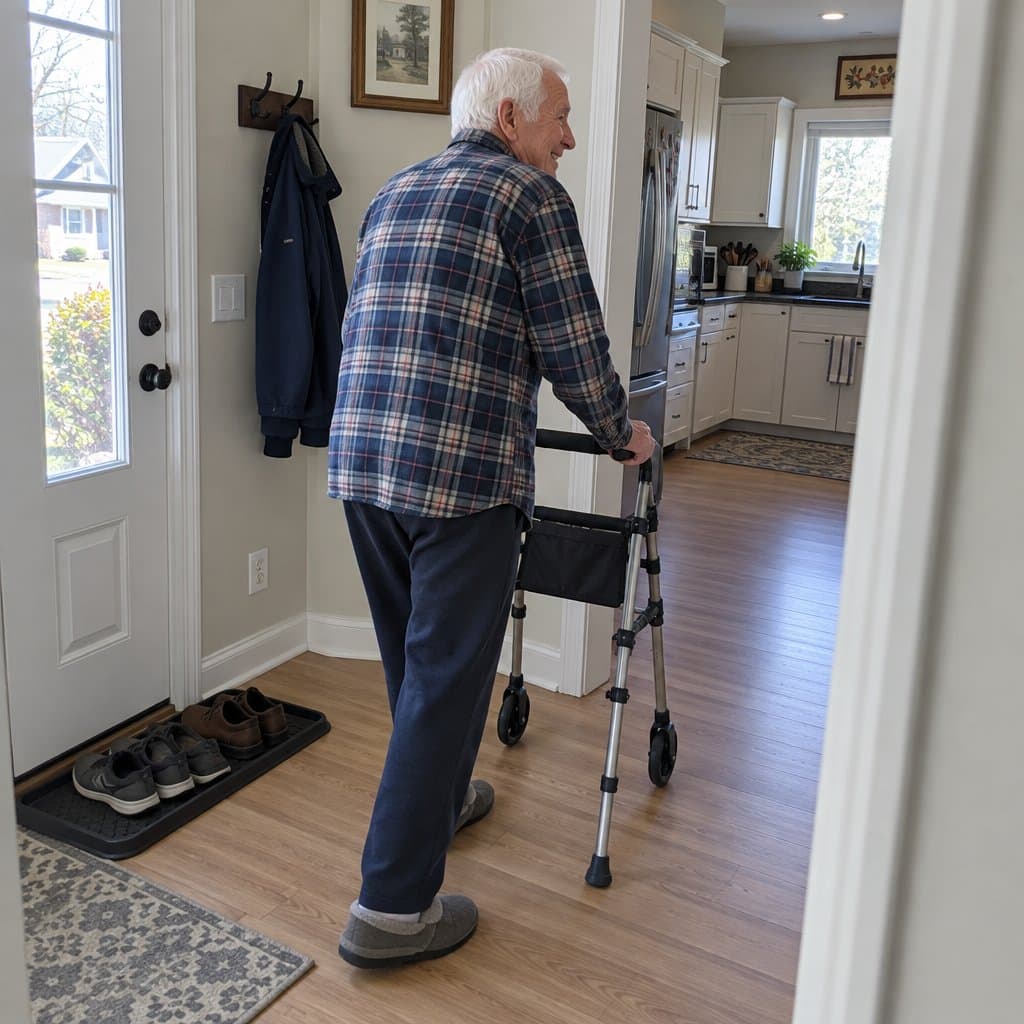
A walker is the classic example of equipment Medicare generally treats as covered. A standard walker has no wheels, so you lift it with every step, while a front-wheeled walker rolls ahead with you. If balance trouble is mild, I often see people find the wheeled style easier.


The walker shown above is a rollator, a four-wheeled walker with a seat and hand brakes, so always lock the brakes before you sit.
Any wheeled walker is less steady on thick carpet, so look at your floors and measure your doorways first. Whether a specific model is covered depends on your order and your supplier.

How to Get Covered Equipment, Step by Step
Equipment is generally handled under Medicare Part B, the medical insurance part. Getting it is a short, predictable process, and the common mistakes are easy to avoid.
Four Steps That Protect Your Wallet
- Talk to your doctor and get the order. This is the doctor’s order for durable medical equipment, and it comes first.
- Use a supplier that accepts Medicare. This is where families lose the most money. A supplier that doesn’t accept Medicare can leave you with the whole bill.
- Ask whether it’s rented or bought. Some items are typically rented and some are bought, and it varies. Ask the supplier to explain rent or buy medical equipment Medicare rules in writing.
- Ask what you’ll still owe. Medicare usually doesn’t pay the full cost, and you generally owe a share. Those amounts change every year, so check current figures at Medicare.gov or 1-800-MEDICARE.
Picture two readers. One buys a commode at the pharmacy before asking anyone. The other calls her doctor first, gets the order and confirms the supplier accepts Medicare.
Five minutes of questions up front is the cheapest tool in the whole process. If you’re wondering how to get a walker covered by Medicare, it’s exactly these four steps.
Your Three-Question Call Script
Keep this by the phone when you call any supplier:
- Do you accept Medicare?
- Is this rented or bought?
- What will I still owe?
Bedside Commodes
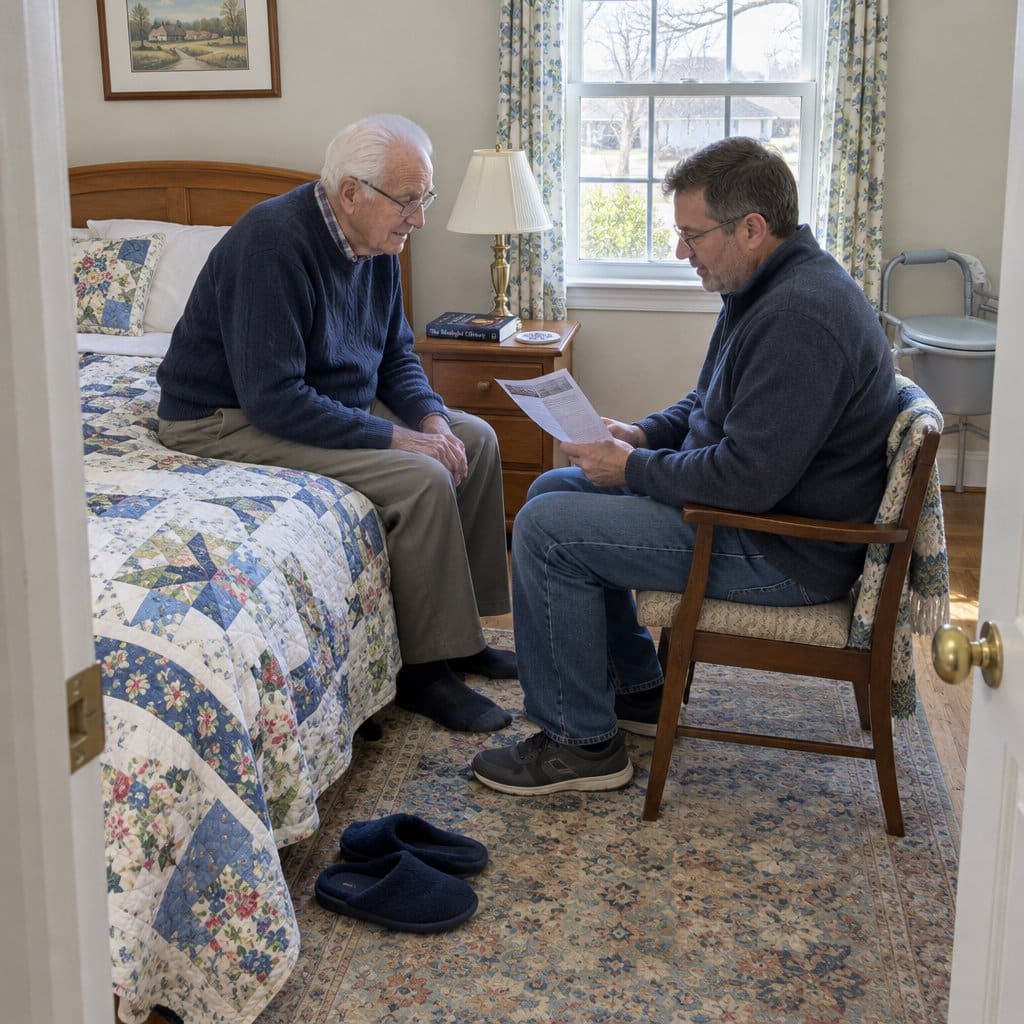
A bedside commode is another common covered example, when your doctor documents that you can’t safely get to or use the regular toilet. It also suits anyone whose nighttime walk to the bathroom feels risky, and having one beside the bed can take a worry out of the night.


It does need a spot in the bedroom and regular cleaning, and some people find it hard to accept at first. That’s a normal reaction, and many families tell me they wish they’d added one sooner. I compare styles in my guide to the best bedside commodes.
Transport Wheelchairs
People often ask about transport wheelchairs, which are lightweight and meant to be pushed by someone else. They’re handy for outings and appointments.

Wheelchair coverage depends on the medical need and the type, so ask your doctor and supplier. One downside: a transport chair generally can’t be self-propelled with large rear wheels the way a standard wheelchair can.

The Bathroom Items Medicare Usually Skips
Many of the items people want most for safety are the ones Medicare typically doesn’t pay for. Generally, Medicare treats them as convenience or home-modification items rather than medical equipment. Exceptions can exist, and rules change.
Here’s the sorted list of what’s usually not covered:
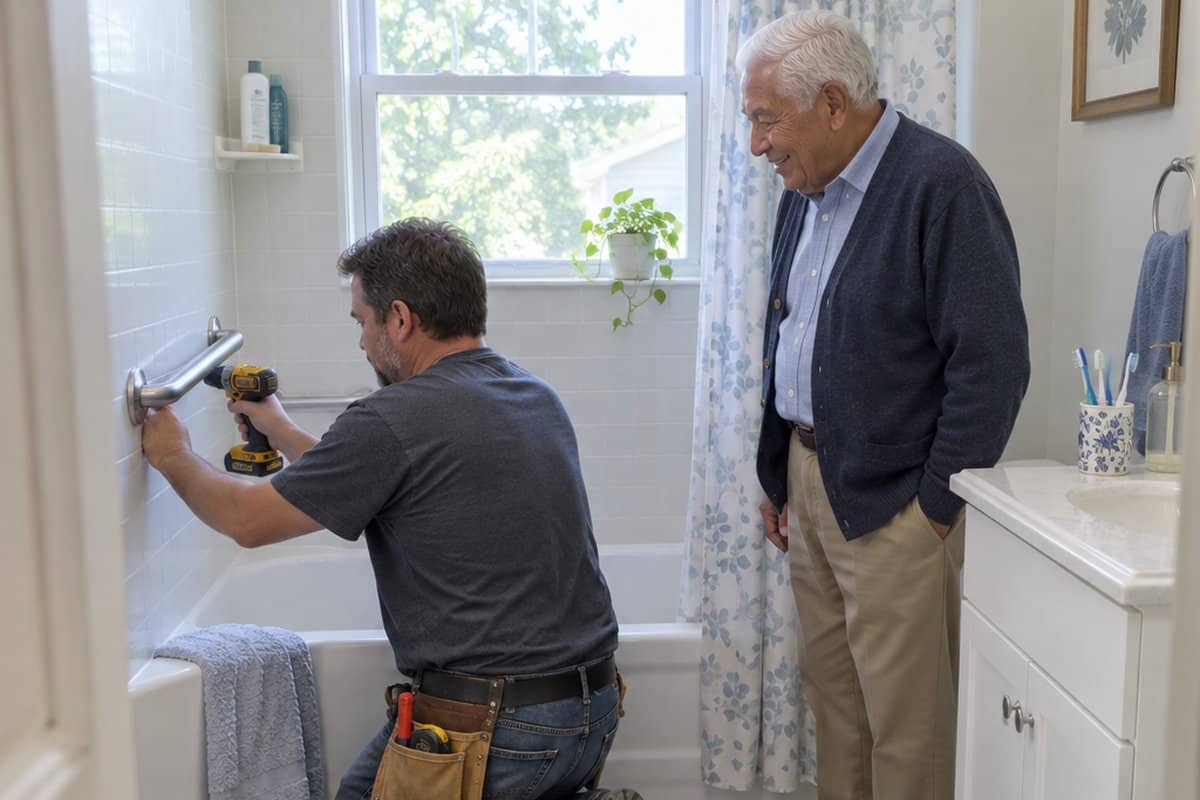
- Grab bars: Usually seen as a home modification.
- Shower chairs: Usually treated as a convenience item.
- Raised toilet seats: Usually not covered, though a commode may be.
- Stairlifts: A permanent home change, so generally not covered. Get more than one quote and ask about installation.
- Most other bathroom safety items: My bathroom safety products guide sorts through them.
“Usually not covered” doesn’t mean “not worth buying.” Many of these are the best fall-prevention money a family can spend, and they’re often modest in cost next to the price of a fall.
Say you get a firm “no” on a shower chair. It’s tempting to assume the safety need was dismissed. It wasn’t. The “no” is about the coverage category, and a no from Medicare is information about insurance rules, not a verdict on what you need.
Try this: Make two lists. “Ask Medicare about” gets the walker, commode and bed. “Plan to find another way” gets grab bars, shower chair and raised toilet seat.
Shower Chairs
A shower chair lets you wash your hair and take your time without keeping one hand on the wall. It’s a small change that makes the whole shower more pleasant.

Check the seat height, look for non-slip feet, and make sure it fits your tub or shower floor. The downside is that it takes up room in a small shower, and it needs rinsing and drying to stay clean.
Raised Toilet Seats
If sitting down and standing up strains your knees, a raised toilet seat is a simple fix. It adds height so you do less of the work.

Check that it fits your toilet’s shape and how securely it attaches, because a wobbly one defeats the purpose. My toilet safety guide covers the other options.
Grab Bars
Grab bars are among the most useful safety items in a home, and they’re usually not covered. How they’re mounted matters more than which one you pick.


A grab bar needs to be anchored into wall studs, or installed with a method rated for your wall. If you’re unsure, a handyperson or professional installer is worth the visit, and a suction-cup bar is not a substitute for an anchored one. I cover choices in my shower grab bar guide.

Do You Have a Medicare Advantage Plan? Ask About the Extras
Medicare Advantage is a plan run by a private company that includes your Medicare coverage and sometimes adds extras. Some plans may offer limited help with certain bathroom safety products or home-related benefits.
What’s offered varies by plan, by county and by year. Your plan card and your plan’s Evidence of Coverage document are the real source of truth.
Questions to Ask Your Plan
- Does my plan cover any bathroom safety equipment or home safety items?
- Is there a list of approved suppliers?
- Do I need prior authorization or a doctor’s order?
- Is there a yearly limit on these benefits?
- Can you send this to me in writing?
You’re not being pushy. Asking is how you find out what you’ve already paid for.
Call the number on the back of your plan card with these questions in hand. Write down the name of the person you spoke with and the date.
Your State Health Insurance Assistance Program (SHIP) offers free, unbiased help comparing plans. Benefits change every year, so ask again each fall during plan review season.
Where to Look When Medicare Says No
A “no” from Medicare isn’t the end of the road. It’s a signal to try the next door.
- Medicaid: Some state Medicaid programs help with home equipment, and rules vary widely. Each state sets who’s eligible and what’s covered, so contact your state Medicaid office or check Medicare.gov and Medicaid.gov.
- Loan closets: Search for a medical equipment loan closet near you. Community groups, churches, libraries and nonprofits often lend or give away walkers, commodes and shower chairs. Check that borrowed equipment is clean, sturdy and the right size, and look for worn rubber tips or loose parts.
- Area Agency on Aging: This free, local office can point you to equipment help, home modification programs and caregiver resources. Find yours through the Eldercare Locator.
A social worker, hospital discharge planner or your doctor’s office can also point the way. Resourcefulness is a form of independence, and asking where to look is smart.
Related questions come up a lot. Wondering about a cane? I cover how Medicare treats those in Does Medicare Pay for Walking Canes?. And if you’re curious about lift chairs, here’s what I explain in my power lift recliner guide.
If a fall is what worries you most, my low-cost bathroom change is worth a look while you wait on answers.
Try this week: Pick one door, call the Area Agency on Aging or search for a loan closet in your county, and write down the question you’ll ask.
I’m a Certified Senior Advisor, not an attorney or benefits counselor. For questions about your own eligibility, talk to a SHIP counselor, a benefits counselor or an elder law attorney.
Medicare Home Equipment Cheat Sheet
Get clarity on what Medicare pays for at home and what it doesn’t—plus the exact steps and scripts to get covered equipment without surprises or dead ends.
Your Sorted List
- Usually covered: Walkers, wheelchairs, hospital beds and commodes, with a doctor’s order and a Medicare-accepting supplier.
- Usually not covered: Grab bars, shower chairs, raised toilet seats and stairlifts.
- Possible extras: Some Medicare Advantage plans, so ask yours.
- Other doors: Medicaid, loan closets and your Area Agency on Aging.
You don’t have to memorize any of this. You just need to know which question to ask next.
Rules change every year, so confirm current details at Medicare.gov, 1-800-MEDICARE, with your plan or with your local SHIP counselor.
Which item on your list surprised you most, and which door will you try first? Share it in the comments, and send this to a family member or friend who’s sorting through the same decisions.