You park, turn off the engine, and then pause. Getting out of the car has started to feel like a small project, whether the seat is low, your knee complains, or the door barely opens in a tight spot.
This is one of the first everyday things to get hard after a knee or hip problem, and one of the easiest to fix. It doesn't mean you have to stop going places.
I'll walk you through a simple order of moves and a few inexpensive aids, and one of the cheapest fixes is already in your kitchen drawer. Do you know which part of getting in the car causes most of the trouble?
Car Entry and Exit Cheat Sheet for Bad Knees
Download our free Car Entry and Exit Cheat Sheet and discover the simple repositioning techniques and affordable aids that make getting in and out of your car pain-free again—no surgery or major changes required.
The Safer Way In: Sit First, Then Swing Your Legs Together
The trouble is the twist. Stepping in one foot at a time while turning your body can put extra strain on your knees and hips.
Changing the order of the moves fixes a lot of that. It's the same idea as changing how you lift a heavy box, and it costs nothing.
How to Get In
Here is how to get in and out of a car with bad knees using one steady sequence:
- Move the seat back as far as is comfortable before you get in.
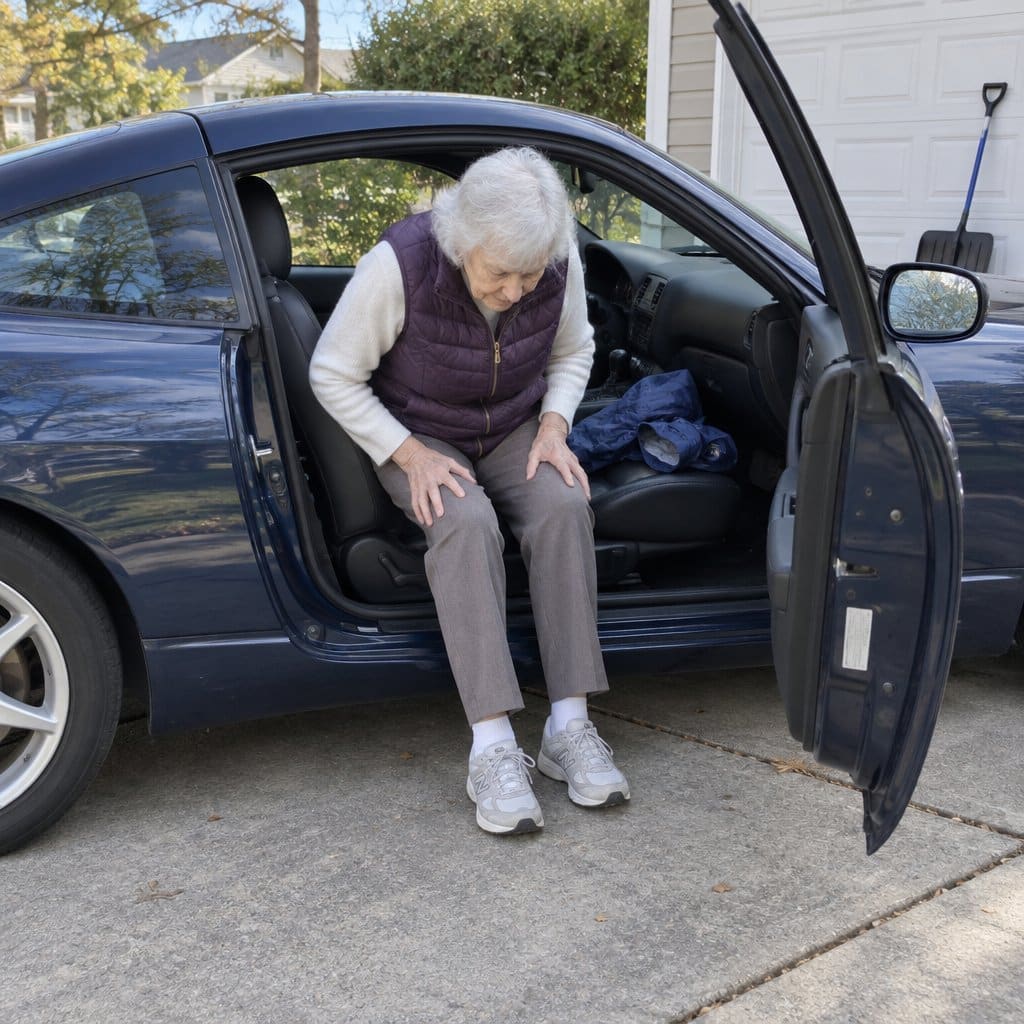
- Back up to the seat until you feel it against the backs of your legs.
- Hold the door frame or another steady support.
- Lower yourself to sit first, before your feet leave the ground.
- Lift and swing both legs in together, turning as one unit.
- Pull the seat forward once you're settled.
How to Get Out
Reverse it. Turn so both feet come out together, scoot toward the edge of the seat, and plant both feet flat. Then stand using your stronger leg and a steady hold.
Sit first, swing together. That one change is often all it takes.
If you're getting out of a car after hip replacement, follow the movement precautions your own surgeon or occupational therapist gave you. Ask about car transfer tips at your next visit.
Try the move once or twice in the driveway with a family member nearby. A busy parking lot is the wrong place to practice.
Car Door Grab Handles: What to Check Before You Trust One
A car door grab handle latches into the U-shaped striker plate in the door frame. That gives you a firm grip while you stand up or sit down.
It suits someone who needs a steady place for one hand when rising from a low or deep seat.
Here is a car door handle option to look at.

Are car door grab handles safe, and do car assist handles work? They can, if you check a few things first:
- Fit: It matches your car's door frame and latches fully.
- Condition: It isn't cracked or worn, and it doesn't wobble.
- Rating: Read the weight rating on the package.
- Use: Treat it as a steadying and standing aid. Don't hang your full weight from it unless it's rated for that.
I'd check the latch fit first, before anything else.
The downside is that it only helps on the side where it's latched. It also won't help if balance is your main problem. In that case, a person standing nearby or a walker is the better fix.
Swivel Seat Cushions and the Plastic Bag Trick

Turning is often the hardest part. Fabric seats grip your clothes, so your hips stay put while your knees try to rotate.
The Free Fix
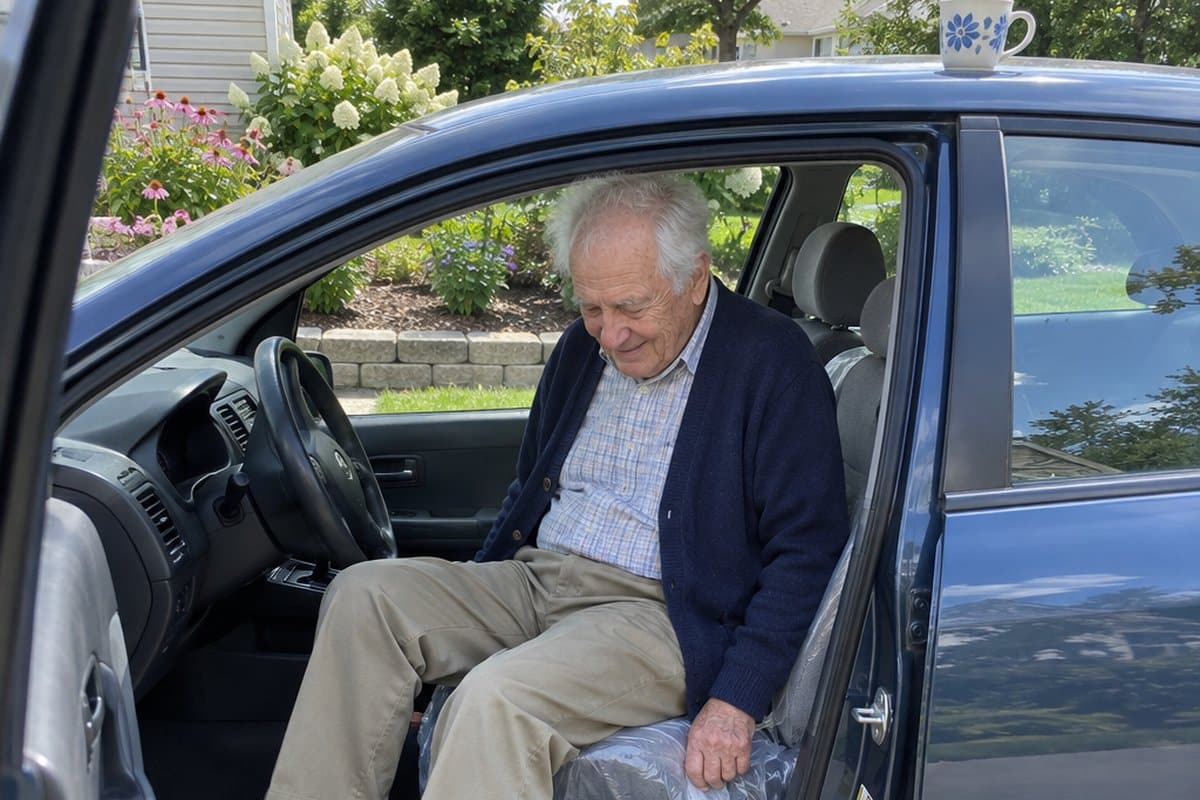
Try the free fix before you spend anything. Lay a smooth plastic bag, like a clean grocery bag, on the seat. It helps you slide and turn more easily.
Take it off before you drive. Otherwise you could slide on the seat when you brake or turn.
When a Cushion Makes Sense
If the bag helps, a swivel cushion is probably worth a look. It has a rotating base, so your body and legs turn together.
A swivel seat cushion suits someone who finds twisting painful but can sit and stand steadily.

Watch for a few things. It adds a little height, which may change how you see over the dash. Make sure it sits flat and doesn't slide, and lock it in place or remove it when you drive.
If you also sit for long stretches behind the wheel, my guide to car seat cushions for long drives matches cushion types to where it hurts.
Leg Lifter Straps and Car Caddie Straps
Sometimes the hard part is lifting a stiff leg or pushing up to stand. Two simple straps can help when it's hard to get in and out of the car.
Leg Lifter Strap
A leg lifter strap has a loop for your foot and a handle for your hand. You can lift a stiff leg in or out without bending down to reach it.
It suits someone recovering from a hip or knee procedure, or whose leg is stiff or weak.

Car Caddie Strap
A car caddie strap hooks around the window frame to give you a handhold while you sit or stand. It suits someone who wants a bit of extra pull when standing and has no door handle option.
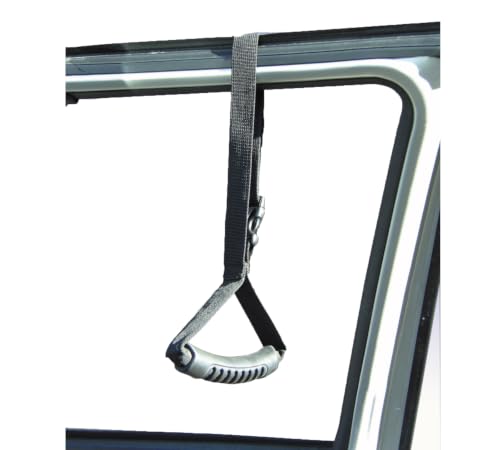
It only works where the window frame is sturdy and the strap is seated firmly. Don't use it if the window is open or the frame feels loose.
Both straps add a step to your routine, and both can feel awkward at first. Practice at home before you rely on them.
Standing from soft, low seating at home can be a struggle too. My reviews of the TerseFit Stand Assist Aid and the VOCIC Electric Seat Lift Assist cover two ways to handle that.
Seat Height, Door Size, and When a Different Car Is Worth It
Sometimes the car is the problem, not you.
Seat Height
For car seat height for easier getting in and out, a seat around hip level is usually easiest. Very low sports-style seats and very tall truck seats both make it harder.
If your car seat is too low to get out of, a wedge cushion can raise and tilt the seat. That's how to get up from a low car seat with less effort.
If you want back support along with the extra height, a one-piece seat and lumbar cushion does both. It doesn't swivel, so pair it with the plastic bag if turning is also hard.


Check that a wedge doesn't change how you reach the pedals or see the road. If it does, it isn't the right fix for that car.
Door Size
If the car door is too heavy or too narrow to get out of, look for a door that opens wide and a roofline you don't duck under. Sit in a car before you buy it. Do a full in-and-out a few times.
When to Switch
If you've tried technique and aids and it's still hard, a car with a higher seat and wider door is a real solution, not a defeat. My list of the best cars for seniors to get in and out of is a good place to start.
When to Stop Driving or Riding Up Front: A Respectful Word
Some decisions deserve care and conversation, not a lecture.
If getting in and out, turning your head, or reacting quickly is getting harder even with aids, talk with your doctor or an occupational therapist about a driving evaluation.
Here is what I want a family to know. Watch for patterns, like new dents, close calls, or getting lost, rather than a single event.
Raise the question of when an older adult should stop driving privately and early, and offer alternatives such as rides from family or community transportation.
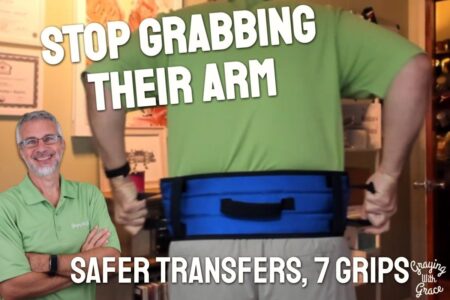
For helping someone transfer safely, my review of the Rhino Valley gait belt may help.
Should an older adult sit in the front or back seat? Up front is usually easier for entry and legroom. The back can be safer for some people, depending on the airbag and the person's size and condition. Ask a doctor or a certified driver rehabilitation specialist about your own situation.
Rules and requirements vary by state and change over time. Check with your state motor vehicle agency for current rules.
Car Entry and Exit Cheat Sheet for Bad Knees
Download our free Car Entry and Exit Cheat Sheet and discover the simple repositioning techniques and affordable aids that make getting in and out of your car pain-free again—no surgery or major changes required.
Your Car, Your Call
Start with technique: sit, then swing both legs together. Add one or two inexpensive aids that match your real problem. Consider a bigger change only if you still need it.
- Turning is hard: Try the plastic bag, then a swivel cushion.
- Lifting a leg is hard: Try a leg lifter strap.
- Standing is hard: Check the grab handle or caddie strap, or a wedge cushion.
- The car is the issue: Look at seat height and door size.
Getting in and out of the car is a skill, and small changes can make it easy again. You don't have to give up outings to stay safe.
Which part of getting in and out of the car is hardest for you right now? Share it in the comments. If this helped, tag a friend or family member who could use it too.