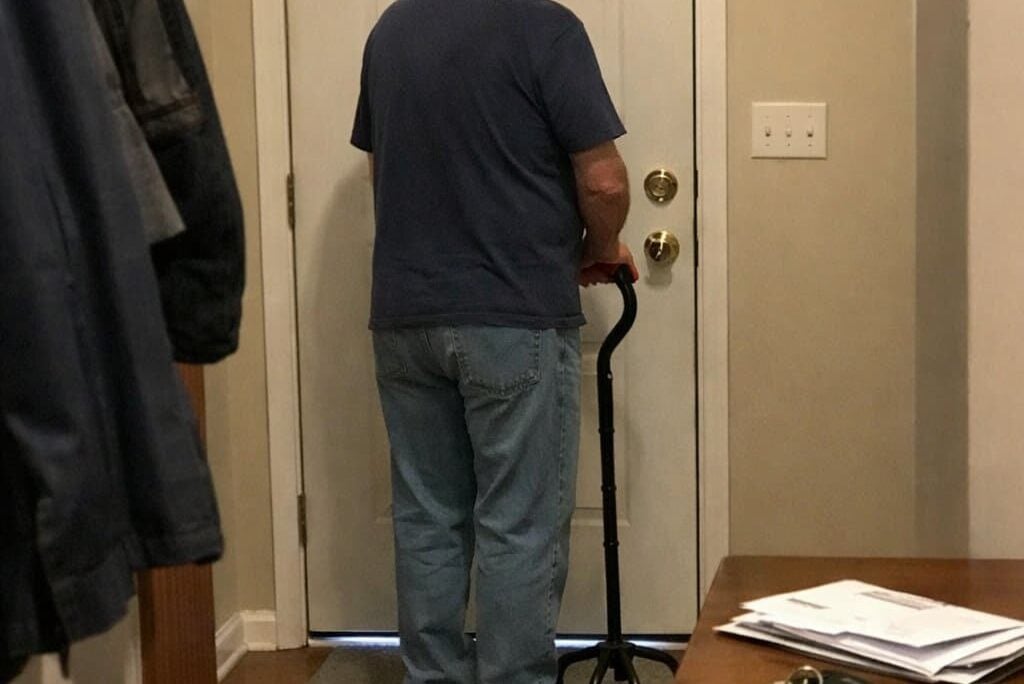
Picture the sequence your front door demands every single time you leave the house.
Approach. Reach the handle. Pull the door open against spring tension and weatherstripping resistance. Hold it open. Maneuver through a frame that may be 32 inches wide at best. Let the door close behind you — or try to, while keeping your walker in both hands or your wheelchair wheels clear of the threshold.
That sequence is where falls happen. It's where walkers get caught in closing doors, where wheelchair footrests clip the frame, and where a person who manages everything else independently discovers that their own front door has become a daily obstacle requiring a second person.
Here's what most people searching this category don't know yet: residential automatic door openers are a real product category. They're not scaled-down commercial units. Low-energy residential operators are specifically designed for standard home doors. But they're not the right answer for everyone — and buying one when basic door hold-open hardware would have solved the actual problem means spending $1,500 or more on something that still frustrates you.
This guide is a decision tool before it's a product list. The first question isn't which opener to buy. It's which problem you're actually trying to solve.
Automatic Door Opener & Hold-Open Hardware Shopping Guide
Download this printable shopping guide to measure your door correctly, identify whether you need automation or hold-open hardware, and avoid costly mistakes before you buy—so you can choose the right solution the first time and restore easy access to every room in your home.
What to Look For
Before you look at a single product, you need four numbers and one honest observation about your door. These specifics determine whether automatic door openers will work on your door at all — and they're what separate a successful installation from an expensive return.
Opening force — measure it first. The ADA standard for non-fire-rated interior door opening force is 5 pounds maximum. Many residential entry doors with weatherstripping, door sweeps, or aged hardware require 8 to 15 pounds or more. A walker user with limited grip, or a wheelchair user who cannot brace against the floor to pull, cannot safely manage that resistance. An inexpensive door force gauge (under $30 at most hardware stores) tells you this number in 30 seconds. An occupational therapist can also assess it during a home visit. This number alone tells you whether hold-open hardware is sufficient or whether full automation is genuinely necessary.
Latch-side clearance — the most common reason an automatic opener purchase fails. Most residential low-energy operators require a minimum of 8 inches of clear space between the door's latch edge (in the open position) and the nearest wall, railing, or obstruction. Some models require up to 12 inches for the operator arm to travel its full arc. Measure this before ordering anything. If that number is under 8 inches, call the manufacturer and describe your door configuration — some models offer low-clearance arm options, and some simply cannot work in that space.
Door condition before door hardware. A door that sticks, drags, or swings unevenly will strain and eventually defeat any automatic operator motor. A $150 door tune-up — hinge tightening, weatherstrip adjustment, threshold check — before installation often makes the difference between a smooth system and a chronically struggling one. Check this honestly before you buy.
Power access and backup behavior. Most residential automatic door openers require a standard 120V outlet within reach of the installation point. Battery backup is worth verifying specifically — in a power outage, a wheelchair user locked inside or outside their home because the opener has no manual override faces a genuine safety emergency. Confirm that any model you consider includes a manual release mechanism. Clarify whether the door defaults to open or closed on power failure. These are not fine-print details; they are safety specifications.
Activation method and reach height. Wall switches, wireless key fobs, motion sensors, and Bluetooth smartphone activation are all available depending on the model. For wheelchair users, the relevant question is whether the activation point is reachable from a seated position. ADA-compliant push-button placement is between 15 and 48 inches from the finished floor. Key fob activation eliminates the reach problem entirely but introduces the risk of a lost or dead-battery fob — worth thinking through before choosing a model.
Installation reality. Residential low-energy automatic door openers are not DIY installations for most households. They require a door that can support 15 to 30 pounds of added mechanism, proper alignment, and in most jurisdictions, a licensed electrician for the power connection. Budget $200 to $500 for installation labor as a separate line item in any cost comparison. That context matters when you're weighing automatic openers against hold-open hardware, which installs without a contractor in most cases.
If you want to think about this door modification in the context of other entrance and mobility changes throughout the home, our guide on choosing the best mobility aids for seniors covers how different devices interact with home features — including doorways.
Residential Automatic Door Openers
Residential low-energy automatic door openers power the full open-and-close cycle of a standard hinged door on command, giving wheelchair users and power chair users a way to enter and exit independently without touching the door or relying on a second person.


A residential low-energy automatic door opener is a powered operator that opens and closes a standard hinged door on command — via wall switch, key fob, motion sensor, or app — without the user touching the door at all. The motor mounts to the door frame or header, an articulating arm connects to the door itself, and the whole system manages the full open-close cycle independently.
This is the right solution for a specific user. Wheelchair users and power chair users who cannot manage a door's weight or swing at all — not merely with difficulty. Users with no reliable way to hold a door open while maneuvering through the frame. Households where the primary entry door is used multiple times daily and caregiver dependence at that point is creating scheduling burden or loss of dignity. And critically: doors that are structurally compatible — standard single-leaf hinged, square in the frame, with adequate latch-side clearance, accessible power, and a wall or header capable of supporting the hardware.
This is the wrong solution for others. Walker users who can manage the door with one hand but need both hands free during passage — that is a hold-open hardware problem. Doors that are warped, incorrectly hung, or framed with insufficient latch-side clearance. Households with storm doors at the same entry point, unless a dedicated storm door opener or dual-opener setup is part of the plan. Renters without landlord permission to modify the door frame and run electrical. And any user whose primary barrier is a sliding door, garage door, or screen door — those are different product categories entirely.
The cost trade-off is real. Hardware alone typically runs $400 to $1,500 depending on the model, plus $200 to $500 for installation. That is significantly more than hold-open hardware, which costs $20 to $150 and installs without a contractor. Automation solves the problem completely and independently. Hold-open hardware only holds the door open — the user still initiates the opening. For the user who needs both functions handled, hold-open hardware solves nothing.
Olideauto Handicap Door Opener for Disabled People
This is a low-energy swing door operator designed specifically for residential and light commercial ADA applications. It mounts to the door header and drives an articulating arm that opens and holds the door, then controls the close speed and latching. The unit is intended for single-leaf hinged doors and operates on standard 120V power with included wiring connections.
The push-button wall switch activation puts control at a fixed point — suitable for users who can position themselves near the switch reliably. Wheelchair users should verify that the switch mounts within the 15-to-48-inch ADA reach range for their specific approach path before installation. The arm configuration needs latch-side clearance measured before ordering; the manufacturer should be contacted if that clearance is under 10 inches.
The honest limitation here is that this is a hardware-only unit. Installation requires a door that is structurally square, properly hung, and within reach of a 120V outlet. I'd recommend having an occupational therapist or contractor assess door compatibility before purchase — the most common frustration in this category comes from discovering a clearance or alignment problem after the hardware arrives.
Olideauto 120B Automatic Door Opener
This Olideauto model is a low-energy swing door operator with an integrated door closer function — meaning it handles both the powered open cycle and the controlled close, rather than relying on a separate closer. That integration matters for households where the door needs to close reliably behind the user for security or climate reasons.
The 120B configuration is designed for either inward or outward swinging doors, with arm options that accommodate different hinge setups. Buyers should confirm which swing direction their specific door uses and specify this at the time of purchase — swapping an arm configuration after installation is an added labor cost. Key fob activation is typically available as an accessory, which eliminates the reach-to-wall-switch problem for seated users.
The integrated closer function adds value for users living alone, where an open door left by a non-closing operator creates a security or weather issue. The trade-off is that the closing mechanism needs correct tension adjustment during installation — a door that closes too fast is a hazard, and one that closes too slowly may not latch. Professional installation calibration is worth the cost here.
GEKRONE Electric Full Automatic Door Opener
The GEKRONE is rated for heavier doors — up to the 110–220V AC input range suggests a more powerful motor than entry-level residential units — and is described as suitable for both commercial and residential applications on heavy-duty doors. That specification makes it a candidate for exterior entry doors with significant spring resistance or weatherstrip drag, where a lighter residential operator would strain over time.
The full-automatic designation means the unit manages both the open and close cycle without user intervention on the close side — the door opens on activation and closes on a timer or sensor. For a wheelchair user who cannot reach back to trigger a close cycle, that behavior is a functional advantage. Confirm the close delay timing is adjustable; a door that closes too quickly mid-passage is dangerous.
As with any high-capacity unit, the installation requirements are proportionally more demanding — the header or frame must be able to support the added hardware weight, and the power connection should be handled by a licensed electrician. This is not a unit to install without a professional site assessment first.
Olideauto Smart WiFi Handicap Door Opener
This Olideauto model adds WiFi connectivity and smartphone app control to the standard swing door operator function. For a wheelchair user who uses a smartphone as a primary control interface already, app activation eliminates both the reach-to-wall-switch problem and the lost-fob risk. The WiFi connection also enables remote monitoring — a caregiver or family member can verify the door is closed from outside the home.
App-based activation does introduce a dependency on a reliable home WiFi network and on the user's ability to navigate the app interface from their device. For users who prefer simpler activation, the unit typically also supports wall switch or fob control as alternatives. Verify which activation methods are included and which are accessories at the time of purchase.
The smart connectivity adds cost relative to non-connected models. For households where the connectivity features add genuine daily value — remote monitoring for a family caregiver, integration with a broader smart home setup — that premium is justified. For users who primarily want reliable powered door operation and have no need for remote access, a non-connected model at lower cost may be the more practical choice.
HNZXIB Low Energy ADA No Touch Swing Door Opener
The HNZXIB unit is described as a no-touch ADA swing door operator with low-energy operation, targeting the same residential and light commercial ADA market as the Olideauto lineup. The no-touch designation typically refers to motion sensor or proximity activation — the door opens when the user approaches within sensor range, without requiring a button press or fob activation.
For a wheelchair user whose hands are occupied with a joystick or push rim, or for a walker user who cannot reach a wall switch without disrupting their balance, no-touch activation removes a genuine friction point. The practical question is sensor placement and sensitivity calibration — a motion sensor positioned incorrectly will either trigger when no one intends to use the door or fail to trigger when someone does. Professional installation calibration is important here.
As with all units in this category, door compatibility verification — latch-side clearance, door weight and condition, power access — should happen before purchase. The activation method solves one problem; the installation context determines whether the system works reliably.
TdiriNar 50W Automatic Electric Swing Door Opener
The TdiriNar is a 50W swing door operator that includes remote controllers in the package — meaning fob-based activation is included rather than sold separately. For buyers who want fob control without an additional accessory purchase, that bundling reduces the initial outlay and setup complexity.
The 50W motor rating places this in the mid-range for residential operators — adequate for standard interior and exterior residential doors in good condition, but buyers with heavy doors (solid wood, steel-clad, significant weatherstripping resistance) should verify the rated door weight before ordering. A motor that is underpowered for the door it is driving will work initially and degrade faster under regular use.
Remote controller inclusion is a practical advantage. The honest caveat is that fob-based systems require the user to carry and maintain the fob — keep it charged or replace the battery, avoid losing it, and have a backup activation method established for the day the fob is not available. Confirm that a wall switch is also included or available as a redundant activation option.
Door Hold-Open Hardware
Door hold-open hardware solves a specific problem for walker and cane users: it keeps a door stationary in the open position after the user has opened it, preventing the door from swinging back mid-passage when both hands are occupied with an assistive device.


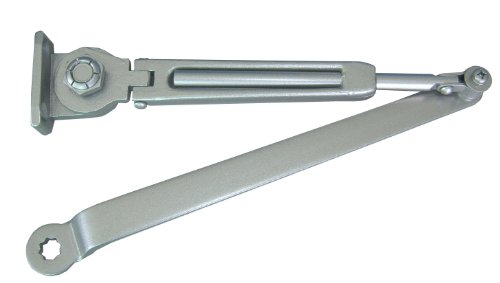
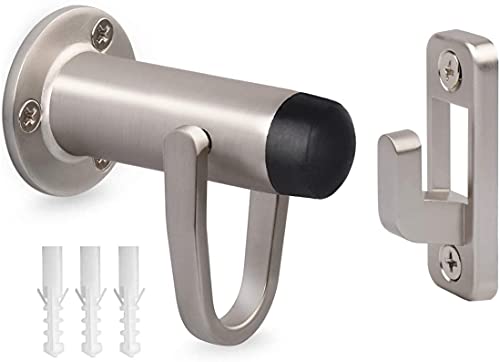
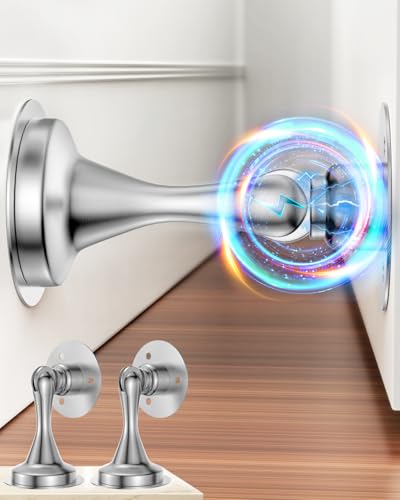
Door hold-open hardware is not a simplified version of an automatic opener. It is a different product solving a different problem, and understanding that distinction before purchasing either one saves significant money and frustration.
A door hold-open device keeps the door stationary in an open position once the user has opened it. It does not power the opening. It does not automate anything. Its entire function is to prevent the door from swinging back while the user passes through — and that is exactly the problem for a walker user who can pull a door open but cannot simultaneously hold it and move through it with both hands occupied.
This is the right solution for a specific user. Walker users and cane users who have adequate strength and grip to initiate the door-opening motion, but who cannot hold the door open while maneuvering through with an assistive device. Households where the primary frustration is the door swinging back mid-passage — not the weight of opening it in the first place. Situations where budget is a primary constraint and full automation is not financially realistic. Most products in this category cost $20 to $150 and install without a contractor.
This is the wrong solution for others. Wheelchair users who cannot reach the door handle, cannot manage the initial opening force against spring tension, or cannot position themselves to trigger a hold-open mechanism before passing through — automation is the right solution for that user, not this one. Households where an open exterior door creates an unacceptable problem — security risk, pet containment, HVAC cost, weather exposure. Hold-open hardware keeps the door open until someone manually releases it. If an open door is a problem, this category does not help.
The core limitation of every product in this section should be stated plainly before you read any individual review: hold-open hardware keeps the door open. That is its function and its constraint. It does not close the door. It does not automate anything. For any user who needs both the opening and the passage handled without touching the door, hold-open hardware solves nothing.
For family caregivers evaluating lower-cost modifications that reduce how often physical assistance is required at daily friction points, the fall prevention checklist covers entrance and threshold modifications alongside interior hazard reduction — useful context for prioritizing which modifications to address first.
Cal-Royal CR3049HOSRPS Hold-Open Cushion Stop Door Closer
This is a door closer with an integrated hold-open arm — meaning it combines the function of a controlled-close door closer with a hold-open position that the user can engage by opening the door past a set angle. When the door reaches that angle, the arm locks into the hold-open position; the user pushes it past to release it back to normal closer operation.
The cushion stop feature refers to the backcheck function, which slows the door before it reaches the stop position — important for doors that open toward a wall, and useful for preventing hardware damage from a door swung too hard. The hold-open angle is fixed by the arm design, so buyers should confirm that the hold-open position provides sufficient clear width for their specific assistive device. Wheelchair clearance requires a minimum of 32 inches of clear width; 36 inches is preferred.
The limitation worth noting: engaging and releasing the hold-open position on this type of unit requires pushing the door past a set angle and then pulling it back through. For a walker user whose balance depends on the door being stationary while they maneuver, the engagement sequence should be tested before purchase if possible — this is a mechanism that suits some users well and frustrates others depending on hand strength and balance.
Yale 2721T Hold-Open Door Closer
The Yale 2721T is a surface-mounted door closer with a hold-open arm, designed for standard single-leaf hinged doors in residential and light commercial applications. Yale's door closer line is well-established in the market, and the 2721T series is commonly specified in accessible design contexts where a hold-open function is needed alongside controlled close speed.
The hold-open arm configuration means the door stays open when pushed to the hold-open angle — useful for walker users who can push through a doorway and want the door to remain open behind them without having to reach back. The close speed is adjustable via the closer body, which matters for users who need more time to clear the threshold before the door begins its close cycle.
This is a closer-plus-hold-open unit, not a simple door stop. It requires installation on the door and frame with appropriate screws for the door material, and the closer arm must be calibrated for the door's weight. Hollow-core interior doors are not suitable for surface-mounted closers — confirm door construction before purchasing.
The Door Bull Series 5000 Automatic Door Closer with Hold Open Arm
The Door Bull Series 5000 combines an automatic door closer with a hold-open arm feature, marketed for residential doors that need controlled closing with the option to hold the door in the open position. The automatic closer function means the door closes on its own after the hold-open is released — useful for households where the door closing reliably behind the user matters for security or climate control.
The hold-open arm engages when the door is pushed to the appropriate angle. For users who need both hands free during passage, the key question is whether they can push the door to the hold-open angle before committing to the passage sequence — this requires a moment of door contact, which is not always possible for users with limited reach or severe hand weakness.
The close speed should be verified as adjustable. A closer that returns the door too quickly after the hold-open releases is a safety hazard for anyone who moves slowly through a doorframe. Adjustable closing tension is a feature worth confirming before purchase.
Copper Creek PT-C86FHO-DB Friction Hold Open Arm
The Copper Creek friction hold-open arm is a replacement arm designed to work with compatible door closer bodies — it adds the hold-open function to a door that already has a closer installed, without replacing the entire closer unit. If a door already has a standard Copper Creek or compatible closer body in good condition, this arm swap is a lower-cost modification than replacing the full unit.
The friction hold-open mechanism works by resisting the arm's return movement — the door stays open at whatever angle it was left, held by friction rather than a positive latch. That means it is less positive than a latching hold-open mechanism and may not hold reliably against a strong wind or a door with significant spring tension. Check the door's actual spring resistance before assuming a friction arm will hold it reliably in the open position.
The Dura-Bronze finish is a corrosion-resistant option suited for exterior door applications where moisture exposure is a factor. Confirm arm compatibility with the existing closer body before ordering — arm and body compatibility is model-specific and not universal across manufacturers.
HOMOTEK Heavy Duty Latch Hook Stop Door Holder
The HOMOTEK is a floor-mounted or wall-mounted latch hook door stopper — a mechanical device that catches the door at a set position and holds it there until the user releases it. The heavy-duty designation refers to the construction and the rated door weight it can hold, which matters for exterior doors with significant mass or spring tension.
The latch hook mechanism is more positive than a friction arm — the door locks into the catch position rather than relying on resistance alone. That positive engagement is an advantage for doors with meaningful spring tension, where a friction-based hold would slip. The sound-dampening rubber component reduces impact noise when the door engages the stop, which is a practical quality-of-life detail in a household context.
The activation posture is worth testing before purchasing. To engage a floor-mounted latch hook stop, the user typically needs to position the door over the stop and push it down or forward to engage — a motion that may require bending, stepping, or kicking depending on the device's placement and the user's mobility. Walker users should confirm they can perform this engagement motion without disrupting their balance.
HELEMAN Magnetic Door Stoppers with Wall Mount
The HELEMAN is a magnetic door catch system — a wall-mounted magnet that holds the door in the open position when the door's metal plate (or the door hardware itself, if ferromagnetic) contacts the magnet. No floor contact, no latch mechanism, no kick or step required — the door holds simply by being pushed open to the point where the magnet engages.
For users who cannot safely perform a kick or step motion, or who cannot bend to engage a floor stop, a wall-mounted magnetic hold is a genuinely simpler activation sequence. The door is pushed open; it holds. To release, the user pulls or pushes the door away from the magnet with enough force to break the magnetic hold — typically a light pull.
The limitation is magnetic hold strength relative to door weight and spring tension. Magnetic door catches are well-suited to lightweight interior doors with minimal spring resistance. For exterior doors with weatherstripping, door sweeps, or installed door closers adding return force, the magnet may not hold reliably. Check the product's rated holding force against your door's actual resistance before purchasing — this is the most common source of dissatisfaction with magnetic hold-open products.
Frequently Asked Questions
Are residential automatic door openers the same as commercial ones? No. Low-energy residential operators are a distinct product category designed for standard home doors, lower daily traffic volume, and residential installation. They do not require commercial-grade structural mounting or an ADA compliance review process. Opening speed and activation force are typically lower than commercial units, calibrated for home use rather than high-traffic public entry.
Does my front door need to be a certain size for an automatic opener to work? Yes — specifically, the latch-side clearance matters most. Most residential low-energy operators require a minimum of 8 to 12 inches of clear space between the door's latch edge (in the open position) and the nearest wall or obstruction, for the operator arm to travel its arc. Measure this before ordering. Also confirm the door is square in the frame — a door that sticks or drags will strain the motor and cause problems over time.
Can I install a residential automatic door opener myself? The mechanical portion is within reach of a confident DIYer with door hardware experience. The electrical connection — running power to the operator — typically requires a licensed electrician in most jurisdictions, and skipping this step voids most product warranties. Budget for professional installation even if you plan to handle the mechanical portion yourself. The total realistic cost is hardware plus $200 to $500 in labor.
Will a door hold-open device work on a door with a strong spring closer? Some will, some won't. A heavy-duty magnetic hold-open or a latch-hook stop with high-rated holding force is more likely to manage a spring-loaded door than a lightweight friction arm or a low-strength magnet. Check the product's rated door weight and spring resistance before purchasing. If you need two hands to hold the door open against its spring, a light-duty hold-open device will not hold it reliably either.
What happens to an automatic door opener in a power outage? This varies by product and is worth verifying before purchase. Most residential operators include a manual release that allows the door to be operated by hand when power is out. Some include battery backup that maintains powered operation for a defined number of cycles. A door that locks in the closed position during a power outage is a safety risk for a wheelchair user living alone. Confirm the fail-safe behavior of any model you are considering — this should be a listed specification, not an assumption.
Is an automatic door opener covered by Medicare as durable medical equipment? Generally, no. Automatic door openers are classified as home modifications, not durable medical equipment, and are not covered under standard Medicare. Some state Medicaid waiver programs, VA benefits, and nonprofit home modification assistance programs do cover or subsidize residential door openers for qualified individuals. An occupational therapist or your local Area Agency on Aging can help identify available funding sources in your area before you commit to out-of-pocket purchase.
Hacks and Practical Advice
Walk your entrance before you research products. Time the full sequence: approach the door, open it against resistance, hold it while maneuvering, clear the frame, release or close it. If any step requires setting something down, bracing against the frame, or waiting for help — write that down. That observation, not a product description, tells you what you actually need to solve.
Measure latch-side clearance on day one. Pull out a tape measure and check the distance from the door's latch edge, when fully open, to the nearest wall, railing, or obstruction. If that number is under 8 inches, call the manufacturer before ordering and describe your configuration. Some models offer low-clearance arm options. Others cannot work in that space regardless of how the installation is handled.
Check the door condition before the opener, not after. A door that sticks, swings unevenly, or has worn hinges will cause problems for any automatic operator. A $150 door tune-up — hinge tightening, weatherstrip adjustment, threshold check — before installation often makes the difference between a smooth-operating system and one that's chronically struggling.
For hold-open hardware: test activation posture before you buy. Sit in a wheelchair or stand with a walker in both hands, in the position you'll actually be in when you need to engage the device. Can you reach the activation point? Can you kick a kickdown stop or push a floor latch without losing balance? Most returns in this category happen because the activation method looked workable on paper and was unusable in practice.
Annual maintenance for automatic openers matters. Check the operator arm connection points for loosening. Verify that activation sensors are clean and unobstructed. Test the manual release mechanism to confirm it still works — not just when the installer showed you, but every year. A manual release that has seized from disuse is a genuine safety problem, particularly for someone living alone.
Think about your full entrance, not just your primary door. If you have a storm door at the same entry point, a powered opener on the primary door does not solve the storm door problem. Dual-door configurations require either a dedicated storm door opener or a different approach to the entry altogether. The bathroom safety products guide applies the same logic to bathroom entry — sometimes the right solution is a different door configuration rather than hardware added to a problem door.
Use a fitness tracker or GPS watch as a safety layer during the transition period. When a new door modification changes your daily routine — and particularly if you're moving between manual and powered operation while learning the system — having a medical alert or GPS device active gives you a backup if something goes wrong during the entry or exit sequence. This is especially relevant for wheelchair users living alone who have a single primary entry point.
Automatic Door Opener & Hold-Open Hardware Shopping Guide
Download this printable shopping guide to measure your door correctly, identify whether you need automation or hold-open hardware, and avoid costly mistakes before you buy—so you can choose the right solution the first time and restore easy access to every room in your home.
What Comes Next
Residential automatic door openers are real. They work. And for the right user on the right door, they change daily life in a meaningful way — removing a point of dependence that happens multiple times every day.
But the question was never whether these products exist. The question is whether your specific door, your specific mobility situation, and your specific problem map to automatic operation — or whether hold-open hardware solves the actual friction point for a fraction of the cost.
Here is your next step before you look at any product in more detail: walk your entrance today and time the full door sequence. Approach, open, maneuver through, close. Mark the exact step where the sequence breaks down or requires help. That observation tells you which product type to evaluate — and which one to skip entirely.
If you want a systematic look at your entrance and other high-priority friction points throughout the home before making any modification decisions, an occupational therapist home assessment is the most efficient path. Your local Area Agency on Aging can connect you with resources — including programs that subsidize home modifications for qualified older adults. That conversation, not a product page, is where the right decision starts.