
You ask someone to repeat themselves for the third time, and you can feel the conversation slipping away.
If hearing aids cost more than you can spend, personal sound amplifiers may be a lower cost alternative worth a look.
Here I cover what they are, how they work, and how they differ from hearing aids.
I also go through a few I like, what to look for when shopping, whether they are safe, whether you should see an audiologist, and what Medicare covers.


PSAPs are sold for people with normal hearing and are not meant to treat hearing loss. OTC hearing aids are FDA regulated and made for mild to moderate loss. One study found some PSAPs helped adults with mild to moderate loss.
- Do they really work? Yes, PSAPs with the latest digital sound processing can effectively amplify sounds for mild to moderate hearing loss. For severe hearing loss, hearing aids remain more effective.
- What should I look for? Focus on comfort, battery life, ease of use, trial periods, positive reviews, and tech features like noise reduction. Devices that serve multiple purposes, like amplifying speech, TV, and phones, are ideal.
- How much do they cost? Quality PSAPs range from $200 to $500. Very cheap models under $50 are not recommended. Though not as costly as hearing aids that run thousands of dollars, PSAPs can still provide noticeable sound amplification and affordability.
If you have severe hearing loss, a prescription hearing aid may be your only viable option for proper hearing care, so check with your audiologist. For any degree of hearing impairment, please consult a medical professional before purchasing a PSAP to ensure it will meet your needs.
Lower Cost Alternatives to Hearing Aids
While hearing aids will cost you thousands of dollars, here are several more affordable options that may cost you only a couple of hundred dollars instead.
While you may be searching for cheap hearing aid alternatives specifically, it’s important to note that you probably won’t find a hearing amplifier for $75 that you will be happy with. As a matter of fact, Consumer Reports says to stay away from any PSAP that costs less than $50.00!

Williams Sound PockeTalker Ultra Amplifier
A personal amplifier is useful because it does a few jobs with one small purchase. It makes speech and conversation louder, and it can help with the TV too.
My top pick here is the Williams Sound PockeTalker Ultra DUO. It is a simple, wired amplifier, and that simplicity is the point.
It has a microphone that picks up the voices around you and sends them to your headphones. You can read my in-depth review of the Maxi Pro here. The microphone is removable and comes with an extension cord, so you can place it closer to the person talking, say across a table or beside a speaker at a meeting.
The volume and tone controls are on the outside of the unit. You can turn the sound up and also adjust it so voices come through more clearly. The amplifier gives 20 to 40 dB of acoustic gain, which is the amount it boosts sound.
The DUO package comes with a listening headset and a single earbud. That lets you choose whichever is more comfortable for you.
For the TV, it includes a TV listening cord. You plug one end into the TV and the other into the amplifier, and the sound goes straight to your headphones at the volume you choose. Everyone else in the room can keep the TV at their own level.
The unit runs on two AAA batteries and can go up to 100 hours on a set. It has a removable belt clip, so you can wear it on a belt or waistband. It also comes with a user’s guide and a 5 year manufacturer warranty.
Now the trade-offs. It connects by cord, not Bluetooth, so it will not pair with your phone or stream music wirelessly. You also have a cord between you and the TV. If you want calls and music sent wirelessly, look at a Bluetooth model instead.
If you want something with few buttons and nothing to pair, this one is a good fit.
Behind-the-Ear Hearing Amplifier
This one is a behind-the-ear hearing amplifier with a volume wheel you turn by hand. It is a simple option for someone who wants sound turned up without learning new technology.
There is no app, no Bluetooth pairing, and no phone setup. You switch it on and turn the wheel until voices are comfortable. If you have ever been handed a gadget and a thick manual, you will appreciate that.
It amplifies sound by 38 dB (give or take 5) across a range of 200 to 3100 Hz. That range covers most of what you listen for in daily life: voices, TV dialogue, and everyday sounds around the house.
It comes with several sizes of ear domes, the soft tips that sit in the ear. A snug fit matters here. A dome that fits well keeps the earpiece in place and cuts down on whistling, which is the squeal that comes from sound leaking back into the microphone.
The design keeps the microphone near your ear. It suits TV time, talking with family, and following conversations at home.
It runs on batteries, so there is no charging routine to remember. You will need to keep spare batteries on hand.
The trade-off is that it does not tailor itself to your hearing. It makes everything louder and does not boost the specific pitches you struggle with. It also will not stream TV or phone calls to your ear.
If you want a hearing test and a customized profile, the bHearing-style amplifiers with an app are a better fit. For my more extensive review of the bHearing Sound Amplifier, click here. If you want something plain and easy to use, this one is worth a look.
Karthus Rechargeable Hearing Aids
If you want something that sits behind the ear and keeps things simple, the Karthus OTC Hearing Aids are worth a look. They are made for mild to moderate hearing loss, and they use a behind-ear design with soft tulip ear tips. If you want to compare, I also demoed the iBstone Nova OTC hearing aids.
Operation is plain. You turn the switch on and use one button to change the volume, with 7 volume levels to choose from. There is no app, no Bluetooth and no wireless function, so there is nothing to pair or set up on a phone.
For sound, they use 16-channel digital processing meant to make speech clearer and reduce background noise. The idea is that you can follow conversations with family and friends, and the TV, without asking people to repeat themselves.
They are rechargeable, and the set comes with a charging case. The listing gives 100 hours of total use with the case, so you are not buying and stocking tiny batteries.
Now the trade-offs. With only one button and no app, you can’t fine-tune the sound for different places the way you can with more advanced models. If you want to stream calls or music straight to your ears, this is not that kind of device.
It is also an amplifier for mild to moderate loss. If your hearing loss is more serious, or you have pain, fluid or sudden changes in your hearing, see a hearing professional first.
Pros:
- Excellent for up-close interactions
- A great choice for hearing the TV better
- Volume amplification up to 40 dB
- Includes full headphones that fold up and an earbud
- Can be used with hearing aids as a booster
Cons:
- Rotary switches are more difficult to use than buttons
- The volume control is combined with the power button
The Williams Sound Pocketalker Ultra 2.0 is a different style of hearing amplifier. Rather than being worn in the ear, it is a microphone, an amplifier, and headphones on a table or in your pocket.
The microphone picks up the sound around you, amplifies it, and sends it to the user through the headphones for you to listen.
You can read my written comparison of the Mino vs. the Pocketalker 2.0 here.

Overall, it’s an easy device to set up and use. To start listening, plug in the earpiece or headphones, then adjust the volume to your preferred level. You can also make adjustments to the overall tone from more treble to less treble.
This sound amplifier is quite versatile and can work with various headphone and earphone options. It also pairs well with telecoil and neck loop-equipped hearing aids.
Because it works with a microphone and doesn’t have to stay in the ear, moving it closer to the sound the user is trying to hear is easy. For example, it comes with a longer cord so the microphone can be placed closer to the TV.
This helps with TV volume, especially for family and friends who don’t like the TV being so loud all the time. But it won’t be the best audio quality, especially when compared to a direct connection.
The user has a choice of headphones too. This set comes with both a full set of headphones and an earbud. That way, the user can choose the best one for their situation.
There is nothing at all discreet, though, with the Pocketalker. So, it’s probably not a good choice for people sensitive about letting others know about their hearing loss.
But for those who don’t care that others see the device, this will improve their hearing, especially in up-close interactions.
What to Look for When Shopping for an Over the Counter Hearing Amplifier
You’ve probably noticed that there are numerous personal sound amplifiers out there. Most of these you should just pass up when you see them. So, to help you wade through all the options, focus on these factors:
- Multi-purpose. Look for devices that serve multiple purposes because chances are your hearing challenges affect all parts of your life. So, having one device for conversation, the TV, and your phone is particularly helpful.
- Comfortable. Many better sound amplifiers come with multiple ear tips and adjustable headphones to customize the fit for your ear canal shape and make them more comfortable to wear. If the device isn’t comfortable, you won’t want to wear or use it, right?
- Latest Tech. The latest technology, including directionality, noise reduction, and other digital sound processing features, is important for getting the best results from these devices.
- Battery Use. Since these devices may be powered by traditional non-rechargeable batteries or rechargeable batteries, you should take some time to think about the type of battery that is suitable for your usage patterns.
- Custom Hearing Profiles. To ensure sound clarity, look for an amplifier that enhances all the frequencies your hearing impairment covers. This frequency range should be at least 250 to 6,000 Hz or wider if possible. Some amplifiers have built-in hearing tests and smartphone apps to set up custom hearing profiles for you. Make sure you at least have some tone control over treble and bass.
- Easy to Use Controls. Look for a PSAP with simple, easy-to-use and understandable controls. If an app is part of the package, make sure you will use it or have someone available to help with the initial setup.
- Positive Reviews. Even the cheaper sound amplifiers should be backed by many positive reviews from people who have used the device.
- Satisfaction Guarantee. Check the return period and availability of a trial period on any device under consideration, as you need to have enough time (about four weeks or 30 days) to test it out and make sure it works for you. Make sure you know and understand the warranty term as well.
Types of OTC Hearing Aids
Here are the main types of sound amplifiers that people with hearing loss can choose from. Many of these address one situation where hearing loss is a problem, while some address multiple problems.
- Personal Sound Amplifiers. These devices use microphones to take in sound, then clarify and amplify it before playing it back through headphones or earbuds. These can sit in the ear and be worn like traditional hearing aids or have a separate microphone apparatus. Watch out for dubious claims, because PSAPs are not intended to treat hearing loss.
- Pocket Talkers and Pocket Amplifiers. While Pocketalker is a trademark of Williams Sound, this term also refers to a group of amplifiers that are designed to be kept in a pocket or on a table and use an internal or external microphone and headphones or earbuds.
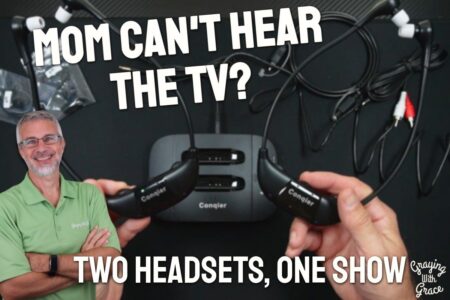
- TV Listeners and Amplifiers. This is a group of amplifiers designed specifically for amplifying the sound from television through corded or wireless connections. This function can also be built into personal amplifiers and pocket talkers as an additional feature. You can see my list of the best TV headphones for seniors here. A subcategory of this group is TV speakers that amplify sound without having to be worn by the user.
- Sound Enhancing Headphones. This special set of headphones enhances and amplifies sound rather than just “playing audio.” Several of these even set up custom hearing profiles for the wearer and boost the specific frequencies they have difficulty hearing. You can see these examples in my list of the best headphones for seniors.
- Amplified Phones. Many people first notice their hearing loss when using the telephone. There are lots of options on the market to address this specific need. You can see a list of my favorites in various guides to standard landline phones for seniors and cordless phones for seniors.
Frequently Asked Questions About Personal Amplifiers
What is a Personal Sound Amplification Product (PSAP)?
Simply put, a PSAP is a wearable device designed to amplify sounds in specific situations and environments. They are sold for people with normal hearing, and they tend to be cheaper than hearing aids.
Furthermore, they are widely available and can be purchased without a prescription from a doctor. But there are some differences when compared to hearing aids.
How do PSAP’s work?
To deliver amplified sound to the ear of the wearer, PSAPs are designed with a few important components. These include a microphone, speaker, amplifier, power source, and volume controls.
The microphone captures the sound to be amplified before being converted into a digital signal that is amplified and then sent to the speaker or headphones.
Should you see an audiologist?
Yes. You should see an audiologist to have your hearing properly tested by an expert. The results of the hearing tests conducted by your audiologist in a clinic will determine whether you need a hearing aid. (Source)
Are hearing amplifiers safe?
Hearing amplifiers are safe, provided they are used correctly and in the right applications. This is according to the information provided by the FDA.
Do hearing amplifiers really work?
Often, yes. A study in JAMA Otolaryngology found that some PSAPs helped adults with mild to moderate hearing loss.
However, in people suffering from severe hearing loss, the effectiveness of sound amplifiers is lower than hearing aids.
What is the difference between a hearing aid and a sound amplifier?
According to the FDA, a hearing aid is a wearable sound amplification device specifically designed to compensate for any hearing loss.
A sound amplifier, on the other hand, is defined as a wearable electronic product that is designed to amplify sound in some environments. Learn more about the differences between sound amplifiers and prescription hearing aids.
How much hearing loss requires a hearing aid?
You might need a supplemental hearing amplifier if you have any degree of hearing loss. Your degree of hearing loss (mild, moderate, or severe), as determined by the tests administered by your audiologist, is used to establish whether or not you need a hearing aid.
The term degree of hearing loss can be translated to mean how loud sounds need to be before you hear them clearly. You have mild hearing loss if you can only hear sounds at 30dB, moderate if you only hear at 50dB, and moderately severe if you only hear sounds at 60 dB. (Source)
How do personal amplifiers differ from hearing aids?
To some degree, PSAPs and hearing aids use similar technology to deliver similar functions; however, these two are very different from each other.
Hearing aids are designed to help with hearing loss and are regulated by the FDA. PSAPs (personal sound amplification products) are sold for people with normal hearing and are not meant to treat hearing loss, though the newest ones have features that come closer to those of hearing aids. Over-the-counter (OTC) hearing aids are a separate category: they are FDA regulated and made for mild to moderate loss.
Why would you want a PSAP instead of a hearing aid?
One of the main reasons you might choose a PSAP over a hearing aid is the lower cost. A prescription hearing aid can run into thousands of dollars, while PSAPs are usually much cheaper.
Getting a PSAP is also easier, since you do not need a prescription from your doctor to buy one.
Are They Covered by Medicare or Other Insurance?
Medicare does not generally cover hearing improvement products because they aren’t considered medically necessary, believe it or not. Many private insurers tend to follow Medicare guidelines, but you should call the back of the number on your insurance card to verify coverage availability with your particular plan.
Conclusion
Hearing loss can leave you feeling left out and even confused as you struggle to follow conversations. Listening to music and watching the TV can also be challenging as you struggle with hearing speech.
As an alternative to more expensive hearing aids, one of these personal sound amplifiers may prove itself invaluable by making speech clearer through sound amplification.
They may bridge the gap for a while before hearing aids are needed. Because a PSAP is not meant to treat hearing loss, check with your doctor or audiologist about your concerns first.
So, do you have any experience with either hearing aids or hearing amplifiers like the products above? Advice, questions, and comments are always welcome here, so leave a comment below!
Also please share this information with friends and family on your social profiles if you found this article helpful!







I appreciate the obvious research you have done. The only item not discussed is with ordinary conversation with living persons. My husband wears an expensive hearing aid and I am a normal hearing partner. However, we have a very difficult time with ordinary conversation. I either have to raise my voice and sound like a shrew or repeat every word. I have tried to speak his name to gain his attention and even then must repeat. This does not permit a conversation but rather a distraction. Please some encouragement in your reviews of each of these alternatives. I may be deaf soon, due to volumes I use or must put up with from outside sources. thank you .